Commercial Elevator Service for Healthcare Facilities in Southern California
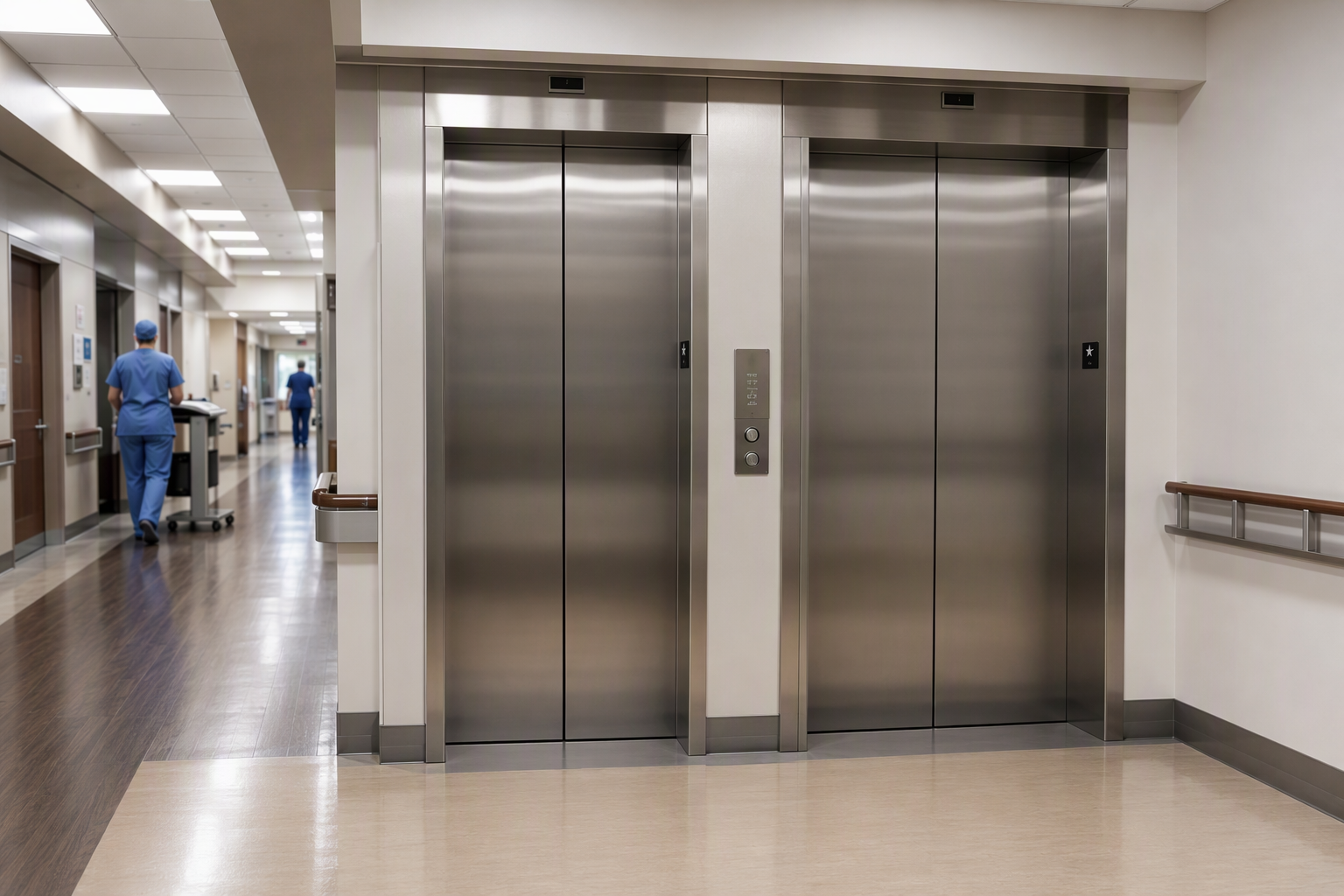
Hospitals, medical office buildings, outpatient surgery centers, rehabilitation facilities, and long-term care communities depend on elevators around the clock. A single out-of-service car can delay medication delivery, strand patients in wheelchairs, and trigger regulatory scrutiny. Commercial elevator service in healthcare settings demands more than a routine maintenance visit — it requires familiarity with infection-control protocols, patient-movement workflows, ADA accessibility standards, and California’s layered regulatory framework. The sections below cover every aspect of healthcare elevator compliance and service that facility managers, directors of engineering, and risk officers need to understand in 2026.
What Regulations Govern Commercial Elevators in California Healthcare Facilities?
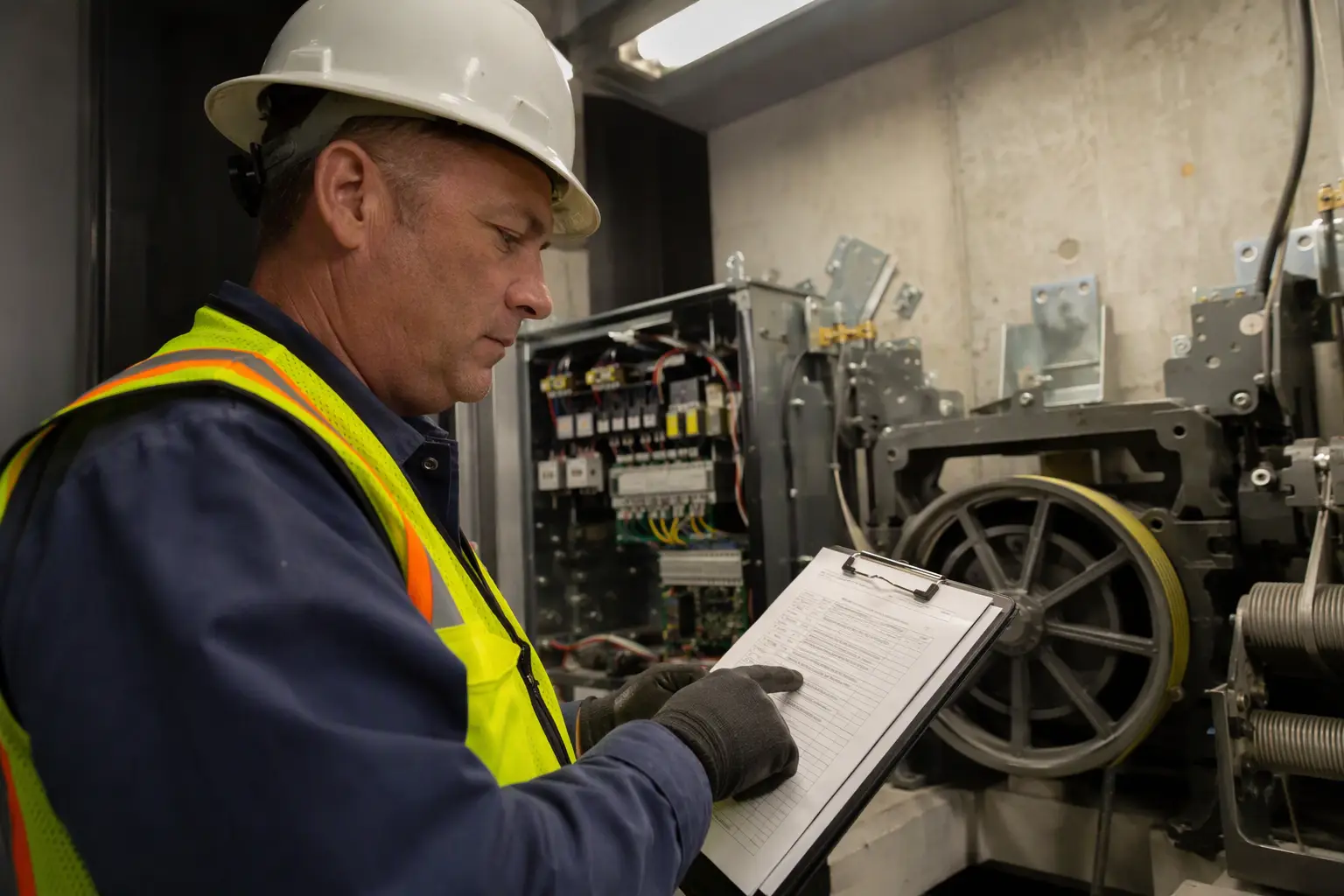
Commercial elevators in California healthcare facilities are subject to multiple overlapping regulatory frameworks. Understanding each layer is essential before scheduling service or planning a capital improvement project.
- California Labor Code Sections 7300–7324.2: These statutes establish the legal foundation for elevator safety in California, including permit requirements, inspection obligations, and licensing for companies and mechanics.
- California Code of Regulations, Title 8, Elevator Safety Orders (Sections 3000–3146): These rules, administered by the Cal/OSHA Elevator Unit, California Department of Industrial Relations, govern installation, maintenance, alteration, and inspection of every conveyance in the state.
- ASME A17.1/CSA B44 (2004 edition, effective May 1, 2008): California’s adopted elevator safety code for installation contracts signed on or after that date. Find the standard family at ASME Codes & Standards.
- Americans with Disabilities Act (ADA): Federal accessibility requirements under ADA.gov apply to public-accommodation areas of healthcare buildings, covering cab dimensions, door timing, controls, and signage.
- City of Los Angeles (LADBS): Facilities located within the City of Los Angeles are subject to that city’s own elevator and conveyance inspection program administered by the Department of Building and Safety. Facility managers should confirm requirements directly with LADBS.
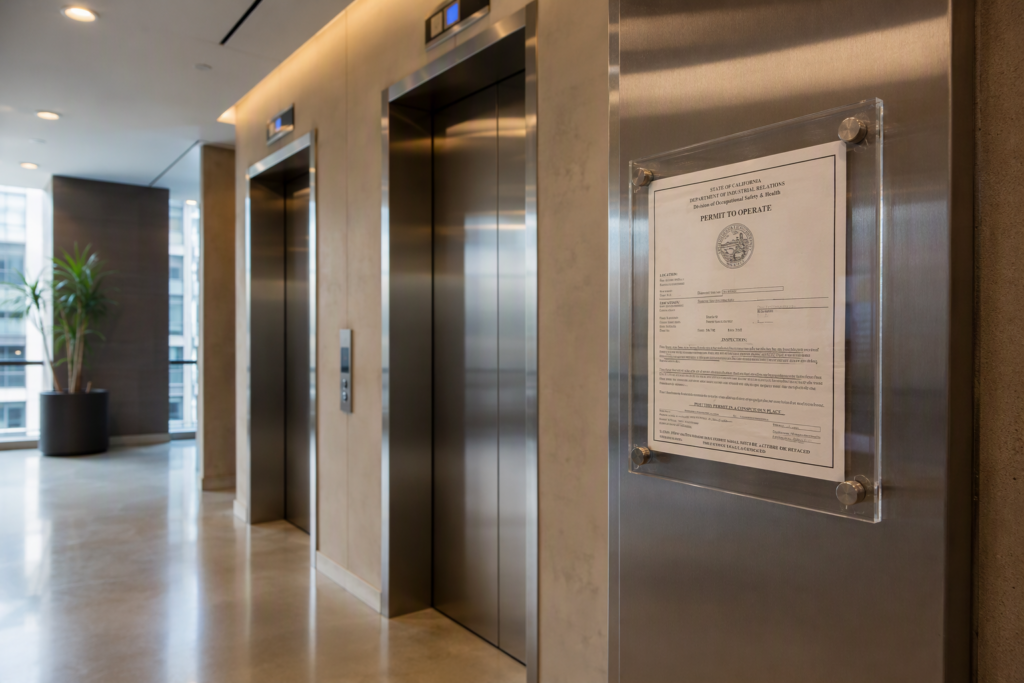
No elevator may be operated in California without a valid, current permit to operate issued by Cal/OSHA. That permit must be posted conspicuously inside the elevator car at all times — a requirement that Joint Commission surveyors and state health licensing inspectors routinely verify during facility audits.
Why Is Annual Inspection Critical for Hospital and Medical Facility Elevators?
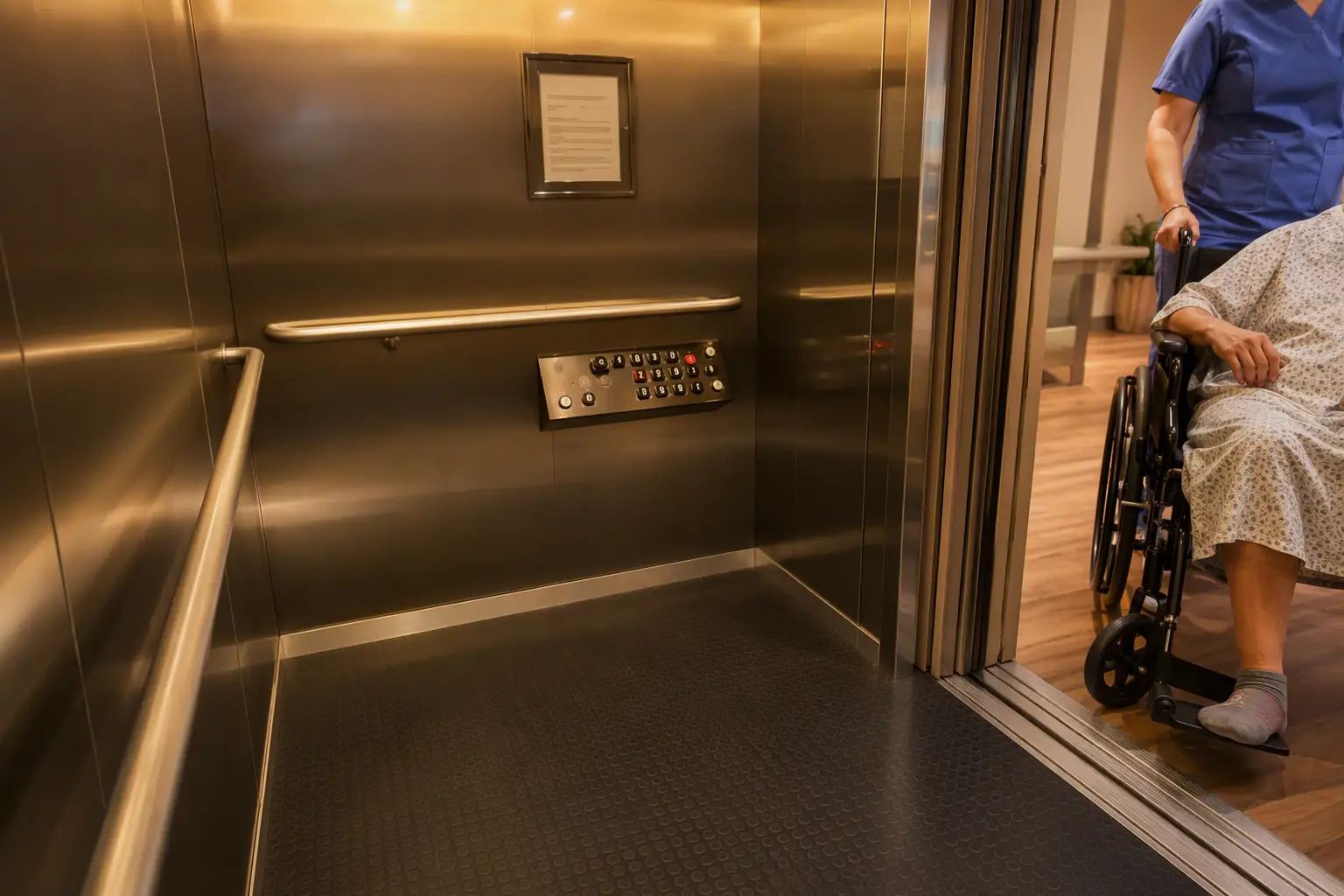
California law requires every conveyance to be inspected at least once a year. Responsibility for arranging that annual reinspection falls on the elevator owner — meaning the hospital system, medical group, or property owner, not the service contractor. A conveyance found safe receives a permit to operate for up to one year.
There is a meaningful compliance benefit available to healthcare facility operators: Cal/OSHA may issue a permit to operate for up to two years for an elevator in safe condition that is covered by a full maintenance contract with a C-11 licensed elevator company. A two-year permit reduces the administrative burden on facility management teams and demonstrates a documented maintenance posture that supports accreditation reviews.
Only State of California safety engineers and Certified Competent Conveyance Inspectors (CCCI) may perform elevator inspections in California. Service providers who claim to perform “official” inspections without that credential cannot legally do so.
Who Is Qualified to Service Elevators in a California Healthcare Facility?
California sets strict credentialing requirements for anyone who touches an elevator:
- Certified Qualified Conveyance Company (CQCC): Any company that installs, alters, tests, maintains, repairs, or services elevators in California must be certified by Cal/OSHA as a CQCC. Applicants must hold a current C-11 Elevator Contractor license issued by the California Contractors State License Board (CSLB) and carry the required workers’ compensation and liability insurance.
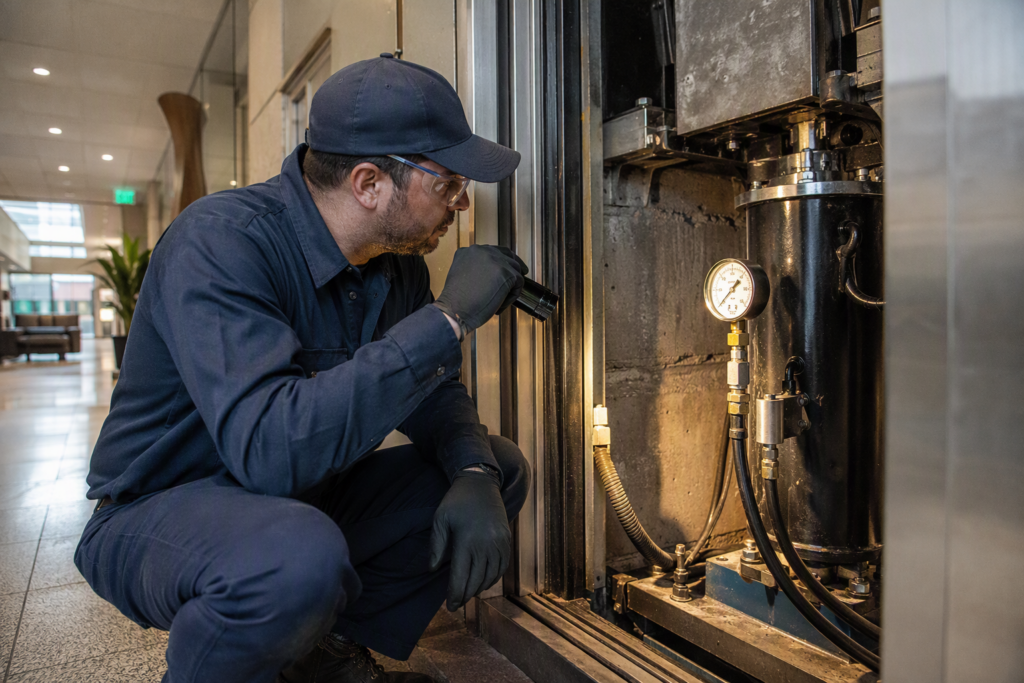
- Certified Competent Conveyance Mechanic (CCCM): Anyone who works on an elevator without direct supervision must be individually certified by Cal/OSHA. Only a CCCM working for a CQCC may maintain, repair, alter, or replace components on a conveyance.
- Certificate renewal: CQCC, CCCM, and conveyance inspector certificates last two years. Renewal requires at least eight hours of continuing education, ensuring technicians remain current with code changes.
Liftech Elevator holds CQCC certification and employs Certified Competent Conveyance Mechanics, meeting the credentials California law requires to service healthcare facility elevators in Signal Hill, Long Beach, Los Angeles, and Orange County.
What Does a Full Maintenance Contract Cover for Healthcare Elevators?
A full maintenance contract typically encompasses preventive maintenance visits on a scheduled basis, lubrication and adjustment of mechanical and hydraulic components, testing of safety devices, door system inspection and calibration, controller diagnostics, and emergency callback service. For healthcare facilities specifically, scope should also address:
- Stretcher and bariatric capacity verification to confirm the elevator meets the load ratings required for patient transport
- Door timing compliance with ADA dwell-time requirements for passengers using mobility devices
- Emergency lighting and communication system function testing
- Documentation packages suitable for Joint Commission Environment of Care submissions
- Coordination with infection-control teams for after-hours or barrier-protected service access
The contractual structure of a full maintenance agreement is also what enables facility operators to qualify for the extended two-year Cal/OSHA permit described above.
How Does ADA Compliance Apply to Healthcare Elevator Service?
The Americans with Disabilities Act establishes accessibility requirements that are especially consequential in healthcare settings, where patients, visitors, and staff may use wheelchairs, walkers, stretchers, and other mobility equipment. Key areas that routine commercial elevator service should address include:
- Door reopening devices: Doors must be equipped with a reopening device that stops and reopens upon contact with a passenger or obstruction.
- Floor call and car controls: Controls must be at accessible mounting heights with Braille and raised-character designations.
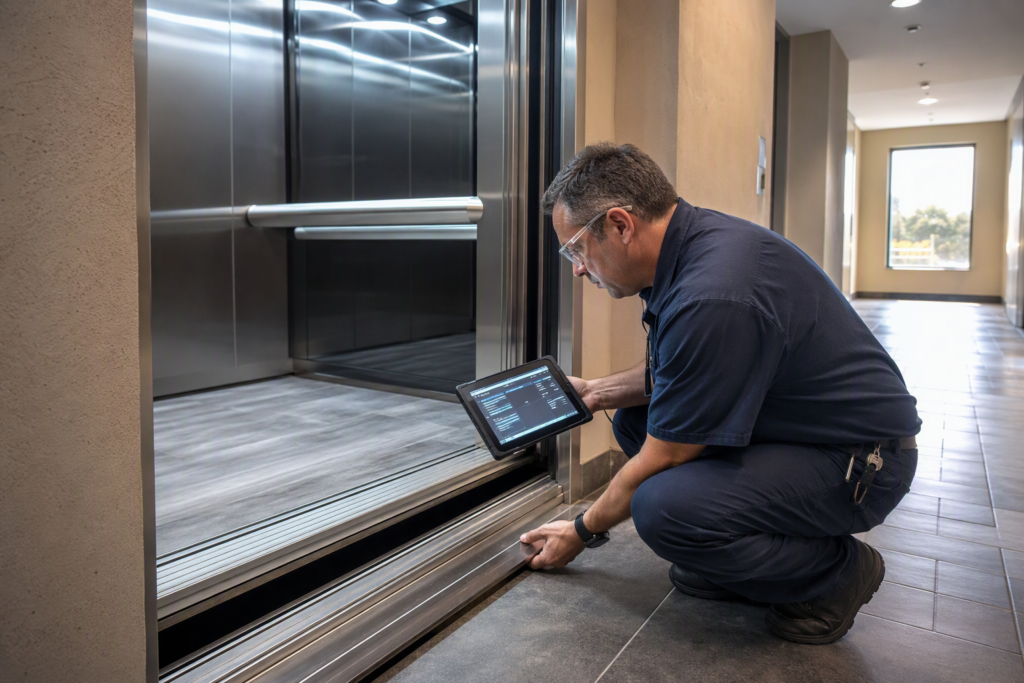
- Leveling accuracy: The cab must level within a tolerance that allows smooth transition for wheeled mobility devices — unacceptable leveling gaps are both a patient safety hazard and an ADA concern.
- Visual and audible signals: Hall lanterns and audible signals must indicate car arrival and direction of travel.
ADA compliance is not a one-time installation checklist. Wear, component drift, and door system degradation can create non-compliant conditions between inspections, making routine service visits an important part of ongoing accessibility management.
What Happens If a Healthcare Facility Operates an Elevator Without a Valid Permit?
Operating a conveyance in California without a valid Cal/OSHA permit to operate is a violation of California Labor Code Sections 7300–7324.2. Consequences can include Cal/OSHA enforcement action, mandatory shutdown of the elevator, and exposure to liability if a patient or staff member is injured during the period of non-compliance. For accredited healthcare facilities, an expired or missing permit posted in the cab can also trigger findings during Joint Commission or state health department surveys. Facility managers should maintain a tracking system for permit expiration dates across all elevators on campus.
What Should Facility Managers Do When an Elevator Fails During Patient Hours?
- Immediately notify the facility’s engineering or facilities management team and activate the site’s elevator-out-of-service protocol.
- Restrict access to the affected elevator and post clear signage to prevent patients or visitors from attempting to use it.
- Identify alternate vertical transportation routes for patient movement, medication transport, and emergency response.
- Contact your licensed elevator service company and provide the equipment number, nature of the malfunction, and any error codes displayed.
- Document the outage with time stamps, actions taken, and personnel notified — this record supports risk management and may be required for incident reporting under facility policies.
- Once service is restored, verify that the elevator passes a functional test, including door operation and leveling accuracy, before returning it to patient-area service.
- Review whether the failure indicates a systemic maintenance gap that warrants a broader equipment assessment.
Liftech Elevator serves healthcare facilities across Signal Hill, Long Beach, Los Angeles, and Orange County and is structured to support urgent service needs for its contract customers.
What Permits Are Required Before Modifying or Upgrading a Healthcare Elevator?
In California, a permit from Cal/OSHA is required before a conveyance is erected, installed, or materially altered. “Material alteration” includes controller upgrades, door system replacements, cab capacity changes, and modernization projects — not just new installations. Healthcare facility managers planning capital projects that involve elevators should build Cal/OSHA permitting timelines into their project schedules. Each new elevator must also be inspected by Cal/OSHA and receive a permit to operate before it is placed in service.
California’s Standards Board held a public hearing on June 18, 2026, regarding a proposed Group V update to the state’s Elevator Safety Orders that would incorporate portions of ASME A17.1-2019. No effective date has been posted as of 2026. Facilities planning major modernizations should confirm the applicable code edition with their service provider and Cal/OSHA before finalizing specifications.
Questions Your Inspector Will Ask
When a Cal/OSHA safety engineer or Certified Competent Conveyance Inspector arrives at a healthcare facility, facility managers should be prepared to address the following:
- Is the current permit to operate posted inside the cab? The permit must be conspicuously displayed and current.
- Who is the elevator owner of record, and who arranged this inspection? California places the reinspection obligation on the owner.
- What is the name and CQCC certification number of the maintenance company? The inspector may request documentation confirming the company is currently certified.
- Is there a full maintenance contract in place? This determines eligibility for a two-year permit.
- When was the last maintenance visit, and what records are available? Service logs should be on site or accessible.
- Have any components been altered or replaced since the last inspection? Material alterations require advance Cal/OSHA permits.
- Are all emergency systems — lighting, communication, and lowering devices — functional? The inspector will test these.
- Does the elevator level within acceptable tolerance? The inspector will test leveling at each floor stop.
- Are door reopening devices operational, and do doors meet required timing? This is tested at each landing.
How Does Healthcare Elevator Service Differ From Standard Commercial Service?
Healthcare environments introduce service requirements that go beyond those of a typical commercial office building. Key differences include:
- Infection control coordination: Mechanics entering clinical areas may need to follow facility protocols including PPE, hand hygiene, and protected-pathway procedures during service visits.
- After-hours scheduling: Many hospitals prefer maintenance activities in lower-census periods to minimize disruption to patient transport, requiring service providers who can accommodate flexible scheduling.
- Load and capacity requirements: Hospital elevators frequently transport bariatric patients, beds, imaging equipment, and supply carts. Load ratings and platform dimensions must be verified and maintained.
- Documentation for accreditation: Healthcare facilities undergoing Joint Commission, CMS, or state licensing reviews need service documentation formatted to support Environment of Care compliance narratives.
- Redundancy planning: On multi-elevator campuses, planned downtime for one unit requires coordination so patient transport continuity is maintained on remaining cars.
Liftech Elevator provides commercial elevator service to healthcare facilities in Signal Hill, Long Beach, Los Angeles, and Orange County with an understanding of these operational realities.
How Should a Healthcare Facility Evaluate Elevator Service Vendors?
When selecting or re-evaluating an elevator service company for a healthcare setting, facility managers and procurement teams should confirm the following before awarding a contract:
- Cal/OSHA CQCC certification is current and verifiable at the Cal/OSHA Elevator Unit
- C-11 Elevator Contractor license is active with the California Contractors State License Board (CSLB)
- All mechanics who will be assigned to the facility hold current CCCM certification from Cal/OSHA
- The company provides maintenance documentation formatted to support regulatory and accreditation reviews
- The service agreement clearly defines what constitutes a “full maintenance contract” in terms that support the two-year Cal/OSHA permit eligibility
- The company has demonstrated experience servicing elevators in occupied healthcare settings
- Insurance certificates meeting the facility’s vendor requirements are on file
Liftech Elevator welcomes credential verification requests and can provide documentation of its CQCC status and C-11 licensure to healthcare procurement and risk management teams in Southern California.
Contact Liftech Elevator for a free elevator assessment at 562-997-3639.
Need elevator service you can rely on? Liftech Elevator is ready to help.