Elevator Inspection for Healthcare Facilities in California
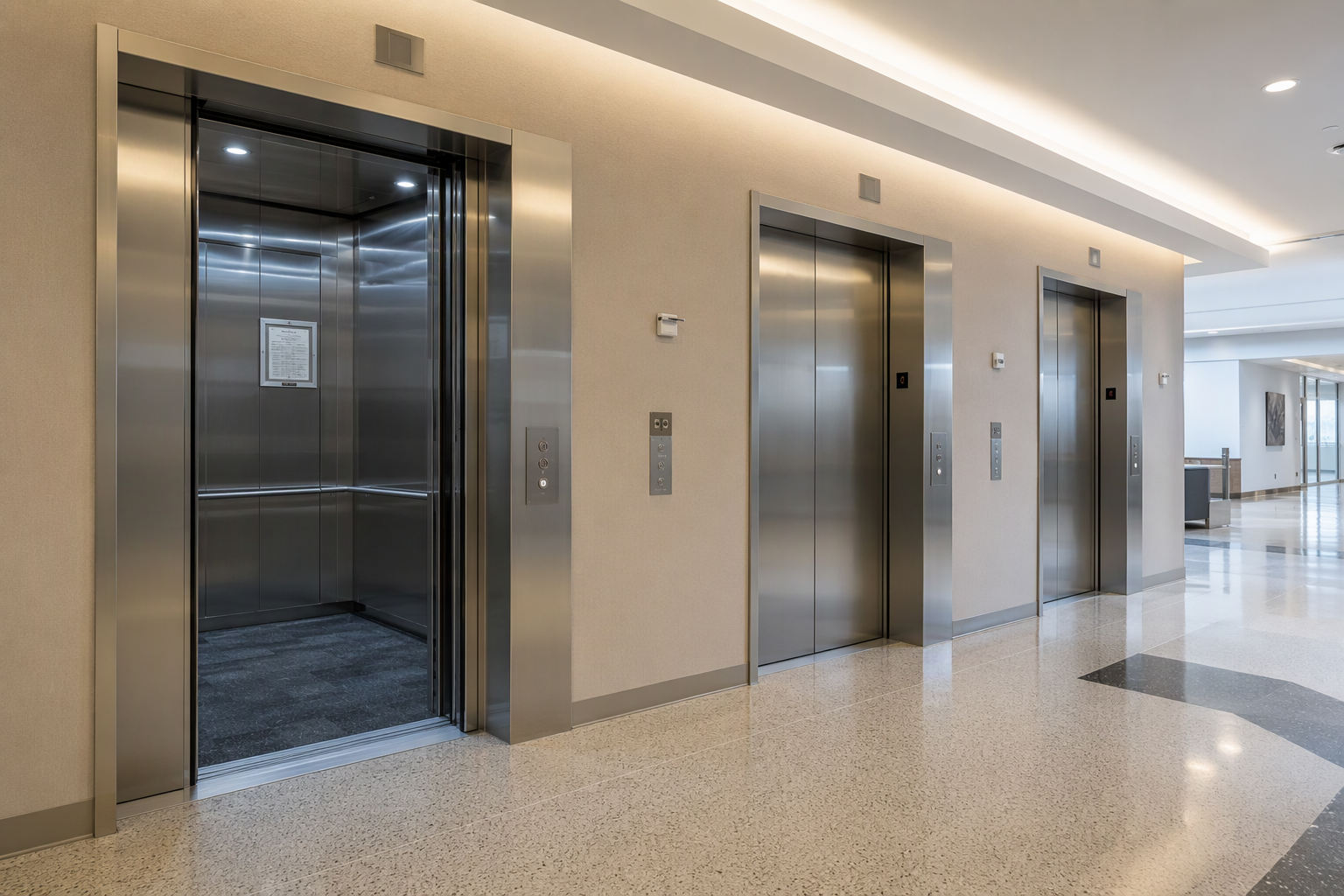
Hospitals, medical office buildings, skilled nursing facilities, and outpatient surgery centers in Signal Hill, Long Beach, Los Angeles, and Orange County share one operational reality: elevator downtime is never just an inconvenience. It can interrupt patient transport, delay emergency response, and place facilities in violation of state and federal requirements. Understanding what elevator inspection involves — and what California law requires — is the first step toward keeping every conveyance safe, compliant, and continuously operational.
What Does California Law Require for Elevator Inspections in Healthcare Settings?
Under Cal/OSHA’s Elevator Unit, California Department of Industrial Relations, no elevator may operate in California without a valid, current permit to operate. The legal foundation is found in California Labor Code Sections 7300–7324.2 and the California Code of Regulations, Title 8, Elevator Safety Orders (Sections 3000–3146).
California law requires every conveyance to be inspected at least once per year. When an elevator is found to be in safe condition, Cal/OSHA issues a permit to operate for up to one year. Healthcare facility operators should note: if the elevator is covered by a full maintenance contract with a company holding a C-11 contractor license — a Certified Qualified Conveyance Company (CQCC) — Cal/OSHA may extend the permit to operate for up to two years.
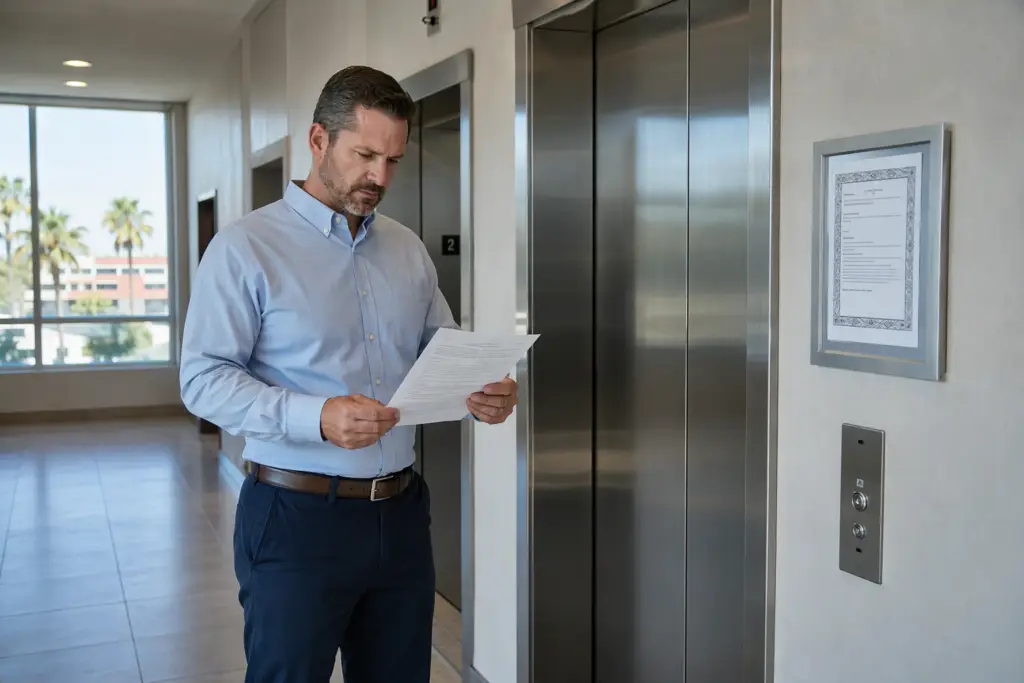
Critically, arranging that annual reinspection is the elevator owner’s responsibility — not Cal/OSHA’s and not the service contractor’s. Only State of California safety engineers and Certified Competent Conveyance Inspectors (CCCI) may perform inspections in California. The permit to operate must be posted conspicuously inside the elevator car at all times.
The City of Los Angeles has its own elevator and conveyance inspection program administered through the Los Angeles Department of Building and Safety (LADBS). Healthcare operators with facilities in Los Angeles should confirm current requirements directly with LADBS in addition to meeting state Cal/OSHA obligations.
Which Codes Apply to Healthcare Elevator Inspections?
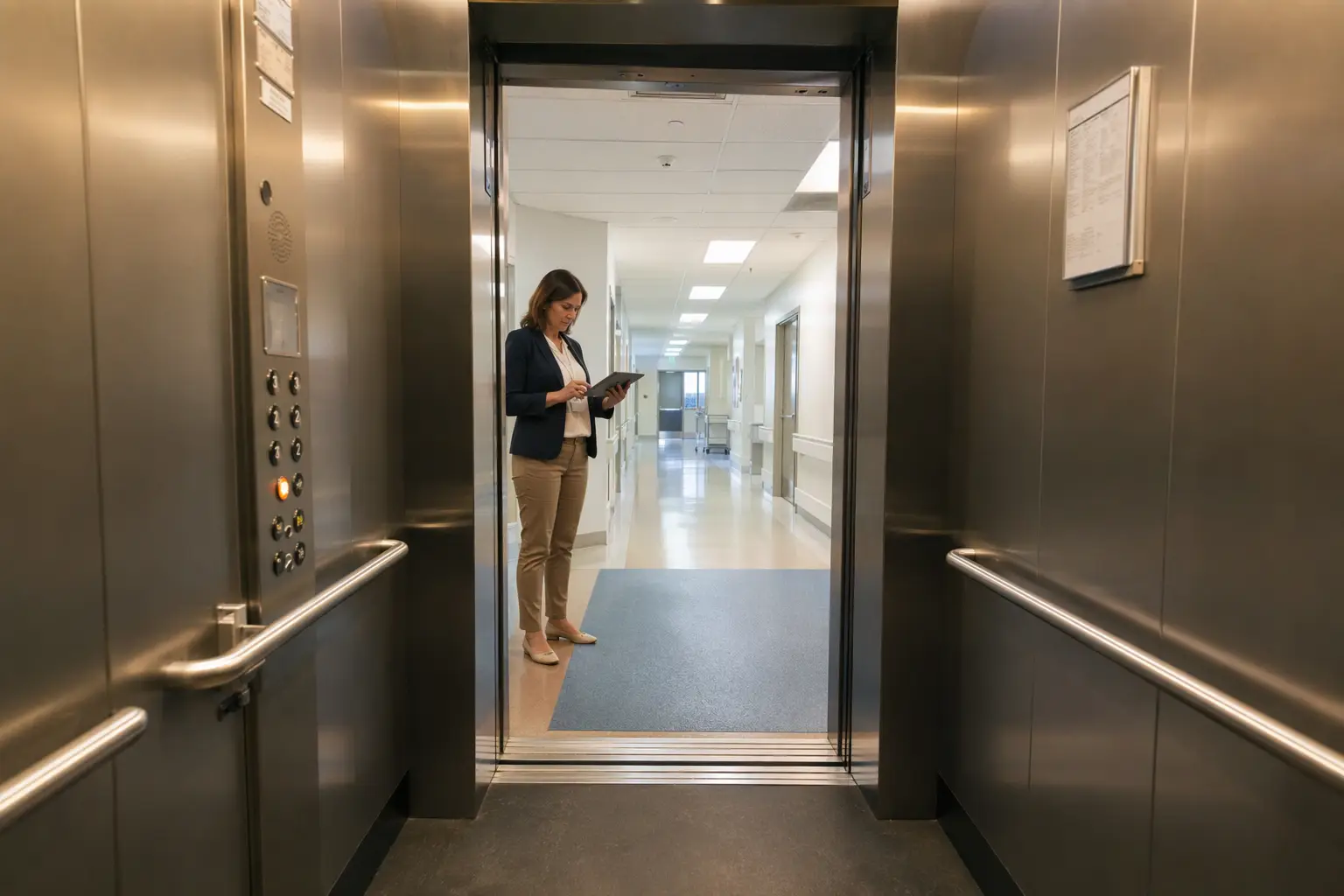
California’s elevator inspections are conducted against the requirements of the ASME A17.1/CSA B44 Safety Code for Elevators and Escalators — specifically the 2004 edition adopted under California’s Group IV Elevator Safety Orders, effective May 1, 2008, for installation contracts signed on or after that date. Any elevator installed before that date may be subject to earlier editions.
As of 2026, California has proposed a Group V update to its Elevator Safety Orders that would incorporate portions of ASME A17.1-2019. The Standards Board held a public hearing on June 18, 2026; no effective date has been posted. Healthcare facility managers planning capital upgrades or modernizations should monitor this rulemaking closely, as it may affect new installations and material alterations.
Federal accessibility standards under the Americans with Disabilities Act (ADA) also apply to healthcare facilities. ADA requirements address elevator car dimensions, door timing, floor identification, and accessibility features that inspectors and facility managers must track alongside state safety requirements.
Workplace safety obligations under OSHA are relevant for healthcare facilities as employers. While elevator-specific inspection authority in California rests with Cal/OSHA’s Elevator Unit, general employer duties regarding equipment safety and hazard communication apply throughout the facility.
Who Is Qualified to Inspect a Healthcare Facility Elevator in California?
California sets strict credentialing requirements for anyone involved in elevator inspection or maintenance. Only State of California safety engineers and Certified Competent Conveyance Inspectors (CCCI) may conduct inspections. Anyone who works on an elevator without supervision must hold a Certified Competent Conveyance Mechanic (CCCM) certification from Cal/OSHA. The company employing those mechanics must be certified by Cal/OSHA as a Certified Qualified Conveyance Company (CQCC) and must hold a current C-11 Elevator Contractor license issued by the California Contractors State License Board (CSLB).
All CQCC, CCCM, and conveyance inspector certificates in California are valid for two years, and renewal requires at least eight hours of continuing education. Healthcare administrators selecting a service provider should verify current certification status before awarding a maintenance contract.
Liftech Elevator operates as a certified elevator service company serving healthcare facilities across Signal Hill, Long Beach, Los Angeles, and Orange County, working within California’s credentialing framework to support compliant elevator programs.
What Happens During a Healthcare Elevator Inspection?
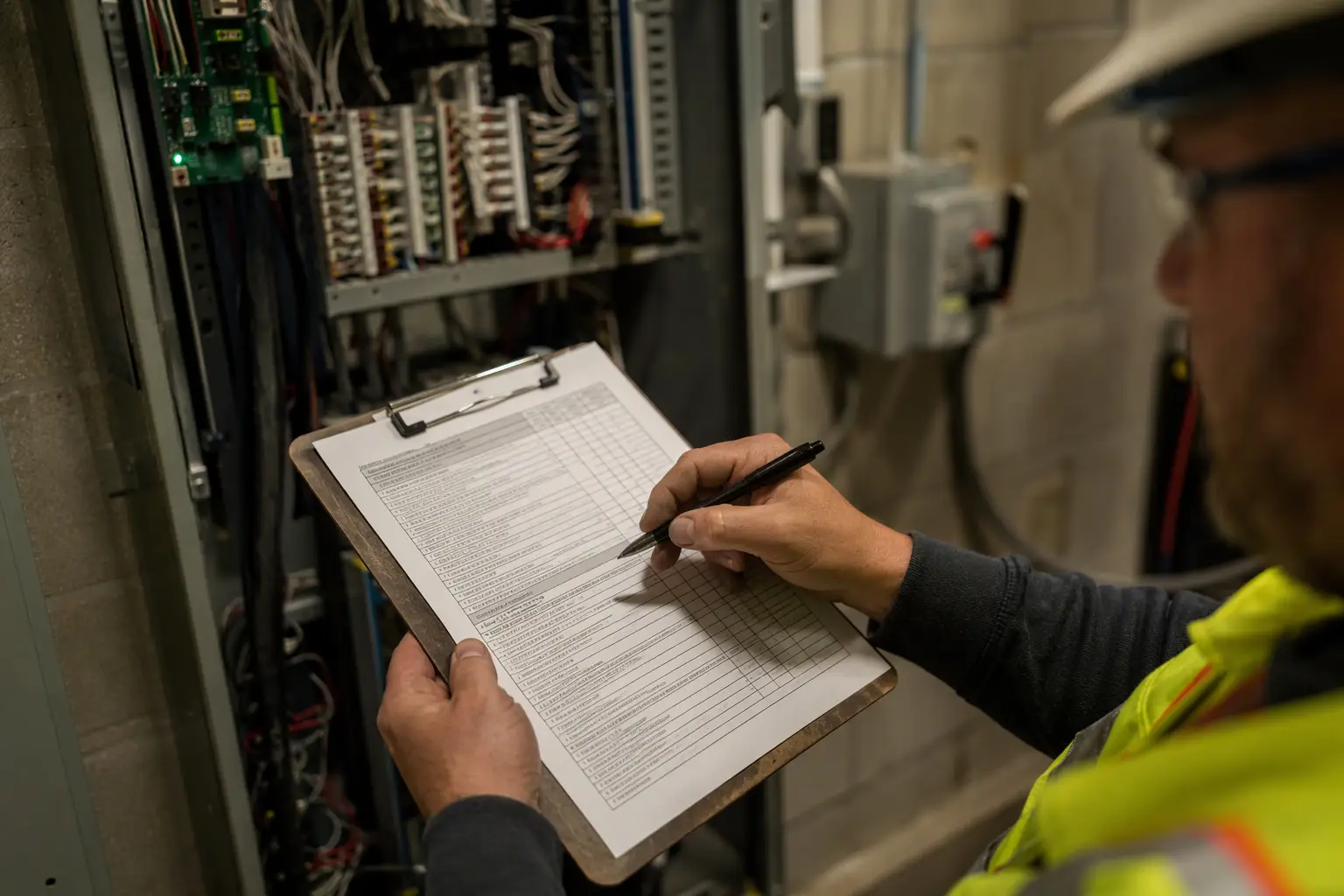
A formal Cal/OSHA inspection evaluates the elevator against the applicable edition of ASME A17.1 and the Title 8 Elevator Safety Orders. Inspectors review both the mechanical and safety systems of the conveyance. Common inspection elements in a healthcare context include:
- Door operation, timing, and obstruction sensing — critical in facilities where patients in beds or wheelchairs are transported
- Leveling accuracy — uneven floor stops create trip and fall risks for ambulatory patients and staff managing equipment
- Emergency lighting and communication systems within the elevator car
- Load capacity ratings and posted signage
- Safety devices including governor, buffers, and safeties
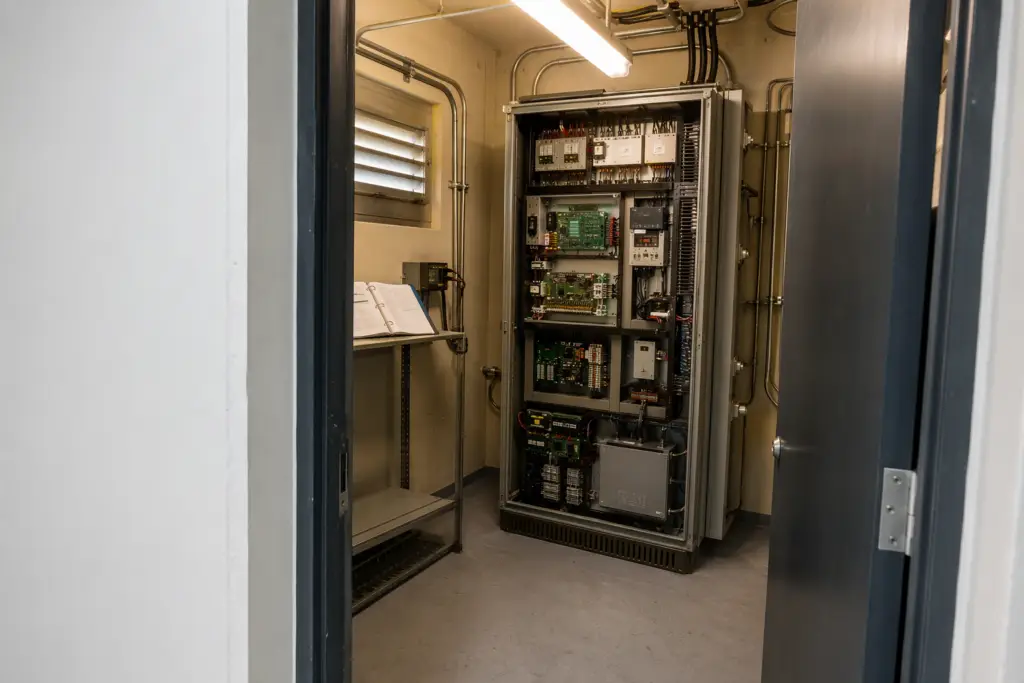
- Machine room conditions and access controls
- Validity and posting of the current permit to operate
- Compliance of accessibility features with ADA requirements
Before the formal state inspection, Liftech Elevator recommends that healthcare facilities conduct a pre-inspection walkthrough to identify and correct deficiencies that could delay permit renewal or result in a failed inspection.
What Is the Step-by-Step Process for Scheduling and Completing a Healthcare Elevator Inspection in California?
- Confirm permit expiration date. Locate the current permit to operate posted inside each elevator car and note the expiration date. Arranging reinspection before expiration is the owner’s legal responsibility.
- Review maintenance records. Gather maintenance logs, previous inspection reports, and any outstanding work orders. Gaps in documentation can complicate the inspection process.
- Engage a CQCC-certified service company. Contact a Certified Qualified Conveyance Company such as Liftech Elevator to perform a pre-inspection assessment and address any deficiencies before the official Cal/OSHA inspection.
- Correct deficiencies. All repairs and adjustments must be made by Certified Competent Conveyance Mechanics working under a CQCC-certified company. Uncertified work is a violation of California law.
- Coordinate with the inspection authority. Contact Cal/OSHA’s Elevator Unit — or LADBS if the facility is in Los Angeles — to schedule the official inspection. For new installations or material alterations, a permit from Cal/OSHA is required before work begins.
- Facilitate access on inspection day. Ensure the machine room, elevator pit, and car are accessible to the inspector and that a knowledgeable facility representative is present.
- Receive and post the permit. Once Cal/OSHA issues the permit to operate, post it conspicuously inside the elevator car immediately.
- Schedule the next maintenance cycle. Document the new permit expiration and calendar the next reinspection well in advance to avoid lapses.
How Do ADA Requirements Affect Healthcare Elevator Inspections?
The ADA establishes accessibility requirements that apply to public-use elevators in healthcare facilities. Requirements address car dimensions, door width, floor call buttons, raised and Braille floor designations, and accessible controls. While ADA compliance is not administered by Cal/OSHA’s Elevator Unit, it is enforced through federal civil rights law and can be raised in complaints, facility surveys, or accreditation reviews. Healthcare facilities should treat ADA accessibility features as an integrated part of every inspection cycle, not a separate concern.
What Are the Consequences of Operating a Healthcare Elevator Without a Valid Permit?
Operating an elevator in California without a valid, current permit to operate is a violation of California Labor Code Sections 7300–7324.2. For healthcare facilities, the consequences extend beyond regulatory fines. Joint Commission surveys, CMS Conditions of Participation reviews, and state Department of Public Health inspections all evaluate whether the physical environment — including vertical transportation — meets safety standards. An expired elevator permit creates a documented compliance gap that can affect accreditation status, reimbursement eligibility, and institutional liability exposure in the event of an incident.
Does a New Elevator Installation in a Healthcare Facility Require a Separate Inspection?
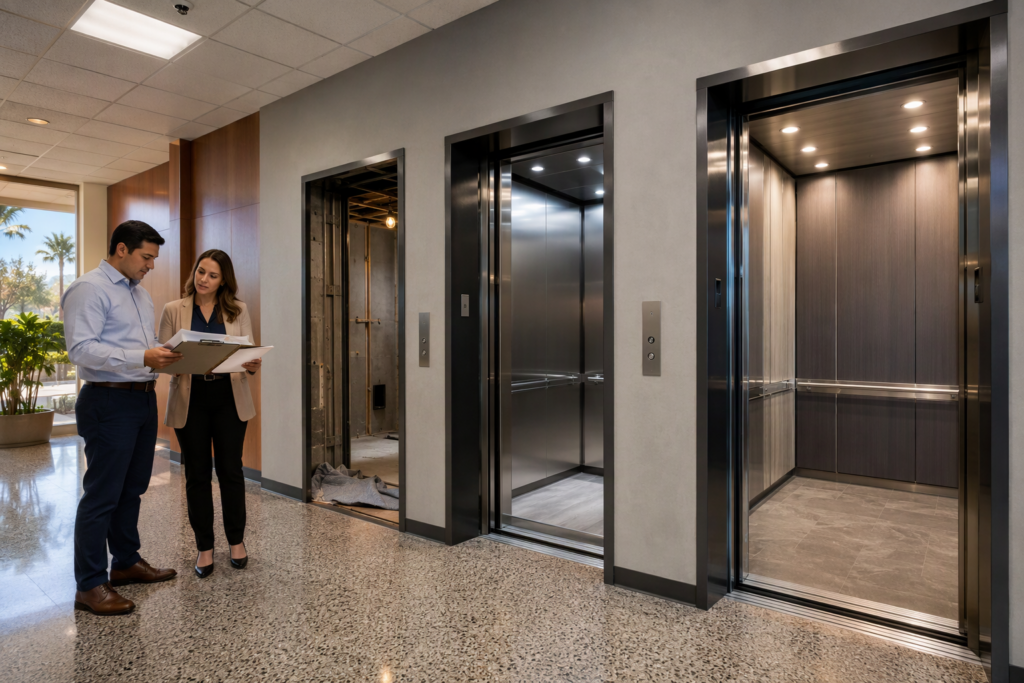
Yes. California law requires that every new elevator be inspected by Cal/OSHA and receive a permit to operate before it is placed in service. A permit from Cal/OSHA is also required before a conveyance is erected, installed, or materially altered. Healthcare construction projects must account for this inspection step in their project timelines — opening a new wing or clinical floor without a compliant, permitted elevator can delay occupancy.
How Often Should Healthcare Facilities Service Elevators Between Inspections?
California law sets minimum inspection intervals, but the clinical environment of a hospital or skilled nursing facility creates demands that go well beyond minimum compliance. High call frequency, heavy loads from medical equipment, bed transport, and continuous operation across all hours of the day accelerate wear on mechanical components. Facilities operating under a full maintenance contract with a CQCC-certified company qualify for a permit to operate of up to two years — but that contract should be backed by regular scheduled maintenance visits, not simply a paperwork arrangement. Liftech Elevator supports healthcare clients in Signal Hill, Long Beach, Los Angeles, and Orange County with structured maintenance programs designed around actual facility usage.
What Should Healthcare Facilities Look for When Choosing an Elevator Inspection and Maintenance Partner?
When evaluating an elevator service company for a healthcare facility in California, administrators should confirm:
- Current CQCC certification from Cal/OSHA
- Active C-11 Elevator Contractor license from the California Contractors State License Board (CSLB)
- Mechanics who hold current CCCM certification from Cal/OSHA
- Demonstrated familiarity with healthcare-specific operational requirements, including infection control protocols for machine room and pit access
- Documentation practices that support Joint Commission and CMS survey readiness
- Coverage area that includes the facility’s location
Liftech Elevator serves healthcare facilities across Signal Hill, Long Beach, Los Angeles, and Orange County with the certifications California law requires.
Questions Your Inspector Will Ask
Healthcare facility managers can prepare for a Cal/OSHA elevator inspection by anticipating the questions and documentation requests an inspector is likely to raise. Common inspector inquiries include:
- Where is the current permit to operate? It must be posted conspicuously inside the elevator car. An inspector will check this immediately.
- Who holds the maintenance contract, and are they a CQCC-certified company? The inspector may request documentation of the contractor’s certification status.
- What is the maintenance log showing for the past 12 months? Inspectors review records of service visits, lubrication, adjustments, and any corrective work performed.
- Have there been any incidents, entrapments, or emergency service calls since the last inspection? Undisclosed incidents can create compliance issues.
- Has any material alteration been made to the elevator since the last inspection? Any material alteration requires a Cal/OSHA permit before work begins and a new inspection before return to service.
- Is the machine room locked and access controlled? Unauthorized access to the machine room is a safety and compliance concern.
- Are the elevator pit and machine room free of storage, water intrusion, and fire hazards? These are common deficiency areas found in healthcare facilities where storage space is at a premium.
- Are the emergency lighting and communication systems functional? Inspectors will test in-car emergency features during the inspection.
- Are load capacity and emergency instruction placards correctly posted? Required postings must be current and legible.
- Has the facility received any complaints or reports from staff or patients about elevator performance? Outstanding complaints should be addressed and documented before inspection day.
Reviewing these questions in advance and ensuring answers are supported by documentation is one of the most effective ways healthcare facilities can reduce the risk of a failed inspection or delayed permit renewal. The team at Liftech Elevator can assist facilities in preparing this documentation as part of a pre-inspection assessment.
Contact Liftech Elevator for a free elevator assessment at 562-997-3639.
Need elevator service you can rely on? Liftech Elevator is ready to help.