Hotel Elevator Maintenance Best Practices: A Complete Guide for Hospitality Properties
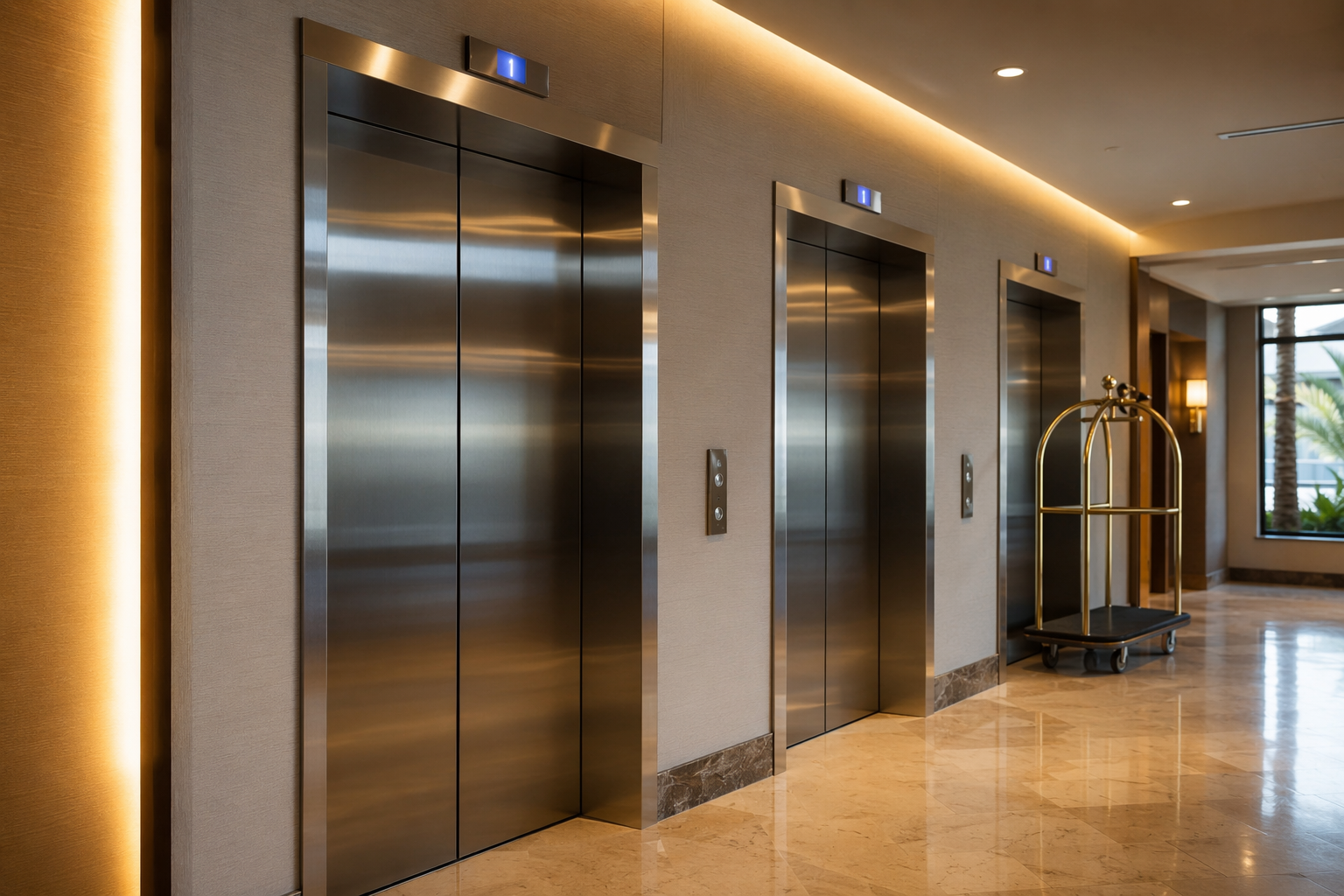
Hotel elevators carry guests, housekeeping staff, luggage carts, and service equipment around the clock. A single unplanned shutdown inconveniences hundreds of guests, triggers negative reviews, and — more critically — can create safety and liability exposure. Whether a property is located in Signal Hill, Long Beach, Los Angeles, or Orange County, the maintenance standard is the same: proactive, documented, and code-compliant.
The sections below cover every dimension of hotel elevator maintenance — from daily walkthroughs to state inspection requirements — so property managers and facilities directors can make informed decisions about their vertical transportation program.
What Compliance Standards Apply to Hotel Elevators?
Hotel elevators in California must satisfy multiple overlapping compliance frameworks simultaneously.
- ASME A17.1 Safety Code for Elevators and Escalators: The foundational national standard governing design, installation, operation, testing, and maintenance of elevators. California adopts this code by reference, and inspectors use it as their primary benchmark during annual state inspections.
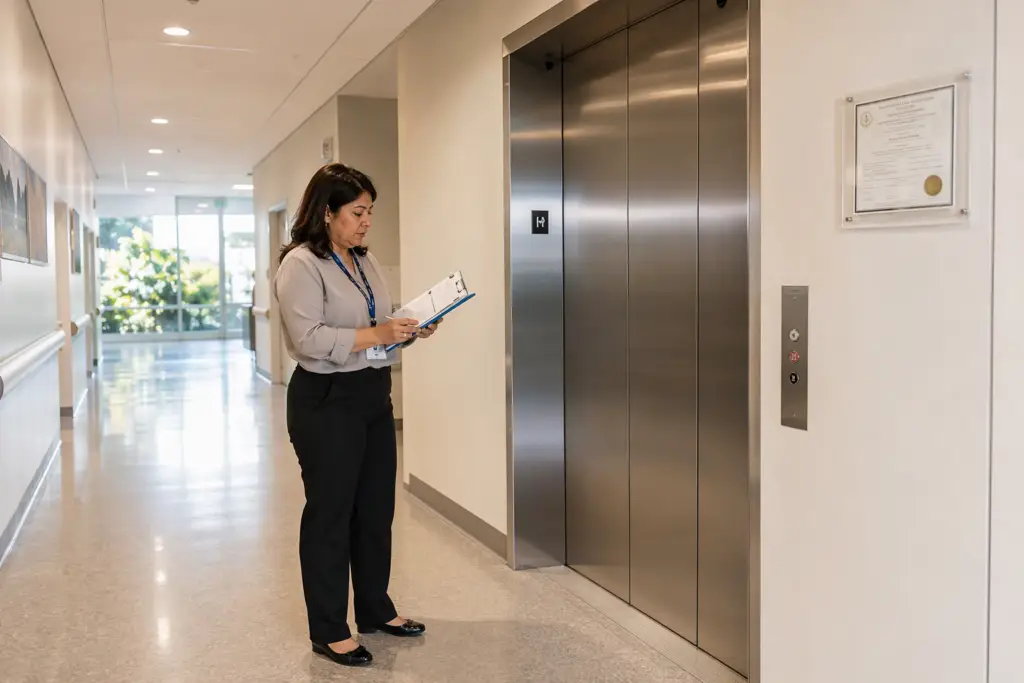
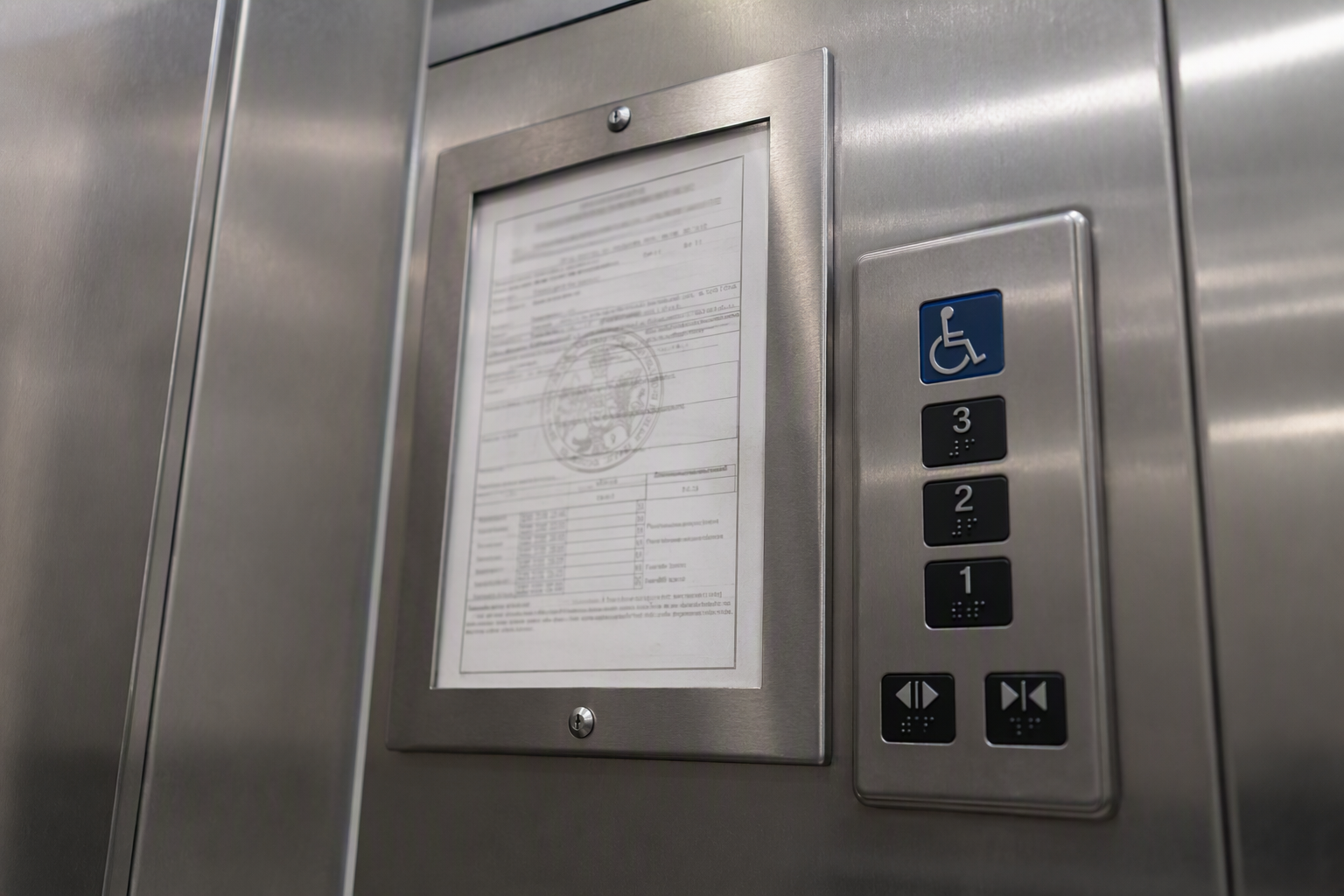
- California Code of Regulations (CCR) Title 8: The California Division of Occupational Safety and Health (Cal/OSHA) enforces elevator safety under Title 8. Hotels operating elevators must obtain a current Certificate of Inspection and post it inside each elevator cab.
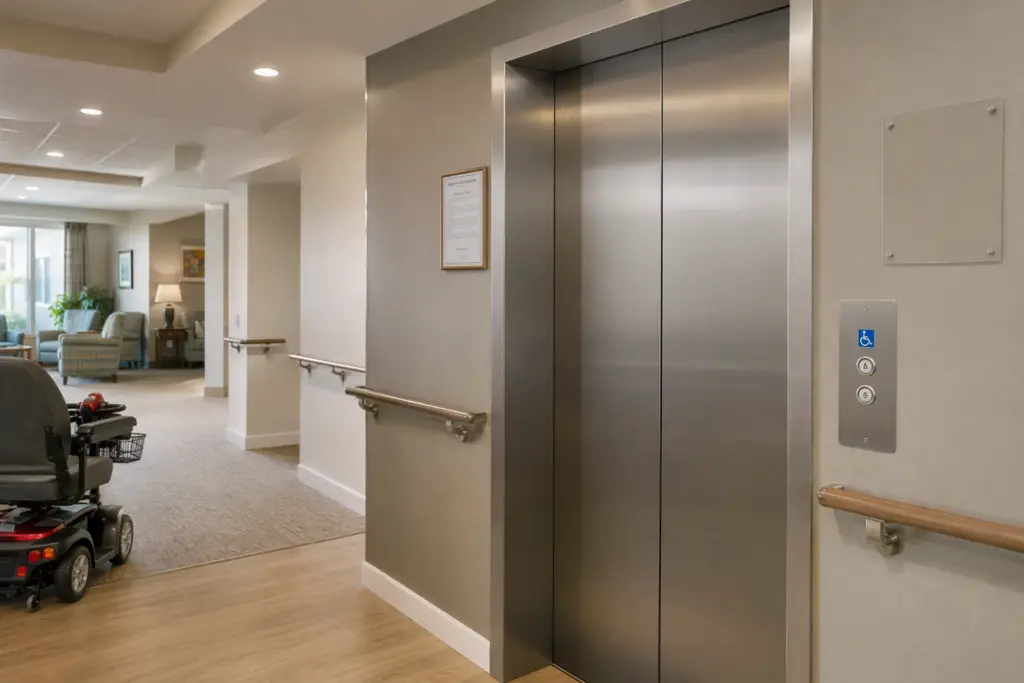
- Americans with Disabilities Act (ADA): Hotels are places of public accommodation and must maintain ADA-compliant elevator features — including accessible controls, audible floor announcements, Braille signage, and door timing — at all times, not just at installation.
- OSHA General Duty Clause: Employers must provide a hazard-free workplace. Elevator mechanical rooms, hoistways, and pits that are accessible to maintenance personnel fall under OSHA’s general duty obligations.
Liftech Elevator works with hotel clients across Los Angeles and Orange County to maintain compliance documentation, coordinate state inspection scheduling, and resolve deficiencies before they result in citations or shutdowns.
What Should a Hotel Elevator Preventive Maintenance Program Include?
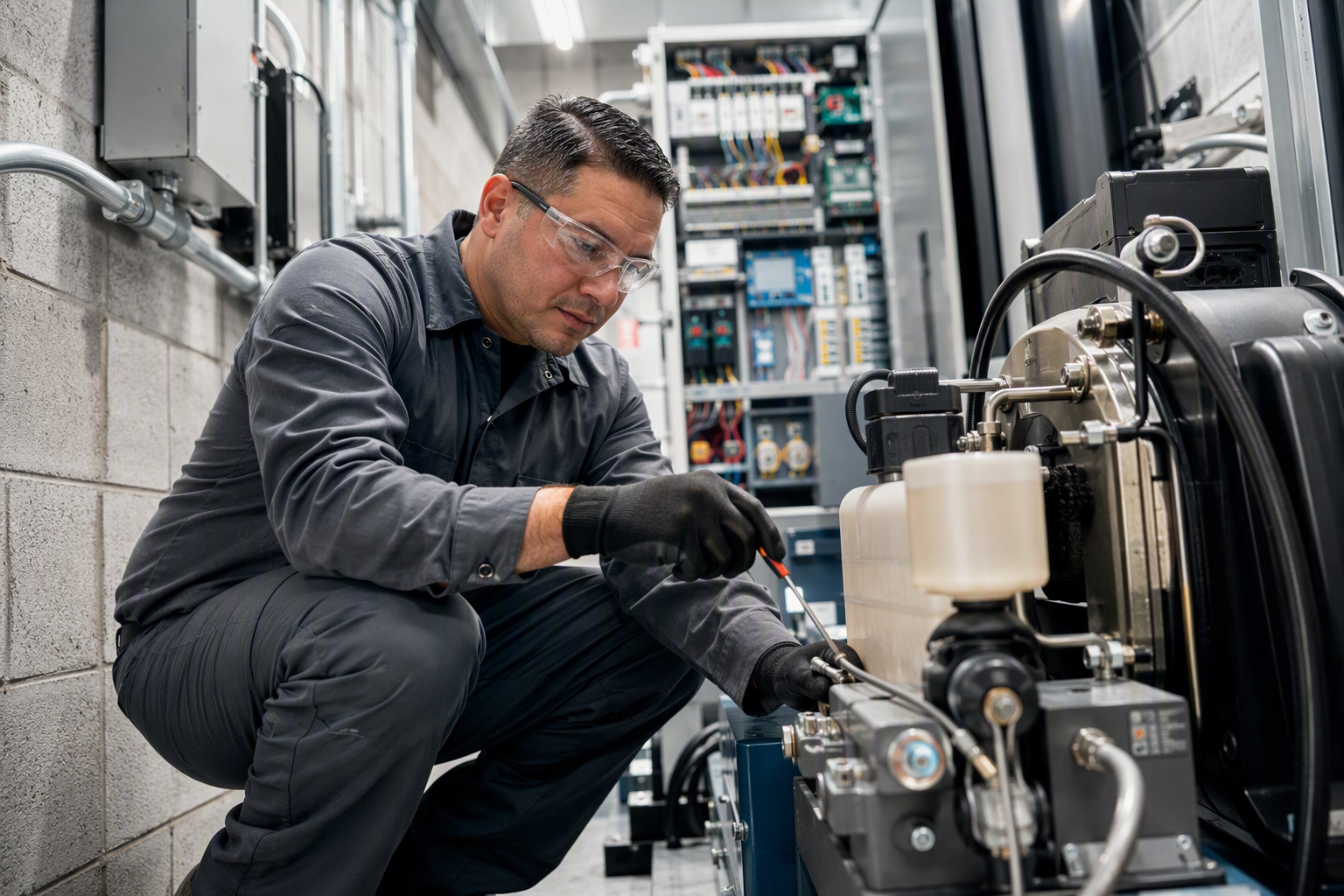
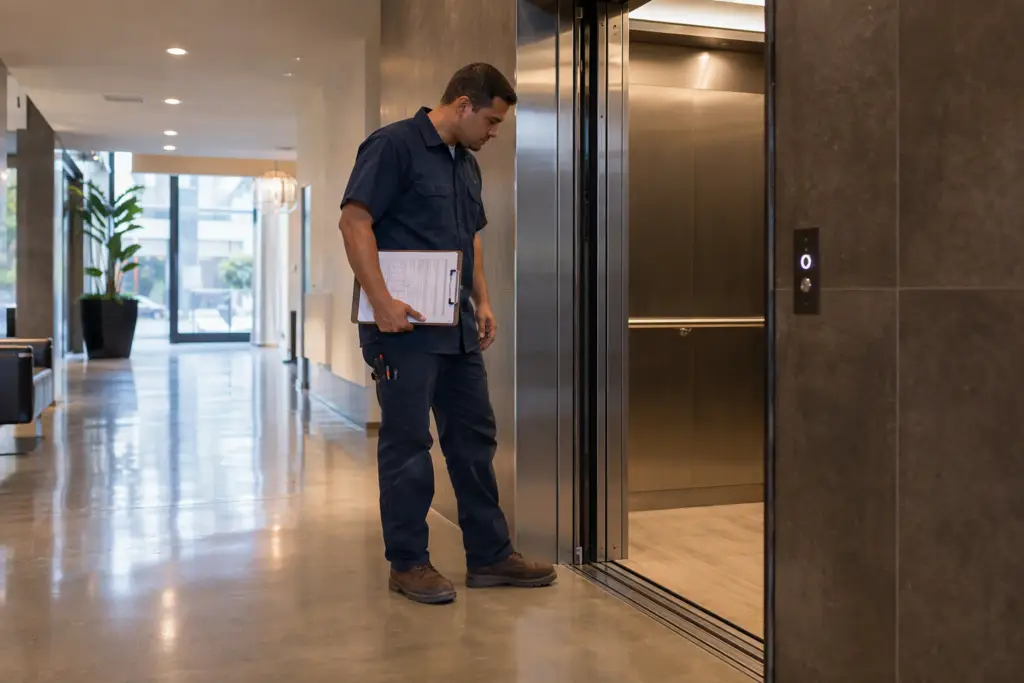
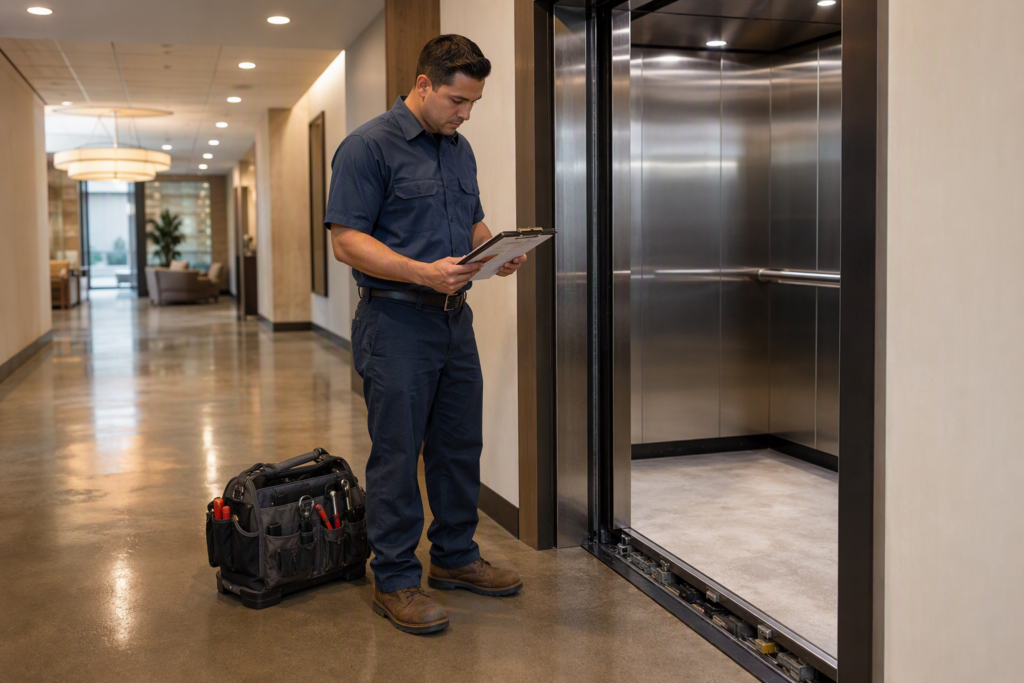
A structured preventive maintenance (PM) program is the single most effective way to extend equipment life and reduce emergency service calls. A comprehensive hotel PM program covers the following service intervals:
Monthly Maintenance Tasks
- Lubrication of guide rails, sheaves, and door operator components
- Inspection and adjustment of door operation speed, force, and re-opening devices
- Testing of emergency lighting, communication systems, and alarm bells
- Visual inspection of hoistway, pit, and machine room for moisture intrusion or debris
- Review of any error codes or fault logs in the controller
Quarterly Maintenance Tasks
- Load weighing device calibration checks
- Governor and safety device visual inspection
- Buffer condition check in the pit
- Review and update of the maintenance logbook
Annual Maintenance Tasks
- Full Category 1 and Category 5 testing as required by ASME A17.1
- Hydraulic fluid level and hose condition inspection (hydraulic units)
- Wire rope or belt inspection for wear, broken wires, and proper tension
- Firefighter’s service and Phase I/Phase II recall testing
- ADA feature verification — control heights, Braille accuracy, door timing
How Often Should Hotel Elevators Be Inspected in California?
California requires a periodic inspection by a state-certified elevator inspector at minimum once per year, with the issuance of a Certificate of Inspection. In addition, ASME A17.1 establishes testing categories (Category 1 through Category 5) on defined cycles for safety devices and buffers. Hotels with high-traffic elevators may benefit from more frequent maintenance visits than the minimum required by code — a qualified service provider can help determine the appropriate schedule based on the number of starts per day, elevator age, and equipment type.
What Are the Most Common Hotel Elevator Problems and How Are They Prevented?
Recurring issues in hotel elevator environments tend to cluster around a few root causes:
- Door malfunctions: The leading cause of service calls. Luggage, housekeeping carts, and high call volume accelerate wear on door tracks, gibs, and operator clutches. Monthly door adjustment and lubrication catches these issues before they cause entrapments.
- Controller faults: Older relay-logic controllers and even modern solid-state systems can develop faults from power fluctuations or heat buildup in machine rooms. Proper machine room ventilation and periodic controller cleaning reduce fault frequency.
- Cab interior damage: While not a mechanical failure, damaged interiors trigger guest complaints and may obscure safety signage. Regular cab inspections should be part of the facilities team’s daily walkthrough.
- Pit flooding: Properties near the coast — particularly in Long Beach and Signal Hill — may face seasonal groundwater intrusion. Pit sump pumps should be tested monthly.
- ADA non-compliance drift: Door timing, control illumination, and audible systems degrade over time. Periodic ADA-specific audits prevent violations from accumulating undetected.
What Should Hotel Staff Do When an Elevator Malfunctions?
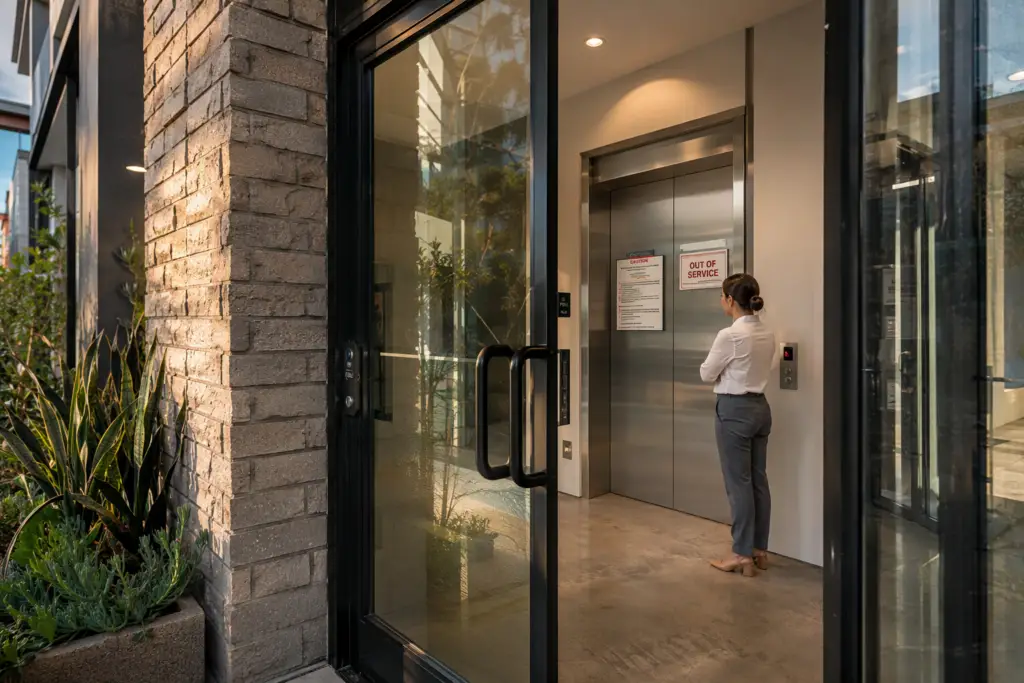
- Secure the elevator out of service immediately. Place the elevator in independent service or switch it off at the main disconnect if guests are not trapped and the cab is at a landing.
- If a passenger is trapped, activate the two-way communication system to establish contact, then call your elevator service provider’s emergency line. Do not attempt self-rescue.
- Notify the front desk and management so alternative arrangements (stairwell escorts, luggage assistance) can be communicated to guests promptly.
- Document the malfunction — time, floor, any error code displayed, and observable symptoms — before calling for service. This information accelerates diagnosis.
- Contact your certified elevator service provider to dispatch a qualified mechanic. Liftech Elevator provides elevator service across Los Angeles, Long Beach, Signal Hill, and Orange County.
- Do not return the elevator to service until a qualified technician has inspected it and cleared it as safe to operate.
- Update the maintenance logbook with the incident details, technician findings, and corrective action taken.
How Do ADA Requirements Affect Ongoing Hotel Elevator Maintenance?
The ADA requires that accessible features remain operational — a non-functioning audible floor indicator or an obscured Braille character is a compliance failure, not merely a cosmetic issue. For hotels, the practical maintenance implications include:
- Verifying that floor-indicator tones and voice announcements function correctly at every PM visit
- Inspecting Braille and tactile signage on control panels for damage or wear
- Confirming door dwell times are sufficient for guests using mobility aids
- Ensuring call button illumination is functional throughout the cab and at all hall stations
- Checking that cab floor leveling is within tolerance — excessive gaps between cab floor and landing can be a tripping hazard and an ADA concern
What Is the Difference Between Full Maintenance and Examination-Only Contracts?
Hotel operators often evaluate elevator service contracts on cost alone without fully understanding the scope differences:
- Full Maintenance Contracts: Cover all labor, routine adjustments, lubrication, and most parts replacement as part of the contract price. This model provides the most predictable budget impact and typically results in faster response to deficiencies because the service provider has a direct financial incentive to keep equipment running reliably.
- Examination-Only (Oil and Grease) Contracts: Cover only routine lubrication and visual inspection. Parts and repair labor are billed separately. This model appears less expensive upfront but can produce higher total costs if equipment is aging or usage is heavy.
Liftech Elevator helps hotel clients in Los Angeles and Orange County evaluate which contract structure aligns with their equipment age, budget, and risk tolerance.
When Should a Hotel Elevator Be Modernized Instead of Maintained?
Maintenance extends equipment life, but it cannot indefinitely substitute for modernization. Signs that a hotel elevator may have crossed from a maintenance candidate to a modernization candidate include:
- Recurring callbacks that cannot be resolved without obsolete or discontinued parts
- Controller technology that no longer supports remote diagnostics or current safety code compliance
- Energy costs that far exceed what a variable-frequency drive (VFD) modernization would eliminate
- Ride quality complaints from guests that reflect worn guide shoes, ropes, or cab suspension
- Inability to achieve current ADA compliance without full cab and fixture replacement
A qualified assessment by Liftech Elevator can clarify whether a property’s investment is better directed toward a comprehensive maintenance agreement or a phased modernization project.
What Documentation Should a Hotel Keep for Elevator Compliance?
Thorough documentation protects properties during state inspections, insurance audits, and any incident investigations:
- Current California Certificate of Inspection posted inside each cab
- Maintenance logbook (required by ASME A17.1) recording all service visits, tests, and findings
- Test reports for all Category 1 and Category 5 tests
- Records of any repairs or parts replacements with dates and technician identification
- Documentation of firefighter’s service tests (Phase I and Phase II)
- ADA compliance audit records
- Written emergency and entrapment response procedures posted in the machine room
Questions Your Inspector Will Ask
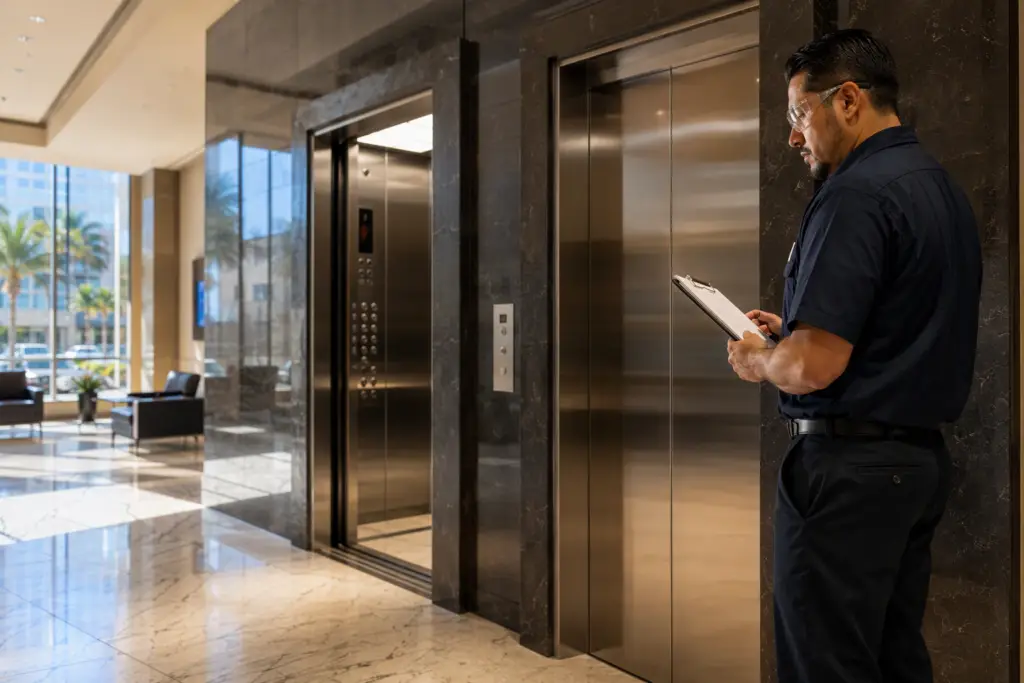
California state elevator inspectors follow a structured review process. Hotel facilities managers should be prepared to address the following during an annual inspection:
- “Where is your maintenance logbook, and is it current?” — The logbook must document all maintenance, tests, and repairs with dates.
- “When was the last Category 1 and Category 5 test performed, and do you have the test reports?” — Test documentation must be available on-site or retrievable promptly.
- “Has firefighter’s recall service been tested within the required interval?” — Phase I and Phase II tests must be documented.
- “Is the machine room secured against unauthorized access and properly ventilated?” — Machine rooms must meet temperature and access control requirements.
- “Is the pit dry and free of debris?” — Pit conditions directly affect equipment reliability and inspector pass/fail decisions.
- “Are all ADA-required features operational?” — Inspectors may test audible signals, door timing, and Braille signage.
- “Who is your current elevator maintenance contractor, and are they licensed in California?” — California requires elevator contractors and mechanics to hold valid state licenses.
- “Has the emergency communication system been tested within the past year?” — Two-way communication in the cab must be functional and documented.
How Do Hotel Elevator Maintenance Needs Differ from Other Commercial Buildings?
Hotels present a distinct set of demands that separate them from standard commercial office buildings:
- Extended operating hours: Hotel elevators frequently operate 24 hours a day, seven days a week, which accelerates wear on mechanical components.
- Load variability: Large luggage loads, housekeeping carts, laundry carts, and food service equipment subject door systems and cab finishes to stress that typical office traffic does not.
- Guest-facing service expectations: Any elevator out-of-service creates an immediate guest experience issue. In hotels, elevator availability is a hospitality metric, not just a facilities metric.
- Multiple elevator banks: Large hotel properties may operate passenger, service, and freight elevators under different usage profiles, each requiring a tailored PM schedule.
How Can Hotel Properties in Los Angeles and Orange County Find a Qualified Elevator Service Provider?
California requires elevator contractors to be licensed through the California Department of Industrial Relations. When evaluating providers, hotel facilities directors should verify:
- A current California elevator contractor license
- Demonstrated experience servicing the specific elevator make and model installed at the property
- Availability to perform required annual tests and coordinate state inspection scheduling
- Clear contract terms specifying what is and is not included in the maintenance scope
- A documented process for emergency response and entrapment situations
Liftech Elevator serves hotel and hospitality properties throughout Signal Hill, Long Beach, Los Angeles, and Orange County, providing preventive maintenance, compliance testing, modernization assessments, and emergency service for a wide range of elevator makes and models.
Ready to Protect Your Guests and Your Property?
A reliable, code-compliant elevator program starts with a professional assessment of your current equipment condition, maintenance history, and compliance standing. Contact Liftech Elevator for a free elevator assessment and let a certified elevator service team identify any gaps before your next state inspection.
Contact Liftech Elevator for a free elevator assessment: 562-609-3478
Need elevator service you can rely on? Liftech Elevator is ready to help.