How Long Does It Take to Get a New Elevator Installed in a Commercial Building? A Complete FAQ Guide
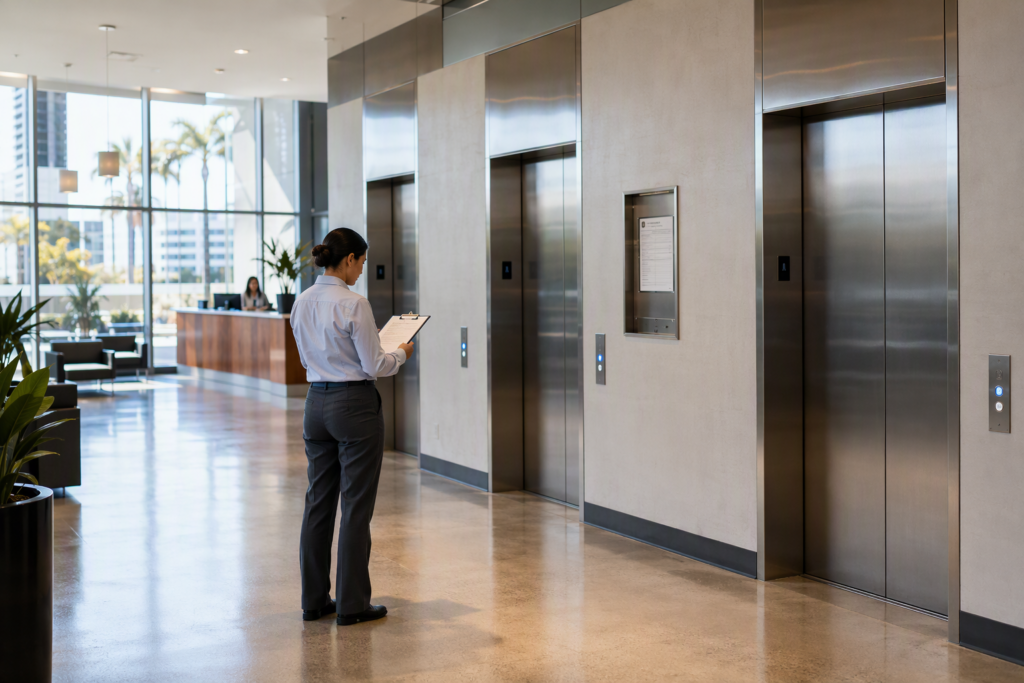
Installing a new elevator in a commercial building is a multi-phase process governed by federal safety codes, California state regulations, and local Authority Having Jurisdiction (AHJ) requirements. From the moment a permit application is submitted to the day an elevator receives its certificate of operation and opens to the public, property owners and project managers in Los Angeles, Long Beach, Signal Hill, and Orange County typically navigate a structured sequence of design approvals, construction phases, and mandatory inspections. Understanding each phase — and what can accelerate or delay it — is essential for accurate project planning.
How long does a commercial elevator installation take from permit to first use?
The total timeline from permit application to first authorized use for a commercial elevator in California generally ranges from 6 to 18 months, though complex high-rise projects can extend further.
This range reflects the combined duration of three major phases: permitting and plan approval, physical construction and equipment installation, and final inspection and certification. Each phase carries its own variables. A straightforward hydraulic elevator installation in a low-rise commercial building in Long Beach may move through all phases closer to the 6-month mark, while a traction elevator system in a high-rise Los Angeles tower requiring multiple AHJ reviews can stretch toward or beyond 18 months. Understanding which phase is the likely bottleneck for a specific project is the first step toward realistic scheduling.
What are the main phases of a commercial elevator installation project?
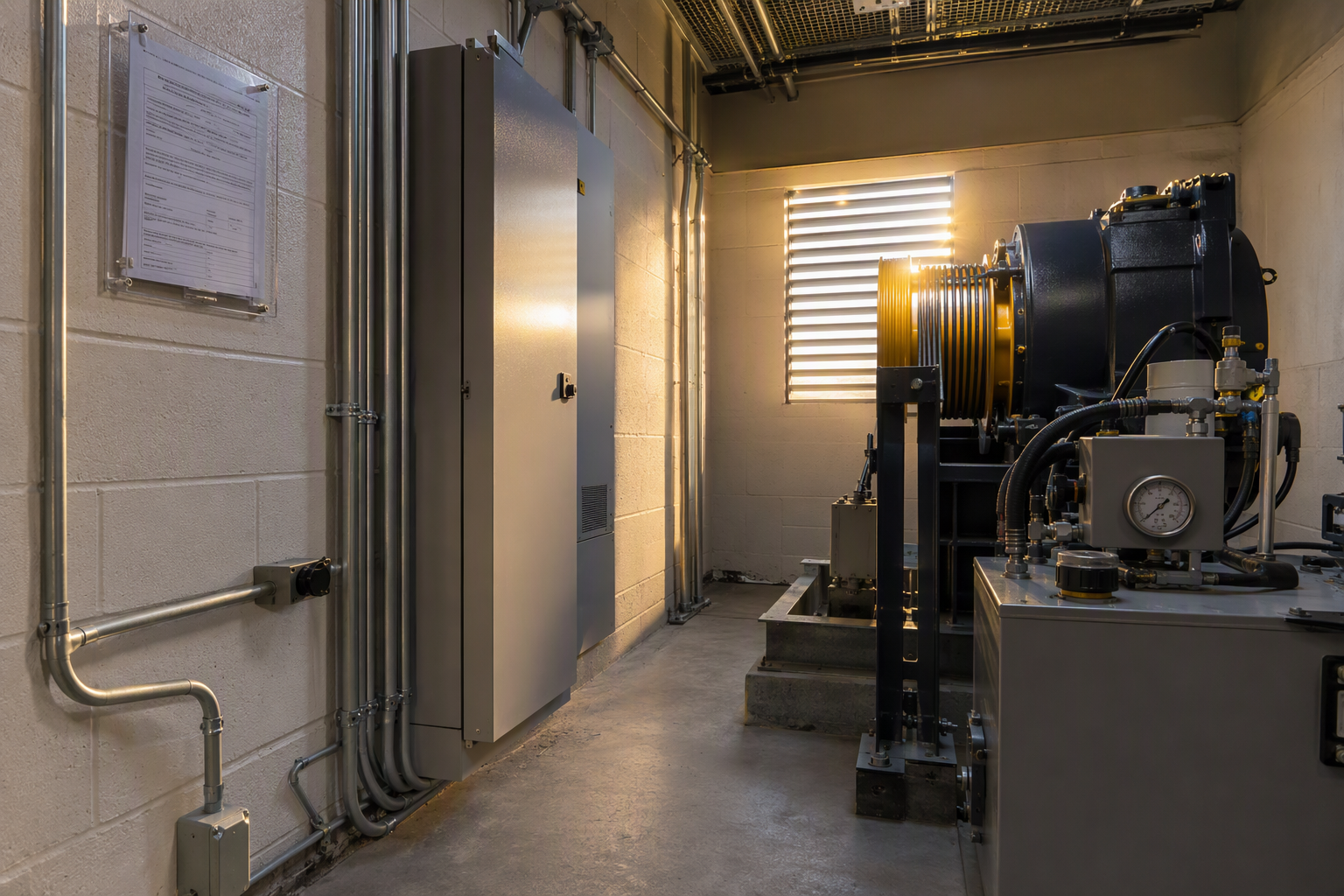
A commercial elevator installation follows five sequential phases: pre-design and code compliance planning, permit application and plan approval, pit and hoistway construction, equipment installation and wiring, and final inspection and certification.
Each phase has dependencies on the previous one, meaning delays compound. The pre-design phase involves selecting the elevator type, establishing the hoistway dimensions, and confirming compliance with ASME A17.1 Safety Code for Elevators and Escalators and ADA accessibility standards. Once plans are drawn and submitted, the AHJ reviews them for code compliance before issuing a permit. Physical construction then proceeds, followed by equipment installation. The project closes with a state-mandated inspection and the issuance of a certificate of operation, without which the elevator cannot be placed in public service.
How long does the elevator permit process take in California?
In California, the elevator permit and plan approval phase typically takes 2 to 6 months, depending on the AHJ’s workload, the completeness of submitted drawings, and whether revisions are required.
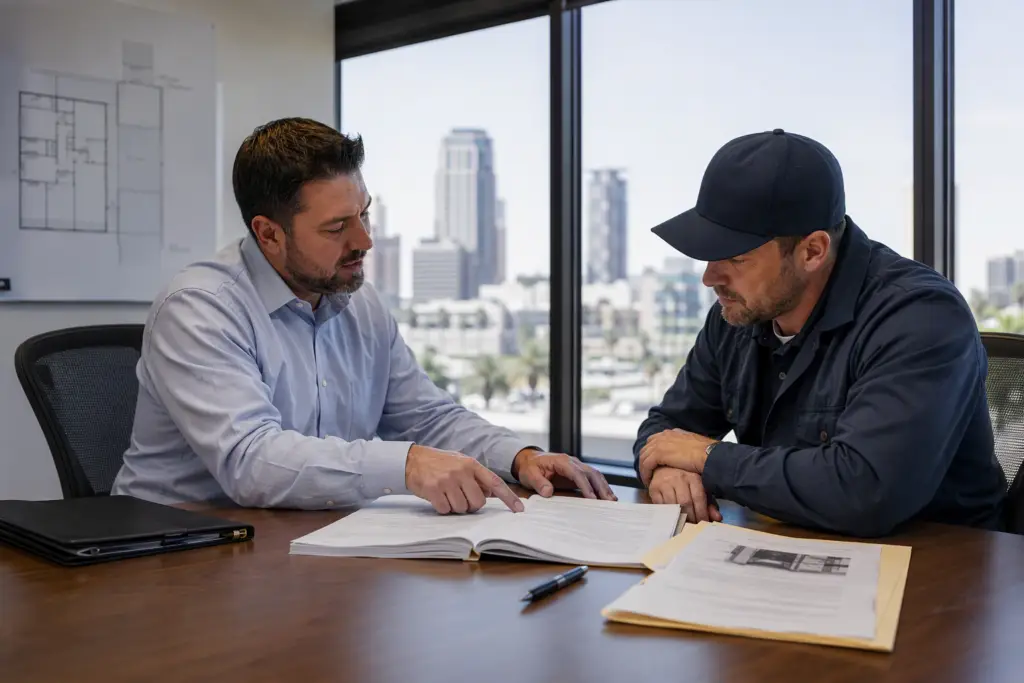
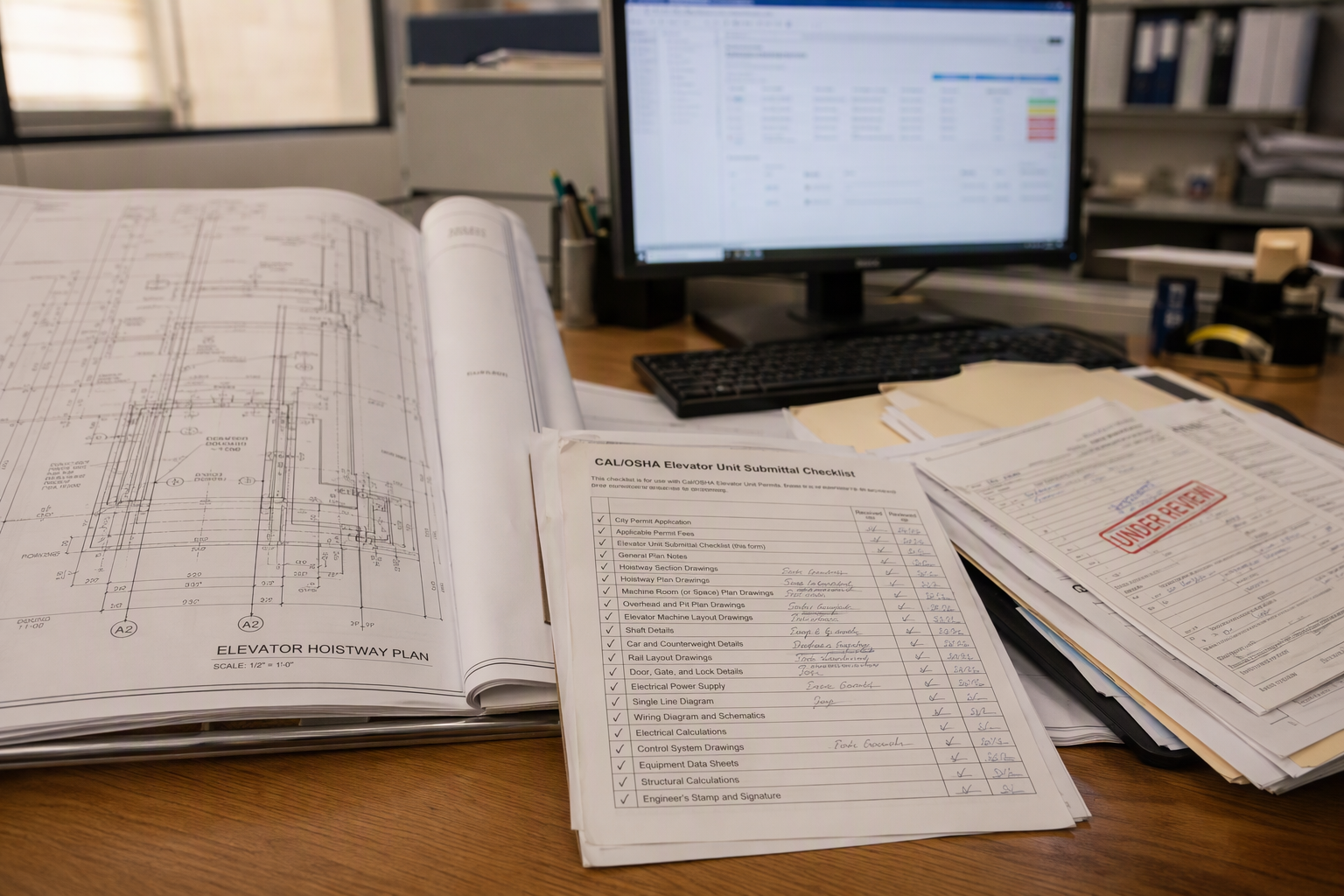
California elevator installations are regulated under the California Elevator Safety Construction Code, enforced by the California Division of Occupational Safety and Health (Cal/OSHA) Elevator Unit in jurisdictions where a local AHJ has not assumed enforcement authority. In cities such as Los Angeles and Long Beach, the local building and safety department often acts as the primary AHJ and coordinates with the state. Permit applications must include hoistway plans, machine room or machine space layouts, electrical schematics, and load calculations, all of which must conform to the applicable edition of ASME A17.1. Incomplete submissions are a leading cause of delays, as plan check comments require responses and resubmission before approval is granted.
What codes govern new elevator installations in California commercial buildings?
New commercial elevator installations in California must comply with ASME A17.1, ADA Title III for public accommodations, and applicable California building and electrical codes adopted at the state and local level.
The ASME A17.1 Safety Code for Elevators and Escalators is the primary mechanical and safety standard governing the design, construction, installation, and testing of elevators in California. It addresses everything from hoistway construction clearances and machine room ventilation to car enclosure requirements and safety device specifications. ADA Title III mandates that elevators in new commercial construction serving multiple floors meet accessibility requirements including minimum car dimensions, two-way communication systems, audible and visual floor indicators, and compliant control panel heights. Failure to satisfy both frameworks during the design phase — rather than retrofitting later — is the most cost-effective approach.
What is the typical timeline breakdown by phase for a commercial elevator installation?
Each phase of a commercial elevator installation carries its own average duration, and understanding the breakdown helps project managers identify where schedule risk is concentrated.
| Phase | Typical Duration | Key Variables |
|---|---|---|
| Pre-design, code review & specification | 4 – 8 weeks | Building complexity, elevator type, ADA scope |
| Permit application & plan approval | 8 – 24 weeks | AHJ workload, completeness of drawings, revision cycles |
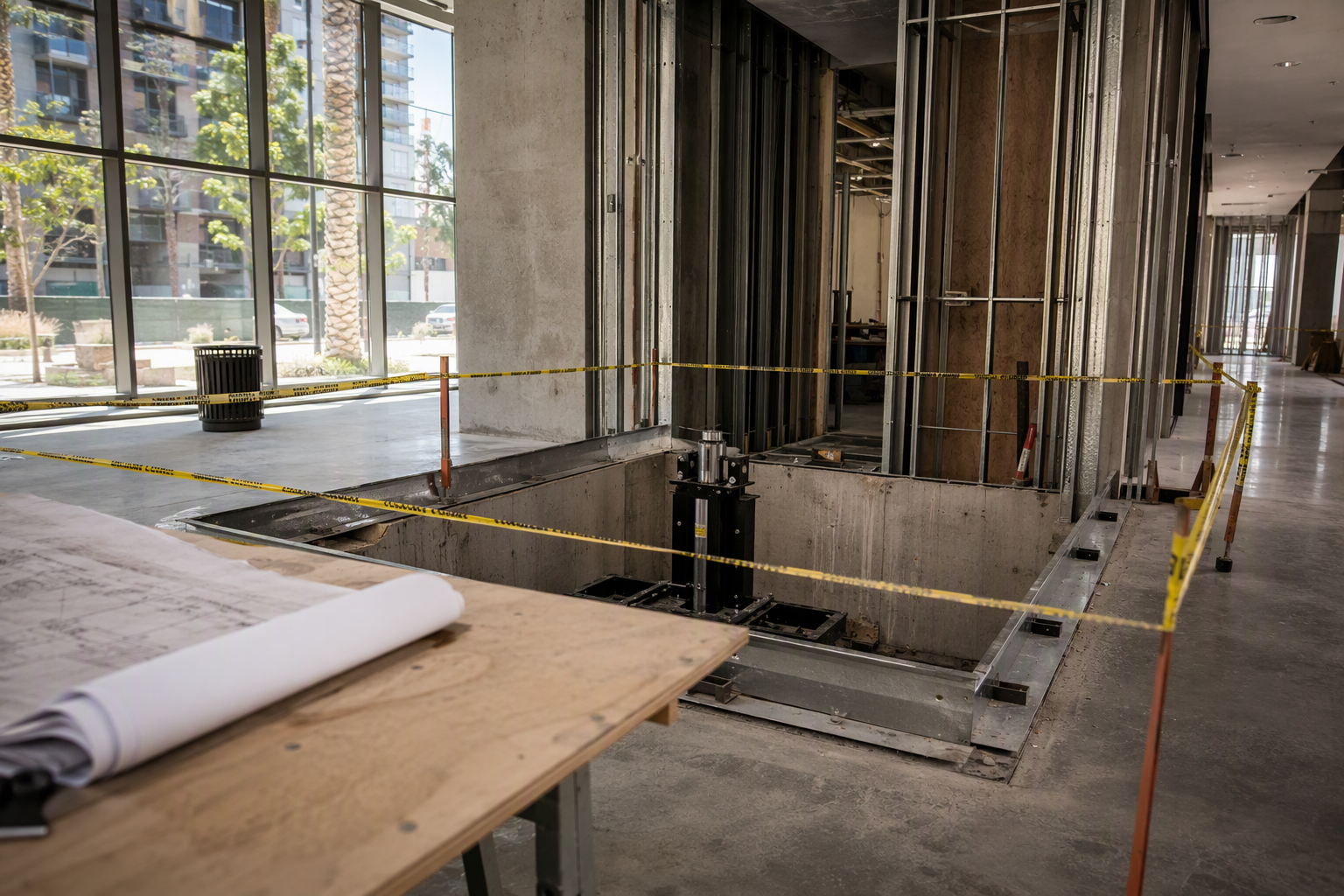
| Hoistway & pit construction | 6 – 16 weeks | General contractor schedule, structural complexity |
| Equipment delivery & installation | 6 – 14 weeks | Manufacturer lead times, supply chain, elevator type |
| Final inspection & certificate of operation | 2 – 6 weeks | Inspector availability, punch list items, re-inspection needs |
| Total (typical range) | 6 – 18 months | All of the above, project integration, AHJ jurisdiction |
What types of commercial elevators are available and how does the choice affect the timeline?
The three primary types used in California commercial buildings — hydraulic, geared traction, and gearless traction — each carry different installation complexities and equipment lead times that directly influence project duration.
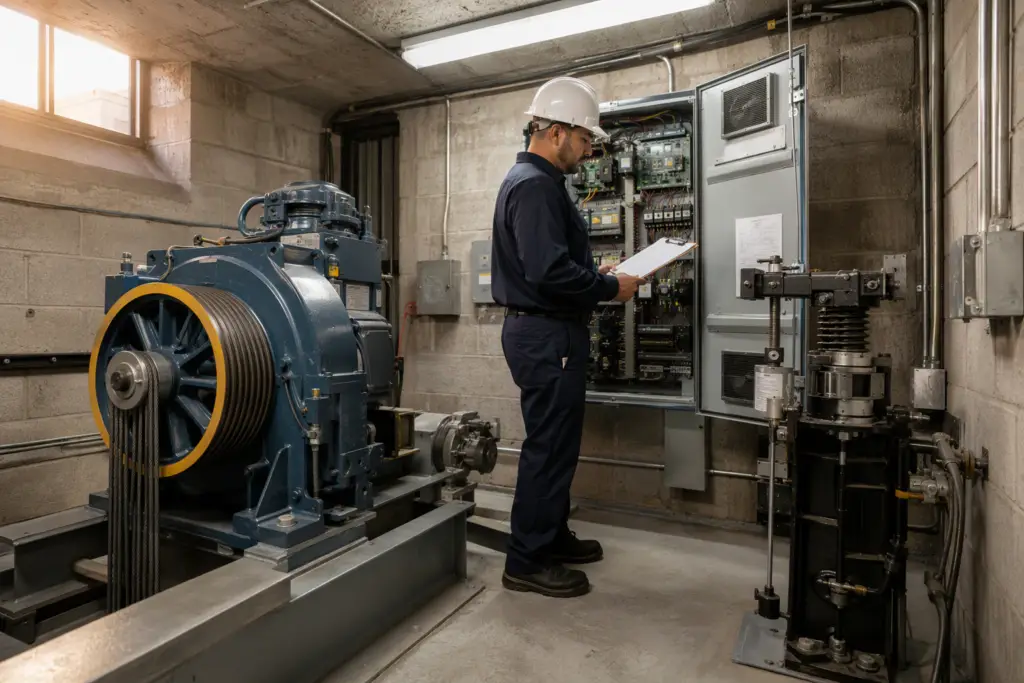
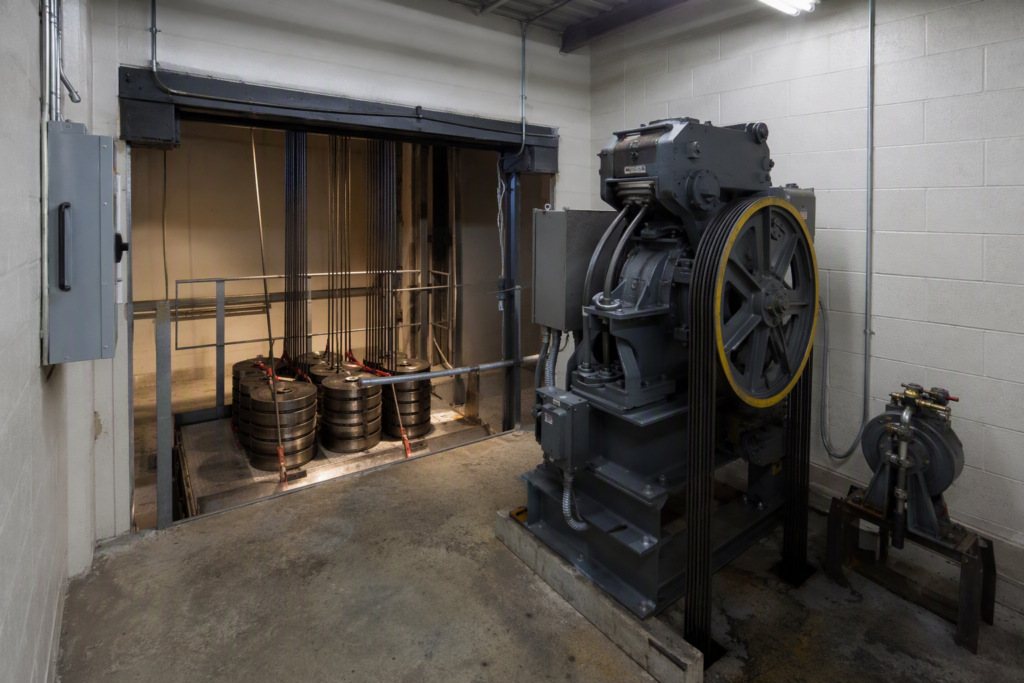
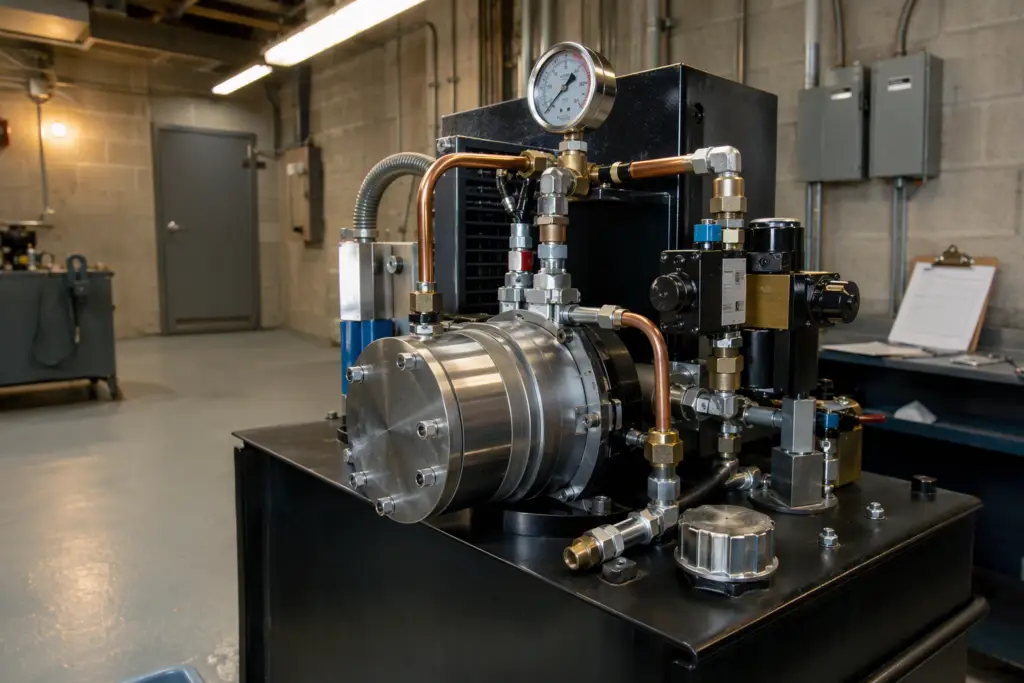
Hydraulic elevators are typically used for low-rise applications up to four or five floors and often have shorter installation timelines because the mechanical systems are less complex, though underground cylinder configurations require additional excavation time. Geared traction elevators suit mid-rise buildings and require a machine room, adding construction scope. Gearless traction and machine-room-less (MRL) systems are common in modern commercial high-rises; their equipment lead times from major manufacturers can be substantial, sometimes exceeding 16 to 20 weeks depending on configuration and customization. Specifying a standard, in-stock configuration from a responsive manufacturer is one of the most effective ways to compress the equipment delivery phase.
What factors most commonly cause delays in a commercial elevator installation?
The most frequent causes of delay are incomplete permit submissions, long AHJ plan review queues, general contractor hoistway construction delays, and extended equipment manufacturing lead times.
Plan check revisions are particularly common when elevator drawings are prepared without a thorough code review against the current edition of ASME A17.1 and local amendments. A single round of plan check comments and resubmission can add 4 to 8 weeks to the permitting phase. On the construction side, the hoistway is often built by the general contractor as part of the base building scope; if the GC’s schedule slips, the elevator contractor cannot begin installation regardless of equipment availability. Coordinating the elevator contractor’s schedule with the GC’s milestone dates early in the project is a best practice that experienced elevator companies emphasize during pre-construction planning.
What inspections are required before a new elevator can be placed in service in California?
California requires at minimum a witnessing of acceptance tests by a qualified elevator inspector before issuing a certificate of operation, with the inspection process governed by ASME A17.1 acceptance testing requirements and state enforcement protocols.
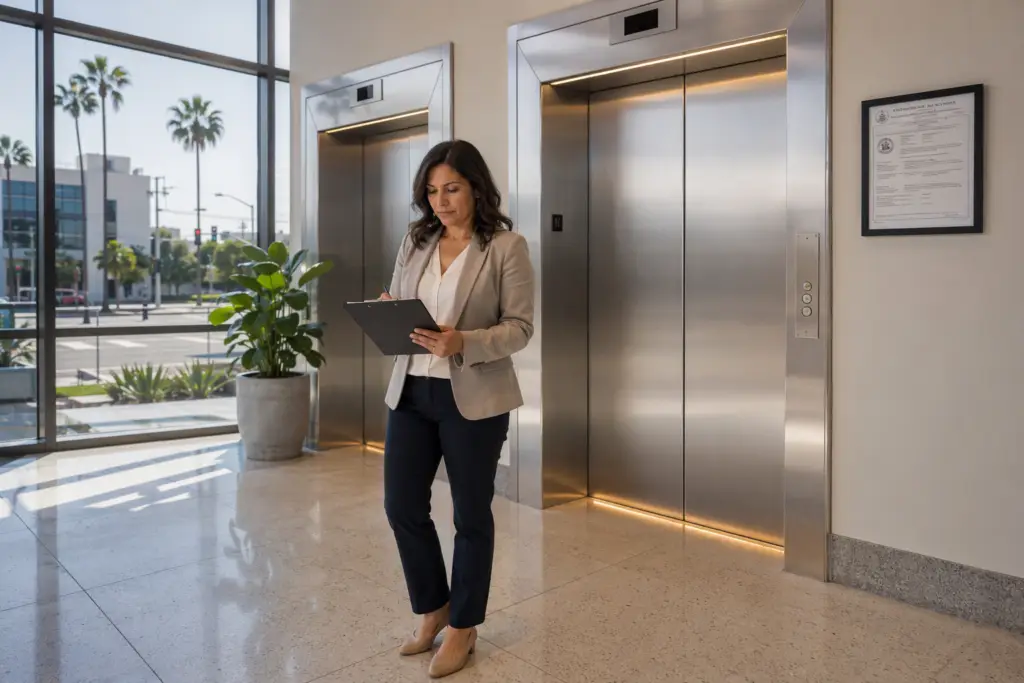
The acceptance inspection verifies that the newly installed elevator meets all code requirements for safety devices, load capacity, leveling accuracy, door operation, emergency lighting, communication systems, and accessibility features under ADA. Inspectors — either from the state’s Cal/OSHA Elevator Unit or a qualified third-party inspection agency authorized under California law — must witness specific performance tests. If deficiencies are found, the elevator contractor must correct them and schedule a re-inspection, which can add several weeks depending on inspector availability. A certificate of operation is issued only after a clean inspection, and the elevator may not be used by the public before this certificate is obtained and posted inside the elevator car.
What is the step-by-step process for getting a new commercial elevator from concept to first use?
A successful commercial elevator installation in California follows a defined sequence that every project team should understand before breaking ground.
- Engage a qualified elevator contractor early — involve the elevator company during the schematic design phase so hoistway dimensions, pit depth, overhead clearance, and machine room or machine space requirements are correctly incorporated into architectural drawings from the start.
- Complete a code compliance review — verify the proposed design against ASME A17.1 and ADA requirements, including car dimensions, door width, control panel layout, and two-way communication.
- Prepare and submit permit documents — submit complete hoistway plans, electrical diagrams, equipment specifications, and load calculations to the local AHJ and, where applicable, the Cal/OSHA Elevator Unit.
- Respond promptly to plan check comments — assign a designated point of contact to monitor the review status and respond to correction requests within days, not weeks.
- Coordinate hoistway construction milestones — align the general contractor’s hoistway completion date with the elevator contractor’s installation crew availability and equipment delivery schedule.
- Place equipment orders upon permit approval — confirm the equipment order with the manufacturer immediately upon permit issuance to minimize queue time; some teams place conditional orders before permit approval to save weeks.
- Complete installation and perform pre-inspection testing — the elevator contractor performs all internal checks and functional tests before calling for the official acceptance inspection.
- Schedule and pass the acceptance inspection — coordinate with the AHJ or authorized inspection agency; ensure all documentation, test weights, and personnel are ready on inspection day.
- Obtain and post the certificate of operation — once issued, post the certificate inside the car as required by California law before placing the elevator in public service.
- Establish an ongoing maintenance agreement — California regulations require periodic inspections and maintenance; a maintenance contract with a qualified elevator company ensures continued compliance and safety.
How does ADA compliance affect the design and installation timeline?
ADA compliance requirements are non-negotiable for commercial elevators serving the public and must be addressed in the design phase to avoid costly modifications or inspection failures that extend the timeline.
Under ADA Title III, elevators in new commercial construction must meet specific accessibility standards including minimum inside car dimensions, tactile and Braille floor designations, audible and visible floor indicators, door reopening devices, and compliant emergency communication systems. These requirements are most economically integrated during the specification and shop drawing phase. Retrofitting ADA components after installation — for example, replacing a non-compliant control panel or adding missing Braille characters — requires re-inspection and may require the elevator to be taken out of service temporarily, adding both time and cost to the project.
What are equipment lead times for commercial elevators in 2026?
Equipment lead times for commercial elevators vary by manufacturer, elevator type, and degree of customization, and they represent one of the most significant scheduling variables in the installation process.
Standard hydraulic elevator packages for low-rise commercial buildings typically carry shorter lead times than custom traction systems. High-specification gearless traction elevators, particularly those with custom cab finishes or specialized door configurations, can have extended lead times that must be factored into the project schedule well in advance. Placing the equipment order as early as possible — ideally concurrent with the permitting phase — is one of the most effective strategies for compressing the overall project timeline. Working with an elevator contractor who has established supplier relationships can also improve access to inventory and lead time estimates.
What is the difference between a permit to install and a certificate of operation?
A permit to install authorizes construction and installation work to begin, while a certificate of operation — issued only after passing the acceptance inspection — is the legal authorization for the elevator to carry passengers in California.
These are two distinct approvals separated by months of work. A building owner or contractor who places an elevator in service before obtaining a certificate of operation is in violation of California law and exposes the property to significant liability. The certificate of operation must be renewed on the applicable inspection cycle after initial issuance; in California, periodic inspection requirements are tied to the elevator use category and are enforced by the AHJ or state agency with jurisdiction.
How does building type affect the elevator installation timeline?
The building type — new construction versus retrofit into an existing structure — is one of the most significant determinants of overall project duration, with retrofit projects often taking longer due to structural modification requirements.
In new construction, the hoistway is designed and built as part of the base building, and coordination between the architect, structural engineer, and elevator contractor occurs during design development. In a retrofit or modernization project, the elevator contractor must work within existing structural constraints, which may require engineering studies, structural reinforcement, asbestos or hazardous material surveys, and phased construction to keep the building operational. Retrofit installations in occupied commercial buildings in Los Angeles or Orange County often require night or weekend work, adding coordination complexity and potentially extending the schedule.
What role does the local Authority Having Jurisdiction (AHJ) play in the installation timeline?
The AHJ is the government body responsible for plan review, permit issuance, and inspection oversight for elevator installations in its jurisdiction, and its backlog and processes directly shape how long the permitting and inspection phases take.
In California, the AHJ may be the Cal/OSHA Elevator Unit at the state level or a delegated local agency such as the City of Los Angeles Department of Building and Safety or the City of Long Beach Development Services Department. Each AHJ has its own plan check timelines, submittal requirements, and inspection scheduling processes. Some jurisdictions offer expedited plan review for an additional fee, which can reduce the permitting phase by several weeks. Understanding the specific AHJ’s procedures for a given project location — Signal Hill, Long Beach, Los Angeles, or an Orange County municipality — is an important part of pre-construction planning that experienced elevator contractors facilitate on behalf of building owners.
Can the elevator installation timeline be shortened, and if so, how?
Yes, the commercial elevator installation timeline can be meaningfully compressed through early contractor engagement, expedited plan review, concurrent permitting and equipment ordering, and thorough pre-inspection preparation.
The most impactful compression strategy is engaging the elevator contractor during the design phase rather than after building permits are issued. Early engagement ensures that hoistway dimensions, structural provisions, and electrical rough-in requirements are correct in the architectural drawings, eliminating the most common cause of plan check revisions. Where the AHJ offers over-the-counter or expedited plan review options, these should be used for time-sensitive projects. Placing a conditional equipment order with the manufacturer before the permit is formally issued — contingent on permit approval — can eliminate weeks of manufacturing queue time. Liftech Elevator works with project teams in Signal Hill, Long Beach, Los Angeles, and Orange County to identify schedule acceleration opportunities specific to each project and jurisdiction.
What maintenance obligations begin immediately after a commercial elevator is placed in service?
California law requires that elevators be maintained in safe operating condition, and the certificate of operation renewal cycle begins immediately upon initial issuance, creating ongoing inspection and maintenance obligations from day one.
Under California regulations and consistent with ASME A17.1 maintenance requirements, elevator owners are responsible for ensuring the equipment is maintained, that records are kept, and that periodic inspections are scheduled and passed. A maintenance agreement with a qualified elevator contractor is the standard mechanism for meeting these obligations. The agreement should cover routine lubrication, adjustment, parts replacement, and coordination of required periodic inspections. Allowing an elevator’s inspection certificate to lapse while it remains in service is a serious compliance violation in California.
What happens if an elevator fails the final acceptance inspection?
If an elevator fails the acceptance inspection, the inspector issues a list of deficiencies that must be corrected before a re-inspection can be scheduled, and no certificate of operation is issued until the elevator passes.
Deficiencies found at acceptance inspections typically relate to safety device functionality, leveling accuracy, door timing and force, emergency lighting, communication systems, or ADA-required features. Each deficiency must be corrected and documented. Scheduling a re-inspection depends on inspector availability, which in busy California markets can add 2 to 4 weeks or more to the project closeout phase. Conducting a thorough pre-inspection walk-through with an experienced elevator technician before calling for the official inspection is a best practice that significantly reduces the likelihood of a failed first inspection. Liftech Elevator’s service teams assist property owners and contractors throughout the inspection process to help ensure acceptance inspections proceed efficiently.
What documentation is required to obtain and maintain an elevator permit and certificate of operation in California?
The documentation required spans the full project lifecycle, from initial permit submission through certificate issuance and subsequent annual maintenance records.
For permit submission, required documents typically include complete hoistway and pit drawings, machine room or machine space plans, electrical wiring diagrams, equipment specifications and load ratings, and any manufacturer’s data sheets or engineering certifications required by the AHJ. At the acceptance inspection stage, the inspector will review installation records, test results, and compliance documentation. After issuance of the certificate of operation, California elevator owners must maintain records of periodic inspections, maintenance activities, and any repairs or modifications. The certificate itself must be posted inside the elevator car in a visible location at all times. Incomplete records are a common citation during periodic inspections.
How does ASME A17.1 apply to new commercial elevator installations in California?
ASME A17.1 is the foundational technical standard that governs virtually every aspect of how a commercial elevator is designed, built, installed, and tested in California, and compliance with it is a prerequisite for permit issuance and inspection approval.
The ASME A17.1 Safety Code for Elevators and Escalators covers requirements for hoistway construction, pit dimensions and lighting, machine room conditions, car enclosures and doors, safety devices including governors and buffers, electrical systems, emergency operations, and acceptance testing procedures. California adopts ASME A17.1 as the basis for its elevator safety regulations, sometimes with amendments. Plan reviewers and inspectors use the applicable adopted edition of A17.1 as their primary reference. Elevator contractors, designers, and building owners should confirm which edition is currently adopted by the applicable California AHJ, as adoption cycles can result in different editions being enforced in different jurisdictions simultaneously.
Why should a commercial building owner in Los Angeles or Orange County work with a local elevator contractor for a new installation?
Local elevator contractors bring jurisdiction-specific knowledge of AHJ requirements, established relationships with plan reviewers and inspectors, and on-the-ground availability that out-of-area contractors often cannot match for complex or time-sensitive projects.
Each AHJ in California has its own submittal requirements, preferred documentation formats, and informal processes that experienced local contractors navigate routinely. A contractor who regularly works with the City of Los Angeles Department of Building and Safety, the City of Long Beach, or Orange County municipalities understands the nuances that can accelerate — or derail — a permit application. Liftech Elevator serves commercial building owners across Signal Hill, Long Beach, Los Angeles, and Orange County, providing local expertise in permitting, installation, inspection coordination, and ongoing maintenance that supports compliant, on-schedule elevator projects.
Ready to Plan Your Commercial Elevator Installation?
Navigating California’s elevator permitting process, ASME A17.1 compliance requirements, ADA accessibility standards, and local AHJ review timelines requires experienced, locally knowledgeable guidance. Whether the project is a new installation in a Long Beach commercial building, a retrofit in a Los Angeles high-rise, or a ground-up development in Signal Hill or Orange County, getting the sequence right from day one protects the project schedule and budget.
Contact Liftech Elevator for a free elevator assessment. Liftech Elevator’s team works with commercial building owners, developers, and general contractors across Signal Hill, Long Beach, Los Angeles, and Orange County to plan and execute elevator installations that meet code, pass inspection, and open on time.
Call us today: 562-997-3639
Need elevator service you can rely on? Liftech Elevator is ready to help.