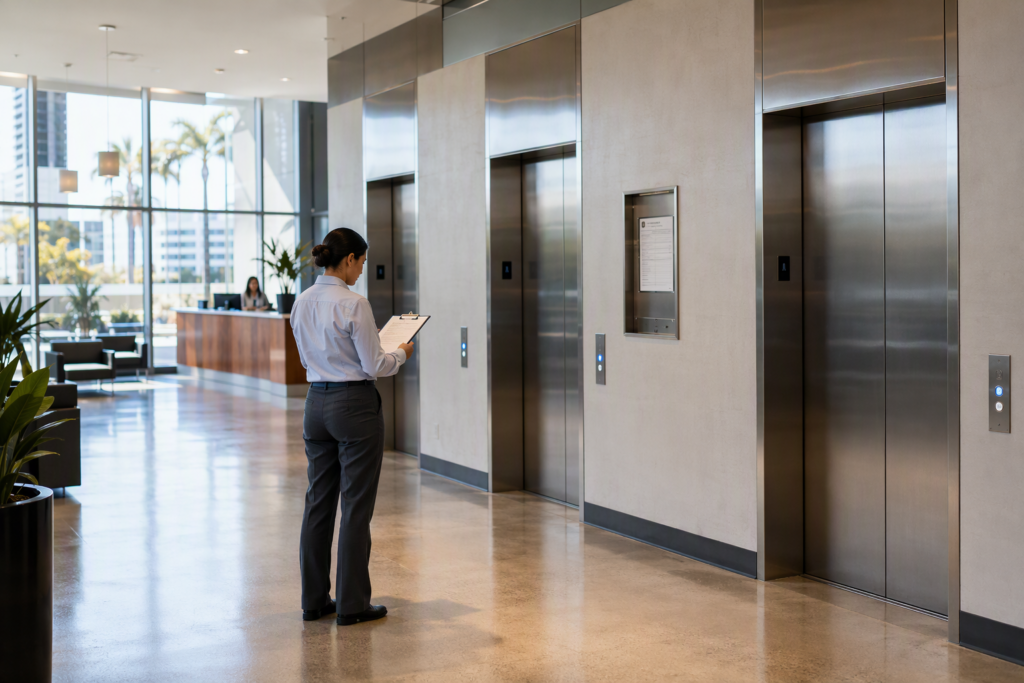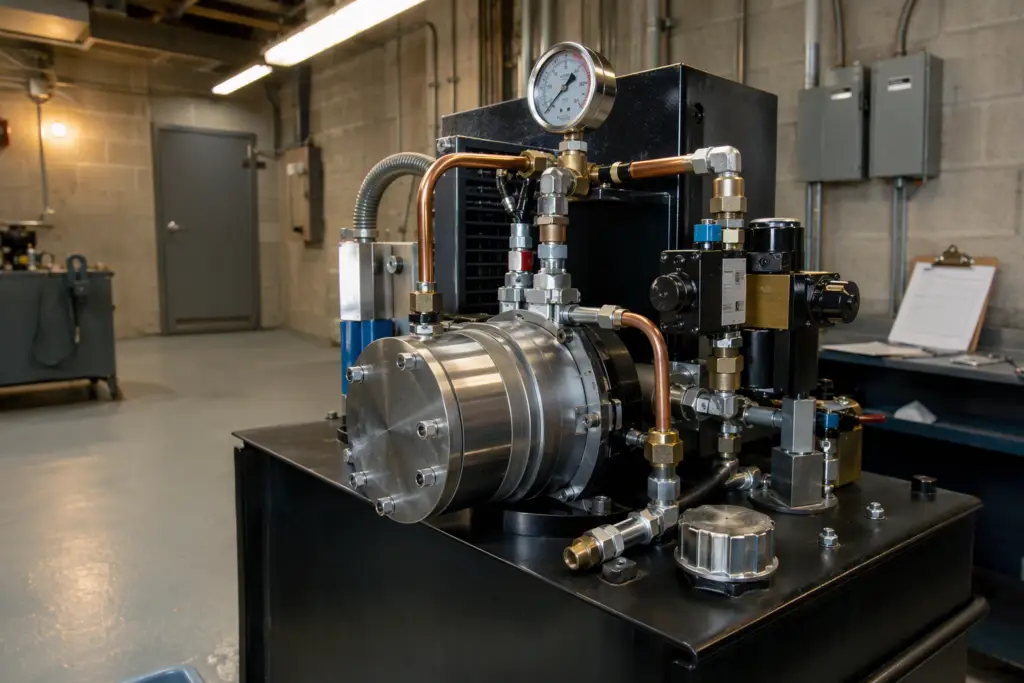
Quick Answer: Your elevator likely qualifies for modernization if the hoistway, structural cab, and load-bearing components are still sound — but full replacement becomes necessary when the shaft itself is damaged, the equipment no longer meets current ASME A17.3 Safety Code for Existing Elevators and Escalators retrofit requirements, or a comprehensive cost analysis shows modernization would exceed roughly the same investment as a new installation over a comparable lifecycle.
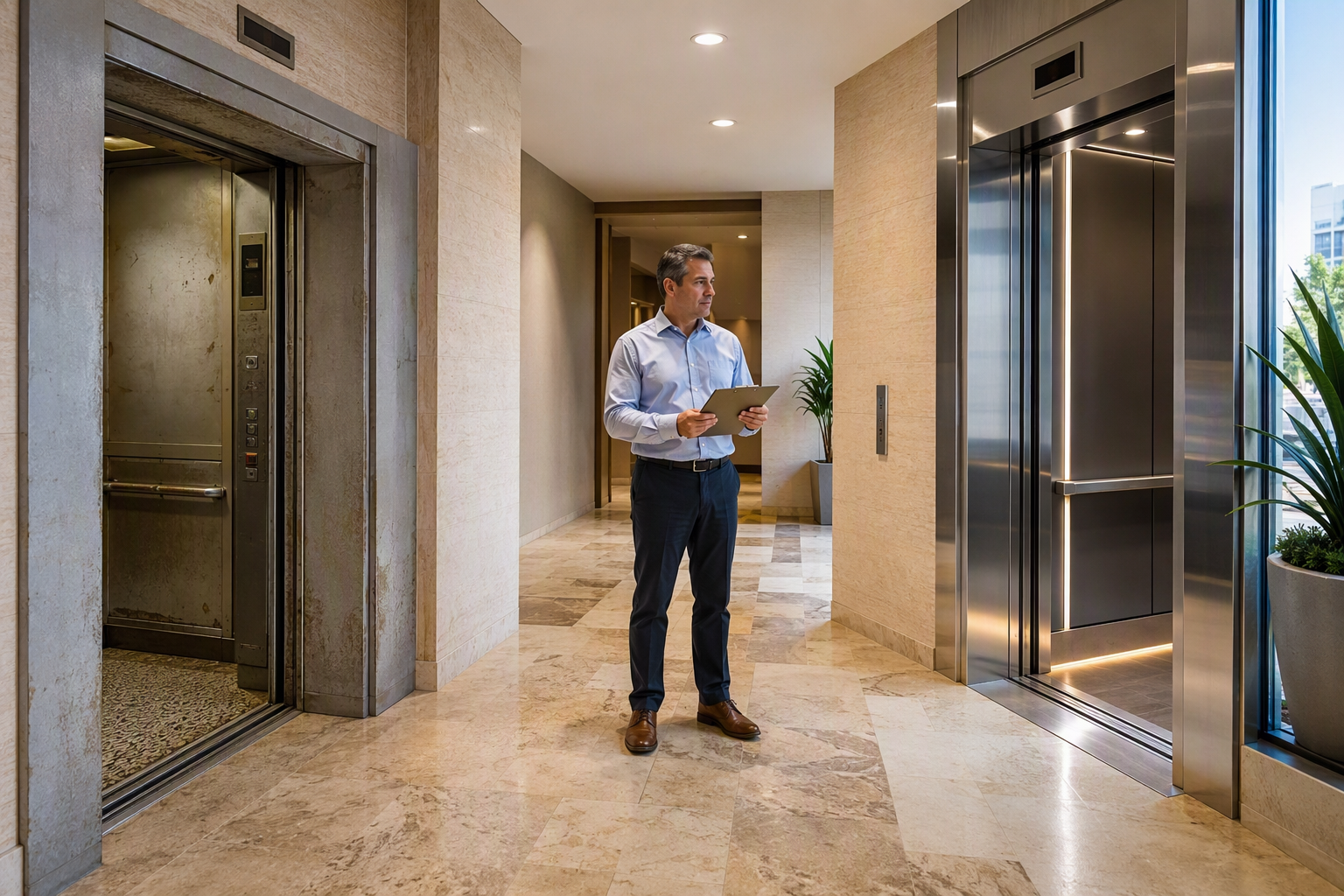
For California building owners and facility managers, the question of whether to modernize an aging elevator or replace it entirely is one of the most consequential decisions in a building’s lifecycle. The answer depends on equipment condition, code compliance obligations, disruption tolerance, and long-term budget strategy. This guide walks through every major factor so you can arrive at a defensible, cost-effective decision.
—
What Is the Difference Between Elevator Modernization and Full Replacement?
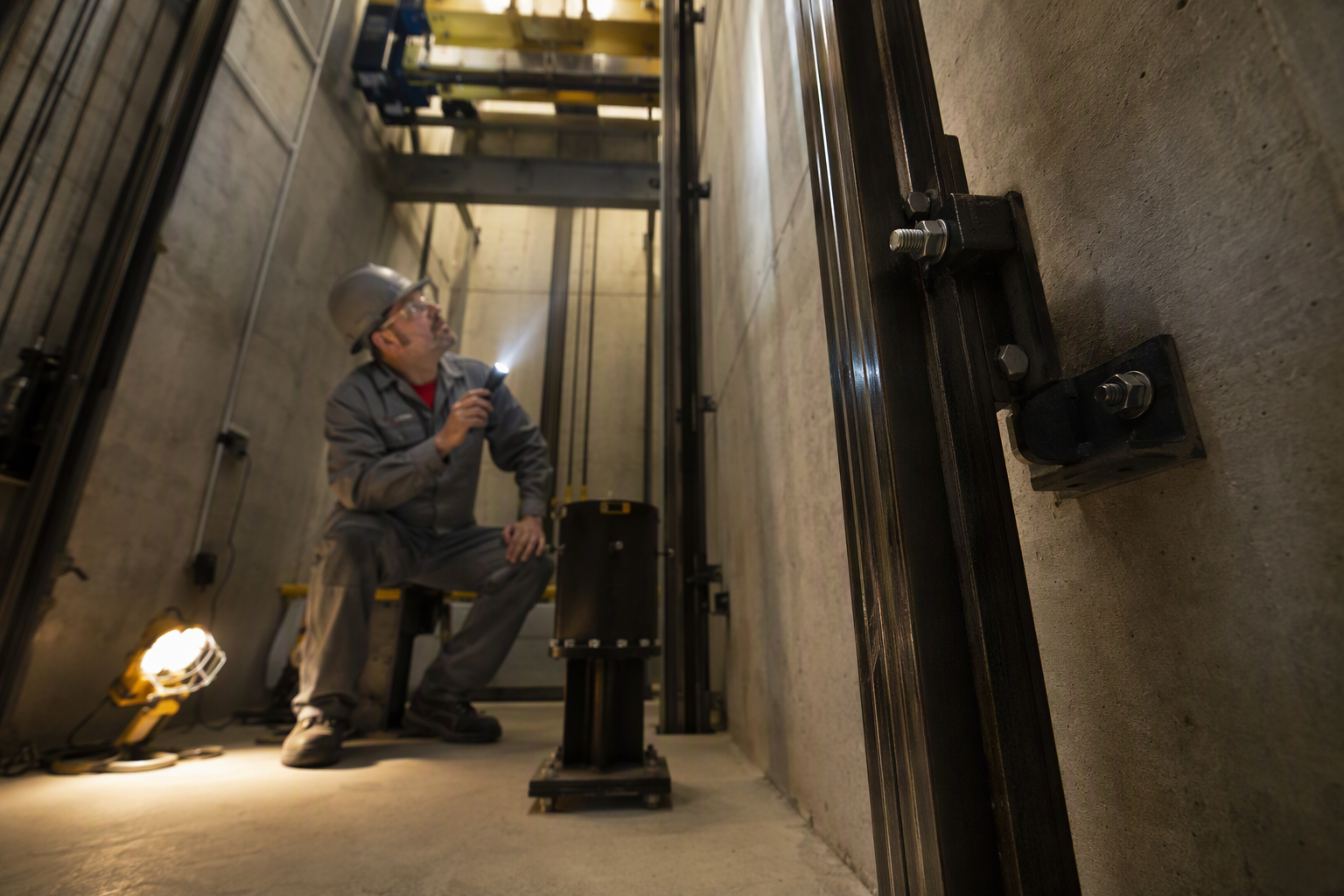
Elevator modernization involves upgrading key subsystems — controls, drive systems, cab interiors, doors, safety devices, and sometimes the machine — while retaining the existing hoistway, guide rails, and structural elements. The goal is to bring an older elevator up to current performance and code standards without the disruption and cost of a full teardown.
Full replacement means removing all existing equipment, often modifying the hoistway, and installing a completely new elevator system from scratch. It is typically recommended when the existing infrastructure is structurally compromised or when the cost of piecemeal modernization approaches or exceeds the value of starting fresh.
Both paths must comply with applicable federal and California-specific standards, including the ASME A17.1 Safety Code for Elevators and Escalators (for new installations) and the ASME A17.3 Safety Code for Existing Elevators and Escalators (for existing units), as well as ADA accessibility requirements.
—
How Do I Know If My Elevator Qualifies for Modernization?
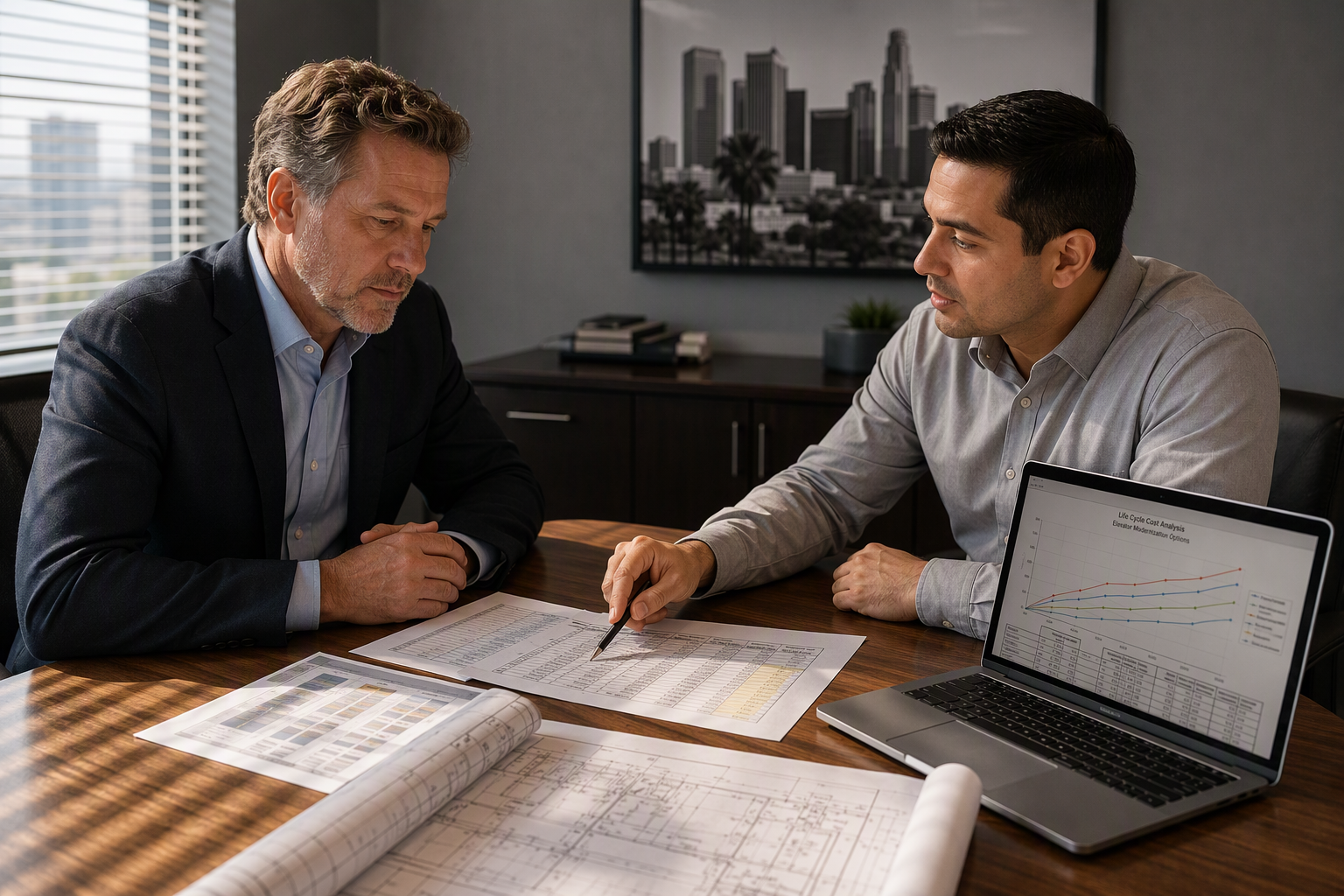
An elevator generally qualifies for modernization when the following structural and mechanical conditions are met:
- The hoistway is structurally sound. Walls, pit, and overhead clearances are intact and meet applicable dimensional requirements.
- Guide rails and buffers are in serviceable condition. These components are expensive to replace and their viability is a key cost driver.
- The cab enclosure is reusable. Even if the interior finish is worn, the cab frame can often be refurbished.
- There is no history of chronic flooding, fire damage, or seismic structural damage. Any of these can disqualify modernization as a viable path.
- The elevator is not so obsolete that parts are entirely unavailable. Some legacy systems have reached end-of-life for components, making even targeted repairs unsustainable.
A licensed California elevator contractor — such as Liftech Elevator — can conduct a formal condition assessment to evaluate each of these factors before any capital commitment is made.
—
What Are the Most Common Reasons Buildings Choose Modernization Over Replacement?
- Lower upfront cost. Modernization typically costs less than a full replacement because the structural shell is preserved.
- Shorter construction timeline. Modernization projects are generally completed faster than new installations, reducing tenant disruption.
- Hoistway preservation. Modifying an existing hoistway can be architecturally complex, expensive, and may require structural engineering permits.
- Sustainability goals. Retaining usable components reduces material waste and aligns with green building objectives.
- Improved energy efficiency. Modern drive systems and controls can substantially reduce energy consumption compared to older relay-logic or hydraulic systems.
—
What Are the Most Common Reasons Buildings Choose Full Replacement?
- Hoistway structural damage. Cracks, water intrusion, or seismic damage to the shaft eliminate the possibility of reuse.
- Code compliance gaps that cannot be closed by upgrades. Some older installations have pit depths, overhead clearances, or machine room configurations that cannot be brought into compliance without a complete rebuild.
- Obsolete system architecture. Elevators so outdated that no manufacturer supports the control logic or drive components may require a clean-slate approach.
- Recurring major failures. When repair costs are escalating year over year and reliability is poor, replacement delivers a better return on investment over the asset’s lifecycle.
- Building renovation or change of occupancy. A major building overhaul may create the right moment to install a system designed for the new use case, including higher capacity, speed, or accessibility features.
—
Modernization vs. Full Replacement: Side-by-Side Comparison
| Factor | Modernization | Full Replacement |
|---|---|---|
| Upfront Investment | Generally lower; existing hoistway and rails are preserved | Generally higher; includes full demolition, new equipment, and often structural work |
| Project Timeline | Shorter — often weeks to a few months depending on scope | Longer — can extend several months, especially if hoistway modifications are required |
| Disruption to Tenants | Moderate; elevator is out of service during upgrade | Significant; longer outage and possible structural construction noise |
| Code Compliance | Can address most ASME A17.3 retrofit requirements; may not resolve all clearance issues | New installation must meet current ASME A17.1 and all ADA standards in full |
| Long-Term Reliability | High if structural components are sound; modernized controls and drives extend useful life | Highest; all components are new with full manufacturer warranties |
| Energy Efficiency | Significantly improved with new drive and controls | Maximum efficiency with latest-generation systems |
| Sustainability | Preserves existing materials; lower embodied carbon | Full demolition waste; offset by long-term efficiency gains |
| ADA Accessibility | Can add cab controls, signage, and door timing improvements | Full ADA compliance achievable from ground up |
| Best Suited For | Structurally sound elevators with aging controls, drives, or interiors | Severely deteriorated shafts, non-compliant clearances, or chronically failing systems |
—
What California Code Requirements Apply to Elevator Modernization?
In California, elevator installations and major alterations are regulated at the state level and must comply with applicable editions of the ASME A17.1 Safety Code for Elevators and Escalators and ASME A17.3 Safety Code for Existing Elevators and Escalators. Any modernization project that constitutes a “major alteration” triggers a permit requirement and requires inspection and sign-off by the California Division of Occupational Safety and Health (Cal/OSHA) Elevator Unit, the state authority having jurisdiction (AHJ) for most elevator installations.
Additionally, any alteration that affects accessibility features — such as cab controls, door timing, or floor-level tolerances — must comply with ADA accessibility standards to the extent technically feasible. Workplace safety obligations under federal OSHA standards also apply to the work performed by elevator technicians during any modernization or replacement project.
Always confirm the current adopted code edition with your AHJ before beginning a project, as California’s adoption schedule may differ from the most recently published ASME edition.
—
What Components Are Typically Upgraded During Elevator Modernization?
A comprehensive modernization project may include any combination of the following:
- Control system: Replacement of relay-logic or older microprocessor controllers with modern, programmable logic-based systems that improve reliability, diagnostics, and energy management.
- Drive system: Upgrading from older DC or AC two-speed drives to modern variable-voltage, variable-frequency (VVVF) drives for smoother rides and reduced energy use.
- Door operators and equipment: New high-performance door operators reduce door-related service calls, one of the most frequent sources of elevator downtime.
- Safety devices: Overspeed governors, safeties, and buffers may require replacement or recertification to meet current ASME A17.3 requirements.
- Cab interior: Flooring, walls, ceilings, lighting, and handrails can be fully refurbished within the existing cab structure.
- Hall fixtures and signage: New call buttons, digital indicators, and Braille/tactile signage support ADA compliance and modernize building aesthetics.
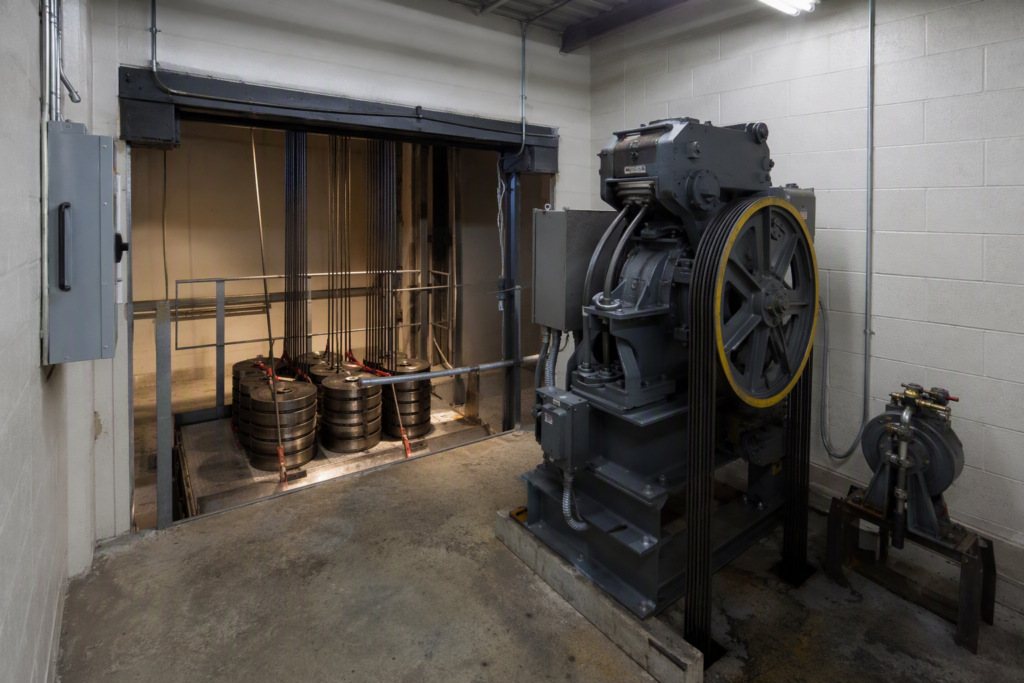
- Machine (motor and gearbox): In some cases the existing machine is retained; in others, a new machine-room-less (MRL) or gearless traction machine is specified.
- Remote monitoring: Modern systems can integrate with building management platforms and provide real-time fault diagnostics.
—
How Should I Evaluate the Return on Investment for Each Option?
ROI analysis for elevator decisions should account for the following variables:
| ROI Factor | Modernization Considerations | Full Replacement Considerations |
|---|---|---|
| Capital Outlay | Lower initial spend preserves capital for other building needs | Higher initial spend may be offset by financing or capital improvement budgets |
| Maintenance Cost Reduction | New controls and drives reduce recurring service call frequency | New equipment typically carries manufacturer warranty and lowest maintenance needs |
| Energy Savings | Modern VVVF drives and LED lighting lower utility costs | Latest-generation systems offer maximum efficiency |
| Tenant Retention / Lease Value | Improved reliability and aesthetics support lease negotiations | Brand-new elevator can serve as a marketing feature for premium tenants |
| Remaining Useful Life | A well-executed modernization extends useful life by many years, depending on component condition | Full replacement resets the asset lifecycle from year one |
| Compliance Risk Reduction | Addresses most current retrofit requirements; some legacy constraints may remain | Eliminates all existing compliance risk; new installation meets current codes in full |
A qualified elevator contractor should provide a written condition assessment and a lifecycle cost model comparing both paths before any decision is finalized.
—
What Is the Step-by-Step Process for Deciding Between Modernization and Replacement?
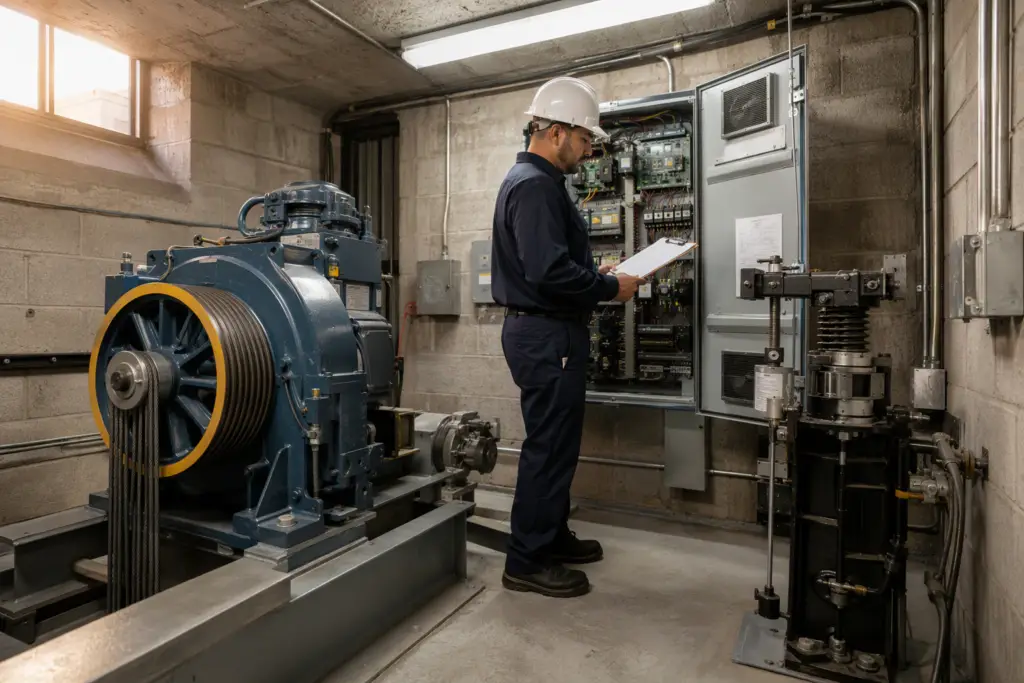
- Commission a professional condition assessment. Engage a licensed California elevator contractor to physically inspect the hoistway, pit, machine room, cab, and all mechanical and electrical components. Document deficiencies in writing.
- Identify code compliance gaps. Compare the current installation against applicable ASME A17.3 retrofit requirements and ADA obligations. Determine which gaps can be closed through modernization and which require structural changes.
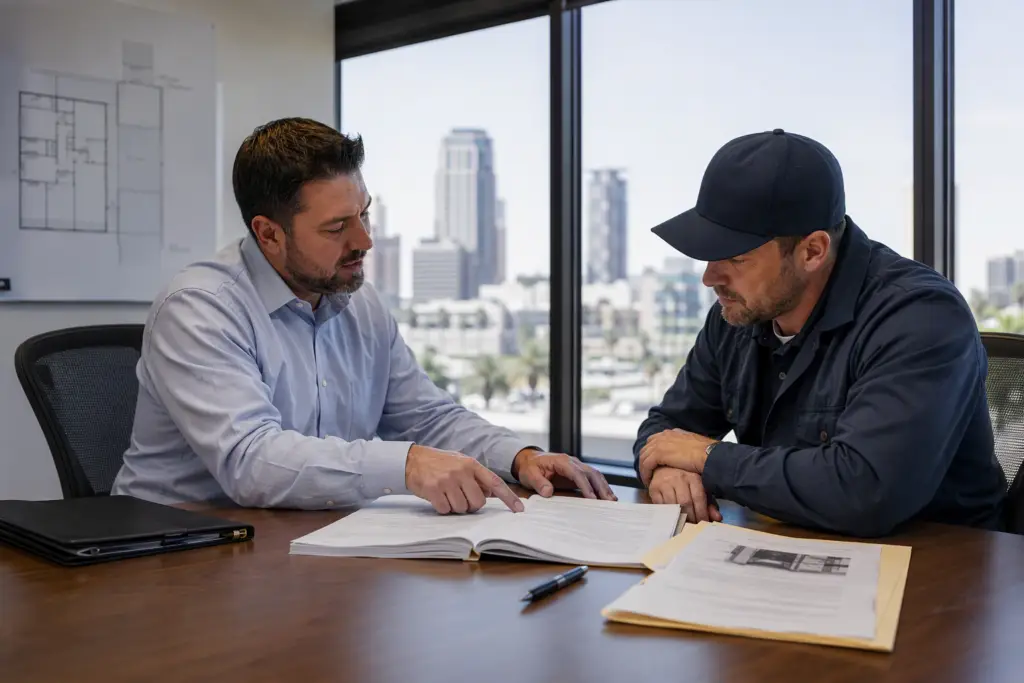
- Request itemized cost estimates for both paths. Obtain detailed, written proposals for a comprehensive modernization and a full replacement from the same qualified contractor so costs are directly comparable.
- Model lifecycle costs. Factor in projected maintenance costs, energy costs, expected downtime, and remaining useful life for each scenario over a defined planning horizon (commonly ten to twenty years).
- Assess disruption impact. Quantify the operational impact of each option’s downtime on tenants, residents, or employees — particularly if the building has only one elevator serving multiple floors.
- Review financing and incentive options. Explore whether energy-efficiency upgrades qualify for utility rebates or financing programs available to California commercial and multifamily property owners.
- Consult with your AHJ. Confirm permit requirements, inspection procedures, and any local amendments before finalizing a scope of work.
- Make a documented decision. Record the basis for your choice, including the condition assessment findings and cost analysis, for risk management and future reference.
—
Are There ADA Accessibility Requirements That Apply When I Modernize an Elevator?
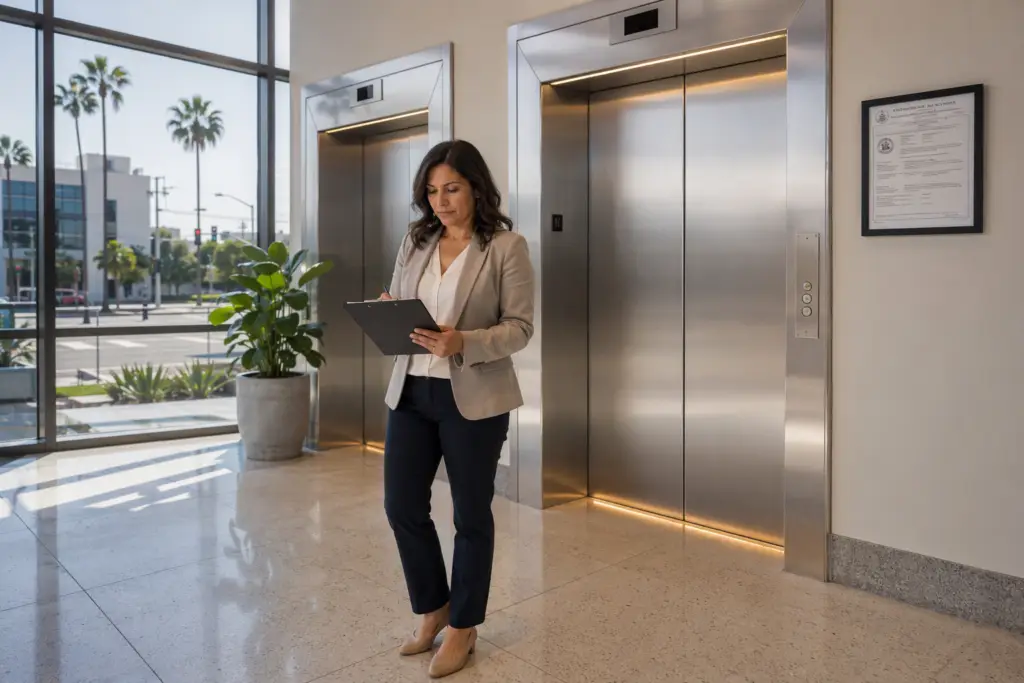
Yes. When an elevator undergoes alterations — including modernization — the work must comply with ADA accessibility requirements to the extent technically feasible. This typically includes ensuring that cab controls are at accessible heights, that tactile and Braille floor designations are present, that door hold-open times are appropriate for slower users, and that leveling accuracy meets the tolerance required for wheelchair accessibility. A full replacement provides the cleanest opportunity to achieve comprehensive ADA compliance, but many modernization scopes can address the most critical accessibility requirements within the existing cab dimensions.
—
How Long Does Elevator Modernization Typically Take Compared to Full Replacement?
Timeline varies considerably based on project scope, parts availability, permit processing by the California AHJ, and building-specific conditions. As a general framework:
- Partial modernization (controls and fixtures only): Can often be completed in a matter of weeks once parts are on hand and permits are issued.
- Comprehensive modernization (controls, drive, machine, cab, and doors): Typically requires more time, often spanning one to several months depending on scope complexity.
- Full replacement (complete demolition, new equipment, potential hoistway modifications): Generally involves the longest timeline, particularly if structural work triggers additional permitting from local building departments alongside the elevator permit.
Parts lead times — especially for custom cab components, drive systems, or specialized equipment — can extend timelines for either path. An experienced contractor will flag long-lead items early in the planning process.
—
What Questions Should I Ask an Elevator Contractor Before Committing to Either Option?
- Is the hoistway structurally suitable for modernization, or are there clearance, pit depth, or overhead issues that cannot be resolved without structural modification?
- Which specific ASME A17.3 retrofit requirements apply to my installation, and can modernization satisfy all of them?
- What components would be retained versus replaced in a modernization, and what is the projected remaining useful life of the retained components?
- What warranty coverage is provided for modernized components versus a new installation?
- What is the estimated out-of-service period for each option, and how will phasing be managed to minimize disruption?
- Are any utility rebates or incentive programs available for energy-efficient drive system upgrades?
- How will the modernized or new system integrate with our building management platform?
- What ongoing maintenance contract terms do you recommend after project completion?
—
Why Work with an Independent Elevator Service Provider Like Liftech Elevator?
Many building owners default to the OEM (original equipment manufacturer) for modernization or replacement quotes, assuming that factory-branded service is the only qualified option. However, independent elevator service companies certified to work on multiple equipment brands offer several distinct advantages:
- Manufacturer-neutral advice. An independent provider has no incentive to recommend a proprietary system simply because it generates higher-margin service contracts. Recommendations are based on what best fits the building’s needs and budget.
- Competitive pricing. Without the overhead of a large OEM structure, independent contractors can often deliver equivalent or superior work at more competitive rates.
- Multi-brand expertise. Independent technicians maintain proficiency across a wide range of equipment, which is particularly valuable for buildings with mixed or legacy systems.
- Accountability and responsiveness. A California-based independent provider is subject to the same Cal/OSHA oversight and ASME code requirements as any OEM contractor — with the added benefit of direct accountability to the local market.
Liftech Elevator serves California building owners as an independent elevator service company, providing condition assessments, modernization projects, full replacement coordination, and ongoing maintenance. Liftech Elevator’s approach is grounded in transparent, code-compliant recommendations tailored to each building’s specific situation — not a one-size-fits-all sales model.
—
Quick-Reference Decision Summary
| Condition or Circumstance | Recommended Path |
|---|---|
| Hoistway is structurally sound; controls and drives are outdated | Modernization |
| Cab interior is worn but frame is intact | Modernization (cab refurbishment) |
| Door operators causing frequent service calls | Modernization (door package) |
| Hoistway has structural damage or inadequate clearances | Full Replacement |
| System is so obsolete that parts are unavailable | Full Replacement |
| Building undergoing major renovation or change of occupancy | Full Replacement (preferred) |
| Recurring major failures with escalating repair costs | Full Replacement (lifecycle cost analysis recommended) |
| ADA compliance gaps in controls and signage only | Modernization with ADA package |
| ADA compliance gaps in cab dimensions or hoistway geometry | Full Replacement |
—
Get an Expert Assessment for Your California Elevator
The modernization-versus-replacement decision is too consequential — financially and legally — to make without a qualified, independent evaluation. Liftech Elevator provides thorough, no-obligation elevator assessments for California building owners and facility managers, evaluating equipment condition, code compliance status, and long-term cost implications of both paths.
Whether your building has a single residential elevator or a multi-car commercial installation, Liftech Elevator’s team can help you build a defensible, budget-conscious plan aligned with California code requirements and your building’s long-term needs.
Contact Liftech Elevator for a Free Elevator Assessment
Serving building owners and facility managers across California, Liftech Elevator is ready to evaluate your elevator’s condition, identify your compliance obligations, and help you determine whether modernization or full replacement is the right investment for your property.
Call Liftech Elevator today: 562-997-3639
Get your free assessment — no obligation, no pressure, just clear answers from California’s trusted independent elevator experts.
Need elevator service you can rely on? Liftech Elevator is ready to help.