MON-FRI 8:00AM-5:00PM   |
   CALL: 562-997-3639

Emergency Elevator Repair Signal Hill

Emergency Elevator Repair in Signal Hill, CA: Complete FAQ Guide
Quick Answer: Emergency elevator repair in Signal Hill, CA requires a licensed, CAL/OSHA-compliant elevator contractor available 24/7 — response times typically range from 30 to 90 minutes, with most entrapment rescues and safety-critical repairs completed within 2 to 4 hours of dispatch.
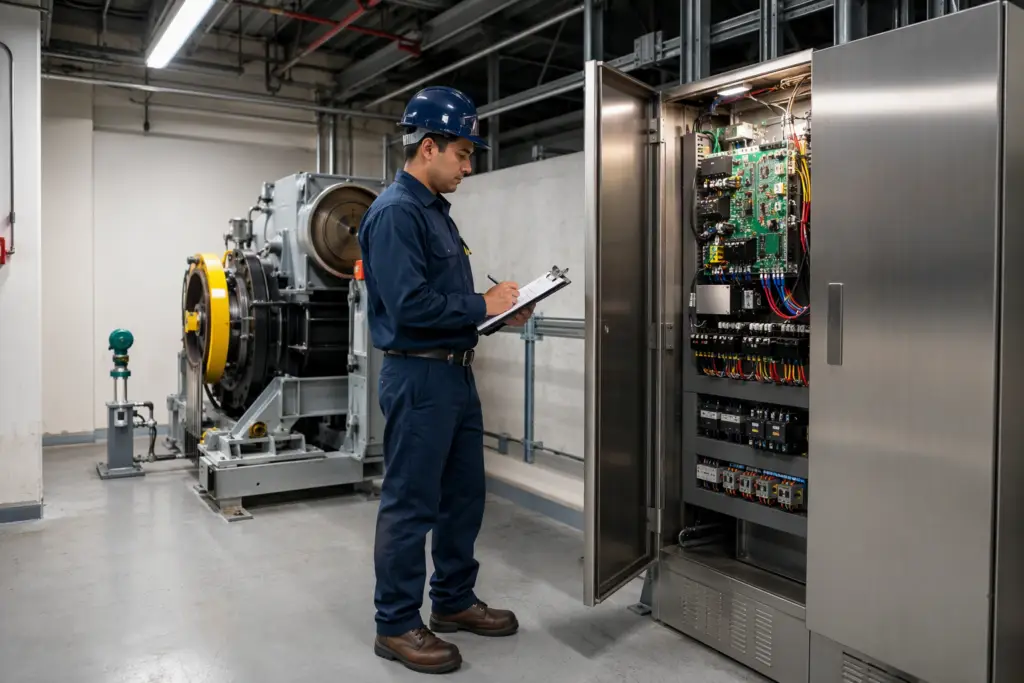
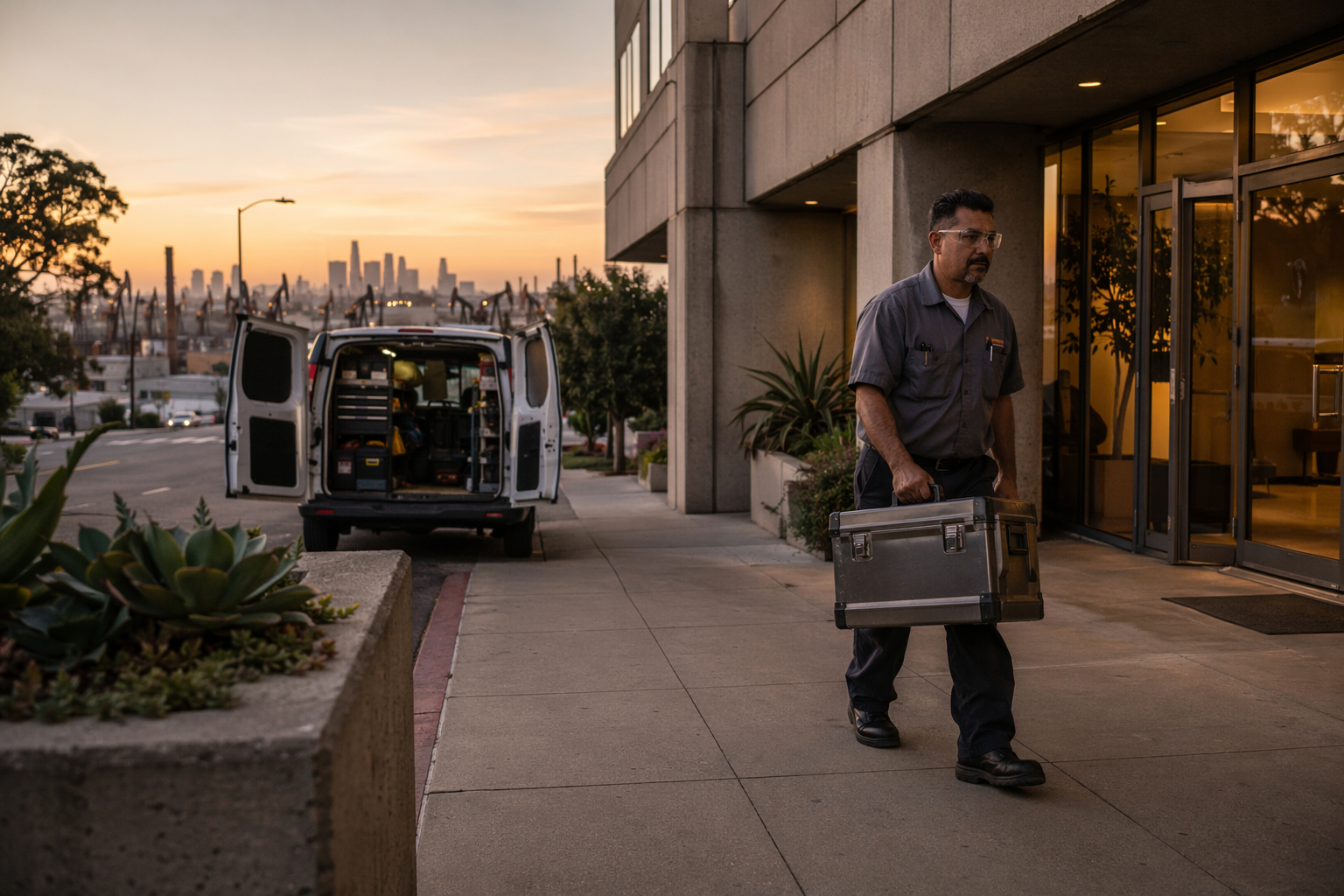
Emergency elevator repair technician arriving at a Signal Hill CA mid-rise commercial building with tools at golden hour, ready for 24/7 service call.
A Liftech Elevator technician responds to an emergency elevator repair call at a Signal Hill, CA commercial building. Local dispatch keeps entrapment response times under 45 minutes for properties throughout Signal Hill and Long Beach.

Whether you manage a mid-rise in Signal Hill’s business district or an older residential building near Hill Street, elevator emergencies don’t wait for business hours. This guide answers every question building owners, property managers, and facilities directors typically ask about emergency elevator repair — covering response times, costs, compliance, and what to expect when something goes wrong at 2 a.m.

What counts as a true elevator emergency in Signal Hill, CA?
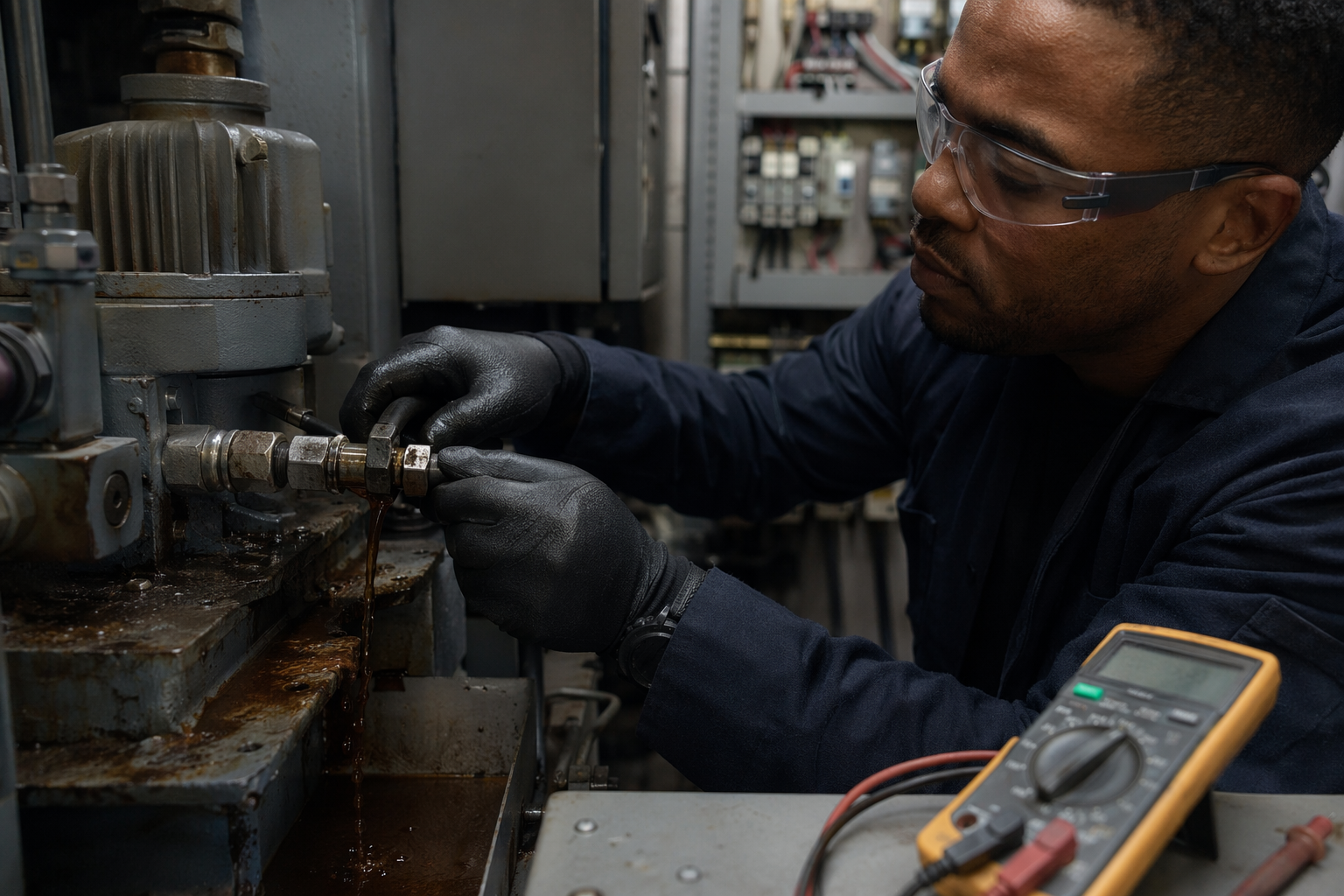
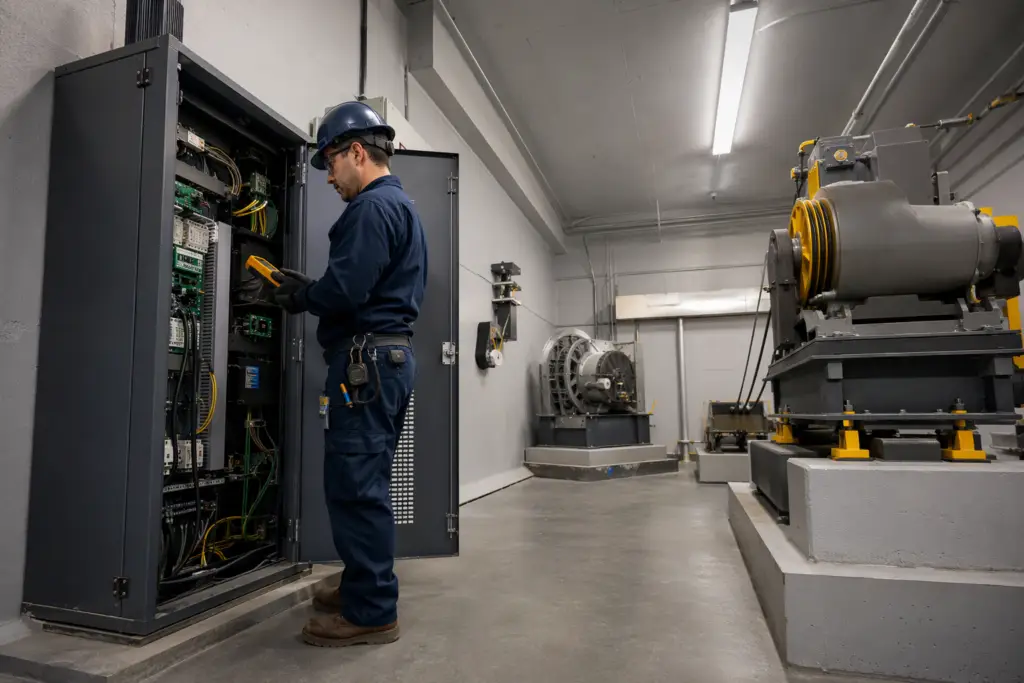
Elevator technician inspecting a leaking hydraulic power unit seal during an emergency elevator repair service call in Signal Hill CA.
Hydraulic fluid loss is one of the five most common causes of emergency elevator breakdowns in Southern California buildings. Identifying a failed seal quickly is critical to restoring service and maintaining CAL/OSHA compliance.

A true elevator emergency is any situation involving passenger entrapment, sudden freefall or uncontrolled movement, failed door operation that creates a physical hazard, or any mechanical failure that triggers a safety device shutdown under ASME A17.1 Safety Code requirements.

From my 15-plus years on service calls across Southern California, I categorize elevator emergencies into three tiers. Tier 1 — life-safety events — includes passenger entrapment, smoke or fire inside the hoistway, elevator leveling failure greater than 3 inches from floor, and tripped safeties after an overspeed event. These demand immediate dispatch, no exceptions.

Tier 2 — operational failures — includes complete loss of service in a building with no alternative vertical access, door open/close failures causing a fall risk, and hydraulic fluid leaks. Tier 3 — urgent but not immediate — covers intermittent shutdowns, erratic floor leveling under 3 inches, and failed lighting inside the cab. All three tiers warrant same-day response under California building codes, but only Tier 1 events require the 24/7 emergency line to be called immediately.

How quickly should an emergency elevator technician arrive in Signal Hill?
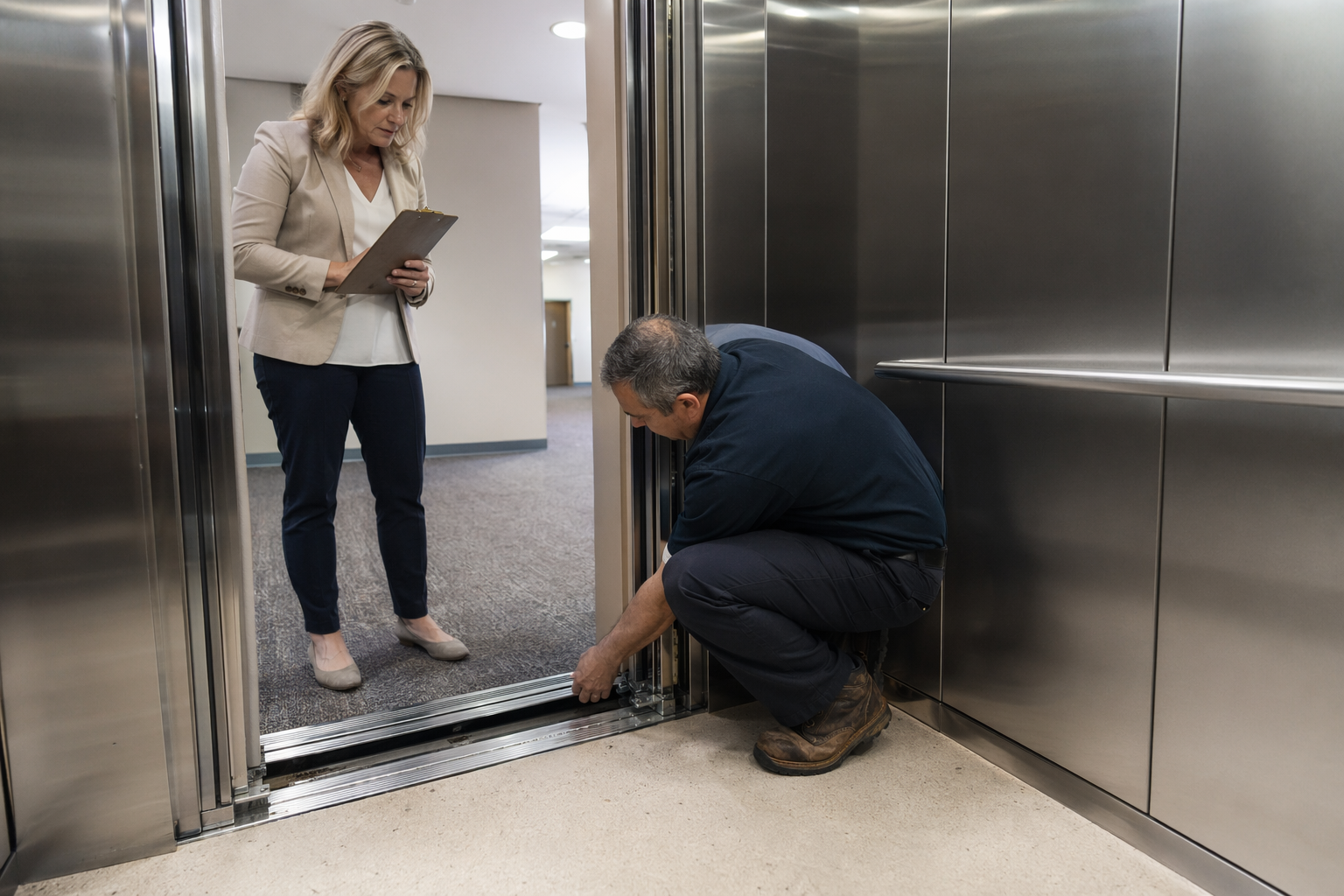
Property manager and elevator technician examining a door interlock and leveling gap during an emergency elevator repair inspection in a Signal Hill CA building.
Door interlock failures and leveling gaps greater than three inches are classified as Tier 1 life-safety emergencies under ASME A17.1, requiring immediate emergency elevator repair response in Signal Hill and throughout Los Angeles County.

In Signal Hill, CA, a qualified emergency elevator technician should arrive within 30 to 60 minutes for entrapment calls and within 60 to 90 minutes for non-entrapment emergency failures, based on 2026 industry service-level benchmarks.

Signal Hill is a 2.2-square-mile city surrounded by Long Beach, which means response logistics are generally favorable if your service provider is locally based. Companies dispatching from downtown Los Angeles or Orange County can add 30 to 45 minutes to response windows during peak traffic — a serious problem when someone is trapped in a cab on a 90-degree summer afternoon.

Liftech Elevator maintains dispatchers and technicians specifically serving Signal Hill, Long Beach, and the surrounding Los Angeles and Orange County metro areas, which consistently keeps entrapment response times under the 45-minute threshold we set as our internal standard. When evaluating any elevator service contract, always ask for a written SLA (Service Level Agreement) that specifies entrapment response time in contractual terms, not just marketing language.

What are the most common causes of emergency elevator breakdowns?

The five most frequent causes of emergency elevator failures are door system malfunctions, hydraulic fluid loss, worn or failed hoist ropes, controller board failures, and brake system faults — with door problems accounting for roughly 40% of all emergency calls industry-wide.

Door interlock failures are the number one culprit I see on emergency calls. ASME A17.1 Section 2.12 mandates that landing doors cannot open unless the elevator car is within the landing zone, and when these interlocks wear or fail, the elevator will shut itself down as a safety measure. In older Signal Hill buildings constructed before 1990, worn interlock hardware is almost a certainty after prolonged deferred maintenance.

Hydraulic systems in low-rise buildings (typically 2 to 5 stops) are vulnerable to seal failures, especially during temperature swings common in the Signal Hill area. A sudden hydraulic fluid drop triggers the low-oil safety circuit, stopping the car — often mid-floor. Hoist machine brake wear is another frequent emergency driver; California’s Title 8 CCR elevator regulations require brakes to hold 125% of rated load, and worn brake linings can cause gradual drift that triggers the Governor and safety gear system.

Is emergency elevator repair in Signal Hill available 24 hours a day, 7 days a week?

Yes — by California regulatory expectation and practical necessity, any legitimate elevator service company operating in Signal Hill should offer 24/7/365 emergency dispatch with live technician response, not just an answering service.

California’s elevator safety program, administered under CAL/OSHA’s Elevator Unit, requires that building owners ensure elevators are maintained in safe operating condition at all times. That legal obligation doesn’t pause on weekends, holidays, or overnight. If your current maintenance vendor cannot demonstrate true 24/7 live dispatch — meaning a certified technician is paged and rolling, not just a voicemail box — you are carrying real liability exposure.

Liftech Elevator operates a 24-hour emergency dispatch line serving Signal Hill, Long Beach, Los Angeles, and Orange County with on-call IUEC-certified technicians every night of the year, including major holidays.

How much does emergency elevator repair cost in Signal Hill, CA?

Emergency elevator repair in Signal Hill typically costs between $350 and $2,500 for a single service call, depending on the failure type, time of call, parts required, and travel time — with major component replacements like controllers or hoist machines ranging from $5,000 to $25,000 or more.

2026 Emergency Elevator Repair Cost Benchmarks — Signal Hill / Los Angeles Metro
Repair Type Typical Cost Range Average Repair Time After-Hours Premium
Door interlock replacement $350 – $900 1 – 2 hours +25% – 50%
Controller board repair/replacement $1,500 – $8,000 2 – 6 hours +25% – 50%
Hydraulic seal/fluid service $500 – $2,500 2 – 4 hours +25% – 50%
Hoist rope replacement $3,000 – $12,000 4 – 8 hours +25% – 50%
Brake lining replacement $800 – $2,500 2 – 4 hours +25% – 50%
Full entrapment rescue (no repair) $250 – $600 30 – 90 minutes +25% – 50%
Motor/drive unit replacement $8,000 – $25,000+ 1 – 3 days Standard daily rate

After-hours and weekend emergency dispatch premiums are standard across the industry and typically add 25% to 50% to labor rates. Always ask your service provider whether after-hours rates are disclosed in writing before you sign a maintenance agreement — surprises on an invoice are avoidable if the contract is clear upfront.

What regulations govern elevator safety and emergency repairs in California?

California elevator emergency repairs are governed by ASME A17.1 Safety Code for Elevators and Escalators, California Title 8 CCR Sections 3000–3067, and oversight from the CAL/OSHA Elevator Unit, which issues permits, conducts inspections, and must be notified of certain incidents.

The ASME A17.1/CSA B44 Safety Code is the foundational technical standard. In California, the state has adopted this code with local amendments under Title 8 of the California Code of Regulations. As of 2026, the applicable edition is ASME A17.1-2019 with California amendments, though your elevator’s “code of record” depends on when it was installed or last modernized.

Critical compliance points for emergency repair situations include: any work performed must be done by a licensed California elevator mechanic (QME — Qualified Mechanic Elevator certification); all safety devices must be tested and documented after major repairs; and CAL/OSHA must be notified within 24 hours of any elevator accident causing serious injury under Title 8 CCR Section 342. Building owners who allow unlicensed contractors to perform elevator work face substantial fines and permanent liability exposure.

Does the ADA create any emergency repair obligations for elevator owners?

Yes — under the Americans with Disabilities Act, building owners must maintain accessible elevators in working order, and extended outages without alternative accessible accommodation can constitute an ADA violation with significant legal consequences.

ADA Title III (for places of public accommodation) and Title II (for government entities) both require that accessible routes remain available to people with disabilities. The ADA regulations at 28 CFR Part 36 acknowledge that temporary outages for maintenance are permissible, but they stipulate that repairs must be made “promptly” and that building operators should take steps to provide alternative accommodation where feasible during outages.

In practical terms, this means a building with a single elevator serving floors above grade has essentially zero tolerance for prolonged outage if it serves the public. A 2-hour entrapment rescue is defensible; a 3-day wait for a part with no accommodation plan is not. This is why expedited parts sourcing and emergency bypass procedures matter — and why choosing a service provider with local parts inventory makes a meaningful ADA compliance difference.

What should a building manager do immediately when an elevator emergency occurs in Signal Hill?

The immediate priority sequence is: confirm passenger status and communicate with anyone trapped, call your 24/7 elevator service line, contact the Signal Hill Fire Department if entrapment is confirmed, document the failure mode, and place the elevator out of service until cleared by a licensed technician.

Never attempt a manual rescue by non-trained personnel. California elevator codes and liability law are unambiguous on this point. Even moving the car manually with the bypass switch — a function available on most hydraulic units — must be performed by trained personnel because of the risk of moving the car into a structural obstruction or creating a shear hazard at the landing.

Signal Hill Fire Department personnel are trained in basic entrapment response but will defer to licensed elevator technicians for anything beyond opening doors and securing a passenger. Your job as a building manager is to keep passengers calm, ensure ventilation, and have your service company’s direct emergency number — not a general office line — posted inside the machine room and at the building management desk at all times.

How long can an elevator legally remain out of service in California before I face penalties?

California has no fixed maximum outage duration in statute, but CAL/OSHA can issue citations for elevators left out of service without active repair efforts, and prolonged outages in ADA-covered buildings create independent legal exposure within days — not weeks.

The regulatory framework works through the permit system. Every commercial elevator in California operates under a CAL/OSHA permit that is contingent on the elevator being maintained in safe operating condition. If an elevator is taken out of service, the building operator is expected to make repairs in a commercially reasonable timeframe. “Waiting 6 weeks for a quote” is not considered reasonable when safety and accessibility are at stake.

From a practical standpoint, I advise my clients to treat any outage exceeding 72 hours as requiring a written repair plan and timeline, particularly in multi-tenant commercial buildings. Courts and regulators alike look unfavorably on protracted outages without documented effort to resolve them.

What parts are most commonly needed for emergency elevator repairs and how quickly can they be sourced?

Door operators, interlock assemblies, controller boards, hydraulic pump units, and door rollers/gibs are the most frequently needed emergency repair components — most can be sourced within 24 to 48 hours from local California distributors, though obsolete parts for pre-1990 units may take 5 to 14 days or require fabrication.

Parts availability is one of the most underappreciated factors in emergency repair timelines. A technician can arrive on-site in 45 minutes but still leave the elevator down for 3 days because a specific controller module for a 1987 Dover unit is only stocked by one supplier in the country. This is a real scenario I’ve encountered multiple times in older Signal Hill commercial buildings.

When vetting service providers, ask specifically about their local parts inventory and their supplier relationships for legacy equipment brands — Dover, Otis, Westinghouse/Schindler, and Montgomery are all common in the Signal Hill building stock. Liftech Elevator maintains relationships with multiple California-based elevator parts distributors and carries commonly needed emergency components on service vehicles to reduce the parts-sourcing bottleneck on first-response calls.

What is the difference between emergency elevator repair and standard maintenance?

Emergency elevator repair addresses an active failure or safety shutdown requiring immediate corrective action, while standard maintenance is the scheduled, preventive service program performed under a maintenance contract to reduce failure probability — the two are legally and operationally distinct services.

ASME A17.1 Part 8 defines maintenance obligations separately from repair work. Maintenance includes lubrication, adjustments, cleaning, and safety testing on a defined schedule. Repair means restoring a component to specification after failure. Emergency repair is repair performed outside of scheduled windows in response to an unplanned failure event.

This distinction matters financially and contractually. Most elevator maintenance contracts include a defined scope of maintenance labor but specify that emergency repairs — especially parts and after-hours labor — are billed separately. Read your contract’s exclusions carefully. A “full-service” maintenance contract should ideally cover most labor costs for emergency repairs during business hours; after-hours premiums are almost always extra.

Do older elevators in Signal Hill require different emergency procedures?

Yes — elevators installed before 1984 that have not been modernized may operate under older code editions, use discontinued safety system architectures, and lack modern diagnostics, which changes both the emergency procedure and the technical expertise required for rapid repair.

Signal Hill has a diverse building stock ranging from 1960s-era commercial properties to modern mixed-use construction. Pre-1984 hydraulic elevators, for example, may have single-bottom cylinder configurations that, under California law, require either oil containment liners or replacement under the state’s groundwater protection requirements. An emergency repair on one of these units that involves the cylinder system triggers additional regulatory considerations beyond just getting the elevator running.

Older relay logic control systems — as opposed to modern solid-state controllers — require technicians who actually understand relay sequencing, not just how to swap a circuit board. This is a real competency gap in the industry. When you’re on the phone with an elevator company at midnight about a 1975 Otis, ask directly whether their on-call technician has experience with that era of equipment.

How do I verify that an emergency elevator repair technician in California is properly licensed?

You can verify a California elevator mechanic’s license through the California Department of Industrial Relations online license lookup — every technician performing elevator work in California must hold a valid QME (Qualified Mechanic Elevator) certification issued by the state.

The elevator contracting company itself must also hold a California Elevator Contractor License (C-11 or equivalent). Asking to see both the company license and the individual mechanic’s QME certification before authorizing work is not just reasonable — it protects you legally if the work is later questioned by CAL/OSHA or in a liability proceeding.

All Liftech Elevator technicians hold current California QME certifications and IUEC (International Union of Elevator Constructors) credentials. We’re happy to provide license documentation before any emergency work begins — any reputable company should be equally transparent.

Can I be held liable if a passenger is injured during an elevator emergency in Signal Hill?

Yes — building owners and property managers in California can face significant civil liability for elevator-related injuries, particularly if deferred maintenance, failure to respond promptly to known defects, or use of unlicensed contractors contributed to the incident.

California premises liability law requires property owners to maintain premises in a reasonably safe condition. Elevators fall squarely within this obligation. Courts in Los Angeles County — which has jurisdiction over Signal Hill — have consistently held that elevator owners who knew about mechanical issues and failed to address them promptly are exposed to negligence claims. The evidentiary record created by your maintenance logs, inspection reports, and service call documentation becomes central in any litigation.

Proactive risk management means: maintaining a current CAL/OSHA permit, keeping maintenance records for at least 5 years, responding to service calls promptly, and never allowing an elevator known to have a safety-related defect to remain in service. The cost of prevention is always less than the cost of litigation.

What should a comprehensive emergency elevator service contract include?

A comprehensive emergency service contract should include a written response time SLA, 24/7 live dispatch confirmation, clearly defined after-hours labor rates, parts coverage scope, exclusions list, CAL/OSHA compliance documentation requirements, and annual safety test obligations.

The response time SLA is the most important clause in an emergency context. It should specify entrapment response time (ideally 45 minutes or less for Signal Hill), non-entrapment emergency response time, and consequences — typically service credits — if those windows are missed. Vague language like “as soon as possible” or “best effort” is unacceptable in a safety-critical contract.

Parts coverage is the second most contentious area. Understand whether your contract covers parts at cost, at marked-up cost, or not at all. Full-service contracts that include parts typically cost 20% to 40% more than labor-only agreements but can provide substantial savings when a major component fails. For buildings with aging equipment, the premium on a parts-inclusive contract is usually worth it.

How often should emergency-critical elevator components be inspected to prevent failures?

Under ASME A17.1 and California Title 8 regulations, safety-critical components including brakes, governors, safeties, and buffers must be tested annually, while general maintenance including door system inspection should occur monthly or quarterly depending on usage levels.

The annual safety test — Category 1 test for most elevators, Category 5 full-load test every 5 years for hydraulic units — is the regulatory minimum. But regulatory minimums and operational best practices are not the same thing. A high-traffic elevator in a Signal Hill commercial building running 200-plus cycles per day needs more frequent door system inspection than a low-rise residential unit doing 30 cycles per day.

I recommend monthly door interlock checks, quarterly brake system inspections, and semi-annual hydraulic fluid condition analysis for any elevator with more than 10 years of service. These aren’t code mandates — they’re maintenance practices that consistently reduce emergency call frequency by 30% to 50% in my experience working the service side of this business.

What is the typical timeline from emergency call to full elevator restoration in Signal Hill?

From initial emergency call to full restoration, the typical timeline is 30 to 90 minutes for technician arrival, 1 to 4 hours for most common failure types, and 1 to 5 business days for major component replacements requiring parts procurement.

Breaking this down realistically: the dispatch and travel phase is where local service providers win. From our Signal Hill and Long Beach service zone, Liftech Elevator typically has a technician on-site within 35 to 50 minutes of an emergency call. Diagnosis takes 15 to 45 minutes depending on system complexity. For the majority of emergency calls — door system failures, controller resets, minor hydraulic issues — the repair itself is completed within 1 to 2 additional hours.

The timeline extends significantly when parts must be sourced. Plan for 24 to 48 hours for standard parts from local California distributors, 3 to 7 days for less common components, and potentially 2 to 4 weeks for custom or discontinued parts on legacy equipment. This is why having a service provider with robust local inventory matters — every day a building is without elevator service has real financial and operational consequences.

Are there specific Signal Hill or Long Beach municipal requirements for elevator emergency response?

Signal Hill does not have municipal elevator ordinances separate from California state law, but all elevators in Signal Hill must comply with CAL/OSHA’s statewide elevator safety program, and the Signal Hill Fire Department is the first responder agency for entrapment emergencies.

This is an important operational detail for building managers: the Signal Hill Fire Department, headquartered on Cherry Avenue, is your Tier 1 life-safety responder for passenger entrapment. They have protocols for elevator emergencies and will respond alongside your elevator technician on confirmed entrapment calls. Your building should have the Signal Hill FD non-emergency dispatch number — separate from 911 — posted in the machine room for entrapment scenarios where immediate life threat is absent but a passenger is trapped.

Long Beach, which borders Signal Hill on three sides, has Long Beach Building and Safety oversight for elevators within city limits. For buildings on the Signal Hill/Long Beach boundary, confirming which jurisdiction’s inspectors have authority over your specific parcel is a worthwhile due diligence step.

How do I choose the right emergency elevator repair company in Signal Hill?

The right emergency elevator repair company in Signal Hill must hold a valid California elevator contractor license, employ IUEC or QME-certified technicians, demonstrate documented local response capability, provide written SLAs, carry adequate insurance, and have verifiable experience with your specific elevator type and brand.

Vetting criteria in priority order: First, verify licensure through the California DIR — non-negotiable. Second, confirm actual 24/7 live dispatch (call the after-hours number before you sign anything to test it). Third, ask for references from Signal Hill or Long Beach building managers specifically — local experience matters for response time and code familiarity. Fourth, evaluate parts inventory depth for your equipment vintage. Fifth, review insurance certificates — look for general liability of at least $2 million and workers’ compensation coverage.

Price should be a secondary consideration to capability and response reliability. A $50-per-month lower maintenance contract is not a good deal if it means a 3-hour entrapment response instead of a 45-minute one. Liftech Elevator provides transparent, written proposals that address every one of these criteria — we encourage prospective clients to compare our documentation against any competitor’s.

What preventive steps can Signal Hill building owners take to reduce elevator emergencies?

The most effective emergency prevention measures are enrolling in a comprehensive maintenance contract with monthly service visits, prioritizing door system maintenance, addressing deferred repairs within 30 days of identification, keeping annual safety tests current, and modernizing elevators older than 25 years that show recurring failure patterns.

In my experience, buildings that have at least monthly maintenance visits experience 60% to 70% fewer emergency calls than buildings on quarterly service programs. The math on this is straightforward: catching a worn door roller during a routine visit costs $150 to replace. The same worn roller failing during peak usage causes a service outage, an emergency call at after-hours rates, potential passenger frustration or injury, and possible ADA exposure — a $1,500 to $5,000 problem minimum.

For Signal Hill building owners specifically: if your elevator has not been modernized since before 2000 and you are experiencing more than two emergency calls per year, the economics of a modernization project — which can extend service life by 20 to 30 years and dramatically reduce maintenance costs — likely justify serious consideration. A phased modernization approach, starting with the controller and door operator, often yields the highest reliability improvement per dollar invested.


Get Expert Emergency Elevator Service in Signal Hill — Available 24/7

Whether you’re facing an active elevator emergency right now or want to prevent the next one with a comprehensive maintenance and service plan, Liftech Elevator is Signal Hill’s certified, locally-based elevator service provider with proven rapid response capability across Signal Hill, Long Beach, Los Angeles, and Orange County.

Our IUEC-certified technicians are available 24 hours a day, 365 days a year. We carry emergency parts on our vehicles, provide written SLAs, and back every job with full California QME licensure and comprehensive insurance.

Contact Liftech Elevator for a free elevator assessment — including emergency response planning for your building.

📞 Call us now: 562-609-3478

Don’t wait for an emergency to find out whether your service provider is truly ready. Call Liftech Elevator today and know with certainty that you’re covered.

Need elevator service you can rely on? Liftech Elevator is ready to help.

Call 562-609-3478Request a free quote

Related Posts

Bottom Line: For most aging elevators, repair is cost-effective when the unit is under 20

Picture of Ian Post
Ian Post

Elevator Maintenance and Inspection Requirements for Healthcare Facilities in California Direct Answer: Healthcare facilities in

Picture of Ian Post
Ian Post

Elevator Maintenance & Compliance for Apartment Buildings in Long Beach and Los Angeles | Liftech

Picture of Ian Post
Ian Post

Direct Answer: To budget for elevator modernization in 2027, building owners should begin the planning

Picture of Ian Post
Ian Post

Direct Answer: Office buildings and schools in California must meet both federal ADA accessibility standards

Picture of Ian Post
Ian Post

How Much Does Elevator Maintenance Cost Per Year for a Commercial Building in California? How

Picture of Ian Post
Ian Post

We use cookies

We use cookies to improve your experience on this website. You may choose which types of cookies to allow and change your preferences at any time. Disabling cookies may impact your experience on this website. You can learn more by viewing our Cookie Policy.