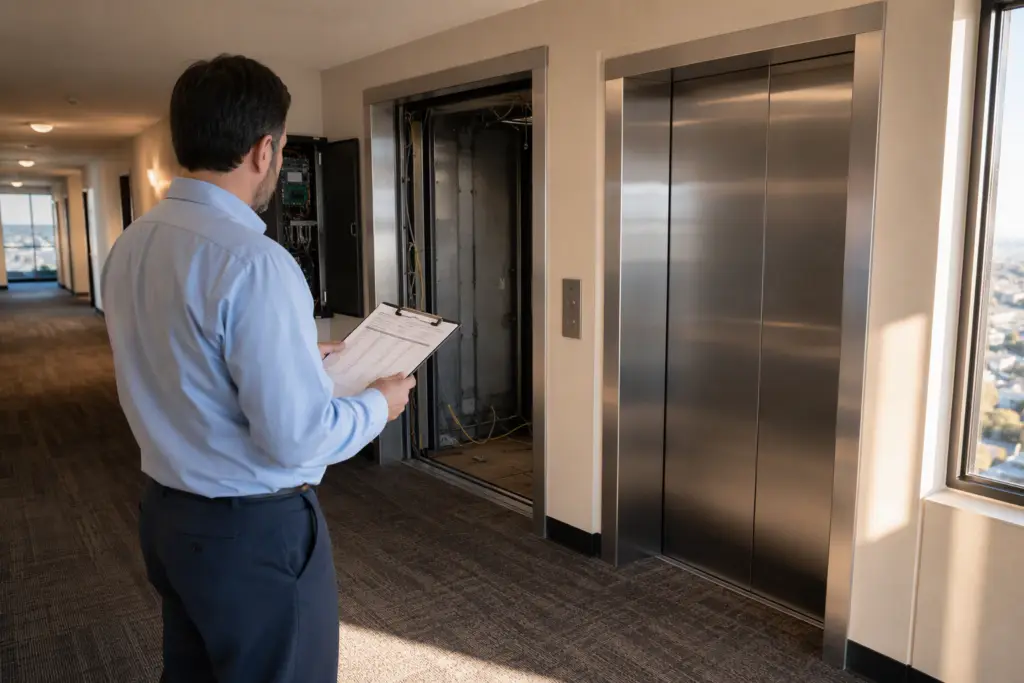
Direct answer: New elevator installations in Los Angeles and Orange County require a building permit from the local jurisdiction, plan approval by a California Elevator Safety Unit-certified inspector, equipment that meets ASME A17.1 Safety Code for Elevators and Escalators and California Title 24, a final acceptance inspection before the elevator opens to the public, and an ongoing annual periodic inspection to maintain a valid certificate of operation.
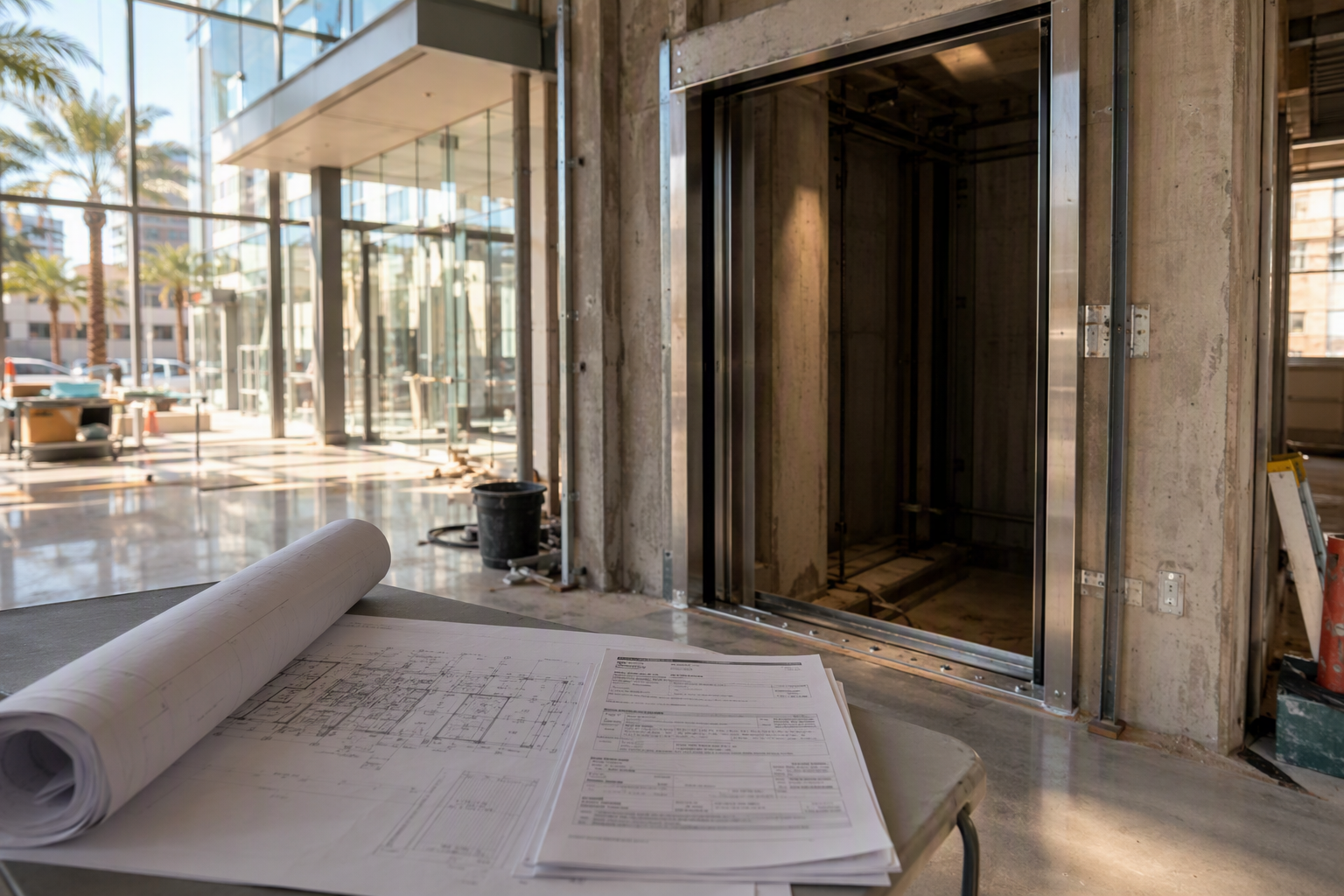
For any building owner or property manager planning a new elevator installation in Los Angeles County or Orange County, navigating the permit and inspection process can feel like solving a puzzle with pieces spread across multiple agencies. This guide assembles every piece — permit applications, plan review, code compliance, inspection stages, and ongoing certificate maintenance — so that projects stay on schedule and on the right side of California law.
Who Issues Elevator Permits in Los Angeles and Orange County?
California’s elevator safety program is administered at the state level by the Division of Occupational Safety and Health (Cal/OSHA) Elevator Safety Unit, operating under the Department of Industrial Relations. However, jurisdictional authority can shift depending on location:
- City of Los Angeles: The Los Angeles Department of Building and Safety (LADBS) handles the local building permit, while the Cal/OSHA Elevator Unit retains authority over elevator-specific plan approval, inspection, and certification.
- Unincorporated Los Angeles County: The LA County Department of Public Works issues the building permit; elevator safety oversight remains with Cal/OSHA.
- Orange County cities (Anaheim, Irvine, Santa Ana, etc.): Each city’s building department issues the local permit; Cal/OSHA again governs elevator-specific inspections and permits statewide.
- Special districts and state-owned facilities: May fall under separate Cal/OSHA jurisdiction tracks.
In practice, building owners must satisfy two parallel permit tracks: a local building permit covering structural, electrical, and mechanical aspects of the hoistway and machine room, and a state elevator permit covering the elevator equipment itself.
What Codes Govern New Elevator Installations in California in 2026?
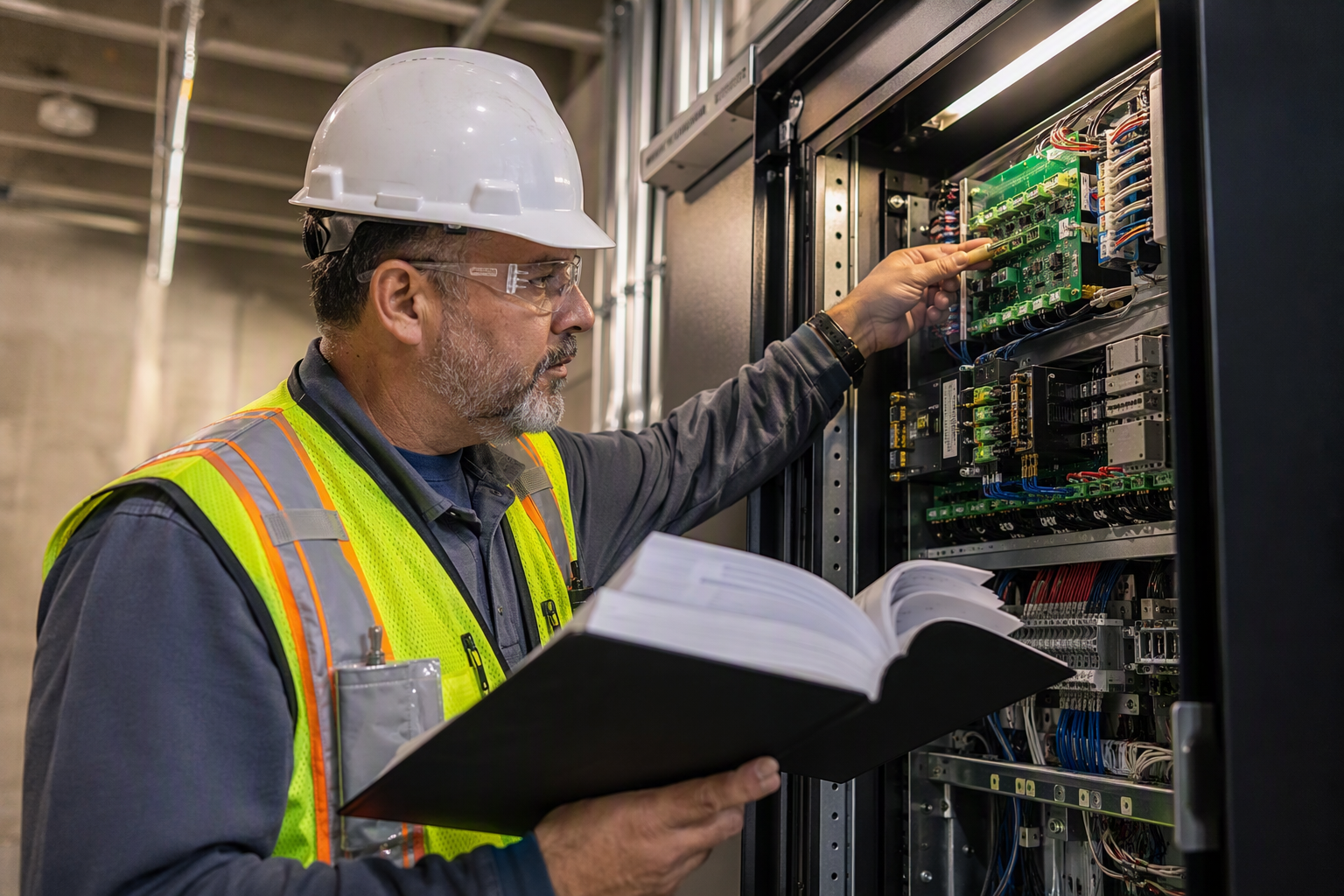
California adopts and amends national standards. The primary codes applicable to a new installation in Los Angeles or Orange County include:
- ASME A17.1 Safety Code for Elevators and Escalators — the foundational national safety standard governing elevator design, construction, operation, and inspection. California adopts this standard with state-specific amendments published in Title 8 of the California Code of Regulations.
- California Title 24 (California Building Code) — governs hoistway dimensions, fire separation, structural loads, and machine room requirements.
- Americans with Disabilities Act (ADA) Accessibility Standards — mandates accessible design for cab dimensions, door timing, floor-to-button heights, and Braille signage in facilities open to the public.
- OSHA standards — apply to construction-phase worker safety inside hoistways and around equipment during installation.
Building owners should confirm with their elevator contractor which edition of ASME A17.1 is currently adopted in California’s Title 8 amendments, as code editions are updated periodically and the 2026 regulatory cycle may incorporate newer provisions.
What Is the Step-by-Step Permit and Inspection Process for a New Elevator?
- Engage a licensed elevator contractor early. California law requires that elevator installation work be performed by a licensed elevator contractor. Confirm licensing through the California Contractors State License Board before signing any contract.
- Submit local building permit application. File with LADBS (City of LA), the relevant county building department, or the appropriate city building department in Orange County. Plans must include hoistway construction drawings, electrical schematics for the machine room, and structural calculations.
- Submit elevator permit application to Cal/OSHA Elevator Unit. The elevator contractor typically files this application on the building owner’s behalf. Required documents include equipment specifications, manufacturer’s drawings, and a description of the installation method.
- Await plan review by Cal/OSHA-certified inspector. Cal/OSHA or an approved third-party inspection agency reviews drawings for compliance with ASME A17.1 and Title 8 amendments. Plan review duration varies by submittal completeness and current agency workload.
- Receive plan approval and permit issuance. Work may not begin on the elevator equipment until the elevator permit is issued. Local building permit approval must also be in hand before hoistway construction begins.
- Complete installation with required field inspections. Multiple interim inspections occur during installation — typically covering rough-in, equipment setting, and wiring. The elevator contractor coordinates these with the inspector.
- Schedule the acceptance inspection (final inspection). After installation is complete, a full acceptance inspection is performed by a Cal/OSHA Elevator Unit inspector or approved third-party inspector. All safety devices, emergency systems, door operations, and load tests are verified against ASME A17.1 requirements.
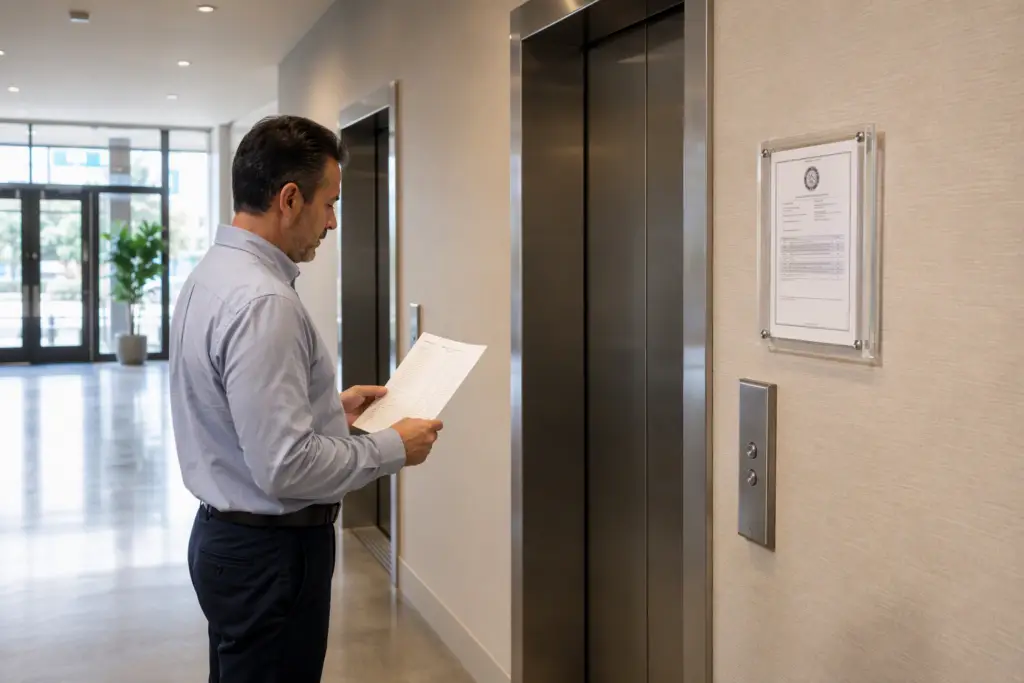
- Obtain the Certificate of Compliance (permit to operate). Once the acceptance inspection passes, Cal/OSHA issues a Certificate of Compliance. The elevator may not legally carry passengers until this certificate is posted in the cab.
- Schedule ongoing periodic inspections. California requires periodic inspections (typically annual) to maintain a valid operating certificate. Missing the inspection window can result in an elevator being ordered out of service.
How Do Permit Requirements Differ Between Los Angeles and Orange County?
| Factor | City of Los Angeles (LADBS) | Unincorporated LA County | Orange County Cities (varies by city) |
|---|---|---|---|
| Local building permit authority | Los Angeles Dept. of Building & Safety | LA County Dept. of Public Works | Individual city building dept. |
| Elevator equipment permit authority | Cal/OSHA Elevator Unit (statewide) | Cal/OSHA Elevator Unit (statewide) | Cal/OSHA Elevator Unit (statewide) |
| Plan review — local | LADBS plan check | County plan check | City plan check |
| Plan review — elevator | Cal/OSHA or approved 3rd party | Cal/OSHA or approved 3rd party | Cal/OSHA or approved 3rd party |
| Applicable building code | California Building Code + LA amendments | California Building Code + County amendments | California Building Code + city amendments |
| ADA applicability | Yes — public accommodations | Yes — public accommodations | Yes — public accommodations |
| Seismic design requirements | High — Seismic Zone 4 | High — Seismic Zone 4 | High — Seismic Zone 4 |
Key takeaway: The elevator-specific permit and inspection pathway is uniform across California because Cal/OSHA governs it statewide. The variation between jurisdictions affects local building permits, plan check timelines, and any local amendments to the building code — not the elevator safety inspection itself.
What Types of Elevators Require Permits and Inspections in California?
All elevators and lifting devices covered under California Labor Code Section 7300 et seq. require a permit and periodic inspection. This includes:
- Passenger elevators (traction, hydraulic, machine-room-less)
- Freight elevators
- Escalators and moving walks
- Dumbwaiters (above a defined capacity threshold)
- Platform lifts and vertical wheelchair lifts
- Inclined stairway chairlifts in certain commercial applications
Residential elevators installed in single-family homes under a certain capacity may follow a separate state pathway; building owners should verify applicability with Cal/OSHA before assuming an exemption.
What Are the ADA Requirements for New Elevator Installations?
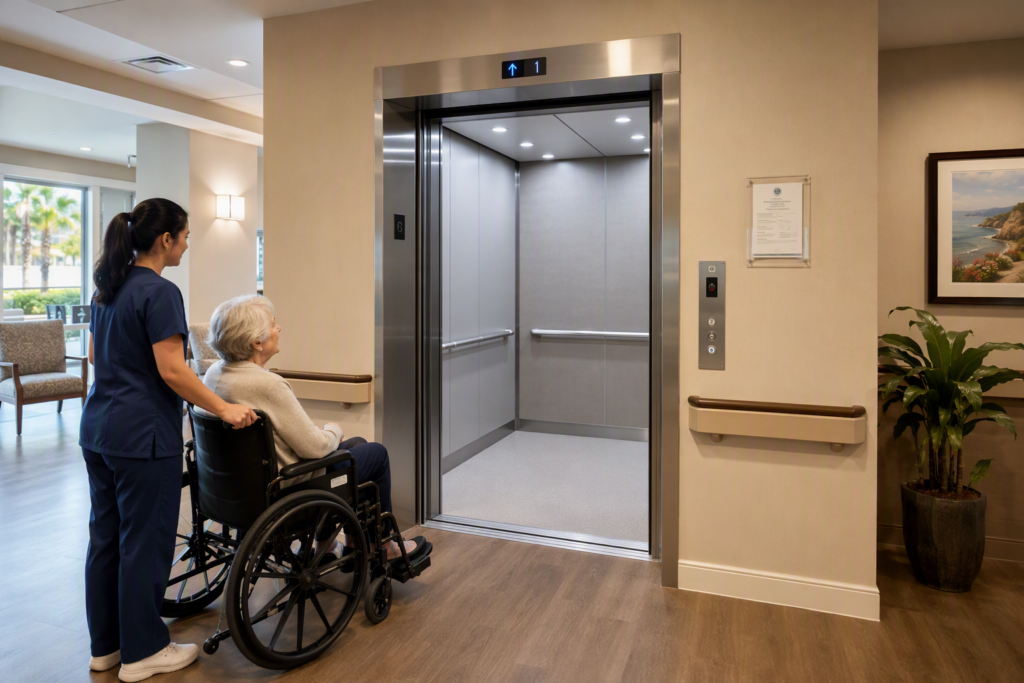
Under the Americans with Disabilities Act, new elevators installed in facilities covered by the ADA — including commercial buildings, multifamily residential buildings with common-use areas, and public accommodations — must meet the ADA Standards for Accessible Design. Key requirements include:
- Minimum cab interior dimensions to accommodate wheelchair users
- Door reopening devices that function without contact
- Audible and visible floor indicators
- Controls within reach range for wheelchair users, including raised characters and Braille
- Adequate door timing (open and close times)
- Leveling accuracy so the cab floor is flush with the landing floor
ADA compliance is typically reviewed during local plan check and must be demonstrated at the acceptance inspection. Non-compliance can trigger costly rework and delay the certificate of operation.
What Are the Seismic Requirements for Elevator Installations in Southern California?
Los Angeles and Orange County are in a high seismic hazard zone. The ASME A17.1 Safety Code for Elevators and Escalators includes seismic requirements for elevators, and California’s Title 8 and Title 24 amendments add further provisions specific to Seismic Zone 4 conditions. Requirements typically address:
- Seismic switches that stop elevator operation during ground motion events above a defined threshold
- Guide rail and bracket design to withstand seismic loads
- Counterweight retainer plates to prevent derailment during an earthquake
- Controller and drive unit anchorage to machine room structure
- Hydraulic elevator piping supports and shutoffs
Seismic compliance documentation must be submitted as part of the elevator permit application package. Inspectors will verify physical installation of seismic components during field inspections.
How Long Does the Permit and Approval Process Typically Take?
Timeline varies significantly based on submittal completeness, agency workload, and complexity of the installation. Rather than cite figures that fluctuate with agency capacity, building owners should plan for the following phases as sequential and potentially overlapping:
| Phase | Variables That Affect Duration | Owner Action to Accelerate |
|---|---|---|
| Local building permit plan check | Plan completeness, city/county backlog, need for corrections | Submit complete, code-compliant drawings; use expedited review if available |
| Cal/OSHA elevator permit plan review | Equipment documentation completeness, state workload, use of approved 3rd-party agency | Work with contractor to pre-prepare full submittal; consider approved private inspector |
| Hoistway and machine room construction | Structural complexity, contractor schedule, material lead times | Begin hoistway construction under local permit while elevator permit is processed |
| Elevator equipment installation | Equipment delivery lead times, contractor labor availability | Place equipment orders immediately after elevator permit is approved |
| Acceptance inspection scheduling | Inspector availability, installation readiness | Notify inspector well in advance; do not schedule until all punch items are resolved |
Projects that submit incomplete plans or discover compliance gaps during installation can face substantial delays. Engaging an experienced elevator contractor who knows Cal/OSHA documentation requirements is one of the most effective ways to manage schedule risk.
What Happens If an Elevator Operates Without a Valid Certificate?
Operating an elevator in California without a valid Certificate of Compliance is a violation of the California Labor Code. Consequences can include:
- Civil penalties issued by Cal/OSHA
- Orders to immediately remove the elevator from service
- Potential personal liability for building owners and property managers if an incident occurs on an uncertified elevator
- Insurance complications if the carrier discovers operation without required state certification
An elevator also becomes non-compliant when its annual periodic inspection lapses without renewal. Building owners are responsible for tracking certificate expiration dates and scheduling inspections proactively.
What Should Building Owners Look for When Selecting an Elevator Installation Contractor?
| Selection Criterion | Why It Matters |
|---|---|
| California Contractors State License Board (CSLB) licensure | State law requires elevator contractors to hold the appropriate CSLB license; verify independently at the CSLB website |
| Experience with Cal/OSHA permit documentation | Incomplete or incorrect submittals are the leading cause of permit delays |
| Familiarity with ASME A17.1 and California Title 8 amendments | Reduces risk of code-related rework discovered during inspection |
| Knowledge of local jurisdiction (LADBS, county, OC city departments) | Local plan check requirements and amendment nuances vary; local knowledge saves time |
| ADA and seismic compliance track record | Both are common failure points at acceptance inspection in Southern California |
| Ongoing maintenance and inspection support | Selecting a contractor who can also support annual periodic inspections simplifies long-term certificate management |
| Independent (non-OEM-tied) service capability | Independent contractors can service multiple equipment brands and are not restricted to proprietary maintenance programs |
Why Do Building Owners Choose Liftech Elevator for New Installation Support in LA and Orange County?
Liftech Elevator is a certified independent elevator service company serving building owners across Los Angeles and Orange County. As an independent provider, Liftech is not tied to any single elevator manufacturer, which means recommendations are based on what best suits the building’s requirements and budget — not what a manufacturer’s sales program incentivizes.
Liftech Elevator supports building owners and their general contractors throughout the permit and inspection lifecycle:
- Pre-permit consultation on equipment selection and code compliance strategy
- Coordination support for Cal/OSHA permit documentation and plan review
- Field oversight and communication with inspectors during installation-phase inspections
- Acceptance inspection readiness review before scheduling the state inspection
- Ongoing annual periodic inspection management to keep certificates current
Building owners who engage Liftech Elevator early — before breaking ground — consistently avoid the most costly permit and inspection pitfalls: incomplete plan submittals, seismic component oversights, ADA non-conformances, and lapsed operating certificates.
Pros and Cons: Using an Independent Elevator Contractor vs. a Manufacturer-Tied Provider
| Factor | Independent Contractor (e.g., Liftech Elevator) | Manufacturer-Tied Provider |
|---|---|---|
| Equipment brand flexibility | ✅ Can specify and service multiple brands | ❌ Typically limited to own-brand equipment |
| Permit and inspection expertise | ✅ Multi-brand code compliance experience | ✅ Strong knowledge of own-brand equipment documentation |
| Ongoing maintenance pricing | ✅ Competitive; not locked into proprietary rates | ⚠️ Proprietary parts and contracts may limit cost competition |
| Parts availability | ✅ Access to aftermarket and OEM parts across brands | ⚠️ May restrict access to proprietary components |
| Conflict of interest in equipment selection | ✅ Low — recommends based on project fit | ⚠️ Higher — commercial incentive to specify own brand |
| Long-term service continuity | ✅ Not subject to manufacturer territory changes | ⚠️ Territory or service contract changes can disrupt service |
Frequently Asked Questions: Elevator Permits and Inspections in LA and Orange County
Does a residential elevator in a single-family home require a Cal/OSHA permit?
Private residence elevators installed solely for single-family use may be exempt from Cal/OSHA Elevator Unit jurisdiction under certain conditions defined in the California Labor Code. However, a local building permit is still typically required. Building owners should verify the specific exemption criteria with their local building department and Cal/OSHA before assuming an exemption applies, as the specifics depend on capacity, travel height, and use.
Can a building owner act as the permit applicant for the elevator permit?
In California, the elevator permit application is typically filed by the licensed elevator contractor, not the building owner. The licensed contractor is the responsible party for the installation under state law. Building owners can and should track permit status, but the contractor carries the permit obligation.
What is an approved third-party elevator inspector and when should one be used?
California allows Cal/OSHA to approve private inspection agencies to conduct elevator plan reviews and field inspections. Using an approved third-party inspector can sometimes accelerate plan review timelines compared to the state queue. The contractor or building owner can request a third-party inspector by selecting from Cal/OSHA’s list of approved agencies. This option is worth evaluating on projects with tight schedules.
How often must an elevator be inspected after installation to maintain its certificate?
California requires periodic inspections to maintain a valid Certificate of Compliance. The standard inspection interval for most passenger elevators is annual, consistent with the periodic inspection requirements referenced in the ASME A17.1 Safety Code for Elevators and Escalators and California’s Title 8 adoption. Missing a periodic inspection can result in the elevator being ordered out of service until an inspection is completed and the certificate is renewed.
What documents should be kept on site for an elevator?
California regulations require that the current Certificate of Compliance (permit to operate) be posted in the elevator cab where it is visible to passengers. Additionally, building owners should maintain on file the elevator permit, accepted drawings, inspection reports, and maintenance records. These documents are reviewed during periodic inspections and are essential in the event of an incident investigation.
What are the most common reasons a new elevator fails its acceptance inspection?
Common failure points at acceptance inspection include: seismic device installation errors or missing components; door operation and timing that does not meet code; emergency lighting or communication system deficiencies; governor and safety device test failures; leveling accuracy outside tolerance; and ADA non-conformances in signage, controls, or cab dimensions. All of these are preventable through pre-inspection readiness reviews with an experienced contractor.
Do machine-room-less (MRL) elevators follow the same permit process as traditional elevators?
Yes. Machine-room-less traction elevators are subject to the same Cal/OSHA permit, plan review, and inspection requirements as traditional machine-room elevators. The permit application and drawings must reflect the specific MRL configuration, and inspectors will verify that overhead equipment access, emergency lowering provisions, and other MRL-specific ASME A17.1 requirements are properly installed.
What role does OSHA play in elevator installation safety?
While Cal/OSHA’s Elevator Unit governs the elevator equipment itself, OSHA construction safety standards apply to workers performing installation inside hoistways and around equipment. General contractors and elevator installation contractors are responsible for fall protection, hoistway opening guarding, electrical safety, and other construction-phase worker protections during the installation period.
Ready to Start Your Elevator Installation Project on the Right Foot?
Navigating elevator permits and inspections in Los Angeles and Orange County requires coordinating multiple agencies, meeting strict code requirements across ASME A17.1, ADA, and California Title 24, and managing documentation that directly affects whether an elevator receives its certificate of operation. Starting the process with experienced support is the most reliable way to avoid delays, rework, and compliance gaps that can push project timelines and costs upward.
Liftech Elevator is an independent certified elevator service company serving building owners and property managers throughout Los Angeles and Orange County. From pre-permit planning through acceptance inspection and ongoing annual certificate management, Liftech Elevator provides the hands-on expertise that keeps projects moving and elevators operating legally and safely.
Contact Liftech Elevator for a Free Elevator Assessment
Whether your project is in early design, mid-permit, or approaching acceptance inspection, Liftech Elevator’s team can assess your compliance status and help you move forward with confidence.
Call Liftech Elevator today: 562-609-3478
Need elevator service you can rely on? Liftech Elevator is ready to help.