Elevator Maintenance and Inspection Requirements for Schools and Universities in California
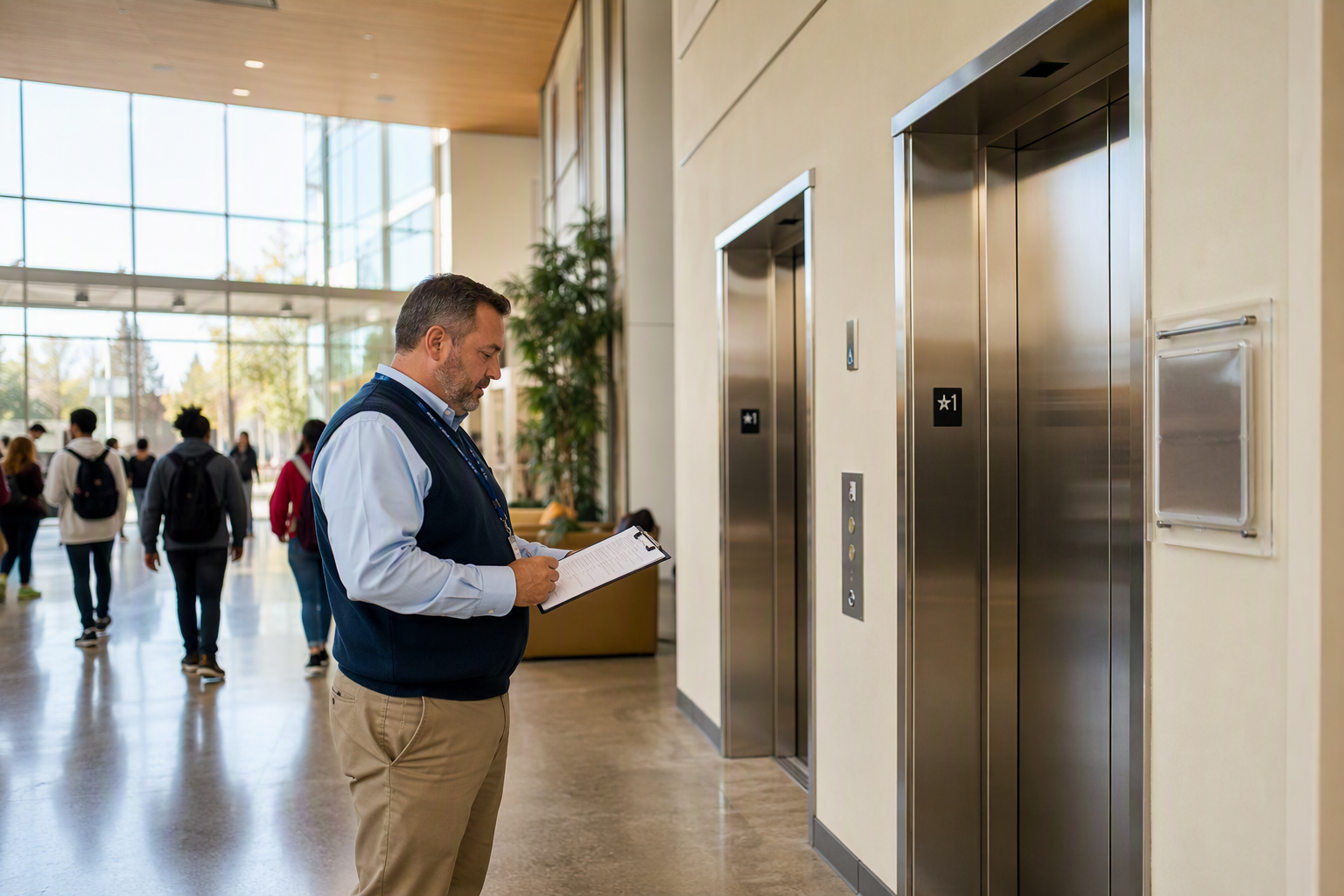
California educational institutions — from K–12 campuses to large research universities — rely on elevators to keep students, faculty, staff, and visitors moving safely between floors. Because these buildings serve high volumes of people, including individuals with disabilities, the regulatory framework governing elevator safety is thorough and non-negotiable. Understanding which requirements apply, how often inspections must occur, and what documentation must be on file is essential for every facilities manager responsible for a California school or university campus.
Liftech Elevator works with institutional clients across Signal Hill, Long Beach, Los Angeles, and Orange County to help educational facilities meet every applicable standard — before an inspector ever sets foot in the building.
What State Authority Oversees Elevator Inspections at California Schools?
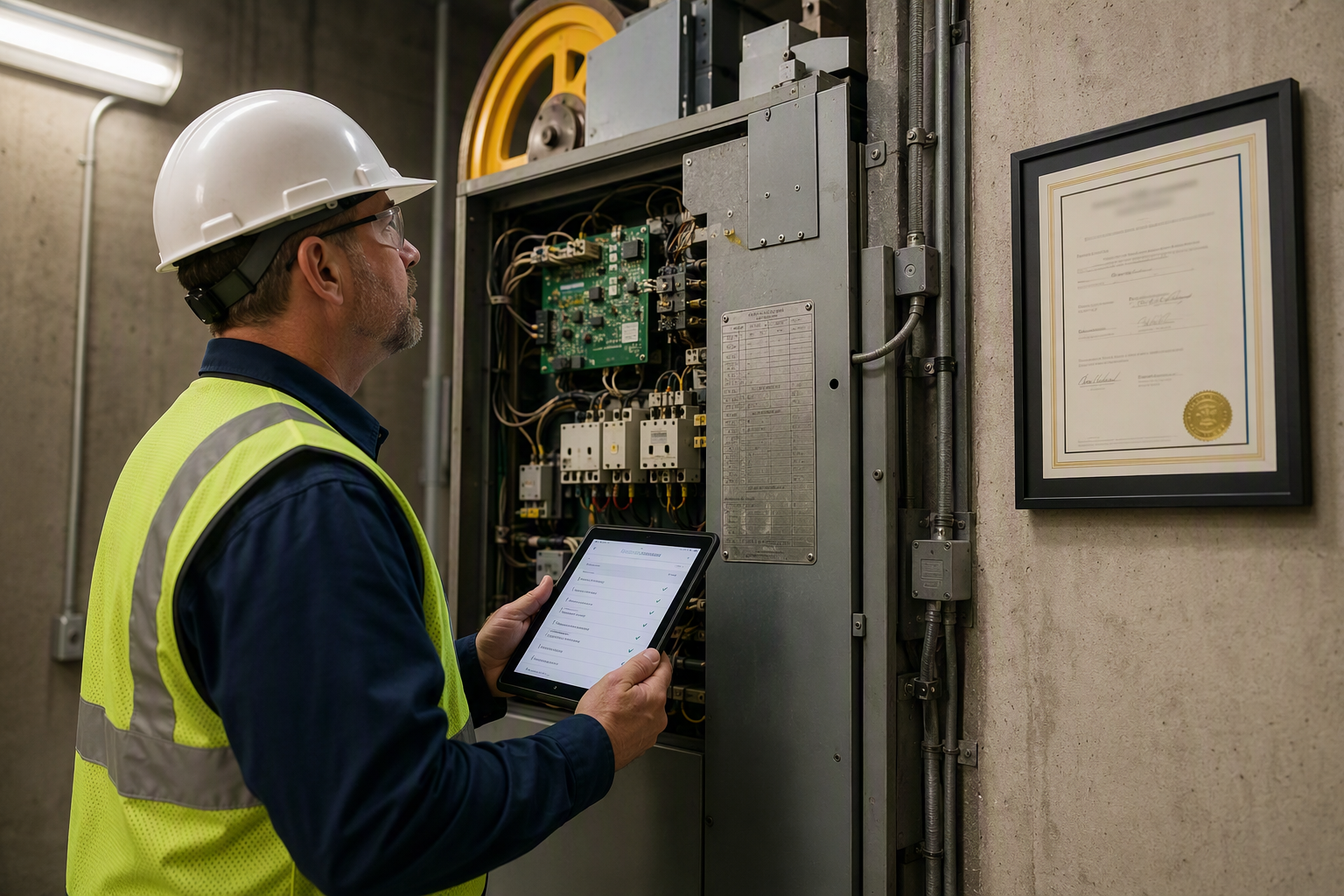
In California, elevator safety falls under the jurisdiction of the Division of Occupational Safety and Health (Cal/OSHA), specifically its Elevator, Ride, and Tramway Unit (ERTA). Cal/OSHA enforces the California Elevator Safety Construction Code, which adopts and amends ASME A17.1 Safety Code for Elevators and Escalators as its foundational technical standard.
Every elevator installed in a school or university must hold a valid Permit to Operate issued by Cal/OSHA or an approved licensed elevator company inspector. Operating an elevator without a current permit is a violation that can result in mandatory shutdown of the unit and potential liability exposure for the institution.
For public school districts, additional oversight may come from the Division of the State Architect (DSA), which reviews and approves construction documents — including elevator installations and major alterations — for K–12 public schools and community colleges.
How Often Must Elevators Be Inspected at California Educational Facilities?
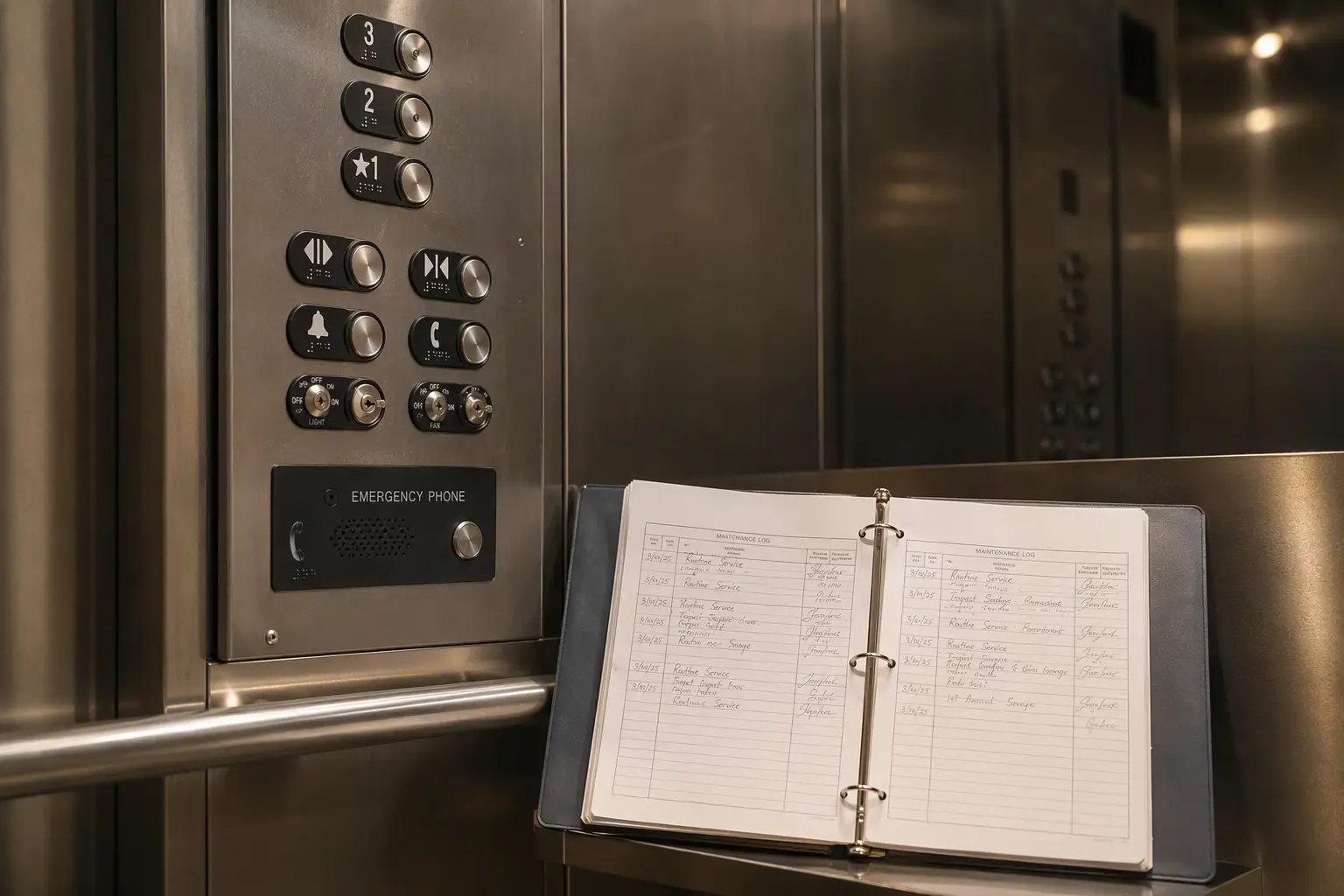
Under California Title 8 regulations, most elevators in public-access buildings, including schools and universities, are subject to periodic inspections on an annual basis. The specific intervals can vary based on the type of equipment and its usage classification, but as a general rule:
- Full inspections of elevator equipment and safety systems are required at regular intervals established by Cal/OSHA and consistent with ASME A17.1 inspection categories.
- Periodic tests of specific safety devices — such as governors, safeties, and buffers — follow longer cycles, typically every one to five years depending on the test type specified in the code.
- Hydraulic elevator pressure vessels require additional periodic testing per the applicable code cycle.
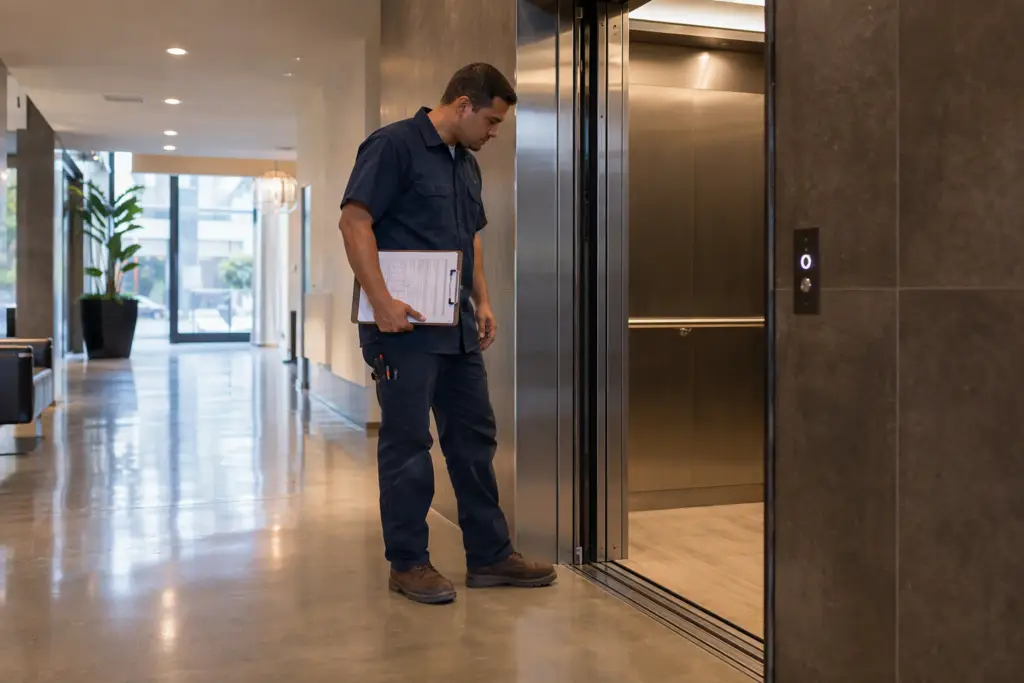
Facilities managers should maintain a master schedule tracking every required inspection and test date to avoid lapses that could void the Permit to Operate.
What Is the Role of ASME A17.1 in School Elevator Compliance?
ASME A17.1 Safety Code for Elevators and Escalators is the primary technical standard California’s elevator regulations are built upon. It covers design, construction, installation, operation, inspection, testing, maintenance, alteration, and repair of elevators. For schools and universities, the most operationally relevant sections include:
- Inspection and test requirements — defining what must be examined, by whom, and how frequently.
- Maintenance requirements — establishing that a documented maintenance program must be in place and that maintenance records must be kept accessible.
- Emergency operations — specifying requirements for firefighters’ emergency operation, which directly applies to multi-story school buildings.
- Accessibility features — referencing dimensions and operational parameters that intersect with ADA requirements.
The 2026 code cycle reinforces requirements that maintenance must be performed by qualified personnel and that records of all maintenance, inspections, and tests be retained on-site or in an accessible format for review by authorities having jurisdiction (AHJ).
How Do ADA Requirements Apply to Elevators in Schools?
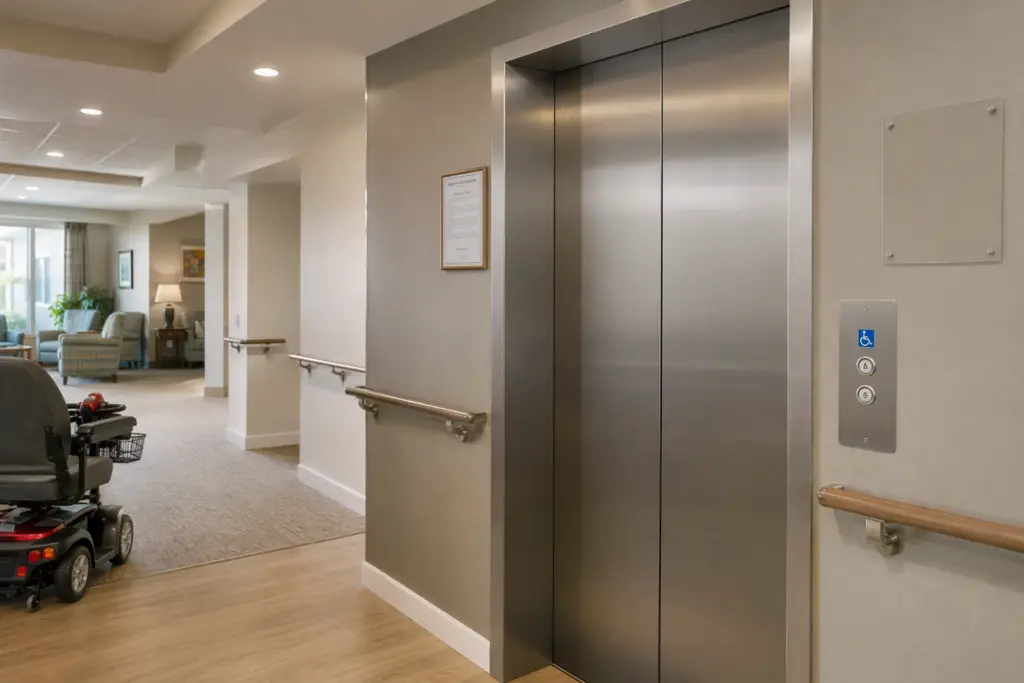
The Americans with Disabilities Act (ADA) mandates that elevators in multi-story school and university buildings provide accessible vertical transportation. Key compliance requirements include:
- Minimum cab dimensions sufficient to accommodate wheelchair users and mobility devices.
- Accessible call buttons at specified mounting heights, with raised characters and Braille.
- Audible and visual floor indicators inside the cab and at landings.
- Door reopening devices that detect obstructions without requiring contact.
- Leveling accuracy so the cab floor aligns within a specified tolerance of the landing floor.
ADA compliance is not a one-time installation check — it must be verified during routine maintenance and after any alteration or repair. An elevator that drifts out of level or develops a malfunctioning door sensor can fall out of ADA compliance between formal inspections, creating both safety risks and legal exposure for the institution.
What Maintenance Program Must a School or University Have in Place?
California regulations and ASME A17.1 collectively require that a documented, written maintenance program be established for every elevator. This program must include:
- A schedule of all required maintenance tasks and their frequencies.
- Identification of the qualified personnel or licensed elevator contractor responsible for each task.
- A log of all maintenance work completed, including dates, tasks performed, and the identity of the performing party.
- Records of all parts replaced, along with specifications confirming the replacement parts meet code requirements.
- Documentation of any deficiencies identified and the corrective actions taken.
Liftech Elevator provides educational facilities throughout Long Beach, Los Angeles, and Orange County with structured maintenance programs designed to satisfy these documentation requirements and hold up to inspector scrutiny.
Are There Additional Requirements for Elevators in K–12 Schools Versus Universities?
The core ASME A17.1 and Cal/OSHA requirements apply to both K–12 and higher education facilities. However, there are structural differences in oversight:
- K–12 public schools built or substantially altered with state funds fall under Division of the State Architect (DSA) review, adding a layer of plan approval for elevator installations and major alterations beyond standard Cal/OSHA permitting.
- Community colleges similarly fall under DSA jurisdiction for capital construction projects.
- Private K–12 schools and private universities are subject to Cal/OSHA inspection authority but typically do not require DSA plan review.
- All facilities serving students with disabilities — which includes virtually every school campus — must maintain ADA-compliant elevator service as a condition of receiving federal funding under the Rehabilitation Act and the ADA.
What Happens If an Elevator at a School Fails Inspection?
When an elevator fails a Cal/OSHA inspection or a required periodic test, the authority having jurisdiction has the power to:
- Issue a notice of violation requiring correction within a specified timeframe.
- Revoke or suspend the Permit to Operate, requiring the elevator to be taken out of service immediately.
- Require a follow-up inspection before the unit may return to service.
- Assess civil penalties for continued operation without a valid permit.
For an educational campus, an out-of-service elevator can immediately trigger ADA access concerns — particularly if the elevator is the only accessible route to classrooms, labs, or administrative offices. Proactive maintenance and pre-inspection audits are the most effective way to prevent these outcomes.
What Should Schools Do Immediately After Identifying an Elevator Problem?
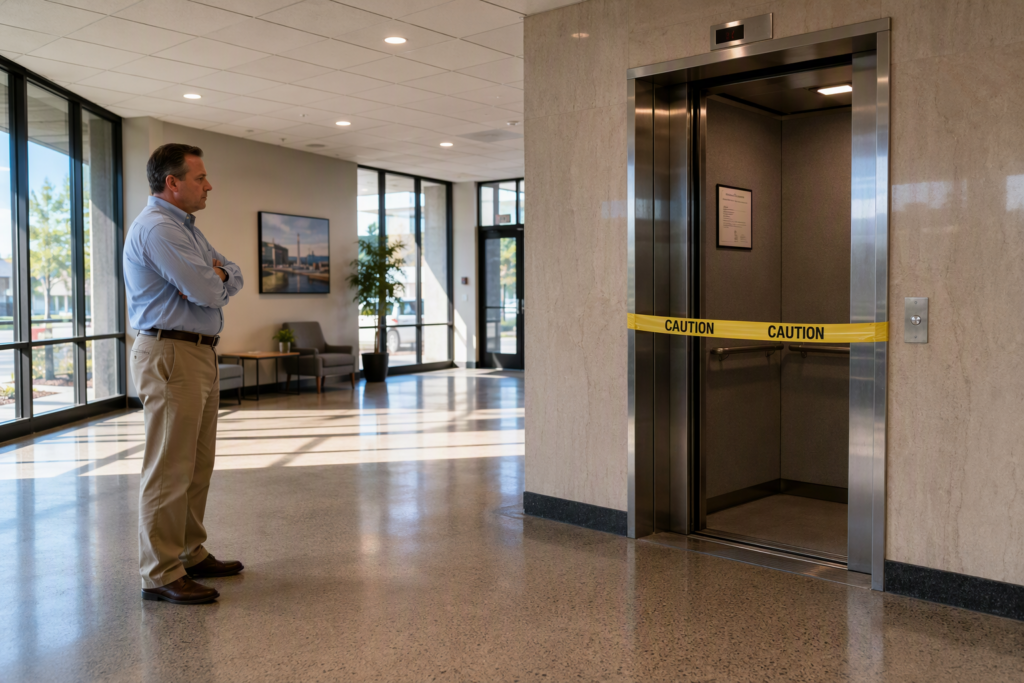
- Take the elevator out of service if a safety-critical deficiency is identified — do not wait for a scheduled maintenance visit.
- Post clear out-of-service signage at all affected landings.
- Notify the campus ADA coordinator to arrange alternative accessible routes for affected users.
- Contact the licensed elevator service contractor to assess and document the deficiency.
- Report the issue and the corrective action taken in the maintenance log.
- Notify Cal/OSHA if the deficiency involves a condition that poses immediate danger, as required by California regulations.
- Schedule and complete the required follow-up inspection before returning the unit to service.
How Do Elevator Requirements Differ for Older School Buildings?
Many school and university campuses across Los Angeles, Long Beach, and Orange County include buildings constructed decades ago. Older elevators are generally governed by the code edition in effect at the time of installation, but California requires that certain retroactive safety improvements be applied regardless of the original installation date. These mandatory upgrades — sometimes called “existing installations” requirements under ASME A17.3 — may include:
- Firefighters’ emergency operation compliance.
- Door reopening device upgrades.
- Phase I and Phase II emergency recall features.
- Car enclosure and lighting standards.
Facilities managers overseeing historic or older campus buildings should request a compliance gap analysis from a qualified elevator service provider. Liftech Elevator assists clients across Signal Hill, Long Beach, Los Angeles, and Orange County in identifying which retroactive requirements apply to their specific equipment and developing a remediation timeline.
Questions Your Inspector Will Ask
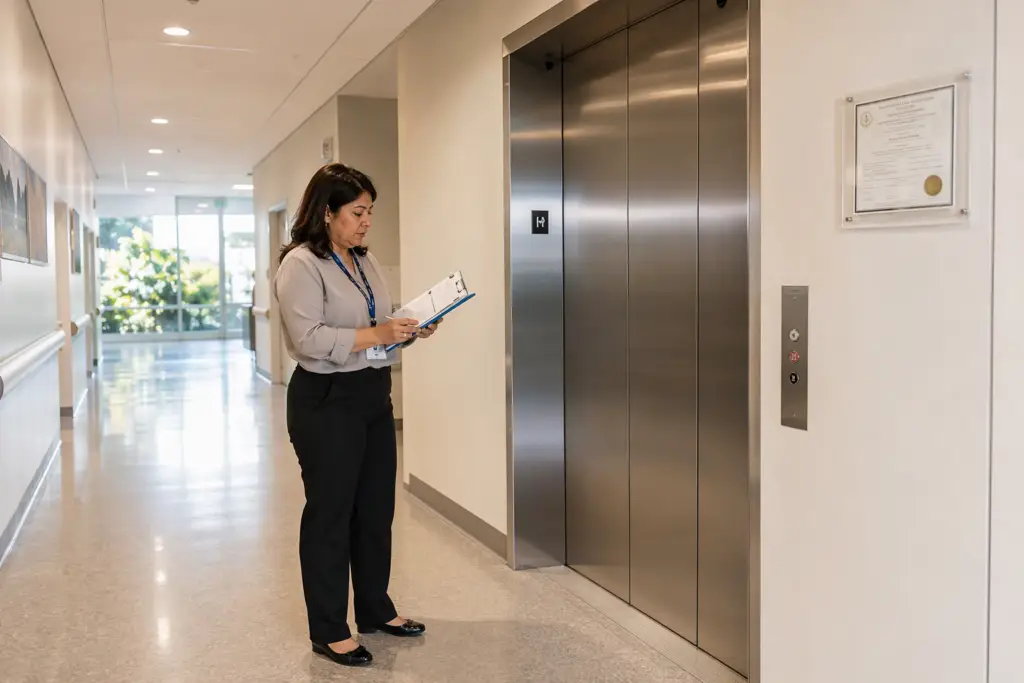
When a Cal/OSHA inspector arrives at a school or university campus, expect questions and documentation requests that include:
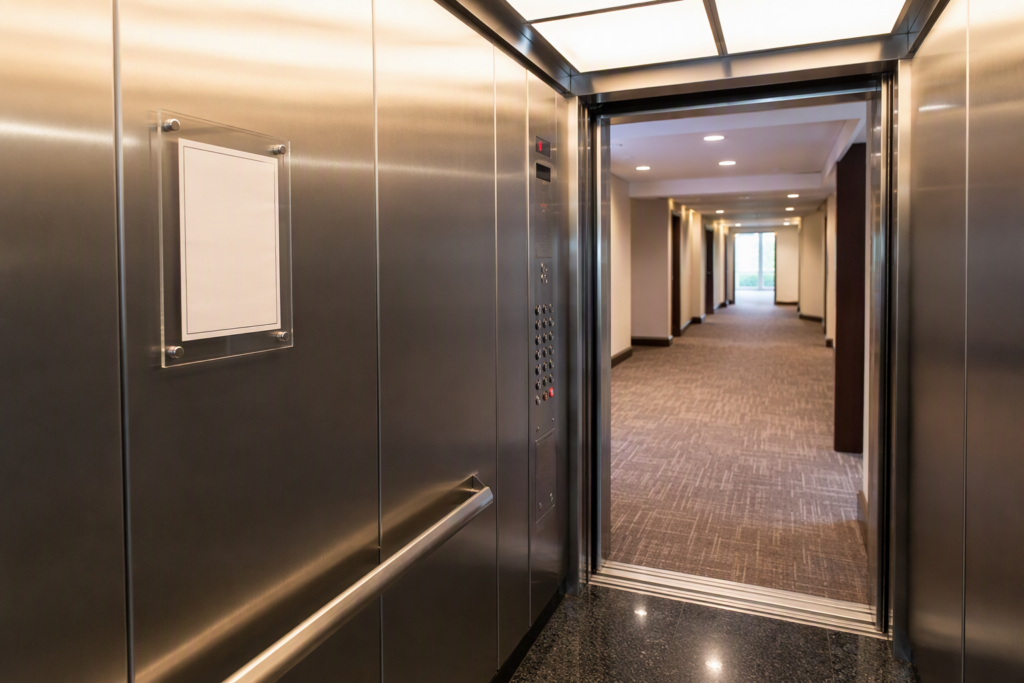
- “Where is your current Permit to Operate?” — It must be posted in or near the elevator cab and be current.
- “Can I see your maintenance log?” — A written record of all maintenance tasks, dates, and performing personnel must be available on-site.
- “When was the last periodic test performed, and where is the test report?” — Test results must be documented and retained.
- “Who is your licensed elevator maintenance contractor?” — The contractor must hold a valid California elevator contractor license.
- “Has this elevator been altered since the last inspection? If so, where is the alteration permit?” — Any alteration requires a permit and may trigger a new acceptance inspection.
- “Are all required safety devices functional?” — Governors, safeties, door operators, and leveling devices will be physically tested.
- “Is firefighters’ emergency operation functional and tested?” — Multi-story school buildings are expected to have this feature in working order.
- “Are ADA-required features operational?” — Door timing, button heights, leveling accuracy, and audible signals may be checked.
Preparation is straightforward when a structured maintenance program is already in place. Liftech Elevator helps facilities teams organize and maintain the documentation package inspectors expect.
How Should Schools Select an Elevator Maintenance Contractor?
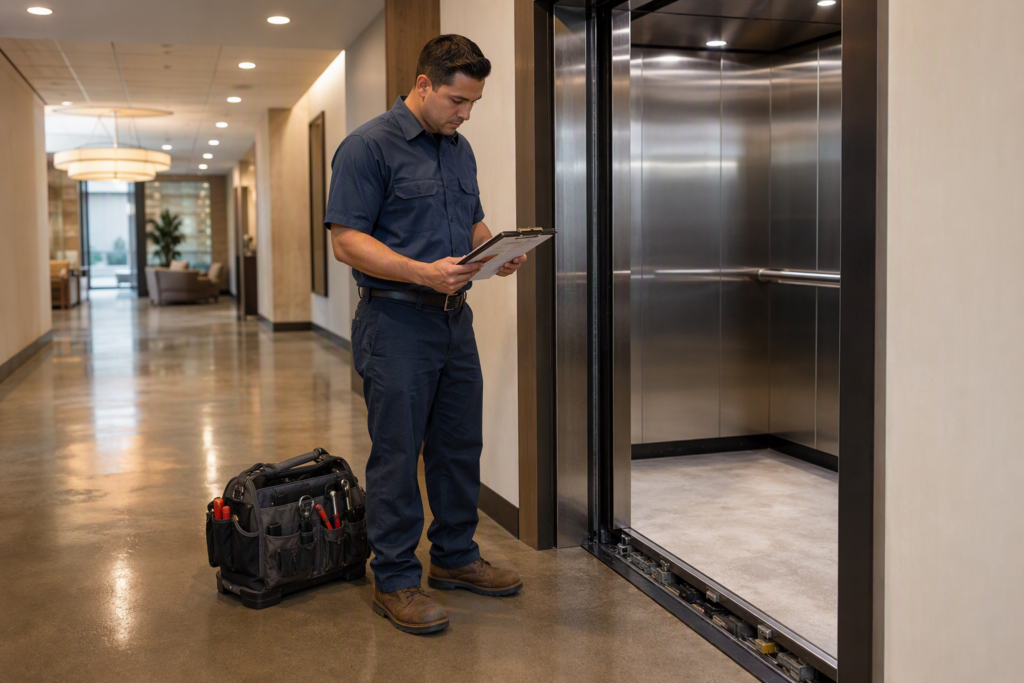
California requires that elevator maintenance, inspection, and repair work be performed by licensed elevator contractors or certified elevator mechanics. When evaluating service providers, educational facilities should confirm:
- The contractor holds a valid California Elevator Contractor license issued by the Department of Industrial Relations.
- Mechanics working on-site hold current Certified Elevator Technician credentials or equivalent state-recognized qualifications.
- The contractor provides written maintenance programs that meet ASME A17.1 documentation standards.
- The contractor has demonstrated experience servicing the specific makes and models of equipment installed on campus.
- The contractor serves the geographic area — institutions in Signal Hill, Long Beach, Los Angeles, and Orange County benefit from a locally based provider who can respond without extended travel delays.
Contact Liftech Elevator for a Free Elevator Assessment
Educational facilities across Signal Hill, Long Beach, Los Angeles, and Orange County trust Liftech Elevator to keep campus elevators compliant, accessible, and operating safely. Whether a campus needs a comprehensive maintenance program, a pre-inspection audit, or guidance on retroactive code compliance, Liftech Elevator is equipped to help.
Contact Liftech Elevator for a free elevator assessment: 562-609-3478
Need elevator service you can rely on? Liftech Elevator is ready to help.