Elevator Service in Signal, CA | Liftech Elevator
Warehouses and industrial buildings in Signal, CA and throughout Southern California operate under a strict set of elevator maintenance and inspection requirements. Freight elevators, personnel hoists, and material lifts that move goods and workers across multiple levels are subject to California state code, federal workplace safety standards, and nationally recognized engineering codes. Staying compliant is not only a legal obligation — it directly affects worker safety and operational continuity.
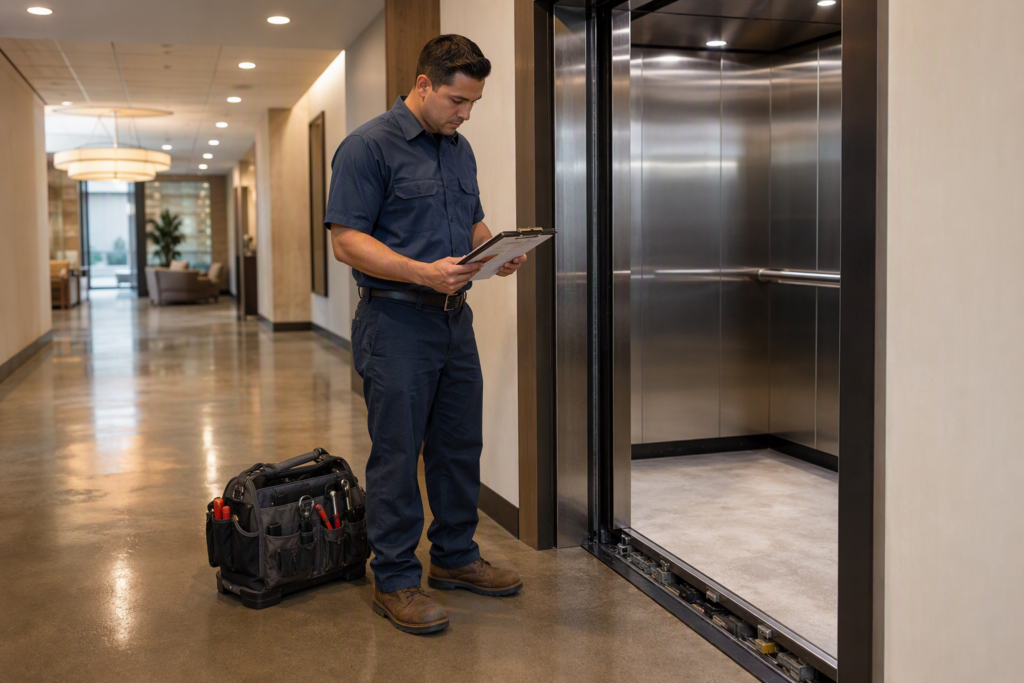
Liftech Elevator provides certified elevator maintenance, inspection coordination, and compliance support for industrial and warehouse facilities across the Southern California region, including Signal Hill, Long Beach, Carson, Compton, Torrance, and surrounding communities.
—
What Are the Core Elevator Regulations Governing Industrial Buildings in California?
California enforces elevator safety through Title 8 of the California Code of Regulations, administered by the Division of Occupational Safety and Health (Cal/OSHA). This framework applies to all elevators, dumbwaiters, escalators, and related conveyance equipment used in commercial and industrial settings. For warehouse environments specifically, freight elevators and vertical reciprocating conveyors (VRCs) must meet the requirements outlined under Title 8 as well as align with the ASME A17.1 Safety Code for Elevators and Escalators.
Federal requirements from OSHA add another layer, particularly regarding employee exposure to elevator-related hazards in general industry settings. Where employees use elevators as part of their workflow, OSHA General Industry standards apply alongside state-level Cal/OSHA enforcement.
How Often Are Elevator Inspections Required in California Warehouses?
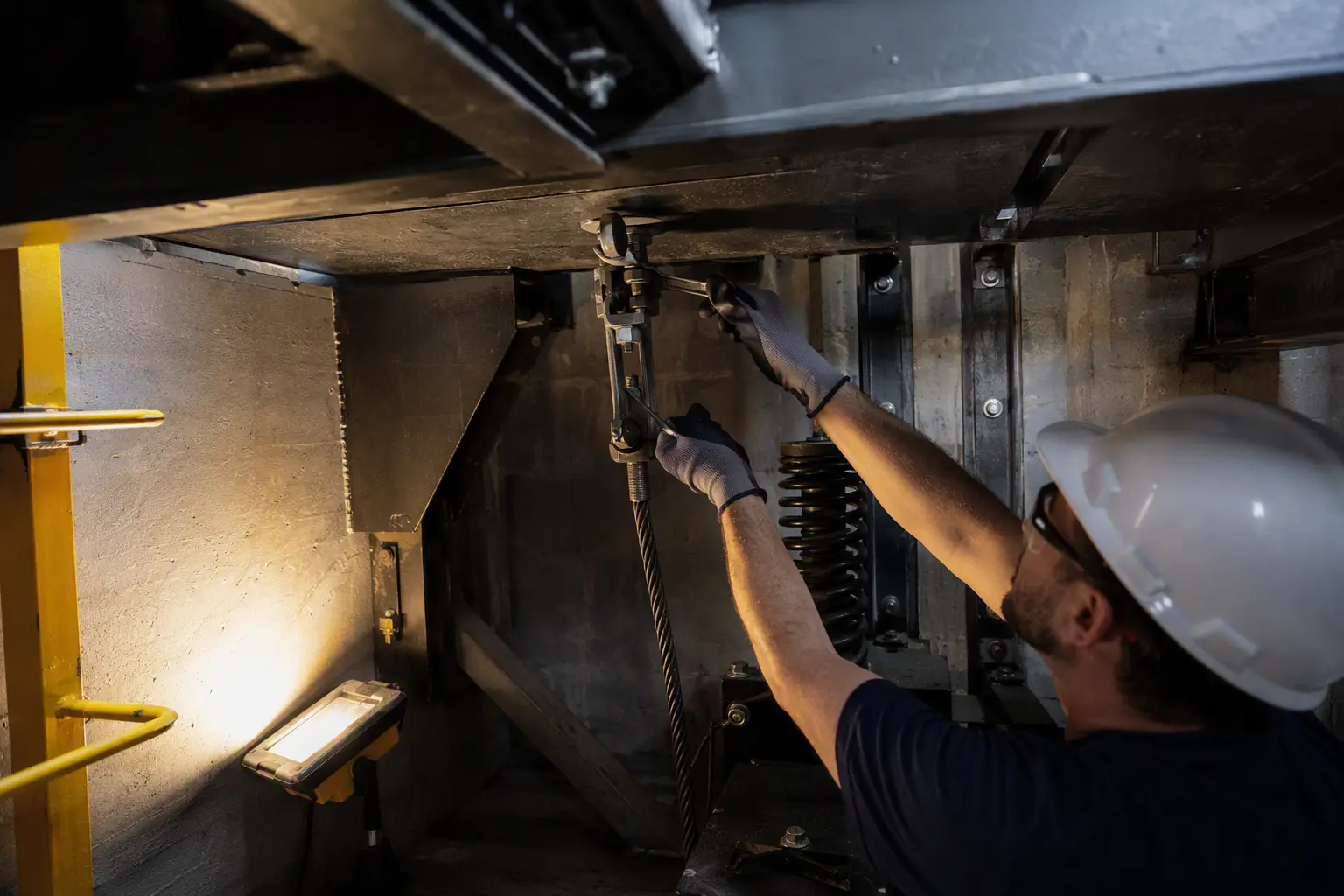
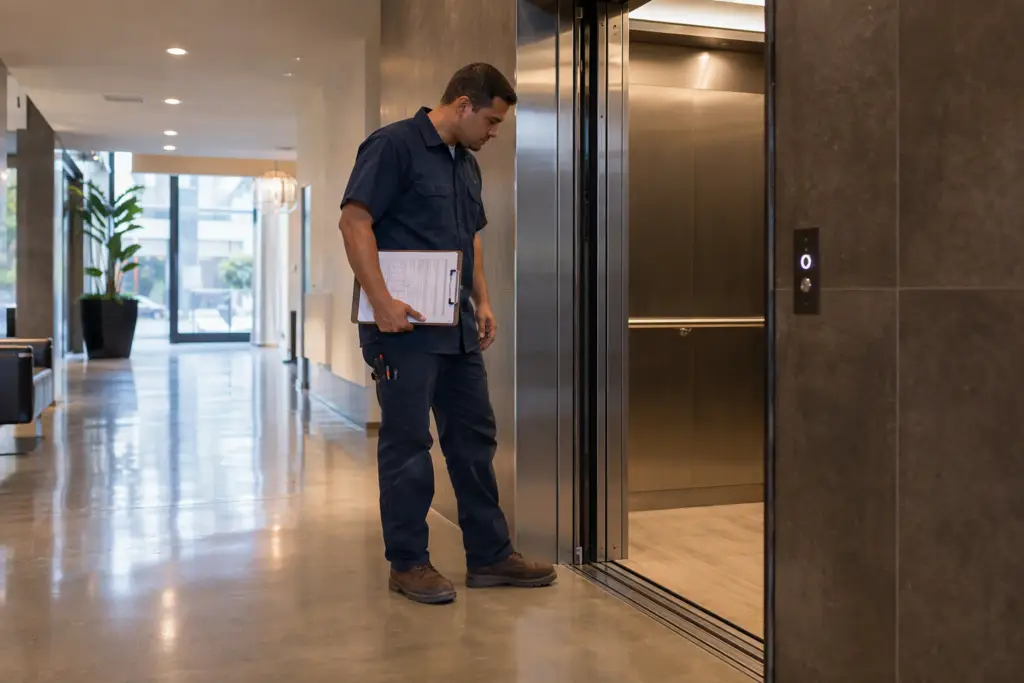
Under California’s Title 8 regulations, elevators in commercial and industrial facilities are required to undergo periodic inspections by a Certified Competent Conveyance Inspector (CCCI). The ASME A17.1 Safety Code for Elevators and Escalators establishes the technical benchmarks that inspectors use to evaluate equipment condition, safety systems, and operational integrity.
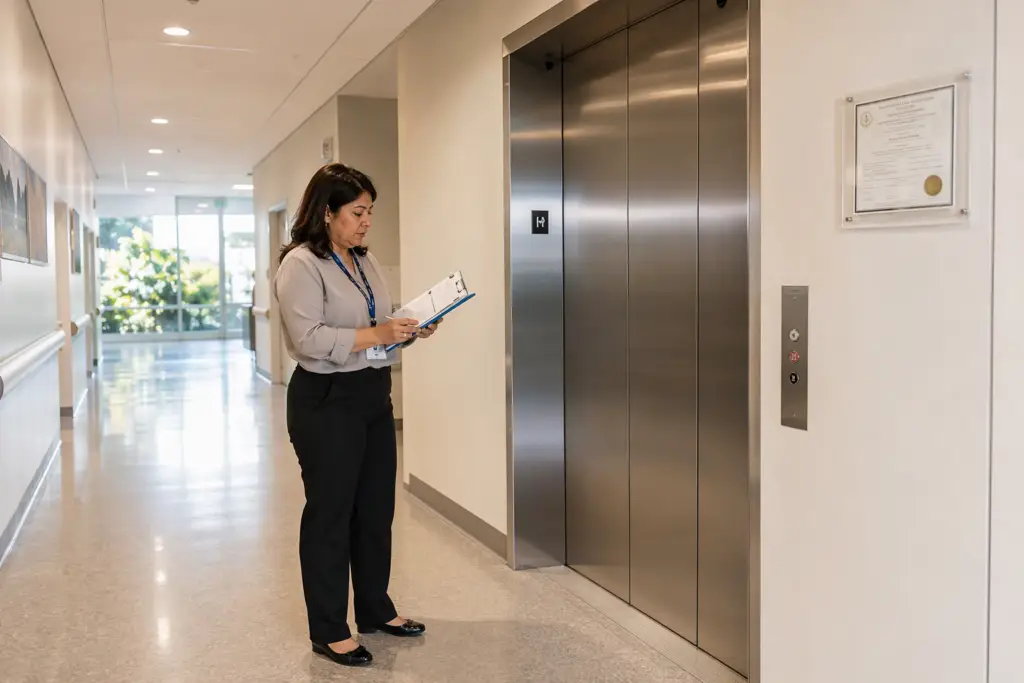
Inspection intervals are determined by elevator type and usage category. High-cycle freight elevators in active warehouse environments are subject to more frequent scrutiny than low-use personnel lifts. California also requires that inspection certificates be current and displayed or made available at the equipment location. Operating an elevator without a valid permit is a violation subject to enforcement action by Cal/OSHA.
What Does a Required Elevator Maintenance Program Include for Industrial Facilities?
A compliant maintenance program for warehouse and industrial elevators in Southern California typically encompasses the following elements:
- Documented periodic maintenance visits covering mechanical components, hydraulic systems, electrical controls, and safety devices
- Lubrication schedules for guide rails, cables, and drive components based on manufacturer specifications and usage intensity
- Safety device testing including governor and safeties, oil buffers, door interlocks, and emergency lighting
- Load testing conducted at required intervals to verify that the elevator can safely carry its rated capacity
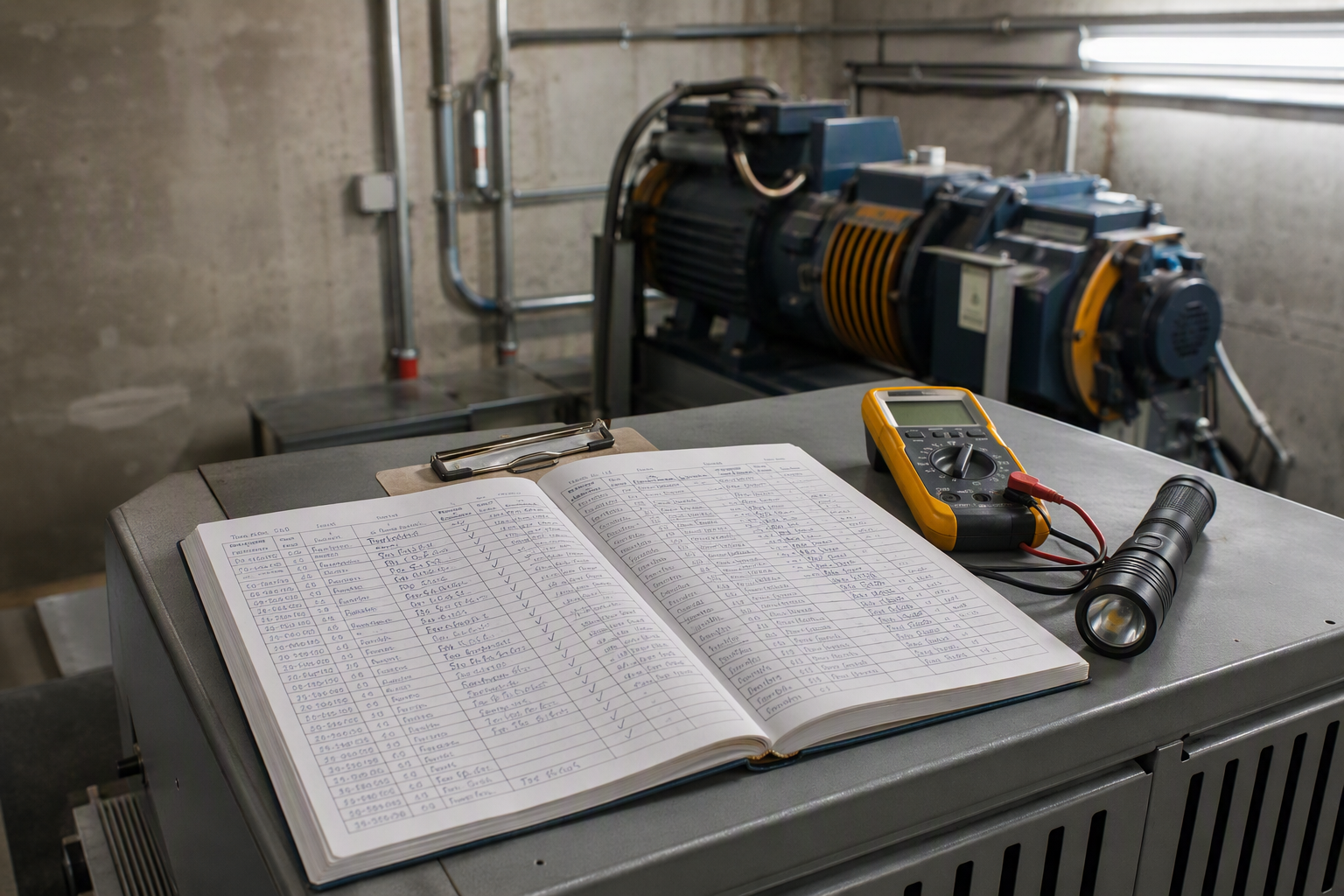
- Maintenance logs and records that document every service visit, parts replaced, and corrective actions taken — required to be available for inspector review
- Modernization assessments to identify aging equipment that may no longer meet current code editions
The 2025/2026 edition of the ASME A17.1 Safety Code for Elevators and Escalators provides the technical standards that govern what maintenance activities are required and at what frequency for various elevator types.
What Specific Elevator Types Are Common in Southern California Warehouses and Industrial Buildings?
Industrial facilities in the Signal Hill and greater Long Beach area commonly rely on:
- Freight elevators — designed for heavy loads and pallet movement, subject to rated-load testing requirements
- Dock levelers and vertical reciprocating conveyors (VRCs) — regulated separately from passenger elevators but still subject to Cal/OSHA oversight
- Personnel/service elevators — used when workers must access mezzanine levels or upper storage areas
- Hydraulic elevators — common in lower-rise industrial buildings, requiring hydraulic fluid inspections and tank testing per California environmental and safety standards
- Mezzanine lifts and material lifts — subject to ASME B20.1 conveyor standards or ASME A17.1 depending on configuration and use
What Are the Consequences of Non-Compliance for Southern California Industrial Buildings?
Cal/OSHA has authority to issue citations, impose fines, and order equipment out of service when elevator violations are found. For warehouse operations that depend on vertical material movement, an out-of-service order can halt operations and create significant logistical disruption. Repeat violations or willful non-compliance carry elevated penalties under California enforcement schedules.
Beyond regulatory penalties, non-compliant elevators create liability exposure. If a worker or visitor is injured on an elevator that has not been maintained or inspected according to code, the building owner and facility operator face potential legal and financial consequences that far exceed the cost of a maintenance contract.
Does ADA Compliance Apply to Elevators in Warehouse and Industrial Buildings?
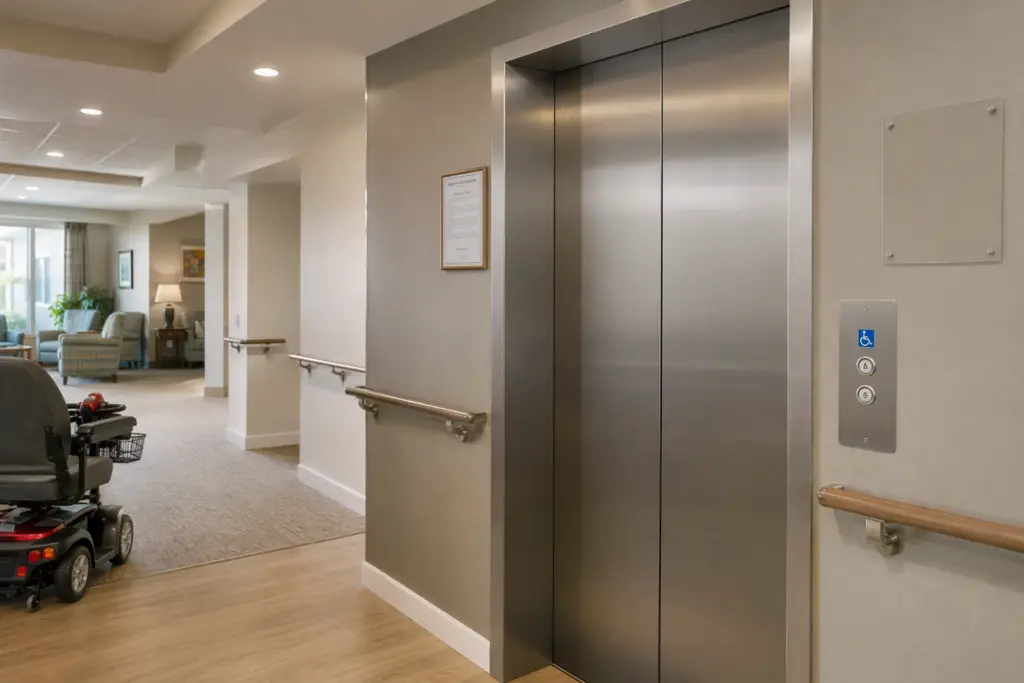
The Americans with Disabilities Act (ADA) requires that areas of a facility open to employees or the public be accessible. In warehouse and industrial buildings where personnel use elevators to access different levels, ADA elevator provisions may apply — particularly in areas with office components, break rooms, or any space accessible to the public or job applicants. ADA requirements cover cab dimensions, door timing, control panel reach ranges, and Braille/audio signage. Facilities undergoing renovation or new construction trigger the full scope of ADA elevator compliance under applicable California building codes.
What Should a Facility Manager Do If an Elevator Fails an Inspection?
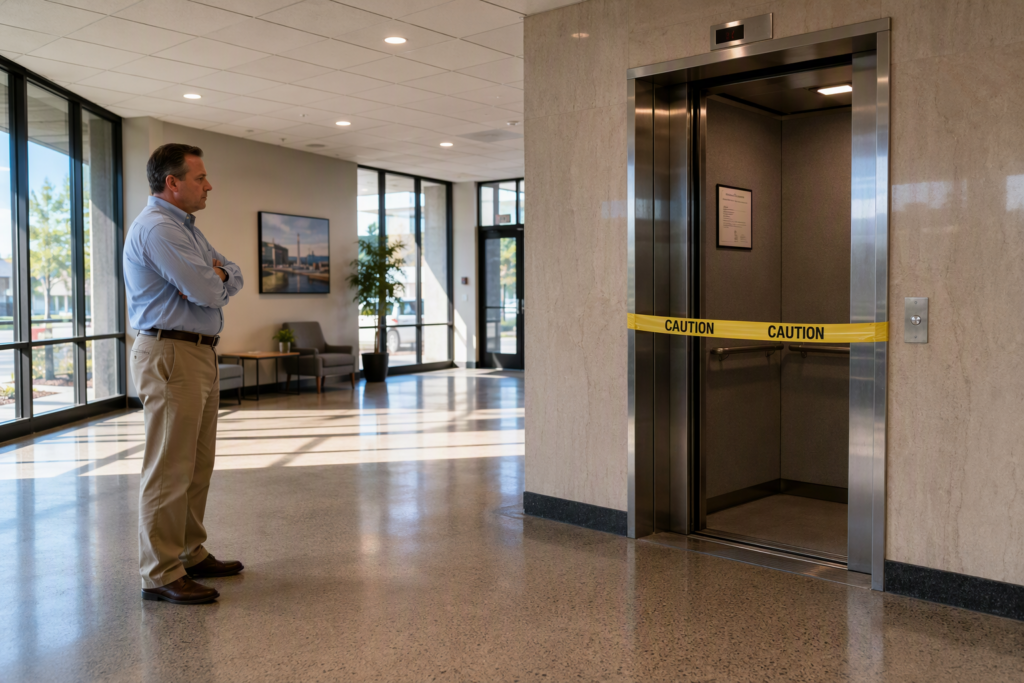
- Remove the elevator from service immediately and post the unit as out of service to prevent unauthorized use.
- Obtain a copy of the inspection report and review all cited deficiencies in detail.
- Contact a qualified elevator service company to evaluate the cited items and provide a scope of repair.
- Prioritize repairs according to safety criticality — address any items that present an immediate hazard first.
- Schedule and complete all required corrective work using certified elevator mechanics.
- Document all repairs with written records, including parts used and technician information.
- Request a re-inspection through Cal/OSHA or the applicable local authority having jurisdiction (AHJ).
- Retain all documentation on file for the duration required by California regulations.
How Does Liftech Elevator Support Warehouse and Industrial Clients in Southern California?
Liftech Elevator works with warehouse operators, industrial property managers, and logistics facility owners throughout the Southern California region to maintain elevator compliance and operational reliability. The team is familiar with the specific demands that high-cycle freight elevator environments place on equipment and maintenance schedules.
Services include full-coverage maintenance agreements, inspection coordination with Cal/OSHA-certified inspectors, permit renewal assistance, load testing, emergency repair dispatch, and equipment modernization for aging freight and hydraulic units. Liftech serves the greater Signal Hill, Long Beach, Compton, Carson, Torrance, and Los Angeles industrial corridor, with knowledge of the local permit and inspection processes that warehouse operators navigate regularly.
Emergency service availability ensures that facilities experiencing unexpected elevator outages can reach Liftech’s team at any time — keeping downtime to a minimum and helping operators meet their compliance obligations without extended gaps in service documentation.
—
Schedule a Free Consultation
If your warehouse or industrial facility in Signal, CA or the surrounding Southern California area needs elevator maintenance planning, inspection preparation, or compliance support, contact Liftech Elevator today. A member of the team will review your current equipment, permit status, and maintenance documentation to identify any gaps and recommend the right service program for your operation.
Call Liftech Elevator: 562-609-3478
Serving Signal Hill, Long Beach, Carson, Compton, Torrance, and the greater Southern California industrial market — Liftech Elevator is your local partner for freight and industrial elevator compliance.
Need elevator service you can rely on? Liftech Elevator is ready to help.