Elevator Maintenance and Inspection Requirements for Healthcare Facilities in California
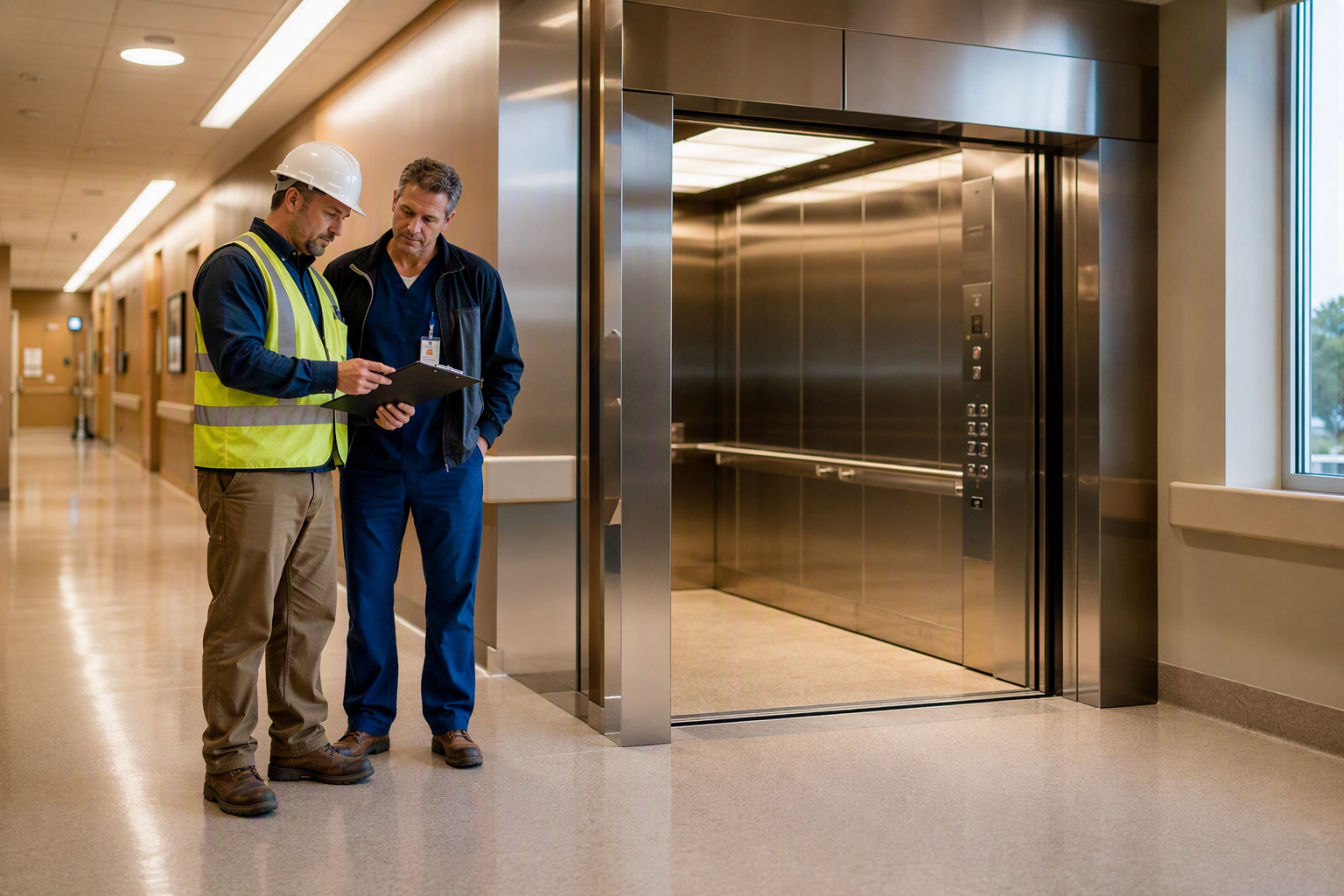
California healthcare facilities — including hospitals, skilled nursing facilities, outpatient surgery centers, and medical office buildings — operate elevators under some of the most demanding conditions of any vertical transportation environment. Patients in wheelchairs, stretchers, and medical transport beds depend on reliable, code-compliant lifts every hour of every day. Understanding the full scope of elevator maintenance and inspection requirements is essential for facility managers, compliance officers, and hospital administrators throughout Signal Hill, Long Beach, Los Angeles, and Orange County.
What Are the Core Elevator Compliance Standards for California Healthcare Facilities?
California healthcare elevator compliance draws from several overlapping regulatory frameworks:
- ASME A17.1 Safety Code for Elevators and Escalators: The foundational national standard governing elevator construction, installation, inspection, testing, and maintenance. California adopts and enforces ASME A17.1 through the Division of Occupational Safety and Health (Cal/OSHA), administered under California Code of Regulations (CCR) Title 8, Sections 3000–3183.
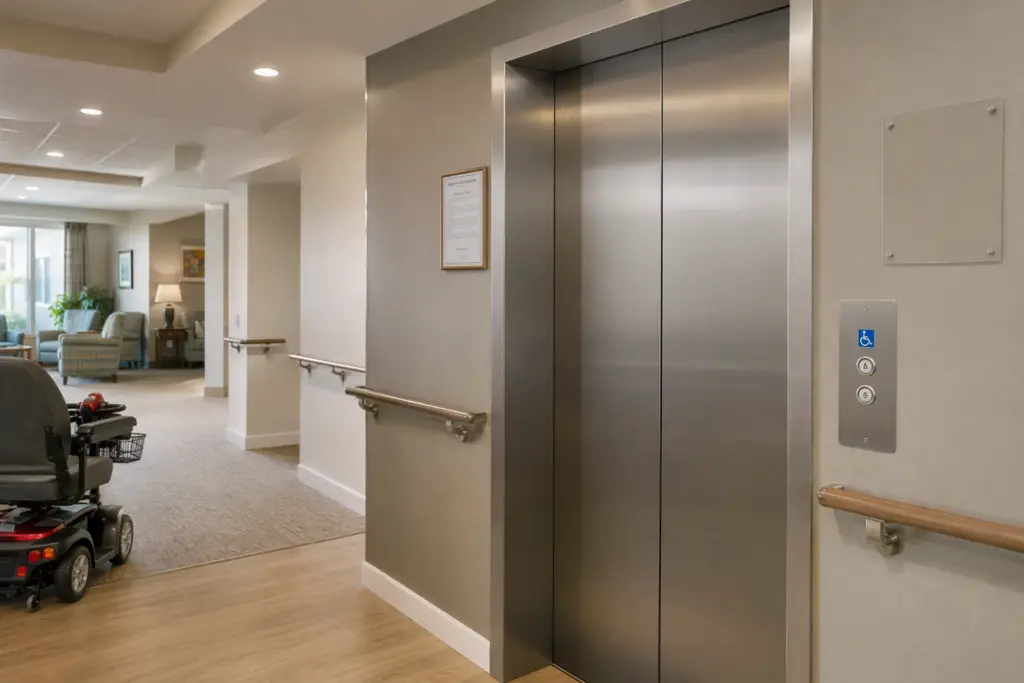
- Americans with Disabilities Act (ADA): Requires that elevators in multi-story healthcare facilities meet accessibility standards for cab dimensions, door timing, call button height, tactile markings, and audible indicators. Healthcare settings serve patients with mobility impairments at far higher rates than general commercial buildings, making ADA compliance especially critical.
- California Building Code (CBC) / Title 24: Governs new installations, alterations, and accessibility requirements at the state level, often incorporating and expanding upon federal ADA minimums.
- The Joint Commission (TJC) and CMS Conditions of Participation: Accredited hospitals and facilities receiving Medicare/Medicaid funding must demonstrate that vertical transportation equipment is maintained under a formal, documented program. Surveyors review maintenance logs and inspection records during accreditation visits.
- NFPA 99 and NFPA 101 (Life Safety Code): Address fire and life safety considerations relevant to elevator lobbies, recall functions, and egress planning in healthcare occupancies.
Liftech Elevator works with healthcare facility managers across Southern California to navigate this layered regulatory environment, ensuring inspections, permits, and maintenance records meet every applicable standard.
How Often Must Healthcare Elevators Be Inspected in California?
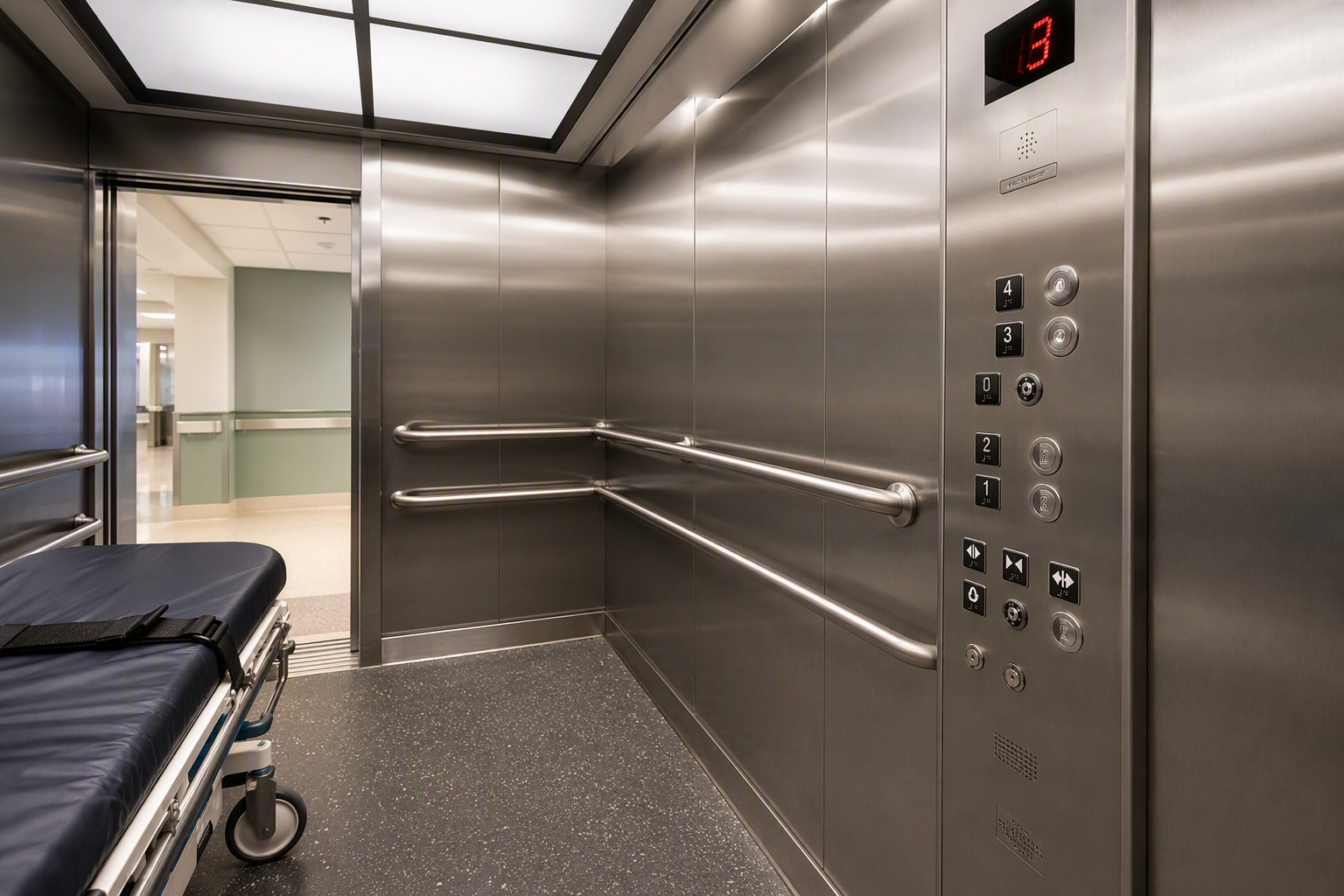
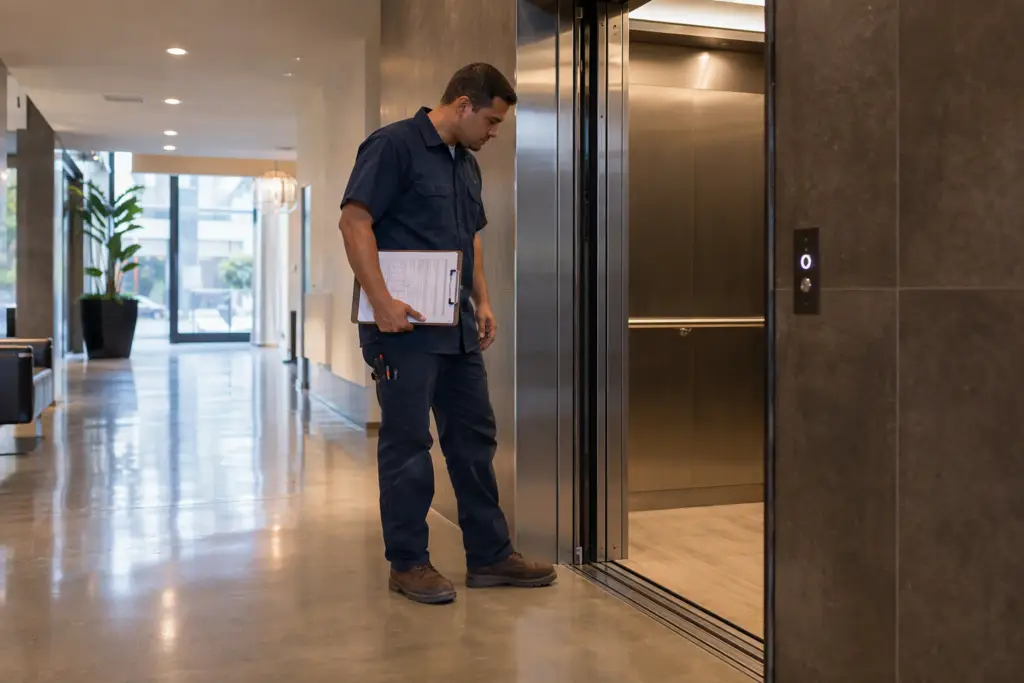
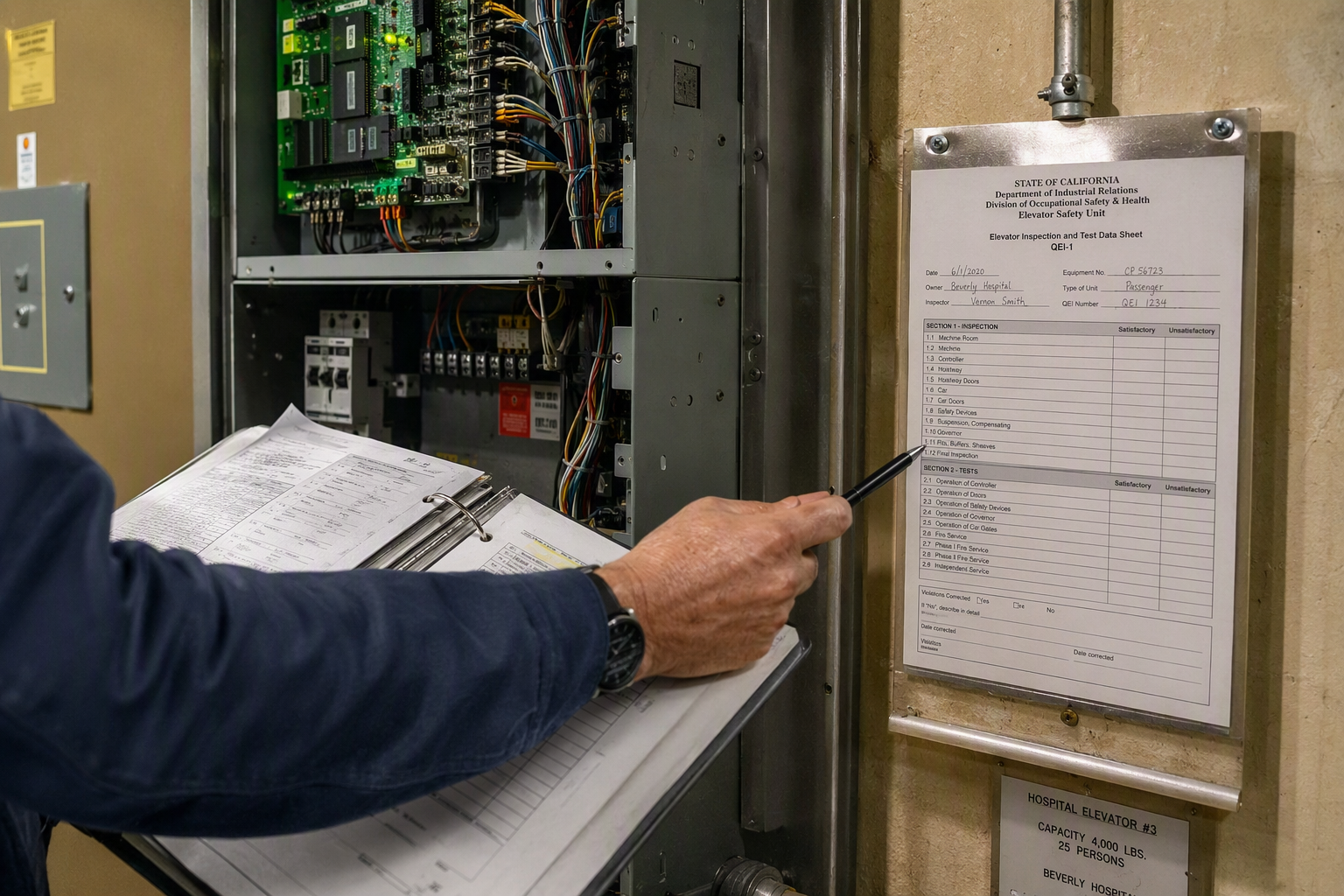
California law requires that elevators receive a periodic inspection and test by a Qualified Elevator Inspector (QEI) certified under ASME QEI-1. For most elevators, the state mandates:
- Periodic inspections: Conducted at intervals not to exceed those specified in ASME A17.1, typically annually for most conveyance types.
- Periodic tests: Certain safety components — including buffers, safeties, governors, and pressure relief valves — require testing on a defined cycle (commonly every one, five, or six years depending on the component, as specified in ASME A17.1 Rule 8.6).
- Annual operating permit: California requires a valid elevator operating permit issued by the local jurisdiction or the state, which is renewed based on satisfactory inspection results.
For healthcare facilities, proactive maintenance scheduling — not just reactive inspection compliance — is strongly recommended. Patient safety depends on elevator availability, and an out-of-service unit during a medical emergency can have serious consequences.
What Are the ADA Requirements Specific to Healthcare Elevator Use?
The ADA Standards for Accessible Design include specific requirements that are especially consequential in healthcare settings:
- Cab dimensions: Must accommodate wheelchair users and medical transport equipment. Hospitals frequently require larger-than-minimum cab sizes to accommodate stretchers and beds.
- Door dwell time: Doors must remain open long enough for individuals using mobility aids. Healthcare facilities often extend dwell times beyond ADA minimums to accommodate patients with limited mobility.
- Call buttons and controls: Buttons must be within accessible reach ranges, with raised and Braille characters. Healthcare-grade panels often include hands-free or low-touch controls.
- Audible and visual signals: Required for passengers with vision or hearing impairments — a particularly important feature in environments serving patients with sensory disabilities.
- Leveling accuracy: Elevators must level within a tolerance that prevents trip hazards — critical when moving patients on wheeled equipment across the threshold.
What Maintenance Tasks Are Required Under ASME A17.1 for Healthcare Elevators?
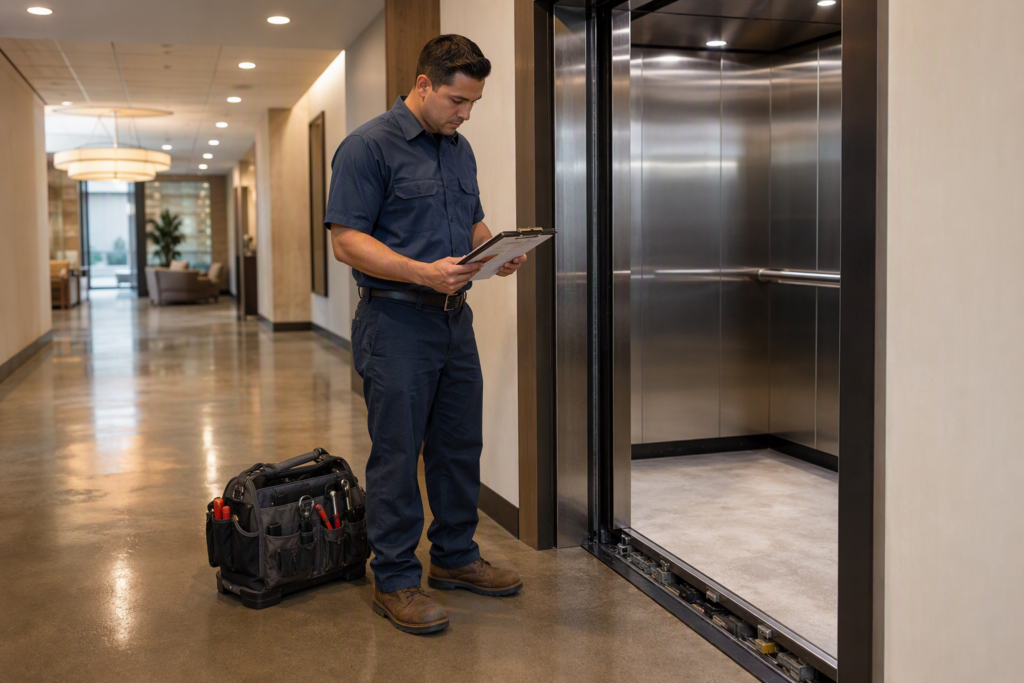
Under ASME A17.1, maintenance must be performed by a certified elevator mechanic and must include, at minimum:
- Lubrication of all moving components on a scheduled basis.
- Inspection and adjustment of door operators, clutches, and safety edges.
- Testing of all safety devices including governors, safeties, and buffers.
- Verification of emergency lighting, communication systems, and alarm functions.
- Inspection of hoist ropes or hydraulic systems for wear or fluid integrity.
- Testing of fire service recall (Phase I and Phase II) per ASME A17.1 requirements.
- Review and update of the Maintenance Control Program (MCP) documentation, which must be kept current and available for inspection.
- Verification of cab leveling accuracy to prevent trip hazards at every floor.
The Maintenance Control Program (MCP) requirement — introduced in the 2004 edition of ASME A17.1 and carried forward — mandates that every elevator have a written, equipment-specific maintenance plan. In healthcare settings, this document is frequently reviewed by Joint Commission surveyors and state inspectors alike.
What Happens If a Healthcare Facility Fails an Elevator Inspection in California?
When a California elevator fails its periodic inspection, the inspector is required to issue a notice of violation. Depending on the severity:
- Minor violations may allow continued operation with a corrective action timeline.
- Serious or imminent-hazard violations can result in the elevator being taken out of service immediately.
- The facility must complete all corrections and request a re-inspection before a permit is reissued.
- Operating an elevator without a valid permit is a violation of California Code of Regulations Title 8 and can result in significant penalties.
- For Joint Commission-accredited hospitals, documented elevator violations can trigger compliance findings during accreditation surveys.
Proactive engagement with a qualified elevator service company — such as Liftech Elevator — before inspections occur is the most effective way to avoid forced shutdowns that disrupt patient care operations.
Are There Special Requirements for Hospital Stretcher Elevators?
Yes. Hospitals and acute care facilities that transport patients on stretchers or hospital beds must ensure that at least one elevator meets minimum cab dimensions to accommodate these loads. California’s adoption of ASME A17.1 and CBC Title 24 includes provisions that reference stretcher-compliance for hospitals above certain floor counts. Facility managers should verify that stretcher-capable units are designated, clearly identified, and maintained with priority scheduling given their critical role in patient transport.
How Should Healthcare Facilities Document Elevator Maintenance for Regulatory Compliance?
Documentation is a cornerstone of healthcare elevator compliance. Facilities should maintain:
- A current, equipment-specific Maintenance Control Program (MCP) as required by ASME A17.1.
- Dated service records for every maintenance visit, including technician identification and tasks performed.
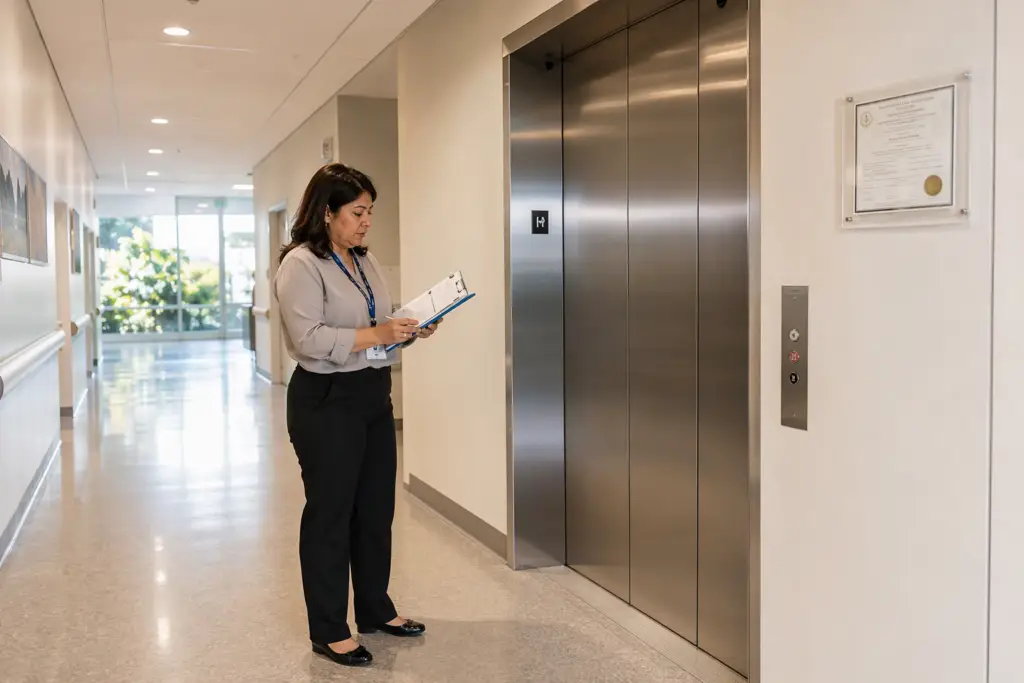
- Inspection certificates and state operating permits, posted in or adjacent to the elevator machine room.
- Records of all safety tests and their results, retained for the period specified by California regulations.
- Corrective action logs documenting how and when any violations were resolved.
Liftech Elevator provides healthcare clients with organized, audit-ready maintenance documentation that supports both state inspections and accreditation surveys.
What Is the Difference Between a Periodic Inspection and a Periodic Test?
Under ASME A17.1, these are distinct activities:
- Periodic inspection is a visual and operational examination of the elevator’s components and systems to verify they remain in safe operating condition.
- Periodic test involves physically activating and loading safety devices — such as applying rated load to safety gear, testing governor trip speed, or conducting hydraulic pressure relief tests — to confirm they function as designed.
Both are required on defined schedules. Healthcare facility managers should confirm with their elevator service provider which test cycle applies to each component on each unit in their facility.
How Do Fire Service Recall Requirements Apply to Healthcare Elevators?
California-adopted ASME A17.1 requires that elevators equipped with automatic fire service recall (Phase I) return to a designated floor when a fire alarm is triggered. Phase II emergency in-car operation allows fire service personnel to manually operate the elevator. In healthcare facilities:
- Fire recall must be tested as part of each periodic inspection.
- Coordination with the facility’s fire alarm system is required to ensure reliable recall activation.
- Staff training on Phase II operation is a separate but related requirement under life safety codes.
Questions Your Inspector Will Ask
During a California elevator inspection at a healthcare facility, a Qualified Elevator Inspector (QEI) is likely to request or verify the following:
- Is the current operating permit posted? The permit must be valid and displayed in the required location.
- Where is the Maintenance Control Program? The MCP must be on-site, current, and specific to each unit.
- Are maintenance logs up to date? Service records must show regular, documented maintenance visits.
- When were safety devices last tested? Governors, safeties, and buffers must have current test records.
- Has fire service recall been tested recently? Phase I and Phase II records will be reviewed.
- Are door safety edges and reopening devices functioning? These will be physically tested during the inspection.
- Is the machine room clean, secure, and properly lit? California regulations require controlled access and adequate lighting.
- Are emergency communications operational? In-cab phones or intercoms must connect to a monitored location.
- Are cab leveling tolerances within acceptable limits? The inspector will check landing accuracy at each floor.
- Is hydraulic fluid (if applicable) within acceptable parameters and free of leaks? Hydraulic units are subject to specific environmental and safety requirements in California.
Liftech Elevator conducts pre-inspection readiness reviews to help healthcare facilities in Long Beach, Los Angeles, Signal Hill, and Orange County address these items before the official inspection date.
What Should a Healthcare Facility Do If an Elevator Breaks Down During Patient Care Hours?
- Immediately notify facility management and activate any internal contingency protocols for patient transport.
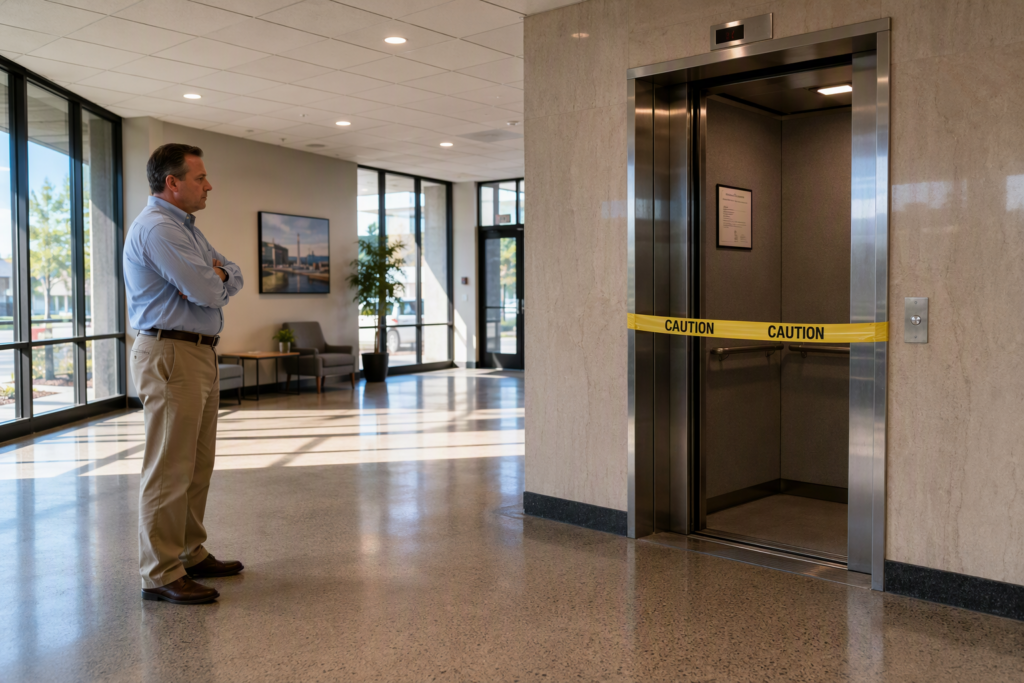
- Post out-of-service signage and barricade access to prevent use.
- Contact your elevator service provider to dispatch a certified mechanic.
- Document the time of failure, symptoms observed, and any preceding unusual operation in your maintenance log.
- Notify relevant department heads — particularly nursing, transport, and emergency services — so patient care workflows can be adjusted.
- Do not allow the elevator to be returned to service until a certified mechanic has cleared it as safe.
- Following restoration of service, document the repair, the root cause, and any corrective actions taken.
How Does Liftech Elevator Support Healthcare Facilities in Southern California?
Liftech Elevator serves healthcare facilities throughout Signal Hill, Long Beach, Los Angeles, and Orange County with elevator maintenance, inspection coordination, and compliance support. Healthcare environments present unique challenges — continuous operations, patient safety exposure, and multi-agency oversight — that require a service partner with deep familiarity with ASME A17.1, ADA requirements, and California’s regulatory framework.
Liftech Elevator helps facility managers build and maintain compliant Maintenance Control Programs, prepares facilities for state inspections and accreditation surveys, and provides documentation support that meets the expectations of The Joint Commission and California state inspectors.
For healthcare facility managers who want to ensure their elevators meet every applicable code — and avoid costly violations or forced shutdowns — working with a qualified local service company is the most reliable path forward.
Summary: Key Healthcare Elevator Compliance Requirements in California (2026)
- Comply with ASME A17.1 Safety Code for Elevators and Escalators as adopted under California CCR Title 8.
- Meet ADA Standards for Accessible Design for cab dimensions, door timing, controls, and leveling.
- Maintain a current, equipment-specific Maintenance Control Program (MCP).
- Obtain and post valid annual operating permits.
- Complete periodic inspections and safety-component tests on ASME-specified schedules.
- Maintain audit-ready documentation for state inspectors, The Joint Commission, and CMS reviewers.
- Ensure fire service recall and emergency communication systems are tested and operational.
- Address stretcher-accessibility requirements for hospitals transporting patients on beds or gurneys.
Get Expert Elevator Compliance Support for Your Healthcare Facility
California’s healthcare elevator regulations are complex, overlapping, and strictly enforced. Non-compliance puts patients at risk and exposes facilities to significant penalties, permit revocations, and accreditation findings. Contact Liftech Elevator for a free elevator assessment and find out exactly where your facility stands — before your next inspection.
Contact Liftech Elevator for a free elevator assessment: 562-609-3478
Serving healthcare facilities in Signal Hill, Long Beach, Los Angeles, and Orange County, CA.
Need elevator service you can rely on? Liftech Elevator is ready to help.