Elevator Modernization Incentives & Rebates for Healthcare Facilities in Los Angeles & Orange County (2026)
Direct Answer: In 2026, healthcare facilities in Los Angeles and Orange County can access elevator modernization incentives through Southern California Edison’s Business Energy Advisor program, the Los Angeles Better Buildings Challenge, utility-sponsored energy efficiency rebates, and federal tax deductions under Section 179D—all of which can offset the cost of compliant, energy-efficient elevator upgrades.
For hospital administrators, clinic operators, and senior care facility managers, elevator modernization is rarely optional—it is a patient safety and regulatory necessity. The good news is that significant financial incentives exist in 2026 to help healthcare buildings in Los Angeles, Long Beach, Signal Hill, and throughout Orange County reduce the out-of-pocket cost of bringing vertical transportation systems up to current standards. This guide covers every major incentive category, compliance requirement, and decision point your team needs before beginning a modernization project.
—
What Elevator Modernization Incentives Are Available for Healthcare Buildings in Los Angeles and Orange County in 2026?
Healthcare facilities in Southern California can pursue several overlapping incentive pathways when planning elevator modernization projects:
- Southern California Edison (SCE) Business Energy Advisor Rebates: SCE offers rebates for energy-efficient equipment, including variable-frequency drives (VFDs) on elevator motors and LED cab lighting upgrades. Eligible modernization work that reduces kilowatt-hour consumption can qualify. Facility managers should request a pre-project application directly from SCE before work begins, as rebates are processed post-installation.
- Los Angeles Better Buildings Challenge (LABBC): Commercial and institutional buildings in the City of Los Angeles that commit to measurable energy reduction targets may access technical assistance, financing connections, and recognition that supports internal capital allocation for projects like elevator modernization.
- SoCalGas Energy Efficiency Programs: Where elevator modernization involves machine room HVAC or ventilation improvements, SoCalGas rebates for energy-efficient equipment may apply as a complementary incentive.
- Federal Section 179D Tax Deduction: The Energy Efficient Commercial Buildings Deduction allows qualifying building owners to deduct costs associated with energy-efficient improvements. Elevator modernization that reduces whole-building energy use as part of a broader HVAC, lighting, or building envelope project may contribute to 179D qualification. Healthcare facilities should consult a qualified tax professional to determine eligibility.
- PACE Financing (Property Assessed Clean Energy): Los Angeles County and many Orange County municipalities participate in PACE programs such as LACPACE and CaliforniaFIRST. PACE financing allows building owners to fund energy-related improvements—including elevator drive and lighting upgrades—through a property tax assessment, spreading costs over time with no upfront capital required.
- California HVAC & Mechanical Equipment Incentives: For machine room cooling upgrades that accompany elevator modernization, additional rebates through Energy Upgrade California may apply.
Because incentive programs are updated annually and funding pools vary, healthcare facility managers in Long Beach, Signal Hill, Los Angeles, and Orange County are advised to confirm current program availability with their utility provider and local jurisdiction before submitting applications. Liftech Elevator assists clients in identifying which incentive categories apply to their specific scope of work during the assessment phase.
—
Why Do Healthcare Facilities Face Stricter Elevator Compliance Requirements Than Other Commercial Buildings?

Hospitals, outpatient surgery centers, skilled nursing facilities, and medical office buildings operate under a layered compliance environment that goes well beyond standard commercial elevator codes. The core technical standard is the ASME A17.1 Safety Code for Elevators and Escalators, which governs design, construction, operation, inspection, and maintenance of all elevators in the United States. In California, this standard is adopted by reference through the California Elevator Safety Construction Regulations enforced by the Division of Occupational Safety and Health (Cal/OSHA).
Healthcare-specific overlays include:
- ADA Accessibility Requirements: The Americans with Disabilities Act (ADA) mandates that elevators serving multiple floors in healthcare facilities meet dimensional, control, and door timing standards that accommodate patients using wheelchairs, gurneys, and mobility aids. Modernization projects trigger a “path of travel” obligation, meaning accessible routes—including elevator access—must be brought into compliance as part of any significant renovation.
- Gurney and Stretcher Cab Dimensions: Clinical standards and local fire codes in Los Angeles and Orange County often require at minimum one elevator per facility capable of accommodating a standard hospital gurney, which influences cab size, door width, and control placement during modernization.
- Infection Control During Modernization: Joint Commission-accredited facilities and CMS-certified hospitals are subject to Infection Control Risk Assessment (ICRA) requirements during construction. Elevator modernization contractors working in active healthcare environments must follow dust containment, traffic separation, and material handling protocols.
- Emergency Power and Firefighter Service: ASME A17.1 and local fire codes require that at least one elevator per bank be capable of Phase I and Phase II firefighter emergency operations and, in many healthcare occupancies, be connected to emergency backup power systems.
- Cal/OSHA Inspection Jurisdiction: Unlike many states, California places elevator safety regulation under Cal/OSHA jurisdiction rather than a building department. Permits, inspections, and certificates of compliance for modernization work in Los Angeles and Orange County are processed through Cal/OSHA’s Elevator Unit.
—
What Equipment Is Typically Replaced During Healthcare Elevator Modernization?
A full elevator modernization for a healthcare facility typically addresses the following systems, each of which may contribute to incentive eligibility and compliance improvement:
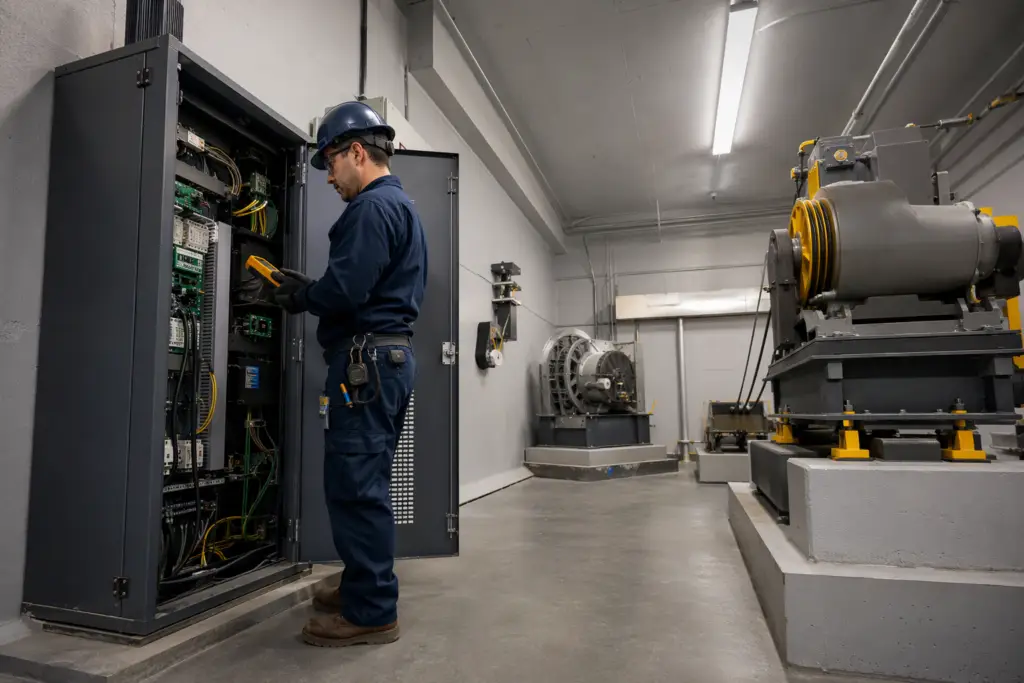
- Control system and relay logic replacement with modern solid-state or microprocessor-based controls
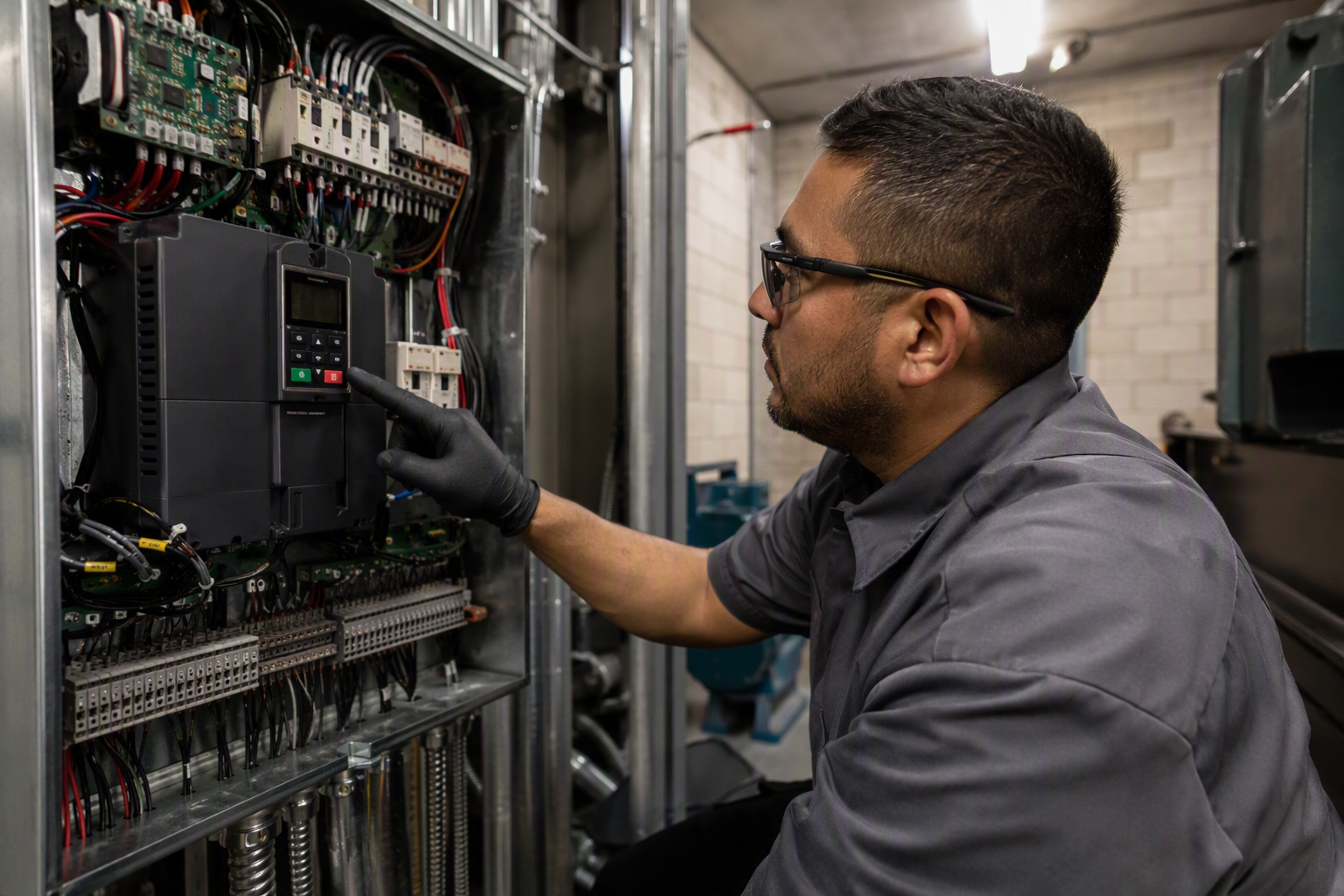
- Variable-frequency drive (VFD) installation on traction elevator motors for energy reduction
- Door operator and safety edge upgrades to meet current ASME A17.1 requirements
- Cab interior renovation including ADA-compliant control panels, Braille signage, and audio announcements
- LED cab and hoistway lighting replacement
- Emergency lighting and communication system upgrades
- Hydraulic fluid conversion to biodegradable fluid (for hydraulic elevators), reducing environmental liability
- Firefighter service phase I and phase II upgrades
- Seismic safety upgrades required under California Building Code
—
How Long Does a Healthcare Elevator Modernization Take in Los Angeles or Orange County?
Project timelines vary by building type, elevator age, and scope. A partial modernization focused on controls and drives may be completed in a matter of weeks per elevator. A full cab and mechanical modernization in an active hospital environment—where elevator downtime must be sequenced to maintain patient access—typically requires more careful phasing and coordination. Cal/OSHA permit processing time in Los Angeles and Orange County should be factored into project scheduling, as permits must be issued before modernization work begins and a final inspection must occur before the elevator returns to service.
Healthcare facilities should request a phased modernization plan that maintains minimum vertical transportation capacity throughout the project. Liftech Elevator works with facility operations teams in Long Beach, Signal Hill, Los Angeles, and Orange County to develop phasing schedules that meet both regulatory timelines and patient care continuity requirements.
—
Does Elevator Modernization Trigger Full ADA Compliance Upgrades?
In most cases, yes. Under ADA regulations enforced by the U.S. Department of Justice, alterations to a facility trigger a path of travel obligation requiring that the accessible route serving the altered area—including elevators—be brought into compliance to the extent that the cost is not disproportionate to the overall project cost. The ADA defines “disproportionate” as exceeding a specified percentage of the total alteration cost; healthcare facilities should confirm current thresholds with legal counsel. Because elevator modernization is frequently the triggering alteration itself, the cab controls, signage, door timing, and leveling accuracy should all be addressed within the same project scope.
—
Are There Seismic Upgrade Requirements for Elevators in California Healthcare Facilities?
Yes. California’s seismic requirements under the California Building Code (CBC) and California Elevator Safety Construction Regulations impose specific seismic design standards for elevator guide rails, counterweight retention, and machine anchorage. Healthcare facilities classified as essential services buildings under the CBC face heightened seismic performance standards. Modernization projects that touch structural or mechanical components may trigger a full seismic compliance review by the Cal/OSHA Elevator Unit. Addressing seismic upgrades within a modernization project is generally more cost-effective than performing them as a separate project, and some seismic work may qualify for energy-related incentives when bundled with drive and lighting upgrades.
—
How Do Utility Rebates Work for Elevator Modernization Projects?
Utility rebates for elevator modernization are typically calculated based on projected energy savings from the upgraded equipment. The most common qualifying measures include:
- Submit a pre-approval application to the utility (SCE or SoCalGas) before work begins—most programs require pre-project enrollment.
- Complete the modernization using qualifying equipment that meets the program’s technical specifications (e.g., VFD efficiency ratings).
- Provide documentation including invoices, equipment specifications, and a post-installation inspection report.
- The utility processes the rebate application and issues payment to the building owner or, in some programs, directly to the contractor.
Rebate amounts are determined by the utility’s current program schedules, which are updated periodically. Healthcare facilities should obtain current program details directly from SCE or SoCalGas before budgeting incentive amounts into a project financial model.
—
What Is the Section 179D Deduction and Can It Apply to Hospital Elevator Modernization?
Section 179D of the Internal Revenue Code provides a tax deduction for energy-efficient commercial building improvements. For tax-exempt entities such as nonprofit hospitals, the Inflation Reduction Act of 2022 created a pathway allowing the deduction to be allocated to the designer or contractor of the project. For-profit healthcare building owners may claim the deduction directly. Elevator modernization qualifies as a contributing measure when it reduces the building’s overall energy consumption as part of a qualifying building system improvement. A qualified energy assessor must certify the energy savings. Healthcare facility CFOs and tax advisors should review current IRS guidance for 2026 eligibility thresholds and certification requirements.
—
How Should a Healthcare Facility Choose an Elevator Modernization Contractor?
When evaluating elevator modernization contractors for a healthcare environment, facility managers should assess the following criteria:
- Demonstrated experience working in active clinical environments with ICRA-compliant construction practices
- Familiarity with Cal/OSHA elevator permit processes in Los Angeles and Orange County
- Ability to provide phased project plans that maintain patient access throughout modernization
- Knowledge of current ASME A17.1 requirements and ADA compliance obligations
- Ability to assist with utility rebate documentation and pre-approval processes
- Local service presence for ongoing maintenance after modernization is complete
Liftech Elevator serves healthcare facilities across Signal Hill, Long Beach, Los Angeles, and Orange County, providing modernization assessments that evaluate compliance gaps, incentive eligibility, and phasing options in a single coordinated review.
—
Questions Your Inspector Will Ask
When a Cal/OSHA elevator inspector reviews a modernization project at a healthcare facility in Los Angeles or Orange County, the following questions and documentation requests are standard. Preparing these answers in advance will streamline the inspection and certificate of compliance process:
- What is the current permit status? A Cal/OSHA modernization permit must be in place before work begins. Inspectors will verify the permit number and scope matches the completed work.
- Has the control system been tested to current ASME A17.1 performance standards? Inspectors will request test results for door reopening devices, leveling accuracy, speed governors, and emergency stop functions.
- Are Phase I and Phase II firefighter service operations functional? Inspectors test firefighter recall and in-car operation directly.
- Does the cab interior meet ADA requirements? Control panel height, button size, Braille, and audio announcements are verified against ADA standards.
- Has seismic bracing been updated? For modernizations touching guide rails or machine anchorage, inspectors will ask for engineering documentation on seismic compliance.
- Is emergency lighting functional and compliant? Battery backup duration and illumination levels are tested.
- Is the cab communication system two-way and operational? ASME A17.1 requires a means of two-way communication between the cab and a continuously monitored location.
- Has the maintenance provider updated service records? Inspectors may request to review the maintenance log to confirm ongoing compliance between inspections.
—
What Are the Risks of Delaying Elevator Modernization in a Healthcare Facility?
Deferring elevator modernization in a healthcare environment carries compounding risk across multiple dimensions:
- Regulatory enforcement: Cal/OSHA can issue correction notices, impose fines, or order elevators out of service if deficiencies are identified during routine or complaint-driven inspections.
- ADA litigation exposure: Healthcare facilities that have not addressed known ADA deficiencies face potential civil complaints and legal liability.
- Patient and staff safety: Aging door operators, worn guide rails, and obsolete control systems increase the probability of entrapments, leveling failures, and door-related injuries.
- Incentive program expiration: Utility rebate programs and PACE financing terms change annually. Facilities that delay may find fewer or smaller incentives available in future program years.
- Parts obsolescence: Replacement components for older elevator control systems become increasingly difficult to source, extending downtime during emergency repairs.
—
Next Steps: How to Begin a Healthcare Elevator Modernization Assessment
Healthcare facility managers in Los Angeles, Long Beach, Signal Hill, and Orange County can take the following steps to move a modernization project forward in 2026:
- Pull current elevator inspection records and identify any outstanding Cal/OSHA correction items.
- Document the age, manufacturer, and control system type for each elevator in the facility.
- Contact SCE or SoCalGas to request current rebate program information and pre-enrollment deadlines.
- Engage a qualified elevator modernization contractor to conduct a compliance gap assessment against current ASME A17.1 and ADA requirements.
- Request a phased modernization proposal that accounts for patient care continuity, permit timelines, and incentive documentation requirements.
- Share the proposal with the facility’s CFO and tax advisor to evaluate Section 179D and PACE financing opportunities.
- Submit utility pre-approval applications before any work begins.
Liftech Elevator provides free elevator assessments for healthcare facilities throughout Signal Hill, Long Beach, Los Angeles, and Orange County, covering compliance status, modernization scope, and available incentive pathways in a single coordinated evaluation.
—
Get a Free Elevator Assessment for Your Healthcare Facility
Contact Liftech Elevator for a free elevator assessment and find out which modernization incentives, rebates, and financing options apply to your Los Angeles or Orange County healthcare facility in 2026. Call 562-609-3478 to schedule your assessment today.
Need elevator service you can rely on? Liftech Elevator is ready to help.