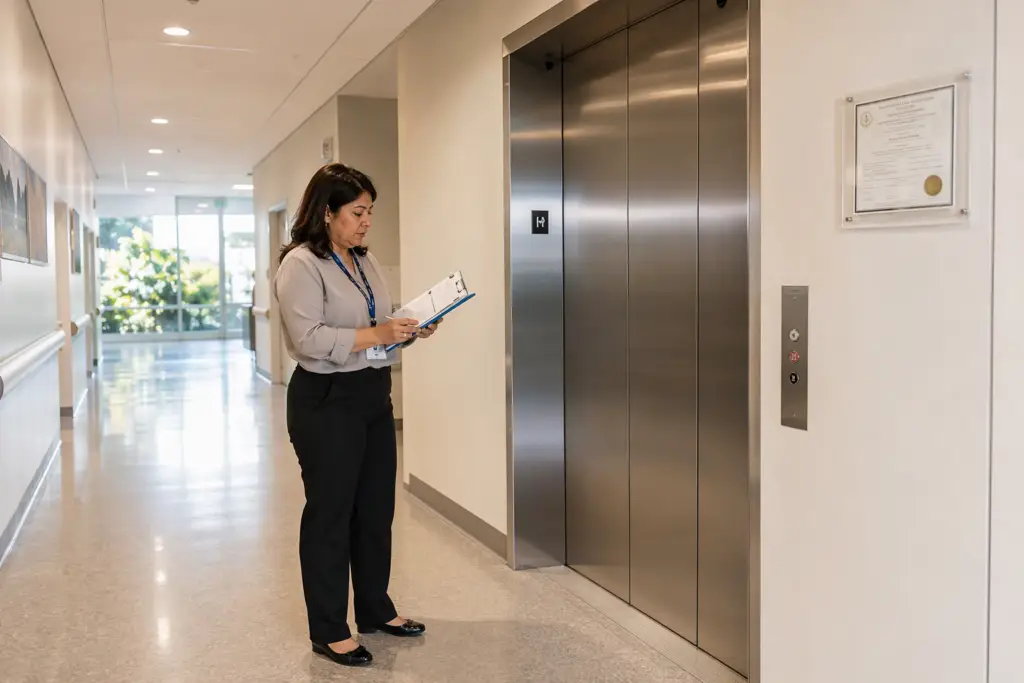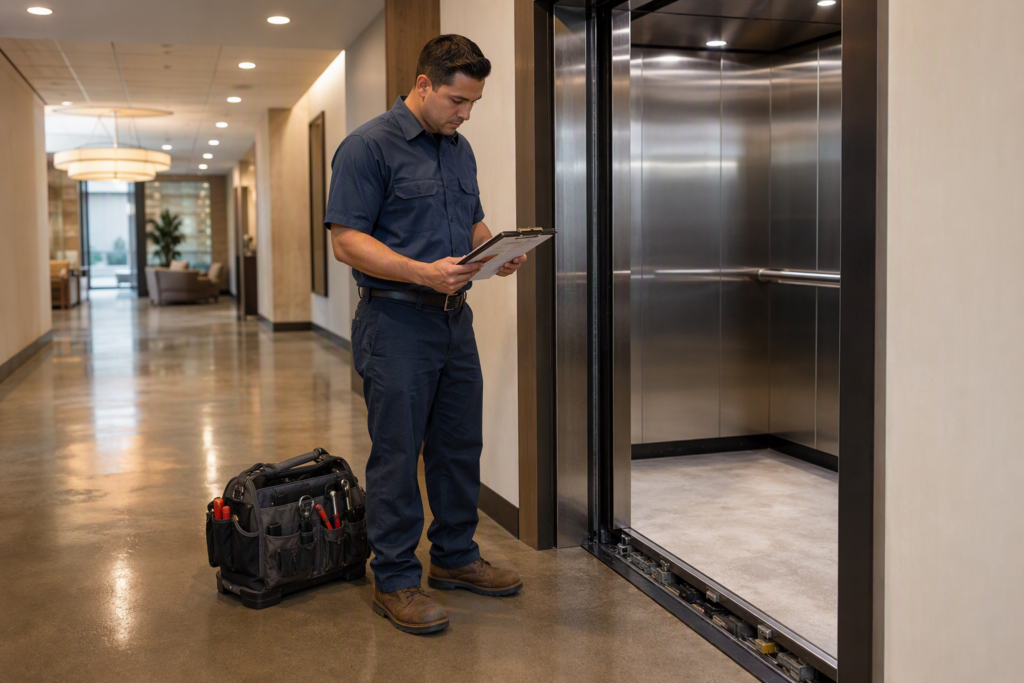
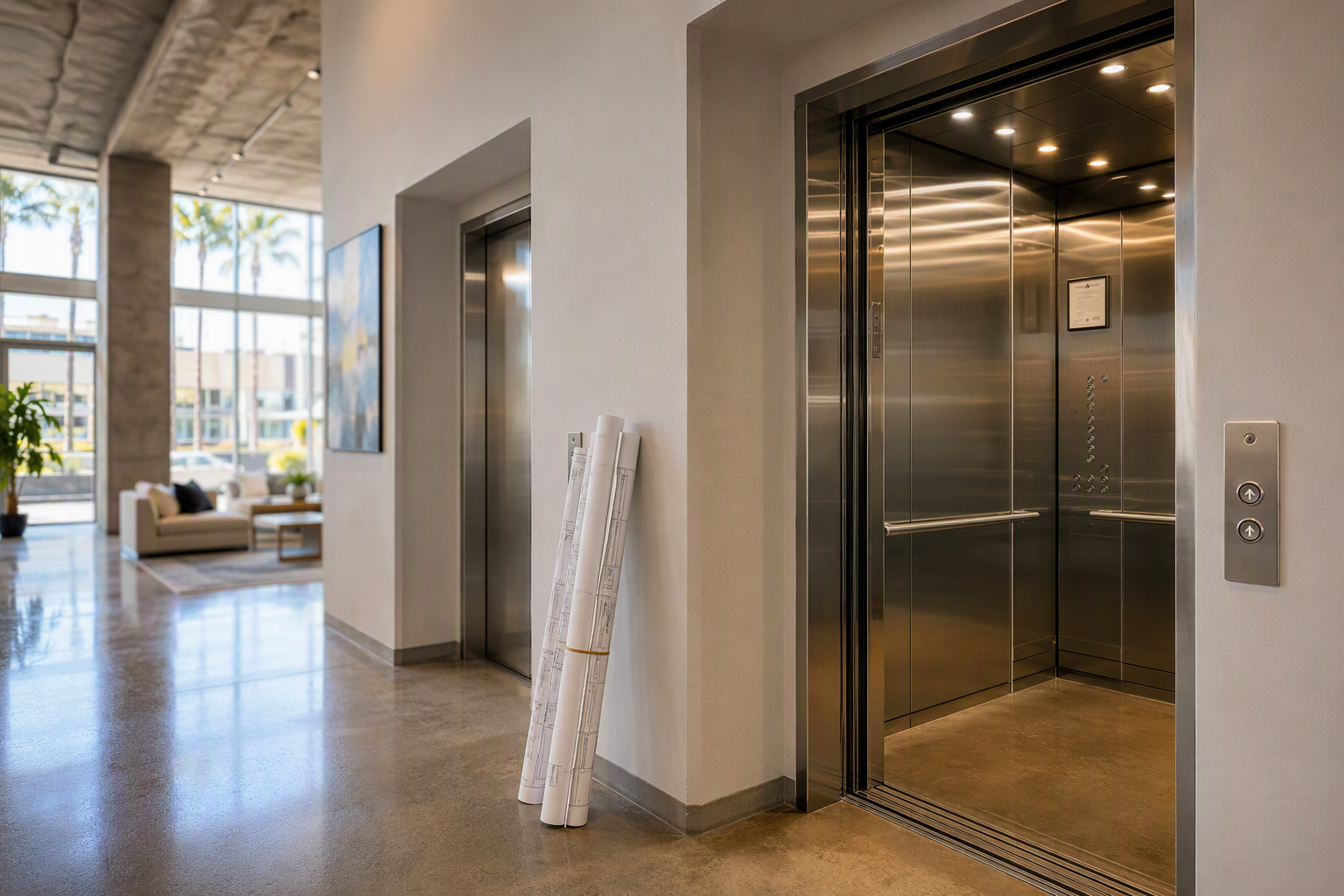
Elevator Upgrades Required When a California Building Changes Use or Undergoes Major Renovation: Complete FAQ
California building owners and property managers facing an occupancy change or significant renovation project often discover that elevator compliance is one of the most complex and consequential items on their checklist. The requirements span multiple overlapping codes — state elevator safety law, federal accessibility mandates, and local building department rules — and the consequences of non-compliance range from permit denial to forced shutdowns. This FAQ hub covers every major question surrounding elevator upgrade requirements during California building conversions and major renovations, with the technical detail needed to make informed decisions.
What elevator upgrades are required when a California building changes its occupancy use?

When a California building changes occupancy use, elevators must be upgraded to meet the current requirements of ASME A17.1 Safety Code for Elevators and Escalators, California Title 8 elevator safety orders, and ADA accessibility standards applicable to the new occupancy type.
A change of use — for example, converting an office building into residential apartments, or transforming a warehouse into a mixed-use retail and residential structure — is treated by California authorities as a trigger event for elevator compliance review. The AHJ (Authority Having Jurisdiction), which may be the local building department or Cal/OSHA, evaluates whether the existing elevator equipment meets the code edition currently enforced for the new building classification. Commonly required upgrades include firefighter’s emergency operation (Phase I and Phase II), updated door reopening devices, cab interior accessibility modifications, emergency lighting, two-way communication systems, and in some cases, full modernization of the machine room and controller.
The extent of required upgrades depends on the gap between the code edition under which the elevator was originally permitted and the current enforced edition, as well as the nature of the new occupancy and whether the renovation triggers a “substantial alteration” determination under ADA guidelines.
What California codes and regulations govern elevator upgrades during renovations?
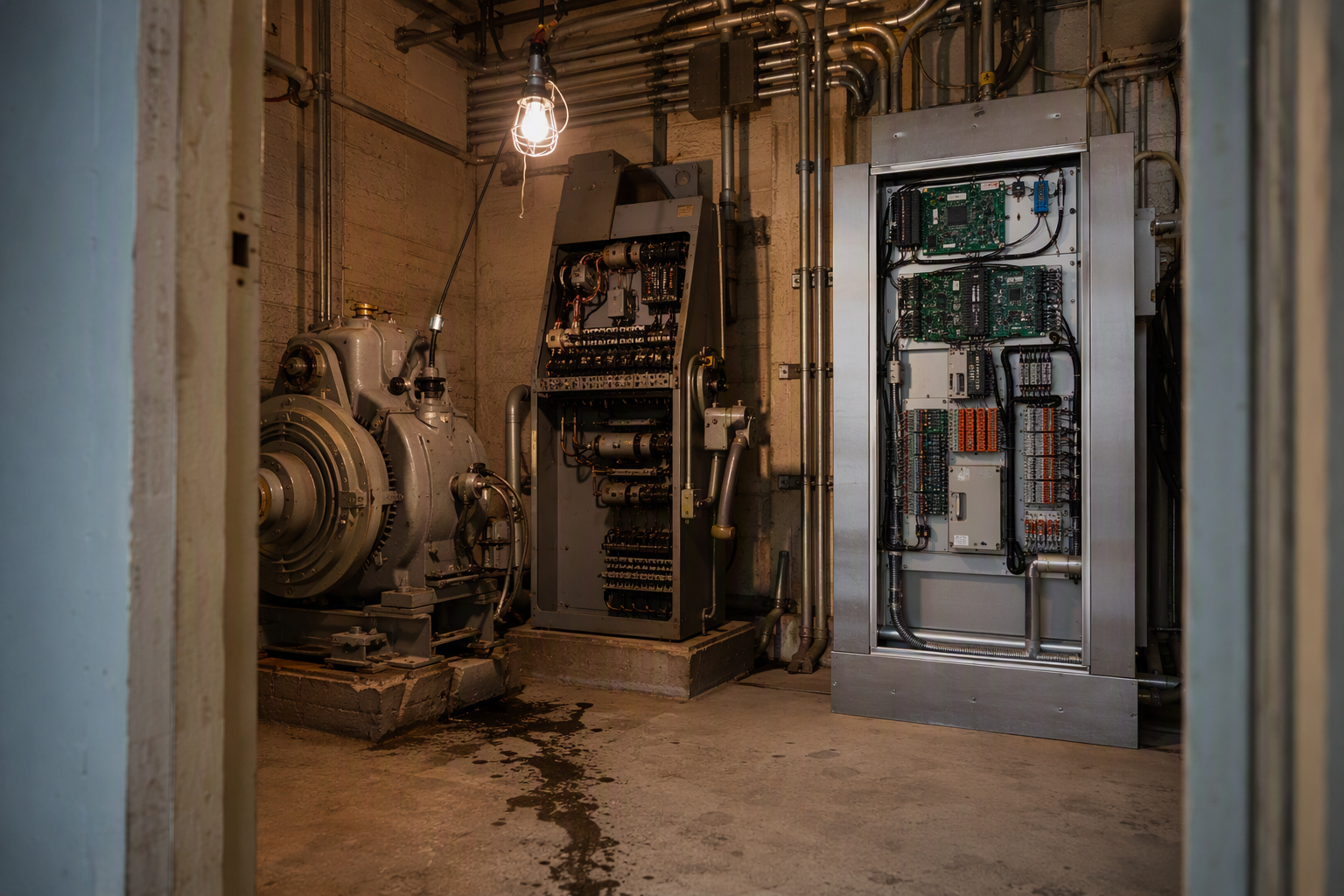
Elevator upgrades in California during renovations are primarily governed by ASME A17.1, California Code of Regulations (CCR) Title 8, the California Building Code (CBC), and the ADA Standards for Accessible Design.
California’s elevator safety program sits under the Division of Occupational Safety and Health (Cal/OSHA), Elevator, Ride, and Tramway Unit (ERTA). ERTA enforces the California elevator safety orders found in CCR Title 8, which adopt and modify ASME A17.1. California has historically operated on a slightly delayed adoption cycle relative to the national ASME edition; as of 2026, project teams should confirm the currently enforced edition directly with ERTA or the local AHJ, as adoption cycles can affect which specific code provisions apply.
The CBC, administered locally by city and county building departments, governs the renovation permit process and references accessibility requirements. For buildings with public accommodations or commercial uses, ADA accessibility standards impose additional obligations that go beyond state elevator safety orders, covering items such as cab dimensions, control button height, Braille signage, and audible floor indicators.
Does a “major renovation” always trigger elevator upgrade requirements in California?
Not every renovation automatically triggers elevator upgrades, but any renovation that affects the elevator system directly, changes the building’s occupancy classification, or constitutes a “substantial alteration” under ADA triggers compliance review and potential mandatory upgrades.
California building departments apply a threshold analysis. If the renovation costs exceed a certain percentage of the building’s value or involves the primary function area of a building open to the public, ADA path-of-travel obligations arise — and the elevator is almost always part of the required accessible path. Even purely cosmetic lobby renovations can trigger an obligation to upgrade elevator cab interiors and controls if the lobby is the “primary function area” being renovated and the elevator is identified as a barrier in the path of travel. Project owners should obtain a formal AHJ determination before assuming an elevator is exempt.
What specific ASME A17.1 safety features are most commonly required as upgrades?
The most commonly required upgrades under ASME A17.1 during California building renovations include firefighter’s emergency operation, car door reopening devices, emergency lighting and two-way communication, car enclosure fire ratings, and governor and safety device recertification.
Older elevators installed before the widespread adoption of ASME A17.1’s firefighter service requirements (Phase I recall and Phase II in-car operation) frequently require a full firefighter’s emergency service upgrade when a building changes use to an occupancy type where fire service is mandated — including residential, hotel, healthcare, and most commercial uses above a certain number of floors. Door reopening devices (safety edges or light curtains) must meet current performance standards. Emergency lighting inside the cab, a battery-powered backup, and a two-way means of communication connecting the cab to an emergency monitoring location are also standard upgrade triggers. Governing and safety systems on older equipment may need recertification or replacement to meet current drop-test and speed-governor standards.
What ADA accessibility upgrades are typically required when a building changes use?
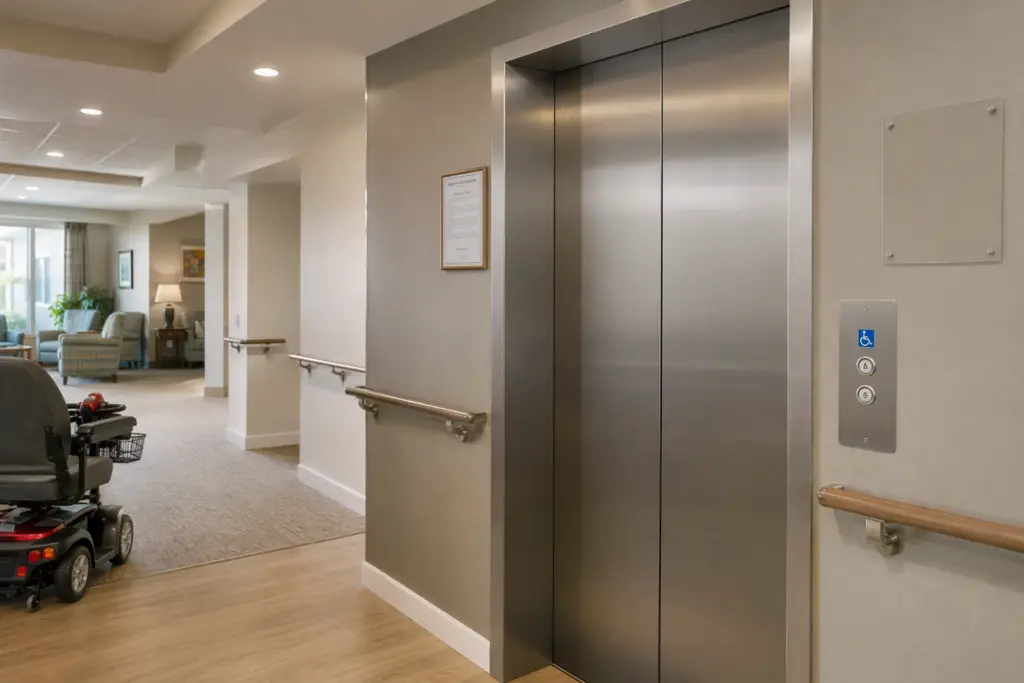
When a building changes use or undergoes a substantial alteration, ADA requires that elevators on the accessible route serving the altered area meet current ADA Standards for Accessible Design, including requirements for call button height, cab dimensions, floor designations in Braille, audible signals, and leveling accuracy.
For older elevators, the most frequent ADA deficiencies found during change-of-use reviews include call buttons mounted at non-compliant heights, absence of raised and Braille floor designations on jamb plates, missing or non-functional audible and visible floor indicators, and leveling tolerances exceeding the allowable threshold. Cab interior dimensions may also be non-compliant for wheelchair access. Under ADA, when a path-of-travel obligation is triggered, the required accessibility expenditure is limited to a defined percentage of the cost of the alteration to the primary function area — but within that limit, elevator upgrades are a priority item.
How does a change from commercial to residential use specifically affect elevator requirements?
Converting a commercial building to residential use typically triggers requirements for firefighter’s emergency operation, enhanced door safety devices, accessible cab features aligned with residential building codes, and in California, may require compliance with additional seismic safety provisions.
Residential occupancies introduce life-safety considerations that may not have applied to the prior commercial use, particularly around 24-hour emergency communication monitoring, since residential occupants may be present at all hours without building staff. California’s seismic risk also means that elevator buffers, guide rail fastenings, and machine room anchorage may need to be evaluated and potentially upgraded to meet current seismic performance expectations, particularly in higher seismic zones that include much of Los Angeles County and Orange County.
What is the process for obtaining elevator upgrade permits in California?
The elevator upgrade permit process in California involves filing permit applications with Cal/OSHA’s ERTA unit, coordinating with the local building department for any construction permits, submitting engineering plans for significant alterations, completing the work through a licensed elevator contractor, and scheduling required inspections with a certified elevator inspector.
- Conduct a preliminary code compliance assessment with a licensed elevator contractor to identify all required upgrades relative to the current enforced code edition.
- Engage a licensed elevator contractor or elevator engineer to prepare plans and specifications for the required work.
- Submit permit applications to Cal/OSHA ERTA for elevator-specific work, including all required drawings and equipment specifications.
- Submit any associated construction permits to the local city or county building department for cab interior work, machine room modifications, or structural changes.
- Coordinate permit timelines with the overall renovation schedule to avoid delays in obtaining a certificate of occupancy.
- Complete all upgrade work using licensed elevator mechanics and a licensed elevator contractor in accordance with the approved plans.
- Schedule and pass all required inspections by a Cal/OSHA certified elevator inspector or third-party certified inspector as approved by ERTA.
- Receive an updated permit to operate (certificate of operation) reflecting compliance with the upgraded code requirements.
Liftech Elevator assists building owners throughout the Signal Hill, Long Beach, Los Angeles, and Orange County areas in navigating this permitting process, coordinating directly with ERTA and local building departments to keep projects on schedule.
How long do elevator upgrade projects typically take during a major California renovation?
The timeline for elevator upgrades during a California building renovation varies significantly based on the scope of work — ranging from several weeks for targeted safety device upgrades to several months for full modernization projects — with permit processing time and equipment lead times being the most significant variables.
Permit processing at Cal/OSHA ERTA can add weeks to a project timeline, and building owners who do not initiate the permit process early in a renovation project frequently experience delays in their certificate of occupancy. Equipment lead times for controllers, door operators, and cab interiors can vary depending on the manufacturer and current supply chain conditions. Projects involving complete modernization — new controller, new machine, new cab, new door systems — generally require the most lead time and planning. Engaging a qualified elevator contractor at the earliest stage of renovation planning is the most effective way to avoid schedule conflicts.
What are the consequences of not upgrading elevators when required during a California building renovation?
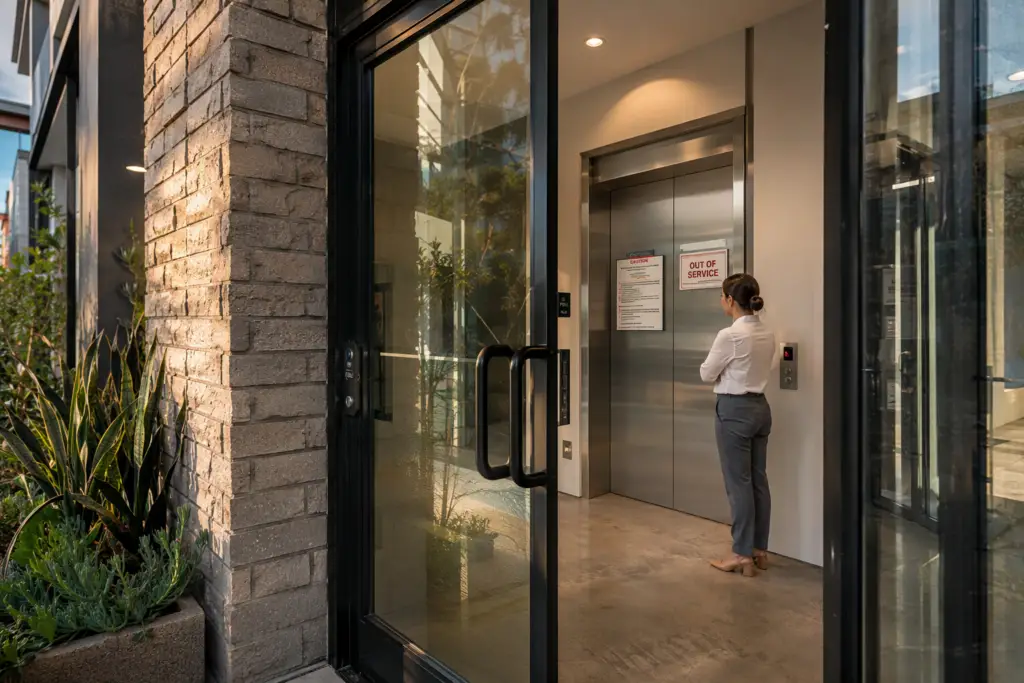
Failing to perform required elevator upgrades during a California building renovation can result in permit denial, refusal to issue a certificate of occupancy, elevator shutdown orders from Cal/OSHA, and potential ADA-based legal liability.
Cal/OSHA has the authority to issue orders prohibiting use of an elevator that does not meet applicable safety requirements. Beyond operational shutdowns, building owners face potential civil liability under the ADA if an elevator on a required accessible route does not meet accessibility standards following a substantial alteration. In litigation, failure to upgrade when legally required is a significant factor in establishing liability. Property lenders and insurers are also increasingly scrutinizing elevator compliance as part of due diligence for building acquisitions and refinancing.
What is a “substantial alteration” under ADA and how does it apply to elevators?
Under the ADA, a “substantial alteration” is a modification to a building or facility that affects or could affect its usability, and when such an alteration occurs to a primary function area, the path of travel to that area — including elevators — must be made accessible to the extent that the cost of doing so does not exceed a defined percentage of the cost of the alteration itself.
The ADA’s path-of-travel obligation is one of the most frequently misunderstood triggers for elevator upgrades. A building owner who renovates a primary function area — such as a main floor tenant space, lobby, or conference facility — must also upgrade the accessible path of travel to that area. Since elevators serve as the accessible path in multi-story buildings, they fall directly within this obligation. The ADA does not require that path-of-travel upgrades exceed the defined cost cap (20% of the cost of the alteration to the primary function area under DOJ guidance), but within that budget, accessibility barriers on the elevator should be addressed first.
Are there seismic upgrade requirements for elevators in California renovation projects?
California’s seismic environment means that elevator guide rail systems, machine anchorage, and buffer systems in older buildings may need to be evaluated and upgraded when a major renovation triggers a permit review, particularly in high seismic zones such as those in Los Angeles and Orange Counties.
While California’s elevator safety orders do not establish a single universal seismic retrofit mandate for all older elevators, the permitting and inspection process during a major renovation creates an opportunity for Cal/OSHA inspectors and local building officials to flag deficiencies in seismic restraint systems. Buildings in higher seismic zones that are undergoing change of use may be subject to a broader structural review under the CBC that can include the elevator hoistway and machine room. Building owners in Los Angeles County and Orange County should specifically discuss seismic compliance with their elevator contractor as part of the upgrade assessment.
What is the role of the Authority Having Jurisdiction (AHJ) in elevator upgrade decisions?
The AHJ — typically the local building department and Cal/OSHA ERTA — makes the authoritative determination of which elevator upgrades are required for a specific project, interpreting applicable codes and issuing the permits and inspection approvals that govern the work.
Because California’s elevator code adoption and local amendments create variation across jurisdictions, what is required in the City of Los Angeles may differ in detail from what is required in Long Beach, Signal Hill, or an Orange County city. The AHJ has discretionary authority to require upgrades beyond the minimum code baseline in some circumstances, and equally has the authority to grant equivalencies or variances when an owner proposes an alternative approach that achieves the same level of safety. Engaging directly with the AHJ at the planning stage — rather than after permits are submitted — is consistently one of the most effective strategies for managing elevator upgrade scope and cost on renovation projects.
How much do elevator upgrades typically cost during a California building renovation?
The cost of elevator upgrades during a California building renovation ranges widely depending on the scope — from targeted safety device upgrades at the lower end of the scale to complete modernization projects involving new controls, machines, cab interiors, and door systems at the higher end — and should be estimated based on a site-specific assessment rather than general averages.
Because elevator upgrade costs are highly project-specific, building owners should avoid relying on industry-wide averages that may not reflect the actual condition and age of their equipment, the current cost of materials and labor in the Southern California market, or the specific code requirements triggered by their renovation. A detailed field assessment by a licensed elevator contractor is the appropriate starting point for budget planning. Liftech Elevator provides free elevator assessments for building owners in Long Beach, Signal Hill, Los Angeles, and Orange County, giving property managers and owners a clear picture of upgrade scope and cost before committing to a renovation budget.
What is elevator modernization and when is it required versus recommended during a renovation?
Elevator modernization is the replacement of major system components — typically the controller, motor drive, door operator, and cab interior — and is required when the accumulated mandatory upgrades effectively necessitate a full system replacement, or recommended when the age and condition of the equipment make piecemeal upgrades economically impractical.
Full modernization is often the most cost-effective path when a building’s elevators are significantly outdated — particularly for elevators with relay-logic controllers, DC motor drives, or mechanical interlocks — because the combination of required safety upgrades, accessibility improvements, and reliability considerations makes targeted repairs increasingly uneconomical. A licensed elevator contractor can help building owners compare the lifecycle cost of piecemeal upgrades against full modernization, factoring in reduced energy consumption, improved reliability, and reduced ongoing maintenance costs that modern equipment typically delivers.
| Renovation Trigger | Primary Code Authority | Typical Upgrade Requirements | ADA Path-of-Travel Obligation? | Cal/OSHA Permit Required? |
|---|---|---|---|---|
| Change of occupancy (e.g., office to residential) | ASME A17.1, CBC, Title 8 | Firefighter service, door safety devices, emergency lighting, two-way communication, seismic review | Yes, if public accommodation involved | Yes |
| Substantial alteration to primary function area | ADA, CBC | Accessible controls, Braille/raised signage, leveling, audible indicators, cab dimensions | Yes (up to 20% of alteration cost) | Yes, if elevator work is performed |
| Lobby or common area renovation | ADA, CBC | Accessible call buttons, landing fixtures, cab interior accessibility features | Yes, if lobby is primary function area | Yes, if elevator work is performed |
| Mechanical/electrical system upgrade | ASME A17.1, Title 8 | Controller upgrade, wiring compliance, machine room ventilation | Potentially, if path of travel is affected | Yes |
| Full building renovation (gut rehab) | All of the above | Full modernization typically required; all current code features | Yes | Yes |
| Seismic retrofit project | CBC, Title 8 | Guide rail review, machine anchorage, buffer systems, potential controller upgrade | Potentially triggered | Yes |
What documentation should building owners maintain after completing elevator upgrades?
After completing required elevator upgrades, building owners should retain the updated Cal/OSHA permit to operate, inspection certificates, engineering plans, equipment specifications, and all warranty documentation in a permanent elevator maintenance file accessible during future inspections or transactions.
Proper documentation serves multiple purposes beyond immediate compliance. During future renovation projects or occupancy changes, documentation of the existing elevator’s code compliance status allows the new AHJ review to proceed more efficiently. During building sales or refinancing, elevator compliance documentation is increasingly reviewed by lenders, buyers, and their consultants as part of property due diligence. Insurance carriers may also request evidence of current compliance following an elevator incident. A well-maintained elevator file is a straightforward investment in risk management.
How are elevator inspections scheduled and what do they cover during a renovation project?
In California, elevator inspections during and after renovation projects are scheduled through Cal/OSHA ERTA or through a third-party certified elevator inspector approved by ERTA, and cover verification that all installed equipment meets the approved plans and applicable code requirements before a permit to operate is issued.
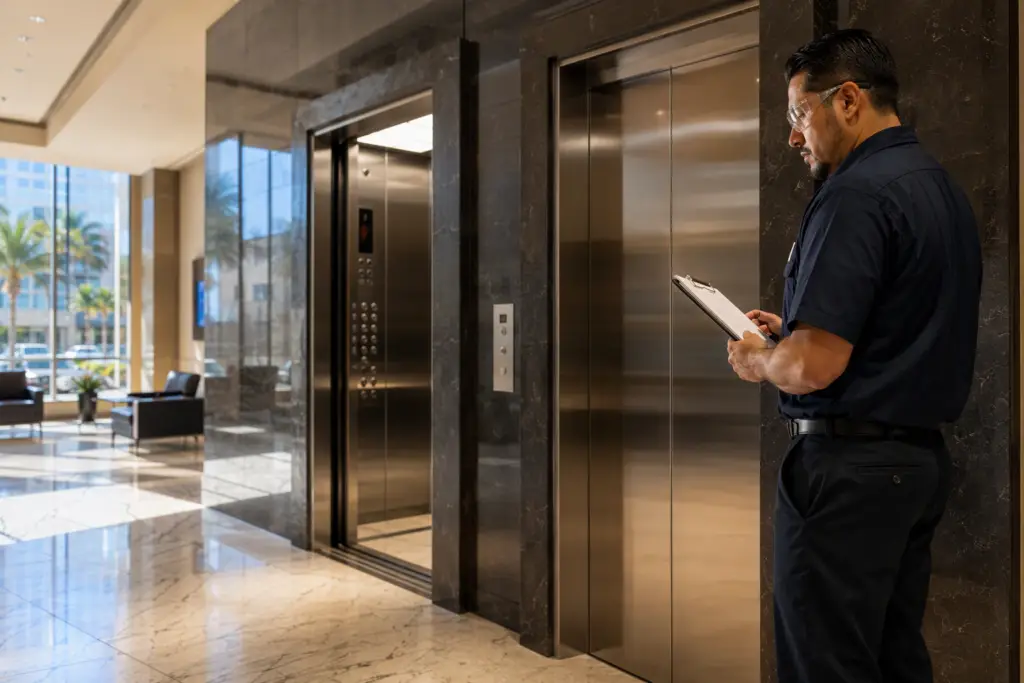
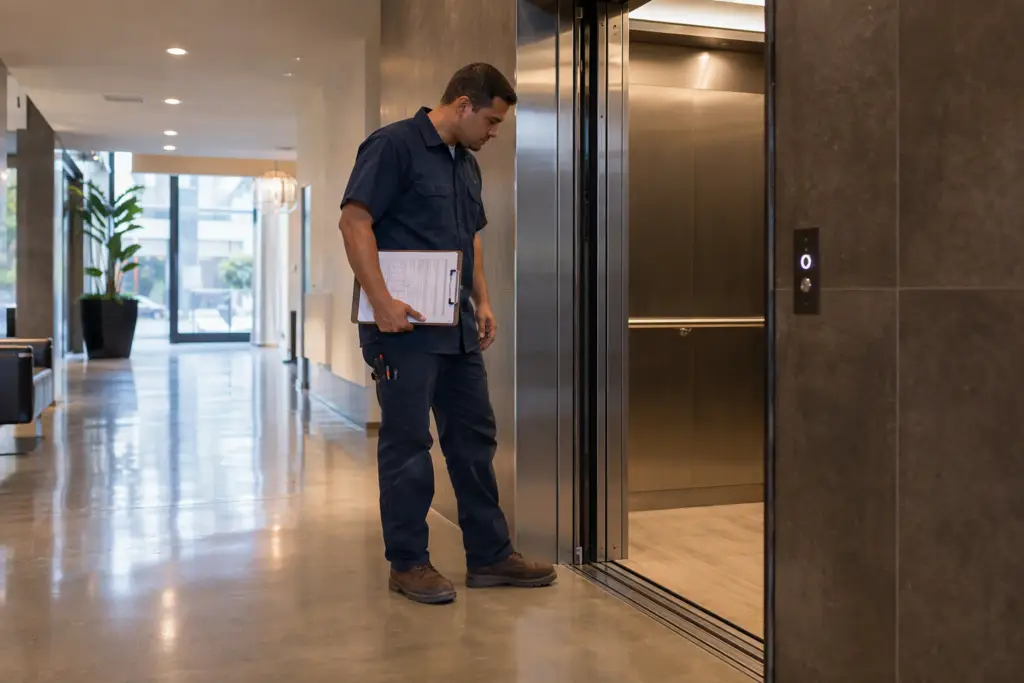
Inspections are required at defined milestones — typically a rough-in inspection before hoistway walls are closed, and a final acceptance inspection upon completion of all work. The final inspection involves operational testing of all safety devices, firefighter service, door operations, leveling accuracy, emergency lighting, and two-way communication. Building owners should coordinate inspection scheduling with their elevator contractor well in advance, as inspector availability can affect project completion timelines. Any deficiencies noted at inspection must be corrected before the updated permit to operate is issued.
Can building owners self-manage elevator upgrades, or must a licensed contractor be used?
California law requires that elevator installation, alteration, and repair work be performed by elevator mechanics holding appropriate California certifications, working under a contractor licensed by the Contractors State License Board (CSLB) with the appropriate elevator specialty classification.
Unlike some building maintenance tasks, elevator work is a licensed trade in California, and self-performance by building owners or general contractors without the appropriate elevator contractor license and certified mechanics is not permitted. This requirement applies to the full scope of upgrade work — from safety device replacement to full modernization. Building owners should verify that any elevator contractor they engage holds a current CSLB license with the appropriate classification and that the mechanics performing the work hold current California elevator mechanic certifications. Liftech Elevator operates as a fully licensed elevator contractor serving building owners throughout Signal Hill, Long Beach, Los Angeles, and Orange County.
How should building owners compare elevator upgrade contractors in Southern California?
Building owners should evaluate elevator upgrade contractors based on verifiable CSLB licensure, demonstrated experience with Cal/OSHA ERTA permitting, familiarity with the specific code editions enforced in the relevant jurisdiction, references from comparable renovation projects, and the quality and specificity of their written scope of work and proposal.
A qualified elevator contractor should be able to identify the specific code provisions that apply to the project, explain why each upgrade item is required, and provide a written proposal that maps each line item to a specific compliance requirement. Vague proposals that list work without code justification, or contractors who cannot speak specifically to the Cal/OSHA ERTA process, are warning signs. Building owners should also inquire whether the contractor has experience with the specific type of occupancy change involved, as code applicability can differ between residential, commercial, healthcare, and mixed-use projects.
What ongoing maintenance obligations arise after elevator upgrades are completed?
After required upgrades are completed, California-compliant elevators remain subject to ongoing periodic inspection and testing requirements under ASME A17.1 and California Title 8, including annual inspections, periodic safety device testing, and maintenance of a current permit to operate issued by Cal/OSHA ERTA.
The completion of upgrade work does not end the compliance obligation — it begins the ongoing lifecycle of inspection, testing, and maintenance that keeps the elevator legally operable. California requires that elevators hold a current permit to operate, which is renewed based on satisfactory periodic inspections. ASME A17.1 establishes specific testing intervals for safety devices including governors, safeties, and buffers. Building owners transitioning to a new occupancy use should establish a maintenance agreement with a licensed elevator contractor to ensure these ongoing obligations are tracked and met. Liftech Elevator provides ongoing maintenance programs for building owners across its Southern California service area to ensure continued code compliance after upgrade projects are complete.
What should building owners do immediately if Cal/OSHA flags an elevator as non-compliant during a renovation inspection?
If Cal/OSHA ERTA flags an elevator as non-compliant during a renovation inspection, building owners should immediately cease operation of the elevator if ordered to do so, engage a licensed elevator contractor to assess the cited deficiencies, respond formally to Cal/OSHA within any stated timeframe, and develop a written corrective action plan.
- Cease elevator operation immediately if Cal/OSHA issues a shutdown order — operating a tagged-out elevator compounds liability and regulatory exposure.
- Obtain the full written inspection report and citation from ERTA, and review each deficiency item carefully.
- Engage a licensed elevator contractor — such as Liftech Elevator — to conduct a field review of the cited deficiencies and assess whether additional non-cited issues exist that should be proactively addressed.
- Determine whether any cited deficiencies are disputable (e.g., based on an incorrect code interpretation) and consult with the elevator contractor or legal counsel regarding any formal response options.
- Develop a written corrective action plan with specific remediation steps and a realistic timeline for each deficiency.
- Submit the corrective action plan to Cal/OSHA ERTA within the required timeframe.
- Complete all required remediation work using licensed elevator mechanics.
- Schedule and pass a re-inspection before returning the elevator to service.
- Document all corrective actions taken and retain records in the permanent elevator file.
Get Expert Guidance on Your California Elevator Upgrade Requirements
Navigating elevator upgrade requirements during a California building renovation or change of use is a complex process involving multiple overlapping codes, permit authorities, and technical specifications. Getting the scope right from the beginning — before permits are filed and contractors are committed — is the most effective way to control costs, avoid delays, and ensure full compliance.
Contact Liftech Elevator for a free elevator assessment. Liftech Elevator serves building owners and property managers throughout Signal Hill CA, Long Beach CA, Los Angeles CA, and Orange County CA, providing expert evaluation of elevator compliance status, upgrade scope, and permitting requirements for renovation and change-of-use projects.
Call Liftech Elevator today: 562-609-3478
Need elevator service you can rely on? Liftech Elevator is ready to help.