Elevator Service in Signal, CA | Liftech Elevator
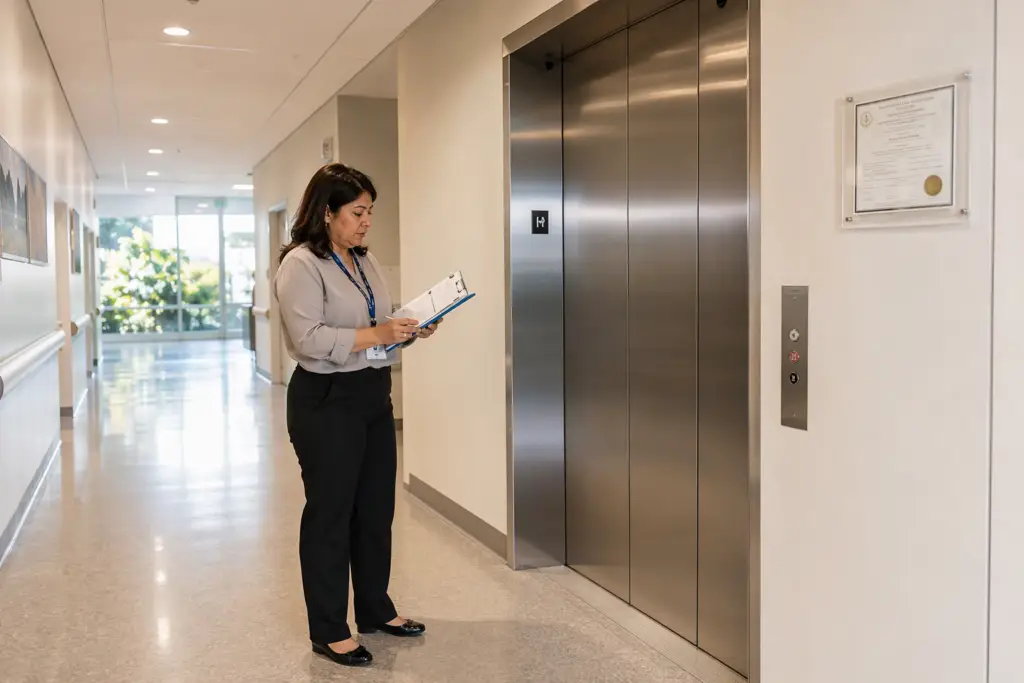
Preparing a building elevator for California state inspection requires more than a quick walk-through. State inspectors look closely at mechanical integrity, safety system performance, code compliance, and proper documentation — all of which must align with current California Elevator Safety Orders enforced by the Division of Occupational Safety and Health (Cal/OSHA). Liftech Elevator provides certified elevator service throughout Signal, CA and the surrounding region, helping building owners and property managers navigate every step of the inspection process with confidence.
What Does California Law Require Before an Elevator Inspection?
California elevator inspections are governed by the California Elevator Safety Orders, administered under Cal/OSHA. These regulations require that all passenger and freight elevators be inspected periodically by a Qualified Elevator Inspector (QEI). Before that inspection occurs, building owners are responsible for ensuring the unit is in a safe, operable condition and that all required maintenance has been performed by a licensed elevator contractor.
Key legal obligations in California include:
- Maintaining a valid Permit to Operate, which must be renewed on a schedule set by the authority having jurisdiction (AHJ).
- Ensuring the elevator has been maintained under a documented maintenance program consistent with the ASME A17.1 Safety Code for Elevators and Escalators.
- Keeping accurate maintenance records on file and available for the inspector upon request.
- Correcting any previously cited violations or deficiencies before the next scheduled inspection.
What Do California State Elevator Inspectors Actually Look For?
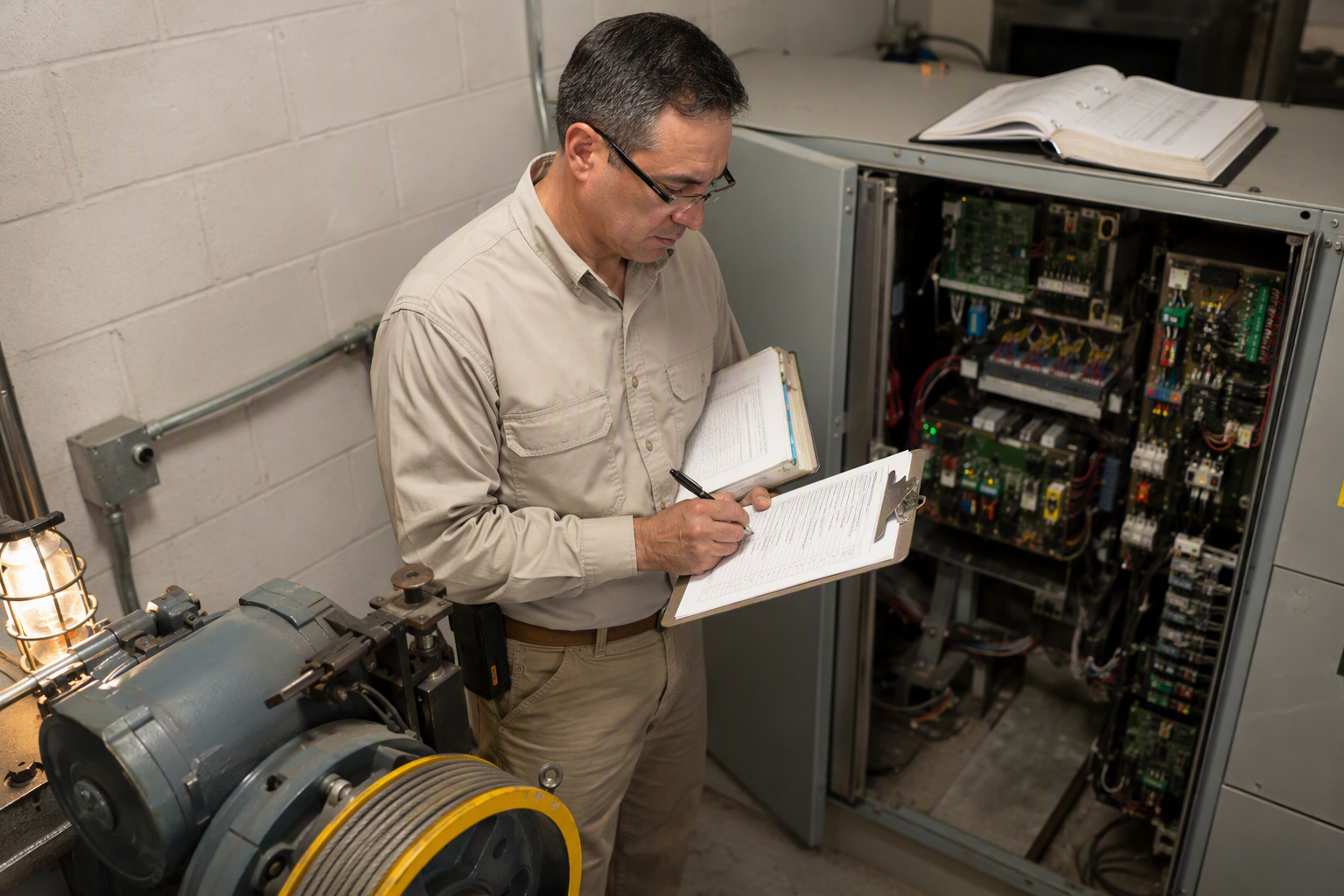
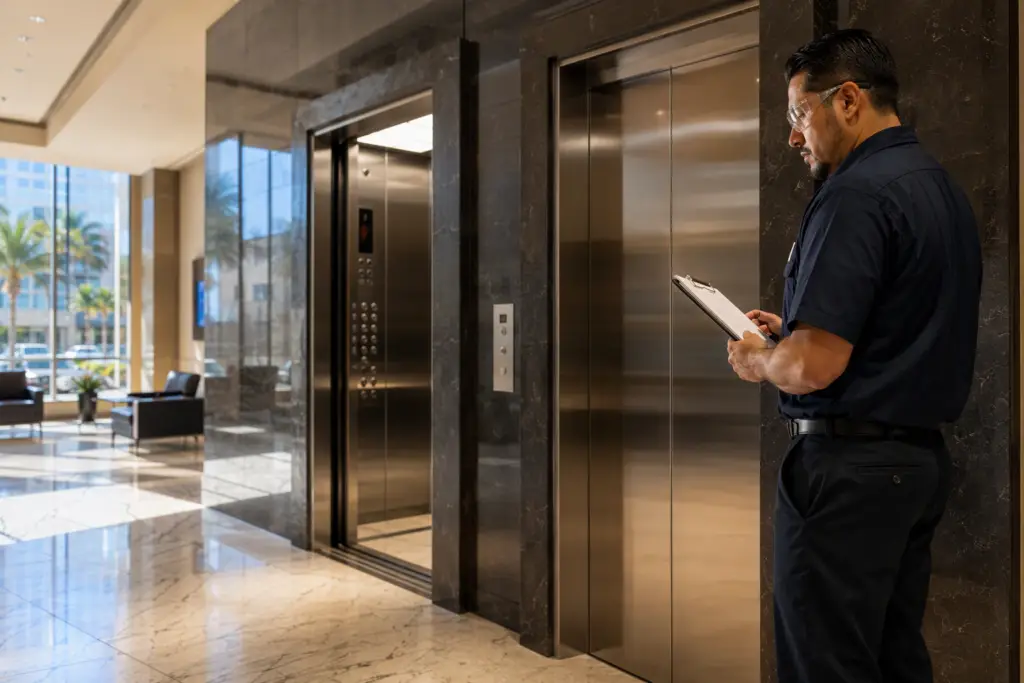
California inspectors conduct thorough evaluations that go well beyond a visual check. Inspectors assess both operational performance and code compliance across multiple systems. Common inspection focus areas include:
- Door operation and safety edges: Doors must open and close smoothly, and door restrictor and reversal devices must function correctly to prevent entrapment.
- Governor and safeties: The overspeed governor and car safety devices must engage properly under test conditions.
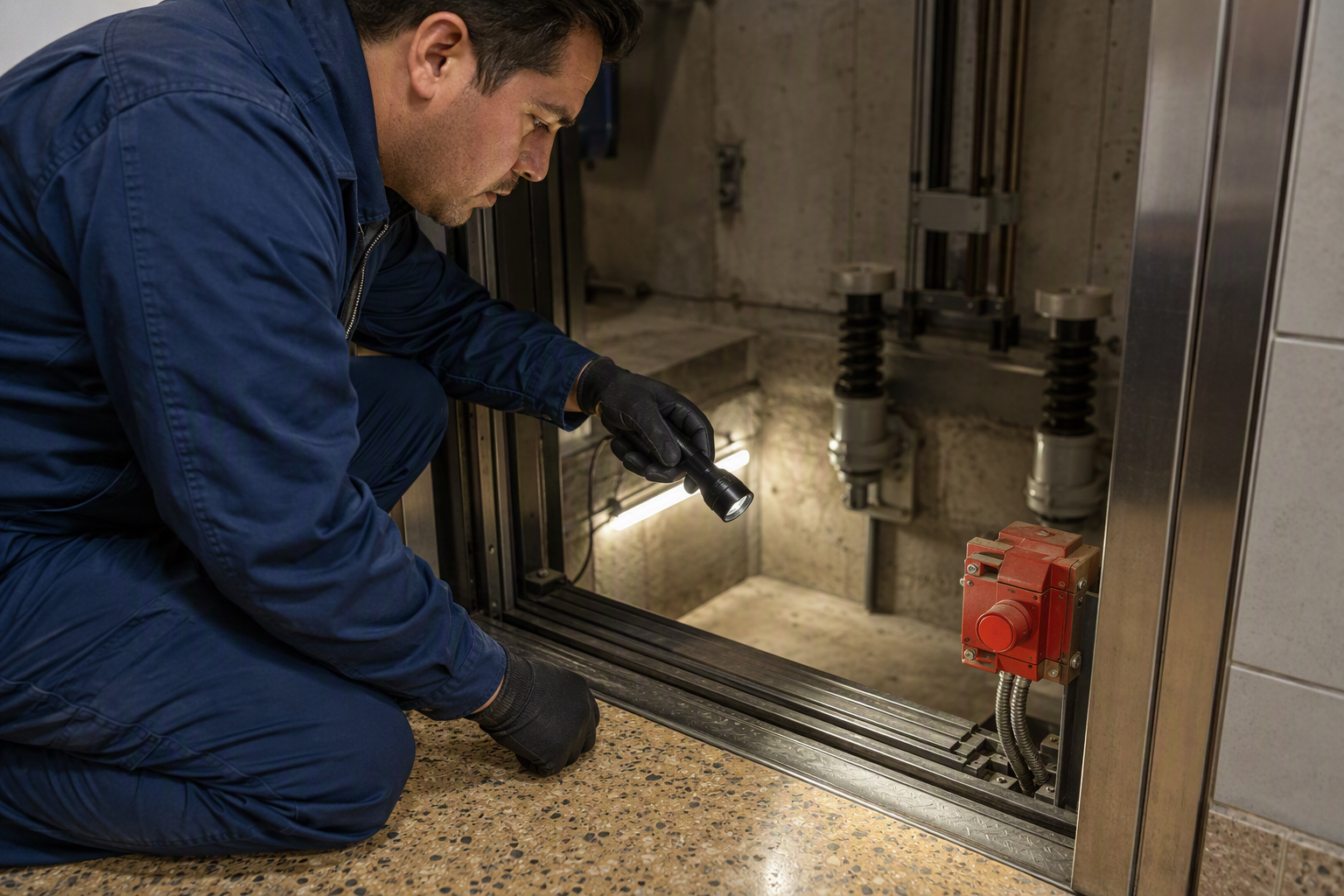
- Buffers and pit conditions: The pit must be clean, dry, properly lit, and equipped with a working stop switch. Buffers must be in serviceable condition.
- Brake performance: The elevator brake must hold the car under rated load conditions.
- Emergency lighting and communication: Per California code, cars must have functioning emergency lighting and a two-way communication system capable of contacting help from inside the car.
- Capacity and load posting: Rated load and capacity placards must be posted inside the car.
- Machine room conditions: The machine room must be secure, properly ventilated, and free of stored materials not related to elevator operation.
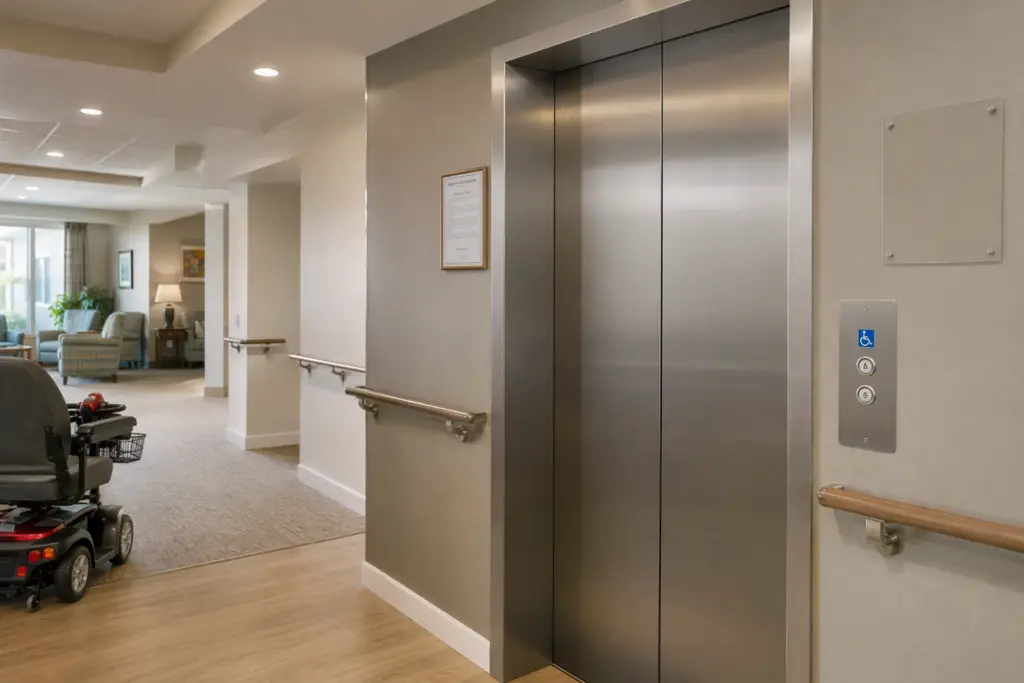
- Accessibility features: Where applicable, elevators must comply with ADA accessibility requirements, including call button height, handrail placement, and audible/visual floor indicators.
- Oil and hydraulic fluid levels (hydraulic elevators): Fluid must be within acceptable range with no visible leaks, and a functioning oil-sensing device is required.
How Should Building Owners Prepare Step by Step?
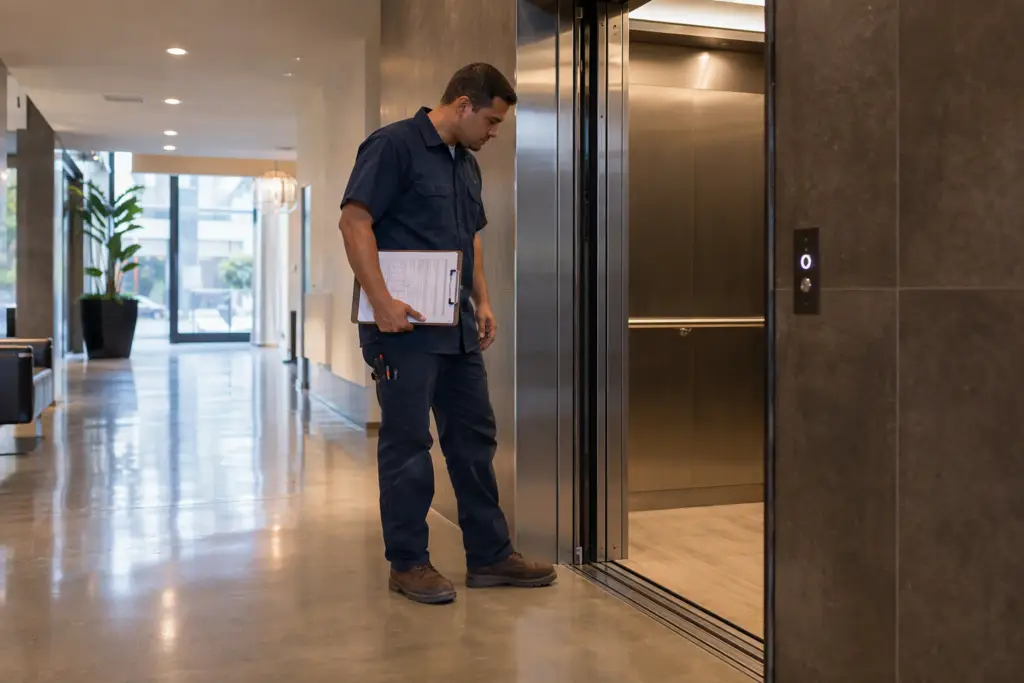
A proactive preparation process reduces the likelihood of failed inspections and costly re-inspection fees. Follow these steps before your scheduled California elevator inspection:
- Review the previous inspection report. Pull the most recent inspection report and confirm that any cited violations or deficiencies have been corrected and documented.
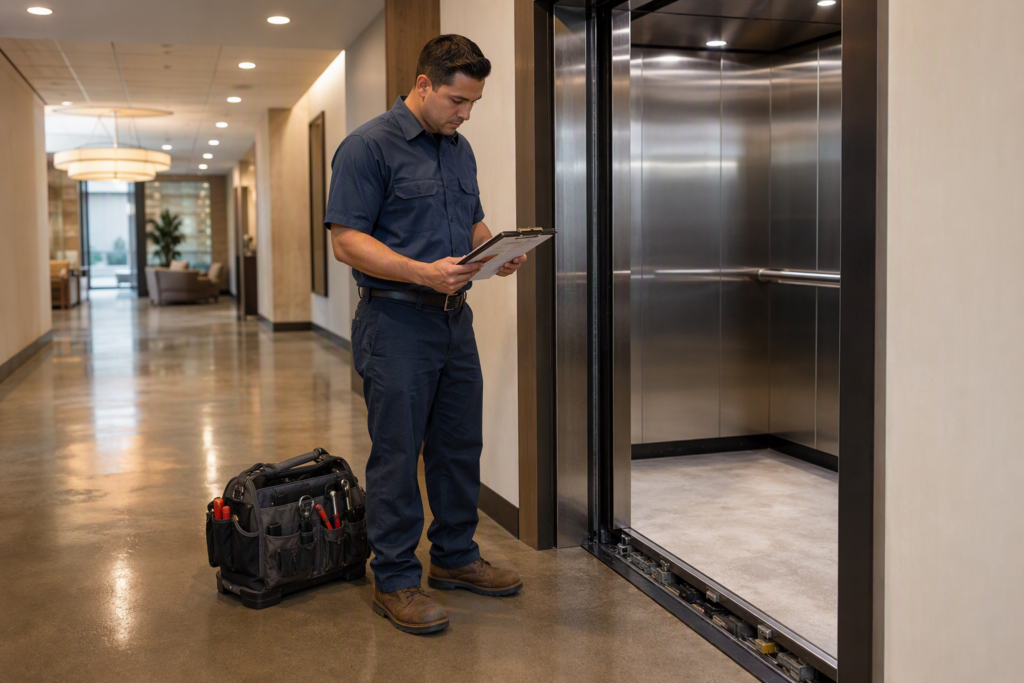
- Schedule a pre-inspection maintenance visit. Contact a licensed elevator contractor to perform a full maintenance check, lubrication, and safety device testing before the official inspection date.
- Compile maintenance records. Gather all service logs, repair invoices, and maintenance records. California inspectors can and do request documentation going back multiple service cycles.
- Inspect the machine room and pit. Clear the machine room of non-elevator materials, verify lighting, and confirm the pit is dry and clean with a functioning stop switch.
- Test emergency systems. Verify that emergency lighting, the alarm bell, and the two-way communication system all function correctly from inside the car.
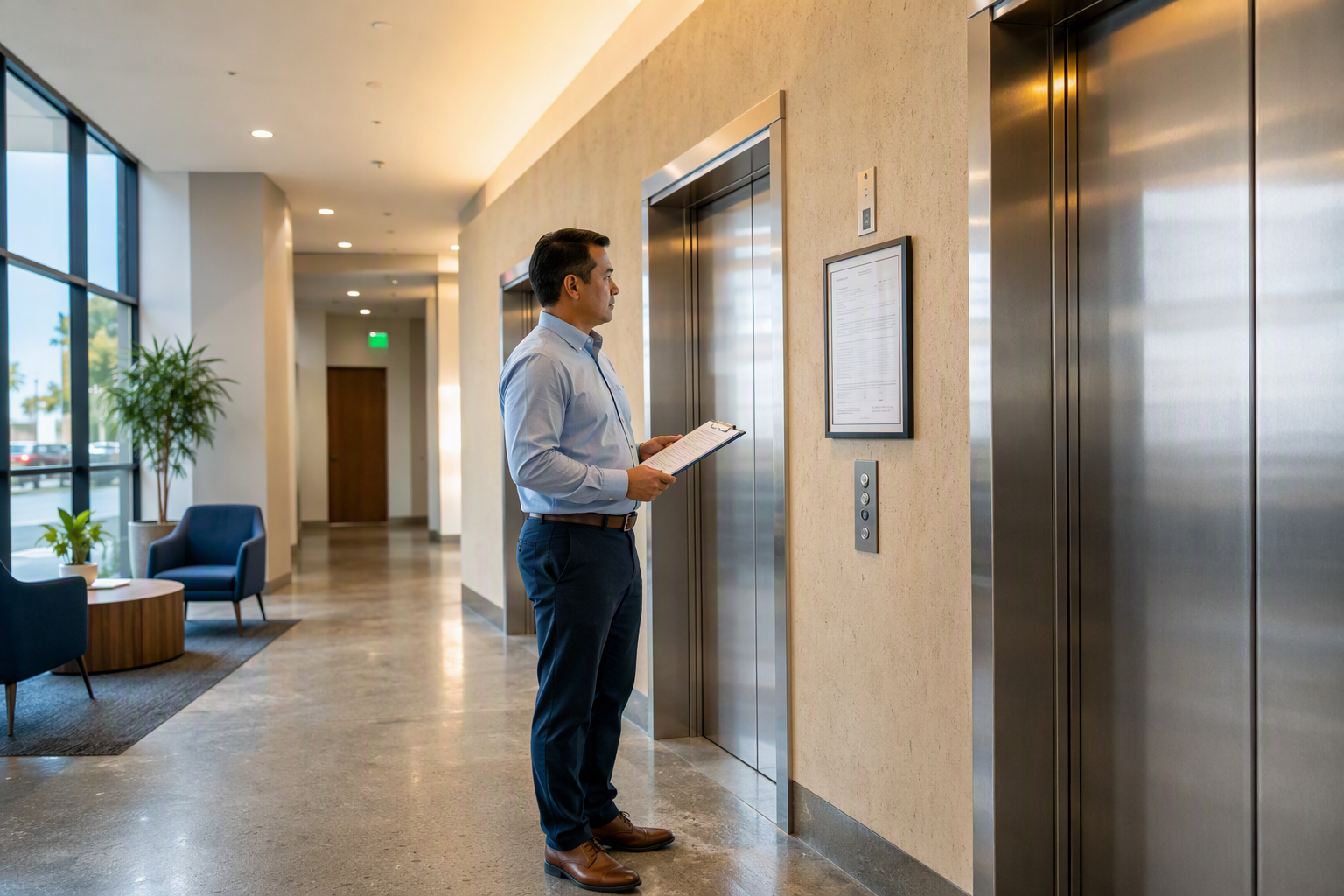
- Confirm the Permit to Operate is current. Ensure the permit is posted in the elevator machine room or as required by the local authority having jurisdiction.
- Check door operation and interlocks. Test each floor landing door for smooth operation and confirm door interlock devices are engaging properly.
- Address accessibility compliance. For buildings subject to ADA requirements, verify that button heights, signage, and audible floor indicators meet current standards.
How Often Are California Elevator Inspections Required?
California Elevator Safety Orders require routine periodic inspections, and the specific interval may vary depending on the elevator type, use classification, and the authority having jurisdiction. In addition to periodic inspections, full witness tests — where the inspector observes a complete functional and safety test — are required at intervals specified in the applicable edition of the ASME A17.1 Safety Code for Elevators and Escalators. Building owners should consult with their elevator contractor or the local AHJ to confirm the exact schedule applicable to their unit in 2026.
What Happens If an Elevator Fails a California Inspection?
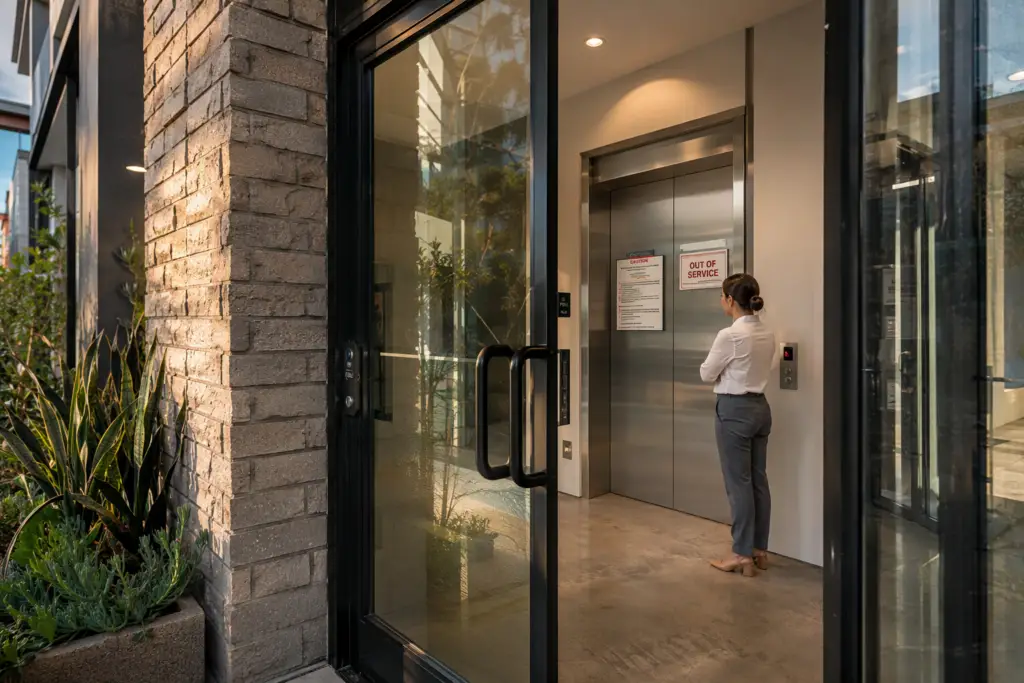
When an elevator fails a state inspection, Cal/OSHA or the local AHJ has the authority to issue a notice of violation and, in serious cases, order the elevator taken out of service until corrections are made. The building owner is responsible for contracting a licensed elevator company to perform the required repairs, after which a re-inspection must be scheduled. Operating an elevator with a lapsed permit or after a shutdown order can expose property owners to significant liability. Addressing deficiencies before the inspection — rather than after a failed result — saves time, expense, and disruption to building occupants.
What Are the Most Commonly Failed Items on California Elevator Inspections?
While every inspection is unique, certain items consistently generate violations across California buildings. These include:
- Inoperative or inadequately tested emergency communication systems
- Door interlock failures or worn door components
- Pit conditions that do not meet code — moisture intrusion, inadequate lighting, or missing stop switches
- Expired or missing Permits to Operate
- Incomplete or missing maintenance documentation
- Hydraulic fluid leaks or low fluid levels on hydraulic units
- Out-of-adjustment governor or safety device settings
Does ADA Compliance Affect California Elevator Inspections?
Yes. For buildings subject to federal ADA requirements, elevator accessibility features may be reviewed as part of the broader compliance picture. While ADA enforcement operates separately from Cal/OSHA elevator safety inspections, inspectors may note accessibility deficiencies, and building owners face potential civil liability for ADA non-compliance. Requirements include minimum car dimensions, compliant control panel button heights, Braille and raised character signage, audible and visible floor indicators, and handrail specifications. The full framework is available through ADA.gov.
Why Do Signal, CA Building Owners Work With Liftech Elevator?
Liftech Elevator serves commercial, residential, and mixed-use properties throughout Signal, CA and the broader Los Angeles region. The Liftech team is familiar with the local authority having jurisdiction requirements, Cal/OSHA inspection procedures, and the specific challenges that older building stock and high-rise properties in this area present. Liftech provides maintenance programs designed to keep elevators in continuous compliance, pre-inspection assessments to identify deficiencies before the inspector arrives, and responsive repair service when issues are identified. When building owners need support preparing documentation, correcting violations, or coordinating re-inspections, Liftech Elevator provides knowledgeable, locally grounded guidance at every stage.
Schedule a Free Consultation
Don’t wait until the inspector arrives to find out your elevator isn’t ready. Contact Liftech Elevator today to schedule a comprehensive pre-inspection assessment for your Signal, CA property. A member of the Liftech team will review your current maintenance records, evaluate equipment condition, and identify any items that need attention before your next California state elevator inspection.
Call Liftech Elevator: 562-609-3478
Serving Signal, CA and surrounding communities — Liftech Elevator is ready to help your building stay safe, compliant, and operational.
Need elevator service you can rely on? Liftech Elevator is ready to help.