Elevator Entrapment Response and Property Owner Legal Responsibilities in California: Complete FAQ Guide
Elevator entrapments are among the most stressful incidents a property owner or building manager can face. Knowing exactly what to do — and what the law requires — can protect both passengers and the property owner from harm, liability, and regulatory action. This comprehensive FAQ covers every dimension of elevator entrapment response and California property owner compliance, drawing on current code requirements and practical building management guidance.
What Is an Elevator Entrapment and How Often Does It Happen?
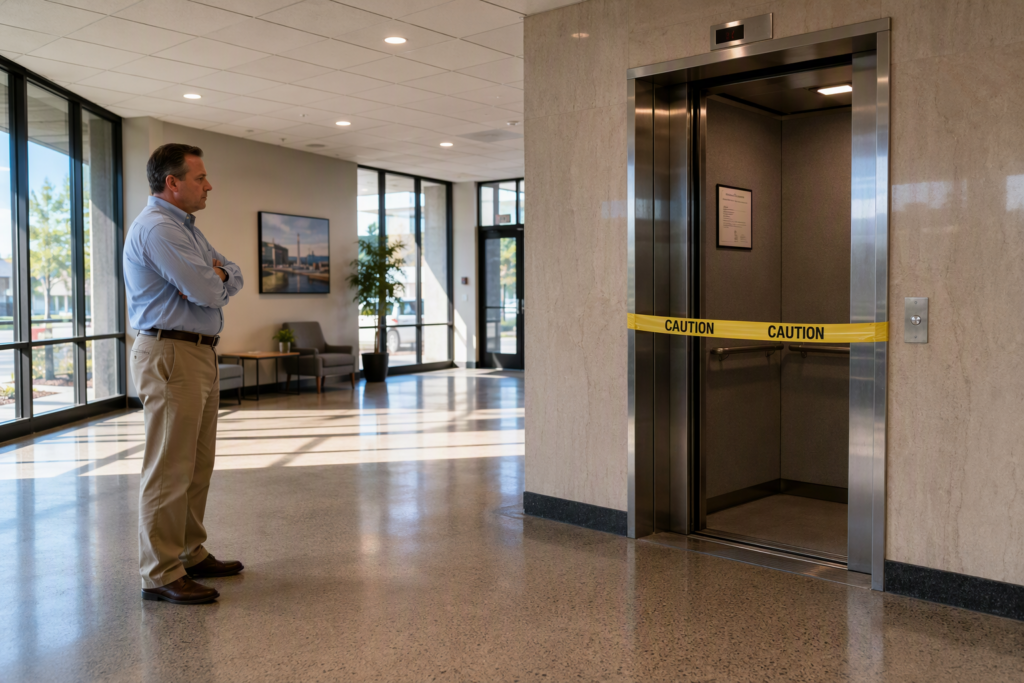
An elevator entrapment occurs when one or more passengers become unable to exit an elevator cab due to a mechanical failure, power outage, door malfunction, or control system fault — regardless of whether the cab is between floors.
Entrapments can result from a wide range of causes: leveling sensor failures, door operator malfunctions, drive system faults, or utility power interruptions. They are not always accompanied by abrupt stops or unusual motion — a cab that simply fails to open its doors at a floor constitutes an entrapment under California’s definition. Under the ASME A17.1 Safety Code for Elevators and Escalators, equipment must be designed and maintained to minimize entrapment risk, and an emergency lighting and communication system must be operational at all times.
What Should a Property Owner or Building Manager Do Immediately When an Entrapment Is Reported?
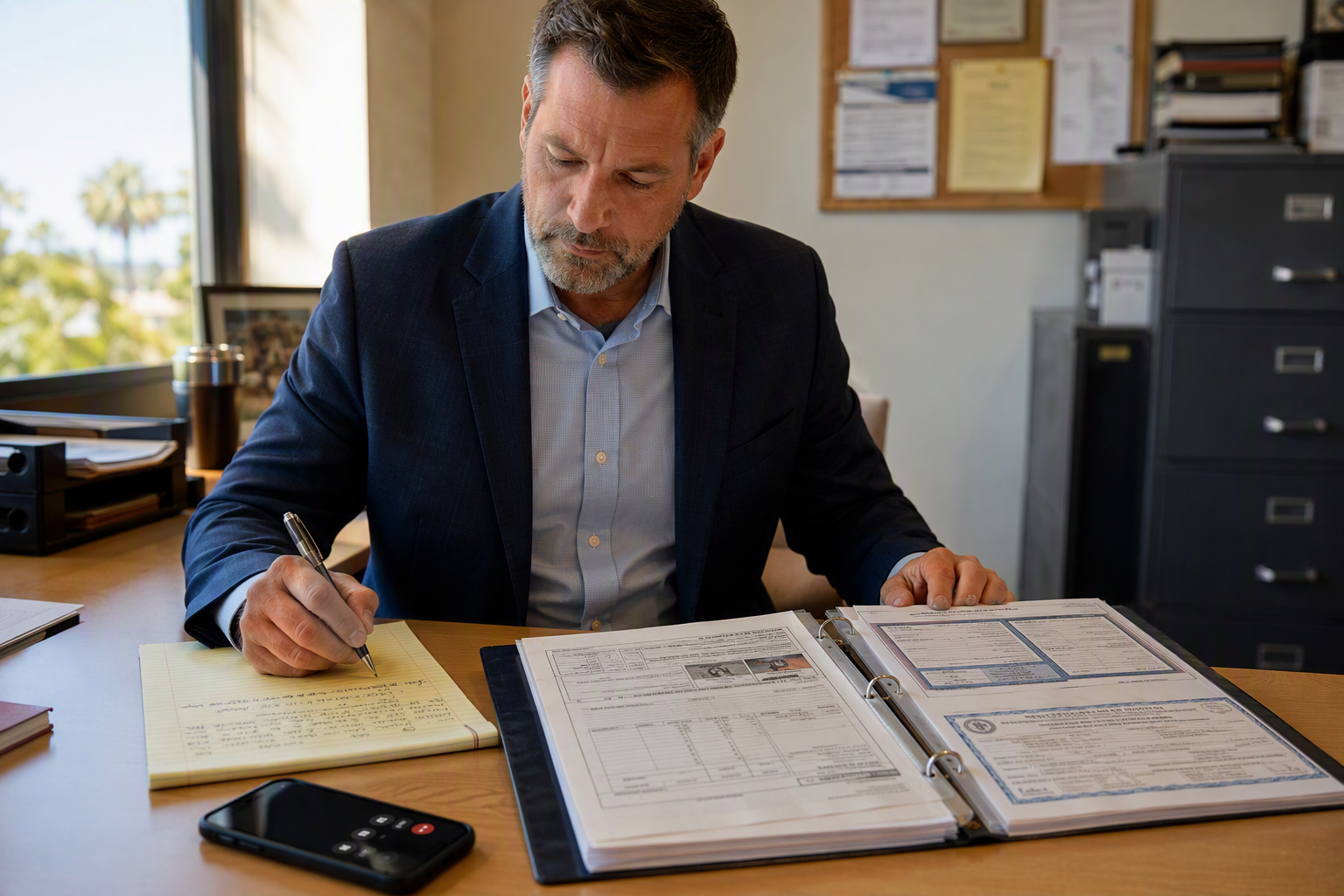
The moment an entrapment is reported, the property owner or manager must act swiftly and systematically to protect the safety of trapped passengers and fulfill their legal duty of care.
- Call 911 immediately. Emergency services should be notified any time a person is trapped, regardless of whether the situation appears non-urgent.
- Contact your elevator service company. Notify your licensed elevator contractor — such as Liftech Elevator — so a qualified mechanic can be dispatched to the site.
- Establish voice communication with trapped passengers. Use the in-cab emergency telephone, building intercom, or direct voice contact through the door to reassure occupants that help is on the way.
- Instruct passengers to remain in the cab. Advise trapped individuals not to attempt to force open doors, climb out of the cab, or exit between floors under any circumstances.
- Locate and do not reset circuit breakers or main disconnects. Resetting power during an entrapment can cause unexpected cab movement and serious injury.
- Document the time of the entrapment report and every action taken. This record supports any subsequent inspection report, insurance claim, or regulatory inquiry.
- Secure the area around the elevator landing. Prevent other building occupants from attempting to assist or from operating adjacent elevators if they share a machine room.
- Cooperate fully with fire department and elevator mechanic upon arrival. Provide access to the machine room, controller, and all building systems documentation.
- After resolution, take the elevator out of service. Do not return the unit to service until a licensed mechanic has inspected it and determined the root cause.
- File an incident report and notify your insurer. California property owners should document every entrapment event for liability protection and regulatory compliance purposes.
Is It Legal for Building Staff or Firefighters to Manually Release Trapped Passengers?
Only licensed elevator mechanics or, in specific emergency circumstances, trained firefighters using the fire service key switch are legally authorized to perform a manual release of trapped elevator passengers in California.
Building staff — including maintenance personnel — are not authorized to open hoistway doors between floors or manually lower a cab unless they hold a California elevator mechanic license and are acting within the scope of that license. Untrained rescue attempts create severe crush and fall hazards and expose the property owner to significant liability. The ASME A17.1 Safety Code for Elevators and Escalators requires that hoistway doors include interlock devices that prevent manual opening from the landing side without a special key — this design is intentional and safety-critical.
What Are the Legal Requirements for Emergency Communication Systems Inside Elevator Cabs in California?
California-regulated elevators must be equipped with a two-way means of communication capable of connecting passengers with a continuously monitored answering point, as required under ASME A17.1 and enforced by the California Department of Industrial Relations, Division of Occupational Safety and Health (Cal/OSHA).
The two-way communication device — typically an in-cab telephone or intercom — must not require the passenger to hold a button to maintain the connection, and the answering point must be staffed or monitored at all times the elevator is in service. Properties that operate elevators without a functioning emergency telephone are in violation of California elevator safety law and face permit suspension, fines, and civil liability exposure. Additionally, under the Americans with Disabilities Act (ADA), the emergency communication system must be accessible to individuals who are deaf or hard of hearing, typically requiring a visual or tactile signal confirming that the emergency call has been received.
What California State Permits and Inspections Are Required for Elevator Operation?
Every elevator in California must hold a current Permit to Operate issued by the California Department of Industrial Relations after a passing annual inspection by a state-certified inspector or a certified third-party inspection company.
California’s elevator safety program is administered under California Labor Code Sections 7300–7324.2, with enforcement delegated to Cal/OSHA’s Elevator, Ride, and Tramway Unit. Key requirements include:
- An annual inspection and load test at intervals specified by the state and consistent with ASME A17.1 testing schedules.
- Posting of the current Permit to Operate inside the elevator cab, visible to passengers.
- Prompt notification to Cal/OSHA of any accident, serious malfunction, or entrapment involving injury.
- Maintenance by a licensed elevator contractor holding a valid California C-11 Elevator Contractor license.
Properties in Long Beach, Signal Hill, Los Angeles, and Orange County are all subject to state-level Cal/OSHA jurisdiction, though some municipalities may have additional local requirements. Building owners should verify current local ordinances annually.
What Are a Property Owner’s Liability Exposures Following an Elevator Entrapment?
A California property owner whose elevator causes an entrapment may face civil liability for negligence, premises liability claims, regulatory fines, and — in cases involving injury or death — potential criminal exposure if gross negligence is established.
California courts apply a premises liability standard requiring property owners to maintain elevators in a reasonably safe condition. If an entrapment results from deferred maintenance, an expired permit, a known equipment defect, or failure to maintain the emergency communication system, those facts will be central to any negligence claim. Property owners who contract with a qualified elevator maintenance provider and maintain complete service records are in a substantially stronger legal position. Liftech Elevator provides documented maintenance programs that create a traceable service history — an essential asset in any liability defense.
How Does ASME A17.1 Apply to Entrapment Prevention in California Buildings?
The ASME A17.1 Safety Code for Elevators and Escalators is the primary technical standard adopted by California for elevator design, installation, and maintenance, and it includes specific provisions designed to prevent entrapments and ensure safe rescue when they occur.
Relevant ASME A17.1 provisions include requirements for door reopening devices, emergency lighting with a minimum duration sufficient to allow rescue operations, in-car stop switches, slack rope switches, and governor and safety devices that arrest uncontrolled descent. The code also mandates that elevator equipment include means for emergency lowering or raising of a stalled cab by trained personnel. California adopts ASME A17.1 by reference with state-specific amendments, meaning the edition in force at the time of equipment installation governs, with certain safety updates applied retroactively. Building owners should confirm with their elevator contractor which edition and amendments apply to their specific equipment.
What Equipment Failures Most Commonly Cause Elevator Entrapments?
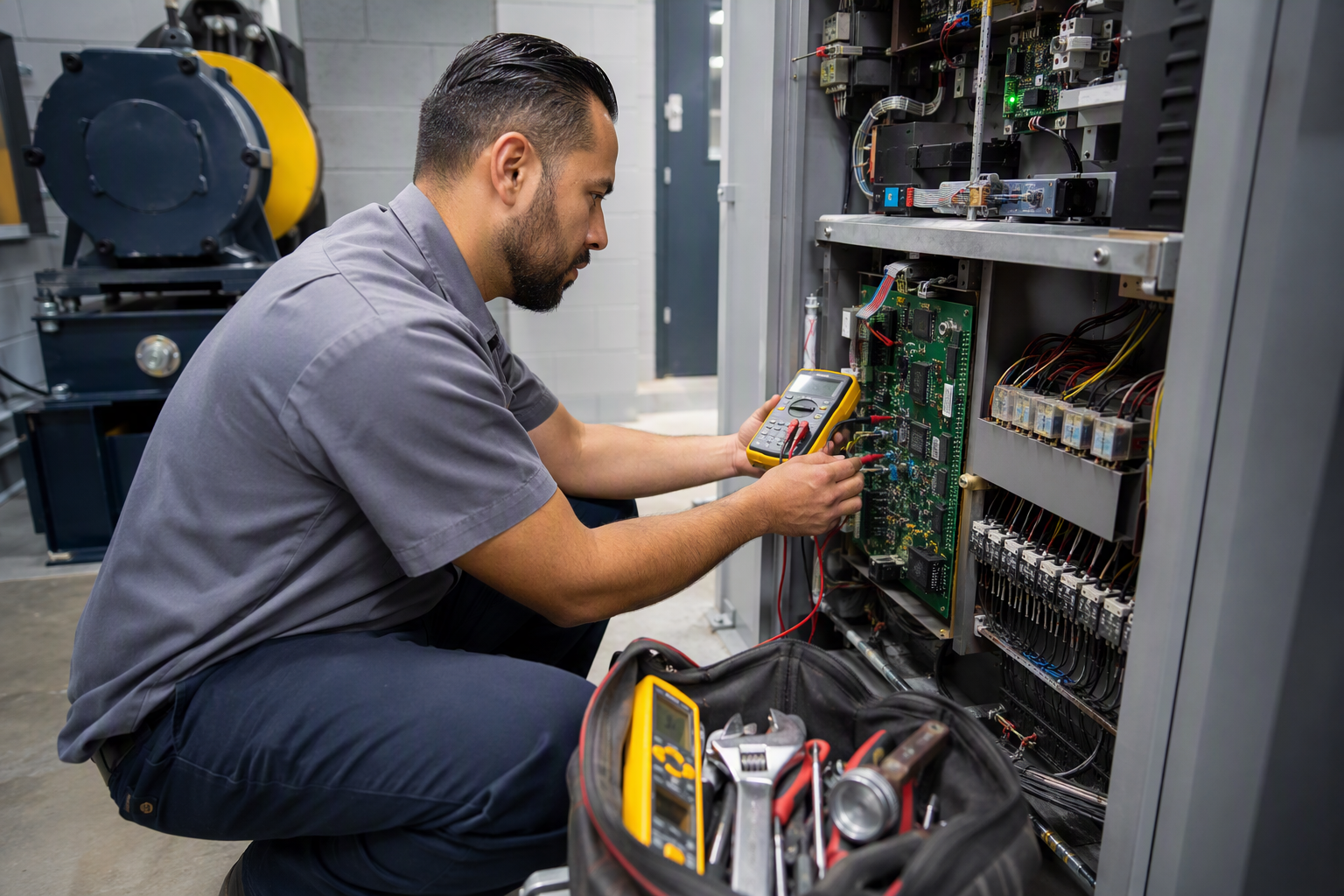
The most common causes of elevator entrapments in commercial and residential buildings include door system failures, drive motor or controller faults, leveling sensor errors, and power supply interruptions — many of which are preventable through a proactive maintenance program.
| Cause Category | Specific Failure Mode | Applicable ASME A17.1 Requirement | Preventive Action |
|---|---|---|---|
| Door System | Door operator motor failure; gate switch fault | Door reopening device; interlock testing | Lubrication, adjustment, and contact cleaning on scheduled intervals |
| Drive / Motor | Traction motor overheat; hydraulic pump failure | Brake and drive system testing | Thermal monitoring; fluid analysis for hydraulic units |
| Control System | Controller board fault; relay failure | Electrical safety device testing | Periodic controller inspection and software/firmware review |
| Leveling / Position | Selector tape wear; encoder drift | Leveling accuracy requirements | Selector and encoder calibration during maintenance visits |
| Power Supply | Utility outage; fuse failure; battery backup failure | Emergency lighting and ARD (Automatic Rescue Device) testing | Battery testing; ARD functional test; surge protection inspection |
| Safety Devices | Governor rope wear; safety shoe wear | Governor and safety device testing intervals | Rope inspection and replacement per code; safety jaw lubrication |
Are Property Owners Required to Have an Emergency Action Plan for Elevator Entrapments?
While California law does not prescribe a single standardized elevator emergency action plan document for all building types, property owners have a legal duty of care that effectively requires having clear procedures, posted emergency contact information, and functioning communication systems in place before an entrapment ever occurs.
Best practice — and the standard against which a property owner’s conduct will be measured in litigation — is to maintain a written elevator emergency response procedure that is distributed to all building management and security staff. This plan should include the elevator service company’s emergency contact number, the location of the machine room, instructions for communicating with trapped passengers, and guidance on what not to do. OSHA workplace safety standards may apply additionally in buildings where employees regularly use the elevator as part of their work activities.
What Is an Automatic Rescue Device (ARD) and Is One Required in California?
An Automatic Rescue Device (ARD) is a battery-powered backup system that automatically moves a stalled elevator cab to the nearest floor and opens the doors when a power failure occurs, allowing passengers to exit without manual intervention.
ARDs are not universally mandated by California law for all existing elevators, but they are increasingly specified for new installations and major modernizations under the current edition of ASME A17.1 and are strongly recommended for all buildings — particularly those with limited staff or after-hours occupancy. For buildings in the Los Angeles and Orange County markets where high-rise occupancy and after-hours use are common, an ARD significantly reduces the duration of entrapments and the associated liability exposure. Liftech Elevator can assess whether an ARD retrofit is appropriate for a given installation during a building assessment.
How Long Can a Person Legally Be Trapped in an Elevator in California Before It Becomes a Legal Violation?
California law does not specify a numerical time limit for entrapment duration, but a property owner’s failure to maintain a functioning emergency communication system, failure to have a service contract, or failure to enable timely rescue could independently constitute a violation of California Labor Code elevator safety provisions.
The practical standard is that the property owner must take all reasonable steps — beginning immediately — to secure the safety and comfort of trapped passengers and facilitate their release. Delayed action that results in medical distress, panic-related injury, or exacerbation of a pre-existing medical condition creates compounding liability. Properties served by a full-service maintenance contractor with documented emergency response protocols are in a defensible position; those without any service contract or with lapsed permits are not.
What Must Be Posted Inside an Elevator Cab in California?
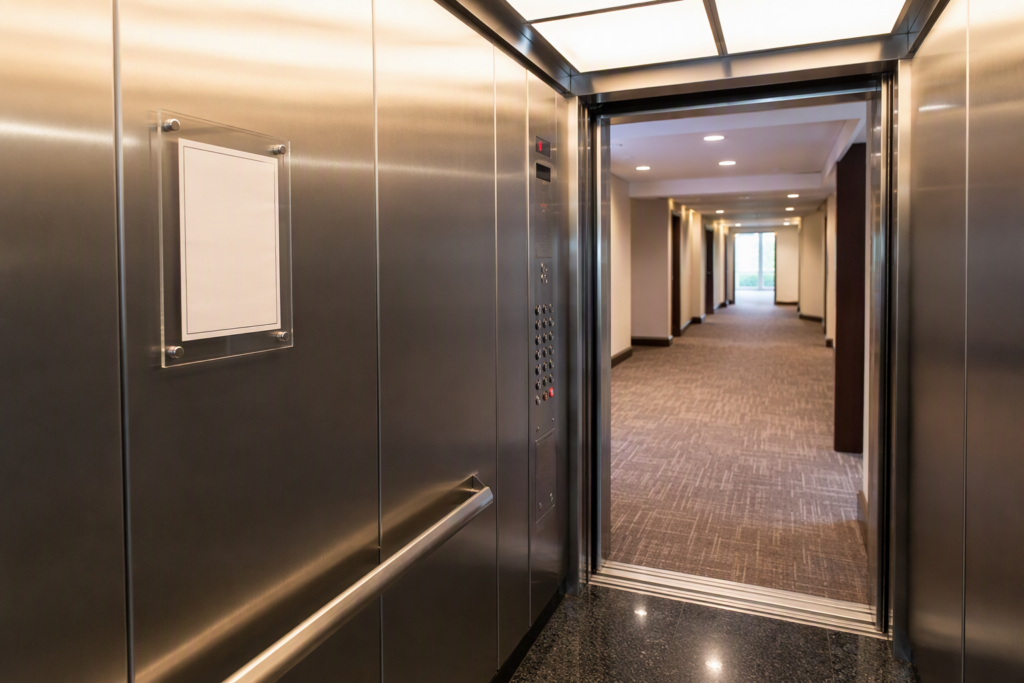
California-regulated elevators must display a current, valid Permit to Operate, the elevator’s maximum capacity in both pounds and persons, the certificate of inspection, and clear emergency instructions — all posted inside the cab and visible to passengers.
The posting of emergency contact information — including the building management office number and the elevator service company’s emergency line — is not always a statutory requirement by itself but is considered a minimum component of reasonable care and is standard practice among compliant property owners. Under the ADA, all signage and emergency communication systems within the cab must also meet accessibility requirements, including Braille designations on control buttons and accessible emergency communication.
What Should a Property Owner Do After an Entrapment Is Resolved?
After every entrapment, the property owner must ensure the elevator is inspected and root-cause analyzed before returning it to service, document the incident thoroughly, and evaluate whether the event reveals a systemic maintenance gap.
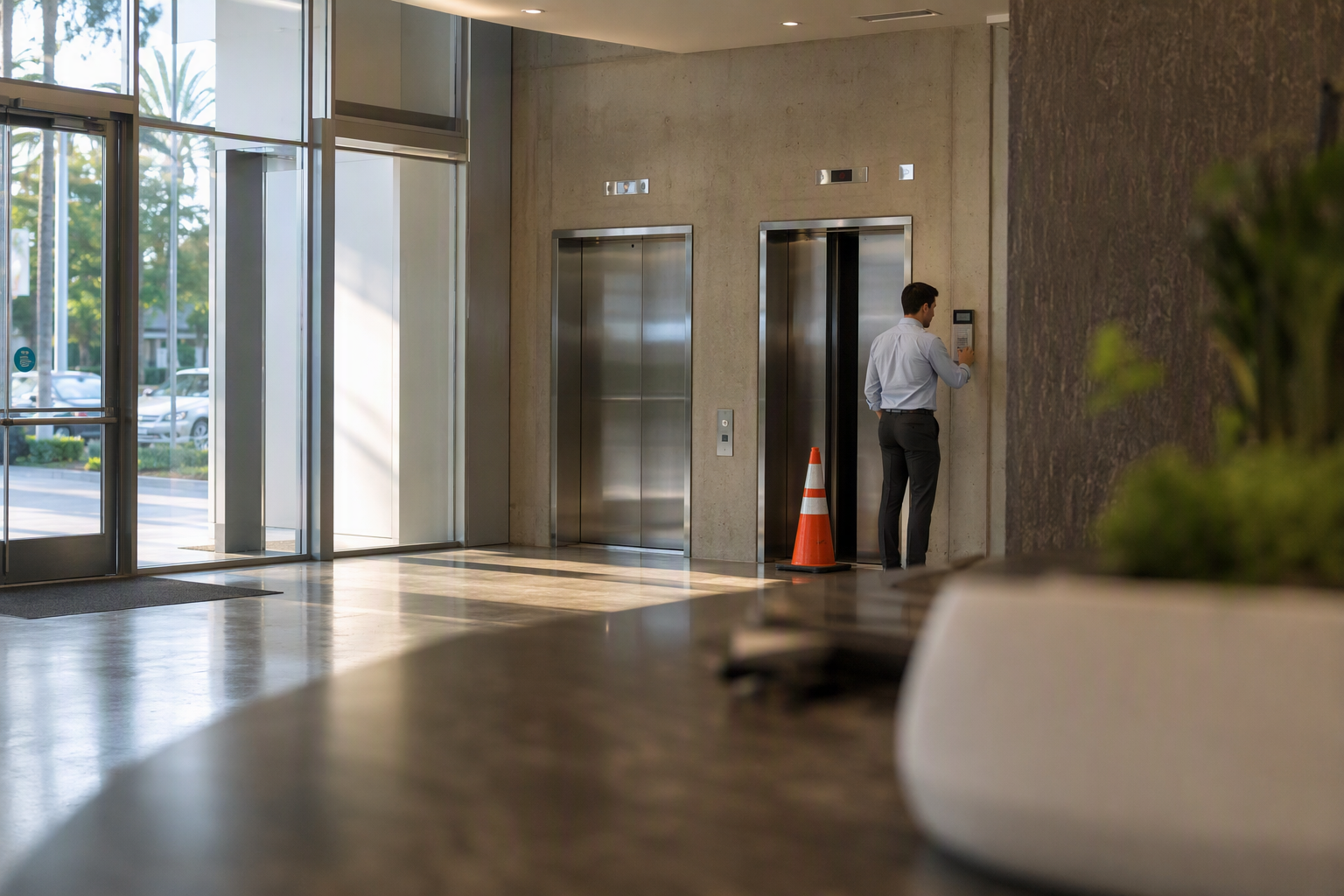
- Tag the elevator out of service and post an “Out of Service” notice at all landings.
- Contact your licensed elevator contractor to perform a post-entrapment inspection and identify the root cause.
- Obtain a written service report documenting what failed, what was repaired, and what was tested before return to service.
- Report to Cal/OSHA if the entrapment involved an injury, a medical emergency, or a significant mechanical failure that may be reportable under California Labor Code requirements.
- Notify your property insurer of the incident, even if no injury occurred.
- Review your maintenance contract to confirm that the failure mode is covered and that maintenance intervals are adequate.
- Conduct a debrief with building staff to identify any gaps in the emergency response and update the written emergency action plan accordingly.
How Do ADA Requirements Intersect With Elevator Entrapment Preparedness?
Under the Americans with Disabilities Act, property owners must ensure that elevator emergency communication systems are accessible to individuals with hearing or speech disabilities, which directly affects entrapment preparedness protocols.
ADA Title III (for public accommodations) and Title II (for government facilities) require that two-way emergency communication in elevators provide a non-voice channel — typically a visual or text-based confirmation — so that a deaf or hard-of-hearing passenger can confirm their emergency call has been received. During an entrapment, if a passenger with a disability cannot effectively communicate distress or receive instructions, the property owner’s duty of care is heightened. Building owners should audit their in-cab communication systems to confirm ADA compliance as part of any comprehensive elevator assessment.
What Is the Difference Between a Maintenance Contract and a Full-Service Contract, and Which Provides Better Liability Protection?
A full-service elevator maintenance contract — which covers parts, labor, and emergency callbacks — provides substantially stronger liability protection than a basic lubrication-and-adjustment agreement because it ensures that known defects are repaired without delay due to cost disputes.
Under a limited maintenance agreement, the property owner remains financially responsible for parts and repairs beyond routine service. When a failure that should have been addressed under maintenance results in an entrapment, the existence of a limited contract — combined with unpaid repair invoices or deferred work orders — can serve as evidence of negligent property management in litigation. Full-service contracts with a qualified, licensed contractor create a documented record of proactive care. Liftech Elevator offers maintenance programs for commercial and residential properties across Signal Hill, Long Beach, Los Angeles, and Orange County designed to address the full scope of property owner compliance obligations.
Can a Property Owner Face Criminal Charges for an Elevator Entrapment in California?
In cases where an entrapment results in serious injury or death and evidence establishes that the property owner knowingly allowed an elevator to operate with a known dangerous defect, lapsed permit, or without required maintenance, criminal prosecution under California’s gross negligence standards is legally possible.
While criminal prosecution is rare in entrapment cases absent clear recklessness, Cal/OSHA does have authority to issue civil penalties and refer cases for criminal prosecution under California Labor Code Section 6423 when willful violations are found. Property owners who discover elevator defects and continue operating the equipment — particularly in multi-tenant residential buildings in Los Angeles or Orange County — face the greatest exposure. The most effective protection is maintaining current permits, a licensed service contractor, and complete service documentation at all times.
How Should Property Owners in Los Angeles and Orange County Vet an Elevator Service Company for Entrapment Response Capability?
Property owners should verify that any elevator service company holds a valid California C-11 Elevator Contractor license, employs mechanics with current California Elevator Mechanic licensure, and can demonstrate documented emergency response protocols before awarding a maintenance contract.
Key questions to ask a prospective elevator contractor include: Are mechanics licensed under California’s elevator safety licensing program? Does the company have documented entrapment rescue procedures? Does it carry general liability and workers’ compensation insurance? Can it provide references from comparable properties in the same market? Liftech Elevator serves property owners throughout Signal Hill, Long Beach, Los Angeles, and Orange County with licensed technicians and a maintenance program structured around California’s compliance requirements — making it a practical choice for owners seeking accountability and technical depth.
What Records Should a Property Owner Maintain to Demonstrate Compliance?
California property owners should maintain a complete elevator compliance file containing the current Permit to Operate, all inspection certificates and test reports, all maintenance visit logs, repair invoices and work orders, and records of any entrapment incidents — ideally retained for a minimum of five years.
In the event of a regulatory audit, insurance claim, or litigation, this documentation file is the primary evidence of a property owner’s compliance posture. The absence of maintenance records is routinely used by plaintiffs’ attorneys as evidence of negligent building management. Digital record-keeping, with records also held by the elevator contractor, provides redundancy. Property owners should request that their elevator contractor provide them with copies of every service report within a defined number of days after each visit.
How Often Should Elevators Be Inspected to Minimize Entrapment Risk in California?
California requires a minimum of one annual inspection by a certified elevator inspector, but the ASME A17.1 Safety Code for Elevators and Escalators establishes maintenance task intervals — some monthly, some quarterly, and some annually — that collectively define the frequency of professional attention required to minimize entrapment risk.
The annual state inspection establishes regulatory compliance, but it is not a substitute for ongoing maintenance. High-traffic elevators in commercial buildings, healthcare facilities, or multi-family residential properties in dense urban markets like Los Angeles or Long Beach may require more frequent attention than the minimum code intervals suggest. A qualified elevator contractor will assess actual usage patterns and equipment age when recommending a maintenance schedule. Liftech Elevator provides tailored maintenance programs that align with both California regulatory requirements and the specific risk profile of each property.
What Should Property Owners Know About Hydraulic Elevator Entrapments Specifically?
Hydraulic elevators present a distinct entrapment risk: a slow descent caused by hydraulic fluid leakage can lower a cab to the pit over time, which may go undetected until the cab fails to respond to calls — a situation that requires immediate shutdown and licensed mechanic intervention.
Unlike traction elevators, hydraulic systems rely on fluid pressure to hold the cab at a floor. A leak in the cylinder, piston, or piping causes gradual drift downward. If this drift is slow, passengers may not realize they are trapped until the cab has descended significantly below floor level and the door interlocks prevent exit. California’s environmental regulations also apply to hydraulic fluid leaks, as underground cylinder failures can result in soil contamination with associated remediation liability. Building owners with hydraulic elevators — common in low-rise residential and commercial properties throughout Orange County and Long Beach — should ensure their maintenance contract specifically includes hydraulic system inspection and fluid integrity testing.
Get Expert Guidance on Elevator Safety and Compliance for Your California Property
Elevator entrapments are preventable. California property owners in Signal Hill, Long Beach, Los Angeles, and Orange County who partner with a licensed, experienced elevator service company can dramatically reduce their entrapment risk and ensure full regulatory compliance before an incident occurs.
Contact Liftech Elevator for a free elevator assessment. A licensed technician will review your equipment condition, permit status, maintenance records, and emergency communication systems — and provide a clear compliance report with actionable recommendations.
Call Liftech Elevator today: 562-609-3478
Serving Signal Hill CA, Long Beach CA, Los Angeles CA, and Orange County CA.
Need elevator service you can rely on? Liftech Elevator is ready to help.