How Much Does Elevator Maintenance Cost Per Year for a Commercial Building in California?
Understanding what drives commercial elevator maintenance costs in California is essential for building owners, property managers, and facility directors who need to budget accurately and stay compliant with state and federal requirements. This guide breaks down the cost factors, contract types, compliance obligations, and questions you should ask any service provider before signing.
What Is the Typical Annual Elevator Maintenance Cost for a California Commercial Building?
Annual elevator maintenance costs in California vary considerably based on a set of well-documented variables. Rather than a single fixed number, building owners should expect a range that reflects:
- Elevator type: Hydraulic elevators generally carry lower maintenance costs than traction (cable-driven) elevators, while machine-room-less (MRL) traction units introduce their own specialized service requirements.
- Number of stops and floors served: More floors mean more landings, doors, and mechanical interactions — all of which increase the scope of periodic service visits.
- Equipment age: Older units with obsolete components are more expensive to maintain because parts are harder to source and more components are nearing end of life.
- Usage volume: A high-traffic downtown office tower elevator experiences far more wear cycles per day than a low-traffic medical office elevator, directly affecting how quickly parts degrade.
- Contract type: See the section below on contract structures for how the scope of coverage is the single largest pricing lever.
- Geographic labor market: California’s labor costs — particularly in the Bay Area, Los Angeles, and San Diego — are among the highest in the nation for licensed elevator mechanics, which is reflected in service pricing.
Because none of these variables can be collapsed into a single honest number without fabricating data, building owners are best served by requesting itemized proposals from qualified contractors and benchmarking them against the cost drivers described throughout this page.
What Types of Elevator Maintenance Contracts Are Available?
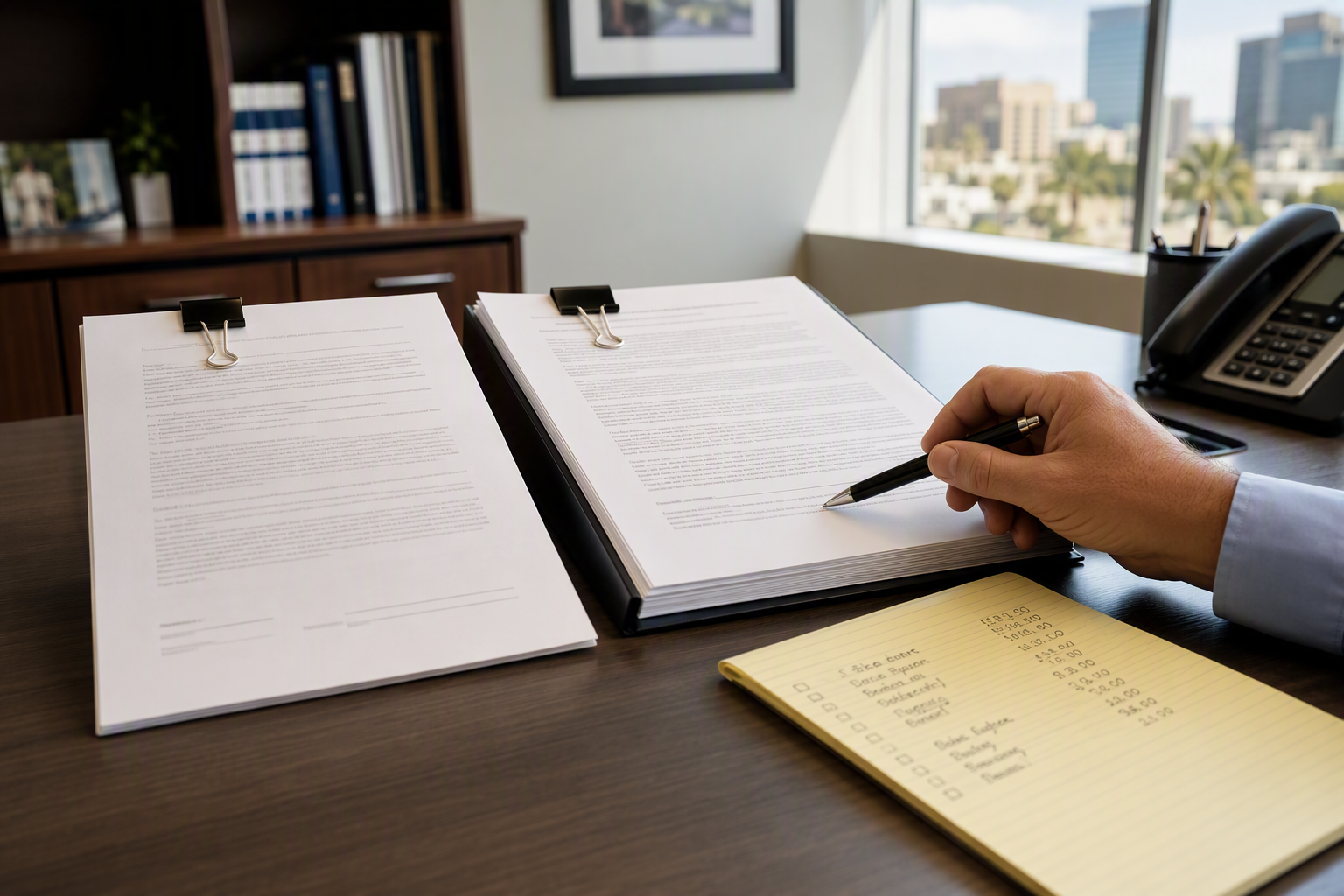
The structure of your maintenance contract is the most significant factor in your annual cost. Three primary contract types exist in the commercial elevator service market:
1. Oil-and-Grease (Basic) Contracts
These cover routine lubrication, basic adjustments, and periodic inspections. Parts and labor for repairs are billed separately. This is the lowest annual premium but carries the highest exposure to unpredictable repair invoices.
2. Comprehensive (Full-Coverage) Contracts
These include routine maintenance plus parts and labor for most repairs. They carry a higher annual cost but convert unpredictable repair expenses into a predictable budget line. High-traffic buildings and older elevators often benefit most from this structure.
3. Parts-Only or Hybrid Contracts
These cover parts replacement but bill labor separately, or vice versa. They sit between the two extremes in cost and risk exposure.
When evaluating any contract, building owners should carefully review what is explicitly excluded — controller modernizations, cab interior work, and major hydraulic cylinder replacements are commonly excluded even from “full coverage” agreements.
What Does California Law Require for Elevator Maintenance and Inspection?
California commercial elevators are regulated under the California Elevator Safety Construction Code, administered by the California Department of Industrial Relations (DIR) — Elevator, Ride, and Tramway Unit. The state adopts and amends the ASME A17.1 Safety Code for Elevators and Escalators, which establishes the baseline for design, installation, inspection, testing, and maintenance practices.
Key compliance obligations for California commercial building owners include:
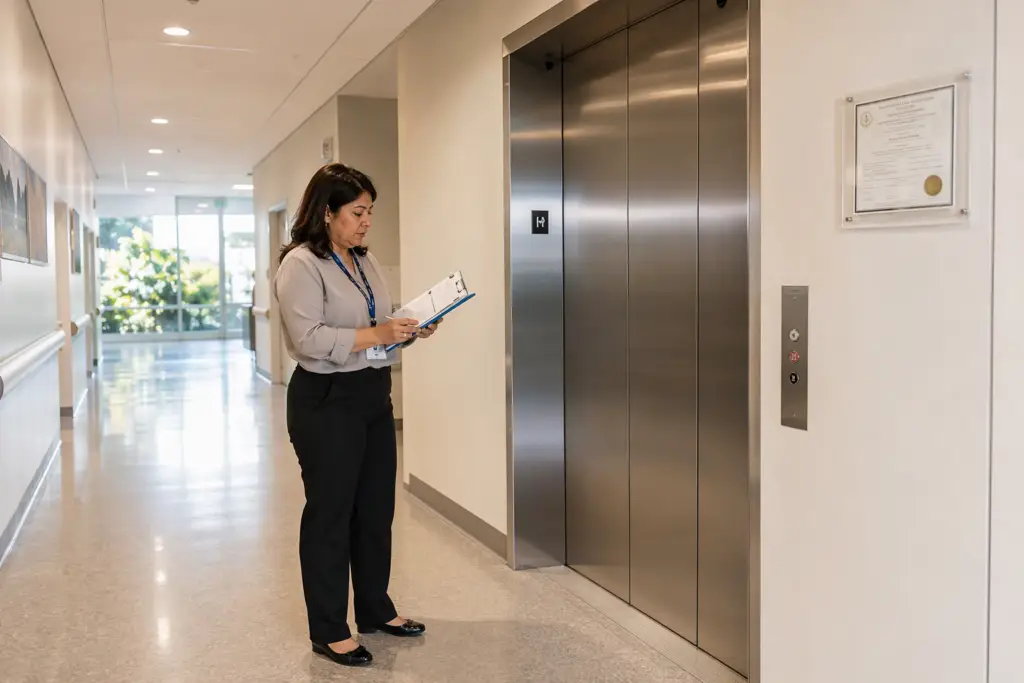
- Annual inspections: Elevators must undergo periodic inspections by a Qualified Elevator Inspector (QEI) certified under standards referenced in the ASME A17.1 code. Operating without a current certificate of inspection is a code violation that can result in the elevator being shut down.
- Five-year full-load tests: The ASME A17.1 code requires periodic full-load safety tests at intervals that include a comprehensive five-year cycle for most elevator types. California enforces these intervals through the DIR permit system.
- Maintenance logs: The ASME A17.1 Safety Code for Elevators and Escalators requires that maintenance records be kept current and available for inspection. Failure to maintain adequate records is itself a code deficiency.
- ADA accessibility compliance: Commercial elevators that serve the public must meet applicable requirements under the Americans with Disabilities Act, including requirements for cab dimensions, door timing, and accessible controls. Maintenance programs must preserve these features in working order.
- Workplace safety: Elevator mechanics performing maintenance are protected under OSHA standards, and building owners share responsibility for providing safe working conditions during service visits.
What Factors Drive Elevator Maintenance Costs Higher in California Specifically?
Several California-specific factors push maintenance costs above national averages:
- Prevailing wage requirements: Many California public buildings and projects subject to prevailing wage law require elevator mechanics to be paid at rates set by the DIR, which are substantially higher than open-market rates.
- Seismic retrofit requirements: California enforces seismic safety standards for elevators that other states do not. Buildings in seismic zones may face additional maintenance and testing obligations tied to seismic switches and other protective devices.
- Energy efficiency regulations: California’s Title 24 energy code influences elevator operations and can require upgrades to lighting, drives, and standby power features — all of which become part of the maintenance scope.
- High labor costs: Unionized elevator mechanics in California, particularly in major metro areas, command premium wages that are factored directly into service contract pricing.
- Parts availability and supply chain: California’s geography and the concentration of older elevator equipment in legacy commercial buildings can affect parts lead times and emergency service costs.
How Does Elevator Age Affect Annual Maintenance Costs?
Equipment age is one of the strongest predictors of maintenance cost trajectory. As elevators age past their design service life — which varies by manufacturer and type but is commonly discussed in the industry as ranging from 20 to 30 years for major components — several cost pressures compound:
- Replacement parts for obsolete controllers and drive systems become scarce and expensive.
- More frequent breakdowns increase callback labor charges under basic contracts.
- Aging hydraulic systems may develop fluid leaks requiring environmental remediation under California law.
- Older equipment is more likely to fail annual inspections, triggering mandatory repairs before a new certificate of inspection is issued.
Building owners managing elevators approaching or past their expected component lifespan should request a modernization feasibility assessment alongside their maintenance proposals, as the long-term cost of maintaining aging equipment often approaches or exceeds the annualized cost of a phased modernization.
What Is Typically Included in an Annual Elevator Maintenance Visit?
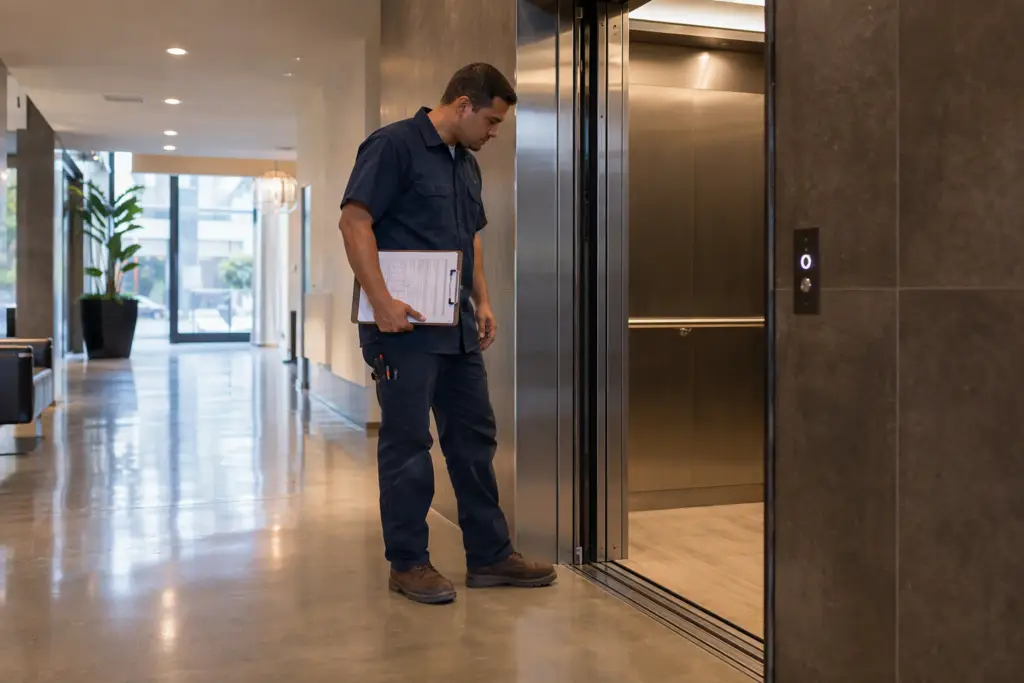
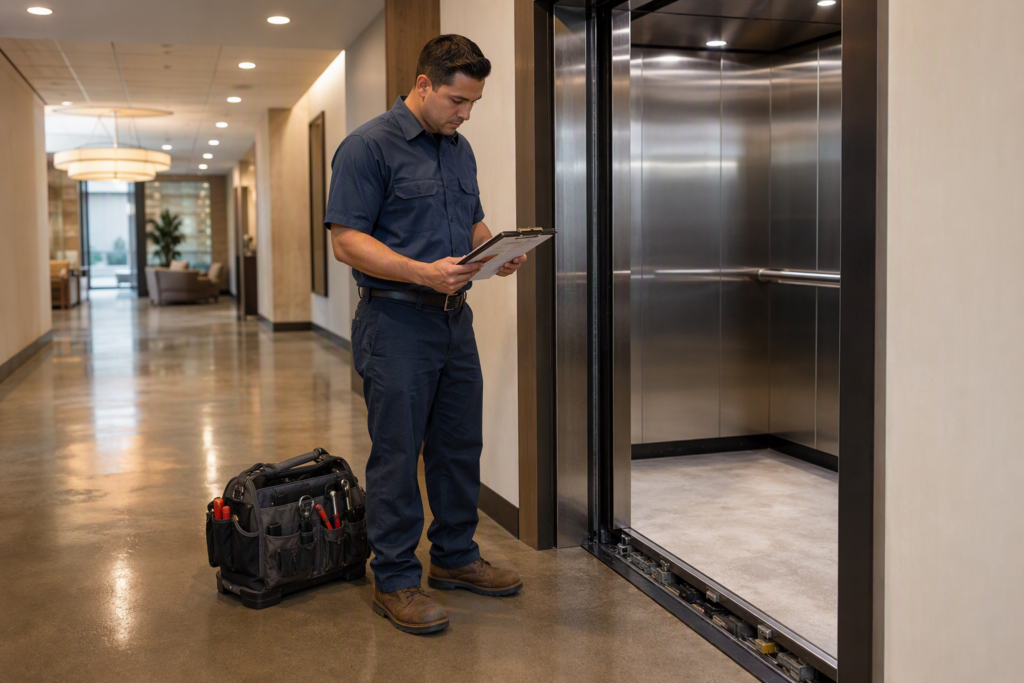
A standard scheduled maintenance visit for a commercial elevator in California — as aligned with practices supported by the ASME A17.1 Safety Code for Elevators and Escalators — generally encompasses the following tasks:
- Inspection and lubrication of guide rails, roller guides, and governor components.
- Testing and adjustment of door operators, door safety edges, and interlock mechanisms.
- Inspection of hoist ropes or hydraulic cylinder and piping (by elevator type).
- Testing of safety devices including buffers, safeties, and overspeed governors.
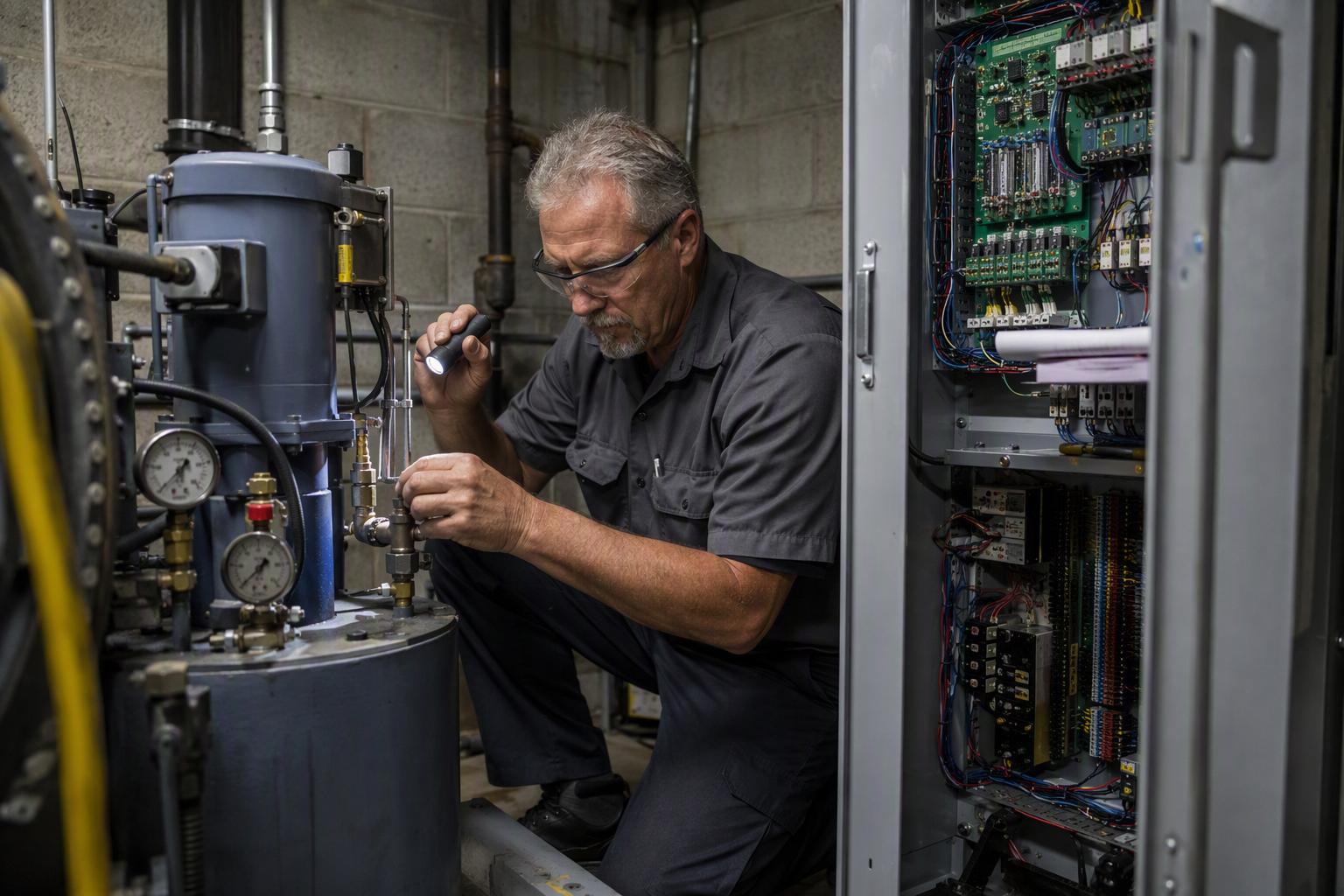
- Inspection and cleaning of machine room equipment including motors, controllers, and selector systems.
- Testing of lighting, emergency lighting, and communication systems in the cab.
- Review and update of maintenance log as required by code.
- Identification and documentation of deficiencies requiring follow-up repair or modernization.
How Do I Evaluate Elevator Maintenance Proposals From Competing Vendors?
When comparing proposals from multiple service contractors, the annual price alone is not a reliable comparison point. A more complete evaluation considers:
- Scope of exclusions: Ask each vendor to list in writing what is not covered. A lower-priced comprehensive contract that excludes circuit boards, valves, and hydraulic cylinders may cost more in practice than a slightly higher-priced contract that covers them.
- Response time provisions: How quickly will the contractor respond to an entrapment or outage? This should be in writing, not verbal.
- Technician qualification: California requires elevator mechanics to hold a valid state license. Verify that the contractor’s technicians are licensed through the DIR before service begins.
- Parts sourcing transparency: Ask whether the contractor uses OEM (original equipment manufacturer) parts or aftermarket equivalents, and how parts are priced under the contract terms.
- Inspection coordination: A quality contractor will manage annual inspection scheduling with the state authority having jurisdiction (AHJ) on your behalf and ensure all required tests are performed on time.
- Modernization conflict of interest: Some contractors profit from recommending modernizations — ask for an independent assessment if you receive a recommendation for a major capital project.
What Happens if Elevator Maintenance Is Deferred or Skipped?
Deferred maintenance is one of the most costly decisions a building owner can make with elevator systems. The consequences compound over time:
- Regulatory penalties: Operating an elevator without a current certificate of inspection in California can result in the unit being ordered out of service by the DIR, which for a multi-tenant office building or residential tower can create serious tenant relations and liability problems.
- Accelerated component failure: Lubrication and adjustment tasks that seem minor prevent metal-on-metal wear, rope fatigue, and hydraulic seal deterioration. Skipping them accelerates the failure curve.
- ADA liability: An elevator that falls out of proper adjustment may fail to level accurately at floor stops, creating a tripping hazard for wheelchair users and potentially triggering complaints under the Americans with Disabilities Act.
- Emergency repair premiums: Emergency after-hours service calls carry significant labor premiums. A single major hydraulic failure or controller breakdown can exceed an entire year of preventive maintenance costs.
- Insurance implications: Commercial property and liability insurers increasingly ask about elevator maintenance compliance as part of underwriting. Gaps in documentation can affect claims outcomes.
What Are the Industry Trends Affecting Elevator Maintenance Costs in 2025 and 2026?
Several qualitative trends are shaping the commercial elevator maintenance landscape in California as of 2025 and into 2026:
- Remote monitoring adoption: More service contractors are deploying IoT-based monitoring systems that transmit real-time fault data from elevator controllers. This allows predictive maintenance — addressing faults before they cause outages — and is gradually shifting the industry away from purely calendar-based service visits.
- Technician workforce constraints: The elevator mechanic trade faces workforce pipeline challenges in California, as retirements outpace new apprentice completions in some markets. This dynamic exerts upward pressure on labor rates and can affect service availability.
- Code modernization cycles: The ASME A17.1 Safety Code for Elevators and Escalators is updated on a regular cycle, and California periodically adopts newer editions with amendments. Buildings on older code cycles may face compliance upgrade requirements as the state updates its adoption schedule.
- Energy efficiency mandates: Pressure from California’s building performance standards is pushing building owners to consider regenerative drive upgrades and LED cab lighting as part of maintenance and modernization scopes, adding to the total cost of ownership but reducing operating energy consumption.
- Supply chain normalization: After notable disruptions in elevator parts availability in recent years, the supply chain for major components has been stabilizing — though certain proprietary components for legacy systems remain difficult to source.
How Should a Building Owner Budget for Elevator Maintenance Annually?
A sound budgeting approach for California commercial building owners includes:
- Obtain itemized proposals from at least two to three qualified, DIR-licensed elevator service contractors, specifying the same scope so comparisons are valid.
- Add a capital reserve line for non-routine repairs and code-required tests such as the five-year full-load test cycle — these are predictable expenses that should not be treated as surprises.
- Account for modernization amortization if the elevator is aging, by treating the annualized cost of an eventual modernization as part of the total cost of elevator ownership.
- Factor in inspection fees separately from maintenance contract costs — California DIR inspection fees and QEI fees are typically the building owner’s direct responsibility.
- Review contracts annually rather than auto-renewing, as equipment condition, usage patterns, and market pricing all change over time.
Does Elevator Type Affect Maintenance Costs?
Yes, significantly. The three most common commercial elevator types in California commercial buildings have meaningfully different maintenance profiles:
- Hydraulic elevators: Common in low-rise commercial buildings (typically up to five or six floors). Maintenance focuses on hydraulic fluid quality, cylinder integrity, and valve systems. California environmental regulations govern hydraulic fluid management, and underground cylinder corrosion can become a major unplanned expense in older installations.
- Geared traction elevators: Found in mid-rise buildings, these require machine room maintenance including gear oil changes and sheave inspection. The machine room footprint adds to the maintenance scope.
- Gearless traction and MRL elevators: Common in modern high-rise and mid-rise buildings. These units often have sophisticated electronic drive systems and require technicians with current training on the specific controller platform — which can affect both availability and cost of qualified service.
Why Work With a Data-Driven Elevator Service Provider Like Liftech Elevator?
Liftech Elevator approaches commercial elevator maintenance with a focus on documentation, code compliance, and transparent communication with building owners. Rather than relying on generic service schedules, Liftech Elevator uses equipment condition data to inform maintenance priorities — helping California commercial property owners avoid both under-maintenance (which creates liability and breakdown risk) and over-maintenance (which inflates costs without adding safety value).
For California commercial buildings navigating the specific requirements of the DIR, ASME A17.1, ADA accessibility standards, and seismic compliance, working with a service provider that tracks code requirements and documents work thoroughly is not optional — it is a risk management necessity.
What Questions Should I Ask Before Signing an Elevator Maintenance Contract?
- Are all of your elevator mechanics licensed by the California DIR?
- What is explicitly excluded from this contract in writing?
- How do you handle the five-year full-load test requirement, and is that included or billed separately?
- What is your documented process for maintaining the maintenance log required under ASME A17.1?
- How do you coordinate with the state AHJ for annual inspection scheduling?
- What are your parts sourcing policies, and how are parts priced under this agreement?
- Do you provide written condition reports after each maintenance visit?
- How do you handle callbacks between scheduled visits?
- Do you offer remote monitoring, and if so, how does it affect the service visit schedule and pricing?
- What is your process for identifying and communicating modernization needs without creating a conflict of interest?
What Should I Do If My Elevator Fails a California State Inspection?
If a California DIR inspection results in a failed certificate or a notice of violation, take the following steps:
- Obtain the written inspection report and review every cited deficiency with your elevator service contractor.
- Prioritize deficiencies by safety classification — items that pose an immediate hazard typically require the elevator to be taken out of service until corrected.
- Request a written repair plan and timeline from your contractor that directly references each cited item.
- Ensure all repairs are performed by a DIR-licensed elevator mechanic and documented in the maintenance log.
- Schedule the re-inspection with the DIR as promptly as the repair timeline allows — operating a failed elevator without correcting cited deficiencies compounds regulatory and liability exposure.
- Use the inspection failure as a diagnostic opportunity to assess whether the current maintenance program is adequate or whether the contract scope needs to be upgraded.
Are There Ways to Reduce Annual Elevator Maintenance Costs Without Sacrificing Compliance?
Building owners can take several legitimate steps to manage annual elevator maintenance costs:
- Bundle multiple units: Buildings with two or more elevators typically receive better per-unit pricing when all units are under a single contract with one provider.
- Invest in modernization strategically: Upgrading an aging controller or drive system can reduce maintenance frequency and parts costs over the subsequent years, shifting the cost curve favorably.
- Maintain accurate usage records: If a particular elevator has demonstrably low utilization, share that data with your contractor — service intervals may be adjustable in a way that reduces visit frequency without creating a compliance gap.
- Negotiate multi-year terms carefully: Locking in pricing for multiple years can protect against labor rate increases, but only if the contract scope and exclusions are clearly defined upfront.
- Request remote monitoring: For buildings where it is available, IoT-based fault monitoring can reduce unnecessary preventive visits while catching developing faults earlier — a net positive for both cost and reliability.
Contact Liftech Elevator for a Free Elevator Assessment
Managing elevator maintenance costs in a California commercial building requires accurate information, a compliant service provider, and a contract structure matched to your equipment and usage profile. Liftech Elevator offers a free elevator assessment to help building owners and property managers understand their current compliance status, equipment condition, and the service scope that makes sense for their specific installation.
Contact Liftech Elevator at 562-609-3478 to schedule your free elevator assessment and get a transparent, itemized proposal for your California commercial building.
Need elevator service you can rely on? Liftech Elevator is ready to help.