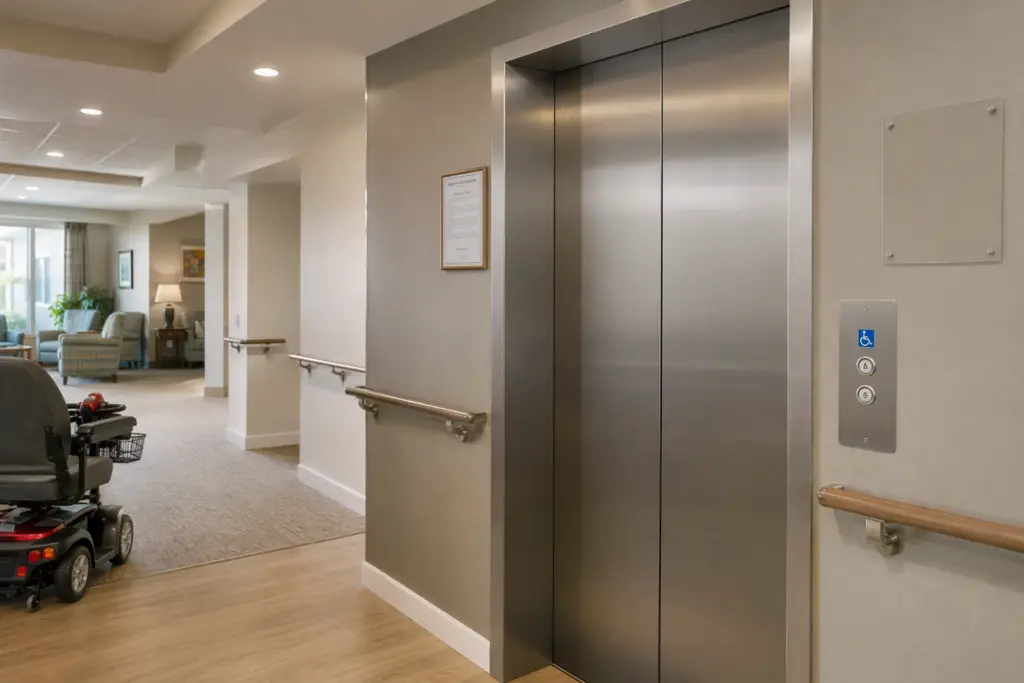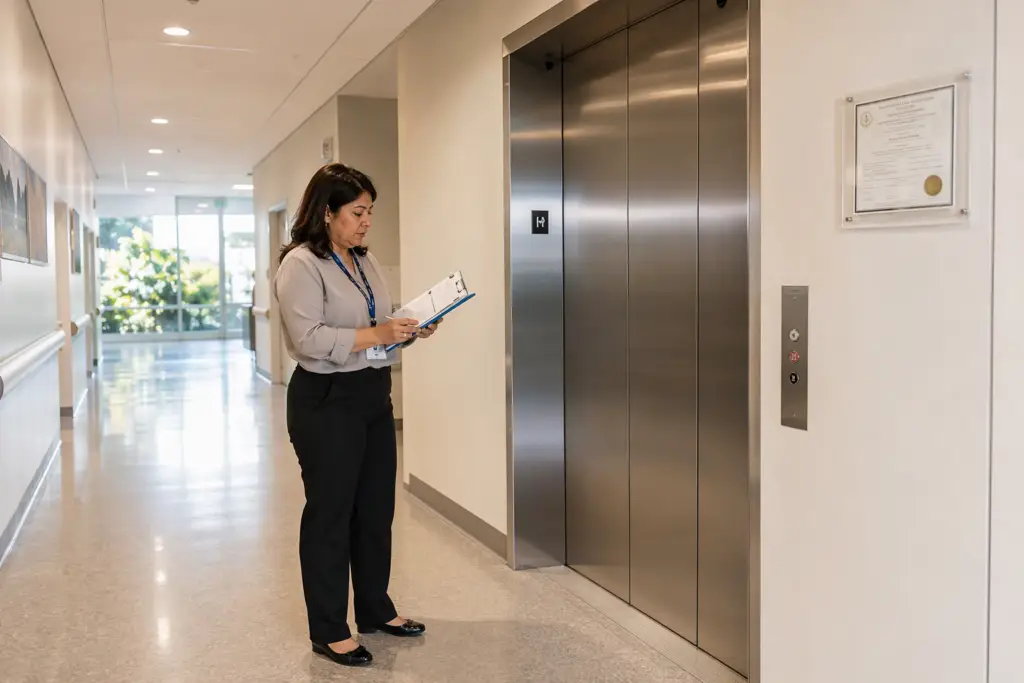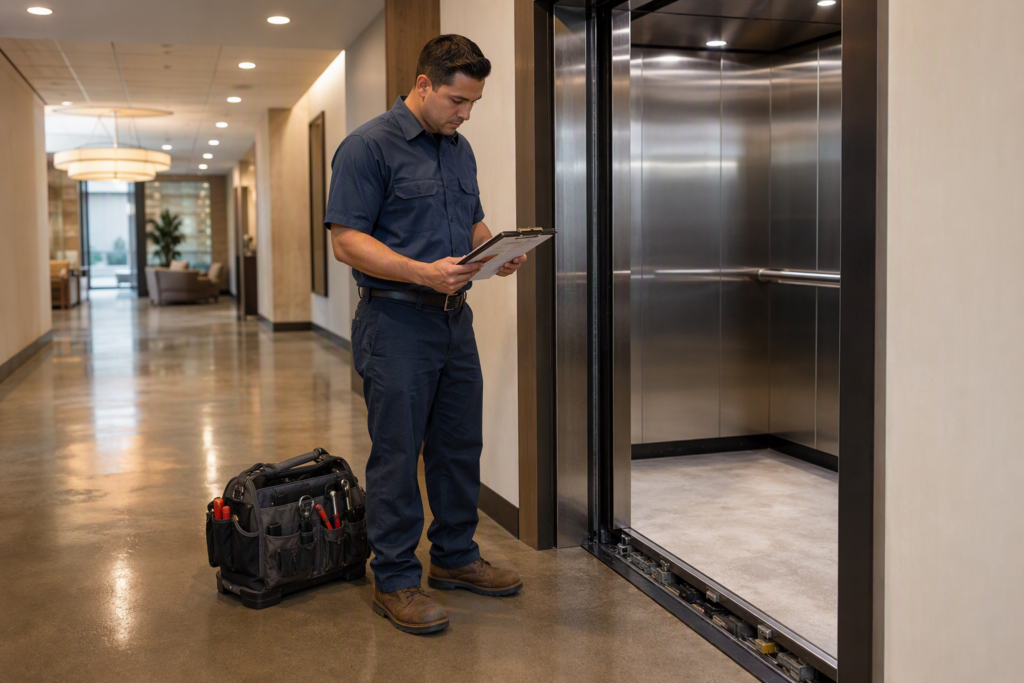
Quick Answer: California buildings should pursue elevator modernization when the structure and shaft remain code-compliant and components such as controls, drives, or doors can be selectively upgraded to meet current standards — full replacement becomes necessary when the cab structure, machine room configuration, or shaft dimensions no longer support safe, compliant operation under ASME A17.1 Safety Code for Elevators and Escalators or California’s Title 8 elevator regulations, or when cumulative repair costs persistently exceed the value of incremental upgrades.
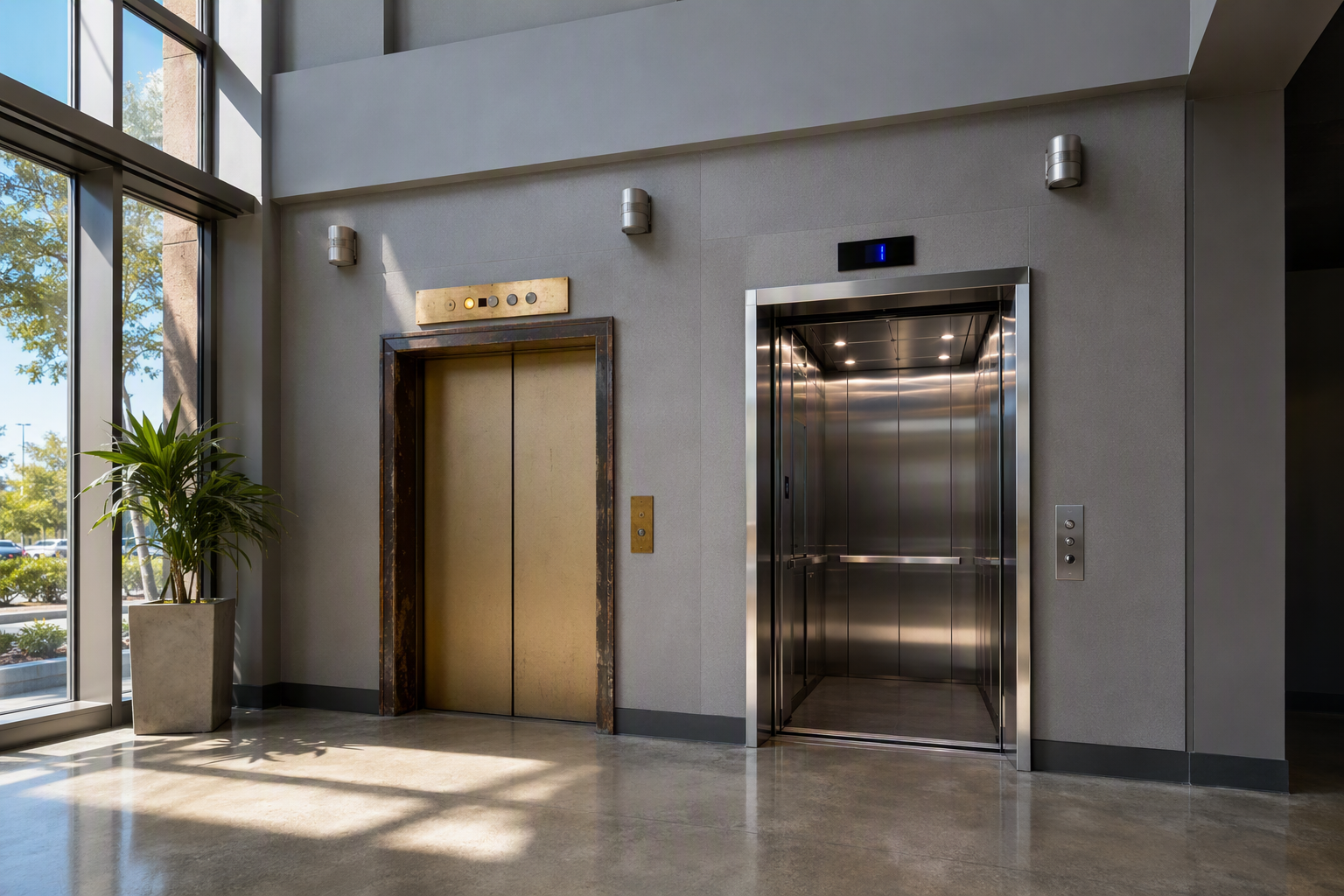
Building owners and facility managers across California face one of the most consequential decisions in vertical transportation: when the elevator starts underperforming, is a targeted modernization the right answer, or does the situation call for a complete tear-out and replacement? The wrong choice can mean years of unnecessary downtime, regulatory penalties, or spending significant capital on a system that cannot deliver long-term reliability. This guide walks through every factor — compliance, cost structure, timeline, building type, and risk — so decision-makers can approach the evaluation with clarity.
—
What Is the Difference Between Elevator Modernization and Full Replacement?
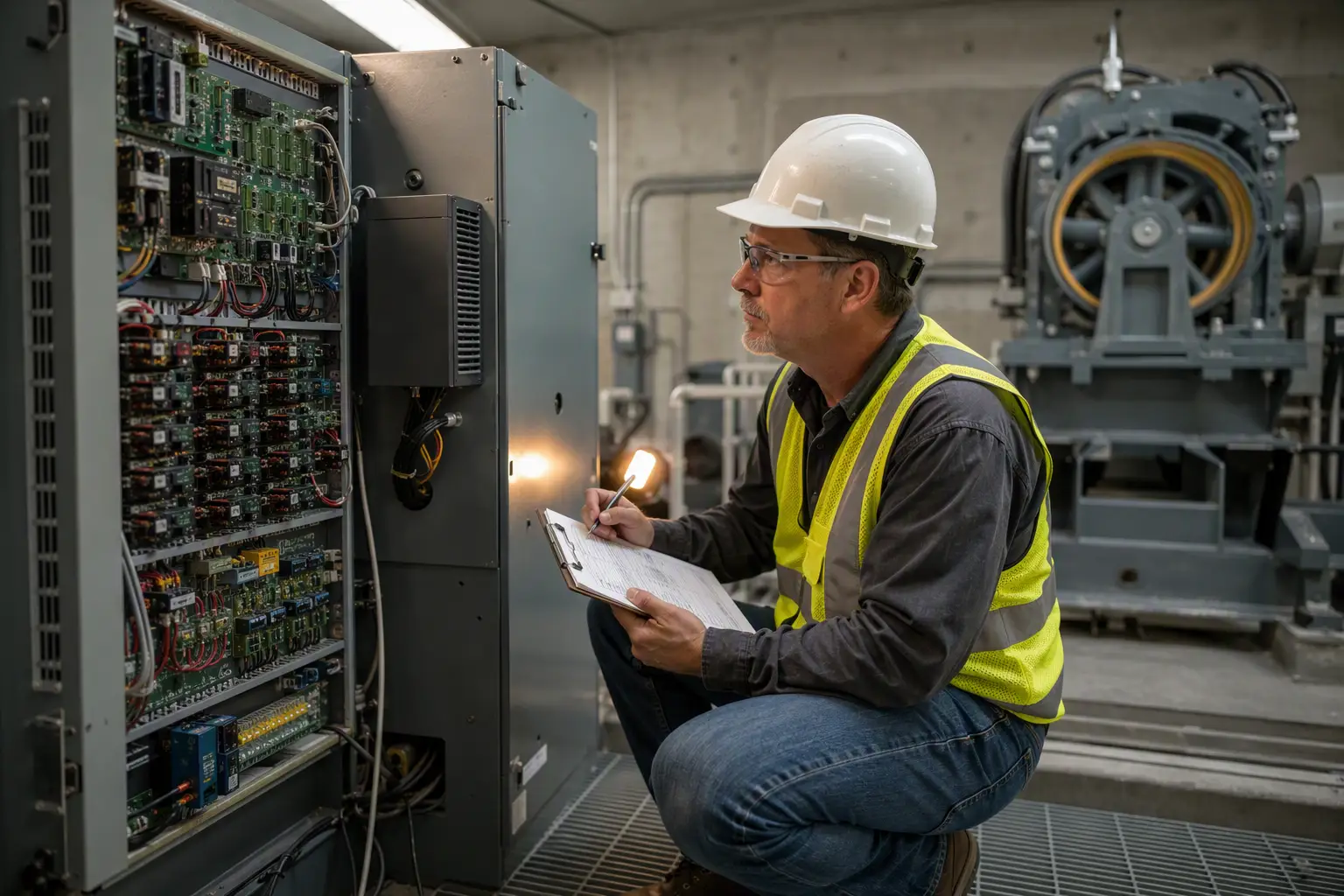
Elevator modernization refers to the selective upgrade of one or more major subsystems — typically the control panel, drive unit, door operators, cab interior, or safety devices — while retaining the existing hoistway, guide rails, and machine room configuration. The result is a functionally updated system that meets current code requirements without the structural disruption of a full project.
Full elevator replacement, sometimes called a complete tear-out and reinstall, involves removing every major component — including the cab frame, counterweight, roping, buffers, and often the machine room equipment — and installing an entirely new system from the ground up. In some cases this also requires hoistway modifications.
The distinction matters because these two paths carry meaningfully different cost profiles, project timelines, disruption levels, and compliance outcomes.
—
What Are the Key Decision Factors That Determine Modernization vs. Replacement?
No single factor drives this decision on its own. Building owners should evaluate all of the following in combination:
- Age and condition of the structural components: Guide rails, pit buffers, overhead steel, and the cab sling are expensive to replace piecemeal. If these are compromised, a full replacement is more economical.
- Compliance gap severity: A system that is far out of compliance with the current edition of ASME A17.1 Safety Code for Elevators and Escalators or California Title 8 may require so many mandated upgrades that the modernization scope approaches replacement cost.
- ADA accessibility requirements: If the cab dimensions, door widths, button heights, or landing requirements do not meet ADA Standards for Accessible Design, modifications must be incorporated — modernization can often address these; replacement is sometimes more efficient when multiple ADA deficiencies overlap with mechanical failures.
- Frequency and cost of ongoing repairs: When a system requires frequent service calls and parts are difficult to source because the equipment is obsolete, the cumulative maintenance burden tips the economics toward replacement.
- Building use and traffic demands: A high-rise commercial building with intensive daily cycles has different reliability requirements than a two-stop residential lift. Traffic demand influences the acceptable risk of partial upgrades.
- Available downtime: Full replacement requires significantly longer out-of-service periods. Buildings with no alternate vertical access — such as hospitals or high-rises without stairwell bypass options — may need to phase modernization rather than accept a prolonged shutdown.
- Seismic compliance: California’s seismic requirements for elevators are among the most specific in the country. Buildings in high-seismic zones may face mandated seismic upgrades that interact with other component decisions.
—
How Do the Costs of Modernization and Full Replacement Compare?
Because exact costs vary by building, elevator type, number of stops, and current code compliance status, the figures below represent general structural relationships rather than fixed quotes. Any specific budget should be validated through a site assessment.
| Cost Factor | Modernization | Full Replacement |
|---|---|---|
| Scope of work | Targeted subsystem upgrades (controls, drives, doors, cab, safety devices) | Complete removal and reinstall of all components; possible hoistway work |
| Relative capital outlay | Lower upfront cost for partial scope; can increase significantly with broad compliance requirements | Higher upfront capital; but often the lowest total cost when the system is extensively degraded |
| Ongoing maintenance cost impact | Reduced for upgraded components; legacy parts may still generate costs | Lowest ongoing cost — full warranty on new system, modern parts availability |
| Permit and inspection fees | Required for each major component upgrade; varies by California jurisdiction | Required for full installation; typically consolidated permitting |
| Unexpected cost risk | Moderate — hidden component degradation discovered during work can expand scope | Lower — comprehensive assessment at start; full visibility into system condition |
| Long-term ROI | Strong when targeted correctly; limited if system requires follow-on upgrades within a few years | Strongest over a full equipment lifecycle; best for buildings with long-term ownership horizons |
—
How Do the Timelines Compare Between Modernization and Replacement?
| Phase | Modernization | Full Replacement |
|---|---|---|
| Initial assessment and planning | Days to a few weeks depending on scope | Weeks — comprehensive engineering review required |
| Permitting (California) | Varies by jurisdiction; major component changes require California DOSH permits | Comprehensive permit required; may take longer in high-volume jurisdictions |
| Active construction / installation | Days to several weeks depending on scope | Several weeks to a few months for a complete system |
| Inspection and sign-off | Required after each permitted upgrade; scheduling dependent on local authority | Final inspection and certificate of operation required before return to service |
| Total out-of-service period | Shorter — can sometimes be phased to minimize disruption | Longer continuous shutdown; alternate access planning is essential |
—
What Are the Pros and Cons of Each Approach?
| Modernization | Full Replacement | |
|---|---|---|
| Pros |
|
|
| Cons |
|
|
—
What California-Specific Regulations Must Be Considered?
California’s elevator regulations are administered through the Division of Occupational Safety and Health (Cal/OSHA) under Title 8 of the California Code of Regulations, which adopts and supplements the ASME A17.1 Safety Code for Elevators and Escalators. Key California-specific considerations include:
- Seismic design requirements: California applies specific seismic provisions to elevator installations that exceed national baseline codes. Any project — modernization or replacement — that touches structural or mechanical components in a seismic zone must address these provisions.
- Periodic safety testing: California requires periodic safety inspections and tests. A modernization project that changes control systems or safety devices will trigger re-inspection and re-testing requirements.
- Accessibility: ADA Standards for Accessible Design apply to any alteration project in public accommodations and commercial facilities. Modernization work that constitutes an “alteration” under ADA triggers path-of-travel accessibility obligations.
- Local jurisdictional overlays: Some California cities and counties have adopted supplemental elevator ordinances. Los Angeles, San Francisco, and other major jurisdictions may impose requirements beyond the state baseline.
- Energy codes: California Title 24 energy standards may apply to certain equipment replacements, particularly lighting, motors, and drive systems.
—
What Signs Indicate That Modernization Is the Right Choice?
Modernization is generally the appropriate path when:
- The hoistway, pit, overhead, and machine room dimensions are structurally sound and code-compliant
- The primary failure points are concentrated in the control system, door operators, or drive unit rather than distributed across all subsystems
- The cab sling, rails, and counterweight are in serviceable condition
- Compliance deficiencies are limited and addressable through component-level upgrades
- The building ownership has a medium-term horizon and a lower initial capital budget
- The elevator type (hydraulic or traction) is appropriate for the building’s traffic demand and will remain so after the upgrade
—
What Signs Indicate That Full Replacement Is the Right Choice?
Full replacement typically becomes necessary or economically superior when:
- The cab structure, sling, or counterweight frame is compromised and requires replacement regardless
- The hoistway requires modification to meet current code — particularly seismic or clearance requirements
- Parts for critical components are no longer manufactured or available through secondary markets
- The total cost of bringing the existing system to compliance approaches or exceeds replacement cost
- The building is converting to a different elevator technology (e.g., hydraulic to traction) for energy or performance reasons
- Cumulative repair history demonstrates systemic unreliability that selective upgrades cannot resolve
- Long-term building ownership justifies the highest-reliability, lowest-maintenance outcome
—
What Is the Step-by-Step Process for Evaluating Which Option Is Right?
- Commission a comprehensive elevator assessment. A qualified elevator service provider should inspect every major subsystem — controls, mechanical, structural, doors, cab, pit, and machine room — and document the condition of each.
- Request a current compliance audit. Compare the existing system against the current edition of ASME A17.1 and California Title 8 as adopted and amended in 2026 to identify all open deficiencies.
- Identify all ADA compliance gaps. Review cab dimensions, control placement, door timing, and landing requirements against ADA Standards for Accessible Design.
- Obtain separate itemized proposals for both paths. A credible independent provider should be able to quote both a modernization scope and a full replacement scope so building owners can compare total cost of ownership, not just upfront price.
- Evaluate total cost of ownership over a defined horizon. Project out maintenance, repair, and likely follow-on upgrade costs for each option over the ownership horizon — five, ten, or twenty years — not just the immediate project cost.
- Assess building-specific constraints. Confirm whether the building can support the out-of-service period for full replacement, whether alternate access exists, and whether phased modernization is operationally viable.
- Verify jurisdiction-specific permitting requirements. Contact the local California elevator inspection authority or the contractor to confirm what permits, plans, and inspections are required for the chosen scope.
- Make the decision with documented rationale. Record the factors that drove the decision for insurance, regulatory, and future ownership reference.
—
How Does Elevator Type (Hydraulic vs. Traction) Affect the Decision?
Hydraulic elevators — common in low-rise California buildings — have specific modernization considerations. The hydraulic cylinder, fluid system, and power unit each carry their own lifespan and environmental compliance requirements. California’s environmental regulations on hydraulic fluid containment and cylinder integrity inspections add a layer of compliance that can make hydraulic modernization more complex than a comparable traction system upgrade.
Traction elevators, common in mid-rise and high-rise buildings, often have more modular control and drive systems that respond well to targeted modernization — particularly the replacement of relay-logic controls with solid-state or microprocessor-based systems, which can dramatically improve reliability and diagnostic capability without touching the mechanical infrastructure.
The decision of whether to modernize or replace is therefore inseparable from the question of whether to retain the existing elevator technology type or convert to a different system.
—
Does the Age of the Elevator Determine Whether Replacement Is Required?
Age alone does not determine whether modernization or replacement is the correct path. California elevator regulations do not mandate replacement based solely on age. What matters is the condition of the components, their compliance status under current code, and the economic relationship between upgrade costs and replacement costs. A well-maintained older traction elevator with a sound structure and rails may be an excellent modernization candidate. A newer hydraulic system with an aging cylinder, a compromised pit, and obsolete controls may be a stronger replacement candidate despite its shorter service history.
—
Can Modernization Be Done in Phases to Reduce Disruption?
Yes, phased modernization is a recognized approach in the elevator industry. For buildings where continuous elevator access is critical — hospitals, senior housing, high-rises without stairwell bypass options — a phased approach allows the most critical compliance deficiencies to be addressed first while deferring other scope to a second phase. However, phased modernization requires careful planning to ensure that each completed phase is independently code-compliant and that the sequencing does not create new compliance gaps at the phase boundary. Buildings with only one elevator have very limited phasing flexibility and may need to plan more carefully for temporary shutdown periods.
—
Why Work With an Independent Elevator Service Provider Like Liftech Elevator?
The decision between modernization and full replacement should be made by someone whose recommendation is not driven by the margin on equipment sales or manufacturer relationships. Liftech Elevator is an independent, certified elevator service company serving California building owners and managers. As an independent provider, Liftech Elevator is positioned to assess each building’s situation on its merits — recommending modernization where it genuinely serves the building’s needs and full replacement only when that is the technically and economically sound outcome.
Liftech Elevator’s assessments evaluate compliance with ASME A17.1 Safety Code for Elevators and Escalators, California Title 8 requirements, ADA Standards for Accessible Design, and California’s seismic provisions — providing building owners with the full compliance picture needed to make this decision with confidence.
—
Summary: Modernization vs. Replacement at a Glance
| Scenario | Recommended Path |
|---|---|
| Sound structure, localized control or door failures, moderate compliance gaps | Modernization |
| Obsolete controls, strong mechanical infrastructure, budget-constrained ownership | Modernization (controls/drive focus) |
| Compromised cab sling, rails, or pit structure | Full Replacement |
| Extensive compliance gaps approaching full system scope | Full Replacement |
| Parts obsolescence across multiple subsystems | Full Replacement |
| Technology conversion (hydraulic to traction) | Full Replacement |
| High-traffic building, long-term ownership, maximum reliability goal | Full Replacement preferred |
| Critical-access building, phased budget, sound structure | Phased Modernization |
—
Get a Free Elevator Assessment From Liftech Elevator
Every California building is different. Compliance requirements, structural conditions, budget constraints, and operational realities all shape the right answer. Liftech Elevator provides free, independent elevator assessments that evaluate your system’s current condition, identify every open compliance item under California and ASME standards, and give you clear, unbiased guidance on whether modernization or full replacement serves your building’s long-term interests.
Contact Liftech Elevator for a free elevator assessment: 562-609-3478
Need elevator service you can rely on? Liftech Elevator is ready to help.