Repair vs. Replace an Aging Elevator: The Complete Decision Guide
Deciding whether to repair or replace an aging elevator is one of the most consequential maintenance decisions a building owner or property manager will face. The answer involves equipment age, safety code compliance, total cost of ownership, passenger demand, and long-term building strategy. This guide answers the 20 most important questions surrounding that decision, drawing on current safety standards, California regulations, and the technical realities of elevator service in 2026.
How do I decide whether to repair or replace an aging elevator?
The decision hinges on a structured evaluation of age, repair frequency, compliance status, and the ratio of accumulated repair costs to replacement value — no single factor alone determines the right path.
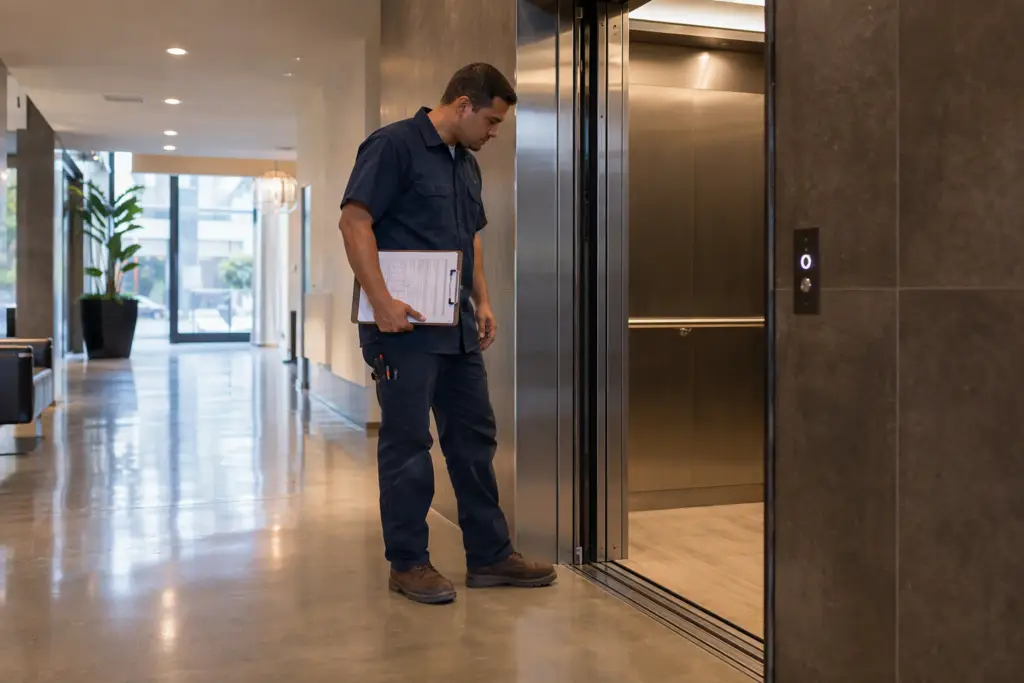
Building owners should begin with a professional condition assessment that reviews the elevator’s mechanical and electrical systems, code compliance posture, and maintenance history. When repairs are targeted and infrequent, and the unit still meets current safety standards, continued maintenance is usually prudent. When multiple systems are failing simultaneously, parts are obsolete, and the elevator no longer meets the requirements of the ASME A17.1 Safety Code for Elevators and Escalators, the calculus shifts decisively toward replacement or comprehensive modernization.
Liftech Elevator performs detailed condition assessments for properties throughout Signal Hill, Long Beach, Los Angeles, and Orange County to give building owners an objective baseline before any decision is made.
What is the typical lifespan of a commercial elevator?
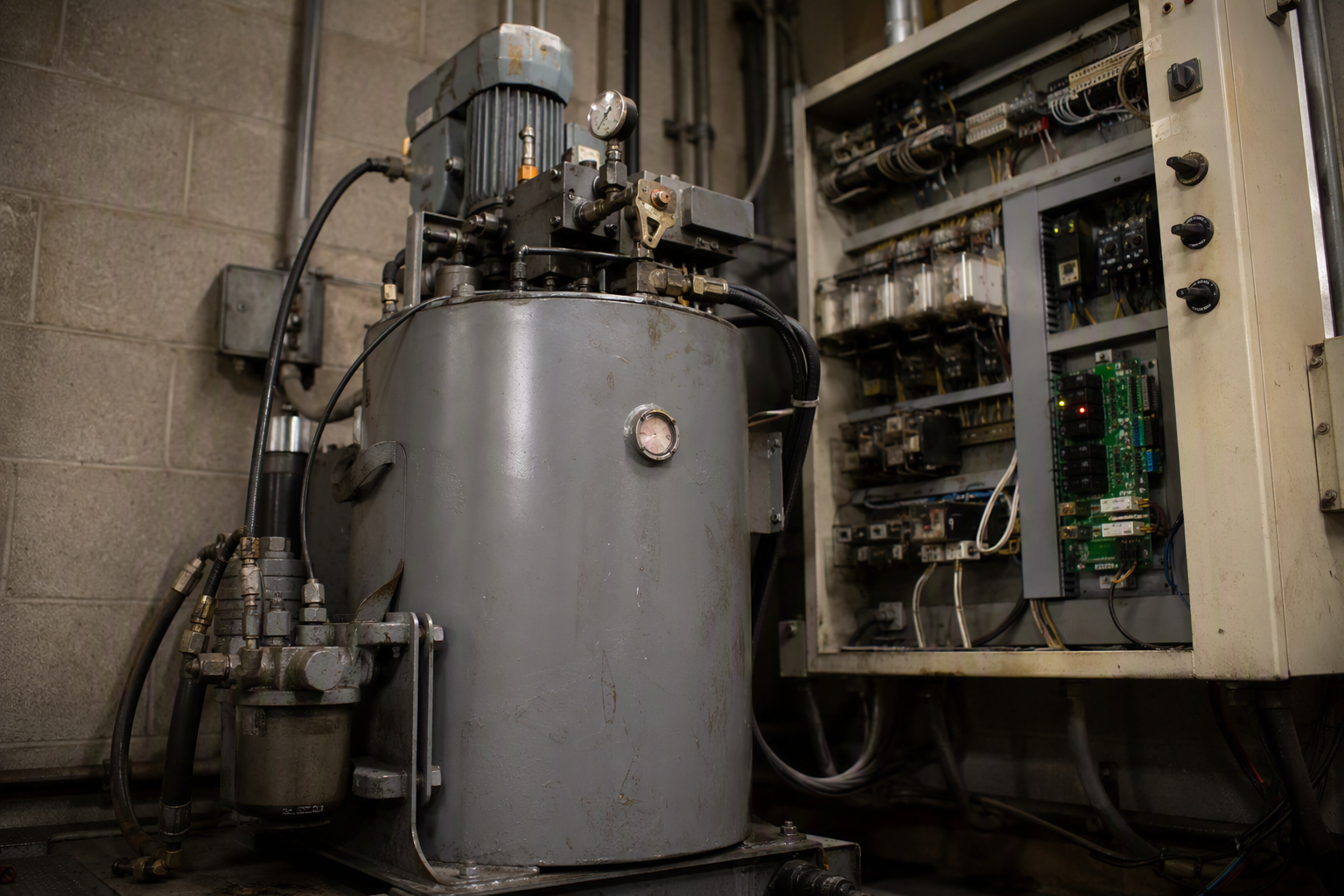
A properly maintained commercial elevator generally has a functional service life of 20 to 25 years for its core mechanical components, with hydraulic systems often requiring modernization sooner than traction systems under heavy use conditions.
Equipment longevity is heavily influenced by maintenance consistency, passenger volume, and environment. A hydraulic elevator in a moderate-traffic three-story medical office may serve reliably well beyond 20 years if the fluid, seals, and controller are serviced on schedule. Conversely, a high-use traction elevator in a busy Los Angeles apartment complex may show significant wear on ropes, sheaves, and controller components earlier. Age alone is not disqualifying, but it is a key variable in any repair-versus-replace analysis.
What are the most common signs that an elevator needs repair rather than replacement?
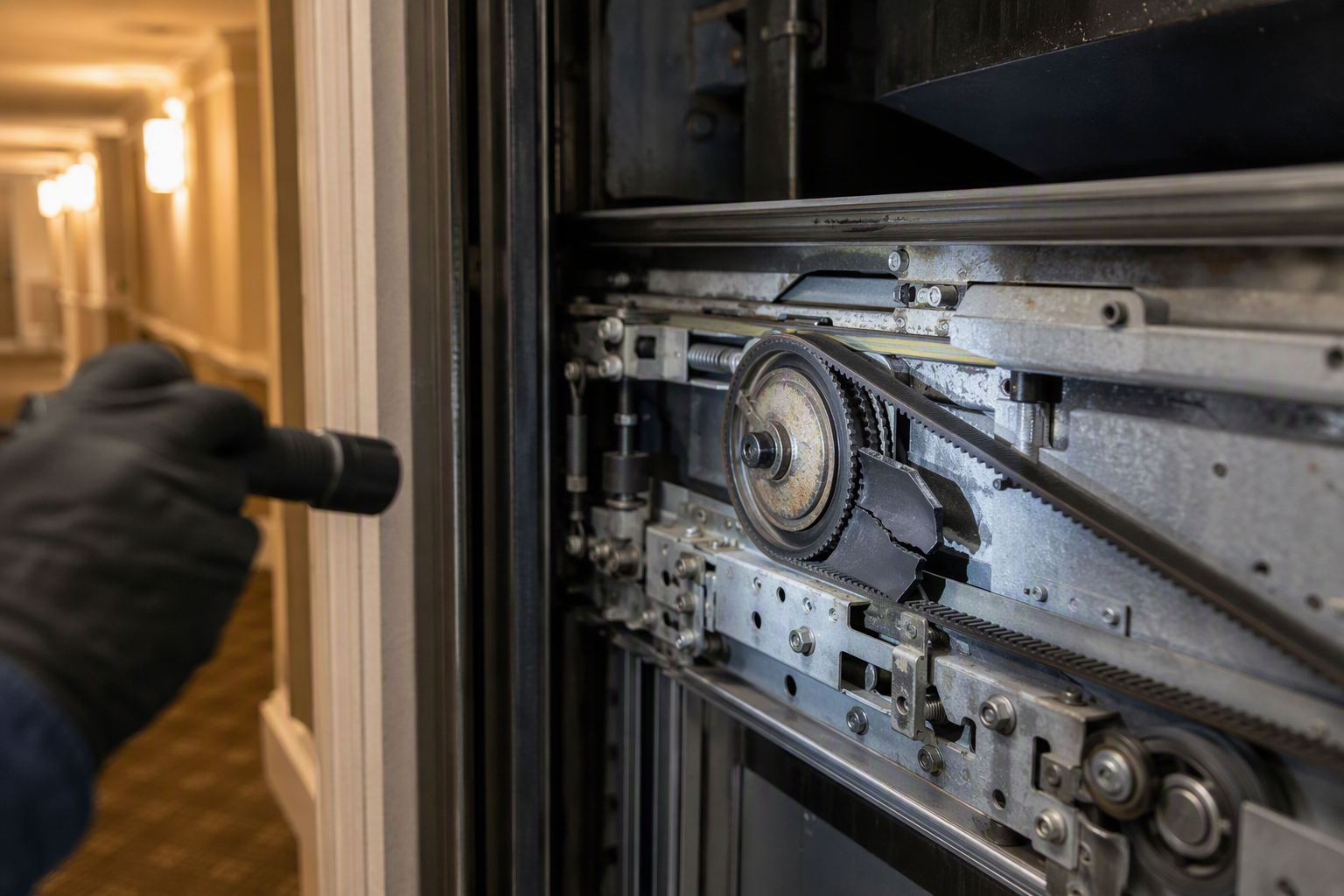
Isolated mechanical failures — a single faulty door operator, worn brake linings, a failing hydraulic seal, or an outdated controller relay — are strong indicators that targeted repair is the appropriate response rather than wholesale replacement.
Other signs that repair is the right approach include: the elevator passes its annual state inspection with minor corrective items, the main drive machine and structural components are in good condition, parts are still available from the manufacturer or aftermarket suppliers, and the unit’s overall downtime history is low. When problems are confined and the root cause is clearly identifiable, repair preserves asset value without the disruption and cost of replacement.
When does elevator replacement make more financial sense than repair?
Replacement or comprehensive modernization becomes the financially superior choice when the projected cost of bringing an aging elevator up to current operating and compliance standards exceeds roughly half to two-thirds of the cost of a new installation.
This threshold is not arbitrary — it reflects the reality that partial repairs on aging equipment often trigger a cascade of subsequent failures as other aged components reach the end of their service life. Beyond the direct cost comparison, replacement delivers improved energy efficiency, modern safety systems, better passenger experience, and a fresh compliance baseline. For building owners in California, this calculation also incorporates the cost of bringing the unit into alignment with state-mandated Title 24 accessibility provisions and current ASME A17.1 editions.
What does an elevator condition assessment involve?
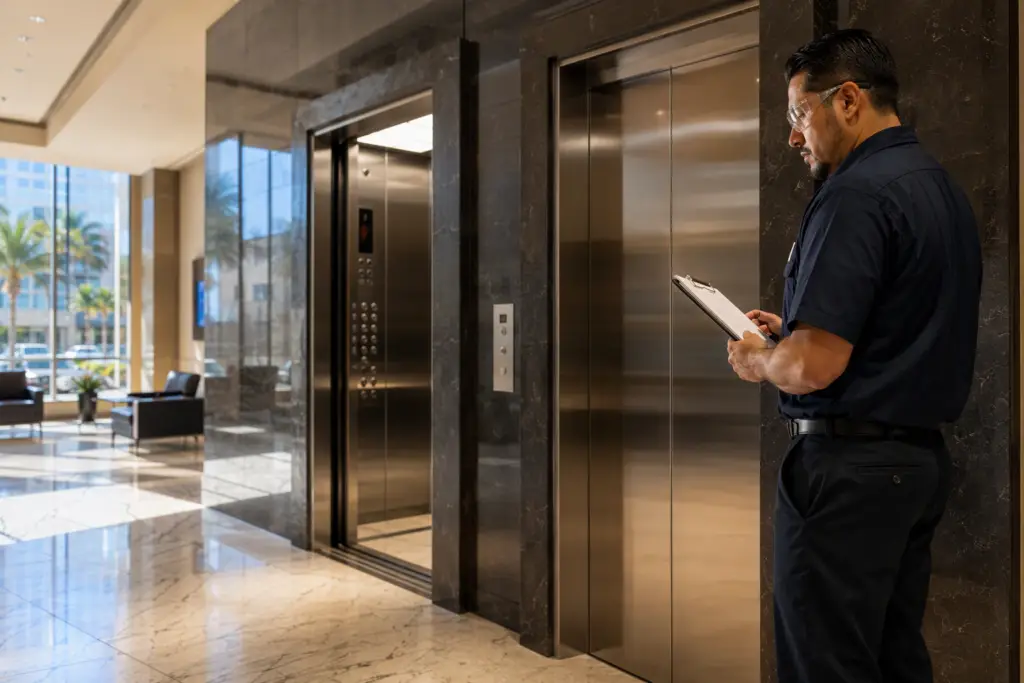
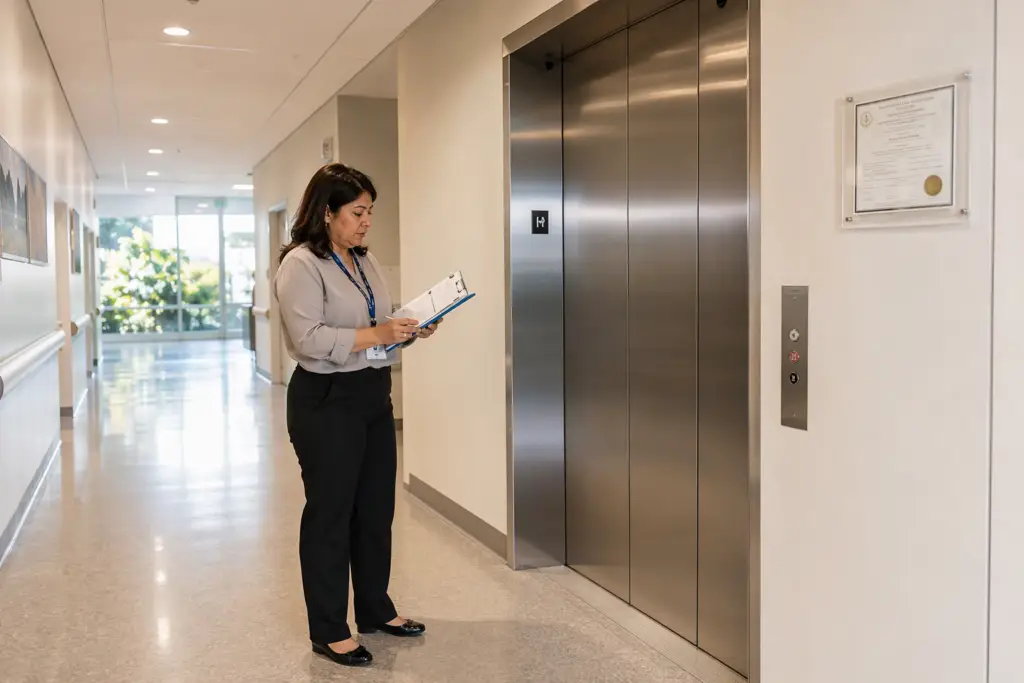
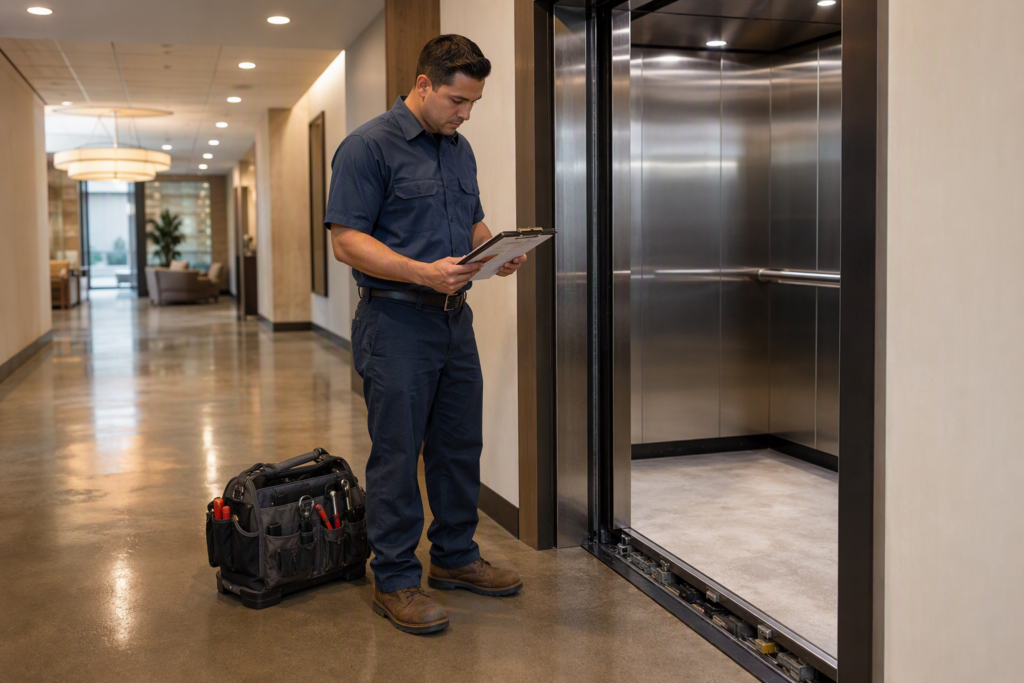
A professional elevator condition assessment is a systematic inspection of all major mechanical, electrical, hydraulic, and safety systems, resulting in a documented report that grades each component’s condition and projects its remaining useful life.
A thorough assessment covers the hoistway, pit, machine room, car and landing doors, drive machine, controller, safety devices, buffers, guide rails, ropes or hydraulic cylinder, and all fixtures. The technician cross-references findings against the current edition of ASME A17.1 and California’s elevator safety regulations enforced by the Division of Occupational Safety and Health (Cal/OSHA). The output is a prioritized list of deficiencies with estimated remediation costs — the foundation for any informed repair-versus-replace decision. Liftech Elevator provides these assessments to property owners across Long Beach, Signal Hill, Los Angeles, and Orange County.
What ASME and ADA codes apply to elevator repair and replacement decisions in 2026?
The ASME A17.1 Safety Code for Elevators and Escalators governs equipment safety requirements, while the Americans with Disabilities Act (ADA) sets accessibility standards that must be met whenever alterations are made to existing elevator equipment.
In California, elevator safety regulations are administered under Cal/OSHA through the Elevator, Ride, and Tramway Unit, with standards generally tracking current ASME A17.1 editions. Critically, when a building owner undertakes a “major alteration” as defined under ASME A17.1 — such as replacing the drive machine, controller, or safety devices — this typically triggers a compliance review of the entire installation against current code requirements. This means a significant repair project can mandate broader upgrades than originally anticipated, a factor that must be weighed before choosing repair over replacement. ADA compliance requirements also attach to alterations: accessible cab dimensions, control panel heights, Braille and tactile signage, and audible signals all become subject to current standards when qualifying work is performed.
How does elevator age affect parts availability and repair feasibility?
For elevators older than approximately 20–25 years, original equipment manufacturer (OEM) parts for controllers, drive machines, and door operators frequently become discontinued, forcing reliance on refurbished components, third-party alternatives, or custom fabrication — all of which increase cost and extend downtime.
Parts obsolescence is one of the most underappreciated factors in the repair-versus-replace debate. A controller from the early 2000s may have no direct replacement available; an experienced elevator service company can often source compatible components, but lead times and costs grow substantially as equipment ages. When a building faces repeated callbacks because critical parts are unavailable or must be sourced internationally, the hidden cost of those delays — lost productivity, tenant dissatisfaction, and potential liability — frequently tips the economic balance toward modernization or full replacement.
What is elevator modernization and how does it differ from full replacement?
Elevator modernization is a partial or phased upgrade that replaces specific high-wear or obsolete subsystems — typically the controller, drive, doors, fixtures, or cab interior — while retaining the existing hoistway, structure, and load-bearing components, whereas full replacement installs an entirely new elevator system.
Modernization occupies the middle ground between ongoing repair and complete replacement. It is often the most cost-effective path for elevators whose structural and hoistway components remain sound but whose electrical and mechanical systems are obsolete. A controller modernization, for example, can dramatically improve reliability and energy efficiency while bringing the unit into compliance with current ASME A17.1 requirements for safety circuits. Full replacement is reserved for situations where the hoistway itself requires structural changes, the equipment type needs to change (e.g., hydraulic to machine-room-less traction), or the overall condition makes piecemeal upgrading impractical.
How much does elevator repair versus replacement typically cost?
Because elevator project costs vary significantly by equipment type, building configuration, local labor rates, and scope of compliance upgrades required, specific pricing should always be obtained through a detailed site assessment rather than relying on general estimates.
That said, the cost variables that universally drive the comparison include: the number of stops, the type of drive system (hydraulic versus traction), the extent of code-compliance work required, hoistway accessibility, and whether asbestos or other hazardous materials are present in older machine rooms. Repair costs scale with parts availability and labor complexity; replacement costs scale with equipment type and installation logistics. The table below summarizes the key decision variables rather than dollar figures, because accurate cost information requires a site-specific assessment.
| Decision Factor | Favors Repair | Favors Modernization | Favors Full Replacement |
|---|---|---|---|
| Equipment Age | Under 15 years | 15–25 years | Over 25 years |
| Failure Pattern | Isolated, infrequent | Recurring, multiple systems | Frequent, systemic |
| Parts Availability | OEM parts readily available | Some parts discontinued | Most parts obsolete |
| Code Compliance | Meets current ASME A17.1 & ADA | Minor gaps, addressable by scope | Significant non-compliance |
| Structural Components | Excellent condition | Good condition | Degraded or inadequate |
| Downtime History | Low, infrequent | Moderate, increasing trend | High, chronic |
| Energy Efficiency | Acceptable for building needs | Improvement desired | Significant upgrade required |
| Passenger Experience | Satisfactory | Improvement warranted | Major upgrade needed |
What steps should a building owner take when their elevator starts having frequent breakdowns?
When an elevator begins experiencing frequent breakdowns, a building owner should follow a structured response to protect passenger safety, meet legal obligations, and gather the data needed to make an informed repair-versus-replace decision.
- Take the elevator out of service immediately if any breakdown presents a potential safety hazard to passengers or creates entrapment risk.
- Contact a certified elevator service company to diagnose the immediate fault and restore safe operation as quickly as possible.
- Document every service call including date, fault description, parts replaced, and labor performed — this maintenance log is essential for the repair-versus-replace analysis.
- Request a formal condition assessment from the service company to evaluate all major systems, not just the component that failed most recently.
- Review the unit’s inspection records and confirm that all California-required annual elevator inspections are current and that any outstanding corrective items have been addressed.
- Obtain a written cost comparison from the elevator service company covering the projected cost of continued repair, a modernization scope, and full replacement — with compliance implications noted for each path.
- Consult with legal counsel or a risk management advisor if the frequency of outages creates potential liability exposure for tenants or visitors under California premises liability standards.
- Make a documented decision and develop a project timeline that minimizes building disruption, especially in occupied residential or medical properties.
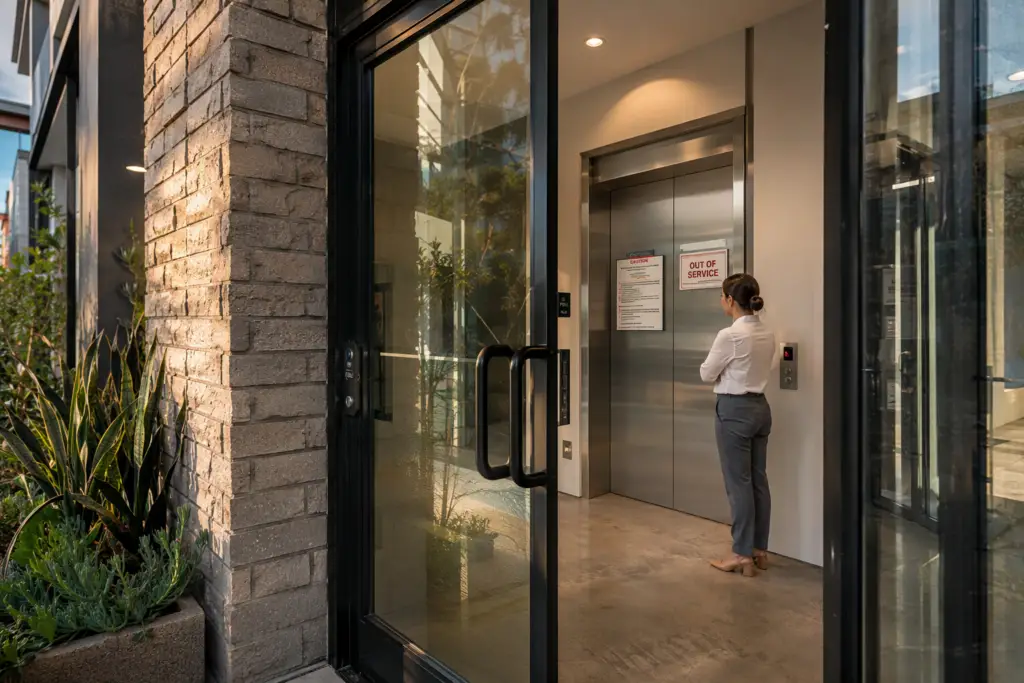
How does elevator downtime affect a building’s legal liability in California?
In California, building owners have a duty of care to maintain elevators in a reasonably safe condition; chronic downtime, especially in buildings where elevator access is essential for disabled tenants or occupants, can create significant premises liability and Fair Employment and Housing Act exposure.
For buildings subject to ADA Title III (public accommodations) or Title II (government facilities), an elevator that is repeatedly out of service may constitute a failure to provide accessible service — particularly when no equivalent accessible alternative exists. California’s own accessibility statutes often impose standards that meet or exceed federal ADA requirements. For residential buildings, prolonged elevator outages in multi-story properties where tenants include older adults or people with disabilities can trigger Fair Employment and Housing Act claims. Proactive maintenance and timely repair or replacement decisions are the most effective risk management tools available to building owners.
What role does energy efficiency play in the repair-versus-replace decision?
Modern elevator drive systems — particularly variable-frequency drives (VFDs) and regenerative drives used in contemporary traction elevators — consume substantially less energy than older hydraulic systems or early-generation traction drives, meaning replacement can deliver meaningful reductions in operating costs over the elevator’s service life.
Older hydraulic elevators in particular are energy-intensive because their pumps run at full load regardless of car weight or speed demand. Replacing aging hydraulic equipment with a modern machine-room-less (MRL) traction system or a VFD-equipped hydraulic unit can reduce elevator energy consumption considerably. For properties pursuing LEED certification, energy benchmarking, or compliance with California’s Title 24 energy standards, this operational efficiency gain is a material factor in the total cost of ownership comparison between repair and replacement.
How does the type of building affect the repair-versus-replace decision?
Building type directly shapes the decision because passenger volume, regulatory requirements, downtime tolerance, and the consequences of equipment failure differ substantially between a low-rise office building, a high-rise residential tower, a hospital, and a retail center.
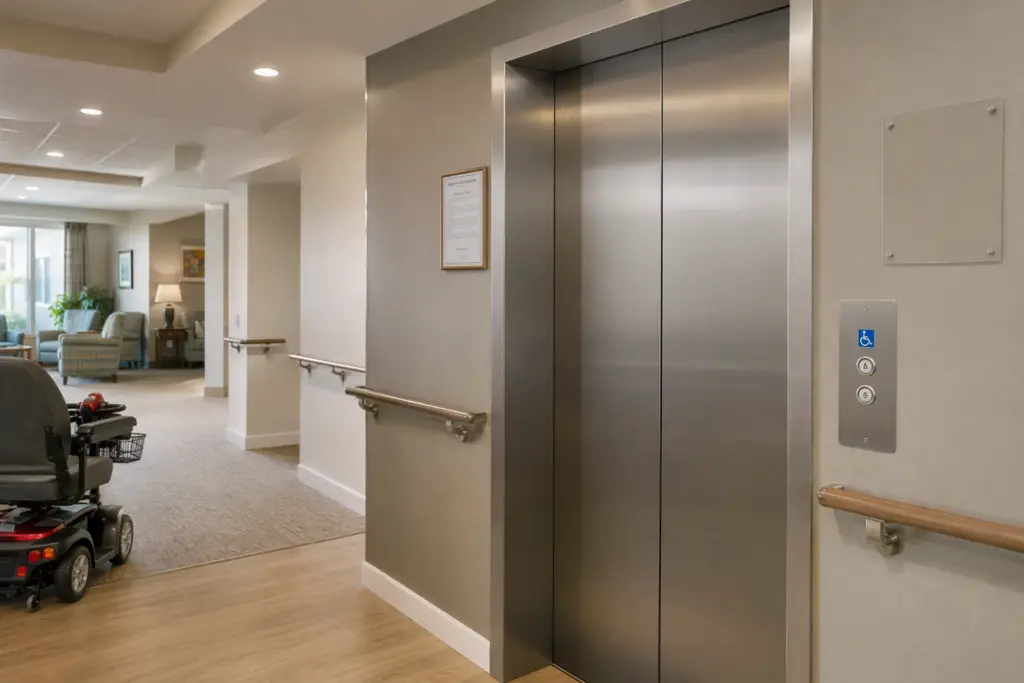
In a hospital or assisted living facility, elevator reliability is a patient safety issue, and the tolerance for downtime is near zero — replacement may be warranted earlier in a unit’s lifecycle than in a low-traffic office building. In a multi-tenant residential high-rise in Los Angeles, elevator downtime affects habitability and triggers landlord obligations under California Civil Code. Retail and hospitality properties face customer experience and revenue implications from outages. A service company with experience across building types — as Liftech Elevator has throughout Los Angeles, Long Beach, Signal Hill, and Orange County — is positioned to factor these contextual realities into its assessment recommendations.
What is the difference between a major alteration and routine maintenance under ASME A17.1?
Under ASME A17.1, a “major alteration” includes work such as changing the type of operation, replacing the driving machine, or modifying the safety system — and it triggers a full compliance review against current code, whereas routine maintenance and minor replacements using like-for-like parts generally do not.
This distinction has profound practical implications. A building owner who authorizes replacement of a controller, for example, may inadvertently initiate a code-compliance cascade that requires upgrading door reopening devices, installing a seismic switch, upgrading the pit lighting, or addressing firefighters’ emergency operation requirements — all legitimate safety improvements, but ones that add scope and cost to what began as a targeted repair. Understanding this distinction is essential before committing to any significant repair project, and it is one reason why engaging an experienced, code-knowledgeable elevator service company at the outset saves money and prevents surprises.
How do California’s seismic requirements affect the elevator repair-versus-replace decision?
California’s seismic risk requires that elevator installations meet specific seismic safety provisions, and any major alteration to an existing elevator in California may trigger the requirement to bring seismic protection features up to current standards under both ASME A17.1 and California-specific amendments.
California’s occupational safety regulations and the California Building Code incorporate seismic design requirements that affect elevator guide rails, counterweight retention, and seismic switches. For older elevators that predate modern seismic provisions, a major alteration can require seismic upgrades that substantially increase project cost. This is another reason why a thorough compliance gap analysis — conducted before the repair-versus-replace decision is finalized — is critical for California properties. The cost of seismic compliance work must be factored into the repair option’s total cost to make a valid comparison with replacement.
How long does elevator replacement or modernization typically take?
The timeline for elevator modernization or replacement varies with project scope, equipment lead times, permit approval processes, and building access logistics — meaning a realistic schedule should be established as part of the project planning process before work begins.
In California, elevator replacement and major alteration work requires permits from the local authority having jurisdiction (AHJ) and inspection by Cal/OSHA’s Elevator, Ride, and Tramway Unit before the elevator can return to service. Equipment procurement lead times vary by manufacturer and product type. For buildings with a single elevator, the downtime planning process is particularly important, and coordination between the elevator contractor, building management, and tenants should begin well before work starts. Modernization projects, which retain the hoistway and structural components, typically require less time than full replacement involving structural modifications.
How should I evaluate and choose an elevator service company for a repair-versus-replace assessment?
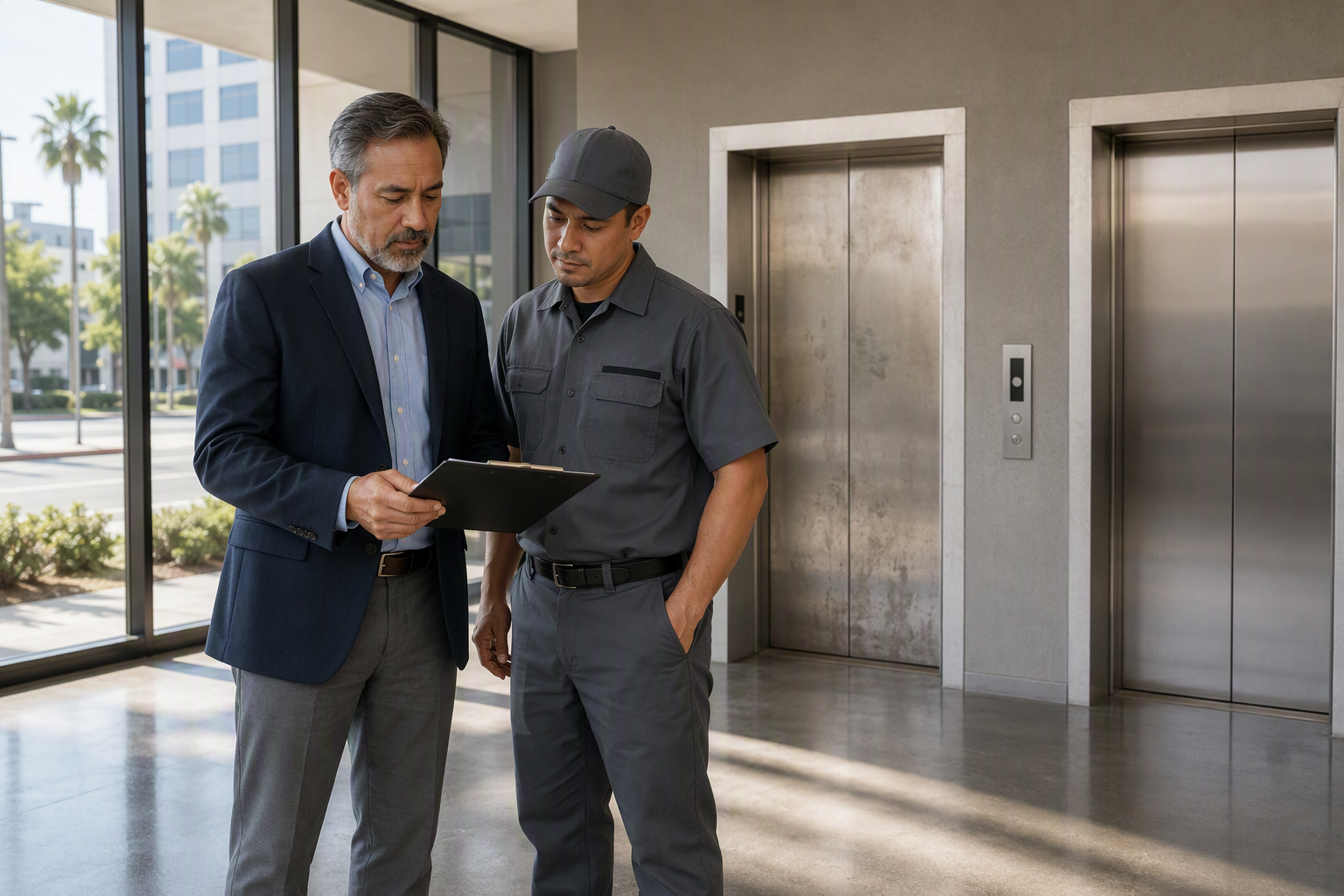
Evaluating an elevator service company should focus on verified licensing, demonstrated familiarity with California regulatory requirements, experience with the specific elevator type in question, the quality and completeness of their condition assessment documentation, and whether they provide unbiased recommendations rather than defaulting to the higher-revenue option.
In California, elevator contractors are required to be licensed through the state’s Contractors State License Board (CSLB). Building owners should request proof of licensure, ask for references from comparable projects, and verify that the company’s technicians hold current certifications relevant to the equipment type. An honest assessment will present repair, modernization, and replacement as genuine options with documented rationale — not a sales pitch for one outcome. Liftech Elevator serves building owners throughout Signal Hill, Long Beach, Los Angeles, and Orange County with condition assessments designed to give property managers the information they need to make the right decision for their specific situation.
What questions should I ask an elevator service company before committing to repair or replacement?
Before committing to either repair or replacement, building owners should ask the service company a specific set of questions to ensure the recommendation is technically grounded, financially complete, and compliance-aware.
Key questions to ask include: What is the documented condition of every major subsystem? Which specific ASME A17.1 provisions, if any, does the current installation not meet? Will the proposed repair scope constitute a major alteration that triggers additional compliance requirements? What is the projected service life of the repaired or modernized system? Are OEM parts available for the components being repaired, and what is the lead time? What warranties apply to repair work versus new equipment? What permits are required and what is the expected approval timeline from Cal/OSHA? Is there a phased modernization option that spreads costs over multiple budget cycles while maintaining safety compliance? The answers to these questions, in writing, form the basis of a defensible, well-documented decision.
Does elevator replacement increase property value?
A modern, code-compliant elevator can positively affect property value by improving tenant retention, expanding the building’s marketability to accessibility-sensitive tenants, reducing operating costs, and eliminating the liability and capital expense uncertainty associated with aging equipment.
For commercial buildings in competitive markets like Los Angeles and Orange County, elevator condition is a factor that sophisticated tenants and buyers evaluate during due diligence. A chronically unreliable or visibly outdated elevator can be a sticking point in lease negotiations or property sales. Conversely, a recently modernized or replaced elevator with updated cab finishes, modern controls, and a documented compliance record is a demonstrable asset improvement. For residential buildings, elevator reliability directly affects habitability ratings and tenant satisfaction — factors that influence both occupancy rates and the building’s assessed value.
What maintenance program should follow a repair or replacement decision?
Whether the outcome is targeted repair, modernization, or full replacement, the investment is only protected long-term through a structured preventive maintenance program that addresses lubrication, adjustment, safety device testing, and code-required periodic inspections on a documented schedule.
California requires annual elevator inspections by Cal/OSHA-authorized inspectors, and the ASME A17.1 Safety Code for Elevators and Escalators specifies testing intervals for various safety devices including governors, safeties, buffers, and pressure relief valves. A full-maintenance agreement with a qualified elevator service company provides scheduled preventive maintenance, priority response for service calls, and documentation of all work performed — the maintenance log that becomes essential evidence in any future repair-versus-replace evaluation. Starting a new maintenance program immediately after any significant repair or replacement work establishes the baseline condition record that protects the building owner’s investment over the elevator’s next service cycle.
What are the risks of delaying an elevator replacement decision when replacement is clearly warranted?
Delaying a warranted elevator replacement exposes building owners to escalating repair costs, increasing risk of passenger entrapment or injury from failed safety systems, potential regulatory enforcement action, and growing legal liability — risks that compound over time rather than stabilize.
When an elevator’s safety systems are degraded, the consequences of a failure go beyond inconvenience. Worn governor ropes, compromised buffers, or failing door safety edges represent genuine injury risks that building owners are legally responsible for under California premises liability law. Cal/OSHA has the authority to order an elevator removed from service if it fails inspection, which creates an unplanned emergency replacement scenario — the most disruptive and often most expensive possible outcome. Building owners who act proactively on a clear replacement signal, rather than deferring the decision, retain control over the timeline, budget, and scope of the project.
Get a Professional Elevator Assessment Before You Decide
The repair-versus-replace decision is too consequential to make without a thorough, documented evaluation of the specific equipment, compliance posture, and building context involved. Liftech Elevator provides professional condition assessments for building owners and property managers throughout Signal Hill, Long Beach, Los Angeles, and Orange County — giving you the technical and financial clarity needed to make the right call with confidence.
Contact Liftech Elevator for a free elevator assessment: 562-609-3478