Elevator Maintenance and Inspection Requirements for Hospitals and Healthcare Facilities in California
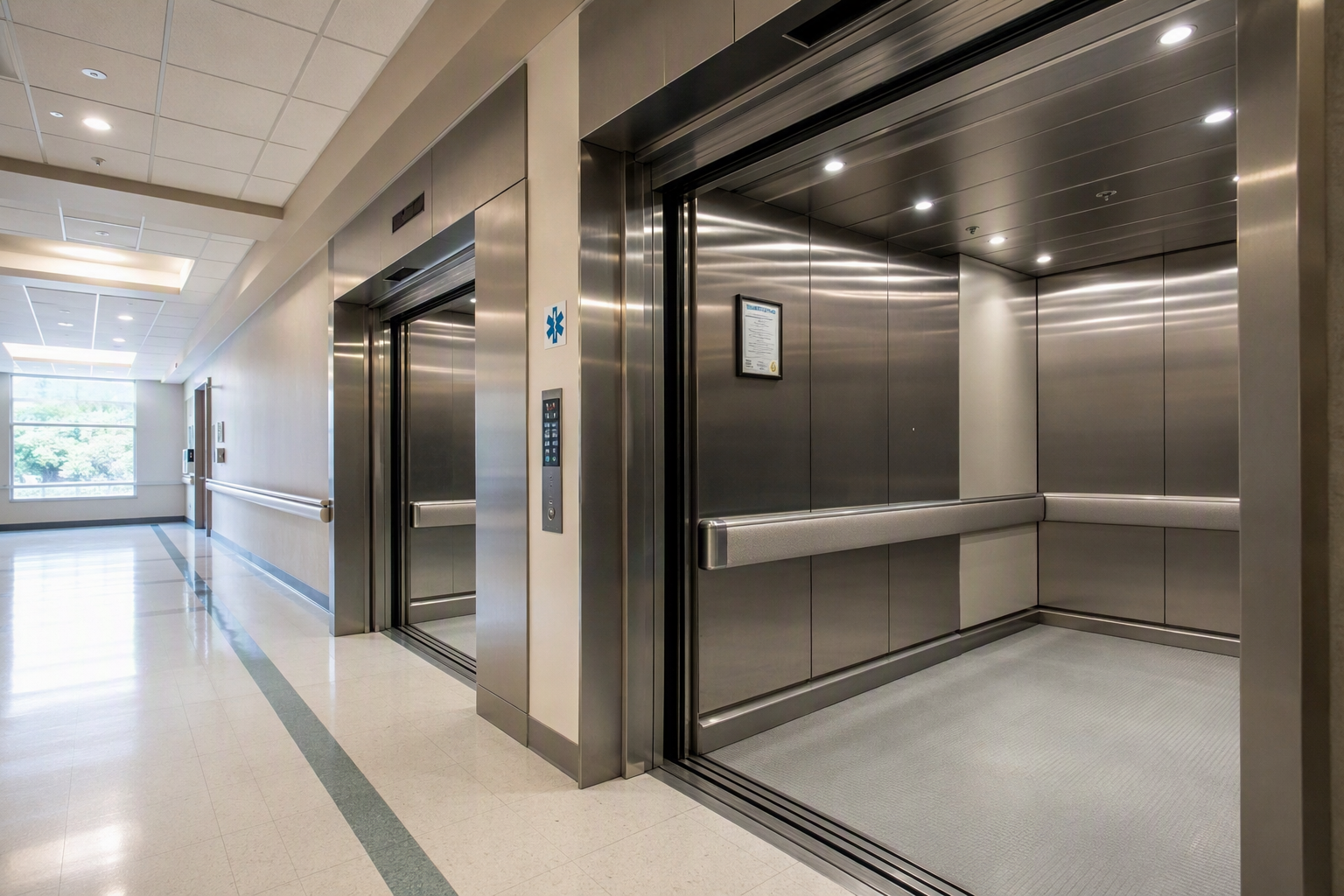
Elevators in hospitals, surgical centers, and long-term care facilities do far more than move people between floors. They transport patients on gurneys, move medical equipment, and must operate reliably during emergencies. That responsibility creates a layered compliance framework that goes well beyond standard commercial elevator requirements. For facility managers in Signal Hill, Long Beach, Los Angeles, and Orange County, understanding exactly what the law requires — and how those requirements interact — is essential to protecting patients, staff, and the facility’s operating license.
—
What Laws and Codes Govern Hospital Elevators in California?
California elevator compliance for healthcare facilities is shaped by four overlapping regulatory layers:
- ASME A17.1 Safety Code for Elevators and Escalators: This is the foundational technical standard adopted by California and enforced statewide. It governs design, construction, alteration, inspection, testing, and maintenance of elevators. The current edition in force reflects the most recent state adoption cycle; California’s Division of Occupational Safety and Health (DOSH) Elevator Unit references this code directly in its enforcement program.
- California Elevator Safety Act (Labor Code §7300 et seq.): This state law requires all elevators to be permitted, periodically inspected by a certified inspector, and operated only with a valid Certificate of Inspection posted in the cab.
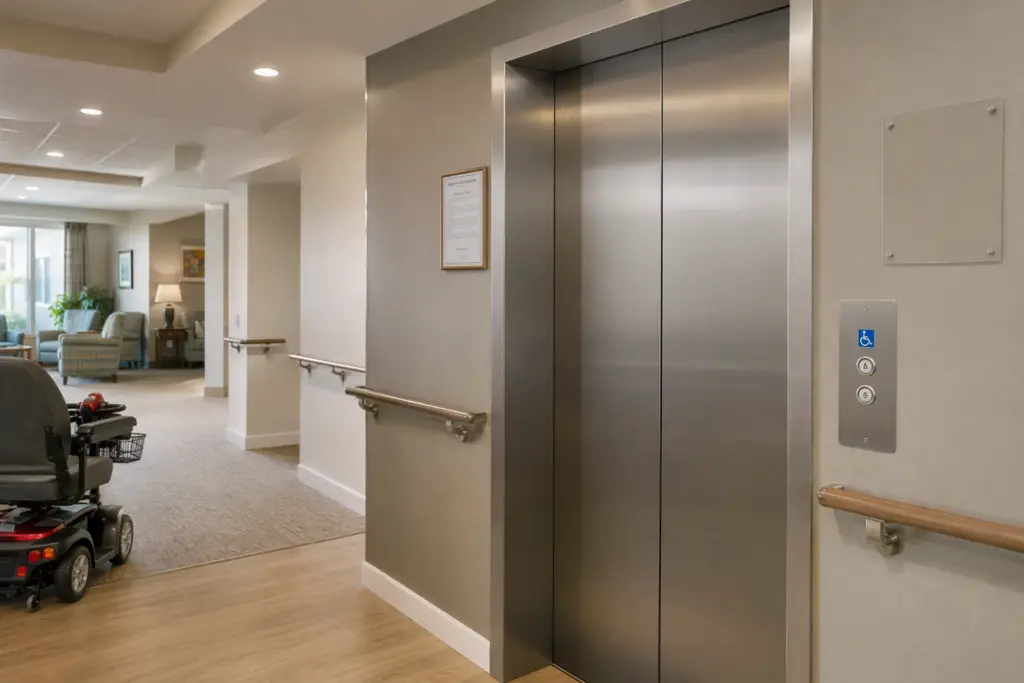
- ADA Standards for Accessible Design: Federal law requires elevators in multi-story healthcare facilities to meet specific dimensional, control, and signage requirements so that patients, visitors, and staff with disabilities can use them independently and safely.
- The Joint Commission (TJC) Environment of Care Standards: Accredited hospitals must maintain all patient-handling equipment — including vertical transportation — as part of their Environment of Care program. Deficient elevators can trigger findings during TJC surveys.
—
How Often Must Hospital Elevators Be Inspected in California?
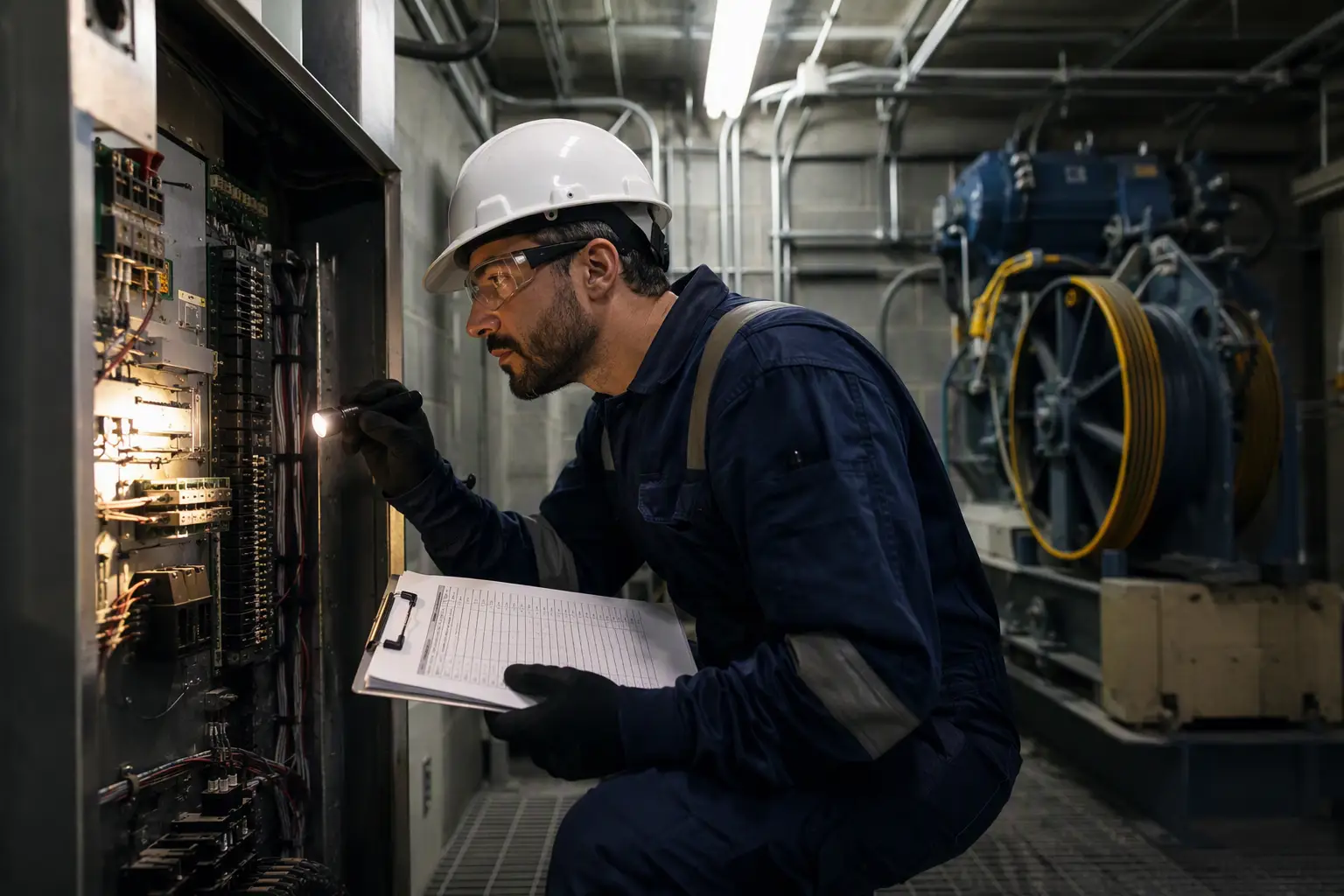
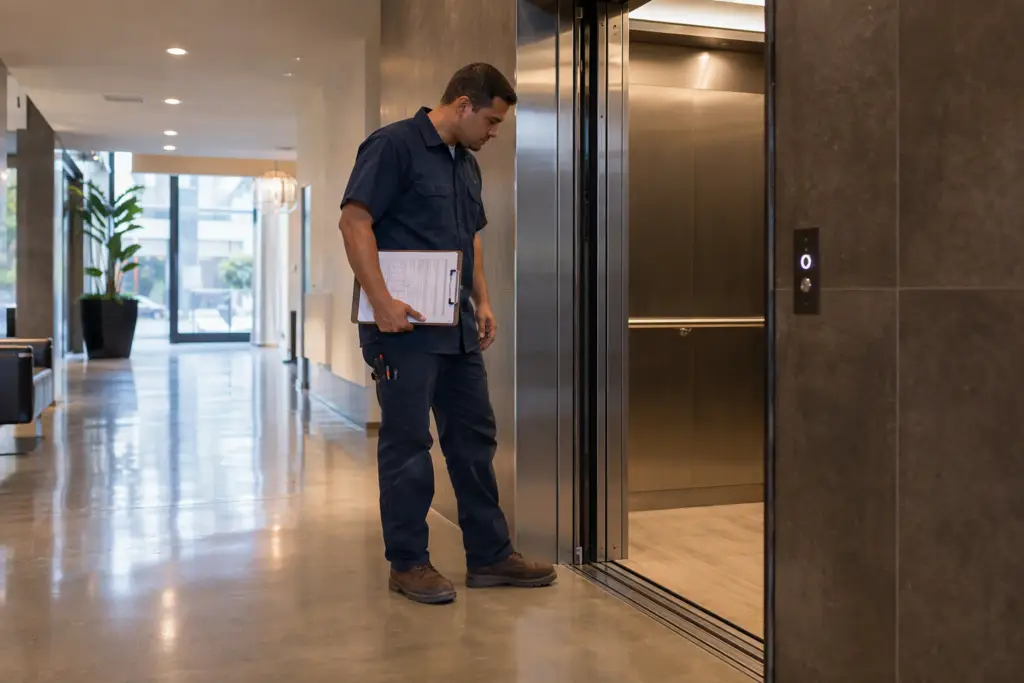
California DOSH requires periodic inspections for all permitted elevators. The inspection interval is tied to equipment type and use classification under the ASME A17.1 Safety Code. In addition to state-mandated periodic inspections, hospital facilities subject to Joint Commission accreditation typically conduct their own internal maintenance audits on a more frequent basis — often monthly or quarterly — as part of their Environment of Care documentation requirements.
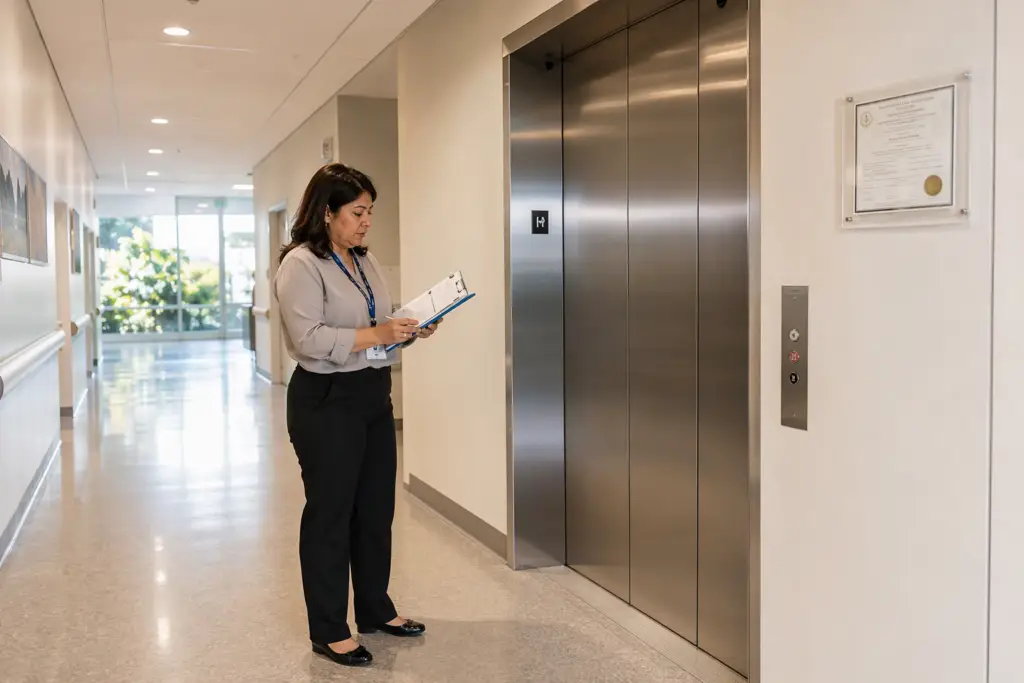
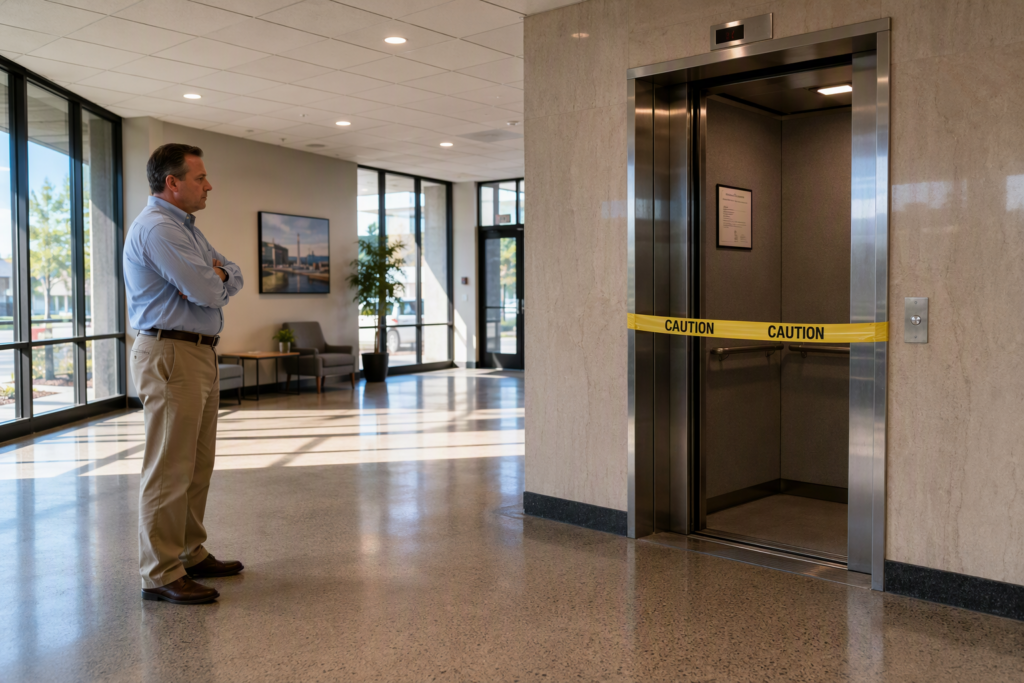
Every elevator in a California healthcare facility must display a valid Certificate of Inspection issued by a DOSH-recognized inspection authority. Operating an elevator with an expired certificate is a violation that can result in the unit being taken out of service — a serious operational risk in an acute care environment.
—
What Does the ASME A17.1 Code Require for Healthcare Elevator Maintenance?
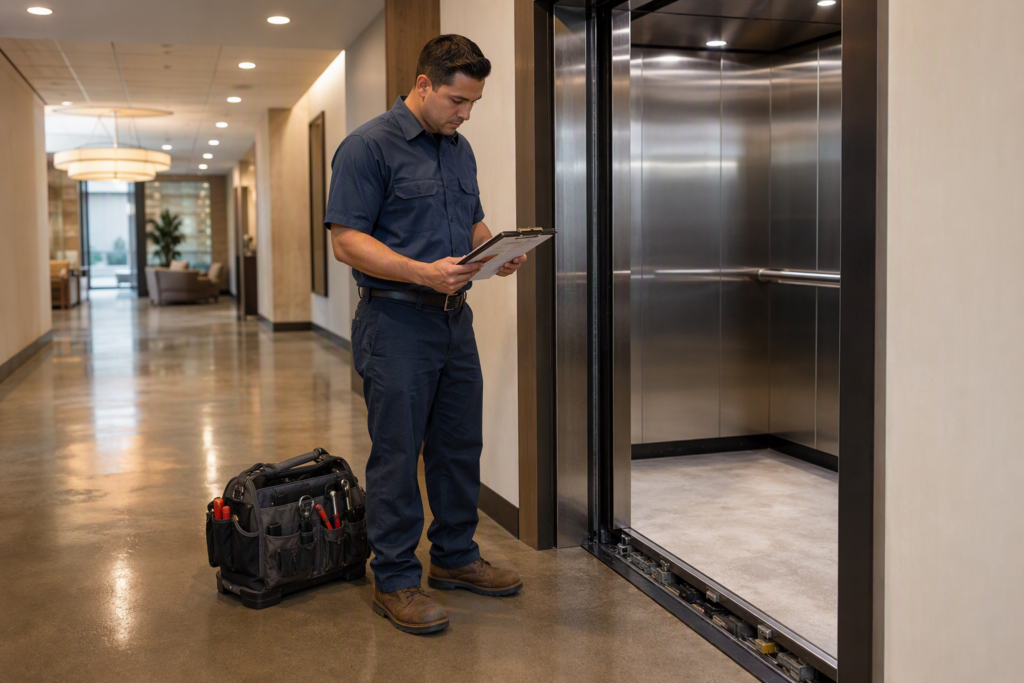
The ASME A17.1 Safety Code for Elevators and Escalators establishes maintenance requirements through its Rule 8.6, which mandates that a written maintenance control program (MCP) be developed and followed for every elevator. For healthcare environments, the MCP is especially critical because it must account for:
- High-frequency use by heavy loads including hospital beds, imaging equipment, and supply carts
- The need for continuous availability, since downtime can directly affect patient care
- Infection control protocols that affect how and when maintenance technicians can access patient-care areas
- Automatic Rescue Operation (ARO) functionality, which is required in many healthcare elevator installations to prevent patients from being trapped between floors
Liftech Elevator develops and maintains ASME-compliant maintenance control programs for healthcare clients throughout Long Beach, Signal Hill, Los Angeles, and Orange County, ensuring that documentation meets both state inspection and Joint Commission requirements.
—
Are There Special ADA Requirements for Hospital Elevators?
Yes. The ADA Standards for Accessible Design impose specific requirements on elevators in multi-story healthcare facilities, including:
- Minimum cab dimensions to accommodate wheelchairs, stretchers, and mobility devices
- Door reopening devices that respond to both light and low-level obstructions
- Raised and Braille characters on control panels and hall call buttons
- Audible and visible floor indicators
- Accessible two-way emergency communications within the cab
In a healthcare setting, ADA compliance is not merely a legal checkbox — it is a patient safety and dignity requirement. Non-compliant controls or door systems can directly harm patients who are already in a medically vulnerable state.
—
What Happens If a Hospital Elevator Fails a California Inspection?
When a California DOSH inspector identifies a deficiency, the outcome depends on severity:
- Minor deficiency: A correction order is issued with a compliance deadline. The elevator may continue operating while repairs are completed.
- Serious deficiency: The inspector may issue an order requiring the deficiency to be corrected before the next periodic inspection, with documentation required.
- Imminent hazard: The elevator is placed Out of Service immediately. A red tag is posted and the unit cannot operate until the condition is corrected and verified by a re-inspection.
For hospitals, an out-of-service elevator is not an inconvenience — it is a potential patient safety crisis. Having a qualified elevator service company on a proactive maintenance program is the most reliable way to prevent deficiencies from reaching the point of shutdown.
—
What Is Automatic Rescue Operation and Is It Required in Hospitals?
Automatic Rescue Operation (ARO) is a system that automatically levels a stalled elevator cab to the nearest floor landing and opens the doors, preventing passengers — including patients who cannot self-rescue — from being trapped. California healthcare facilities, particularly those serving patients with limited mobility, frequently require or strongly recommend ARO-equipped elevators. Facility managers should consult their elevator service provider and the applicable edition of the ASME A17.1 Safety Code to determine whether ARO is required for their specific installation class and occupancy.
—
How Do Joint Commission Environment of Care Standards Affect Elevator Compliance?
The Joint Commission’s Environment of Care (EC) standards require accredited hospitals to manage risks associated with the physical environment, including vertical transportation. During a TJC survey, inspectors may review:
- Elevator maintenance logs and work order histories
- Evidence of a written preventive maintenance program
- Documentation of corrective actions taken after inspections
- Staff knowledge of elevator emergency procedures
- Entrapment and emergency recall procedures
Liftech Elevator provides healthcare clients with organized, audit-ready documentation packages that can be presented directly to Joint Commission surveyors and state inspectors, reducing the administrative burden on facility management teams.
—
What Should Be Included in a Healthcare Facility’s Elevator Maintenance Log?
A compliant maintenance log for a California healthcare elevator should include:
- Date, scope, and technician identification for every maintenance visit
- Parts replaced or adjusted, with component descriptions
- Results of each lubrication, test, and adjustment task specified in the MCP
- Any deficiencies identified and the corrective actions taken
- Callback and entrapment incident records
- Date and result of most recent state periodic inspection
- Certificate of Inspection number and expiration date
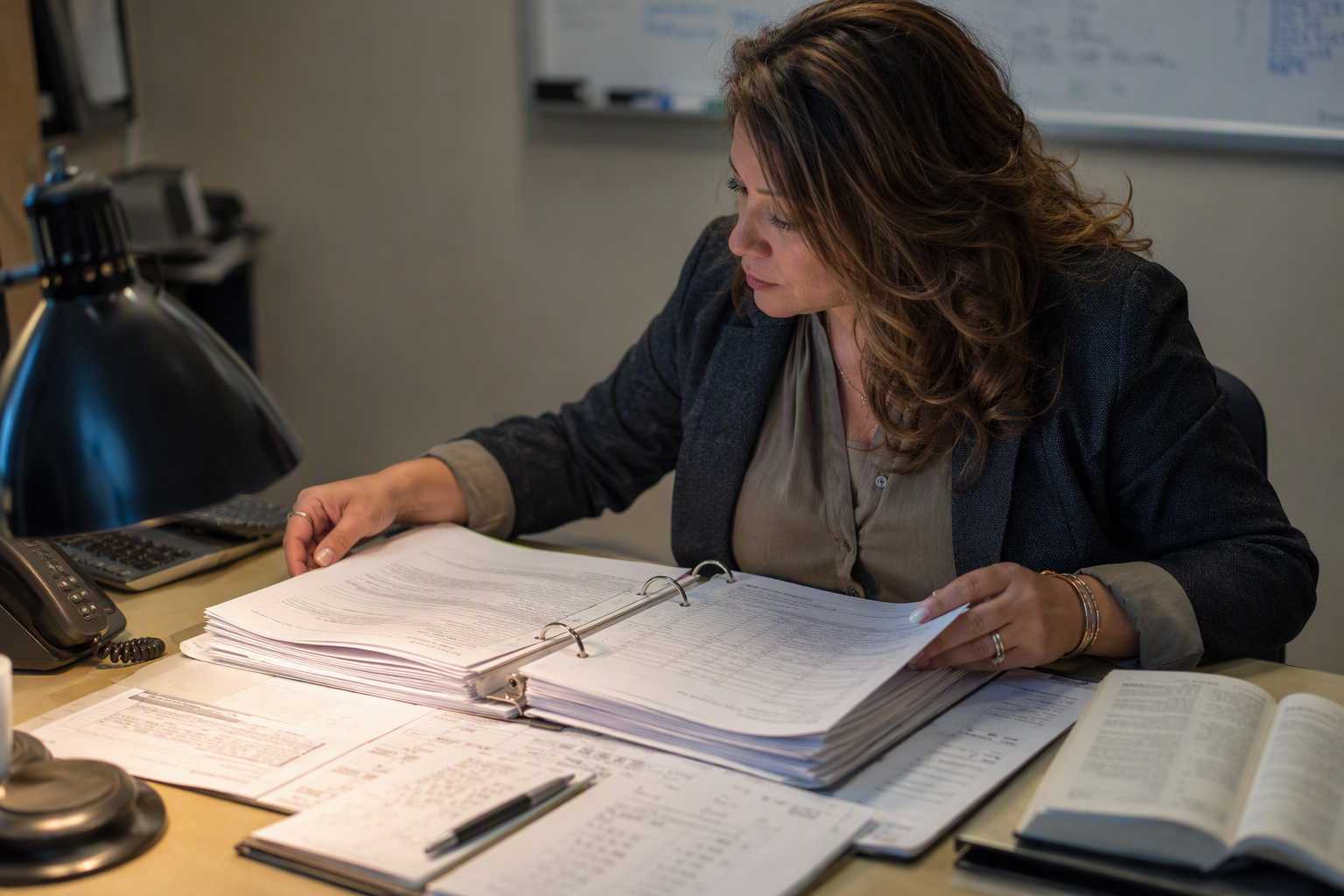
Incomplete or missing logs are one of the most common findings during both state inspections and Joint Commission surveys. Consistent, detailed recordkeeping is as important as the physical maintenance itself.
—
How Does Elevator Downtime Affect Hospital Operations and What Can Prevent It?
In an acute care setting, a single elevator taken out of service can cascade into delayed patient transport, blocked surgical schedules, and diverted emergency resources. The most effective strategy for minimizing downtime is a proactive preventive maintenance program that identifies worn components before they fail — rather than a reactive approach that only dispatches a technician after a breakdown occurs.
Key elements of a downtime-prevention program include regular lubrication cycles, door system adjustments, hydraulic fluid condition monitoring, controller diagnostics, and governor and safety device testing as specified by the ASME A17.1 Safety Code. Liftech Elevator structures its healthcare maintenance programs around these priorities to support continuous availability for facilities across Los Angeles, Long Beach, Orange County, and Signal Hill.
—
How Should a Healthcare Facility Prepare for a California DOSH Elevator Inspection?
- Confirm the current Certificate of Inspection is posted in every elevator cab and has not expired.
- Gather all maintenance logs and work orders from the past inspection cycle and organize them chronologically.
- Review the written Maintenance Control Program to confirm it is current and matches the actual maintenance tasks being performed.
- Ensure the machine room is clean, properly lit, fire-rated access is intact, and no unauthorized storage is present.
- Verify that all firefighter emergency recall (Phase I and Phase II) functions are operational and have been tested.
- Confirm that governor, safeties, and buffers have been tested within the required intervals under ASME A17.1.
- Test the emergency lighting and two-way communication system in each cab.
- Notify your elevator service provider in advance so a technician can be present during the inspection to address any questions or on-site adjustments.
—
Questions Your Inspector Will Ask
California DOSH inspectors and Joint Commission surveyors commonly ask facility managers and elevator contractors the following questions. Being prepared with clear, documented answers demonstrates a culture of compliance:
- “Where is your current Certificate of Inspection, and is it posted in the cab?” — The certificate must be visible to passengers at all times.
- “Can you produce your written Maintenance Control Program?” — Required under ASME A17.1 Rule 8.6; it must reflect the actual tasks being performed.
- “When was the last full maintenance visit, and what was done?” — Inspectors look for regularity and completeness in the log.
- “When were the governor, safeties, and buffers last tested?” — These safety-critical tests are on defined intervals under ASME A17.1.
- “Has firefighter emergency recall been tested recently, and do you have documentation?” — Phase I and Phase II tests must be performed and recorded.
- “Are there any open deficiencies or outstanding correction orders?” — Unresolved prior deficiencies signal a compliance gap.
- “How do you handle entrapments, and how quickly are they documented?” — Entrapment response and recordkeeping are reviewed for patient safety.
- “Is the machine room access restricted to authorized personnel only?” — Unauthorized access to machine rooms is a code violation.
- “Has the emergency communication system in each cab been tested?” — Two-way communication is an ADA and life-safety requirement.
—
Why Healthcare Facilities in Southern California Choose Liftech Elevator
Healthcare facility managers in Signal Hill, Long Beach, Los Angeles, and Orange County have specific compliance pressures that general commercial elevator companies may not fully understand. Liftech Elevator focuses on meeting the technical and documentation requirements that hospitals, surgical centers, and long-term care facilities face — including ASME A17.1 maintenance control program development, DOSH inspection preparation, and Joint Commission-ready recordkeeping. The goal is to keep elevators compliant, operational, and safe for the patients and clinical staff who depend on them every day.
—
Contact Liftech Elevator for a Free Elevator Assessment
If your hospital or healthcare facility in Long Beach, Signal Hill, Los Angeles, or Orange County needs a compliance review, a new maintenance program, or help preparing for an upcoming California DOSH inspection, Liftech Elevator is ready to assist.
Contact Liftech Elevator for a free elevator assessment: 562-609-3478
Need elevator service you can rely on? Liftech Elevator is ready to help.