California Title 24 & Accessibility Elevator Compliance for Senior Living and Multifamily Buildings: What You Need Before the 2027 Budget Cycle
For senior living communities and multifamily residential buildings across Signal Hill, Long Beach, Los Angeles, and Orange County, elevator compliance is not optional — it is a condition of occupancy, liability protection, and resident safety. With 2027 budget cycles approaching, facility managers and property owners need a clear picture of which elevator features, upgrades, and inspections are required under California Title 24 and applicable federal accessibility codes. Planning now avoids emergency expenditures and keeps buildings ahead of enforcement deadlines.
—
What Does California Title 24 Require for Elevators in Senior Living and Multifamily Buildings?
California Title 24 — the California Building Standards Code — incorporates accessibility requirements that directly affect elevator design, operation, and maintenance in residential and healthcare-adjacent occupancies. For senior living and multifamily properties, these requirements are layered on top of federal ADA standards and the ASME A17.1 Safety Code for Elevators and Escalators.
Key Title 24 accessibility elements that apply to elevators in these building types include:
- Cab door clear width: Elevator doors must provide a minimum clear opening width sufficient to accommodate wheelchairs and mobility devices, consistent with federal accessibility guidelines.
- Call button height and placement: Hall call buttons and cab controls must be mounted at accessible heights and comply with reach-range requirements.
- Cab interior dimensions: The elevator cab must be large enough to allow wheelchair users to enter, turn, and exit without obstruction.
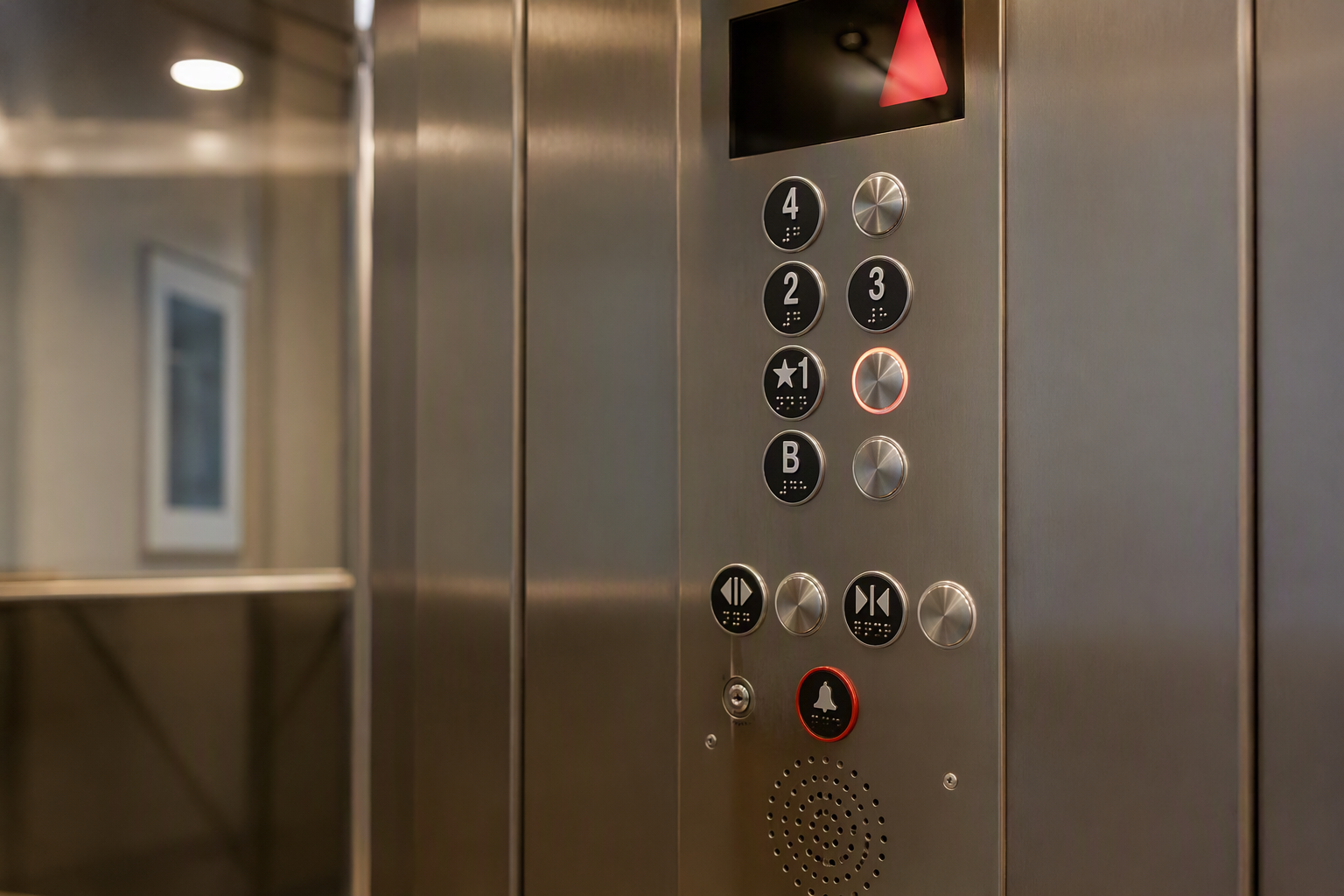
- Tactile and Braille signage: Floor indicators, cab controls, and hall signage must include tactile characters and Braille per California accessibility requirements.
- Audible and visual signals: Elevators must provide both audible announcements and visual indicators for floor arrivals and door operations.
- Emergency two-way communication: Per both Title 24 and ASME A17.1, a functioning two-way emergency communication system is mandatory in every cab — a requirement that now encompasses VoIP and telephone-line compatibility in modern installations.
- Leveling accuracy: Elevator landings must be within close tolerance of the floor level to prevent trip hazards for seniors and mobility-impaired residents.
—
Which Elevator Safety Codes Apply to California Senior Living and Multifamily Properties?
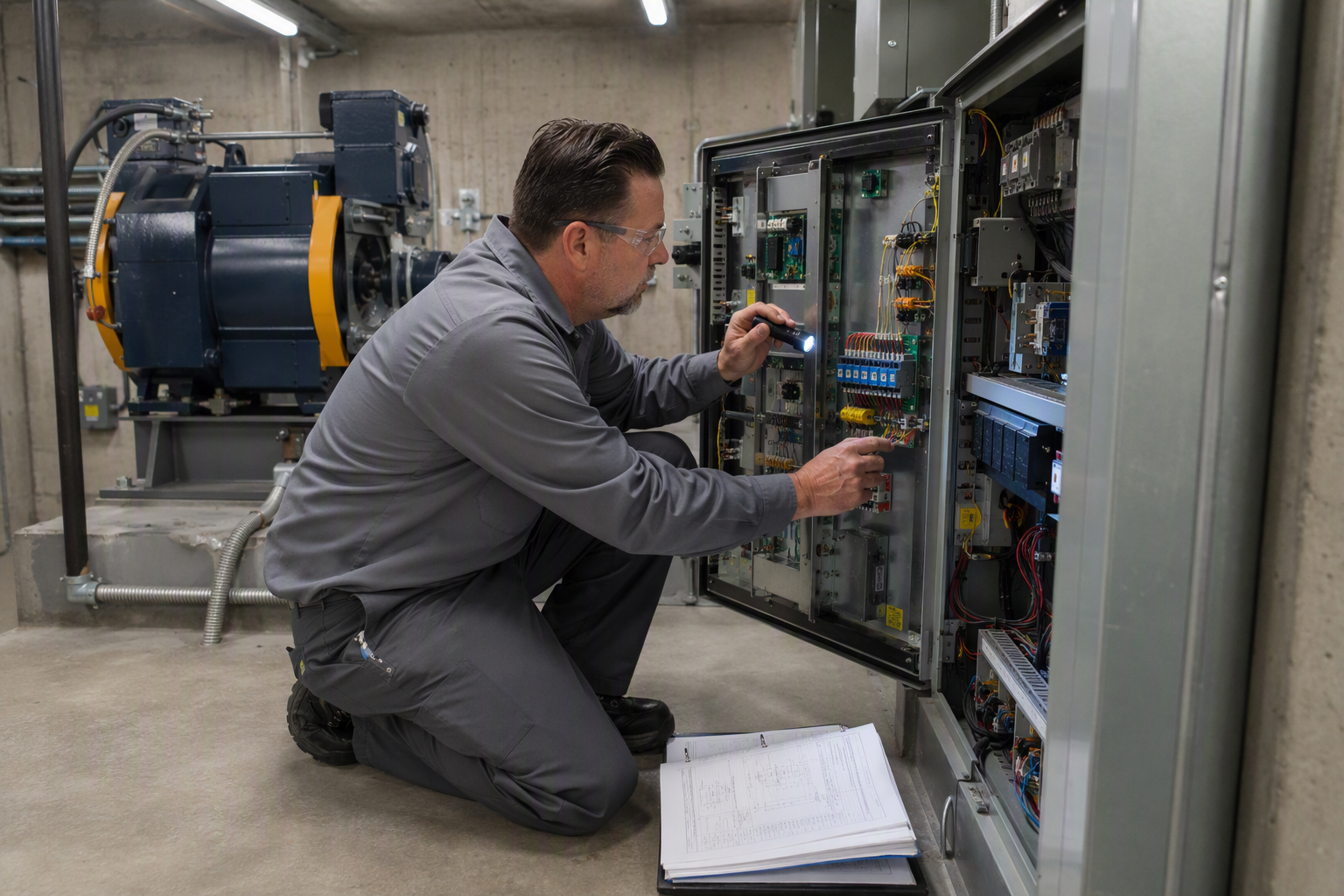
California adopts and enforces several overlapping code frameworks for elevators:
- ASME A17.1 Safety Code for Elevators and Escalators: The primary safety standard governing new elevator installations and major alterations in California.
- ASME A17.3 Safety Code for Existing Elevators and Escalators: Governs retroactive safety requirements for existing installations, including periodic upgrades that California’s Division of Occupational Safety and Health (Cal/OSHA Elevator Unit) may mandate during inspections.
- Americans with Disabilities Act (ADA): Federal accessibility law that applies to all public accommodations and commercial facilities, including the common areas of multifamily and senior living buildings.
- California Title 24, Part 2 (California Building Code): State-level accessibility and building standards that meet or exceed federal ADA requirements in many areas.
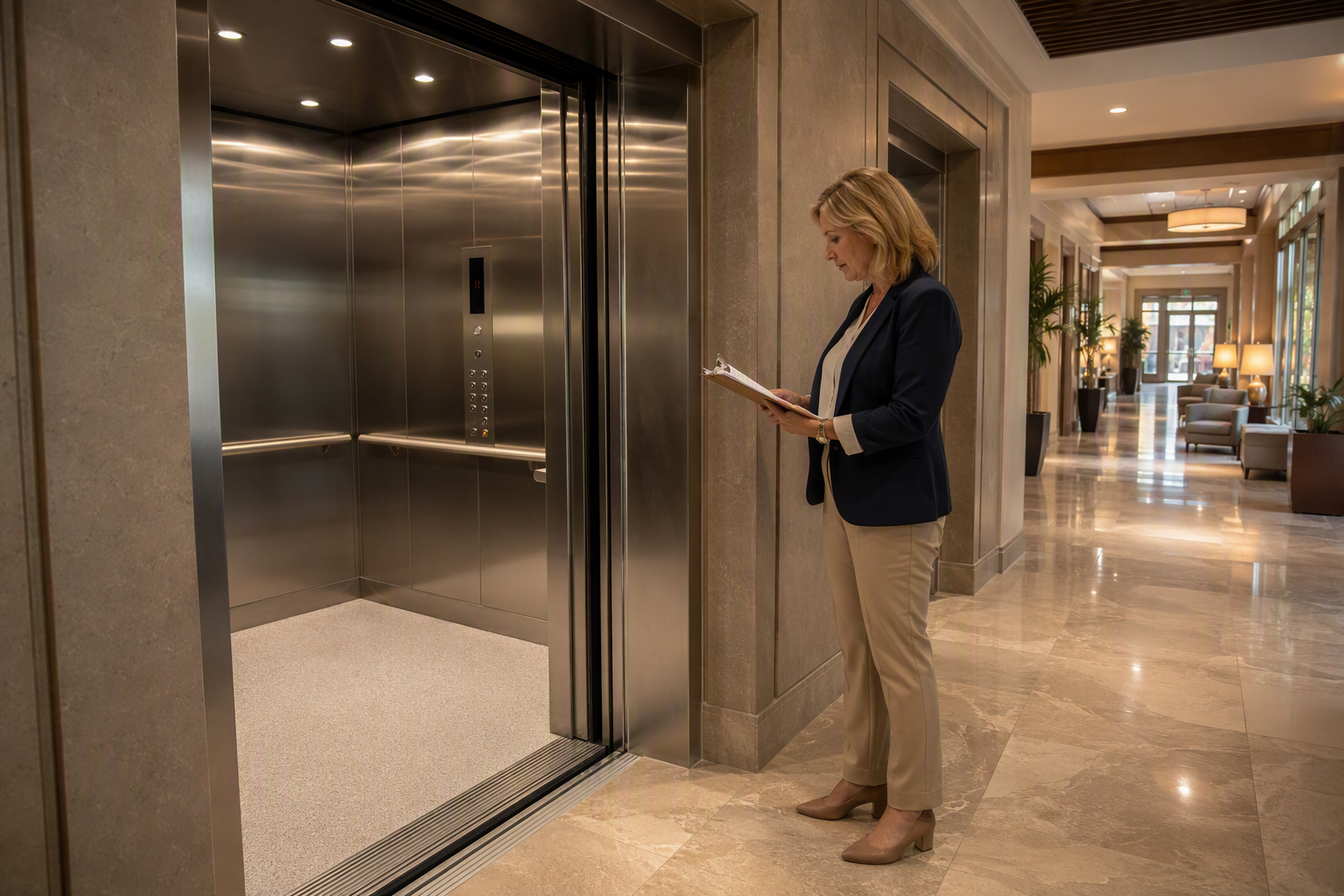
California’s elevator inspection program requires that elevators in occupied buildings receive regular inspections by a certified Qualified Elevator Inspector (QEI). Liftech Elevator works directly with property managers in Long Beach, Signal Hill, Los Angeles, and Orange County to prepare facilities for these inspections and address cited deficiencies before they escalate into shutdown orders.
—
What Elevator Upgrades Are Most Commonly Required in Senior Living Buildings?
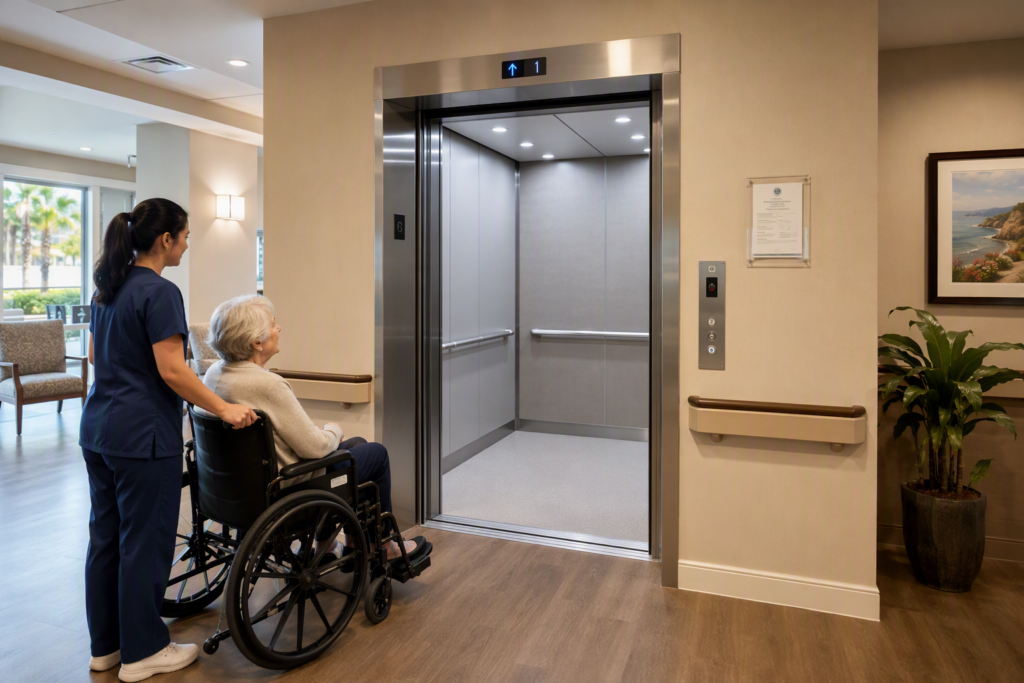
Senior living facilities present specific compliance challenges because their resident population depends on elevators as primary means of floor-to-floor access. The most frequently required upgrades include:
- Door reopening devices: Sensors that prevent doors from closing on a person using a cane, walker, or wheelchair are required and must be tested regularly.
- Cab flooring and leveling: Uneven landings create fall hazards for elderly residents and must be corrected to meet leveling tolerances under ASME A17.1.
- Emergency lighting and power transfer: Elevators in senior living communities must have battery-powered emergency lighting and, in many cases, connection to standby power systems to ensure residents are not trapped during outages.
- Handrails inside the cab: California accessibility requirements call for grab rails inside elevator cabs serving senior living populations.
- Modernized controls and displays: Older relay-logic control systems frequently fail to meet current accessibility and safety standards and require full modernization.
- Two-way emergency communication upgrades: Analog phone lines are being phased out across California; buildings must upgrade to VoIP-compatible or cellular emergency communication systems to maintain compliance.
—
How Does ADA Compliance Intersect With California Title 24 for Elevators?
The ADA establishes baseline federal accessibility standards, while California Title 24 frequently adds more stringent requirements on top of those federal minimums. Where the two frameworks differ, California properties must meet whichever standard is more protective of accessibility.
In practice, this means a multifamily building that passes a federal ADA review may still have elevator features that require modification to satisfy Title 24. Property owners in Los Angeles and Orange County should not assume that federal compliance is sufficient — a California-specific accessibility audit is essential before the 2027 budget cycle closes.
—
What Is the Inspection Timeline for Elevators in California Multifamily Buildings?
California requires periodic elevator inspections conducted by a QEI (Qualified Elevator Inspector) certified under the elevator safety program administered through OSHA-aligned California standards. The inspection cycle and permit renewal requirements are overseen at the local jurisdiction level, with Authority Having Jurisdiction (AHJ) determinations varying by city and county.
For multifamily and senior living properties, the recommended compliance planning timeline before the 2027 budget cycle is:
- 2025–2026: Commission a full elevator assessment to identify all deficiencies under ASME A17.1, A17.3, ADA, and Title 24.
- Early 2026: Obtain contractor bids for required modernization and upgrades based on the assessment findings.
- Mid-2026: Execute modernization contracts and schedule work during lower-occupancy periods to minimize resident disruption.
- Late 2026: Schedule and pass required inspections with the local AHJ to secure updated operating permits before fiscal year 2027 budget commitments are finalized.
- 2027 Budget Cycle: Allocate maintenance, testing, and preventive service funds based on the condition of the upgraded equipment.
Liftech Elevator assists building owners throughout Signal Hill, Long Beach, and the greater Los Angeles and Orange County areas in building out this timeline and coordinating with local AHJs to keep the process on schedule.
—
What Elevator Features Are Specific to Memory Care and Assisted Living Facilities?
Memory care and assisted living buildings face additional considerations beyond standard senior living requirements. Elevator systems in these facilities often need:
- Key-switch or access-controlled operation: Preventing unsupervised residents from accessing certain floors is a care and safety requirement in memory care environments.
- Slow-close door timing: Extended door-hold times reduce risk for residents with slower mobility.
- Gurney-capable cab dimensions: Facilities where medical staff must transport residents horizontally require larger cab depths, consistent with healthcare occupancy planning guidelines.
- Smooth, non-porous cab interior surfaces: Infection control considerations drive surface material specifications in assisted living and skilled nursing settings.
- Redundant emergency communication: Dual-path or cellular-backed emergency phone systems protect residents and staff if primary phone infrastructure fails.
—
How Much Time Does an Elevator Modernization Project Take in a Multifamily Building?
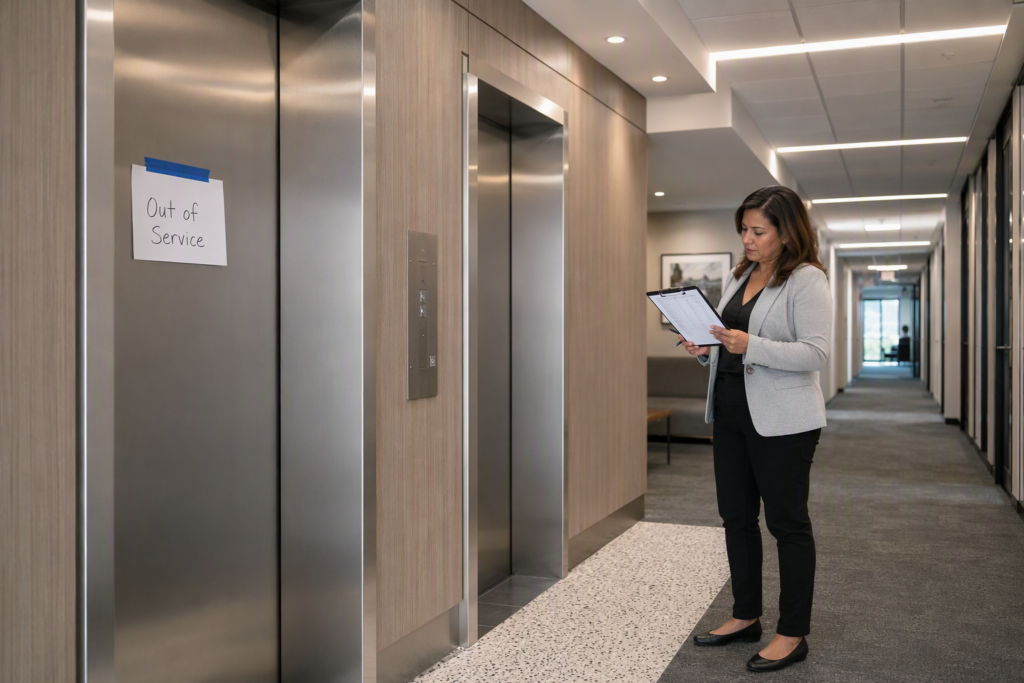
The duration of an elevator modernization project varies based on the scope of work, the number of elevators in the building, equipment lead times, and local permitting timelines. A full cab modernization — including controls, cab interior, door systems, and emergency communication — typically requires the elevator to be out of service for a period that is planned carefully to minimize impact on residents.
For senior living buildings where elevator access is critical to daily life, phased modernization plans — working on one elevator at a time while keeping others in service — are often the most operationally appropriate approach. Liftech Elevator structures modernization scopes to account for building occupancy patterns and resident needs.
—
What Questions Will Your Elevator Inspector Ask During a California Compliance Inspection?
Questions Your Inspector Will Ask
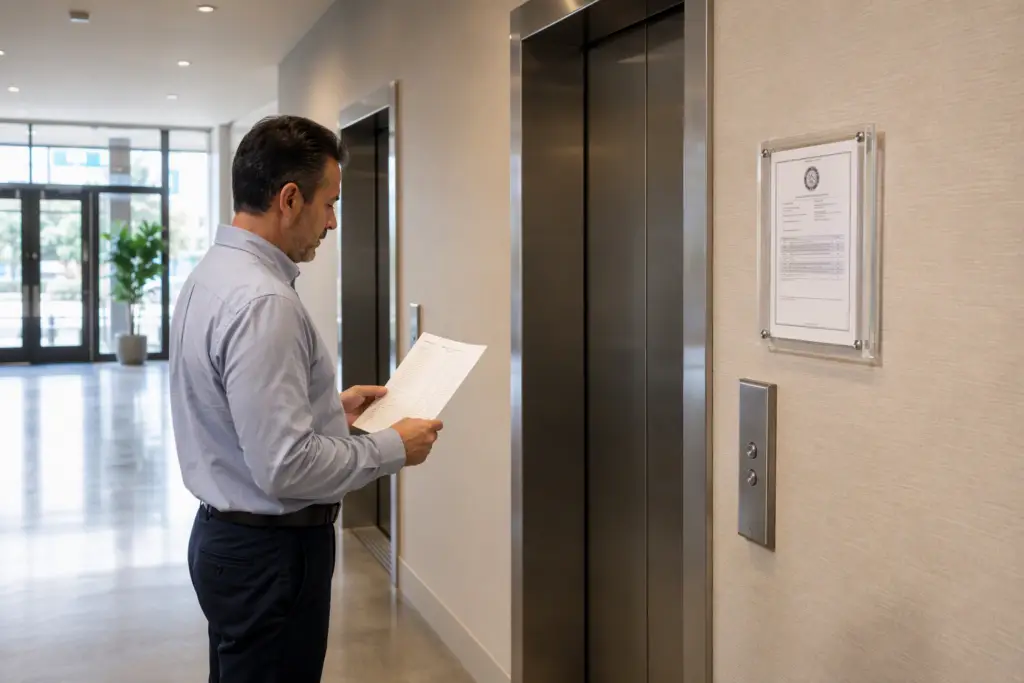
Property owners and facility managers should be prepared to answer — and provide documentation for — the following questions during a California elevator inspection:
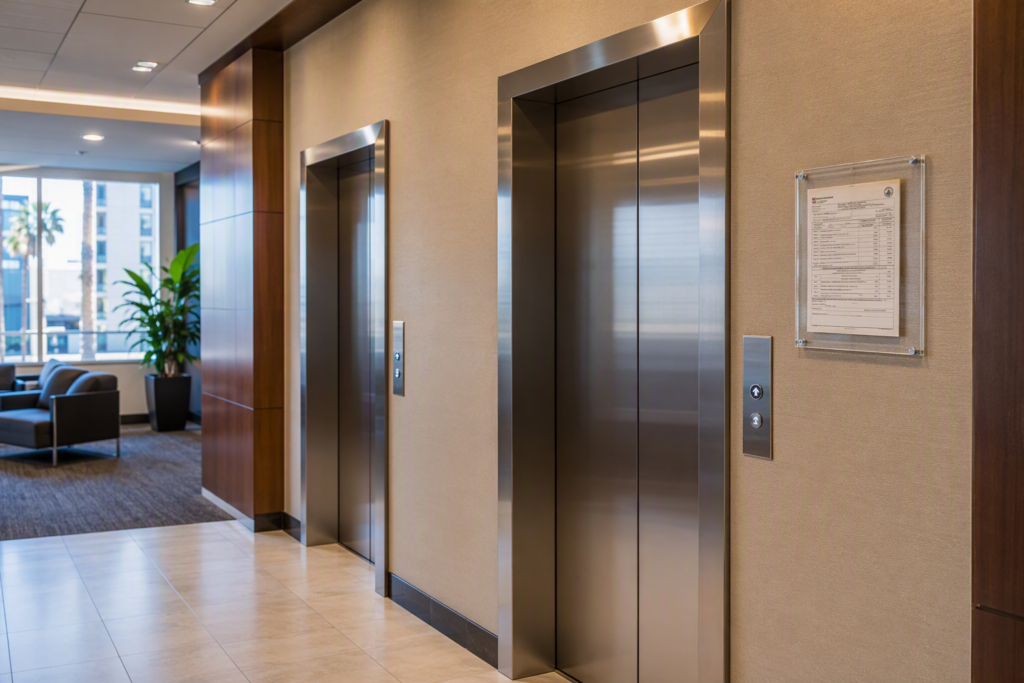
- Is the current operating permit posted inside the elevator cab? California requires valid permits to be displayed in each cab.
- When was the last periodic inspection completed, and is the certificate current? Inspectors will verify the inspection log and look for the QEI’s report.
- Is the two-way emergency communication system operational and connected to a monitored answering point? Both ASME A17.1 and California requirements mandate a functioning, monitored emergency communication system.
- Are all safety devices — buffers, safeties, governor — within their required test intervals? Major safety component tests have defined intervals under ASME standards, and documentation must be on file.
- Do the cab controls and hall fixtures meet current accessibility requirements? Button height, Braille labeling, and visual/audible signals are all inspected.
- Is the machine room or machine space secured and properly ventilated? ASME A17.1 has specific requirements for machine room access, temperature, lighting, and housekeeping.
- Does the elevator level accurately at each landing? Leveling tolerances are measured and must fall within acceptable limits.
- Are door reopening devices functioning correctly across the full door width? Inspectors test sensing devices for proper response to obstruction at multiple heights.
- Has a Category 1 or Category 5 test been completed within the required interval? California enforces ASME A17.1 testing categories, and documentation of Category 5 full-load safety tests must be available.
- Is there a current maintenance contract in place, and are maintenance records available for review? Inspectors may request maintenance logs to verify that routine service has been performed.
—
How Should Building Owners Budget for Elevator Compliance Before 2027?
Budgeting for elevator compliance before the 2027 cycle requires separating costs into three categories:
- Assessment and audit costs: A professional elevator assessment identifies all deficiencies and produces a prioritized remediation list. This step is foundational and should be completed as early as possible.
- Upgrade and modernization capital costs: These vary significantly based on the age and condition of the equipment, the number of elevators, and the scope of required work. Emergency communication upgrades, cab interior modifications, and control system modernizations each carry different cost profiles.
- Ongoing maintenance and testing costs: After modernization, buildings need a documented maintenance program and a plan for required periodic safety tests. These recurring costs belong in every annual operating budget.
Engaging Liftech Elevator for a facility assessment early in the planning process gives property owners in Los Angeles, Long Beach, Signal Hill, and Orange County the documentation they need to make accurate capital budget requests — and to avoid the significantly higher cost of emergency repairs or emergency compliance orders.
—
Why Does Proactive Compliance Planning Matter for Senior Living Properties Specifically?
For senior living and assisted living communities, an elevator that is out of service or subject to a shutdown order is not merely an inconvenience — it is a direct threat to resident welfare and a potential regulatory and liability issue for facility operators. California’s enforcement environment for elevator safety in occupancies housing vulnerable populations is active, and citation for non-compliance can carry consequences beyond repair costs alone.
Proactive planning — beginning assessments and remediation work in 2025 and 2026 — gives facilities the time to sequence work appropriately, avoid emergency contractor premiums, and maintain continuous elevator service for residents throughout the upgrade process. Liftech Elevator’s experience serving senior living, multifamily, and healthcare-adjacent properties across Southern California makes this type of phased, resident-centered planning approach possible.
—
What Should Property Managers Do Right Now to Prepare for 2027 Compliance Deadlines?
- Locate all current elevator operating permits and inspection certificates and verify they are current and posted.
- Pull the most recent QEI inspection report and identify any cited deficiencies that have not yet been corrected.
- Audit the emergency communication system in every cab to confirm it connects to a monitored answering point and is compatible with current phone infrastructure.
- Review cab interior dimensions, door widths, control heights, and tactile signage against current ADA and California Title 24 accessibility requirements.
- Schedule a professional elevator assessment with a qualified service provider to produce a written deficiency report and cost estimate.
- Bring assessment findings into the 2026 capital planning process with sufficient lead time to execute work before the 2027 budget cycle closes.
- Establish or renew a documented maintenance contract and confirm that all required periodic safety tests are scheduled within their intervals under ASME A17.1.
—
Get Ahead of the 2027 Compliance Deadline
Senior living and multifamily buildings across Signal Hill, Long Beach, Los Angeles, and Orange County need an elevator partner who understands California Title 24, ADA accessibility requirements, and ASME A17.1 and A17.3 safety standards — and who can translate those requirements into a practical, budgeted modernization plan before deadlines arrive.
Contact Liftech Elevator for a free elevator assessment and get a clear picture of where your building stands, what work is required, and how to plan for 2027 without surprises.
Call Liftech Elevator: 562-609-3478
Need elevator service you can rely on? Liftech Elevator is ready to help.