When Is the Next Scheduled Monthly Maintenance Service for My Elevator? Complete FAQ Guide
Your next scheduled monthly elevator maintenance visit is set by the terms of your active maintenance contract with a licensed elevator company. Most contracts schedule service on a fixed calendar cycle — the same week or day each month — and your service provider maintains a dispatch log. If you are unsure of your next visit date, contact your elevator company directly, request a copy of your maintenance schedule, and verify that your Cal/OSHA permit to operate is current and posted in the car.
How do I find out the exact date of my next monthly elevator maintenance visit?
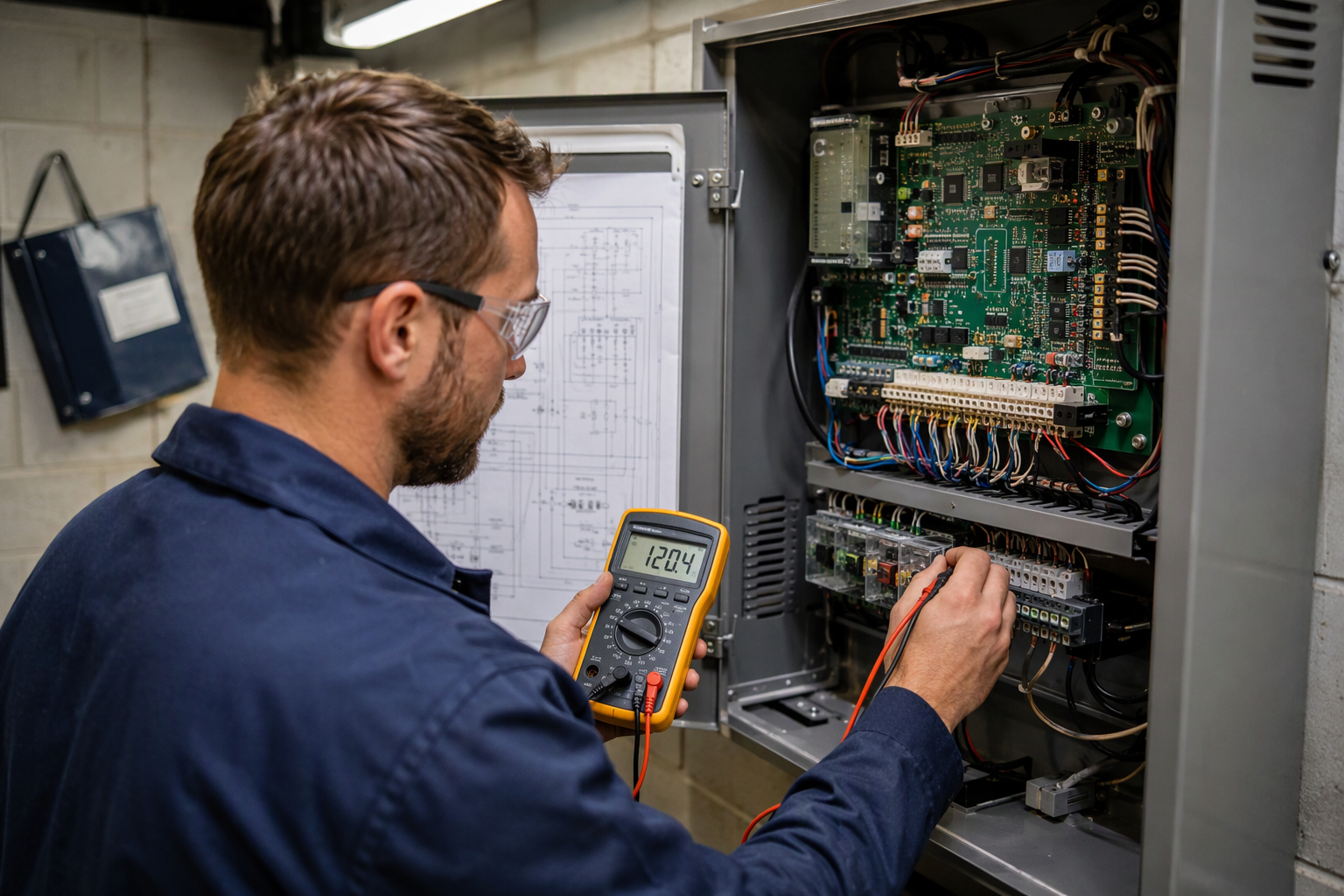
Your maintenance contract document and your service provider’s dispatch system are the two fastest sources for your next scheduled visit date.
Every maintenance agreement specifies the service frequency — monthly, quarterly, bimonthly, or full maintenance — and most licensed elevator companies maintain a scheduling calendar they can share with building owners or facility managers on request. The first step is to locate the original signed contract, which will identify both the service intervals and the designated contact number for scheduling questions.
If the original contract is unavailable, the elevator service company’s service coordinator can look up the account by address and confirm the next dispatch date. Building owners in Signal Hill, Long Beach, Los Angeles, and Orange County served by Liftech Elevator can reach the scheduling team directly to confirm upcoming visits and any pending compliance milestones.
What does California law require for elevator maintenance frequency?
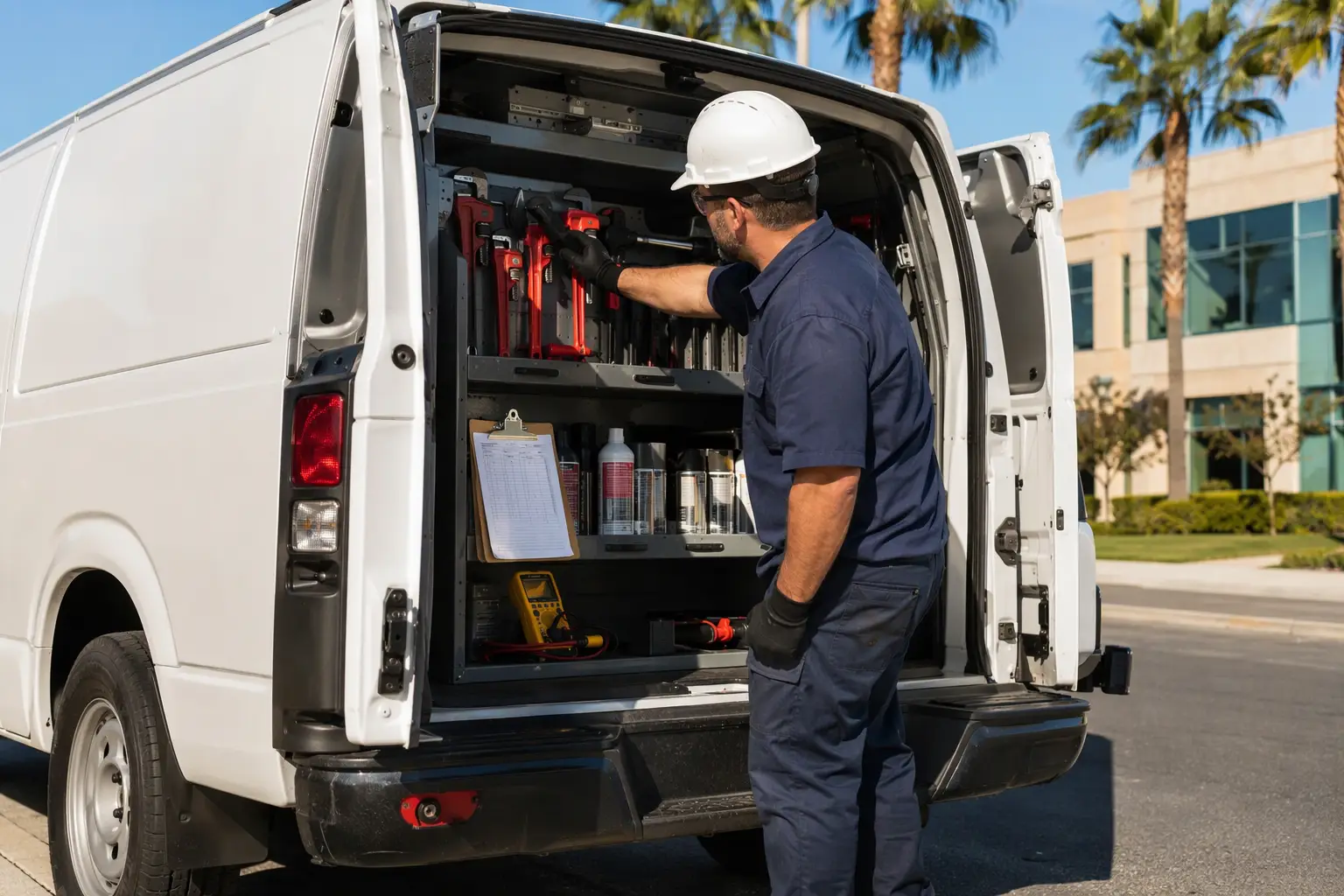
California law requires that every conveyance be inspected at least once a year by a qualified inspector, but it does not mandate a specific monthly maintenance frequency — that interval is set by the owner’s contract with a licensed elevator company.
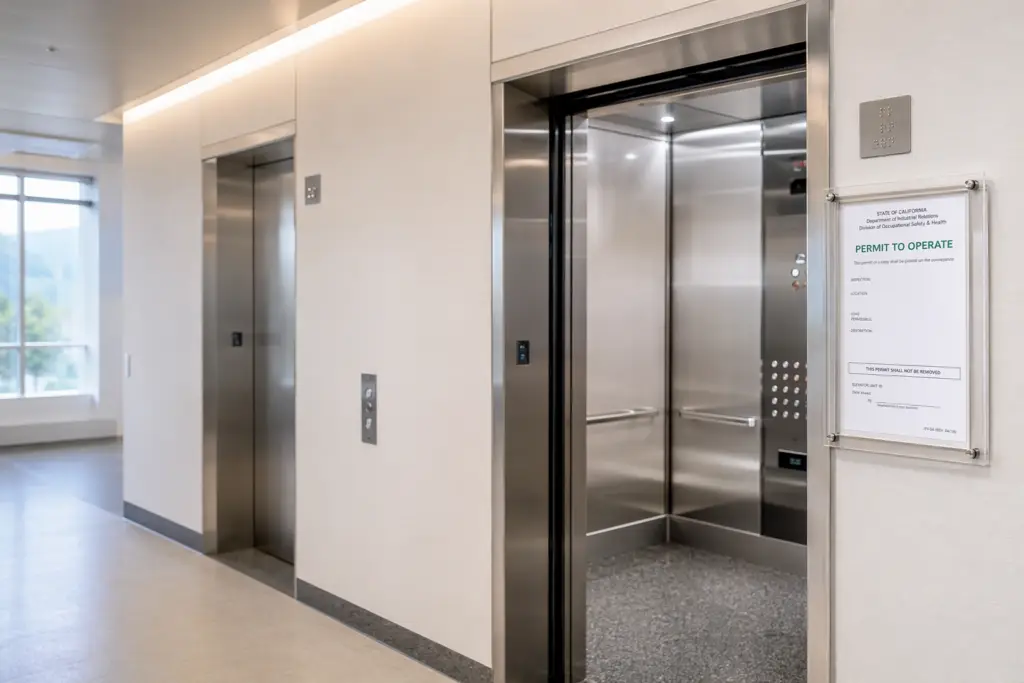
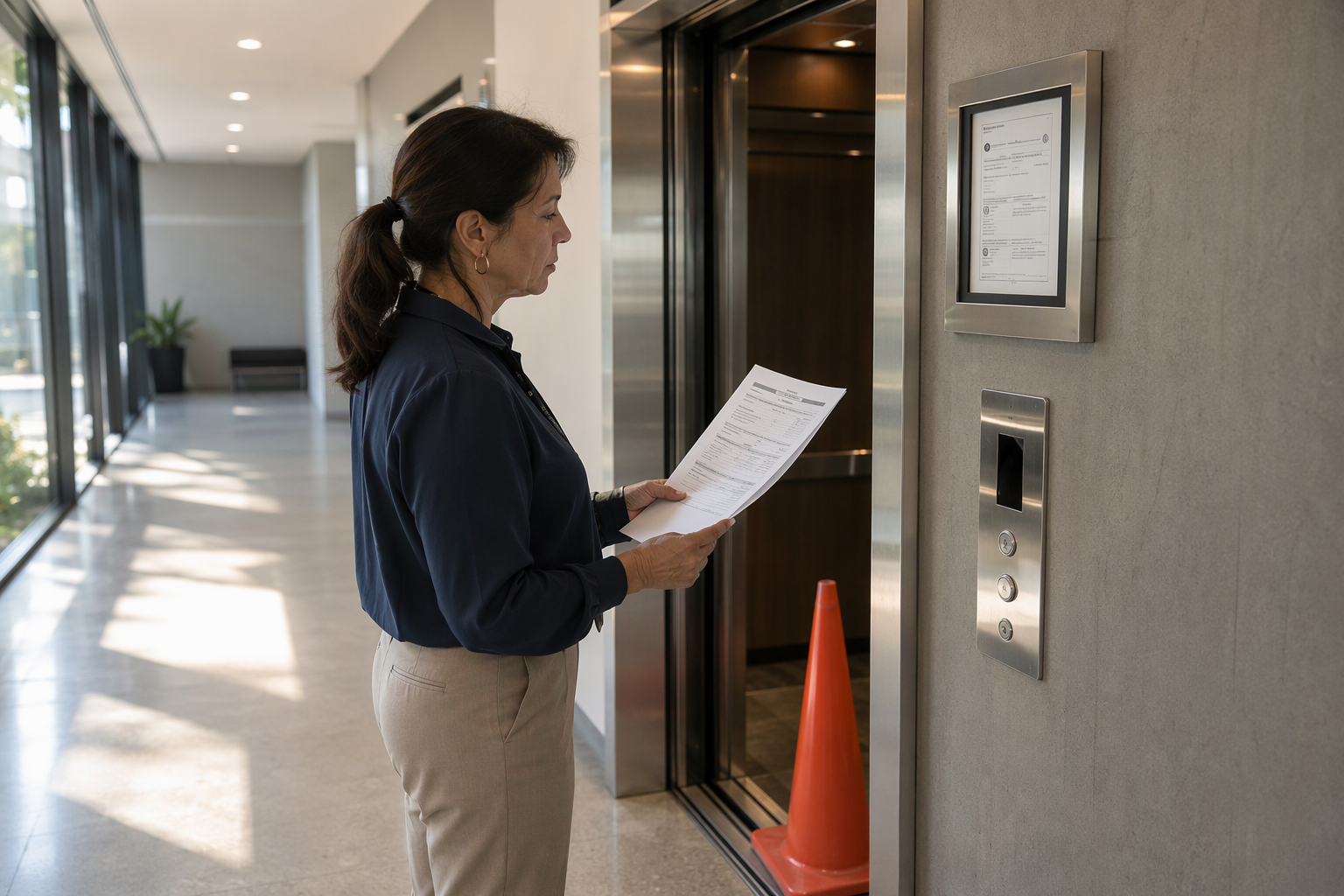
Under California Labor Code Sections 7300–7324.2 and the California Code of Regulations, Title 8, Elevator Safety Orders (Sections 3000–3146), no elevator may be operated without a valid permit to operate issued by the Cal/OSHA Elevator Unit, California Department of Industrial Relations. The permit is renewed through annual inspection, and the permit to operate must be posted conspicuously in the elevator car at all times.
Importantly, Cal/OSHA may issue a permit to operate for up to two years — rather than the standard one-year permit — for an elevator in safe condition that is covered by a full maintenance contract with a C-11 licensed elevator company. This extended permit is a direct regulatory incentive for owners to maintain comprehensive, documented service agreements. Arranging the annual reinspection is the elevator owner’s responsibility, not the inspector’s.
Who is legally authorized to perform elevator maintenance in California?
Only a Certified Competent Conveyance Mechanic (CCCM) working for a Certified Qualified Conveyance Company (CQCC) may maintain, repair, alter, or replace components on a conveyance in California.
The Cal/OSHA Elevator Unit issues CQCC certification to companies that submit a current C-11 Elevator Contractor license — issued by the California Contractors State License Board (CSLB) — along with current certificates of workers’ compensation and liability insurance. Individual mechanics must hold a CCCM certificate issued by Cal/OSHA. Anyone working on an elevator in California without supervision must hold this certification.
CQCC, CCCM, and conveyance inspector certificates are valid for two years. Renewal requires at least eight hours of continuing education, ensuring that technicians remain current with evolving code requirements. When evaluating elevator service providers, building owners should verify both the company’s CQCC status and the certifications of the mechanics assigned to their account.
What is the difference between monthly maintenance and an annual inspection?
Monthly maintenance is preventive servicing performed by the elevator contractor to keep equipment operating safely between regulatory inspections, while the annual inspection is a formal compliance evaluation conducted by a state-certified inspector that results in permit renewal.
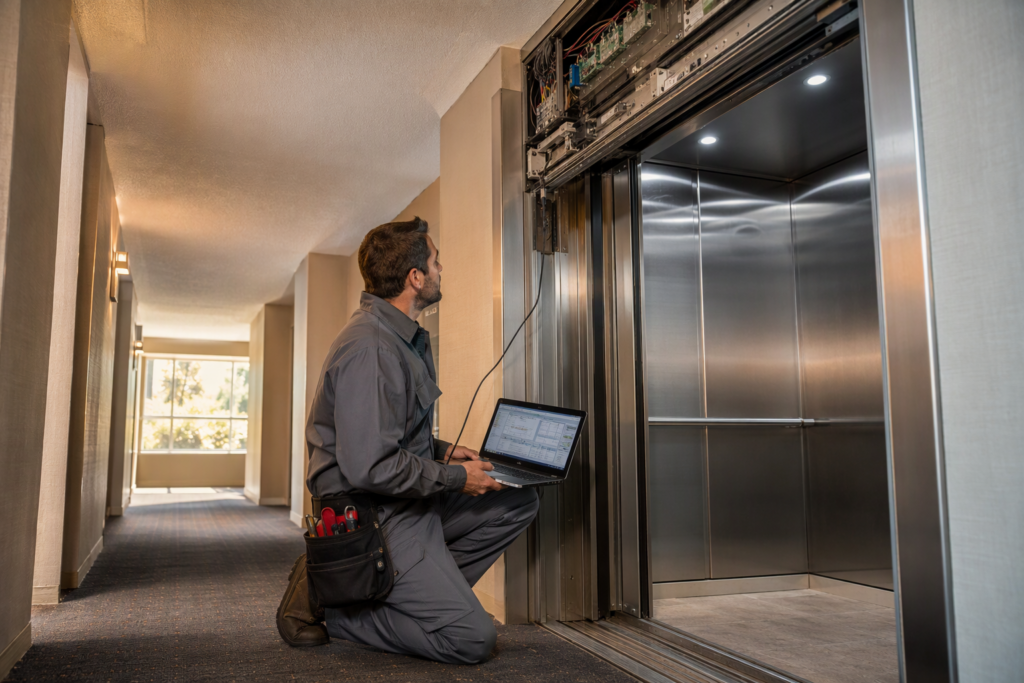
Monthly maintenance typically includes lubrication of moving parts, testing of safety devices, inspection of ropes or hydraulic systems, door operation adjustments, and documentation of any deficiencies. This work is performed by the CQCC and its CCCM-certified mechanics under the terms of the service contract.
The annual inspection, by contrast, may only be performed by State of California safety engineers or Certified Competent Conveyance Inspectors (CCCI). The outcome of a passing inspection is a permit to operate for up to one year — or up to two years when a full maintenance contract is in place. The inspection does not replace ongoing maintenance; rather, consistent monthly servicing is what enables an elevator to pass inspection reliably.
What is included in a standard monthly elevator maintenance visit?
A standard monthly maintenance visit covers all major mechanical, electrical, and safety-related systems of the elevator, with the scope defined by the type of maintenance contract in place.
Typical monthly maintenance tasks include:
- Inspection and lubrication of guide rails, rollers, and sheaves
- Testing and adjustment of door operators, door clutches, and safety edges
- Examination of hoist ropes or hydraulic cylinders and fluid levels
- Verification of all safety devices, including governors, safeties, and buffers
- Testing of emergency lighting, alarm bells, and communication systems
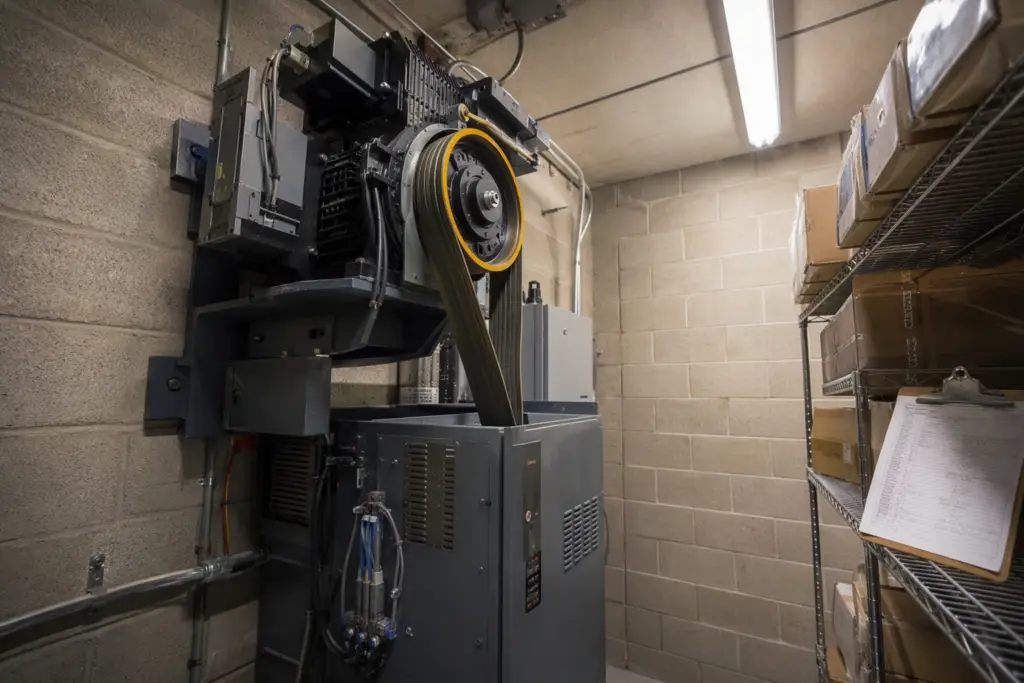
- Inspection of the machine room environment, including temperature and cleanliness
- Review and updating of the maintenance logbook
- Documentation of any observed deficiencies and recommended corrective actions
The scope expands under a full maintenance contract, which typically includes parts replacement and callback service, compared to an oil-and-grease or examination-only agreement. Building owners should review their contract type carefully, because the permit extension benefit under California law applies specifically to full maintenance contracts.
What are the different types of elevator maintenance contracts available?
Elevator maintenance contracts generally fall into three categories: oil-and-grease (examination only), parts-included, and full maintenance — each offering a different level of coverage and cost responsibility.
| Contract Type | Lubrication & Adjustments | Parts Coverage | Callback Service | Qualifies for CA 2-Year Permit Extension |
|---|---|---|---|---|
| Oil-and-Grease / Examination Only | Yes | No | Billed separately | No |
| Parts-Included | Yes | Specified parts only | Often included | Depends on contract language |
| Full Maintenance | Yes | Comprehensive | Included | Yes (per Cal/OSHA criteria) |
Building owners evaluating contracts should confirm in writing whether a proposed agreement qualifies as a “full maintenance contract” under Cal/OSHA standards, as this classification directly affects permit duration and the owner’s out-of-pocket repair exposure. Liftech Elevator can review existing contracts and advise building owners on coverage gaps relative to California regulatory requirements.
What happens if a monthly maintenance visit is missed or skipped?
A missed maintenance visit creates a gap in the service record, can accelerate component wear, and may jeopardize the documentation trail needed for permit renewal and compliance demonstrations.
From a regulatory standpoint, California’s permit to operate is contingent on the elevator remaining in safe condition. A lapse in documented maintenance does not automatically invalidate the permit, but if a Cal/OSHA inspection or complaint-based investigation reveals that maintenance was not being performed as contracted, the owner may face enforcement action. The Cal/OSHA Elevator Unit has authority to order an elevator out of service if it is found to be unsafe.
From an equipment perspective, door operators, lubrication points, and hydraulic systems that go unserviced for extended periods accumulate wear at an accelerated rate. Catching a skipped visit early and rescheduling promptly minimizes both mechanical risk and documentation gaps. Building managers should request a written confirmation whenever a service visit is rescheduled.
How should a building owner track and manage the elevator maintenance schedule?
Building owners should maintain a physical maintenance logbook in the machine room, a digital copy of the maintenance contract, and a calendar reminder system aligned to the contracted service intervals.
- Obtain a copy of the signed maintenance contract and confirm the service interval (monthly, quarterly, etc.) and the scheduled visit window.
- Set recurring calendar reminders approximately five business days before each scheduled visit so staff can ensure machine room access.
- After each visit, review the technician’s service report for noted deficiencies and confirm any recommended repairs are entered into the work order system.
- Maintain a physical logbook in the elevator machine room — this is the primary record inspectors review during annual Cal/OSHA inspections.
- Verify the permit to operate is posted in the elevator car and note the expiration date to plan the next annual reinspection request.
- Keep copies of all permits, inspection certificates, and service reports in a centralized property file for at least the period required by your lease or ownership agreement.
Does the City of Los Angeles have its own elevator maintenance and inspection requirements?
Yes — Los Angeles operates its own elevator and conveyance inspection program through the Los Angeles Department of Building and Safety (LADBS), separate from and in addition to Cal/OSHA requirements.
Building owners with elevators in the City of Los Angeles should be aware that LADBS administers its own program, which may impose locally specific permit, inspection, and documentation requirements. Property managers in Los Angeles should contact LADBS directly to confirm current local obligations and ensure their maintenance documentation satisfies both the city program and Cal/OSHA standards simultaneously. Liftech Elevator services buildings throughout Los Angeles and can help owners navigate the requirements of both regulatory programs.
How does the ASME A17.1 Safety Code apply to monthly elevator maintenance in California?
The ASME A17.1/CSA B44 Safety Code for Elevators and Escalators establishes the minimum technical requirements for elevator maintenance procedures, lubrication intervals, and safety device testing that California’s Elevator Safety Orders incorporate by reference.
California adopted the ASME A17.1/CSA B44 2004 edition as its Group IV Elevator Safety Orders, effective May 1, 2008, for installation contracts signed on or after that date. This edition defines the maintenance examination and testing procedures that CCCM-certified mechanics must follow. The ASME A17.1 code’s maintenance requirements form the technical backbone of what a compliant monthly service visit must include.
As of 2026, California has proposed a Group V update that would incorporate elements of ASME A17.1-2019. The Standards Board held a public hearing on June 18, 2026, and no effective date has been posted. Building owners should monitor the Cal/OSHA Elevator Unit for updates, as the new edition may affect maintenance scope requirements when adopted.
What ADA requirements apply to elevator maintenance?
The Americans with Disabilities Act (ADA) requires that elevators providing access for persons with disabilities remain operational and that accessibility features — including door timing, floor indicators, and control reach ranges — are maintained in working order.
Under ADA Standards for Accessible Design, an elevator that is the accessible route to a floor must be kept in service. Extended outages that eliminate accessible access to a floor may constitute an ADA compliance failure, regardless of whether the mechanical issue is covered under the maintenance contract. Monthly maintenance visits should explicitly include inspection of accessibility features: Braille and raised-character floor buttons, door open/close timing, leveling accuracy, and audible and visual floor indicators where installed.
Building owners should document any accessibility-related deficiencies found during monthly visits and ensure repair timelines are expedited for features that directly affect ADA compliance.
What should a building owner do if the elevator breaks down between scheduled monthly visits?
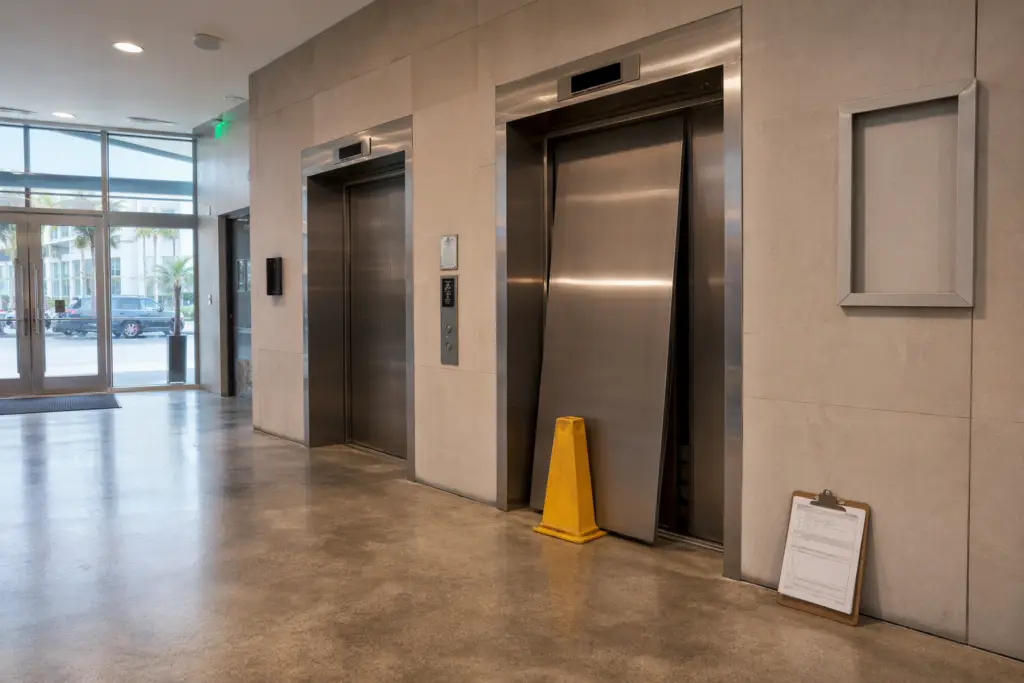
When an elevator breaks down between scheduled maintenance visits, the owner should take the unit out of service immediately, notify the elevator service company for an emergency callback, and post clear signage at all landings.
- Confirm that no passengers are trapped. If a passenger is trapped in the car, call 911 immediately — do not attempt a self-rescue.
- Lock out the elevator at the main power disconnect in the machine room if safe to do so, to prevent further use or additional damage.
- Post “Out of Service” signage at all landing call stations.
- Contact your elevator service company’s emergency line to dispatch a CCCM-certified mechanic for an unscheduled callback visit.
- If the accessible route to any floor is eliminated by the outage, assess ADA obligations and notify affected building occupants.
- Document the time of failure, observed symptoms, and any error codes displayed on the controller, and have this information ready for the responding mechanic.
- After the repair, obtain a written service report and update the maintenance logbook before returning the unit to service.
How long does a monthly elevator maintenance visit typically take?
The duration of a monthly maintenance visit varies with elevator type, age, and contract scope, but it is generally sufficient to complete all required lubrication, adjustment, and safety device checks without requiring extended downtime.
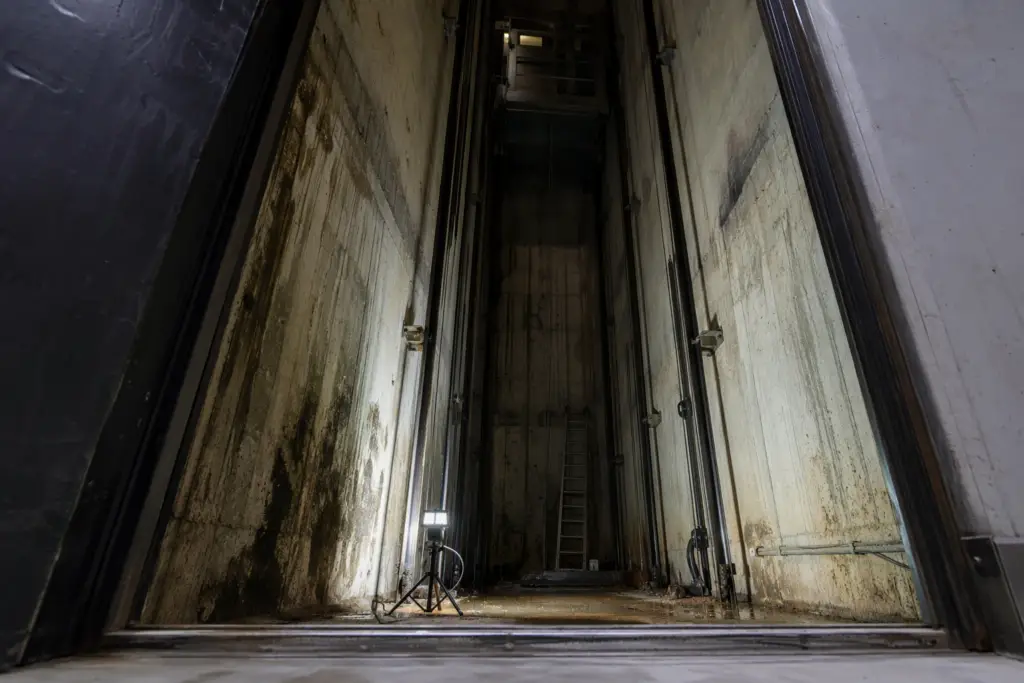
Hydraulic elevators, traction elevators, and limited-use/limited-application (LULA) lifts each have different service point counts and access requirements. Older equipment in Long Beach and Los Angeles commercial buildings that predates the 2008 effective date of California’s current Elevator Safety Orders may have additional service points or non-standard components that extend service time. Building managers should plan for access to both the machine room and the pit during the scheduled window, and should ensure the maintenance logbook is available for the technician’s use and signature.
Can an elevator owner self-perform maintenance to reduce costs?
No — California law is explicit that only a Certified Competent Conveyance Mechanic (CCCM) working for a Certified Qualified Conveyance Company (CQCC) may maintain, repair, alter, or replace components on a conveyance.
This prohibition applies regardless of the building owner’s mechanical knowledge or in-house engineering staff. Unauthorized work on an elevator can result in Cal/OSHA enforcement action, invalidation of insurance coverage, and potential personal liability if a subsequent incident occurs. The only legally compliant path for elevator maintenance in California is to contract with a CQCC-certified company whose mechanics hold current CCCM certifications. Building owners should request documentation of both certifications before any work begins.
What records should be kept after each monthly maintenance visit?
After each monthly maintenance visit, the building owner should retain the signed technician service report, any work orders for deficiencies identified, and an updated entry in the machine room maintenance logbook.
Cal/OSHA inspectors routinely review the maintenance logbook during annual inspections. A well-maintained logbook with dated, signed entries for every service visit demonstrates a consistent maintenance history and supports permit renewal. Service reports should identify the mechanic’s name and CCCM certification number, the specific tasks performed, lubricants and materials used, any safety device test results, and any deficiencies noted with recommended corrective actions and target completion dates.
Digital records stored in building management software are acceptable as supplementary documentation, but the physical logbook in the machine room remains the primary inspection reference. Property owners managing multiple buildings across Signal Hill, Long Beach, or Orange County should implement a standardized record-keeping system across all properties.
What are the consequences of operating an elevator without a valid Cal/OSHA permit to operate?
Operating an elevator in California without a valid, current permit to operate issued by Cal/OSHA is a violation of California Labor Code and can result in the elevator being ordered out of service, citations, and potential civil liability.
The permit to operate must be posted conspicuously in the elevator car at all times. Cal/OSHA has authority to order an elevator shut down immediately if it lacks a valid permit or is found to be in an unsafe condition. For building owners, this creates direct financial exposure through lost use of the building, potential ADA claims if the elevator is an accessible route, and possible tenant complaints. Maintaining a current full maintenance contract and scheduling the annual reinspection proactively — before the existing permit expires — is the most reliable way to avoid permit lapses.
How does California’s proposed Group V Elevator Safety Order update affect maintenance requirements?
California’s proposed Group V update, which would incorporate elements of ASME A17.1-2019 in part, may revise the technical maintenance scope requirements once adopted, but no effective date has been posted as of 2026.
The Standards Board held its public hearing on this rulemaking on June 18, 2026. Until the Group V Orders take effect, the Group IV Orders based on the 2004 edition of ASME A17.1/CSA B44 remain the controlling standard for maintenance procedures in California. Building owners and their service providers should monitor the Cal/OSHA Elevator Unit website for rulemaking updates, as adoption of the new standard may require adjustments to maintenance procedures, testing intervals, or documentation practices.
What questions should a building owner ask when hiring an elevator maintenance company in California?
Building owners should verify CQCC certification, C-11 license status, CCCM certification of assigned mechanics, contract type classification, and documentation practices before signing any elevator maintenance agreement.
A thorough vetting checklist includes:
- Provide your current CQCC certificate number issued by Cal/OSHA.
- Provide your current C-11 Elevator Contractor license number issued by the CSLB.
- Identify the CCCM-certified mechanics who will be assigned to this account and their certificate numbers.
- Classify the proposed contract as full maintenance, parts-included, or oil-and-grease, and confirm in writing whether it qualifies for the Cal/OSHA two-year permit extension.
- Describe the documentation provided after each visit (service report format, logbook entry process).
- Explain the process for scheduling the annual Cal/OSHA reinspection and who coordinates with the inspector.
- Describe the callback process for between-visit breakdowns.
How does Liftech Elevator support building owners with scheduling and compliance tracking?
Liftech Elevator provides structured maintenance scheduling and documentation support to building owners and facility managers across Signal Hill, Long Beach, Los Angeles, and Orange County, helping ensure that monthly service visits, annual inspections, and permit renewals remain on track.
As a CQCC-certified elevator company holding the C-11 license required under California law, Liftech Elevator assigns CCCM-certified mechanics to each account and provides detailed service reports after every visit. The team assists building owners with coordinating annual Cal/OSHA reinspections, maintaining compliant logbooks, and identifying deficiencies before they escalate into code violations or permit risks. For properties in Los Angeles that fall under LADBS jurisdiction, Liftech Elevator can help navigate both the city program and Cal/OSHA requirements simultaneously.
What should a new property owner do immediately regarding elevator maintenance when acquiring a building?
A new property owner acquiring a building with an existing elevator should immediately locate the current permit to operate, review the existing maintenance contract, and confirm the certification status of the current service provider before any maintenance visits continue.
- Locate the permit to operate posted in the elevator car and note the expiration date and issuing inspector’s information.
- Request copies of the past two years of maintenance service reports and the machine room logbook from the seller or previous property manager.
- Verify the current elevator company’s CQCC certification and C-11 license through the Cal/OSHA Elevator Unit and the CSLB.
- Review the existing maintenance contract to determine its type (full maintenance, parts-included, or examination only), service interval, and remaining term.
- Schedule a walk-through inspection of the machine room, pit, and car with a CCCM-certified mechanic to identify any deferred maintenance or deficiencies not captured in prior records.
- If the current contract does not qualify for the two-year permit extension or does not meet the new owner’s service expectations, begin the process of engaging a qualified replacement company before the current permit expires.
- Update building management contacts with the elevator company’s scheduling team so dispatch and service reports go to the correct personnel.
Liftech Elevator regularly assists new property owners across Long Beach, Signal Hill, Los Angeles, and Orange County with this transition process, ensuring no gaps in documented maintenance coverage occur during ownership changes.
Contact Liftech Elevator for a free elevator assessment at 562-997-3639.
Need elevator service you can rely on? Liftech Elevator is ready to help.