Commercial Building Elevator Service Contracts for Healthcare Facilities
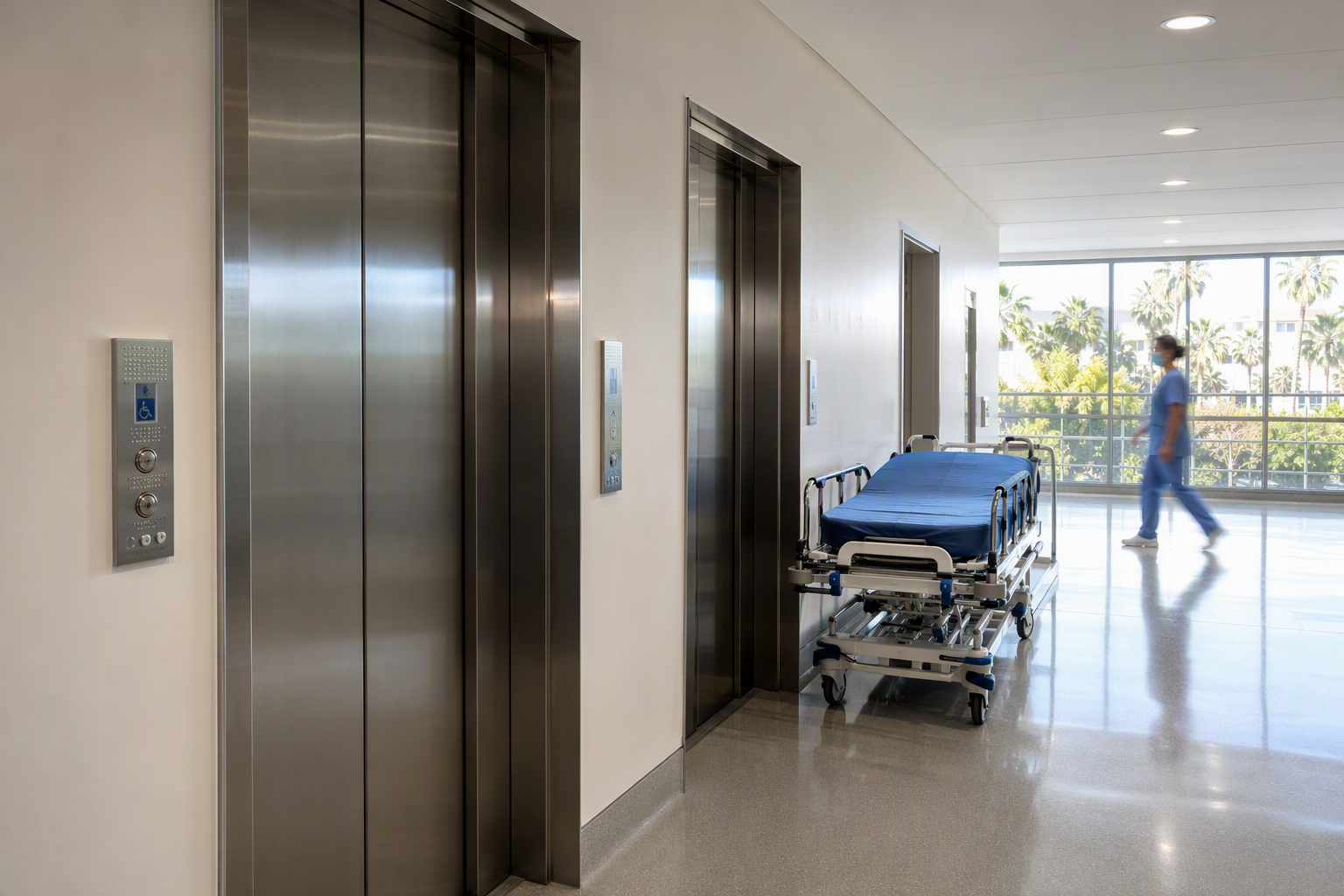
Healthcare facilities in Signal Hill, Long Beach, Los Angeles, and Orange County operate elevators under stricter scrutiny than almost any other building type. A single elevator outage can delay patient transport, interrupt surgical schedules, and expose a facility to regulatory liability. A properly structured commercial building elevator service contract addresses preventive maintenance, mandatory inspections, emergency response protocols, and full compliance documentation — all under one agreement.
Why Do Healthcare Facilities Need a Specialized Elevator Service Contract?
Hospitals, outpatient surgery centers, skilled nursing facilities, and medical office buildings carry patient populations that cannot use stairs. Elevators in these environments transport beds, gurneys, wheelchairs, IV poles, crash carts, and clinical staff under time-sensitive conditions every hour of every day. A standard commercial elevator contract may cover routine lubrication and basic inspections, but a healthcare-specific contract must layer in additional requirements:
- Continuous uptime obligations — patient transport cannot be rerouted to a stairwell.
- Infection control compatibility — maintenance procedures must align with facility infection prevention policies.
- Heavy-duty cycle planning — healthcare elevators frequently exceed the usage cycles of a typical office building, accelerating wear on components.
- Bariatric load compliance — many facilities require elevators rated for bariatric equipment and patient weights.
- Documentation for Joint Commission surveys and state health department inspections — service records must be audit-ready at all times.
Liftech Elevator structures service contracts specifically to meet these demands across healthcare campuses in Los Angeles County and Orange County.
What Compliance Codes Govern Healthcare Elevator Service Contracts?

Healthcare elevator maintenance is governed by a layered set of national, state, and facility-level requirements. Understanding each layer is essential when evaluating any service contract.
ASME A17.1 / CSA B44 Safety Code for Elevators and Escalators
The ASME A17.1 Safety Code for Elevators and Escalators establishes the baseline national standard for elevator installation, operation, inspection, and maintenance. California adopts and enforces this standard through the California Elevator Safety Construction Code (Title 8, California Code of Regulations). All commercial elevator service contracts must comply with ASME A17.1 inspection interval and maintenance record requirements.
ADA Accessibility Requirements
The Americans with Disabilities Act (ADA) mandates that elevators in healthcare facilities serving the public remain accessible and operational for individuals with disabilities. This includes requirements for door timing, cab dimensions, control panel heights, and auditory signals. Service contracts must include checks that verify continued ADA compliance after every maintenance visit.
California State Elevator Inspections
The California Division of Occupational Safety and Health (Cal/OSHA) Elevator, Ride, and Tramway Unit requires periodic certified inspections of all elevators. Healthcare facilities must maintain current permits and pass these inspections to remain operational. A compliant service contract includes coordination with state-certified inspectors and ensures all deficiencies are corrected before re-inspection.
The Joint Commission (TJC) Environment of Care Standards
Facilities accredited by The Joint Commission are subject to Environment of Care (EC) standards that require documented preventive maintenance programs for all patient transport equipment, including elevators. Service contracts must generate maintenance logs, deficiency reports, and corrective action records in formats acceptable for TJC survey review.
OSHA General Industry Standards
The Occupational Safety and Health Administration (OSHA) applies general industry safety standards to elevator maintenance work performed within a healthcare facility. Contracts must specify that all maintenance technicians follow OSHA-compliant lockout/tagout procedures, confined space protocols, and fall protection requirements when working on elevator equipment.
What Does a Healthcare Elevator Service Contract Typically Include?
A comprehensive commercial building elevator service contract for a healthcare facility generally covers the following categories of service:
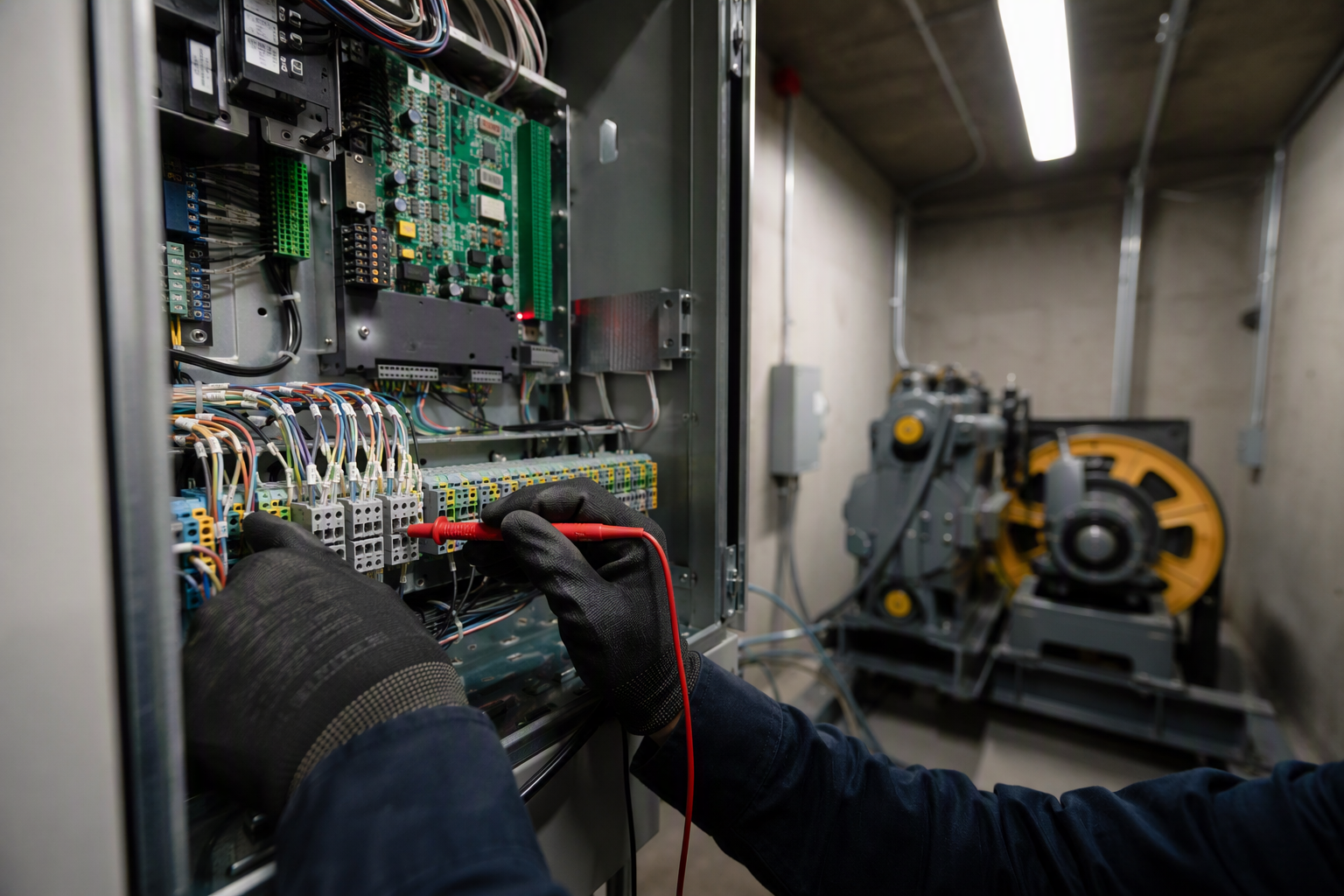
- Scheduled preventive maintenance visits — lubrication, adjustment, and inspection of all mechanical and electrical components on a defined frequency
- Annual or semi-annual full inspections — aligned with ASME A17.1 inspection interval requirements and California state permit cycles
- Safety device testing — governor, safeties, buffers, door interlocks, and emergency lighting
- ADA compliance verification — door timing, cab lighting, and accessible control panel checks after each visit
- Emergency callback service — defined procedures for elevator entrapments and outages
- Parts and labor coverage tiers — contracts range from full-maintenance to oil-and-grease, and healthcare facilities typically benefit from comprehensive parts coverage to minimize outage duration
- Audit-ready recordkeeping — electronic or paper logs formatted for TJC, Cal/OSHA, and state health department review
- Modernization consultation — ongoing assessment of aging components that may require capital planning
How Do You Choose the Right Service Contract Tier for a Hospital or Clinic?
Service contracts are typically offered at several tiers. Healthcare facilities should evaluate each based on patient volume, elevator age, and regulatory exposure:
- Oil and Grease (Basic): Covers lubrication and minor adjustments only. Appropriate for low-traffic outbuildings, not for primary patient transport elevators.
- Comprehensive Maintenance: Covers all routine parts and labor. Recommended for main hospital towers and surgical floors where downtime is clinically unacceptable.
- Full Maintenance with Modernization Planning: Adds lifecycle assessments and capital project consultation — appropriate for facilities with aging elevator infrastructure or upcoming accreditation surveys.
Liftech Elevator helps healthcare facility managers in Long Beach, Los Angeles, and Orange County evaluate which tier aligns with their operational risk profile before any contract is signed.
What Are the Steps to Getting a Healthcare Elevator Service Contract in Place?
- Conduct an initial elevator assessment. A certified technician inspects each elevator for current mechanical condition, permit status, ADA compliance, and outstanding deficiencies.
- Review existing documentation. Gather current inspection certificates, maintenance logs, and any outstanding correction notices from Cal/OSHA or previous contractors.
- Define the scope of required service. Determine the number of units, elevator types (hydraulic, traction, MRL), usage volume, and any bariatric or specialty lift requirements.
- Select the appropriate contract tier. Match the coverage level to the facility’s clinical risk tolerance and budget.
- Align contract terms with accreditation cycles. Ensure maintenance visit frequency and documentation formats satisfy TJC or DNV survey requirements.
- Execute the contract and establish a maintenance schedule. Coordinate visit windows with infection control and facilities management to minimize patient disruption.
- Onboard the service provider to facility protocols. Ensure technicians understand visitor credentialing, infection prevention, and area access requirements before the first visit.
How Often Should Healthcare Elevators Be Inspected Under a Service Contract?
Inspection frequency is driven by both regulatory minimums and clinical risk considerations. The ASME A17.1 Safety Code for Elevators and Escalators establishes minimum inspection intervals, and California state law requires periodic certified inspections to maintain operating permits. Beyond regulatory minimums, healthcare facilities operating elevators under heavy daily cycle loads benefit from more frequent preventive maintenance visits — typically monthly or quarterly — to catch component wear before it causes an outage. Contract language should specify exact visit frequency and what each visit covers, not merely reference compliance with minimums.
What Happens If a Healthcare Elevator Fails During a Service Contract Period?
Contract language governing unplanned outages is among the most important terms for a healthcare facility to negotiate. Key provisions to look for include:
- Defined callback procedures for entrapments, including how the service provider coordinates with facility security and clinical staff
- Parts availability commitments for critical components
- Documentation of root cause and corrective action after every unplanned outage
- Escalation procedures for repeat failures on the same unit
Liftech Elevator serves healthcare facilities across Signal Hill, Long Beach, Los Angeles, and Orange County with service contract structures designed to minimize outage duration and produce the documentation healthcare administrators need for regulatory and accreditation purposes.
How Does ADA Compliance Factor Into an Ongoing Service Contract?
ADA compliance is not a one-time installation check — it requires ongoing verification. Each maintenance visit under a healthcare service contract should verify that door open and close timing meets ADA requirements, that cab and corridor call button heights remain within accessible reach ranges, that auditory floor signals function correctly, and that no component replacement has inadvertently created a barrier. Failure to maintain ADA compliance exposes healthcare facilities to complaints, investigations, and potential loss of federal funding for facilities receiving Medicare or Medicaid reimbursement.
What Should a Healthcare Facility Look for When Comparing Elevator Service Contractors?
When evaluating competing service contracts, healthcare facility managers should assess:
- Familiarity with Joint Commission and California state health department documentation requirements
- Demonstrated experience with the specific elevator types installed in the facility (hydraulic, traction, machine-room-less)
- Parts inventory and supply chain relationships — long lead times on parts extend outages
- Infection control compliance protocols for working in clinical environments
- References from comparable healthcare facilities in the same geographic market
- Contract transparency — clearly defined scope, exclusions, and escalation procedures
Questions Your Inspector Will Ask
When a Cal/OSHA elevator inspector or Joint Commission surveyor reviews your facility’s elevator compliance, expect questions including:
- Is the current operating permit posted in the elevator cab?
- When was the last annual or periodic inspection, and where is the documentation?
- Are maintenance visit logs current, and do they reflect work performed on each unit individually?
- Have any correction notices been issued, and have they been resolved and re-inspected?
- What is the procedure for elevator entrapment, and have staff been trained on it?
- Have safety devices — including governor, safeties, and door interlocks — been tested within required intervals per ASME A17.1?
- Is there a written preventive maintenance plan that defines visit frequency and scope?
- Does the contract address bariatric load requirements for applicable units?
- Are technicians performing maintenance credentialed per facility visitor and infection control policies?
A service contract with Liftech Elevator is structured to ensure that when these questions arise, facility managers have current, complete, and audit-ready answers on file.
Are There Local Code Considerations for Healthcare Elevators in Los Angeles and Orange County?
California enforces elevator safety through the Division of Occupational Safety and Health (Cal/OSHA), and both Los Angeles County and Orange County have active elevator inspection programs operating under state authority. Healthcare facilities in these jurisdictions must maintain current operating permits for each elevator unit. Los Angeles and Orange County jurisdictions may have specific requirements for permit posting, inspection scheduling, and correction notice resolution timelines. Facilities in Signal Hill and Long Beach fall under Los Angeles County jurisdictional oversight for state elevator inspection purposes. Contracts should explicitly address how permit renewals, inspection scheduling, and deficiency corrections are managed within these local regulatory environments.
How Does 2026 Code Guidance Affect Existing Healthcare Elevator Contracts?
The ASME A17.1 Safety Code for Elevators and Escalators is updated on a regular cycle, and California periodically adopts updated editions into state regulation. Healthcare facilities with existing contracts should verify that their service provider is working to the current adopted code edition as of 2026, particularly for safety device testing intervals and documentation requirements. Contracts that reference outdated code editions may create compliance gaps that are not apparent until an inspection or survey reveals them. Facilities should ask contractors to confirm the specific code edition governing their contract scope.
Contact Liftech Elevator for a Free Elevator Assessment
Healthcare facilities in Signal Hill, Long Beach, Los Angeles, and Orange County can schedule a no-obligation elevator assessment with Liftech Elevator to review current compliance status, evaluate existing contract coverage, and identify any gaps before the next inspection or accreditation survey.
Contact Liftech Elevator for a free elevator assessment: 562-609-3478
Need elevator service you can rely on? Liftech Elevator is ready to help.