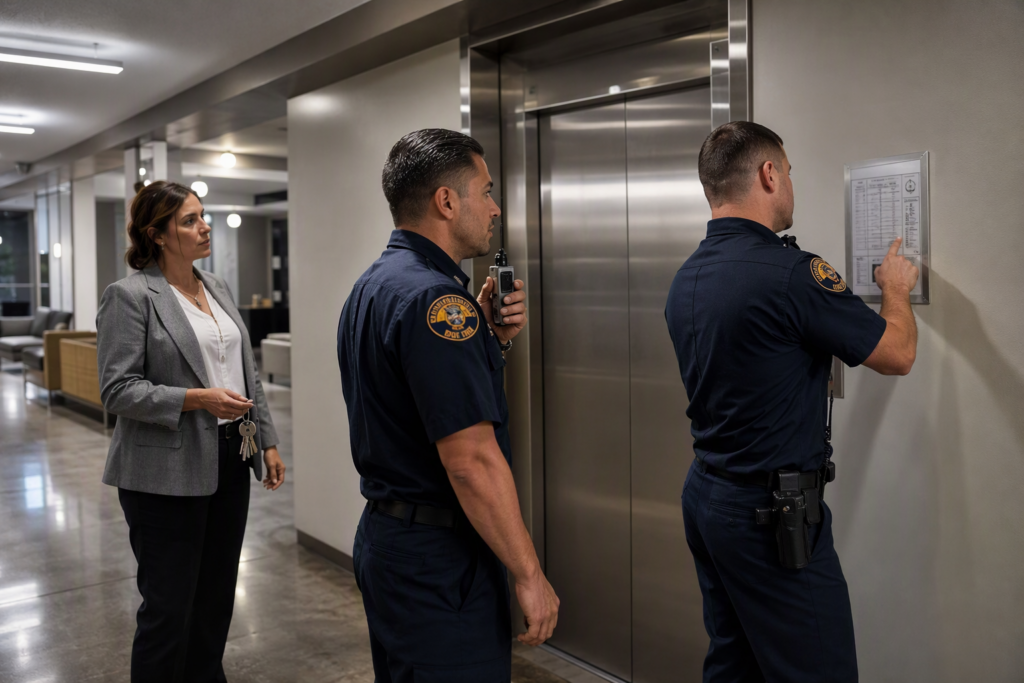
How Often Should Elevators Be Inspected? Complete FAQ Guide (2026)
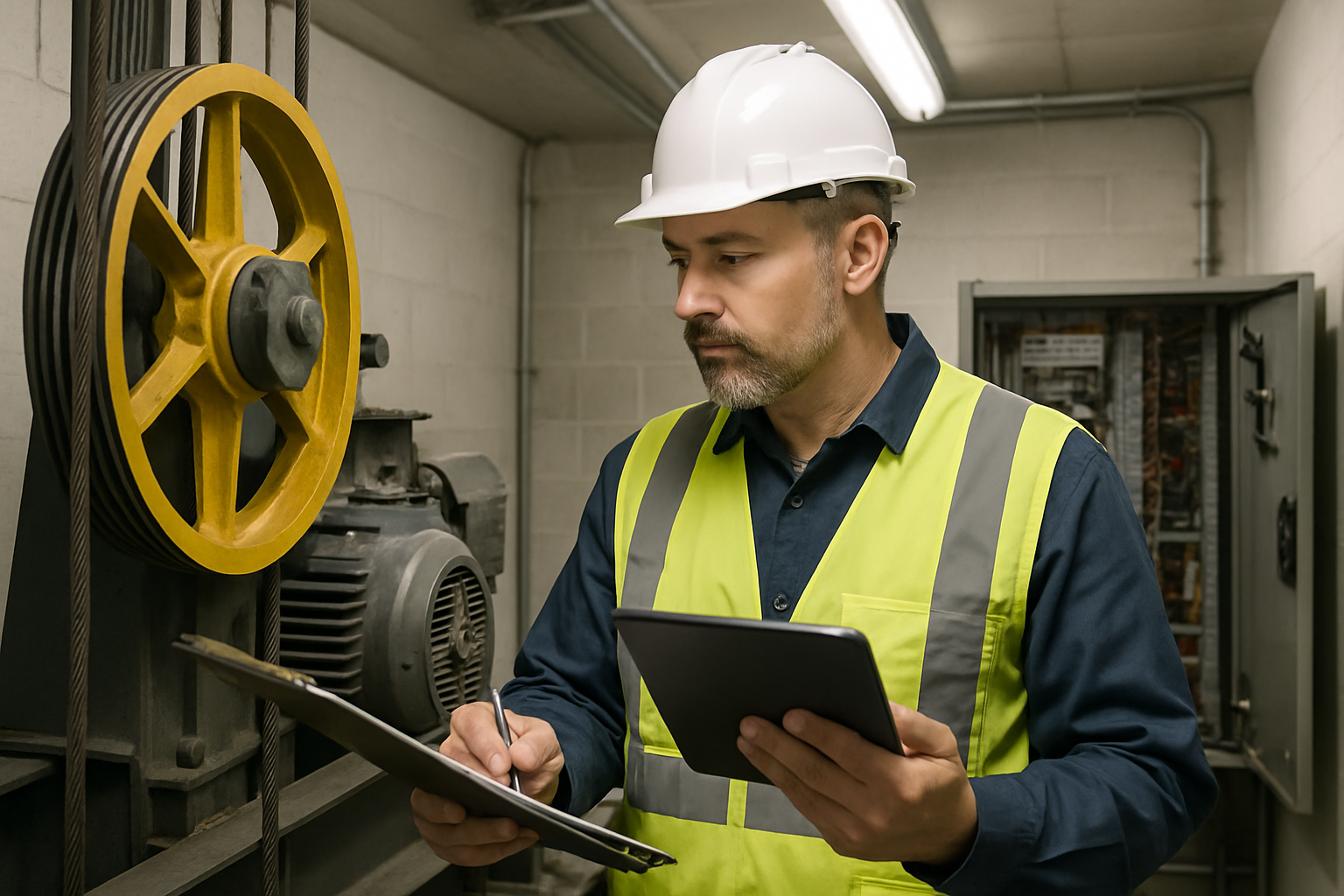
After more than 15 years servicing elevators across Long Beach, Signal Hill, Los Angeles, and Orange County, I’ve seen what happens when building owners treat elevator inspections as an afterthought. Costly breakdowns, failed state audits, liability lawsuits, and — most importantly — preventable injuries. The questions I get asked most often start with one simple concern: “How often does my elevator actually need to be inspected?” This FAQ hub answers that question thoroughly, covering every related angle from California code requirements to cost benchmarks to what really happens during an inspection.
How Often Should Elevators Be Inspected?
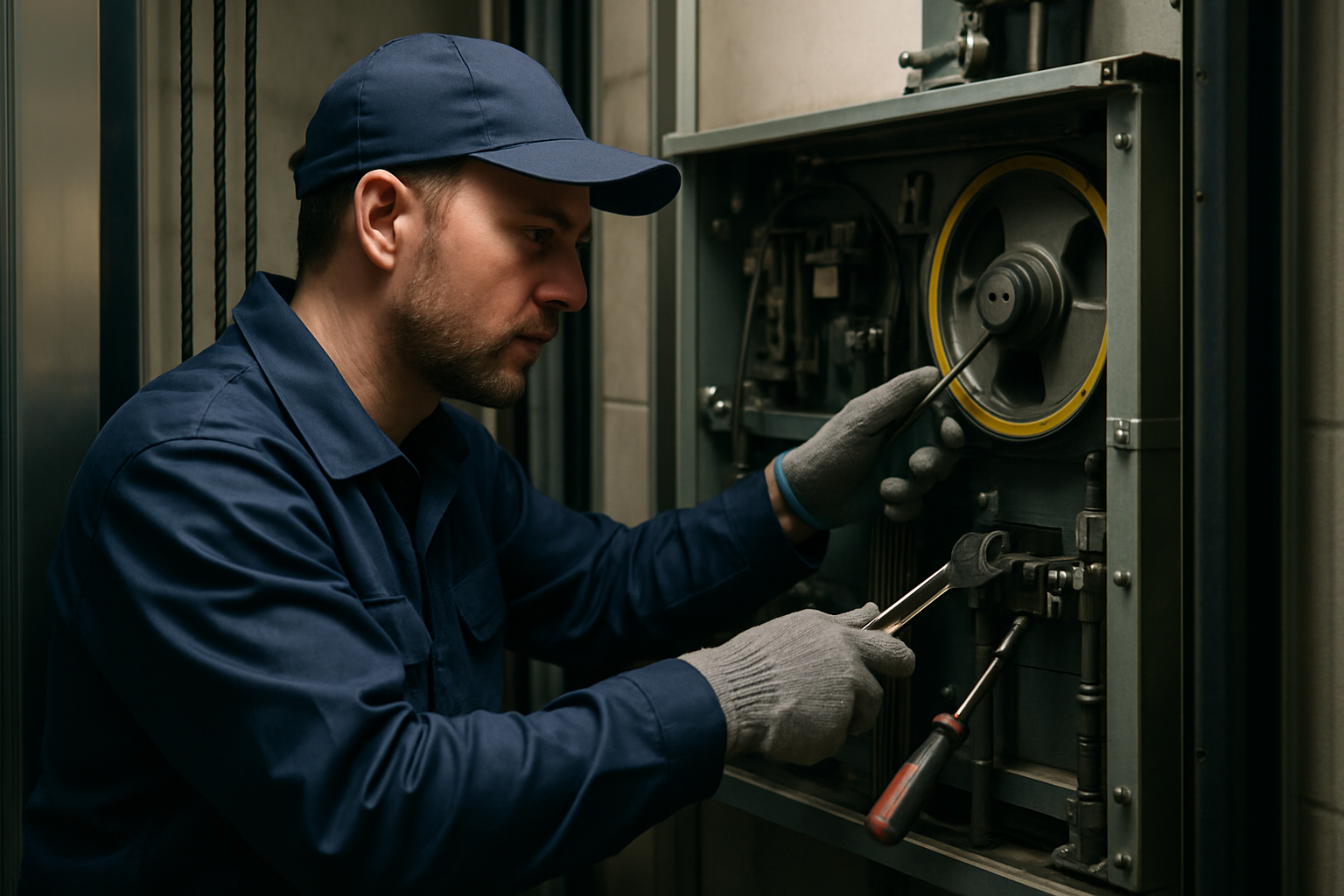
Elevators must receive a full safety inspection from a certified Qualified Elevator Inspector (QEI) at least once every 12 months. In California, this requirement is enforced under CCR Title 8 and aligned with the ASME A17.1/CSA B44 2022 Safety Code for Elevators and Escalators — the current governing standard as of 2026.
This annual inspection is not optional — it is a legal requirement enforced by the California Division of Occupational Safety and Health (Cal/OSHA). Beyond the annual state-mandated inspection, most modern elevator maintenance programs include quarterly or monthly maintenance visits to catch mechanical wear before it becomes a safety issue. High-traffic commercial elevators in busy Los Angeles office towers may require monthly check-ins, while a low-usage residential elevator in a Signal Hill condo may only need quarterly maintenance on top of the annual inspection.
The ASME A17.1/CSA B44 Safety Code serves as the foundational document that California and most other states adopt. It specifies inspection cycles, testing procedures, and documentation requirements. Ignoring these cycles doesn’t just risk a failed inspection — it can void your insurance coverage and expose building owners to serious liability.
What Does California Law Say About Elevator Inspection Frequency?
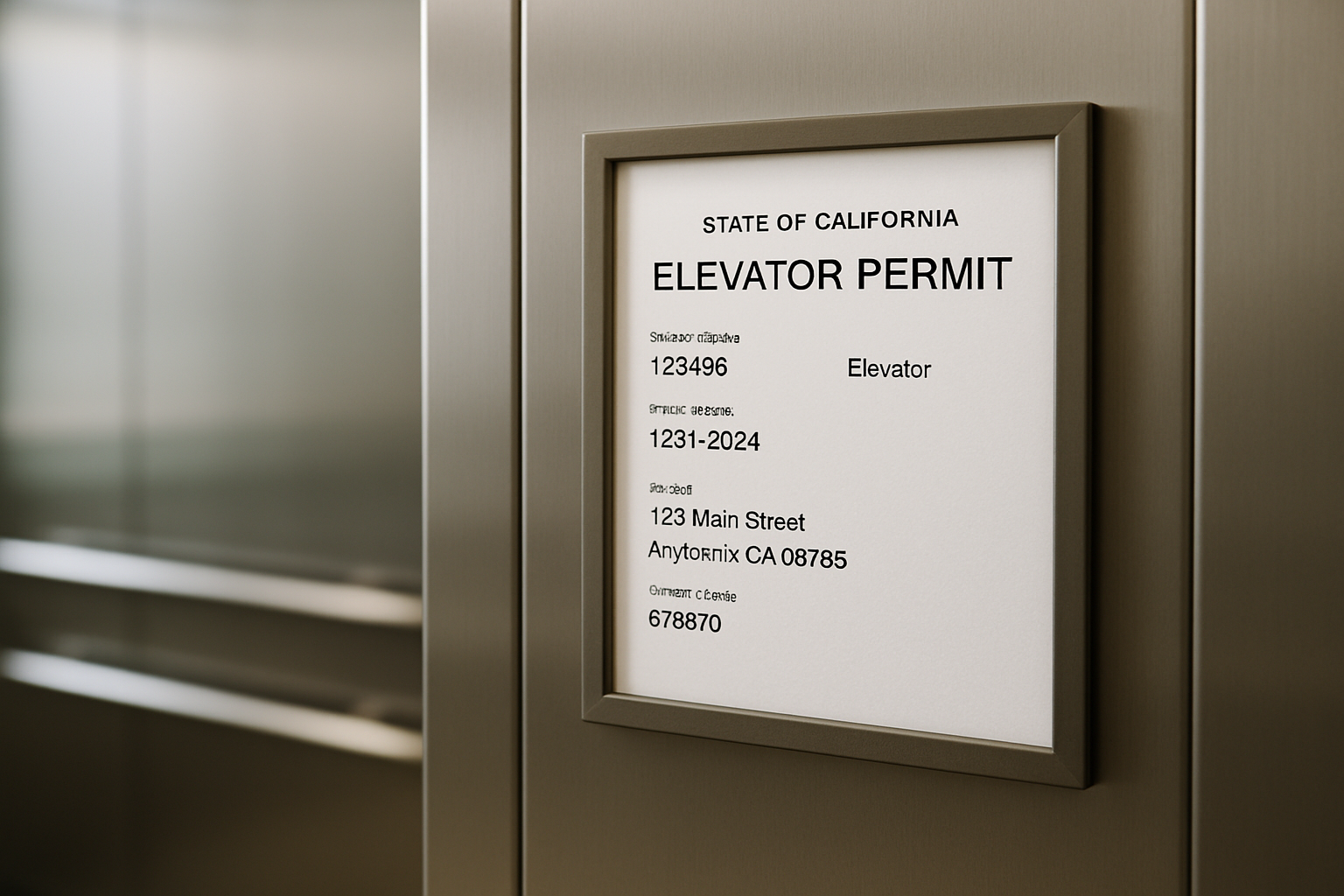
California requires all elevators to be inspected annually by a Qualified Elevator Inspector (QEI) licensed through Cal/OSHA, with the elevator permit displayed in the cab at all times.
Under California Code of Regulations (CCR) Title 8, Section 3000 et seq., any elevator, escalator, or conveyance used by the public or employees must hold a current permit issued by the Division of Occupational Safety and Health. That permit is only renewed after a passing annual inspection.
California also mandates a Category 1 functional test annually and a Category 5 (full-load, full-speed safety test) every five years for traction elevators. Hydraulic elevators follow their own testing schedules under the same CCR Title 8 framework, including periodic pressure relief valve and cylinder integrity checks. Failure to maintain these schedules can result in permits being revoked, meaning your elevator must be taken out of service until compliance is restored — a costly and disruptive outcome for any commercial property.
Building owners can verify current Cal/OSHA elevator permit requirements and inspector licensing status directly through the California DIR Elevators, Rides & Tramways program.
What Is the Difference Between an Elevator Inspection and Preventive Maintenance?
An elevator inspection is a formal, code-mandated safety evaluation conducted by a licensed third-party QEI or Cal/OSHA inspector. Preventive maintenance is an ongoing service performed by your elevator contractor to keep equipment running reliably between inspections.
Many building managers confuse the two, and that confusion can create compliance gaps. Here is how they differ:
- Annual Inspection: Conducted by a QEI or state-approved inspector. Results in a pass/fail determination. Required to renew your Cal/OSHA operating permit. Covers safety devices, brakes, governors, door operation, lighting, and emergency systems per ASME A17.1/CSA B44 2022.
- Preventive Maintenance (PM) Visits: Performed by a licensed elevator technician — typically from your service contractor like Liftech Elevator. Scheduled monthly or quarterly depending on usage. Covers lubrication, adjustment, parts wear assessment, and minor corrections before they become violations.
- Category 1 and Category 5 Tests: These are periodic performance tests required by code — Category 1 annually, Category 5 every five years for traction elevators. They may be conducted during or separately from the annual inspection.
A well-structured maintenance agreement bundles PM visits with coordination of the annual inspection, so building owners never face a surprise compliance gap. At Liftech Elevator, our service contracts covering Long Beach, Los Angeles, and Orange County are structured around both the inspection calendar and manufacturer-recommended PM intervals.
How Much Does an Elevator Inspection Cost in California in 2026?
In California, a standard annual elevator inspection typically costs between $300 and $800 per unit depending on elevator type, location, and whether the inspection is conducted by a state inspector or a third-party QEI retained by your maintenance contractor.
Cost variables to understand include:
- Elevator type: Hydraulic elevators generally cost less to inspect than traction (cable-driven) elevators due to fewer mechanical systems to evaluate. MRL (machine-room-less) traction units may carry a slight premium.
- Category 5 test years: The full-load, full-speed safety test required every five years adds cost — typically an additional $400 to $1,200 depending on unit capacity and the labor involved in safely loading and testing the car.
- Third-party QEI vs. state inspection: Cal/OSHA charges a fee schedule tied to unit type. Many building owners find it more cost-efficient to use a QEI retained through their maintenance contractor, as the inspection can be coordinated with a scheduled PM visit.
- Violations and re-inspection fees: A failed inspection requiring a follow-up visit adds both contractor labor costs and potential re-inspection fees. This is the most avoidable cost — consistent PM visits dramatically reduce first-time failure rates.
For a current fee schedule, the California DIR Elevators, Rides & Tramways page publishes official state inspection fee tables. Always request an itemized quote from any inspection or maintenance provider before signing a service agreement.
What Happens If an Elevator Fails Its Annual Inspection in California?
If an elevator fails its annual inspection in California, Cal/OSHA can issue an order to take the unit out of service immediately until all cited deficiencies are corrected and a re-inspection confirms compliance. Operating an elevator with a lapsed or failed permit is a violation that exposes building owners to fines and civil liability.
The specific outcome depends on the severity of the cited deficiencies:
- Minor violations (e.g., lighting deficiencies, certificate display, minor door timing issues) may allow continued operation with a correction deadline — typically 30 days.
- Major safety violations (e.g., failed governor, broken safety device, hydraulic leak, inoperative emergency lowering) typically result in an immediate out-of-service order. The elevator cannot be used until repairs are completed and verified by re-inspection.
- Permit revocation is the formal outcome of unresolved violations. Restoring a revoked permit requires full correction of all cited items, a re-inspection by a QEI or Cal/OSHA inspector, and reapplication for the operating permit.
Beyond regulatory penalties, operating a non-compliant elevator creates significant insurance and liability exposure. Most commercial property insurance policies contain clauses that can reduce or deny coverage for incidents involving equipment operating outside of its required inspection and maintenance schedule.
The most effective way to avoid a failed inspection is a proactive maintenance program. At Liftech Elevator, our technicians serving Long Beach, Signal Hill, Los Angeles, and Orange County conduct pre-inspection readiness checks as part of our service contracts — identifying and resolving likely violation items before the QEI arrives.
How Do I Choose the Right Elevator Maintenance and Inspection Contractor?
The right elevator maintenance contractor is licensed under California law, employs NEIEP-trained or equivalent certified technicians, carries adequate liability insurance, and provides a transparent service agreement that clearly separates routine PM visits, annual inspection coordination, and Category 5 test scheduling.
When evaluating contractors in the Los Angeles and Orange County area, use this checklist:
- California Contractor License: Elevator contractors must hold a valid C-11 Elevator Contractor license issued by the California Contractors State License Board (CSLB). You can verify any license at the CSLB license lookup tool.
- QEI Access: Confirm whether the contractor employs or has a working relationship with a Qualified Elevator Inspector certified through the National Elevator Industry Educational Program (NEIEP) or an equivalent ASME-recognized body. This simplifies annual inspection coordination.
- Transparent Maintenance Agreement: A reputable contractor will clearly define visit frequency, response time for callbacks, parts coverage terms, and how Category 1 and Category 5 tests are scheduled and billed.
- Local Response Capacity: For commercial properties in Long Beach, Los Angeles, or Orange County, prioritize contractors with local technicians. Fast callback response — ideally within four hours for safety-related issues — is critical to minimizing downtime.
- References and Permit History: Ask for references from comparable properties (similar elevator type and traffic volume) and request documentation showing current permit status on units they maintain.
Liftech Elevator has served building owners and property managers across Long Beach, Signal Hill, Los Angeles, and Orange County for over 15 years. Our service agreements are structured around California code requirements, and we coordinate annual inspections, Category 5 tests, and QEI scheduling on behalf of our clients — so compliance never falls through the cracks. Contact our team to discuss a maintenance program tailored to your building and elevator type.
Elevator Inspection Frequency: Quick Reference Summary
| Inspection or Test Type | Required Frequency | Governing Authority |
|---|---|---|
| Annual Safety Inspection | Every 12 months | Cal/OSHA / CCR Title 8 |
| Category 1 Functional Test | Annually | ASME A17.1/CSA B44 2022 |
| Category 5 Full-Load Safety Test (traction elevators) | Every 5 years | ASME A17.1/CSA B44 2022 / CCR Title 8 |
| Preventive Maintenance Visit (high-traffic commercial) | Monthly | Manufacturer / contractor recommendation |
| Preventive Maintenance Visit (low-traffic residential or light commercial) | Quarterly | Manufacturer / contractor recommendation |
| Operating Permit Renewal | Annually (upon passing inspection) | Cal/OSHA |