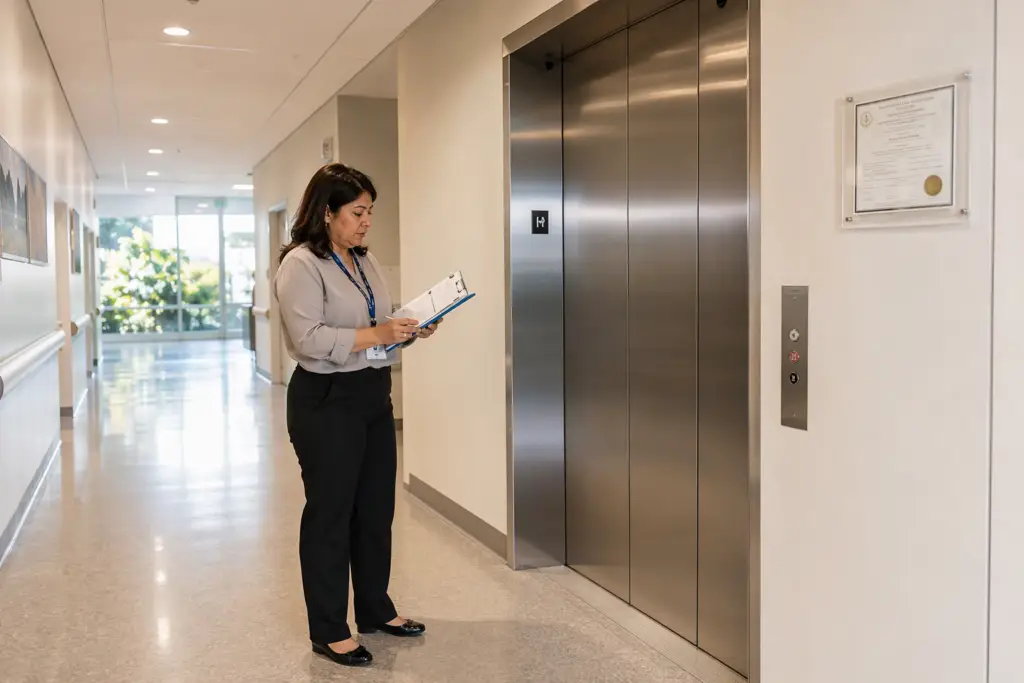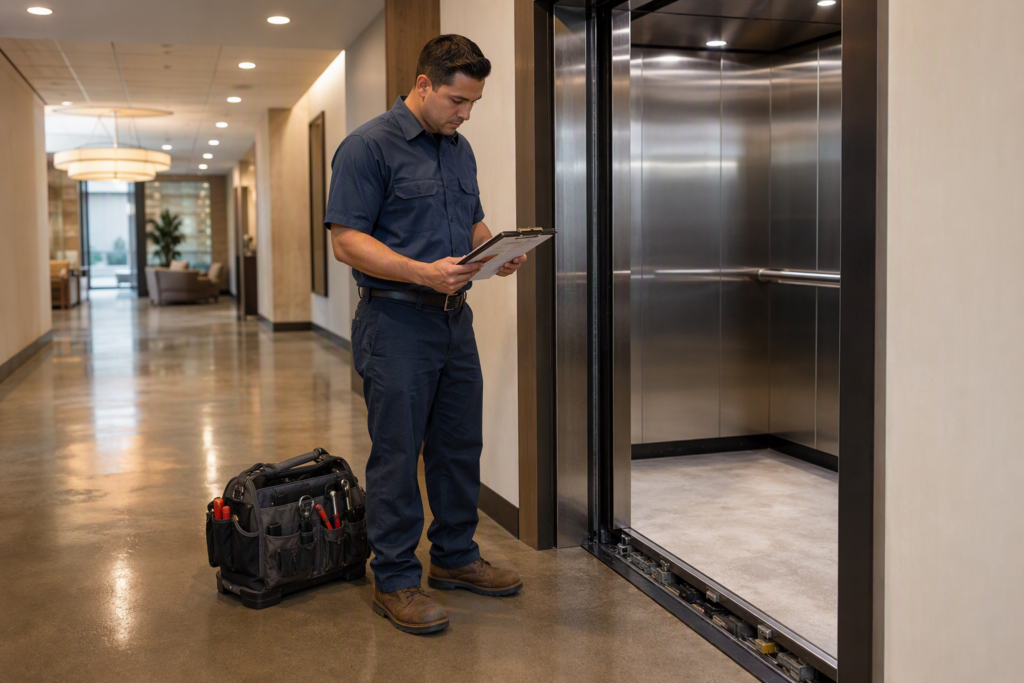
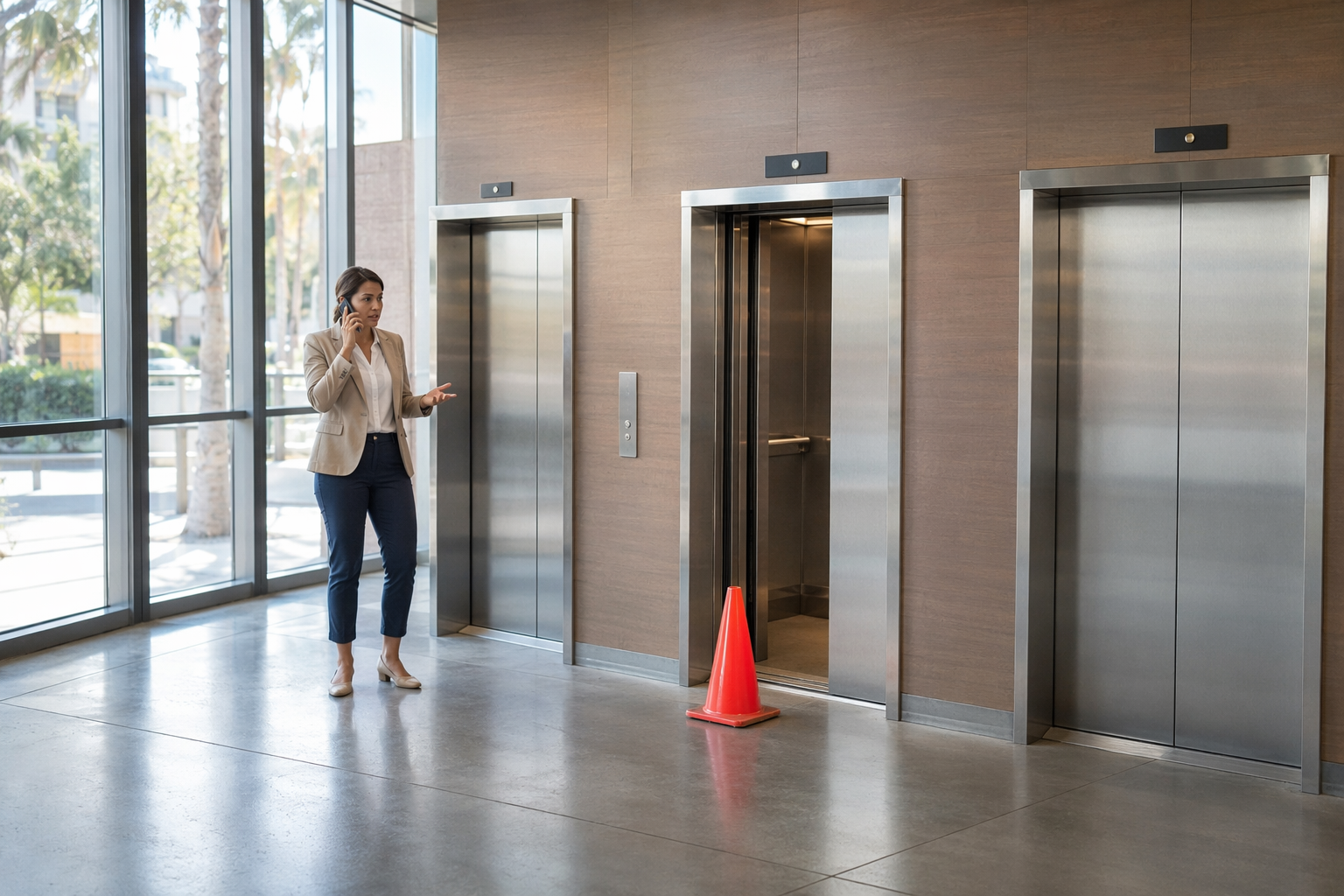
Elevator breakdowns are stressful events that demand swift, coordinated action. Whether a cab has stopped between floors, doors refuse to open, or a mechanical failure has halted service entirely, knowing exactly who to contact — and in what order — can protect passengers, reduce liability, and minimize costly downtime. This comprehensive guide answers the most important questions building owners, property managers, and facilities teams ask when facing an elevator emergency in Southern California.
Who is the right contact for an elevator breakdown emergency?
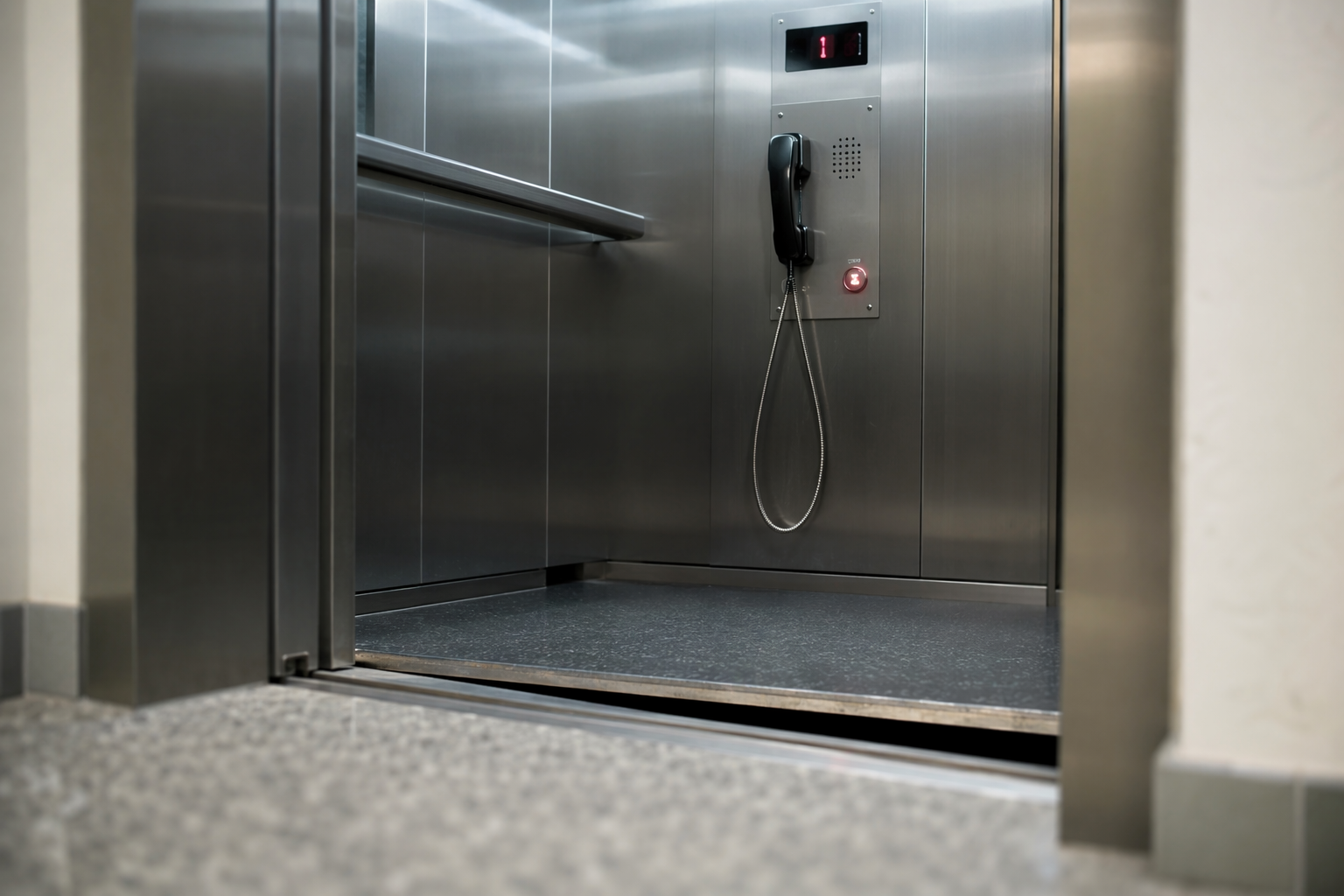
The right first contact is a licensed elevator service contractor with emergency repair authorization, and simultaneously, local emergency services (911) if any passenger is trapped inside the cab.
Building owners and property managers should maintain two contacts at all times: a licensed elevator service company for mechanical repair, and a direct line to local fire and rescue services for passenger entrapment situations. These two response tracks run in parallel, not sequentially. Calling only the elevator contractor when someone is trapped inside the cab is a critical mistake — fire departments are trained and equipped to perform safe extractions, while the contractor handles the mechanical restoration of service.
Liftech Elevator provides emergency elevator service across Signal Hill, Long Beach, Los Angeles, and Orange County, and recommends that every building post emergency contact information inside the elevator machine room and on the elevator cab itself.
What is the difference between a trapped passenger situation and a standard elevator breakdown?
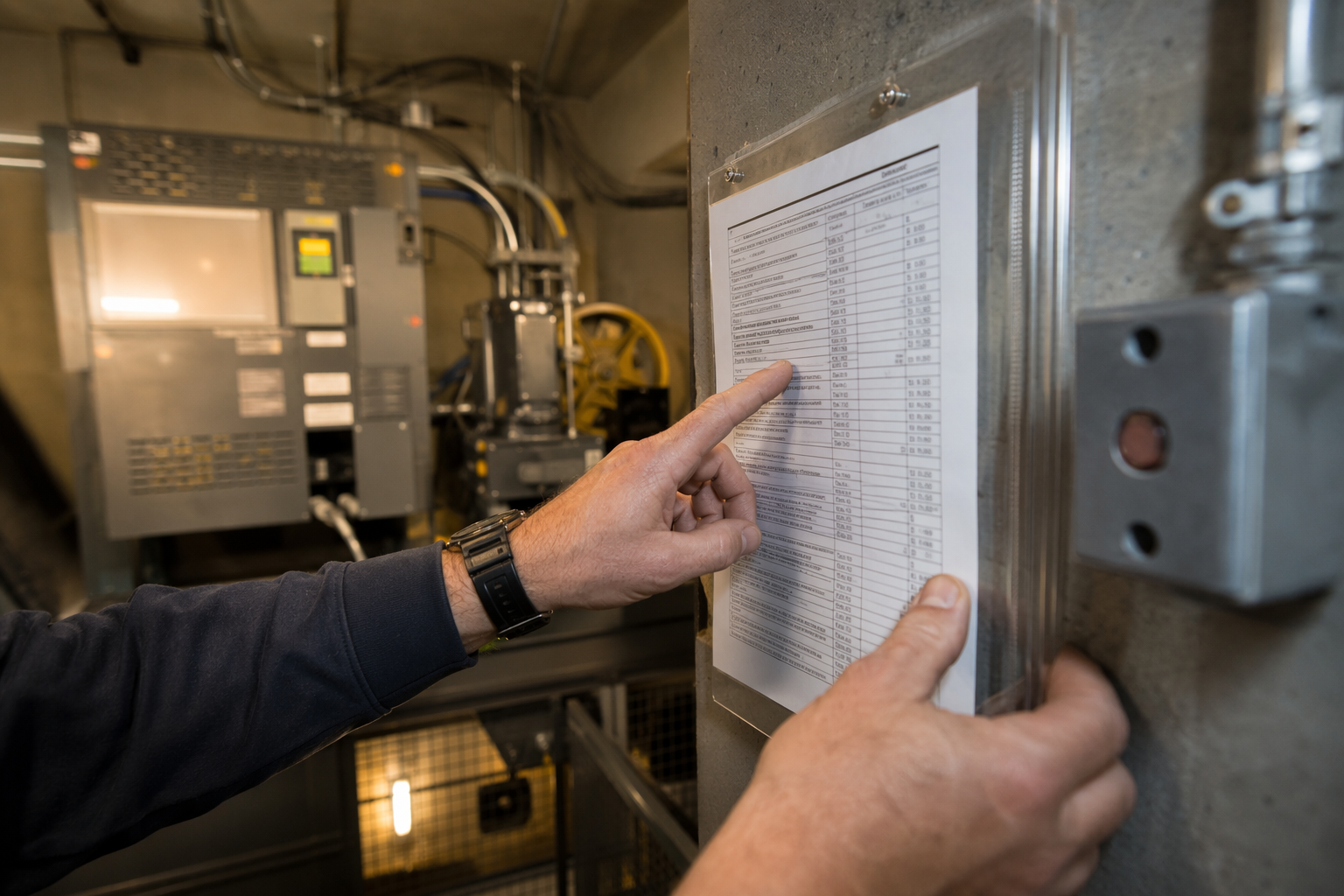
A trapped passenger situation requires an immediate 911 call in addition to contacting your elevator contractor, while a standard breakdown with no passengers inside is handled solely through your licensed service provider.
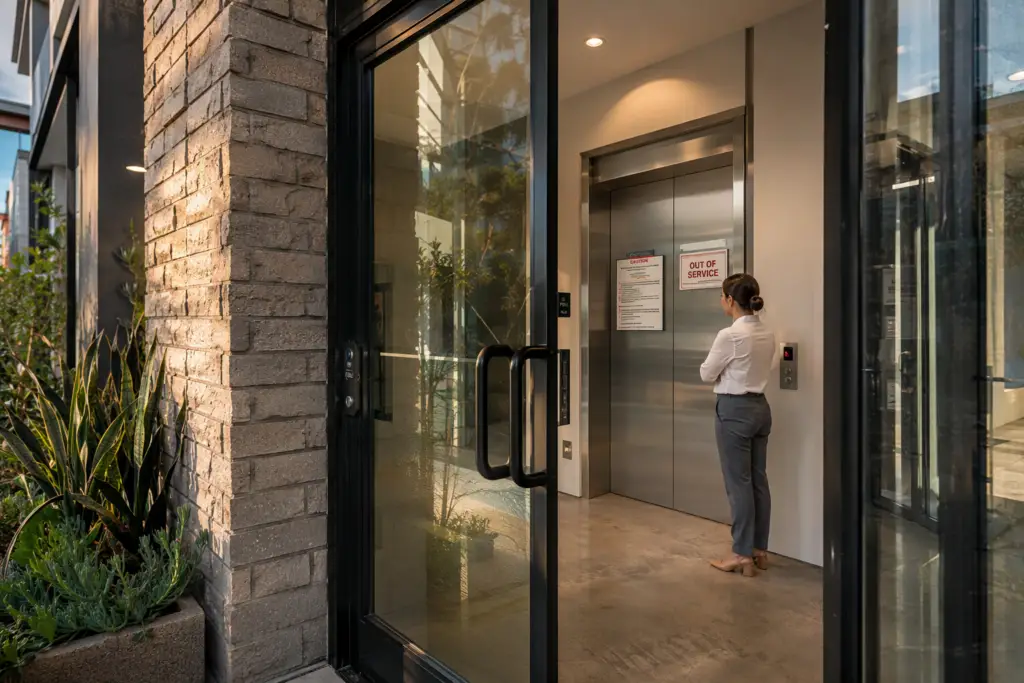
Elevator breakdowns fall into two general categories. The first involves a mechanical, electrical, or door-related failure that stops the elevator from operating, but no person is confined inside. In this case, the elevator should be taken out of service immediately, warning signs posted at every landing, and the elevator service contractor contacted for repair.
The second — and more urgent — category is a passenger entrapment. California building codes and life-safety standards treat entrapment as an emergency. Passengers must never be encouraged to attempt self-rescue by forcing doors open or climbing out of the cab, as falls from improperly leveled cabs are a recognized hazard under OSHA general industry safety standards. Fire department personnel are trained in controlled passenger removal procedures.
What steps should a property manager take immediately during an elevator breakdown?
Property managers should follow a clear, ordered protocol the moment an elevator breakdown is reported to protect passengers, comply with regulations, and document the incident properly.
- Determine if any passenger is trapped: Communicate with the cab via the elevator’s emergency phone or intercom system immediately.
- Call 911 if a passenger is trapped: Do not wait for the elevator contractor to arrive before making this call. Give dispatchers the building address and cab location.
- Reassure any trapped passenger: Instruct them calmly to remain inside the cab, step away from the doors, and avoid attempting to exit on their own.
- Contact your licensed elevator service contractor: Provide the elevator ID, the nature of the reported malfunction, and any error codes displayed on the panel.
- Take the elevator out of service: Use the machine room disconnect or building management system to prevent other passengers from attempting to use the unit.
- Post out-of-service notices at all landings: This is a legal obligation under California elevator regulations and a basic safety duty.
- Secure the machine room: Restrict access to the elevator machine room until the licensed contractor arrives to prevent unauthorized intervention.
- Document the incident: Record the time of the breakdown report, steps taken, names of personnel involved, and any communications with contractors or emergency services.
- File any required regulatory reports: California’s Division of Occupational Safety and Health (Cal/OSHA) Elevator Unit may require notification of certain incidents, especially those involving injury.
- Obtain a written service report from the contractor: Retain this for your maintenance records and insurance documentation.
What qualifications should an elevator breakdown contractor have in California?
In California, elevator contractors must be certified under the state’s elevator safety laws, and technicians performing repairs must hold appropriate certifications recognized under the California Elevator Safety Construction and Maintenance regulations administered by Cal/OSHA’s Elevator Unit.
Property managers should verify that any elevator contractor they engage holds a valid California elevator contractor certification. This is not optional — performing elevator repair work without proper state authorization is illegal and voids equipment warranties and liability protections. Work performed must also conform to the ASME A17.1 Safety Code for Elevators and Escalators, which is the foundational technical standard adopted by California as the basis for its elevator construction and maintenance regulations.
Liftech Elevator operates as a certified elevator service company in California, serving property owners and managers throughout Signal Hill, Long Beach, Los Angeles, and Orange County.
How long can a property legally leave an elevator out of service after a breakdown?
California law does not specify a single maximum duration for an elevator to remain out of service after a breakdown, but ADA obligations, lease agreements, and Cal/OSHA regulatory requirements create urgent practical and legal pressure to restore service as quickly as possible.
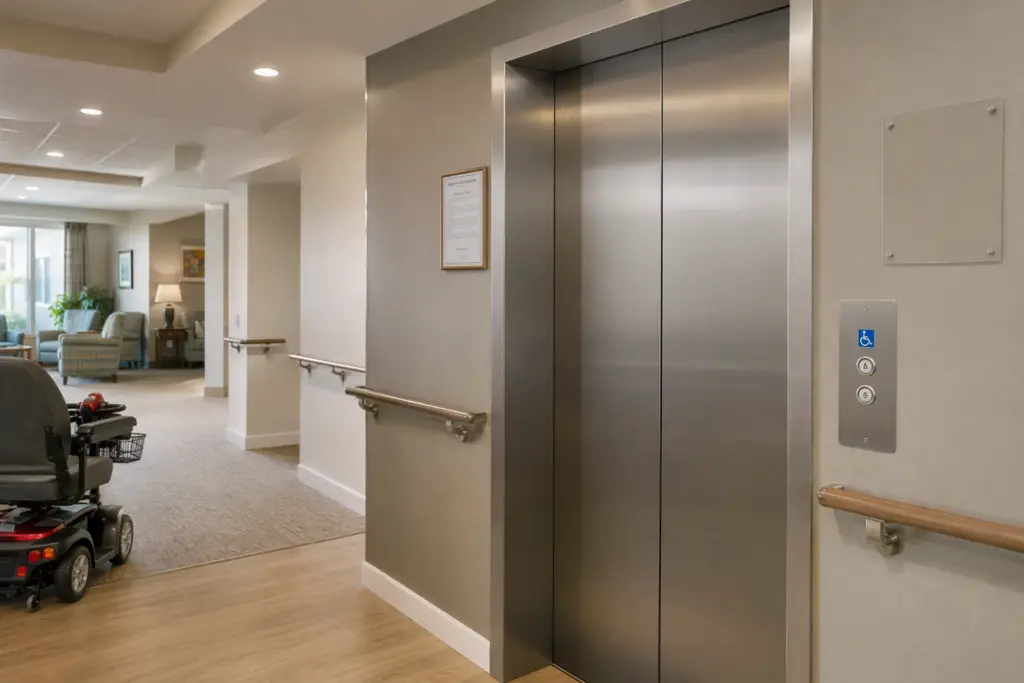
Under the Americans with Disabilities Act (ADA), building owners are required to maintain accessible routes. An elevator that provides the only accessible path to upper floors becomes an ADA compliance issue the moment it goes out of service. The ADA does allow for temporary inaccessibility during maintenance, but the guidance emphasizes that owners must restore access promptly and provide alternative accommodations where feasible. Extended outages with no corrective action can trigger complaints and enforcement proceedings.
Practically speaking, building managers should treat every breakdown as time-critical and engage a contractor immediately, rather than waiting for routine scheduling windows.
Is the building owner or the elevator maintenance company responsible when an elevator breaks down?
Responsibility for an elevator breakdown is shared, and depends on the terms of the maintenance contract, the cause of the failure, and whether required inspections and preventive maintenance were current at the time of the incident.
Building owners have a non-delegable duty of care to maintain their elevators in safe operating condition under California premises liability law. This means that even when a maintenance contract is in place, the owner retains legal responsibility for the condition of the equipment. However, if the maintenance contractor failed to perform contractually specified work that would have prevented the breakdown, the contractor may share liability.
This is why documentation is critical. Maintenance logs, inspection certificates, and service records serve as evidence of due diligence. A comprehensive maintenance agreement with a qualified contractor — reviewed and renewed regularly — is a building owner’s primary risk management tool in elevator safety.
What elevator breakdowns require mandatory reporting to California regulators?
California requires immediate notification to the Cal/OSHA Elevator Unit when an elevator incident results in serious injury, death, or certain structural failures, regardless of whether the elevator was in use at the time.
The Cal/OSHA Elevator Unit oversees elevator safety enforcement in California under the Elevator Safety Act. While routine breakdowns without injury typically do not trigger a mandatory regulatory report, incidents involving injury, entrapment resulting in physical harm, equipment failure that creates a risk of injury, or certain catastrophic mechanical failures may require notification. Building owners should consult with their legal counsel and elevator contractor to determine reporting obligations after any serious incident.
Maintaining current inspection certificates issued by a Cal/OSHA-approved certified competent authority is an ongoing obligation. An elevator operating with an expired permit is subject to enforcement action independent of whether a breakdown occurs.
What are the most common causes of sudden elevator breakdowns?
The most common causes of sudden elevator breakdowns include door system malfunctions, power supply issues, worn or failed drive components, safety device activations, and overdue preventive maintenance.
| Failure Category | Common Cause | Typical Service Response | Preventable With Maintenance? |
|---|---|---|---|
| Door System | Worn door rollers, misaligned tracks, faulty door operator | Door adjustment or component replacement | Yes — routine lubrication and adjustment |
| Drive / Motor | Failed motor, worn brake pads, drive belt or sheave wear | Component replacement, brake adjustment | Yes — periodic inspection and load testing |
| Control System | Controller board fault, software error, relay failure | Board repair or replacement, software reset | Partially — diagnostics catch early faults |
| Safety Devices | Governor trip, overspeed sensor, buffer engagement | Safety device reset and re-inspection required | Partially — devices activate by design in unsafe conditions |
| Power Supply | Building power interruption, phase loss, voltage spike | Electrical inspection, coordination with utility | Partially — surge protection helps |
| Lubrication Failure | Dry guide rails, worn buffers, unlubricated components | Full lubrication service, component inspection | Yes — scheduled lubrication program |
Door system problems are consistently among the highest-frequency failure categories across elevator types. Many breakdowns that appear sudden are, on closer inspection, the result of deferred maintenance that allowed minor wear to progress to the point of failure.
How do elevator safety codes apply during a breakdown situation?
The ASME A17.1 Safety Code for Elevators and Escalators governs how elevators must be equipped, inspected, and restored to service, and any post-breakdown repair work must conform to its requirements before the elevator is returned to operation.
ASME A17.1 requires that elevators be equipped with specific safety features designed to protect passengers during a malfunction — including emergency lighting, an emergency communication system (phone or two-way intercom), and mechanical safety devices such as governors and safeties that arrest an uncontrolled descent. After a breakdown, especially one that caused any of these safety devices to activate, the elevator must be inspected and restored by a qualified mechanic before it returns to service. California has adopted ASME A17.1 as the basis of its state elevator code, so compliance is both a technical and legal obligation.
Does ADA compliance affect how property managers respond to elevator outages?
Yes — under the ADA, building owners must take prompt corrective action when elevator outages affect accessible routes, and should communicate proactively with building occupants who rely on the elevator for accessibility.
Buildings subject to ADA Title II (government facilities) and Title III (places of public accommodation) have specific obligations around program accessibility. When an elevator is the only means of reaching an upper-floor space for a person with a mobility disability, an extended outage without alternative accommodation can constitute an ADA violation. Property managers should identify affected tenants or visitors at the outset of any outage and document efforts to restore service or provide alternatives. This documentation becomes important if an ADA complaint is subsequently filed.
What information should be ready before calling an elevator breakdown contractor?
Having key information ready before calling your elevator service contractor will accelerate dispatch and help the responding technician arrive prepared with the right tools and parts.
When placing the call, be ready to provide: the building address and specific elevator identification (unit number or cab designation); the nature of the reported malfunction (stuck doors, stopped between floors, error code displayed, unusual noise or smell); whether any passengers are currently inside the cab; the elevator type (hydraulic, traction, MRL); the approximate age and manufacturer of the unit; and whether this unit has an active maintenance contract and, if so, the contract number. Buildings served by Liftech Elevator can reference their service agreement when calling, which streamlines the dispatch process.
How does preventive maintenance reduce elevator breakdown frequency?
Preventive maintenance directly reduces breakdown frequency by identifying and correcting worn components, misalignments, and early-stage faults before they progress to failure during normal operation.
The ASME A17.1 Safety Code for Elevators and Escalators establishes minimum maintenance requirements, and California’s elevator regulations incorporate these standards. A properly executed maintenance program includes periodic lubrication, adjustment, load testing, safety device testing, and controller diagnostics. Elevators operating without a maintenance contract or on a minimal self-maintained basis are statistically more likely to experience unplanned service interruptions and are at greater regulatory risk when inspected.
Liftech Elevator provides preventive maintenance programs for commercial and residential buildings throughout Los Angeles, Long Beach, Signal Hill, and Orange County, structured to keep equipment in code-compliant operating condition year-round.
What role do local fire departments play in elevator breakdown response in California?
California fire departments are trained and equipped to perform passenger extractions from stalled elevator cabs and respond to elevator-related emergencies as part of their standard operations, in coordination with elevator service technicians.
Fire department personnel use elevator firefighters’ service keys and their training in elevator emergency operations — governed by ASME A17.1 requirements for firefighters’ emergency operation — to access machine rooms, manually lower or raise cabs to a landing, and safely remove trapped passengers. They do not perform mechanical repairs. Once passengers are safely extracted, the elevator remains out of service until a licensed elevator technician has inspected and cleared the unit. Building managers should never assume that a successful fire department extraction means the elevator is safe to return to service.
What should passengers do when trapped in a stalled elevator?
Passengers trapped in a stalled elevator should stay calm, use the elevator’s emergency communication device, and wait for trained responders — they should never attempt to force doors open or climb out of the cab unassisted.
Modern elevators are required under ASME A17.1 to be equipped with an emergency communication system that connects occupants to emergency services or a monitoring center. Passengers should activate this immediately. The cab itself provides a safe, enclosed environment — elevator cabs are engineered with multiple redundant safety systems, and the risk of the cab moving unexpectedly while passengers wait for help is low when safety devices have engaged. Attempting to pry doors open or squeeze through a partial opening risks entrapment between the cab and the hoistway structure, which can cause serious injury.
How are hydraulic elevator breakdowns different from traction elevator breakdowns?
Hydraulic and traction elevators have fundamentally different mechanical systems, so breakdowns in each type involve different failure modes, diagnostic approaches, and repair requirements.
Hydraulic elevators use a fluid-driven piston to raise and lower the cab. Common failure points include hydraulic fluid leaks, pump motor failures, valve malfunctions, and fluid contamination. A hydraulic fluid leak is also an environmental concern and may trigger reporting obligations. Traction elevators — including machine-room-less (MRL) designs — rely on a motor, drive sheave, and counterweight system. Failure points include motor and brake assembly wear, rope or belt wear, controller faults, and safety gear activation. The repair approach, required parts, and inspection protocols differ significantly between these systems, which is why specifying the elevator type when calling for emergency service is important for efficient response.
What documentation should a building maintain for elevator breakdown incidents?
Buildings should maintain a complete, organized record of every elevator breakdown including the date and time, nature of the fault, actions taken, contractor service reports, any regulatory notifications, and the outcome — this documentation is essential for compliance, insurance, and liability purposes.
California elevator regulations require that maintenance logs be kept and made available for inspection. Beyond regulatory requirements, thorough incident documentation serves multiple practical purposes: it supports insurance claims, demonstrates due diligence in the event of litigation, helps identify recurring failure patterns that may indicate a systemic equipment problem, and provides a contractual audit trail if disputes arise with a maintenance contractor. Electronic maintenance management systems are increasingly used by larger property management organizations to centralize this documentation.
How do elevator monitoring systems help with breakdown response?
Modern elevator monitoring systems use real-time diagnostic data and remote connectivity to alert service contractors to developing faults before a full breakdown occurs, and to speed response when a breakdown does happen.
Remote monitoring technology — now available on many elevator control systems — allows a service contractor to receive automated alerts when the elevator’s diagnostics register fault codes, door cycle anomalies, or performance degradation. In some cases, technicians can diagnose the nature of the fault remotely before arriving on site, allowing them to arrive with the correct parts and reduce resolution time. For buildings in high-use environments, remote monitoring is increasingly considered a standard component of a comprehensive maintenance agreement rather than a premium add-on.
What questions should property managers ask when selecting an elevator breakdown service provider?
Property managers should evaluate elevator service providers on the basis of California state certification, familiarity with the specific elevator equipment installed, service contract terms, and their documented process for emergency dispatch.
Key questions to ask include: Does the contractor hold valid California elevator contractor certification? Are their technicians trained and current on the specific manufacturer’s equipment in the building? What does the service contract cover, and what is excluded? How does the contractor handle emergency calls outside of standard business hours? What is their process for documenting and reporting repairs? Can they provide references from comparable properties in the service area? These questions establish whether a contractor is equipped to serve as a reliable long-term partner rather than simply a break-fix vendor.
Liftech Elevator serves commercial and residential properties across Signal Hill, Long Beach, Los Angeles, and Orange County and welcomes inquiries from property managers evaluating their elevator service options.
Are older elevators more prone to breakdowns, and when should modernization be considered?
Older elevators are generally more susceptible to unplanned breakdowns because aging components accumulate wear, replacement parts become harder to source, and legacy control systems lack the diagnostic capabilities of modern equipment.
As elevator systems age, the frequency and cost of repairs typically increases while parts availability decreases. At some point, a pattern of recurring breakdowns and rising repair costs signals that modernization — whether partial (controls and door systems) or full — becomes more cost-effective than continued repair of aging equipment. Code compliance is also a factor: California periodically updates its elevator safety regulations in alignment with new editions of ASME A17.1, and modernization can bring older equipment into compliance with current safety standards including updated firefighters’ emergency operation requirements and ADA-related accessibility improvements. A qualified elevator contractor can assess the current condition of aging equipment and provide a modernization evaluation.
What is the cost range for emergency elevator repair in Southern California?
Emergency elevator repair costs in Southern California vary widely depending on the nature of the fault, the type and age of the equipment, parts availability, and whether the repair is covered under an existing maintenance contract — property managers should obtain a written estimate before authorizing work.
Minor repairs such as door adjustments or basic component replacements typically cost less than major work involving motor replacement, controller overhaul, or hydraulic system repairs. Emergency call charges may apply outside standard business hours, and these vary by contractor and contract terms. Buildings with comprehensive maintenance agreements often receive preferential pricing on repairs or have certain repair categories covered under the contract, which is one of the financial arguments in favor of proactive maintenance programs over a purely reactive approach. Any estimate should be provided in writing and should specify parts, labor, and any applicable emergency service premiums.
How can building owners in Southern California reduce elevator breakdown risk proactively?
Building owners in Signal Hill, Long Beach, Los Angeles, and Orange County can significantly reduce elevator breakdown risk through a combination of scheduled preventive maintenance, regular code-compliant inspections, staff training, and timely modernization of aging systems.
The most effective risk reduction strategy combines a comprehensive maintenance contract with a certified elevator contractor, adherence to the inspection schedule required under California regulations and ASME A17.1, a clearly documented emergency response protocol posted in the building, and periodic equipment condition assessments that identify modernization needs before equipment reaches critical failure. Building staff should be trained to recognize the early warning signs of elevator trouble — including unusual noises, leveling problems, slow door operation, or intermittent error codes — and to report these promptly to the service contractor rather than waiting for a complete breakdown.
Get Expert Elevator Support in Southern California
Elevator breakdowns demand fast action from a qualified, California-certified service provider. Whether facing an emergency today or looking to prevent future breakdowns with a comprehensive maintenance program, Liftech Elevator is ready to help property owners and managers across Signal Hill, Long Beach, Los Angeles, and Orange County protect their equipment, their occupants, and their compliance standing.
Contact Liftech Elevator for a free elevator assessment: 562-609-3478