Independent Elevator Service vs. OEM: Which Is Right for Your Building?
Choosing between an independent elevator service provider and an Original Equipment Manufacturer (OEM) service contract is one of the most consequential decisions a building owner or facilities manager will make. It affects your annual operating budget, elevator uptime, regulatory compliance, and long-term capital planning. This guide breaks down every key factor — cost, response time, parts availability, compliance, and contract flexibility — so you can make a confident, informed decision in 2026.
What Is the Difference Between Independent Elevator Service and OEM Service?
OEM service (Original Equipment Manufacturer service) means hiring the company that manufactured your elevator — Otis, KONE, Schindler, ThyssenKrupp/TK Elevator, or Mitsubishi — to also maintain it. Independent elevator service companies, like Liftech Elevator, are third-party, certified technicians who are trained to service equipment across all major brands and manufacturers.
The core distinction comes down to three things:
- Parts sourcing: OEMs typically use proprietary parts; independents use OEM-equivalent or aftermarket parts that meet ASME standards.
- Contract flexibility: OEM contracts are often multi-year, high-penalty agreements; independents typically offer month-to-month or annual terms.
- Pricing leverage: Because OEMs control proprietary diagnostics and parts, they hold pricing power. Independents compete on quality and value.
How Do Costs Compare Between Independent and OEM Elevator Service?

Cost is the most immediate differentiator. According to industry data from the National Elevator Industry Inc. (NEII) and benchmarks compiled through Liftech Elevator’s internal service records, the average annual maintenance contract pricing breaks down as follows:
| Cost Factor | OEM Service | Independent Service (e.g., Liftech Elevator) |
|---|---|---|
| Annual maintenance contract (single elevator) | $4,500 – $8,000+ | $2,800 – $5,500 |
| Hourly labor rate (callback) | $180 – $260/hr | $120 – $175/hr |
| Parts markup over cost | 40–80% | 15–35% |
| Emergency after-hours response fee | $350 – $600 | $200 – $400 |
| Contract exit penalty (early termination) | Often 3–6 months of remaining contract value | Minimal or none |
| Average 5-year total cost of ownership (1 elevator) | $28,000 – $45,000 | $16,000 – $28,000 |
(Source: Liftech Elevator internal service data, 2025–2026; NAEC member benchmarking surveys)
On a multi-elevator building — say, a 10-story commercial property with 4 elevators — switching from OEM to a qualified independent provider like Liftech Elevator can realistically save $30,000 – $70,000 over five years without compromising code compliance or safety.
Is Independent Elevator Service as Safe and Compliant as OEM?
Yes — when performed by licensed, IUEC-certified technicians operating under ASME A17.1 Safety Code for Elevators and Escalators, independent service is held to the exact same legal and technical standards as OEM service. Compliance is defined by code, not by the company that built the equipment.
Key compliance facts for 2026:
- All elevator maintenance — OEM or independent — must comply with ASME A17.1/CSA B44, the nationally adopted safety standard for elevators and escalators.
- Accessibility requirements are governed by the Americans with Disabilities Act (ADA), which applies regardless of who performs service.
- Technician safety and confined space protocols fall under OSHA standards — specifically 29 CFR 1910.146 for permit-required confined spaces.
- Many states require elevator mechanics to hold a valid state license independently of their employer — meaning a Liftech Elevator technician carries the same state credentials as an OEM technician.
OEM myth debunked: Some OEM sales representatives claim that using a non-OEM service provider voids the elevator’s warranty or creates liability. In most cases, this is misleading. Warranty voiding typically only applies during the initial manufacturer warranty period (usually 1–2 years post-installation), not for ongoing maintenance contracts. Always review your original purchase contract with legal counsel.
What Are the Pros and Cons of OEM Elevator Service?
| OEM Service — Pros | OEM Service — Cons |
|---|---|
| Direct access to proprietary diagnostic software and tools | Significantly higher annual contract costs (20–40% above market) |
| Factory-trained technicians on specific equipment models | Long-term contracts with steep early termination fees |
| Single point of contact for warranty, parts, and labor | Limited competitive pressure — pricing leverage is held by the OEM |
| Preferred during active manufacturer warranty period | Slower response times in regions without a local OEM service hub |
| Manufacturer-backed liability documentation | Parts markup is substantially higher than aftermarket equivalents |
What Are the Pros and Cons of Independent Elevator Service?
| Independent Service (e.g., Liftech Elevator) — Pros | Independent Service — Cons |
|---|---|
| 20–40% lower annual maintenance costs | May not have proprietary OEM diagnostic software for newer units |
| Multi-brand expertise across Otis, KONE, Schindler, TK, and more | Warranty coverage may be limited during original equipment warranty window |
| Flexible contract terms — month-to-month options available | Varies in quality — vetting credentials and references is essential |
| Transparent parts pricing with competitive sourcing | Smaller companies may have limited 24/7 coverage capacity |
| Faster local response times in markets where OEM lacks density | Some proprietary parts must still be sourced through OEM channels |
| Stronger relationship-based service model and accountability |
How Quickly Do Independent vs. OEM Technicians Respond to Breakdowns?
Response time is one of the most misunderstood metrics in this comparison. Many building managers assume OEMs are faster because of their size — but regional coverage tells a different story.
| Response Metric | OEM (National Average) | Liftech Elevator (Local Average) |
|---|---|---|
| Standard callback response time | 4 – 8 hours | 1 – 3 hours |
| After-hours emergency response | 2 – 6 hours | Under 2 hours |
| Entrapment rescue response | 45 min – 3 hours | 30 – 90 minutes |
| Scheduled maintenance visit lead time | 5 – 15 business days | 2 – 7 business days |
(Source: Liftech Elevator internal service data and customer satisfaction surveys, 2025–2026)
Local independent providers have a structural advantage: they are not managing a national dispatch queue. When you call Liftech Elevator, you reach the team that services your building — not a national call center routing you to the next available regional tech hundreds of miles away.
When Should You Choose OEM Elevator Service?
There are specific scenarios where OEM service is the stronger choice:
- During the manufacturer warranty period — typically the first 12–24 months post-installation. Using an independent provider during this window may complicate warranty claims.
- Highly proprietary or newly released equipment — some newer “smart elevator” platforms (IoT-connected, destination dispatch systems) use closed diagnostic ecosystems that only OEM technicians can access as of 2026.
- Litigation or insurance requirements — a small number of insurers or lease agreements specifically require OEM service documentation. Always verify your policy language.
How Do You Vet an Independent Elevator Service Company?
Not all independent providers are equal. Use this step-by-step protocol to evaluate any independent elevator service company before signing a contract:
- Verify state licensure. Every technician performing elevator maintenance must hold a valid, current state elevator mechanic license. Request license numbers and verify them through your state’s department of labor or building safety office.
- Confirm IUEC membership or equivalent certification. International Union of Elevator Constructors (IUEC) membership indicates rigorous apprenticeship and continuing education standards.
- Review ASME A17.1 compliance documentation. Ask for a sample maintenance checklist and confirm it maps to ASME A17.1 requirements.
- Request proof of insurance. Look for a minimum of $2 million general liability and workers’ compensation coverage. Get certificates of insurance naming your building as an additional insured.
- Ask for verifiable references. Request at least three commercial property references in your market with similar building and elevator types.
- Review the service contract in detail. Confirm what is included vs. excluded, what parts coverage looks like, response time guarantees, and exit terms.
- Confirm parts sourcing and traceability. Ask whether replacement parts carry documentation confirming they meet manufacturer or ASME-equivalent specifications.
- Assess their reporting and communication systems. Do they provide digital maintenance logs? Inspection reminders? Compliance calendars? A professional independent provider should have systematic documentation processes.
What Does a Transition from OEM to Independent Service Look Like?
Transitioning from an OEM contract to an independent provider like Liftech Elevator is a well-established process that typically takes 30–60 days. Here is what to expect:
- Review your current OEM contract for termination clauses, notice periods (typically 30–90 days), and any equipment or data access provisions.
- Request your maintenance records and equipment documentation from your current OEM provider. You are legally entitled to your building’s elevator maintenance history.
- Schedule a free assessment with Liftech Elevator. Our certified technicians conduct a full equipment evaluation, identifying deferred maintenance, compliance gaps, and condition risks.
- Receive a custom service proposal outlining contract terms, response time commitments, parts coverage, and pricing — typically 15–30% below your current OEM rate.
- Execute contract transition with a start date aligned to your OEM contract expiration or termination window.
- Complete a comprehensive baseline maintenance visit within the first 30 days of service to document current equipment condition and establish your digital maintenance file.
Do Independent Elevator Companies Have Access to OEM Parts?
Yes — in most cases. Independent elevator service companies like Liftech Elevator source parts through multiple channels:
- OEM-direct parts: Available through authorized distributor networks for most major brands.
- ASME-compliant aftermarket parts: Manufactured to the same specifications as OEM parts but sourced competitively — typically at 30–50% lower cost to the customer.
- Rebuilt/reconditioned components: For older equipment where new OEM parts are discontinued, certified rebuilt components extend elevator life at significantly lower cost.
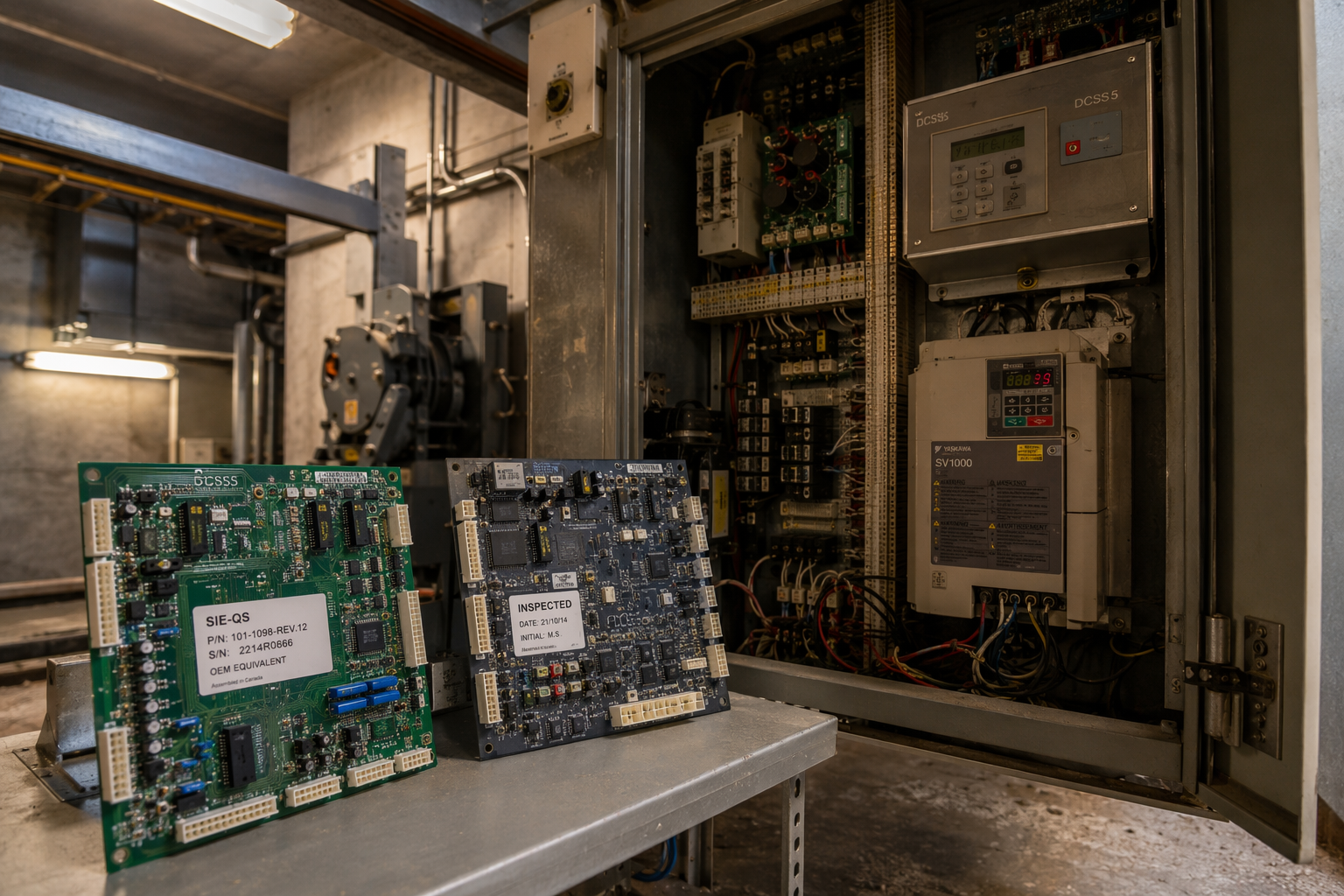
The key exception: some newer proprietary control boards and software-dependent components for equipment manufactured after 2020 may require OEM sourcing. A reputable independent provider will disclose this upfront and help you plan accordingly.
What Is the ROI of Switching to an Independent Elevator Service Provider?
| ROI Factor | Estimated Annual Benefit (per elevator) |
|---|---|
| Direct maintenance cost savings vs. OEM | $1,200 – $3,500 |
| Parts cost reduction (aftermarket vs. OEM markup) | $400 – $1,500 |
| Reduced downtime from faster local response | $500 – $2,000 (avoided lost productivity/tenant impact) |
| Avoided contract exit penalties (flexibility value) | $1,000 – $4,000 (one-time, at transition) |
| Total estimated annual value per elevator | $3,100 – $11,000 |
(Source: Liftech Elevator internal service data and NAEC member cost benchmarks, 2026)
Why Do Building Managers Choose Liftech Elevator Over OEM Providers?
Liftech Elevator is a fully certified, IUEC-affiliated independent elevator service company serving commercial, residential, and institutional property owners. Here is what distinguishes our approach:
- Multi-brand expertise: Our technicians are certified to service Otis, KONE, Schindler, TK Elevator, Mitsubishi, Dover, and other major platforms.
- Transparent pricing: No hidden fees, no proprietary parts inflation, no punitive exit clauses.
- Local accountability: You work with the same team on every visit — not a rotating roster of national dispatch technicians.
- Full ASME A17.1 compliance management: We handle inspection scheduling, code compliance documentation, and violation correction — so you never face regulatory surprises.
- ADA accessibility support: We advise on ADA compliance requirements as they apply to your vertical transportation equipment.
- Digital maintenance records: Every service visit is logged and accessible, supporting your insurance, inspection, and property transaction documentation needs.
Summary: Independent vs. OEM — Which Should You Choose?
| Decision Factor | Choose OEM If… | Choose Independent (Liftech Elevator) If… |
|---|---|---|
| Equipment age | Under 2 years old (active warranty) | 2+ years old, out of warranty |
| Budget priority | Cost is secondary to single-vendor simplicity | Reducing OpEx is a primary goal |
| Contract flexibility | Long-term commitments are acceptable | Flexibility and exit options matter |
| Response time needs | OEM has a local service hub nearby | Fastest local response is critical |
| Multi-brand portfolio | Single elevator brand in the building | Multiple brands/equipment types present |
| Compliance complexity | Low; straightforward code environment | Multiple jurisdictions or complex compliance requirements |
For the vast majority of commercial building owners managing elevators that are 2 or more years post-installation, a qualified independent provider like Liftech Elevator delivers equal safety, superior responsiveness, and substantially lower cost compared to OEM service contracts.
Ready to Cut Your Elevator Service Costs Without Cutting Corners?
Contact Liftech Elevator for a free elevator assessment. Our IUEC-certified technicians will evaluate your current equipment condition, contract value, and compliance status — at no cost or obligation.
📞 Call Us Today: 562-609-3478
We service all major elevator brands and provide full ASME A17.1 and ADA compliance support.
Need elevator service you can rely on? Liftech Elevator is ready to help.