Elevator Code Update Requirements: A Complete Compliance Guide
Building owners, facility managers, and property developers navigating elevator compliance face a complex web of federal standards, state adoptions, and local amendments. Understanding exactly which updates trigger mandatory retrofits — and which inspection cycles apply — is essential to avoiding shutdowns, fines, and liability. This guide breaks down the full scope of elevator code update requirements, from foundational standards to emerging 2025–2026 trends.
What Governing Standards Define Elevator Code Requirements?
The foundational document for elevator safety in the United States is the ASME A17.1 Safety Code for Elevators and Escalators. Published and maintained by the American Society of Mechanical Engineers, this code establishes minimum safety requirements for the design, construction, operation, inspection, testing, maintenance, alteration, and repair of elevators and escalators.
ASME A17.1 is updated on a regular publication cycle, with new editions incorporating revised safety requirements, updated technology provisions, and clarified compliance pathways. Separately, ASME A17.3 — the Safety Code for Existing Elevators and Escalators — addresses retroactive requirements specifically for equipment already in service, making it the code most directly relevant to building owners managing aging vertical transportation systems.
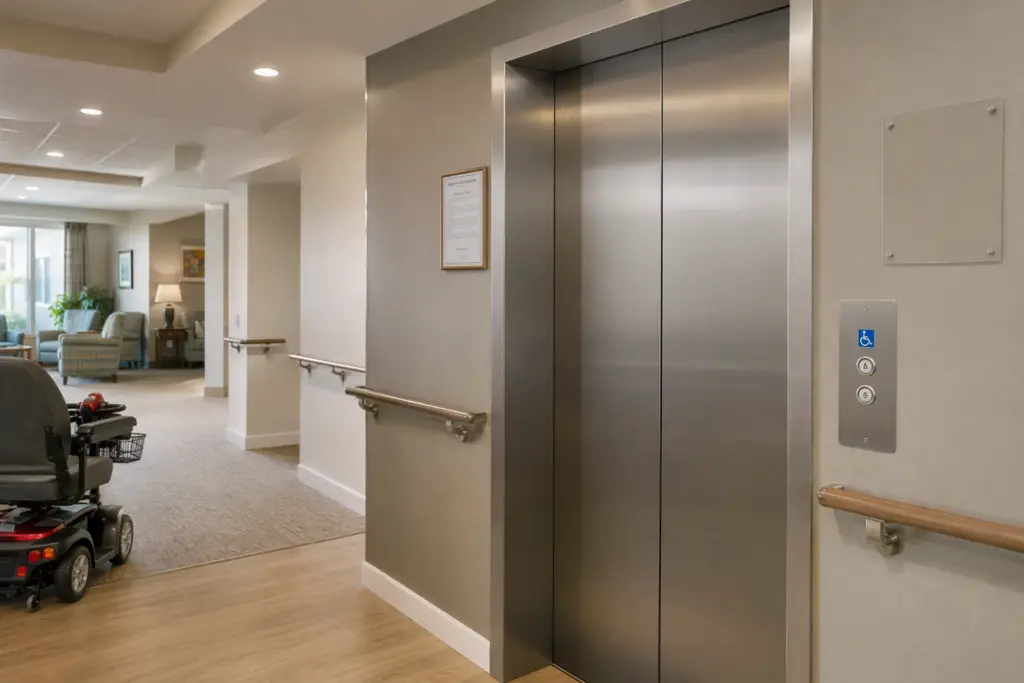
At the federal level, the Americans with Disabilities Act (ADA) imposes accessibility requirements that intersect with elevator code compliance, particularly regarding cab dimensions, door timing, control height, and tactile signage. OSHA standards further govern worker safety during elevator construction, maintenance, and repair activities.
Crucially, the United States operates under a decentralized enforcement model. There is no single federal elevator inspection mandate — each state, and often each municipality, adopts its own version of the ASME codes (sometimes with amendments), sets its own inspection frequency, and designates its own authority having jurisdiction (AHJ). This means a building in one state may face different retroactive upgrade obligations than an identical building across a state line.
What Triggers a Mandatory Elevator Code Update?

Not every building with an older elevator must immediately bring it into compliance with the latest ASME edition. Code update requirements are typically triggered by one or more of the following circumstances:
- Alteration or modernization work: Under ASME A17.1 and A17.3, when a building owner initiates an alteration — replacing the controller, upgrading the drive system, changing the cab interior, or modifying safety devices — this typically triggers a requirement to bring the altered components and related systems into compliance with the current adopted code edition.
- Change of use or occupancy: Converting a building from one use type to another (e.g., industrial to residential) can require a full elevator compliance review.
- Periodic inspection findings: When annual or periodic inspections identify safety deficiencies, the AHJ may issue correction orders that require code-compliant upgrades before the elevator can be returned to service.
- Mandatory retrofit programs: Some jurisdictions — notably New York City — have enacted their own phased mandatory upgrade programs independent of ASME adoption cycles, requiring specific safety features such as door restrictors, safety edges, or pit lighting on a scheduled timeline.
- Insurance or financing requirements: Lenders and insurers may independently require demonstrated code compliance as a condition of coverage or loan approval.
What Are the Key Safety Devices Commonly Required Under Code Updates?
When elevator code updates apply — whether through alteration triggers or retroactive mandates — the following safety systems are among those most commonly addressed:
- Door restrictors and door reopening devices: Preventing elevator doors from opening between floors or in the absence of a car is a core safety requirement under current ASME standards.
- Governor and safety systems: Overspeed governors and car safeties must meet current performance and testing standards.
- Pit lighting and stop switches: Adequate illumination and accessible emergency stops in the pit are required for maintenance worker safety, aligning with both ASME and OSHA requirements.
- Emergency lighting and communication: In-cab emergency lighting and a two-way communication system capable of reaching rescue services are standard requirements under current codes.
- Seismic provisions: In seismically active regions, ASME A17.1 contains provisions requiring specific counterweight retaining devices and seismic switches — these are frequently triggered during modernizations in qualifying zones.
- Firefighters’ emergency operation: Phase I and Phase II firefighters’ service must conform to current ASME requirements, ensuring elevators can be safely used or recalled during a fire event.
- Accessibility features under the ADA: The Americans with Disabilities Act requires that elevators in facilities covered by the ADA meet accessibility standards for door width, cab size, control panel height, audible signals, and Braille signage.
How Does the Inspection and Testing Cycle Work?
Under ASME A17.1, elevators are subject to both periodic inspections and periodic tests, which are distinct obligations:
- Periodic Inspection: A qualified elevator inspector examines the installation to verify it is in safe operating condition and conforms to the applicable code. The frequency is defined by the AHJ and often follows ASME A17.1 Table N1.2, which recommends inspection intervals based on elevator type and use.
- Periodic Test — Category 1: A no-load safety test performed annually on most traction elevators, verifying that safety devices such as safeties, buffers, and brakes function correctly.
- Periodic Test — Category 5: A full-load, full-speed safety test performed on a five-year cycle for traction elevators, requiring the car to be loaded and the safety devices to be physically tripped under operating conditions. This is the most demanding and expensive recurring compliance obligation for most elevator owners.
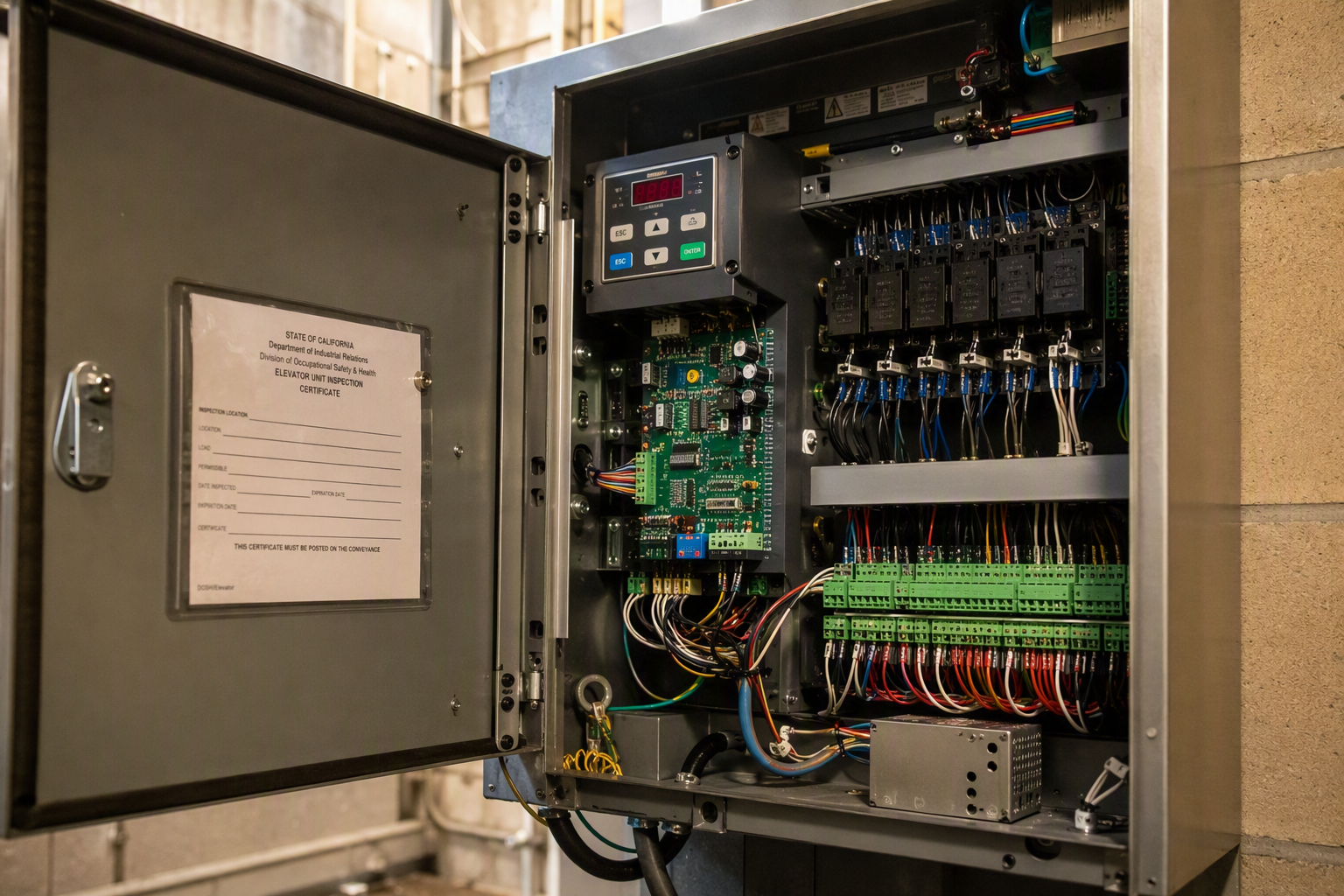
- Witnessing and documentation: Tests must typically be witnessed by the AHJ or an approved third-party inspector, and results must be documented and retained. Certificates of compliance are issued upon successful completion.
- Correction of deficiencies: Any deficiencies identified during inspection or testing must be corrected within the timeframe specified by the AHJ — failure to comply can result in an order to cease operation.
What Does an Elevator Modernization or Code Compliance Project Typically Involve?
A code-driven elevator modernization is not a single task — it is a coordinated project that may span weeks or months depending on the scope of work and equipment availability. Typical phases include:
- Compliance audit: A qualified elevator contractor or consultant reviews the existing installation against the currently adopted code edition in the jurisdiction to identify all gaps.
- Scope of work development: Based on the audit, a detailed scope is developed identifying which components require repair, replacement, or new installation.
- Permitting: Most jurisdictions require a permit before alteration work begins. The contractor submits drawings and specifications to the AHJ for review and approval.
- Equipment procurement: Controllers, drives, safety devices, and cab components are ordered. Lead times for certain components can affect project timelines, particularly for older or custom equipment.
- Installation and alteration work: The physical work is performed by licensed elevator mechanics under the supervision of a licensed elevator contractor.
- Inspection and testing: Upon completion of work, the AHJ or approved inspection agency conducts the required inspections and witnesses the necessary tests.
- Certificate issuance: Upon passing inspection, the AHJ issues a new certificate of operation, which must typically be posted in or near the elevator cab.
What Factors Drive the Cost of Elevator Code Compliance Work?
Because cost figures vary significantly by region, equipment type, and scope, no single number applies universally. The factors that most directly influence what a compliance or modernization project will cost include:
- Age and condition of existing equipment: Older hydraulic or traction systems may require more extensive component replacement to meet current standards than more recently installed equipment.
- Jurisdiction-specific requirements: Local amendments to ASME codes — or independently enacted retroactive requirements — can substantially expand the scope of required work beyond what the base standard demands.
- Controller and drive replacement: Replacing the main controller and drive system is typically the largest cost driver in a traction elevator modernization, and is often required when the existing equipment is obsolete or unsupported.
- Accessibility upgrades: Bringing a cab into full ADA compliance may require cab expansion, new fixtures, and revised control panels.
- Number of stops and elevator type: A low-rise hydraulic elevator with two stops has materially different compliance costs than a high-rise traction elevator serving twenty floors.
- Building downtime and logistics: In multi-elevator buildings, phased work that keeps at least one cab in service adds coordination complexity; in single-elevator buildings, temporary vertical transportation arrangements may be needed.
How Do ADA Requirements Interact With Elevator Code Updates?
The ADA establishes a parallel and sometimes overlapping layer of compliance obligations. Under ADA Title III (places of public accommodation) and Title II (state and local government facilities), elevators in covered buildings must meet the ADA Standards for Accessible Design.
Key elevator-related accessibility requirements under the ADA include minimum cab dimensions, door clear opening widths, maximum door closing times, control button specifications, floor designation signage in raised characters and Braille, and audible floor indicators. When a building undergoes alterations that affect usability of the elevator, the ADA may require path-of-travel upgrades — including elevator accessibility improvements — to the extent technically feasible and not disproportionately costly.
Importantly, the ADA does not exempt older buildings entirely. The obligation to remove barriers in existing facilities — to the extent readily achievable — is an ongoing one, not a one-time compliance event.
What Are the 2025–2026 Trends Shaping Elevator Code Compliance?
The elevator compliance landscape is evolving in several notable directions heading into 2026:
- Increased adoption of newer ASME editions: Jurisdictions that have historically lagged in adopting current ASME A17.1 editions are progressively moving to more recent versions, which contain expanded provisions for machine-room-less (MRL) elevators, enhanced safety circuit requirements, and updated seismic provisions.
- Remote monitoring and predictive maintenance provisions: Emerging code discussions and industry practice are increasingly addressing connected elevator systems — remote monitoring, predictive diagnostics, and digital inspection records. While formal code provisions are still developing, AHJs in some jurisdictions are beginning to accept or require digital documentation of inspection and test results.
- Energy efficiency requirements: Some state and local governments are introducing or expanding energy benchmarking and efficiency requirements for building systems including elevators, particularly regarding standby power consumption, regenerative drives, and LED cab lighting.
- Accessibility enforcement focus: Increased regulatory and legal attention to ADA elevator compliance, particularly in multi-family housing and transit facilities, is driving more proactive accessibility audits.
- Workforce and supply chain considerations: Demand for licensed elevator mechanics and lead times for certain components remain factors that influence project scheduling for compliance work, a dynamic that building owners are planning around more carefully than in previous years.
How Do You Find Out Which Code Edition Applies to Your Elevator?
Determining the applicable code edition requires contacting the AHJ directly — typically the state or local elevator safety division, labor department, or building department. The AHJ will confirm:
- Which edition of ASME A17.1 and/or A17.3 has been adopted in the jurisdiction
- Whether any local amendments or independently enacted requirements apply
- The current inspection and testing schedule for the specific elevator type
- Whether any outstanding compliance orders or correction notices are on file for the installation
A qualified elevator contractor familiar with local requirements can assist in interpreting AHJ guidance and translating code language into specific scope-of-work items.
What Happens If an Elevator Fails to Meet Code Requirements?
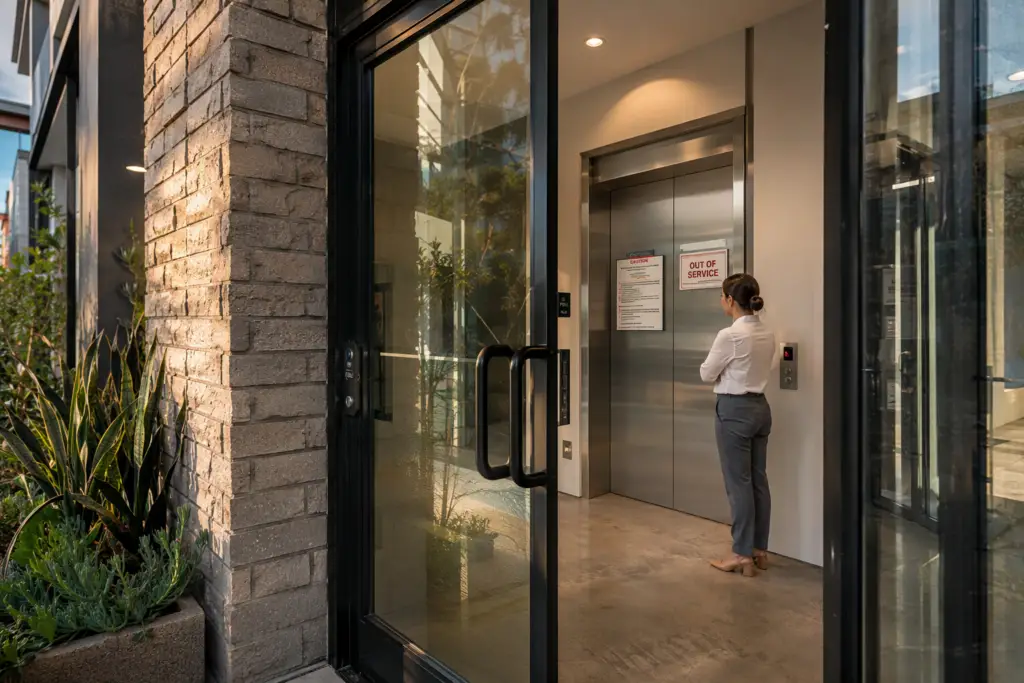
Non-compliance with elevator code requirements carries significant consequences. When an AHJ inspection identifies safety deficiencies or finds that required tests have not been performed, the inspector may issue an order to correct deficiencies within a specified timeframe, tag the elevator out of service until corrections are made, or refer the matter to a code enforcement authority for administrative or legal action. Operating an elevator under a shutdown order can expose building owners to substantial liability in the event of an injury.
Beyond regulatory enforcement, insurance carriers may deny claims or refuse to renew policies for properties with documented elevator code violations. In commercial real estate transactions, elevator compliance status is routinely reviewed during due diligence, and outstanding violations can affect property valuation or transaction timelines.
How Should Building Owners Proactively Manage Elevator Code Compliance?
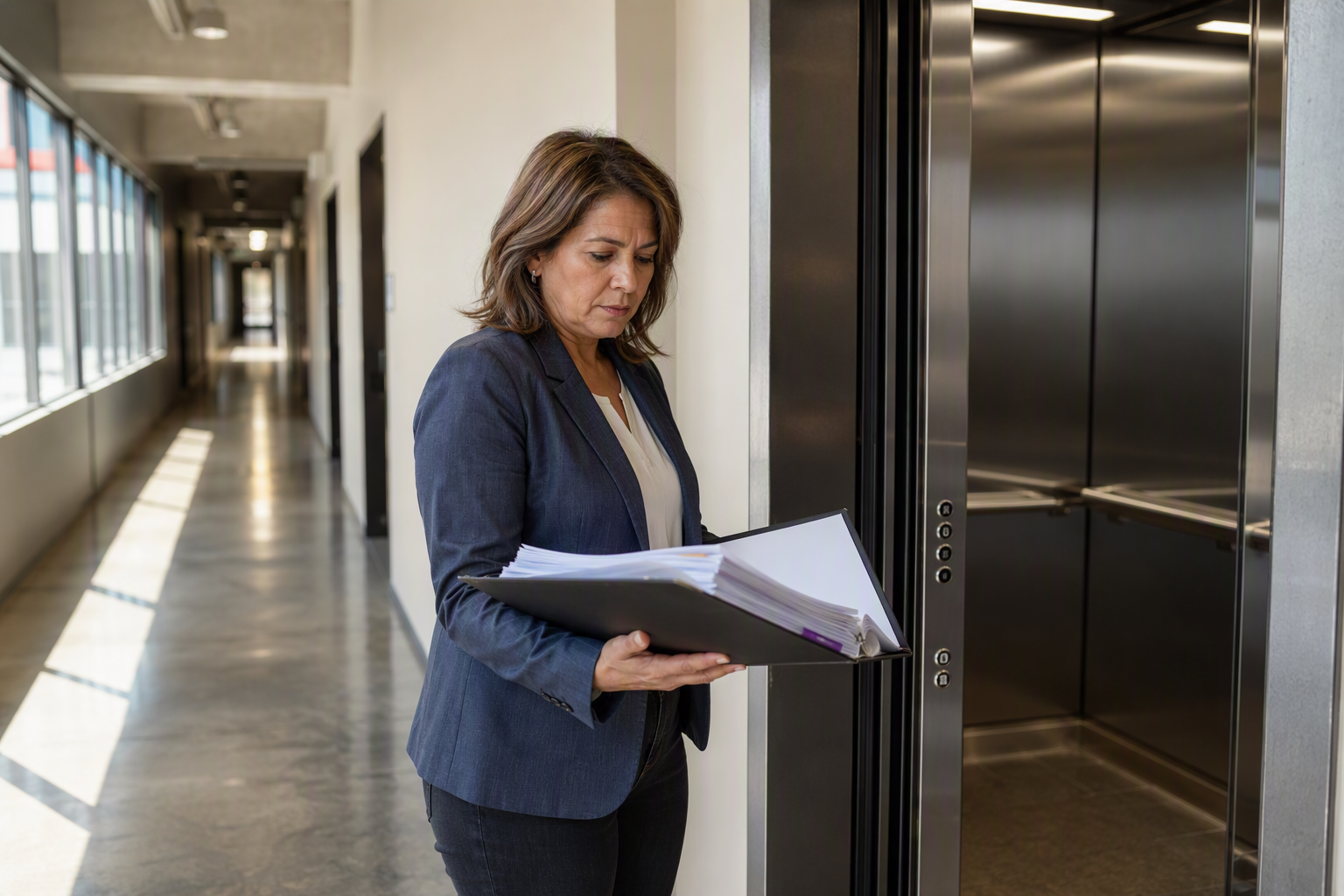
- Maintain complete records: Keep all inspection certificates, test reports, maintenance logs, and permits organized and accessible. Many AHJs require these to be produced on demand.
- Schedule inspections before they expire: Do not wait for a notice of violation — track inspection and test due dates and engage a qualified elevator contractor or inspection agency in advance.
- Conduct a proactive compliance audit before planning any alteration: Before initiating any modernization or repair work, have a qualified contractor assess which code upgrade requirements will be triggered by the planned scope.
- Monitor jurisdiction-specific regulatory changes: AHJs occasionally adopt new code editions or enact local amendments. Building owners should periodically verify whether their current compliance status remains current.
- Engage a licensed elevator contractor for all alteration and repair work: Performing work without the required permits or using unlicensed personnel can void inspection certificates and create liability exposure.
- Budget for Category 5 testing on a five-year cycle: This recurring obligation requires advance planning for equipment availability, inspection scheduling, and potential building logistics during the test.
What Role Does OSHA Play in Elevator Code Compliance?
OSHA standards are primarily relevant to the safety of workers who perform elevator construction, maintenance, inspection, and repair rather than to the elevator equipment itself. OSHA’s construction and general industry standards require employers to ensure safe working conditions in elevator pits, machine rooms, and hoistways — including requirements for fall protection, lockout/tagout procedures, adequate lighting, and safe access. Elevator contractors are responsible for OSHA compliance for their employees, while building owners maintain obligations for the physical environment in which that work occurs.
How Does Liftech Elevator Support Code Compliance?
Liftech Elevator provides comprehensive elevator compliance services designed to help building owners and facility managers navigate the full scope of code update requirements. The Liftech team works with the current editions of ASME A17.1 and A17.3, interprets jurisdiction-specific AHJ requirements, and develops detailed compliance assessments that identify exactly what is required — and what is not — before any work begins. By approaching compliance systematically and transparently, Liftech Elevator helps clients avoid unnecessary scope creep while ensuring that all safety-critical requirements are addressed completely.
Whether a building requires a focused single-component upgrade, a phased modernization plan, preparation for a Category 5 test, or an ADA accessibility review, Liftech Elevator’s data-driven approach means recommendations are grounded in applicable code requirements rather than unnecessary upselling.
Quick Reference: Elevator Code Update Requirements Q&A
What is the primary code governing elevator safety requirements in the US?
The ASME A17.1 Safety Code for Elevators and Escalators is the primary model code. ASME A17.3 addresses retroactive requirements for existing installations. States and municipalities adopt these codes — sometimes with local amendments — and designate an authority having jurisdiction (AHJ) to enforce them.
Does every old elevator need to be brought up to the current code edition?
Not automatically. ASME A17.3 governs existing elevators and generally requires upgrades when specific alterations are made or when the AHJ identifies safety deficiencies. Some jurisdictions also enact independent mandatory retrofit programs for specific safety features on a phased timeline regardless of alteration status.
How often must elevators be inspected?
Inspection frequency is set by the AHJ and typically follows guidance in ASME A17.1. Most jurisdictions require annual periodic inspections. Category 1 safety tests are typically annual; Category 5 full-load safety tests are generally required on a five-year cycle for traction elevators.
What triggers a code upgrade requirement during a modernization project?
Under ASME A17.1 and A17.3, initiating an alteration to the elevator system — replacing the controller, upgrading the drive, modifying safety devices, or changing cab components — typically triggers a requirement to bring the altered systems and related components into compliance with the currently adopted code edition in the jurisdiction.
Are ADA elevator requirements the same as ASME requirements?
No. The ADA establishes separate accessibility requirements focused on usability by people with disabilities — covering cab dimensions, door timing, control panel height, and signage. ASME codes focus on mechanical and operational safety. Both may apply simultaneously, and compliance with one does not guarantee compliance with the other.
What is a Category 5 elevator test?
A Category 5 test, defined in ASME A17.1, is a full-load, full-speed safety test for traction elevators typically required on a five-year cycle. It requires physically tripping safety devices under operating load conditions and must be witnessed by the AHJ or an approved inspection agency.
What happens if an elevator fails an inspection?
The AHJ may issue a correction order requiring deficiencies to be remedied within a specified timeframe, or may order the elevator taken out of service immediately until corrections are made. Operating an elevator under a shutdown order exposes building owners to significant liability and potential regulatory penalties.
Does OSHA regulate elevator safety?
OSHA regulates worker safety during elevator construction, maintenance, and repair — covering lockout/tagout, fall protection, hoistway access, and pit safety conditions. OSHA standards complement rather than replace ASME code requirements, which govern the elevator equipment itself.
How do I find out which code edition applies in my jurisdiction?
Contact the state or local AHJ — typically the elevator safety division of the labor, building, or consumer affairs department. A qualified elevator contractor with jurisdiction-specific experience can also advise on the applicable code edition and any local amendments that affect compliance obligations.
What is the best way to prepare for an elevator compliance audit?
Gather all existing inspection certificates, test records, maintenance logs, and permits. Identify the date of the last Category 1 and Category 5 tests, confirm the currently adopted code edition with the AHJ, and engage a qualified elevator contractor to conduct a pre-audit gap assessment before any formal inspection or planned alteration work begins.
Can a building owner be held liable for elevator code violations?
Yes. Building owners bear primary responsibility for ensuring that elevators on their property are maintained in compliance with applicable codes and that required inspections and tests are current. Outstanding violations can affect insurance coverage, property transactions, and create direct liability exposure in the event of an incident involving an elevator passenger or maintenance worker.
Get Expert Guidance on Your Elevator Code Compliance
Navigating elevator code update requirements — from identifying which ASME edition applies in your jurisdiction to planning a compliant modernization project — requires current technical knowledge and jurisdiction-specific expertise. Contact Liftech Elevator for a free elevator assessment and find out exactly where your installation stands against current code requirements.
Call Liftech Elevator today: 562-609-3478
Need elevator service you can rely on? Liftech Elevator is ready to help.