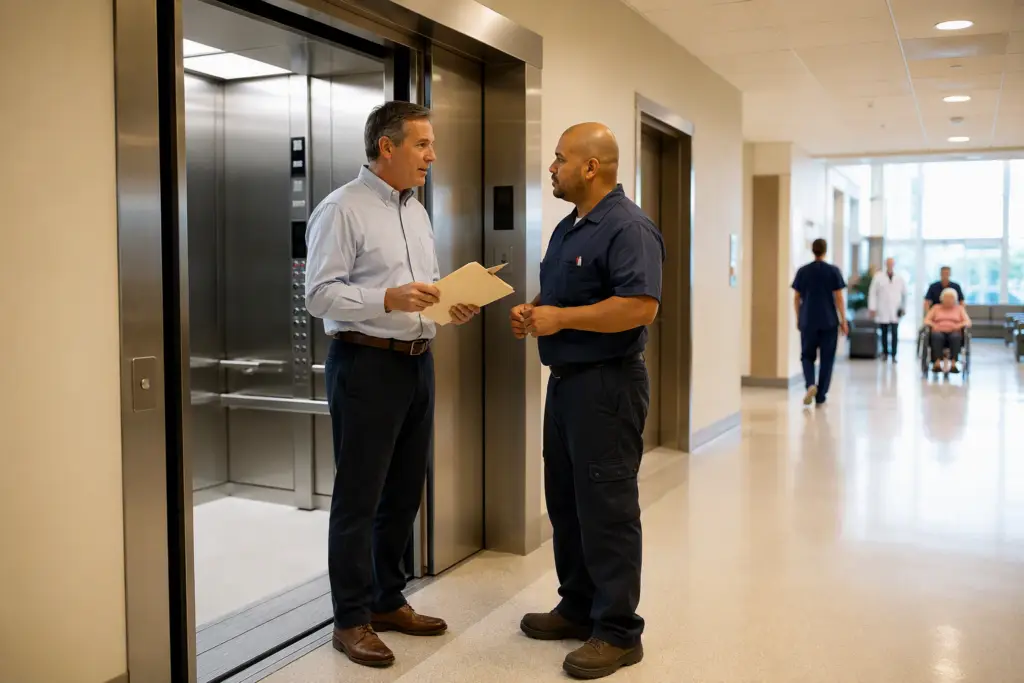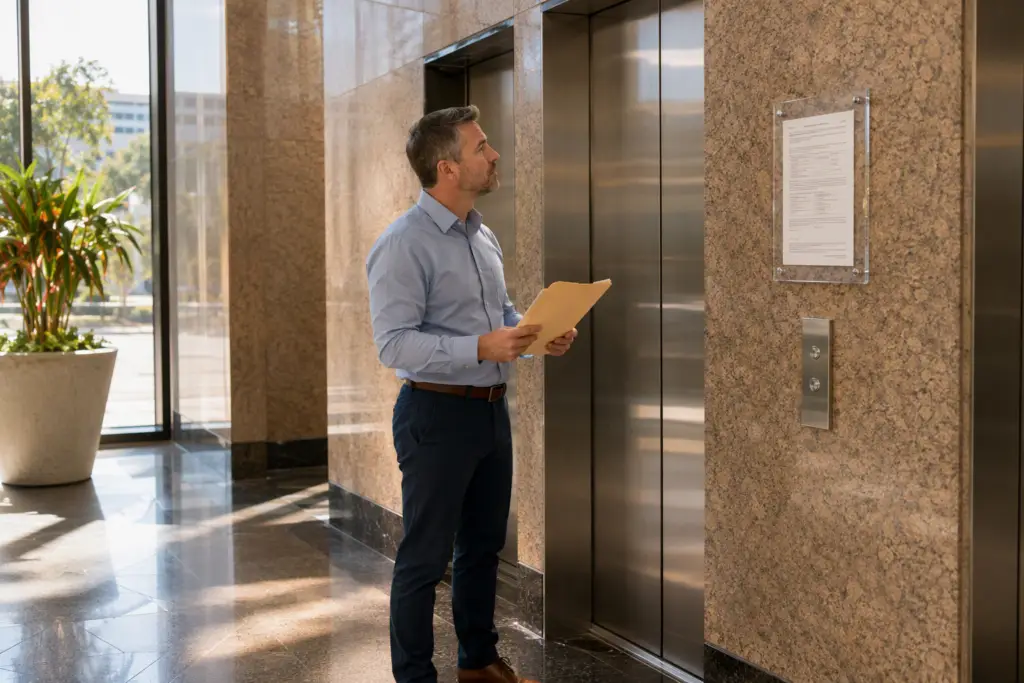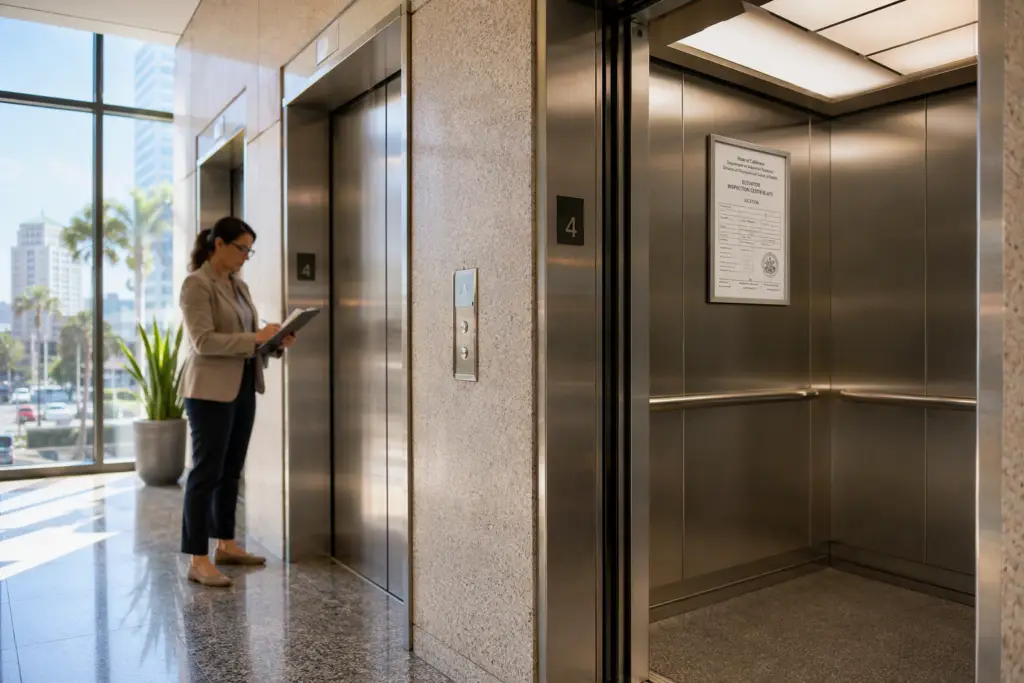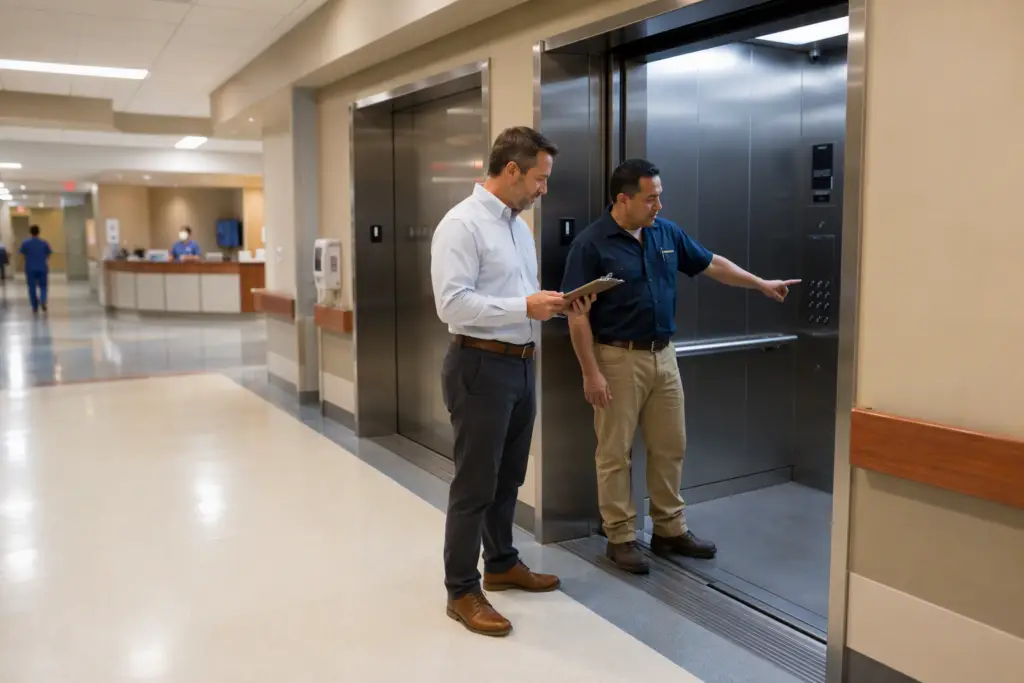
Elevator maintenance is one of the most significant recurring costs for building owners, property managers, and facilities teams — yet it is also one of the least understood in terms of what drives price and where genuine savings can be found. This resource consolidates industry knowledge, code requirements, and practical benchmarking guidance to help decision-makers identify affordable elevator maintenance strategies without sacrificing safety or compliance.
What Factors Drive Elevator Maintenance Costs?
Elevator maintenance pricing is not arbitrary. Several interconnected variables determine what a building owner will pay on an annual or monthly basis. Understanding these variables is the first step toward benchmarking and identifying affordable options.
- Contract type: The structure of the maintenance agreement — full-service, oil-and-grease, or parts-and-labor — is the single largest pricing variable. Full-service contracts cover most parts and labor; oil-and-grease contracts cover only routine lubrication and minor adjustments, leaving major repairs as additional billable work.
- Equipment age and technology: Older hydraulic or traction elevator systems typically require more frequent part replacements. Newer microprocessor-controlled systems may cost less in routine maintenance but require specialized technicians when failures occur.
- Number of units: Multi-unit buildings that negotiate bundled maintenance agreements for several elevators can achieve meaningful per-unit cost reductions.
- Usage intensity: A high-rise commercial tower running elevators continuously at peak loads will require more frequent maintenance intervals than a low-rise residential building.
- Geographic location: Labor costs, local licensing requirements, and the density of qualified service providers all affect regional pricing. Urban markets with fewer independent maintainers tend to have higher prices.
- Regulatory compliance requirements: Jurisdictions that mandate more frequent inspections or specific testing protocols under ASME A17.1 Safety Code for Elevators and Escalators will create baseline compliance costs that cannot be negotiated away.
- Modernization history: Elevators that have undergone partial or full modernization often have fewer emergency breakdown events, reducing the hidden cost of unplanned repairs that inflate total maintenance spend.
What Are the Main Types of Elevator Maintenance Contracts?
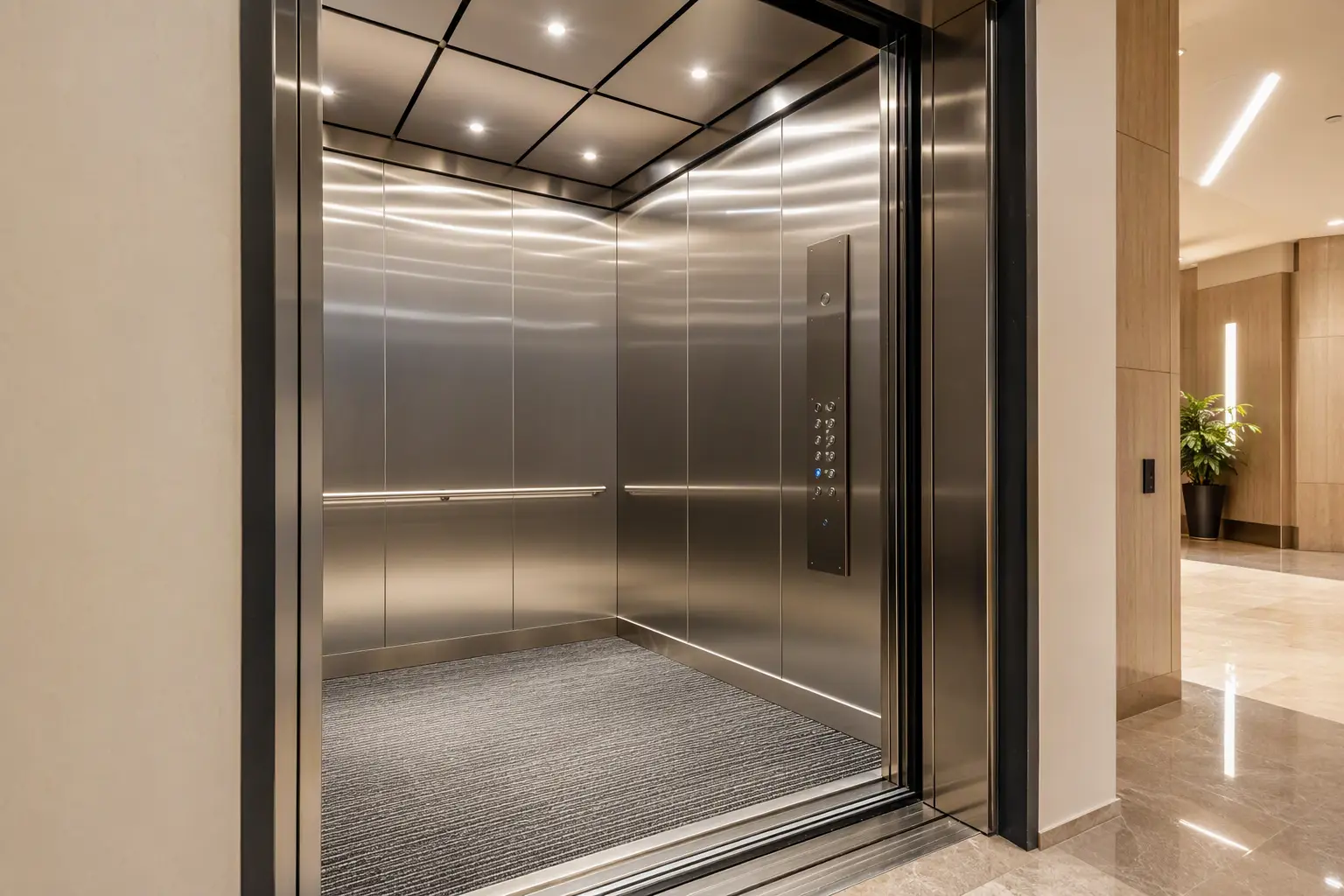
Contract structure is where most building owners find the greatest opportunity to either save money or inadvertently overpay. There are three primary contract formats in commercial use:
Oil-and-Grease (Lubrication-Only) Contracts
These are the lowest-quoted contracts and include only routine lubrication, minor cleaning, and basic adjustments. They appear affordable on paper but can result in high out-of-pocket repair costs when components fail. Buildings with newer equipment in excellent condition may find this appropriate as a short-term strategy, but older systems make this a high-risk approach.
Parts-and-Labor Contracts
These mid-tier agreements include scheduled maintenance visits plus coverage for labor on specific repair categories, with parts billed separately or subject to coverage limits. They offer a middle ground between cost exposure and protection.
Full-Service (Comprehensive) Contracts
Full-service agreements cover scheduled maintenance, routine parts, labor, and often emergency call coverage. They carry higher quoted monthly costs but provide the most predictable total cost of ownership. For buildings with aging equipment or high usage, these often represent better value once unplanned repair costs are factored in.
How to Compare Contracts Accurately
When benchmarking across vendors, building owners should request total cost of ownership modeling — not just the quoted monthly rate. A full-service contract at a higher monthly rate may be significantly more affordable over a three-to-five-year period than an oil-and-grease contract that generates multiple emergency repair invoices annually.
What Does ASME A17.1 Require for Elevator Maintenance?
Compliance with ASME A17.1 Safety Code for Elevators and Escalators is not optional — it is the foundational standard governing elevator safety in the United States and Canada. The 2019 edition and subsequent updates establish specific requirements for maintenance intervals, documentation, and the qualifications of personnel performing maintenance work.
Key compliance points that directly affect maintenance cost benchmarking include:
- Maintenance Control Program (MCP): ASME A17.1 requires that a written Maintenance Control Program be in place for every elevator. The MCP specifies maintenance tasks, intervals, and documentation requirements. This is not a negotiable element — any contract that does not provide for MCP compliance is non-conforming and exposes the building owner to liability.
- Periodic inspection and testing: The code defines the frequency of Category 1 and Category 5 tests for hydraulic and traction elevators. These tests must be performed by or under the supervision of a qualified elevator inspector. The cost of these tests must be factored into any true maintenance cost benchmark.
- Record retention: Maintenance records must be retained and made available to the authority having jurisdiction (AHJ). Gaps in documentation can result in failed inspections and additional costs to remediate.
Additionally, OSHA regulations govern the safety of elevator maintenance personnel, including lockout/tagout procedures and machine room hazard protocols. These requirements affect how maintenance work is performed and, consequently, what qualified maintenance providers must charge to operate compliantly.
Buildings accessible to the public must also ensure elevator availability and functionality consistent with ADA (Americans with Disabilities Act) accessibility requirements. Extended elevator downtime in ADA-regulated buildings can create legal exposure that far exceeds the cost of a more comprehensive maintenance contract.
What Are the Most Affordable Elevator Maintenance Strategies?
- Audit your current contract type against actual repair spend. Request a three-year history of all maintenance invoices, including emergency calls and repair billings outside the contract. If out-of-contract spend is high, a full-service upgrade may be more affordable in practice.
- Negotiate multi-unit bundling. Buildings with two or more elevators should negotiate bundled agreements. Providers typically apply per-unit discounts when multiple units are covered under a single contract, reducing administrative overhead for both parties.
- Establish clear contract exclusion lists. Before signing, request a complete list of components and scenarios excluded from coverage. Hidden exclusions — such as circuit boards, door operators, or cab finishes — turn affordable-looking contracts into expensive ones when those components fail.
- Consider independent service providers. Large OEM-affiliated maintenance providers are not always the most cost-effective option, particularly for older equipment. Independent, certified maintainers often offer more competitive pricing without sacrificing code compliance.
- Schedule modernization assessments proactively. Elevators approaching or beyond their typical service lifespan generate disproportionate maintenance costs. A proactive modernization plan can reduce maintenance spend over the medium term, even accounting for capital investment.
- Verify inspection scheduling is included. Some contracts pass the cost of mandatory periodic inspections to the building owner as a separate line item. Contracts that bundle inspection coordination reduce both cost and administrative burden.
- Use competitive rebidding cycles. Maintenance contracts should be competitively rebid at least every three to five years. Long-term automatic-renewal contracts without rebidding often result in price drift well above market benchmarks.
- Invest in preventive maintenance compliance. Elevators maintained consistently to MCP standards under ASME A17.1 experience fewer emergency breakdowns. Preventive compliance is the most durable cost-reduction strategy available.
How Do Full-Service Contracts Compare to Oil-and-Grease Contracts in Total Cost?
The central benchmarking question for most building owners is whether a higher-quoted full-service contract is actually more expensive than a lower-quoted oil-and-grease arrangement when all costs are included. The answer depends on equipment condition, usage patterns, and the specific exclusions written into each contract.
Buildings with older traction or hydraulic systems — particularly those operating beyond their intended design life — consistently find that emergency repairs, unplanned parts replacement, and code violation remediation costs under oil-and-grease contracts exceed the premium associated with full-service coverage. Buildings with newer, well-maintained systems in low-usage environments may find that a parts-and-labor or even oil-and-grease contract is genuinely cost-effective over a three-year horizon.
The key benchmark discipline is calculating total cost of ownership, not monthly quoted rate. A rigorous comparison includes: monthly contract fees × contract term + all out-of-contract repair and parts invoices + inspection and testing fees + any violation remediation costs + the imputed cost of downtime (lost productivity, ADA exposure, tenant complaints).
What Is Typically Excluded From Low-Cost Elevator Maintenance Contracts?
Understanding exclusions is as important as understanding what is included when benchmarking affordable maintenance options. Common exclusions in lower-cost contracts include:
- Electronic circuit boards and microprocessor controls
- Door operator assemblies and door components
- Hydraulic cylinders, pumps, and valve units
- Cab interior finishes, lighting, and flooring
- Ropes, cables, and hoisting machinery in certain traction configurations
- Work required as a result of vandalism, power surges, or flood damage
- Code-compliance upgrades required by new or revised regulatory editions
When any of these items fail — which they inevitably do over a sufficiently long maintenance horizon — they become time-and-materials billings at full labor and parts rates. Building owners benchmarking contract affordability should price these common failure scenarios before selecting the lowest-quoted option.
How Does Elevator Age Affect Maintenance Cost Benchmarks?
Elevator age is one of the strongest predictors of total maintenance cost. Components across all major elevator systems — hydraulic, traction, MRL (machine-room-less) — have defined service lives, and maintenance costs accelerate as those thresholds are approached or passed.
Building owners with aging elevator inventory should obtain a condition assessment that identifies components approaching end of life, the likely cost and timeline of their replacement, and whether targeted modernization of high-failure subsystems (such as hydraulic power units or door operator systems) can reduce maintenance spend without full elevator replacement.
Liftech Elevator provides condition assessment services that help building owners and property managers develop data-driven maintenance budgets aligned with actual equipment condition rather than contract assumptions.
What Should a Vendor Comparison Include for Elevator Maintenance?
A rigorous vendor comparison for elevator maintenance should evaluate the following dimensions beyond quoted price:
- Contract type and coverage scope: What is explicitly included and excluded, in writing?
- Code compliance framework: Does the vendor maintain an ASME A17.1-compliant Maintenance Control Program for each unit?
- Documentation and reporting: Will the vendor provide maintenance logs and inspection records sufficient for AHJ compliance?
- Parts sourcing: Does the vendor use OEM-specified parts, or are substitutions permitted? How does this affect warranty coverage?
- Escalation clauses: What annual price escalation is written into multi-year agreements, and are there caps?
- Contract exit provisions: What are the terms and costs for early contract termination if service is unsatisfactory?
- Geographic service density: Does the vendor have qualified technicians operating in proximity to the building, or will distance create service delays?
What Are the 2025–2026 Industry Trends Affecting Elevator Maintenance Costs?
Several structural trends are reshaping elevator maintenance pricing and strategy entering 2025 and 2026:
Remote monitoring and predictive maintenance technology is becoming increasingly prevalent. Elevator systems equipped with IoT-enabled monitoring can transmit real-time performance data, allowing maintenance providers to identify developing faults before they become emergency repairs. Building owners should evaluate whether vendors offer monitoring-integrated contracts, as these can reduce the frequency and cost of emergency call-outs over time.
Skilled technician availability continues to constrain supply in many markets. The elevator mechanic workforce faces demographic pressure as experienced technicians retire, and the training pipeline for replacements is lengthy. This dynamic is expected to maintain upward pressure on labor-intensive maintenance costs in many regions through 2026.
Code update cycles are ongoing. Building owners should track developments in ASME A17.1 editions adopted by their jurisdiction’s AHJ, as new code editions can introduce retroactive compliance requirements that become maintenance and upgrade cost drivers.
Sustainability and energy efficiency considerations are increasingly influencing modernization and maintenance decisions. Regenerative drive technology and LED lighting retrofits are among the upgrades that can reduce operating costs while maintaining compliance.
Supply chain normalization for elevator parts and components has improved relative to the disruption years of 2021–2023, though lead times for certain specialized components remain longer than historical norms. Building owners with aging equipment should confirm parts availability timelines with their maintenance provider as part of contract negotiations.
How Can Building Owners Benchmark Their Current Elevator Maintenance Costs?
Benchmarking begins with data collection. Building owners should compile a complete cost history including all contract payments, out-of-contract repair invoices, inspection fees, and any costs associated with code violations or ADA-related complaints. This total, divided by the number of elevators and the number of months in the period, produces a true per-unit monthly cost figure that can be compared against contract proposals.
The next step is obtaining at least two to three competitive proposals from qualified, code-compliant maintainers. Proposals should be evaluated on identical scopes — apples-to-apples comparison requires that each vendor specify exactly the same coverage terms, exclusion lists, and inspection provisions.
Finally, building owners should factor in the soft costs of maintenance: elevator downtime frequency, tenant or occupant complaints, and the administrative burden of managing a maintenance relationship. A slightly higher-cost provider that delivers reliable uptime and proactive communication may represent better total value than a lower-cost provider with frequent service disruptions.
Liftech Elevator’s approach to maintenance benchmarking is grounded in transparent cost modeling and alignment with ASME A17.1 Safety Code for Elevators and Escalators compliance requirements, so building owners receive proposals that reflect real, sustainable cost structures rather than introductory pricing that escalates after year one.
Is a Lower-Cost Elevator Maintenance Contract Ever the Right Choice?
Yes — under the right conditions. A lower-cost oil-and-grease or parts-and-labor contract is a rational choice when the elevator equipment is relatively new and within its design service life, when the building owner maintains a dedicated capital reserve for parts replacement, when usage intensity is low, and when the building owner has the administrative capacity to manage repair procurement independently when issues arise.
The risk profile changes substantially for older equipment, high-usage environments, or buildings where elevator availability is mission-critical. In those contexts, the cost-per-incident model of low-coverage contracts frequently produces higher total spend than comprehensive alternatives.
What Are the Compliance Consequences of Deferred or Inadequate Elevator Maintenance?
Deferred maintenance creates compounding risk across several dimensions. From a regulatory standpoint, failure to maintain elevators in accordance with the applicable edition of ASME A17.1 Safety Code for Elevators and Escalators can result in failed periodic inspections, mandatory shutdown orders from the AHJ, and remediation requirements that must be completed at significant cost before the elevator can return to service.
From an ADA standpoint, extended elevator outages in buildings covered by accessibility requirements can expose building owners to formal complaints and legal action. The cost of defending or settling ADA-related elevator downtime claims routinely exceeds years of comprehensive maintenance premiums.
From a liability standpoint, maintenance records are discoverable in personal injury litigation. Buildings that cannot demonstrate a consistent, code-compliant maintenance history face significantly higher legal exposure in the event of an elevator-related injury.
How Should Building Owners Plan an Elevator Maintenance Budget?
- Inventory all elevators with basic specifications — type (hydraulic, traction, MRL), installation year, last modernization date, and current contract status.
- Obtain a condition assessment for any elevator older than fifteen years or without a recent documented inspection history.
- Request full-scope proposals from at least two to three qualified, licensed maintainers, specifying the same coverage terms for each.
- Calculate total cost of ownership for each proposal across a three-to-five-year horizon, including potential repair costs based on equipment condition.
- Verify ASME A17.1 Maintenance Control Program compliance is included in every proposal under consideration.
- Confirm ADA compliance protocols are addressed, including downtime notification procedures and emergency response provisions.
- Build a capital reserve line item for modernization of aging components, informed by the condition assessment findings.
- Schedule competitive rebidding at the conclusion of each contract term to ensure ongoing market alignment.
Why Work With Liftech Elevator for Maintenance Cost Benchmarking?
Liftech Elevator operates as a data-driven service provider, helping building owners and property managers move beyond surface-level price comparisons to a rigorous understanding of total elevator maintenance costs. By aligning maintenance programs with ASME A17.1 Safety Code for Elevators and Escalators requirements and building owners’ specific equipment conditions, Liftech Elevator’s approach is designed to produce genuinely affordable outcomes — not just low quoted rates that grow into expensive surprises.
Whether evaluating a first maintenance contract, benchmarking an existing agreement against market rates, or planning for equipment modernization, Liftech Elevator provides the assessment and transparency building owners need to make informed, cost-effective decisions.
Get a Free Elevator Assessment From Liftech Elevator
Understanding your true elevator maintenance costs starts with a clear picture of your equipment’s condition and compliance status. Contact Liftech Elevator for a free elevator assessment and begin building a maintenance strategy that is affordable, code-compliant, and genuinely sustainable.
Contact Liftech Elevator for a free elevator assessment: 562-609-3478