Elevator Modernization Timeline for Healthcare Facilities: What to Expect and How to Protect Patient Access
For hospitals, medical office buildings, skilled nursing facilities, and outpatient clinics across Signal Hill, Long Beach, Los Angeles, and Orange County, elevator modernization is not simply a capital improvement project — it is a patient safety and regulatory compliance obligation. The question facility managers and hospital administrators ask most often is straightforward: how long will this take, and will our building lose elevator service during construction? The sections below answer those questions in full and address every related concern a healthcare compliance officer, risk manager, or facilities director should understand before signing a modernization contract.
How Long Does Healthcare Elevator Modernization Take?
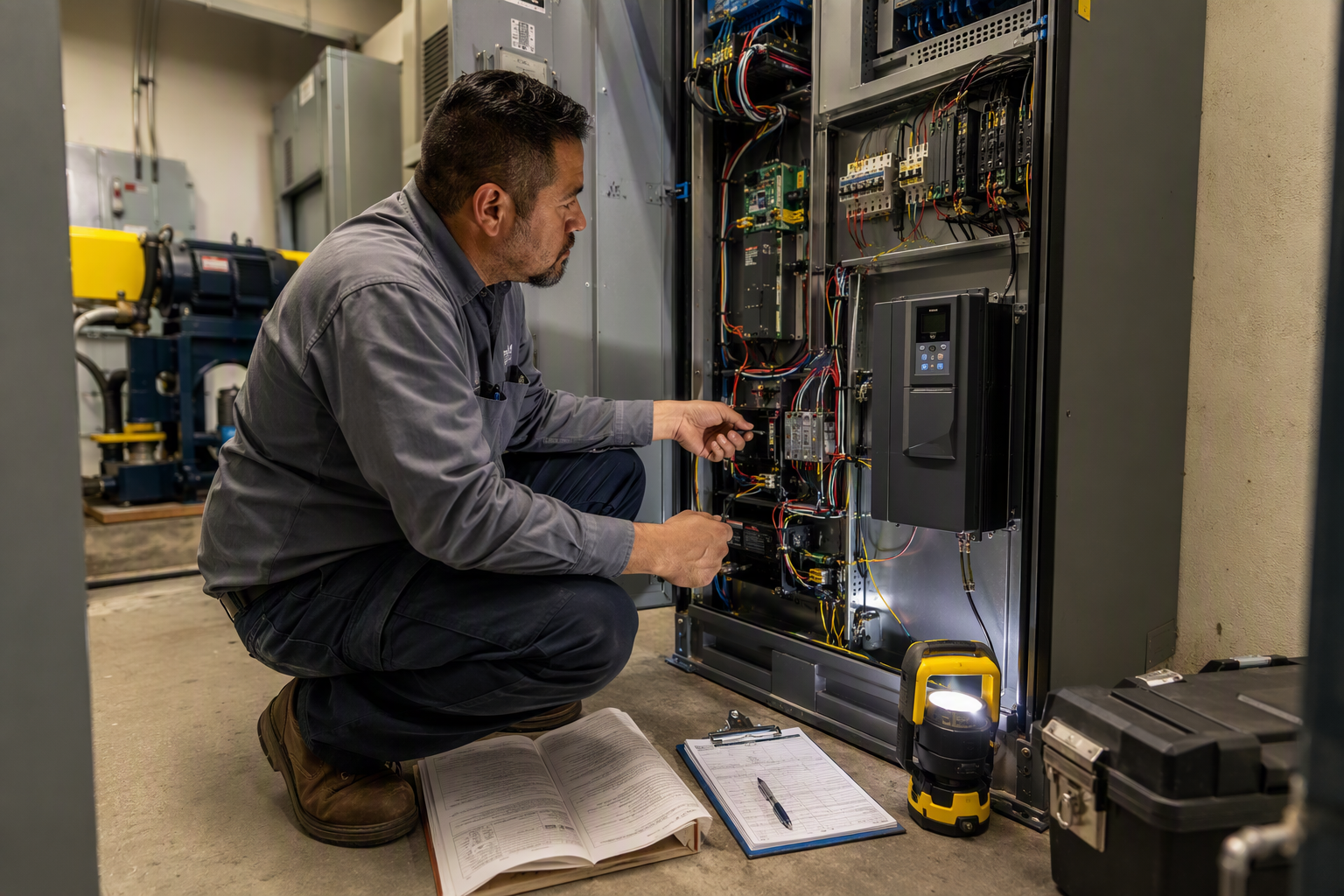
The timeline for a single elevator modernization in a healthcare setting typically spans four to twelve weeks of active construction, depending on the scope of work. A partial modernization — replacing the control system and drive unit while retaining the cab and structure — may fall on the shorter end of that range. A full modernization that includes the cab interior, doors, door operators, controllers, hydraulic or traction components, safety devices, and updated fixtures will occupy the longer portion of that window.
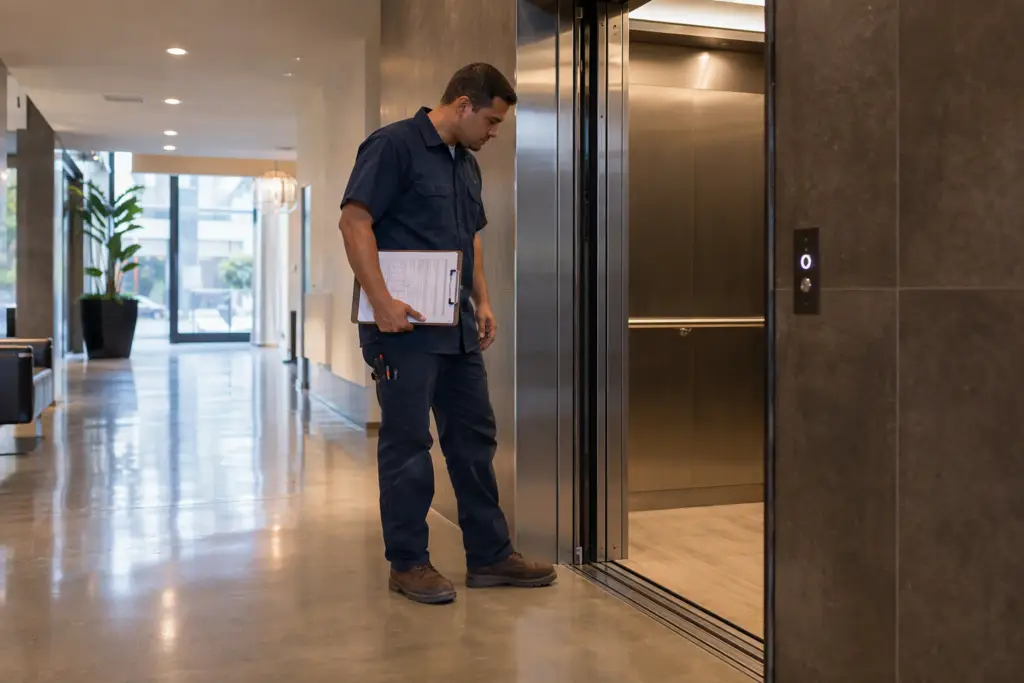
Before any tools are deployed on-site, however, healthcare facilities should plan for a pre-construction phase that adds additional weeks. This phase includes a comprehensive condition assessment, permit submissions to the California Division of Occupational Safety and Health (Cal/OSHA) Elevator Unit, coordination with the local Authority Having Jurisdiction (AHJ), and lead time for specialty parts. In a hospital environment, coordination with infection control, patient transport logistics, and the facilities department adds layers that are not present in a commercial office or residential project.
For a facility operating multiple elevators, Liftech Elevator works with healthcare clients to sequence modernization by unit so that at least one elevator per bank remains in service at all times, effectively eliminating service blackouts for patients and clinical staff.
Will My Healthcare Building Be Without an Elevator During Modernization?
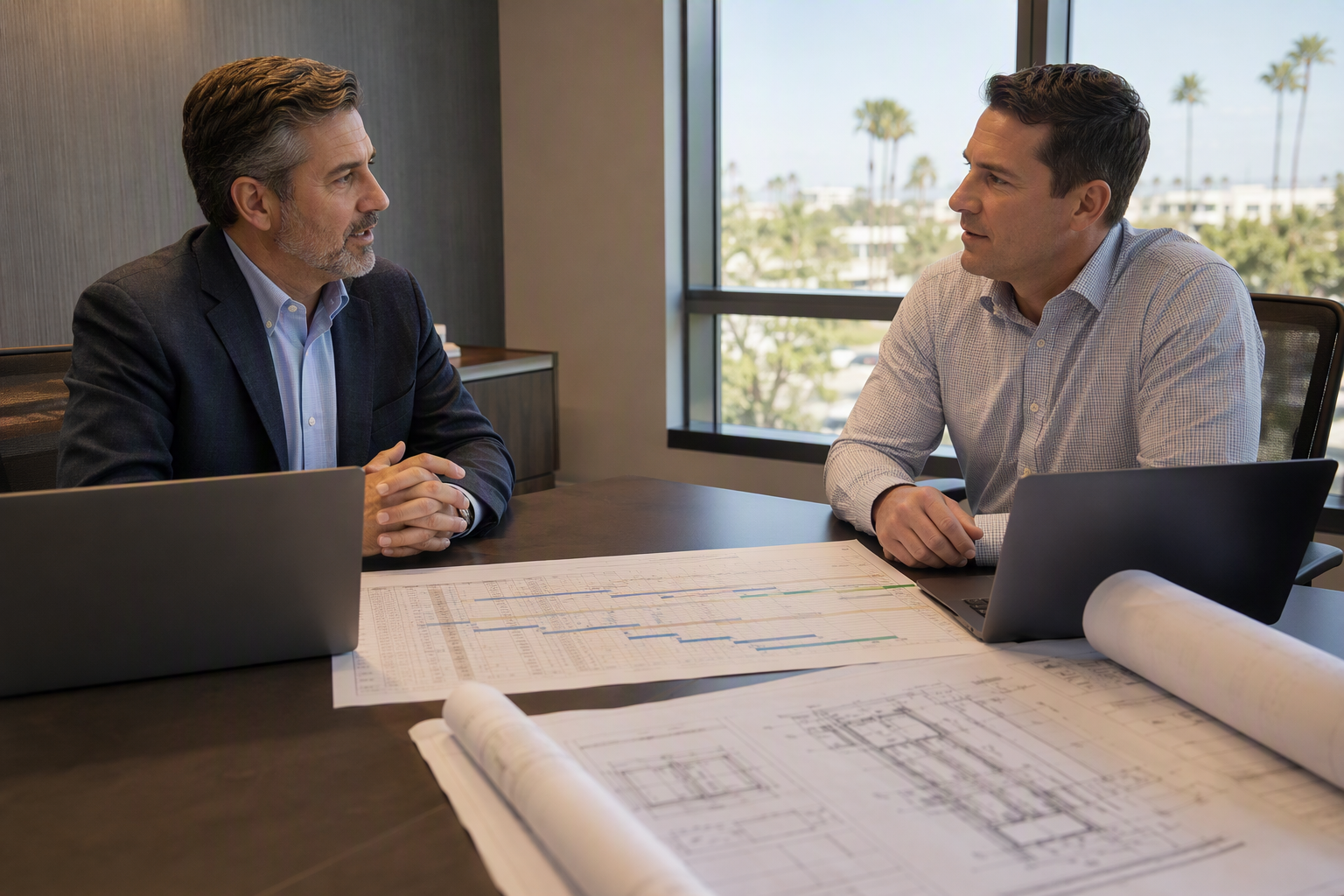
In most cases, a well-planned modernization project does not require a complete building elevator outage. Phased modernization — taking one elevator offline at a time while others remain operational — is the industry-standard approach for multi-elevator healthcare buildings. For single-elevator facilities such as small medical offices or two-story specialty clinics, a planned outage window is unavoidable, but it can be minimized through careful pre-staging of parts and compressed construction schedules.
Healthcare facilities with a single elevator must notify patients in advance, arrange accessible ground-floor alternatives for appointments during the outage window, and confirm that emergency egress and ADA accommodation plans are documented and approved. Coordination with the Americans with Disabilities Act requirements is non-negotiable: no healthcare facility may leave mobility-impaired patients without a compliant accessible route during any construction phase.
What Compliance Standards Govern Elevator Modernization in Healthcare Facilities?
Healthcare elevator modernization in California is subject to a layered compliance framework that any qualified contractor must navigate before, during, and after construction.
- ASME A17.1 Safety Code for Elevators and Escalators: The governing technical standard for elevator design, installation, alteration, and inspection in the United States. Any modernization that constitutes an “alteration” under ASME A17.1 triggers code compliance for all affected components. Healthcare facilities should understand that partial modernizations can still invoke full code compliance on upgraded systems.
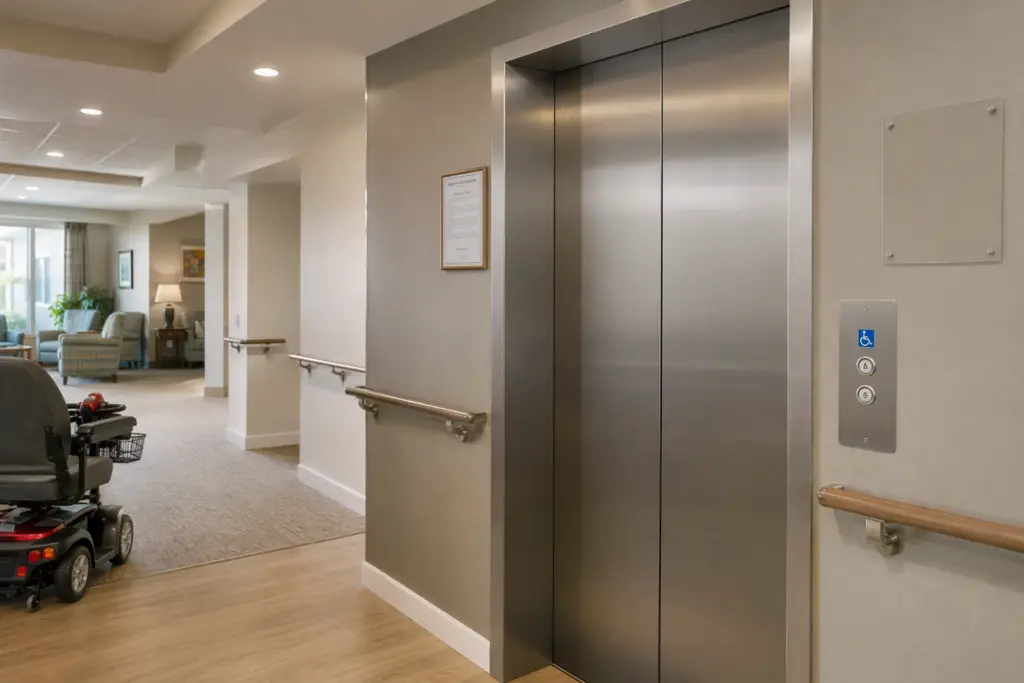
- ADA Standards for Accessible Design: Federal law requires that all elevators serving public or common-use areas in healthcare facilities meet ADA accessibility requirements. Cab dimensions, door timing, leveling accuracy, floor signage, and audible indicators are all subject to ADA review during modernization.
- California Code of Regulations, Title 8: Cal/OSHA’s Elevator Safety Orders govern the permitting, inspection, and certification of all elevator work performed in California. Every modernization project requires a permit and a post-construction inspection by a licensed California elevator inspector before the unit is returned to service.
- Joint Commission Environment of Care Standards: For accredited hospitals, The Joint Commission’s Environment of Care standards require that patient transport systems — including elevators — be maintained in a manner that does not create undue risk to patient safety. Modernization planning should be documented in the facility’s maintenance management program.
- FGI Guidelines for Healthcare Facilities: The Facilities Guidelines Institute publishes design and construction guidance for healthcare buildings, including recommendations on elevator capacity and redundancy that affect modernization scope decisions.
- OSHA General Industry Standards: Construction activities within an occupied healthcare facility trigger OSHA requirements for worker safety, dust and noise control, and infection control risk assessment — all of which affect project scheduling.
What Happens During Each Phase of a Healthcare Elevator Modernization?
- Condition Assessment and Scope Development: A qualified elevator contractor performs a detailed audit of the existing equipment, documents code deficiencies, and develops a modernization scope aligned with current ASME A17.1 and ADA requirements.
- Permitting and AHJ Coordination: The contractor submits plans and specifications to the California elevator permitting authority. In Los Angeles and Orange County, permit timelines can vary; experienced contractors build this window into the master schedule.
- Parts Procurement: Specialty components — controllers, drives, door operators, safety devices — are ordered in advance. Lead times for certain components can run several weeks, making early procurement critical to an on-time start.
- Site Preparation and Infection Control Measures: Before construction begins, the contractor coordinates with hospital infection control to establish barriers, negative pressure protocols if required, and construction traffic routes that do not pass through sterile or patient care areas.
- Modernization Construction: Active equipment replacement proceeds. In a phased plan, one elevator at a time is taken offline. The sequence is communicated to patient transport, nursing, and facilities teams in advance.
- Testing and Adjustment: Newly modernized components are tested per ASME A17.1 requirements before the elevator is presented for inspection.
- State Inspection and Certification: A licensed California elevator inspector performs the acceptance inspection. The elevator cannot legally return to service until this certificate is issued.
- Staff Orientation and Documentation: The facilities team receives updated maintenance documentation, emergency procedure information, and records required for Joint Commission or accreditation audits.
How Does Phased Modernization Protect Patient Flow in Hospitals?
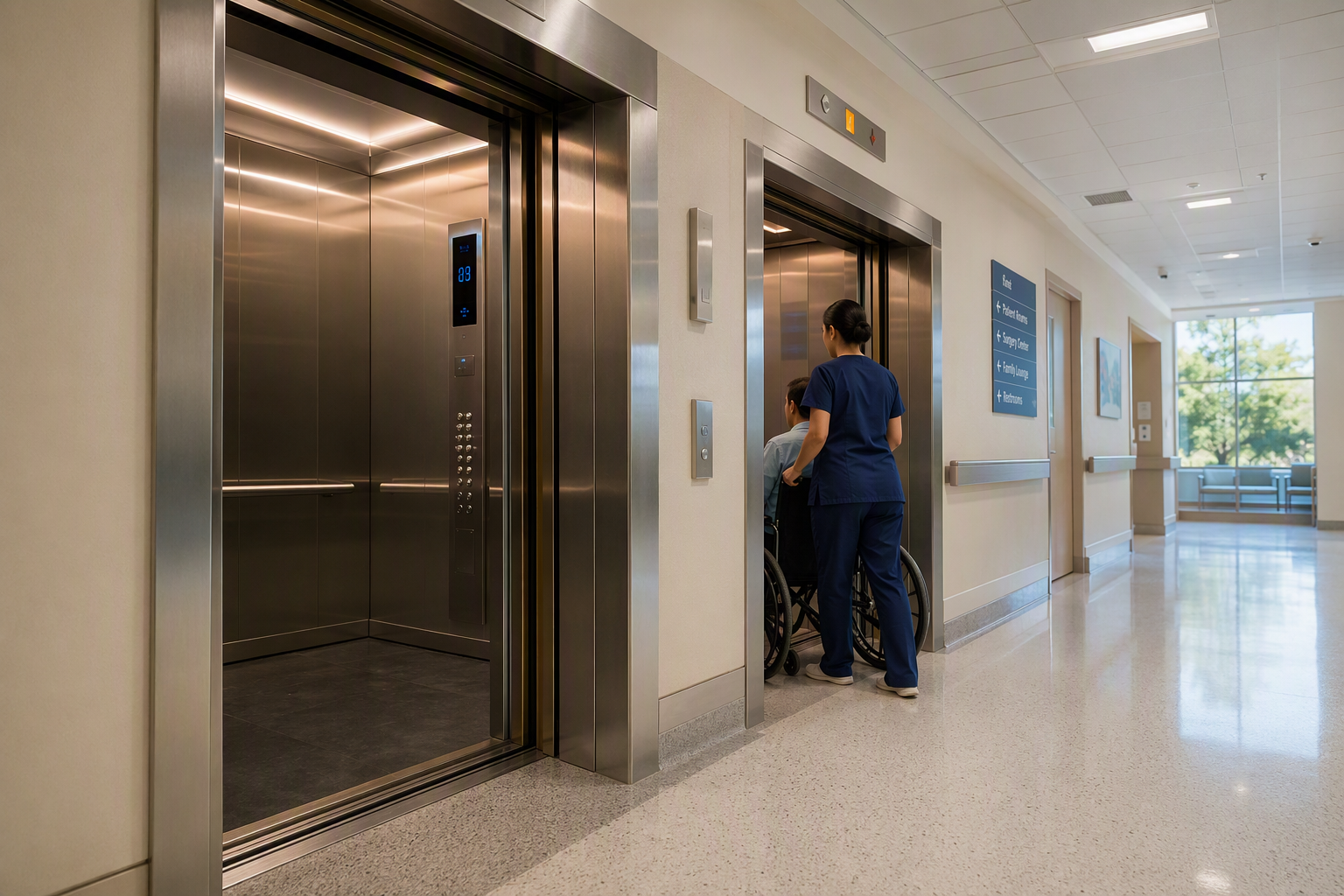
Phased modernization means sequencing construction so that at least one elevator in each vertical zone remains operational throughout the project. Liftech Elevator develops phasing plans in direct collaboration with the healthcare facility’s patient transport coordinator, facilities director, and infection control officer. The goal is to ensure that bed moves, surgical transport, emergency response, and visitor access are never simultaneously interrupted across any floor of the building.
For large hospital campuses with dedicated service, patient, and visitor elevator banks, phasing can be further refined so that clinical operations and non-clinical traffic are never sharing the same limited access point. This level of planning requires a contractor who understands healthcare operational workflows — not simply elevator mechanics.
What Components Are Typically Replaced During a Full Modernization?
A comprehensive healthcare elevator modernization typically includes replacement or upgrade of the following systems:
- Elevator controller and microprocessor dispatch system
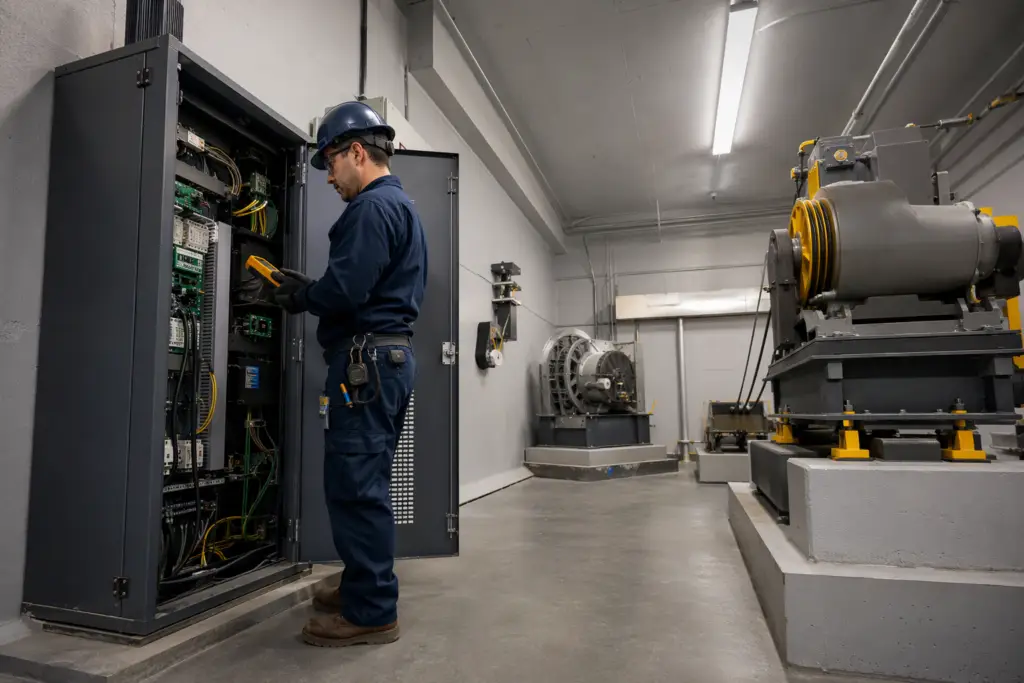
- Drive unit (hydraulic power unit or traction machine, depending on elevator type)
- Door operators, door panels, and sills
- Safety devices and governor systems (required to meet current ASME A17.1 standards)
- Cab interior finishes, lighting, and ADA-compliant fixtures
- Car operating panel and hall call fixtures with ADA-compliant Braille and audible indicators
- Emergency communication system compliant with current code requirements
- Leveling and positioning systems to achieve the floor-level accuracy required for hospital gurney and wheelchair transport
For healthcare settings specifically, leveling accuracy is a clinical concern, not just a comfort issue. An elevator that does not level consistently creates a tripping or tipping hazard for patients in wheelchairs, on gurneys, or using mobility aids — a direct patient safety liability.
How Do I Choose the Right Elevator Contractor for a Healthcare Modernization?
Healthcare facilities should evaluate elevator contractors on criteria that go beyond the lowest bid. Key considerations include:
- Demonstrated experience with occupied healthcare facility projects
- Familiarity with California permitting processes in Los Angeles, Orange County, Long Beach, and Signal Hill
- Ability to produce a written phasing and patient impact plan before contract execution
- Understanding of infection control requirements during construction in clinical environments
- References from hospital, skilled nursing, or medical office clients
- Full compliance with ASME A17.1 and ADA modernization requirements
Liftech Elevator serves healthcare facilities throughout Signal Hill, Long Beach, Los Angeles, and Orange County and is structured to support the coordination demands of occupied medical environments.
Does Elevator Modernization Affect My Facility’s Accreditation Status?
Elevator modernization, when properly planned and documented, generally strengthens a facility’s compliance posture rather than threatening it. Joint Commission surveyors review elevator maintenance records, inspection certificates, and deficiency correction logs. A modernization project that resolves long-standing code deficiencies, updates safety devices to current ASME A17.1 standards, and produces a clean Cal/OSHA inspection certificate is a positive compliance event.
The risk arises when modernization is poorly managed — when construction dust enters patient care areas, when service outages are not communicated in advance, or when post-construction inspections are delayed. Facilities that partner with a contractor experienced in healthcare environments substantially reduce those risks.
What Is the Difference Between Elevator Modernization and Routine Maintenance?
Routine maintenance is periodic servicing designed to keep existing equipment functioning within its current design parameters. Modernization is a planned capital investment that replaces major components to extend the service life of the elevator, bring it into compliance with current codes, and improve reliability and performance. In healthcare settings, modernization often becomes necessary when aging equipment creates unacceptable downtime rates, when parts become unavailable for obsolete controllers, or when a code enforcement action identifies deficiencies that cannot be remedied through maintenance alone.
Liftech Elevator can assess whether a specific elevator is a candidate for targeted component replacement, full modernization, or continued maintenance — and provide documentation to support capital planning and budget requests.
How Should We Communicate Elevator Outages to Patients and Staff?
Healthcare facility communications plans for elevator outages should include the following elements:
- Written advance notice to all departments at least two weeks before each elevator is taken offline
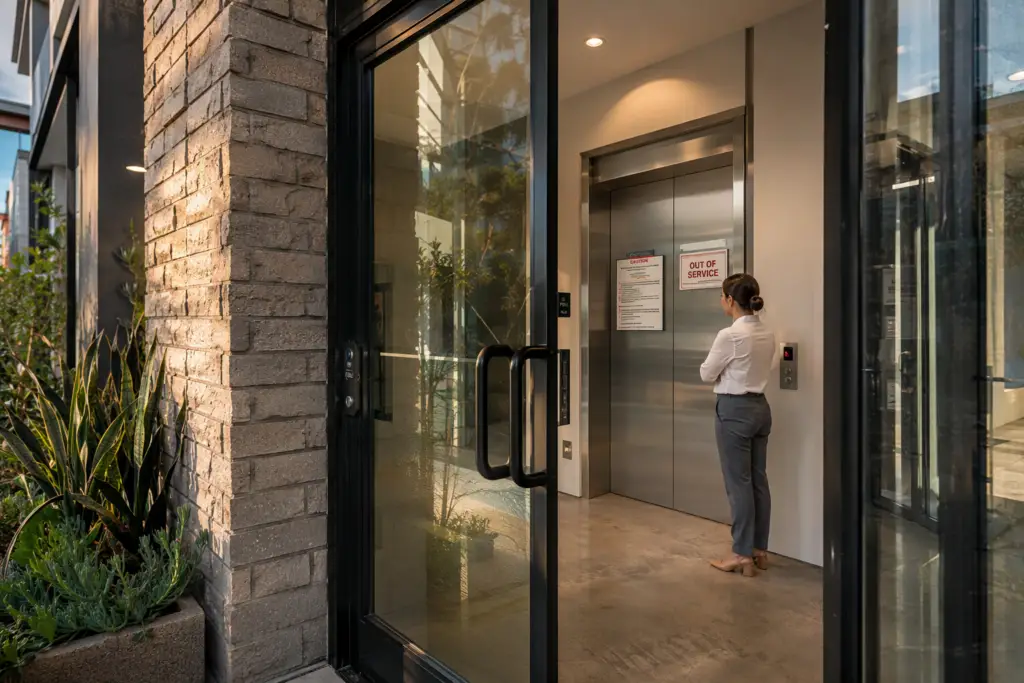
- Signage at all affected elevator lobbies and stairwells
- Direct communication to patient transport, nursing leadership, surgical scheduling, and emergency department leadership
- Updated wayfinding for visitors and patients arriving for appointments during the project window
- A documented ADA accommodation procedure for mobility-impaired individuals during any reduced-service periods
- A daily project status update channel between the contractor’s site supervisor and the facility’s project manager
Questions Your Inspector Will Ask
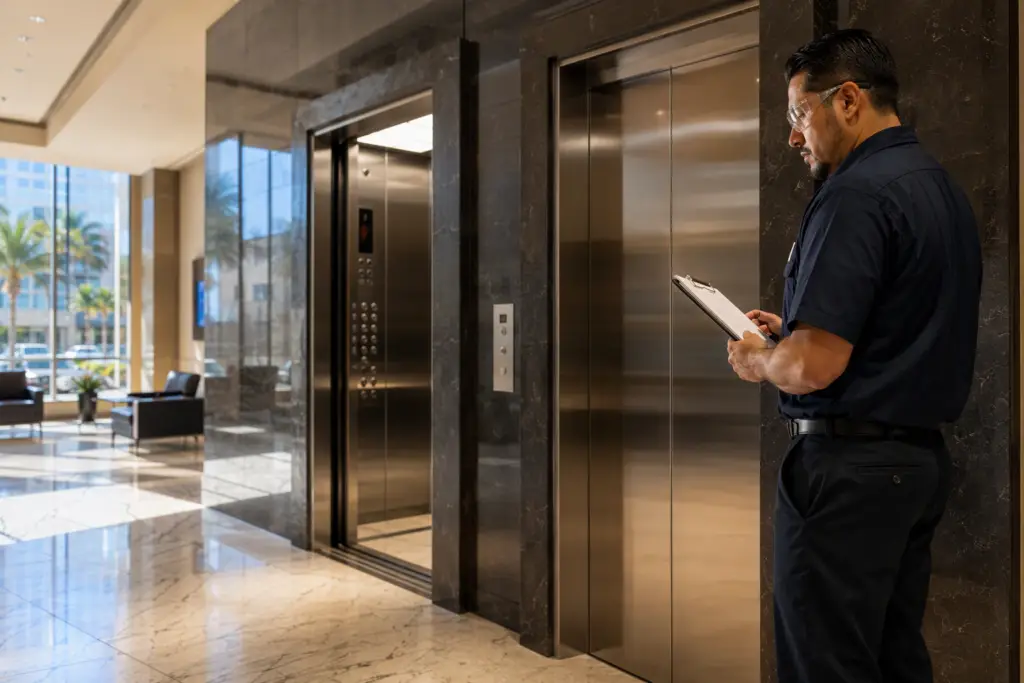
When a California elevator inspector arrives for the post-modernization acceptance inspection at a healthcare facility, the following questions and documentation requests are standard:
- Is the permit posted? The original California elevator permit must be on file and accessible at the job site.
- What components were altered? The inspector will review the alteration scope against the approved permit drawings.
- Do all safety devices test correctly? Governor, safeties, buffers, and door safety edges are tested per ASME A17.1 requirements.
- Does the cab level accurately at all landings? For healthcare facilities, leveling tolerance is a patient safety concern reviewed carefully.
- Are ADA fixtures installed and functional? Braille signage, audible indicators, door timing, and cab dimensions are verified against ADA Standards.
- Is the emergency communication system operational? Two-way communication is tested and must connect to an attended location.
- Are all required load tests complete? Documentation of load testing performed during construction is required for acceptance.
- Is the maintenance contract in place? California law requires that elevators be maintained under a written maintenance agreement — inspectors may request verification.
What Are the Risks of Delaying Elevator Modernization in a Healthcare Setting?
Deferred modernization in healthcare facilities carries compounding risks that extend well beyond equipment failure. Aging elevator controllers with obsolete parts create extended downtime when components fail, because replacement parts may no longer be manufactured. Repeated outages in a hospital or skilled nursing facility disrupt patient care workflows and create potential liability exposure. Code deficiencies that remain uncorrected can result in enforcement actions, fines, or ordered shutdowns by California’s elevator inspection authority. And elevators that do not meet current ADA standards expose facilities to federal civil rights complaints.
The cost of unplanned downtime and reactive repairs in a healthcare setting routinely exceeds the cost of planned modernization when the full operational impact is calculated. Liftech Elevator can provide a condition assessment that helps facility leadership make an evidence-based modernization decision before a crisis occurs.
Schedule Your Healthcare Elevator Assessment Today
Elevator modernization in a healthcare setting requires a contractor who understands patient safety, California compliance requirements, and the operational complexity of occupied medical facilities. Whether your facility is in Signal Hill, Long Beach, Los Angeles, or Orange County, Liftech Elevator is ready to help you develop a modernization plan that protects patient access, satisfies code requirements, and fits your capital planning timeline.
Contact Liftech Elevator for a free elevator assessment — call 562-609-3478 today.
Need elevator service you can rely on? Liftech Elevator is ready to help.