Hotel Elevator Maintenance: Top Rated Practices for Hospitality Facilities
Hotels in Signal Hill CA, Long Beach CA, Los Angeles CA, and across Orange County CA depend on elevators as mission-critical infrastructure. A single unplanned outage during peak occupancy can damage guest reviews, trigger compliance citations, and expose ownership to liability. This guide outlines the top-rated maintenance practices that hospitality facilities should implement in 2026 and beyond — covering compliance requirements, inspection protocols, vendor selection criteria, and the operational standards that separate average service from genuinely reliable elevator performance.
—
What Does a Top-Rated Hotel Elevator Maintenance Program Include?
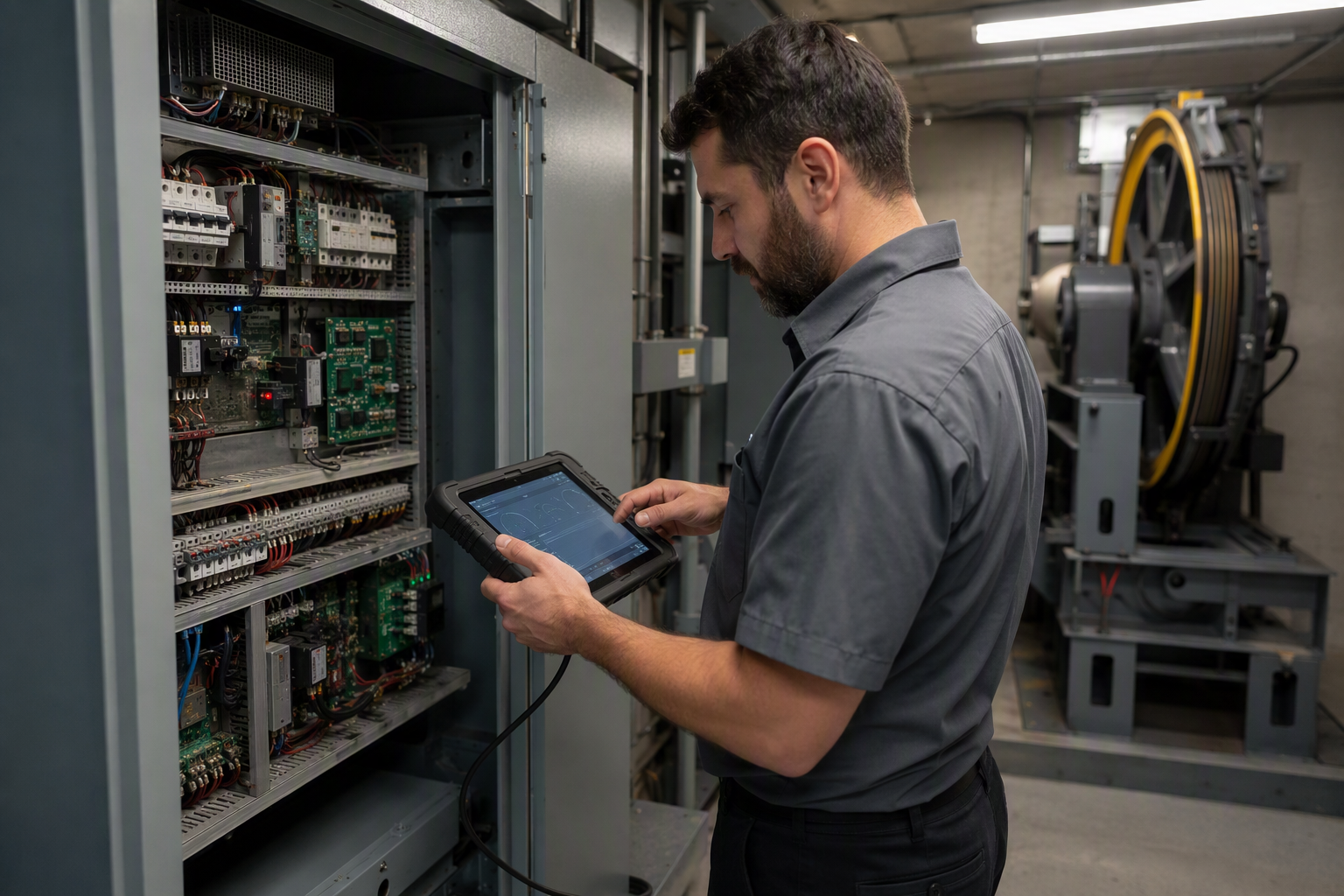
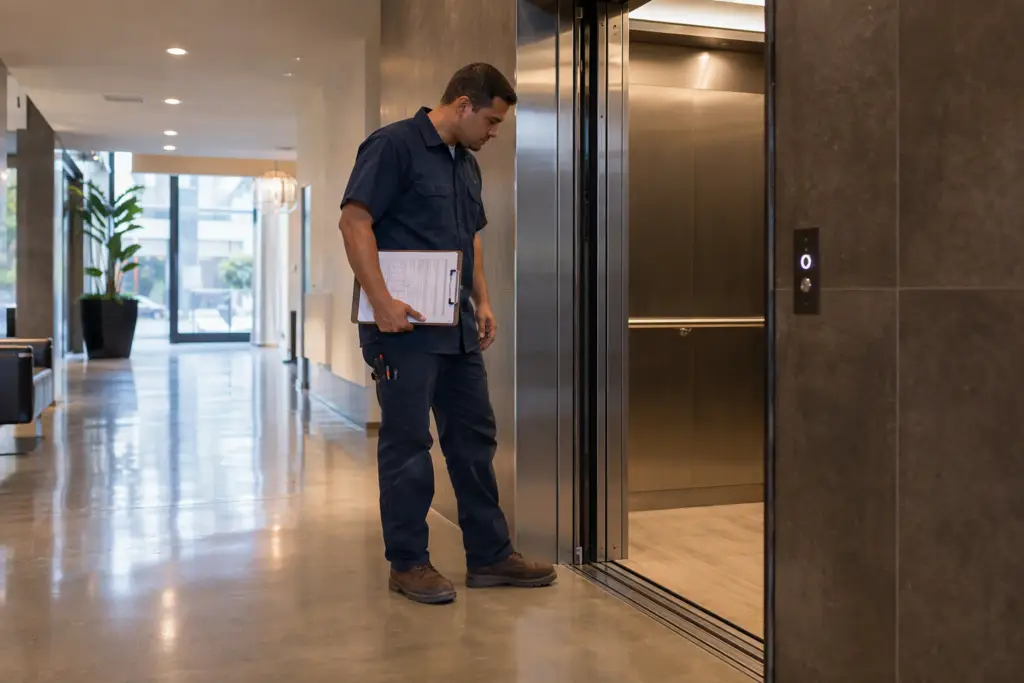
A top-rated maintenance program is not simply about responding to breakdowns. It is a structured, documented system built on four pillars:
- Preventive Maintenance Scheduling: Routine inspections of mechanical, electrical, and hydraulic components on a calendar-based cycle determined by equipment age, usage volume, and manufacturer specifications.
- Code Compliance Verification: Continuous alignment with the ASME A17.1 Safety Code for Elevators and Escalators, state elevator safety regulations enforced by the California Department of Industrial Relations (DIR), and ADA accessibility requirements for public accommodations.
- Documented Service Records: Every visit, adjustment, part replacement, and test result logged and retained — creating an audit trail essential for inspections and insurance reviews.
- Emergency Response Protocol: A clearly defined process for entrapment situations, including coordination with local fire authorities and OSHA-aligned worker safety practices during repair work.
Liftech Elevator structures service agreements around all four pillars, helping hotel operators in Long Beach, Los Angeles, and Orange County maintain both safety and operational continuity.
—
Which Compliance Codes Govern Hotel Elevators in California?
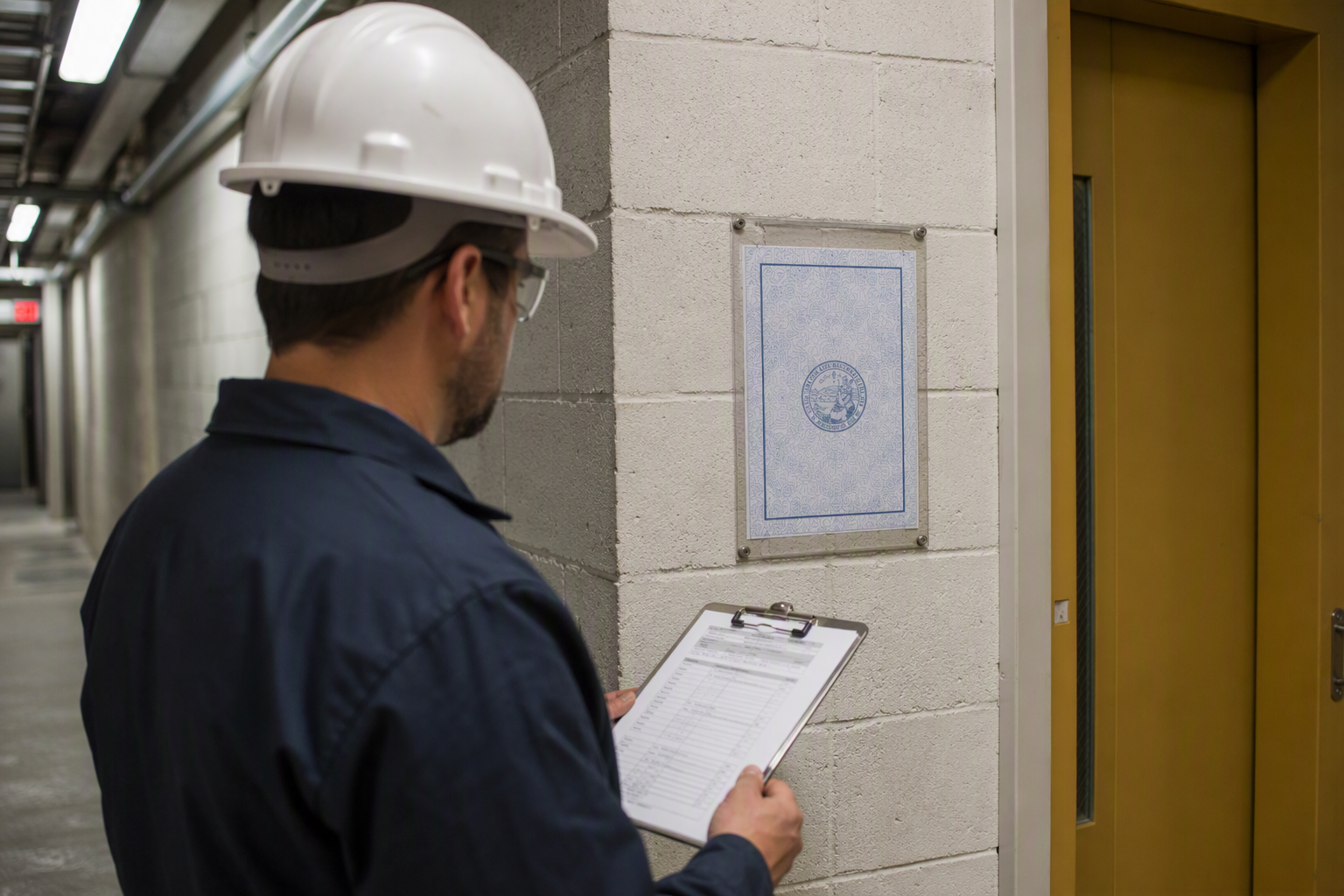
Hotel elevators in California are subject to a layered compliance framework. Understanding each layer is essential before evaluating any maintenance provider.
- ASME A17.1 Safety Code for Elevators and Escalators: The foundational national standard covering design, installation, operation, inspection, testing, maintenance, alteration, and repair of elevators. California adopts and enforces editions of this code through the Division of Occupational Safety and Health (Cal/OSHA).
- ASME A17.3 Safety Code for Existing Elevators and Escalators: Applies retroactively to older installations, requiring upgrades to bring legacy equipment into current safety alignment.
- California Code of Regulations (CCR) Title 8: California’s state-level elevator safety regulations administered by the DIR Elevator Unit, which issues permits, oversees licensed inspectors, and maintains inspection records.
- Americans with Disabilities Act (ADA): Requires elevators in multi-story hotels to meet accessibility standards including minimum cab dimensions, door timing, tactile controls, audible signals, and Braille signage.
- International Building Code (IBC) and NFPA 101 Life Safety Code: Govern fire service access features, emergency lighting, and Phase I/Phase II firefighter operation requirements.
- OSHA Standards: Apply to the safety of elevator technicians performing maintenance and repair work, including lockout/tagout procedures and fall protection in machine rooms.
Hotels that have not reviewed their elevator compliance posture recently risk citations during state inspections. Liftech Elevator assists properties in Signal Hill and throughout the greater Los Angeles area in identifying compliance gaps before an inspector does.
—
How Often Should Hotel Elevators Be Inspected and Maintained?
Inspection and maintenance frequency is driven by code requirements, equipment type, and usage intensity — not by budget convenience.
- State Periodic Inspections: California requires annual inspections by a DIR-certified elevator inspector. A valid Certificate of Inspection must be posted in or near each elevator cab.
- Periodic Tests: The ASME A17.1 code specifies intervals for governor and safety tests, pressure relief valve tests on hydraulic units, and full-load safety tests — typically on five-year cycles, though specific intervals vary by test type and code edition.
- Preventive Maintenance Visits: Industry best practice for high-traffic hotel elevators is monthly or quarterly preventive maintenance visits, depending on the number of daily trips, cab age, and drive system type (traction vs. hydraulic).
- Callback Tracking: A quality maintenance provider tracks callback frequency (unscheduled service calls) as a key performance indicator. Rising callback rates signal that preventive intervals need adjustment or components are approaching end-of-life.
—
What Are the Most Common Hotel Elevator Failures and How Are They Prevented?
Preventive maintenance directly targets the failure modes most likely to disrupt hotel operations:
- Door System Failures: The most frequent cause of service interruptions. Worn door operators, misaligned tracks, and degraded door safety edges cause nuisance stops and entrapments. Regular lubrication, alignment checks, and safety edge testing prevent most door-related callbacks.
- Hydraulic Fluid Leaks: Common in older hydraulic elevators. Routine seal inspection and fluid level monitoring catch leaks before they cause leveling problems or environmental compliance issues.
- Rope and Sheave Wear (Traction Elevators): Hoist ropes stretch and sheave grooves wear over time, affecting leveling precision and ride quality. Rope tension equalization and sheave groove measurement should be part of every maintenance visit.
- Control System and Circuit Board Issues: Aging solid-state controls and relay logic panels are vulnerable to heat, moisture, and voltage fluctuations common in older hotel buildings. Proactive modernization planning reduces the risk of obsolescence-related outages.
- Motor and Drive Failures: Overheating, bearing wear, and contactor degradation are predictable with thermal monitoring and load testing protocols.
—
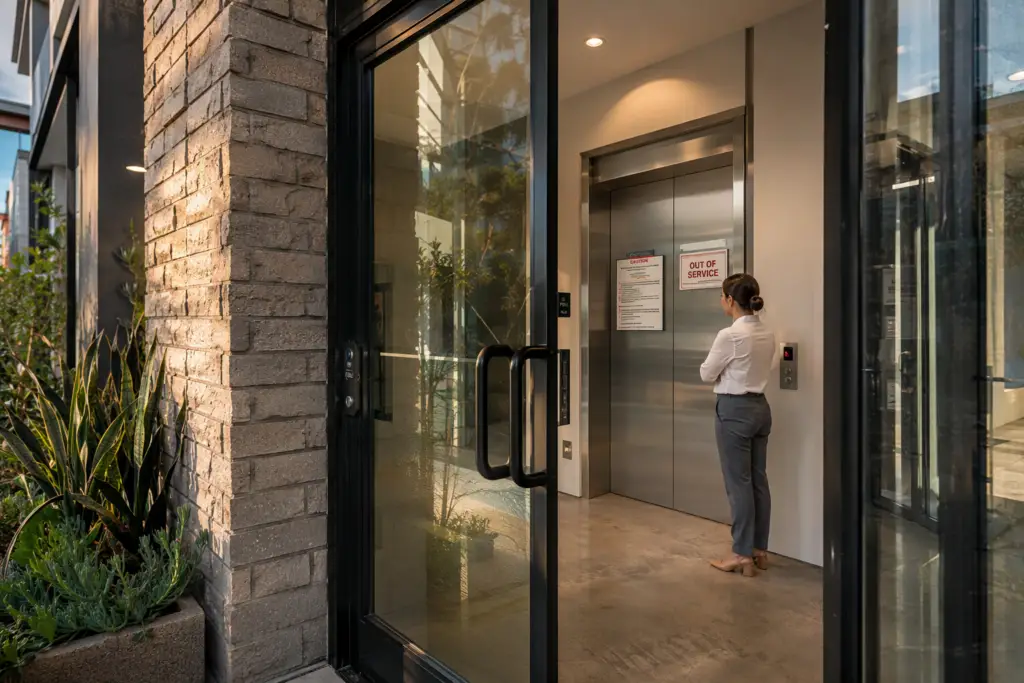
How Should Hotels Handle an Elevator Entrapment?
Every hotel property should have a written entrapment response procedure posted in the front desk and security areas. The following steps reflect standard industry and code-aligned practice:
- Staff acknowledge the entrapment immediately via intercom or phone communication with the passenger.
- Confirm passenger safety — assess for medical emergencies and call emergency services if needed.
- Contact the elevator maintenance provider’s service line to dispatch a certified technician.
- Do not attempt to manually release passengers unless trained and authorized staff are present — improper release attempts create fall hazards.
- Notify the front desk and management and log the incident with time, cab number, and passenger count.
- Keep the passenger informed of progress every few minutes to reduce anxiety.
- Once the technician arrives, provide access to the machine room and any relevant recent service history.
- After resolution, document the cause, corrective action taken, and any follow-up work required in the service record.
—
What Should Hotels Look for When Selecting an Elevator Maintenance Vendor?
Vendor selection is one of the most consequential decisions a hotel facilities manager makes. Evaluation criteria should include:
- California DIR Certification: The vendor’s technicians must hold valid California Elevator Mechanic certifications. Always verify current licensure status.
- Familiarity With Hospitality Operations: Hotel environments require service scheduling that minimizes guest-facing disruption — morning maintenance windows, quiet mode work during peak hours, and rapid response during high-occupancy periods.
- Comprehensive Service Documentation: The provider should deliver written reports for every visit, not just verbal summaries.
- Parts Availability and Brand Agnosticism: A quality provider services multiple elevator manufacturers and maintains access to parts across brands — avoiding the single-brand lock-in that drives up costs.
- Local Presence: A provider with a physical presence in the service market — such as Liftech Elevator serving Signal Hill, Long Beach, Los Angeles, and Orange County — reduces response time and supports consistent technician familiarity with each property’s specific equipment.
- Transparent Contract Terms: Full-coverage agreements should clearly define what is and is not included, avoiding unexpected charges for commonly needed services.
—
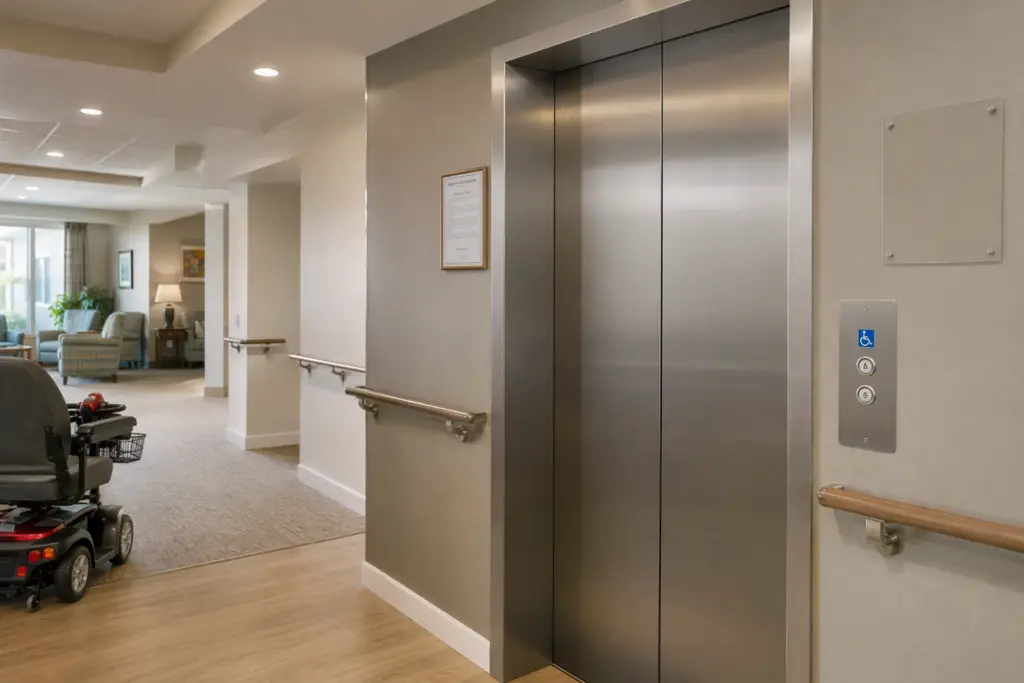
How Does ADA Compliance Apply to Hotel Elevator Maintenance?
The ADA imposes ongoing obligations — not just at the time of installation. Hotels must maintain elevator features in working order, including:
- Tactile and Braille floor designations on hall call and car operating panels
- Audible floor announcements and visual indicators
- Door timing that accommodates passengers with mobility aids
- Minimum cab interior dimensions for wheelchair accessibility
- Leveling accuracy that prevents trip hazards at floor landings
A maintenance provider should flag ADA deficiencies during routine visits — not leave them for a complaint or litigation to surface. Liftech Elevator’s maintenance protocols include an ADA compliance checklist as a standard component of preventive visits.
—
What Is the Cost Structure for Hotel Elevator Maintenance Contracts?
Cost varies based on factors that should be clearly understood before signing any agreement:
- Number and Type of Units: Traction elevators generally carry higher maintenance costs than hydraulic units due to drive system complexity.
- Equipment Age: Older equipment may require more frequent parts replacement, affecting the scope of a full-coverage contract.
- Contract Type: Oil-and-grease (basic) contracts cover only lubrication and adjustments. Comprehensive contracts cover parts and labor. The difference in scope — and risk transfer — is significant.
- Local Market Rates: Pricing in the Los Angeles metro and Orange County markets reflects regional labor costs and code compliance requirements specific to California.
Hotels should request itemized proposals and compare scope carefully — the lowest headline price often reflects a narrower scope of coverage that shifts repair costs back to the property.
—
Questions Your Inspector Will Ask
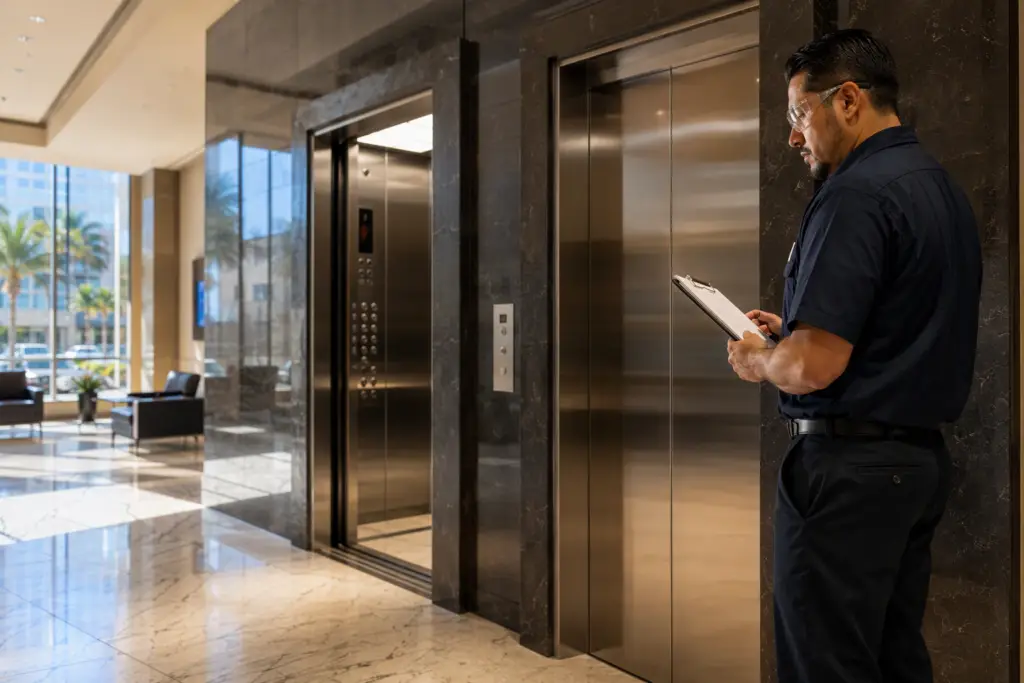
When a California DIR elevator inspector visits a hotel property, these are the questions and documentation requests to expect:
- Is the current Certificate of Inspection posted in or near the elevator cab?
- Are maintenance and inspection records available for review on-site?
- Has the required periodic testing (governor, safeties, pressure relief) been completed and documented within the required intervals per ASME A17.1?
- Is the machine room clean, secured, and free of stored materials unrelated to elevator equipment?
- Are machine room lighting and ventilation functional?
- Is firefighter service (Phase I and Phase II) operational and tested?
- Are emergency lighting and communication systems functional in the cab?
- Have any alterations been made since the last inspection — and if so, were they permitted and inspected?
- Are ADA required features — tactile signage, door timing, leveling — functioning correctly?
- Is there a current maintenance contract in place with a licensed provider?
Properties served by Liftech Elevator are coached on inspector readiness as part of ongoing service relationships — ensuring that no compliance question catches facilities management off guard.
—
How Does Elevator Modernization Factor Into a Long-Term Maintenance Strategy?
Maintenance and modernization are not competing priorities — they are sequential stages in a responsible asset lifecycle plan.
As elevator equipment ages, maintenance costs typically rise while reliability declines. At a defined threshold — often when parts become difficult to source or when control systems are no longer serviceable — modernization becomes more cost-effective than continued repair. A quality maintenance provider identifies that threshold proactively and presents a capital planning timeline so hotel ownership can budget accordingly rather than face emergency replacement decisions.
Modernization scopes range from control system upgrades and drive replacements to full cab interior renovations that simultaneously improve guest experience and energy efficiency. In California, certain modernization triggers also require bringing legacy equipment into current ASME A17.3 compliance.
—
Why Is Local Service Coverage Important for Hotel Elevator Maintenance?
National elevator service companies operate at scale — but scale does not always translate to responsiveness for individual hotel properties in specific markets. Local and regional providers with dedicated coverage in areas like Signal Hill, Long Beach, Los Angeles, and Orange County offer technician familiarity with specific buildings and equipment, faster dispatch logistics, and direct accountability relationships with hotel management teams.
Liftech Elevator focuses its operations in Southern California, allowing service teams to develop detailed knowledge of the properties and equipment within their coverage area — an advantage that shows up most clearly when a service need arises during peak occupancy.
—
Schedule Your Hotel Elevator Assessment Today
Maintaining safe, code-compliant, and guest-ready elevators in a competitive hospitality market requires a maintenance partner who understands both the technical standards and the operational realities of hotel management. Whether a property is overdue for a compliance review, experiencing rising callback rates, or planning a capital improvement program, the right starting point is an honest assessment of current equipment condition.
Contact Liftech Elevator for a free elevator assessment. Call 562-609-3478 to speak with a member of the Liftech Elevator team serving Signal Hill CA, Long Beach CA, Los Angeles CA, and Orange County CA.
Need elevator service you can rely on? Liftech Elevator is ready to help.