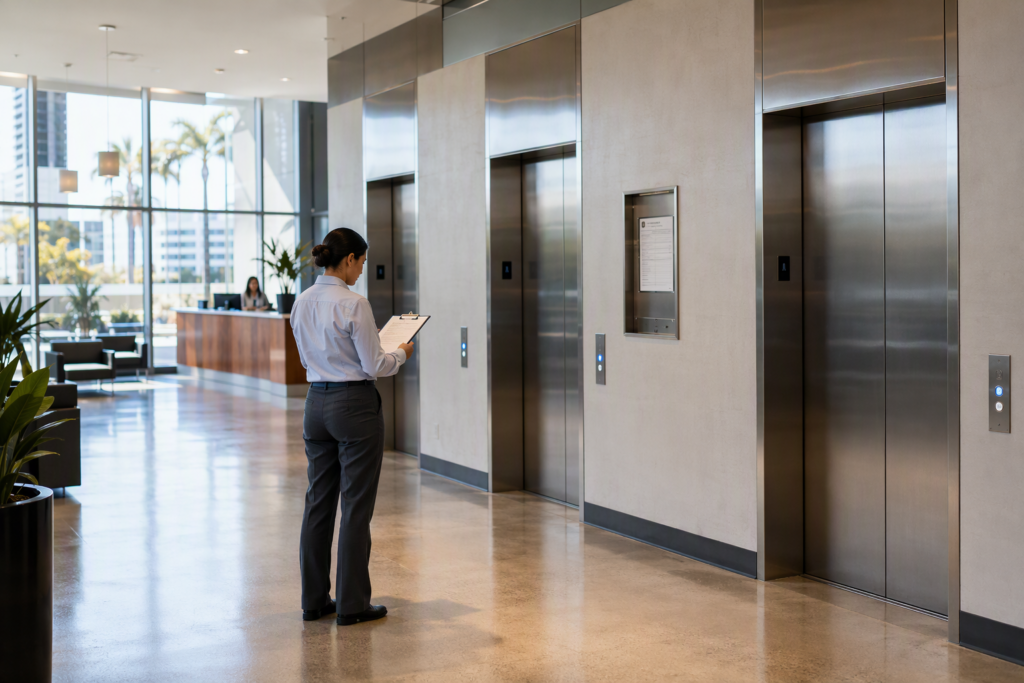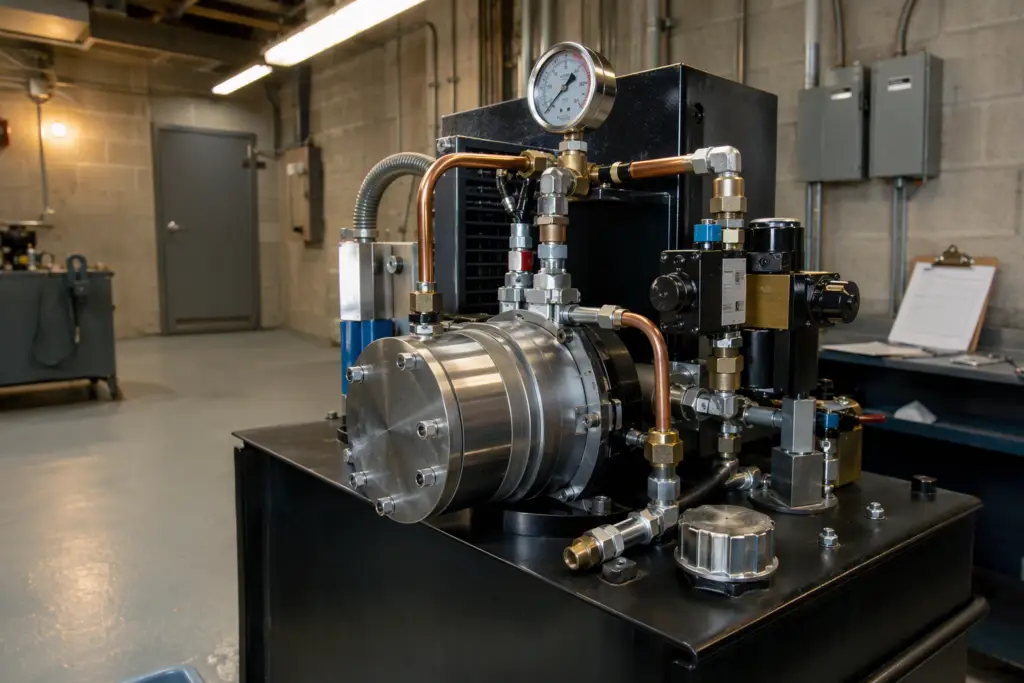
Failed Elevator Inspection in California: What Healthcare Facilities Must Do Next
For hospitals, medical office buildings, skilled nursing facilities, and outpatient clinics across Signal Hill, Long Beach, Los Angeles, and Orange County, a failed elevator inspection is never just a maintenance issue — it is a patient safety event and a potential compliance crisis. Healthcare environments carry a unique burden: elevators are life-safety infrastructure that moves patients on stretchers, nurses with medication carts, and emergency responders under time pressure. Understanding exactly what happens after a failed inspection, and what California law requires of you, is essential for every healthcare facility manager.
—
What Does a Failed California Elevator Inspection Actually Mean?
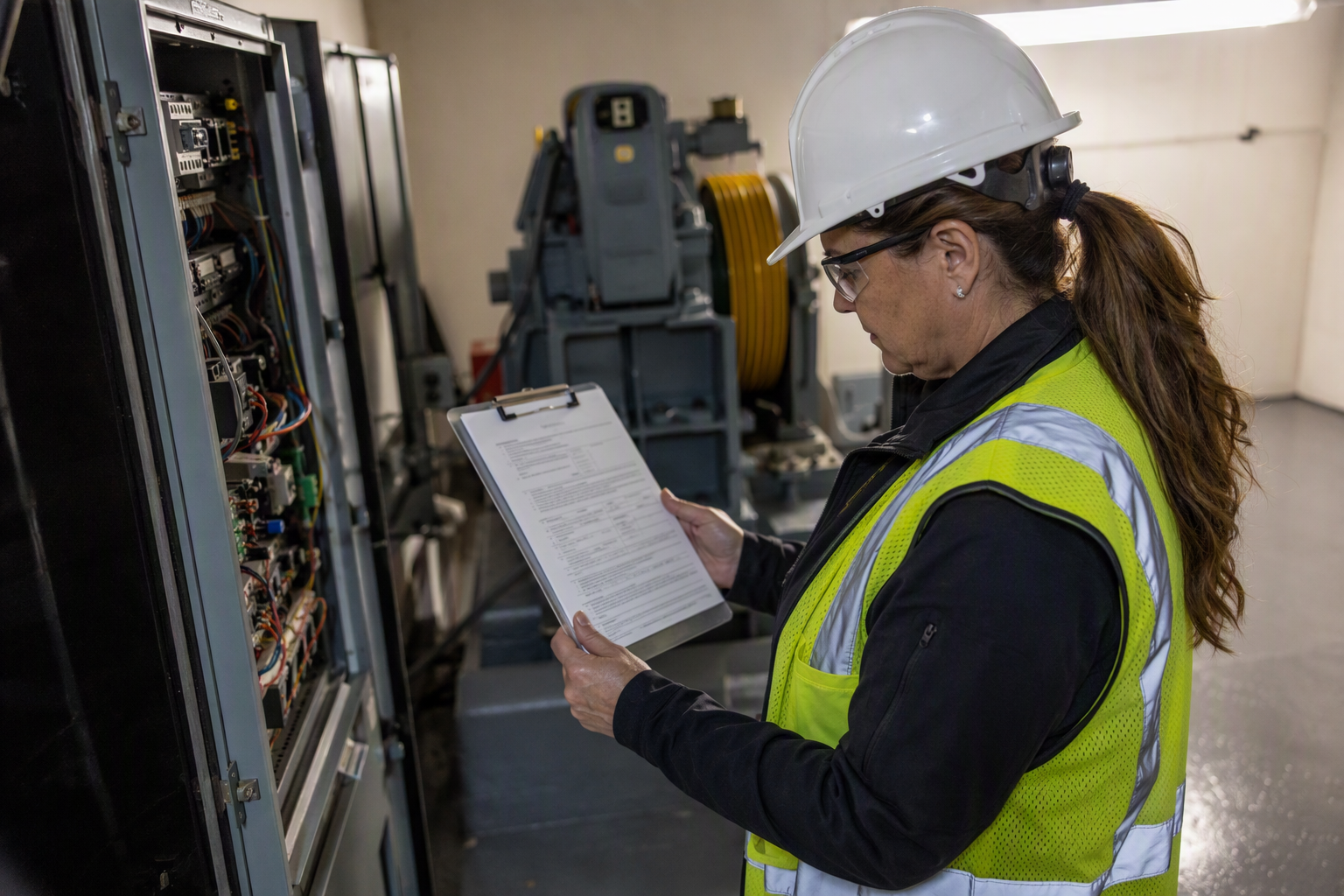
California elevator inspections are conducted under the authority of the Division of Occupational Safety and Health (Cal/OSHA) and its Elevator, Ride, and Tramway Unit, which enforces the state’s elevator safety regulations. When an elevator fails inspection, the outcome depends entirely on the classification of the violations found.
Violations generally fall into two categories:
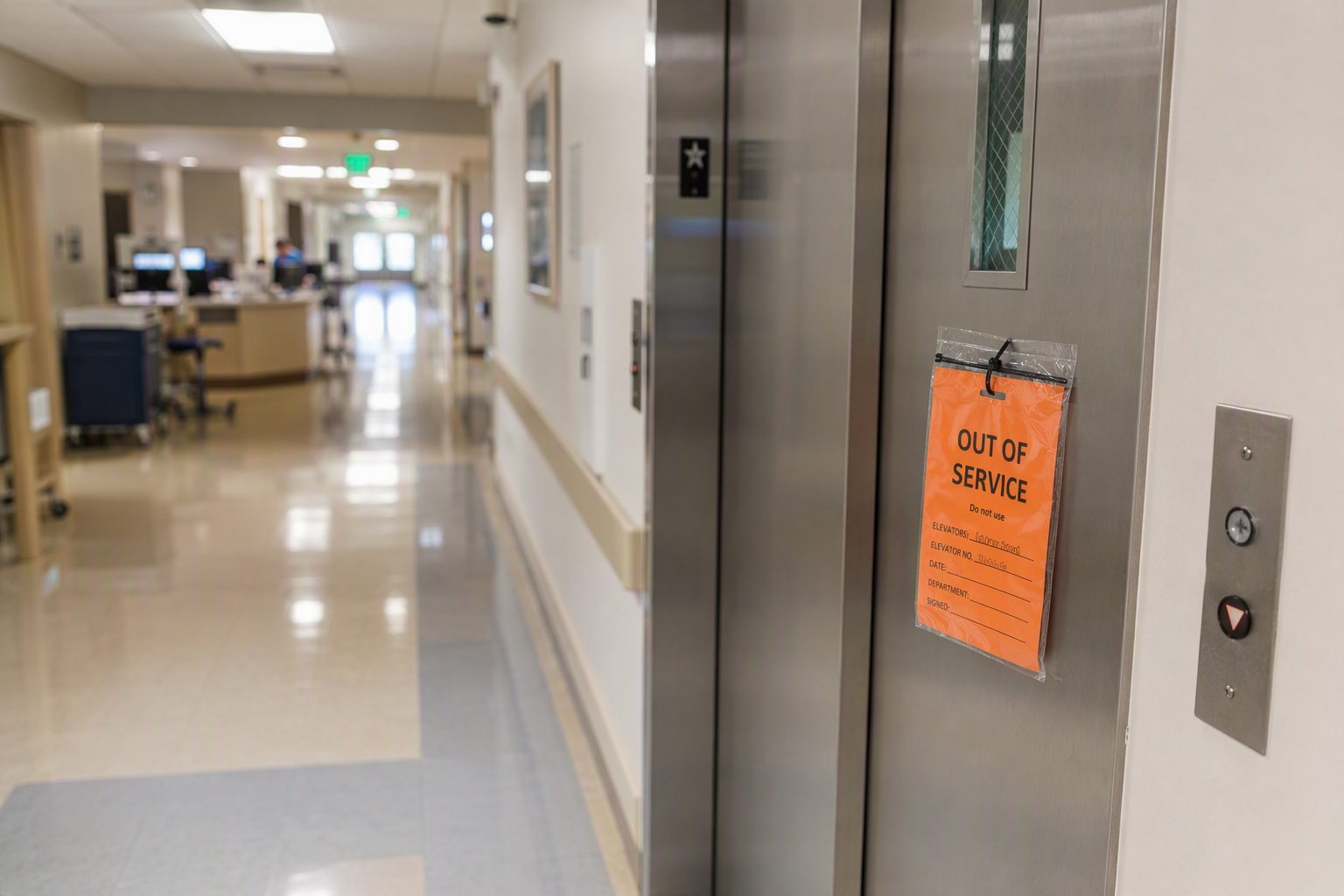
- Imminent Hazard / Category 1 Violations: Deficiencies that pose an immediate risk of injury or death. These trigger an out-of-service tag or “Do Not Use” order immediately upon discovery. The elevator cannot legally operate until the violation is corrected and re-inspected.
- Non-Imminent / Category 2 Violations: Deficiencies that do not pose an immediate danger but still violate applicable codes. These typically carry a written correction order with a defined compliance deadline — commonly 30, 60, or 90 days — though the issuing inspector has discretion to adjust that window based on circumstances.
In either case, the inspection agency issues a formal written notice. For healthcare facilities, receiving this notice triggers obligations not just under California elevator law but also under facility licensing requirements administered by the Occupational Safety and Health Administration (OSHA) and potentially the Centers for Medicare & Medicaid Services (CMS) if the facility participates in federal healthcare programs.
—
How Long Does a Healthcare Facility Have to Fix Elevator Violations in California?

There is no single universal deadline that applies to every violation. Timelines are assigned based on hazard classification and are stated in the correction order itself. As a general framework:
- Imminent hazard violations: The elevator is taken out of service immediately. It may not return to service until repairs are completed and the unit passes a follow-up inspection. There is effectively no grace period — the clock starts at zero.
- Non-imminent violations: Correction orders typically state a deadline. Facilities may request an extension in writing if parts are on order, if contractor scheduling creates a documented delay, or if the scope of repair requires extended downtime. Extension approvals are not guaranteed.
Healthcare facilities should never assume a violation can simply be noted and addressed at the next scheduled maintenance cycle. Regulatory bodies auditing hospital and skilled nursing facility operations — including accreditation organizations and state licensing boards — will review elevator compliance records as part of their surveys.
—
What Are the Code Requirements That Apply to Healthcare Elevator Compliance?
Healthcare elevators in California must comply with a layered set of standards:
- ASME A17.1 Safety Code for Elevators and Escalators: The foundational technical standard governing elevator design, installation, inspection, testing, and maintenance. California adopts this code through state regulation. The 2019 edition and subsequent updates through 2026 govern most inspections conducted today.
- Americans with Disabilities Act (ADA): Requires elevator accessibility for patients with disabilities, including specific door width requirements, control panel heights, and audible/visual signals. ADA non-compliance can be cited during inspections and carries separate federal enforcement exposure.
- California Code of Regulations (CCR) Title 8: Establishes California-specific elevator safety rules, periodic inspection requirements, and the permit-to-operate framework. Healthcare facilities must maintain a current Cal/OSHA elevator permit for each unit.
- NFPA 101 Life Safety Code: Applies to healthcare occupancies and includes requirements for elevator recall, firefighters’ service, and integration with fire alarm systems. Violations of fire service recall functionality are commonly cited as imminent hazard-level deficiencies in hospital settings.
—
What Should a Healthcare Facility Do Immediately After a Failed Inspection?
- Read the correction order in full. Identify every cited violation, its hazard classification, and the stated compliance deadline. Do not rely on verbal summaries from the inspection team.
- Secure and post required notices. If an out-of-service order has been issued, ensure the elevator is physically secured and the notice is clearly posted on the doors. Operating a red-tagged elevator exposes the facility to significant additional liability.
- Notify facility administration and risk management. A failed elevator inspection is a recordable event for most healthcare compliance programs. Legal counsel and your insurance carrier may need to be informed promptly.
- Contact a qualified elevator service contractor immediately. Engage a licensed elevator contractor who understands ASME A17.1 and California-specific requirements. Facilities in Signal Hill, Long Beach, Los Angeles, and Orange County can contact Liftech Elevator to begin the assessment and repair process.
- Document all communications with the inspection authority. Every call, email, and submission related to the violation should be date-stamped and retained in your compliance file.
- Request a re-inspection as soon as repairs are complete. Do not allow a repaired elevator to sit idle awaiting re-inspection scheduling. Follow up proactively with the inspection authority to secure the earliest available appointment.
- Update your elevator maintenance and inspection log. California requires facility-side maintenance logs. Ensure all corrective work is documented by the performing contractor with parts used, dates, and technician credentials.
—
Can a Hospital Keep Using an Elevator That Has Failed Inspection?
If the elevator has received a formal out-of-service order, operation is prohibited. There are no patient-necessity exceptions under California elevator law. Hospitals sometimes ask whether emergency patient transport creates a legal carve-out — it does not. The risk is compounded rather than reduced: operating a tagged elevator creates both regulatory liability and direct patient injury exposure.
Some facilities arrange conditional limited use pending repair for non-imminent violations where the inspector has not posted an out-of-service tag. In these situations, the facility should obtain written confirmation from the inspection authority that limited operation is permissible and document those communications carefully.
—
What Violations Are Most Commonly Cited in Healthcare Elevator Inspections?
Based on the categories of deficiencies that arise under ASME A17.1 and California Title 8 inspections, healthcare elevator violations frequently involve:
- Firefighters’ emergency operation (Phase I recall and Phase II in-car operation) malfunctions
- Door closing force and reopening device sensitivity outside code tolerances
- Leveling accuracy — critical in hospitals where gurney transfers require precise floor alignment
- Emergency lighting and communication system deficiencies
- Pit conditions including inadequate lighting, water intrusion, or clearance violations
- Overdue or missing periodic load tests and safety tests required under ASME A17.1
- ADA non-conformances including inoperable audible signals or inaccessible controls
—
How Does a Failed Inspection Affect a Hospital’s Accreditation or Licensing?
Healthcare facilities accredited by The Joint Commission, Det Norske Veritas (DNV), or the Healthcare Facilities Accreditation Program (HFAP) are required to maintain the physical environment in compliance with applicable codes. An unresolved elevator violation — particularly one involving fire service recall or patient transport safety — can constitute a finding under the Environment of Care (EC) standards and trigger a corrective action plan requirement from the accrediting body.
California Department of Public Health (CDPH) licensing surveys for skilled nursing facilities and hospitals also review elevator compliance records. Open violations at the time of a licensing survey can result in citation, plan of correction requirements, or in severe cases, civil monetary penalties.
—
What Is the Re-Inspection Process After Repairs Are Completed?
After a licensed elevator contractor completes the corrective repairs, the facility must arrange a follow-up inspection with the original inspection authority — typically Cal/OSHA or an authorized third-party inspection agency. The inspector verifies that each cited violation has been resolved and that the elevator meets applicable code requirements. If the unit passes, the inspector issues a new permit to operate or removes the out-of-service notice. The elevator may then return to service.
Liftech Elevator coordinates directly with inspection authorities on behalf of healthcare clients in Long Beach, Los Angeles, and Orange County to help expedite re-inspection scheduling — reducing the total duration of elevator downtime in clinical settings.
—
How Can Healthcare Facilities Prevent Future Inspection Failures?
Proactive maintenance is the most effective strategy. ASME A17.1 establishes maintenance requirements that, when followed consistently, substantially reduce the likelihood of inspection failures. Healthcare facilities should maintain:
- A comprehensive written maintenance control program (MCP) as required by ASME A17.1
- Scheduled periodic testing including annual and five-year safety tests
- Real-time documentation of all service calls, parts replacements, and adjustments
- Regular fire service recall testing coordinated with the facility’s fire alarm testing schedule
- ADA accessibility audits conducted in advance of formal inspections
Facilities that partner with Liftech Elevator for planned maintenance programs report fewer deferred deficiencies entering the formal inspection cycle. Routine maintenance visits are the appropriate venue for identifying and correcting potential violations before they become inspection findings.
—
Questions Your Inspector Will Ask
Healthcare facility managers should be prepared to answer the following questions during an elevator inspection or follow-up compliance review:
- Where is your current elevator permit to operate, and is it posted at the unit?
- Can you produce your maintenance control program documentation?
- When was the last Category 1 and Category 5 safety test performed, and where is the test record?
- Has firefighters’ emergency operation been tested in the last 12 months? What is the documented result?
- Who is your current elevator service contractor, and are they licensed under California law?
- Have there been any prior violations or correction orders on this unit, and how were they resolved?
- What is the load capacity of this elevator, and is it clearly posted inside the car?
- Is the machine room access controlled, properly lit, and free of non-elevator storage?
- Are emergency communication systems functional and connected to a monitored line?
- Does this elevator serve a floor above the fourth floor, and if so, has the required seismic switch been tested?
—
Does Elevator Age Affect Compliance Obligations in Healthcare Settings?
Older elevator equipment is not automatically exempt from current code requirements. California applies a “no reduction in safety” principle: when major components are replaced or when a modernization project is undertaken, the modernized elements must meet current ASME A17.1 standards. For healthcare facilities operating elevators installed decades ago, a compliance gap analysis conducted by a qualified elevator contractor — such as Liftech Elevator — can identify which components are operating under legacy approvals and which are subject to current code mandates.
—
What Are the Consequences of Ignoring a Correction Order?
Ignoring a California elevator correction order is not a viable option for any facility, and for healthcare providers, the consequences compound rapidly:
- Permit revocation: Cal/OSHA can revoke the elevator’s operating permit, making any use of the unit an unlawful act.
- Civil penalties: Continued operation of a non-compliant elevator can result in civil fines assessed per day of violation.
- Accreditation risk: As described above, open violations can trigger findings under Joint Commission EC standards.
- Liability exposure: If a patient or staff member is injured on an elevator operating under an unresolved violation, the facility faces substantially heightened tort exposure.
- Licensing action: For licensed healthcare facilities, CDPH has authority to take licensing action based on persistent life-safety non-compliance.
—
Is There a Difference Between Inspection Requirements for Hospitals vs. Medical Office Buildings?
The underlying California elevator code applies to both. However, the consequences of non-compliance differ significantly by facility type. Hospitals and skilled nursing facilities operate under CMS Conditions of Participation and state licensure requirements that layer additional compliance obligations on top of the baseline elevator code. A medical office building faces primarily the Cal/OSHA and building code framework. Healthcare facility managers should work with both their elevator contractor and their compliance or legal counsel to understand the full regulatory picture applicable to their specific facility type.
—
How Do I Choose the Right Elevator Contractor to Address Healthcare Inspection Violations?
Not every elevator contractor has experience navigating the intersection of California elevator law and healthcare facility compliance requirements. When evaluating contractors, facilities should confirm:
- Current California Elevator Mechanic licensure for all performing mechanics
- Demonstrated experience with ASME A17.1 compliance work in healthcare or institutional settings
- Ability to provide documentation suitable for regulatory and accreditation submissions
- Familiarity with fire service recall requirements and coordination with fire alarm systems
- Capacity to perform or arrange Category 1 and Category 5 safety tests
Liftech Elevator serves healthcare facilities across Signal Hill, Long Beach, Los Angeles, and Orange County with elevator maintenance, inspection preparation, and violation correction services designed for clinical environments.
—
Contact Liftech Elevator for a Free Elevator Assessment
If your healthcare facility has received a failed inspection notice, a correction order, or an out-of-service tag — or if you want to identify and resolve potential violations before your next inspection — contact Liftech Elevator today.
Call us at 562-997-3639 to schedule a free elevator assessment for your Signal Hill, Long Beach, Los Angeles, or Orange County healthcare facility.
Liftech Elevator is a certified elevator service company helping healthcare providers maintain safe, compliant vertical transportation for patients, staff, and visitors.
Need elevator service you can rely on? Liftech Elevator is ready to help.