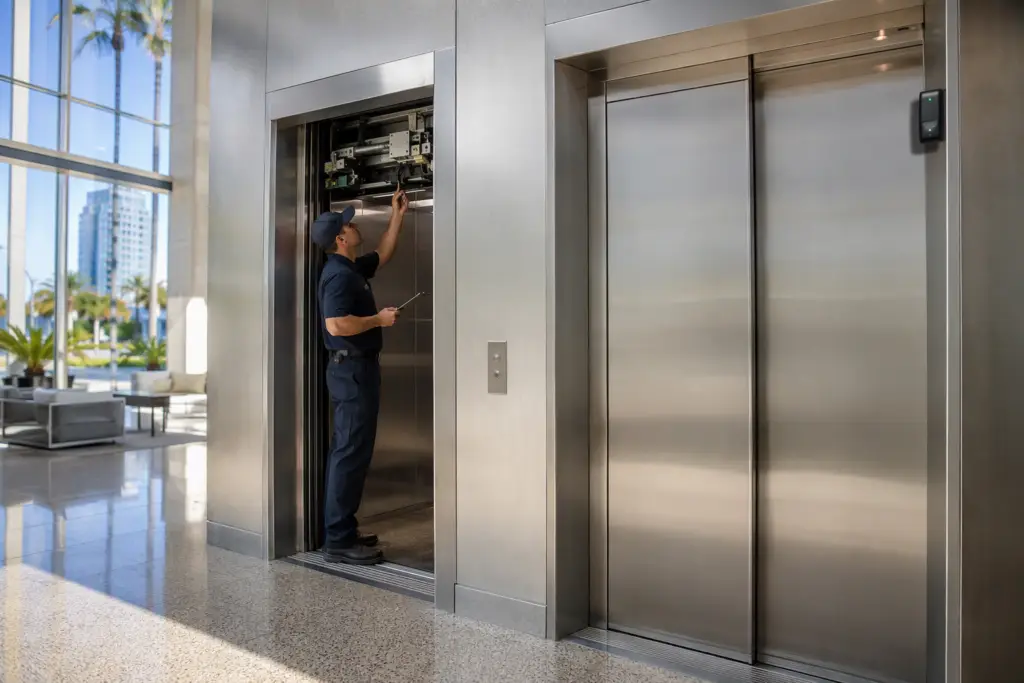
Signs Your Commercial Elevator Is About to Break Down (And How to Prevent an Emergency Shutdown)
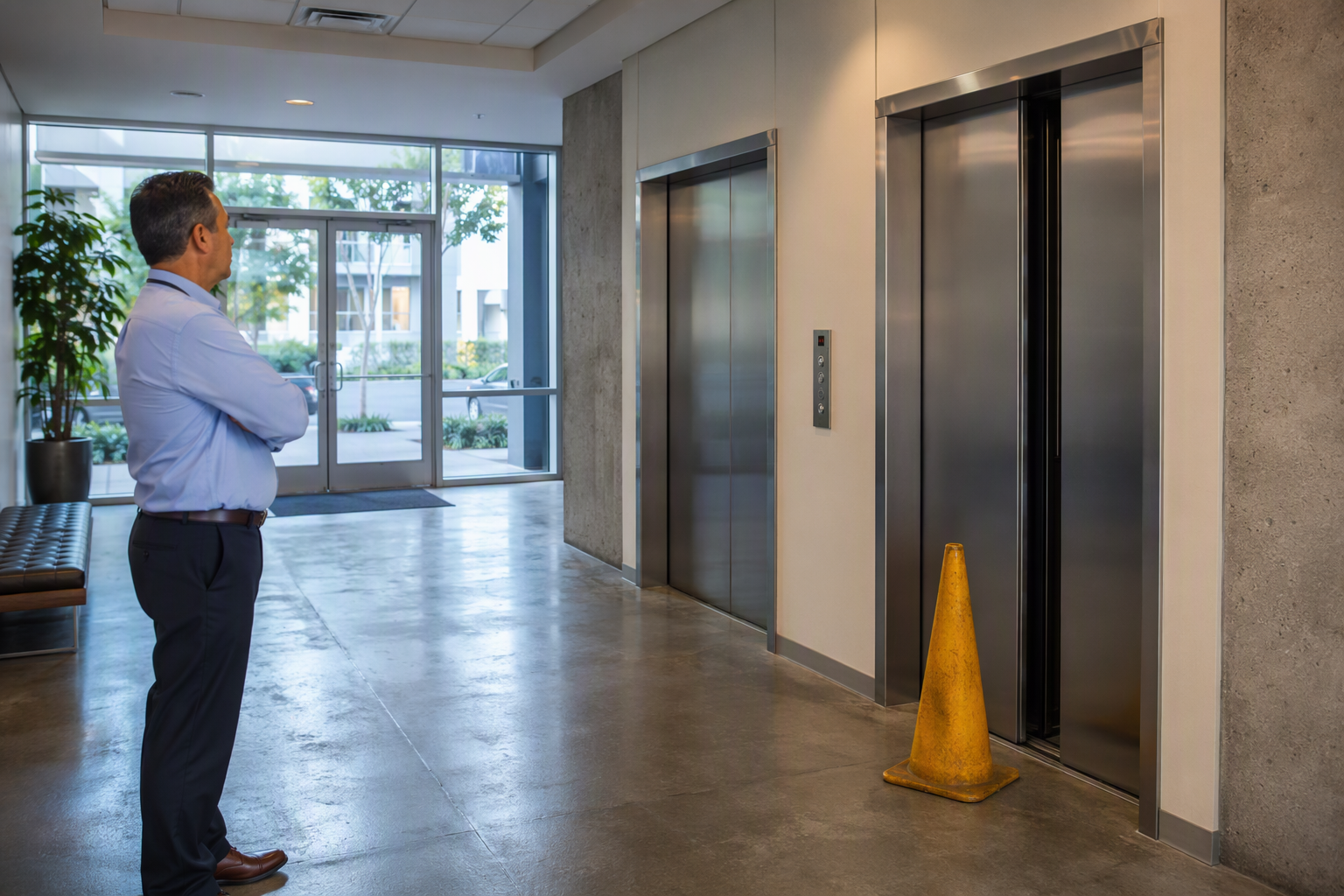
Commercial elevator downtime is not just an inconvenience — it is a potential safety hazard, an ADA compliance violation, and a significant financial liability for building owners and property managers in Signal Hill, Long Beach, Los Angeles, and Orange County. Understanding the early warning signs of elevator failure and knowing how to respond puts facility managers in control before a minor issue becomes an emergency shutdown. This FAQ hub covers the full scope of commercial elevator reliability: warning signs, maintenance schedules, California inspection requirements, repair versus replacement decisions, and how to work with a qualified elevator service company to keep equipment running safely.
What Are the Most Common Early Warning Signs That a Commercial Elevator Is About to Break Down?
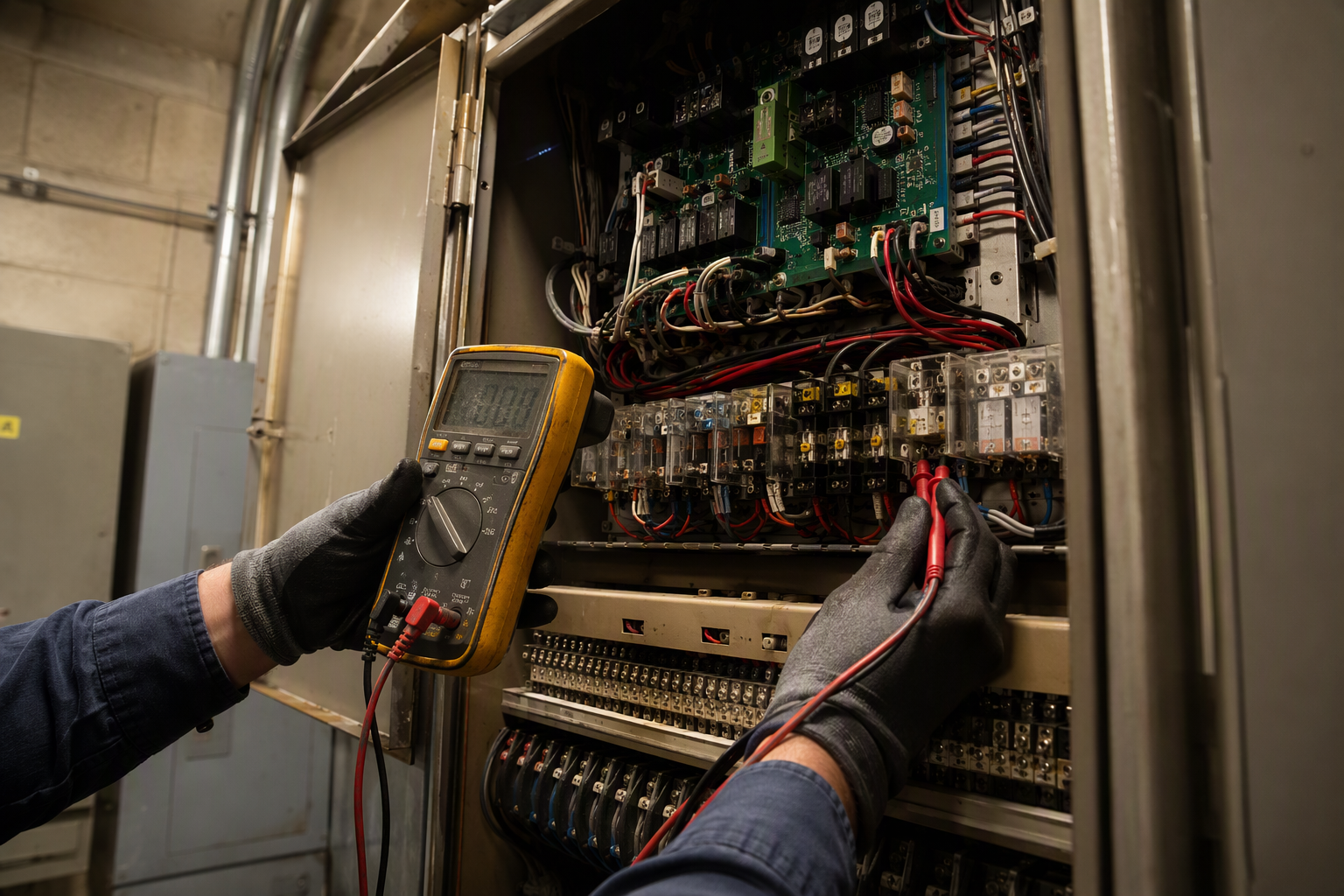
The most reliable early warning signs include unusual mechanical noises, inconsistent door operation, poor floor leveling, slow or sluggish travel speeds, and frequent nuisance trips on safety circuits.
Building managers should train facilities staff to document and report any of the following as soon as they appear:
- Grinding, banging, or squealing sounds during travel or door operation — often indicate worn guide shoes, failing hoist ropes, or deteriorating drive components.
- Jerky or rough ride quality — typically caused by worn roller guides, contaminated rail lubrication, or drive controller instability.
- Doors that hesitate, reverse unexpectedly, or fail to close completely — the leading cause of service calls and a direct passenger safety risk.
- Floor leveling errors greater than a half inch — a tripping hazard and, under the Americans with Disabilities Act (ADA), an accessibility violation for wheelchair and mobility-device users.
- Slow or intermittent response to hall or car calls — can signal controller board degradation, relay failures, or software faults in modern microprocessor controls.
- Burning or oily odors — may indicate motor overheating, hydraulic fluid leaks, or brake lining wear.
- Frequent “out of service” trips with no clear cause — suggests safety-circuit faults that require immediate diagnostic evaluation.
None of these symptoms should be dismissed as normal wear. Each one represents a measurable deviation from the performance baseline the elevator was designed to maintain.
How Often Should Commercial Elevators Be Inspected Under California Law?
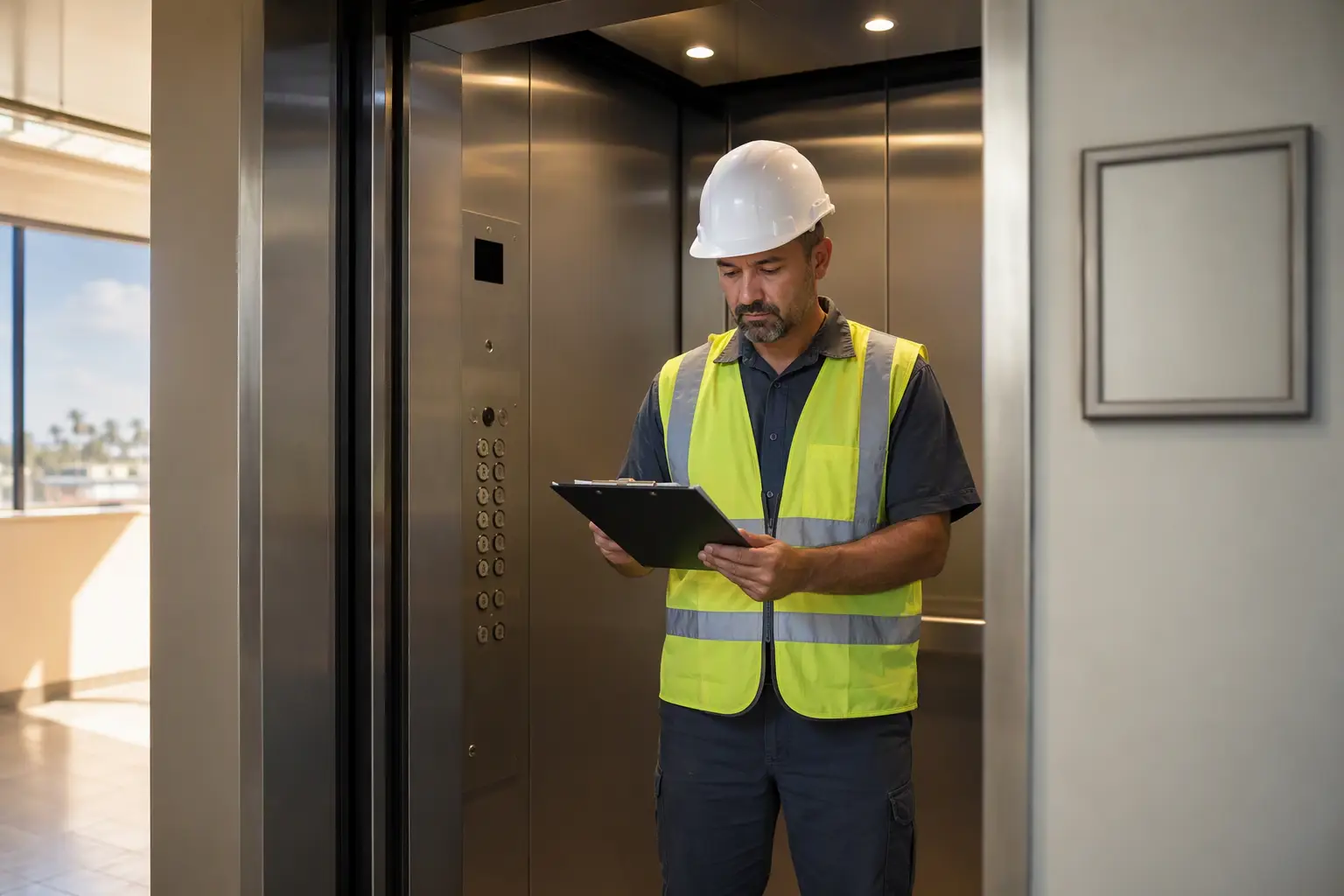
In California, commercial elevators must receive periodic inspections by a Certified Elevator Inspector (CEI) as governed by the California Elevator Safety Construction Unit under the Division of Occupational Safety and Health (Cal/OSHA), and the intervals are tied to elevator type and use classification.
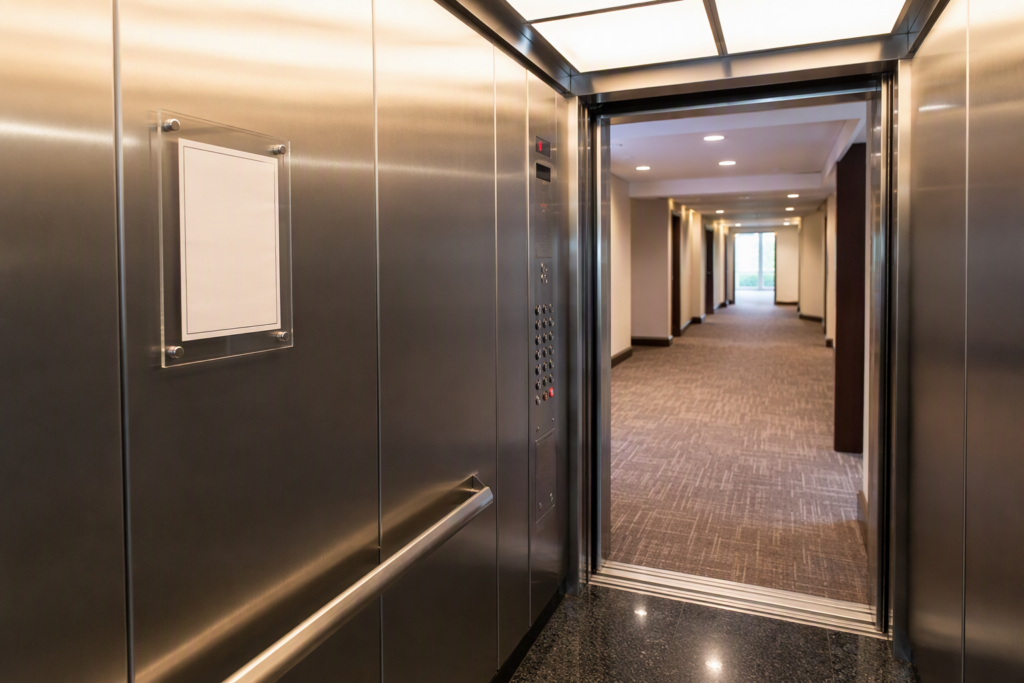
California enforces elevator safety through Title 8 of the California Code of Regulations, with the ASME A17.1 Safety Code for Elevators and Escalators and its companion standard ASME A17.3 (Safety Code for Existing Elevators and Escalators) serving as the adopted technical baseline. Routine periodic inspections are required to maintain a valid Certificate of Inspection, which must be posted in the elevator car at all times.
Building owners who allow a certificate to lapse face elevator shutdown orders and potential liability exposure. In the Los Angeles, Long Beach, Signal Hill, and Orange County markets, the Authority Having Jurisdiction (AHJ) may be a city elevator inspection division, the county, or the state — depending on the municipality. Confirming which AHJ governs a specific property is a critical first step for any facility manager.
What Is the Difference Between Preventive Maintenance and Reactive Repair?
Preventive maintenance is a scheduled, proactive service program that addresses wear and adjusts components before failure occurs, while reactive repair responds to breakdowns after they happen — typically at higher cost and with greater disruption.
A structured preventive maintenance (PM) contract covers lubrication of guide rails, inspection and tensioning of hoist ropes, adjustment of door operators and closers, cleaning and testing of safety devices, load testing of brakes, and review of controller diagnostics. These tasks follow intervals specified in the ASME A17.1 Safety Code for Elevators and Escalators and the manufacturer’s service documentation.
Reactive repair, by contrast, is triggered by failure — a broken door sensor, a blown controller board, or a seized brake. Parts may not be in stock, lead times can extend downtime, and the cascading effect of one failed component stressing adjacent systems often means a larger repair bill. For high-traffic commercial buildings in Los Angeles or Orange County, every hour of elevator downtime has a direct operational and reputational cost.
Liftech Elevator offers structured preventive maintenance programs designed for commercial properties across Signal Hill, Long Beach, Los Angeles, and Orange County, covering all major elevator types and drive systems.
What Mechanical Components Are Most Likely to Fail in a Commercial Elevator?
The components with the highest failure rates in commercial elevators are the door operator system, hoist ropes and sheaves, control board electronics, and the hydraulic power unit (in hydraulic elevator systems).
| Component | Failure Indicators | Typical Service Action | Code/Standard Reference |
|---|---|---|---|
| Door Operator & Closers | Slow close, reversal, failure to latch | Adjust, lubricate, or replace motor/cams | ASME A17.1 |
| Hoist Ropes | Visible wear, broken wires, glazing | Tension adjustment or full replacement | ASME A17.1 |
| Guide Rails & Shoes | Rough ride, noise on travel | Lubrication, re-alignment, shoe replacement | ASME A17.1 |
| Control Board / Controller | Erratic calls, nuisance trips, error codes | Diagnostic, board repair or replacement | ASME A17.1 |
| Hydraulic Power Unit | Slow travel, fluid leaks, overheating | Fluid change, valve adjustment, pump overhaul | ASME A17.1 |
| Brake Assembly | Drifting, hard stops, burning smell | Brake lining inspection and adjustment | ASME A17.1 |
| Safety Devices (governor, safeties) | Triggered without cause, slow reset | Test, calibrate, reset per code | ASME A17.1 |
| Buffers (pit) | Oil leaks, deformation, corrosion | Inspection, replacement as required | ASME A17.3 |
What Noises From an Elevator Should Never Be Ignored?
Grinding, metallic banging, squealing during door travel, and thudding sounds on deceleration are sounds that indicate active mechanical wear or imminent component failure and should prompt an immediate service call.
Elevator sounds carry diagnostic information that trained technicians use to pinpoint failure locations. A grinding noise from above the car suggests sheave or rope wear; a rhythmic clicking during travel often points to a worn guide shoe dragging on a rail fastener; a loud bang at each floor during deceleration may indicate buffer contact or controller tuning problems. Hissing or rushing fluid sounds in a hydraulic unit are a sign of valve seat erosion or a failing packing seal.
Occupants often normalize unusual sounds over time. Building managers in high-rise Los Angeles or Orange County commercial properties should establish a simple reporting protocol — even a log sheet in the elevator lobby — so that sound anomalies are captured and communicated to the maintenance provider promptly.
How Do Elevator Door Problems Lead to Emergency Shutdowns?
Door system malfunctions are the single most frequent cause of commercial elevator outages because the elevator’s safety interlock system will prevent travel whenever a door does not register as fully closed and locked.
Modern elevators use door contact circuits and electromechanical interlocks on every landing and car door. When a contact degrades, an interlock cam wears, or a door closer loses tension, the circuit reads an “open door” condition — and the elevator becomes unavailable. This protects passengers but results in unexpected service interruptions during business hours.
Proactive door maintenance includes regular adjustment of the door operator speed and torque, inspection of door rollers and hangers, replacement of worn sill grooves that can jam door panels, and cleaning of photo-eye or light-curtain sensors that detect passengers in the doorway. Under the ADA, door timing must also accommodate passengers using mobility aids, meaning door-hold time and reopening sensitivity are not purely mechanical issues — they carry regulatory compliance implications.
What Should Building Management Do Immediately When an Elevator Shows Warning Signs?
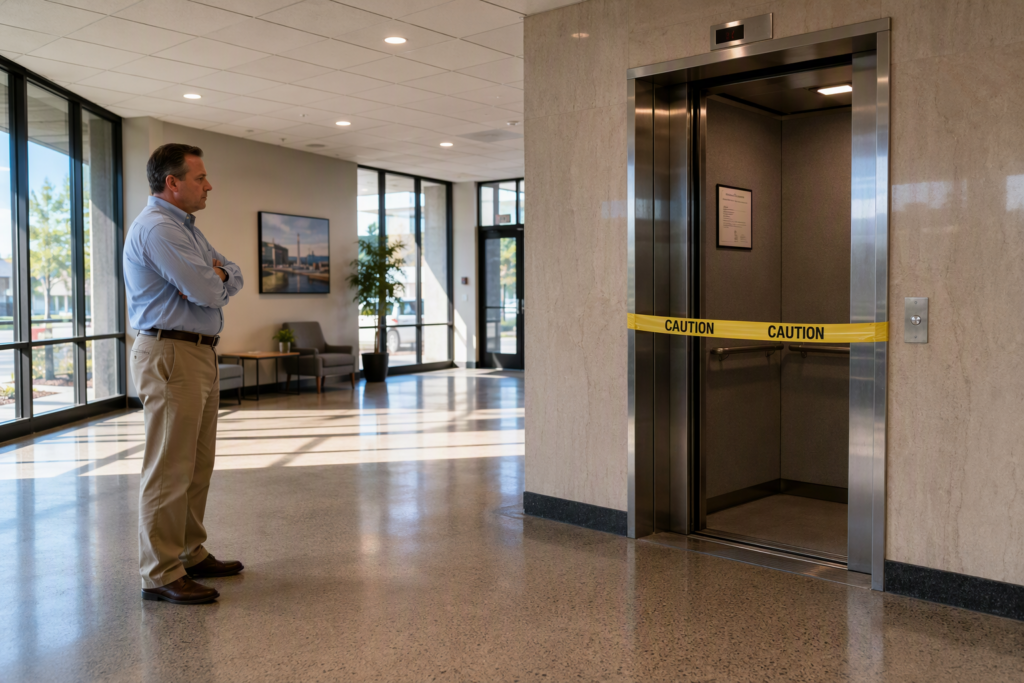
- Remove the elevator from service if there is any immediate safety risk — post clear signage on all affected landings and activate the out-of-service mode if the controller allows it.
- Contact a licensed elevator service company for a diagnostic visit — do not allow building maintenance staff without elevator-specific certification to attempt internal adjustments.
- Document the symptoms in writing — note the time, floor, direction of travel, the specific sound or behavior, and any error codes displayed on the controller panel.
- Notify your AHJ if the elevator has been taken out of service — some California jurisdictions require notification when an elevator is removed from service beyond a specified timeframe.
- Verify your Certificate of Inspection is current — an out-of-service elevator with a lapsed inspection certificate compounds the liability exposure significantly.
- Ensure ADA compliance for building occupants — if the elevator is the only accessible route for wheelchair users, the building owner may have an obligation under the ADA to communicate the outage and provide an accessible alternative or plan.
- Follow up with a written service report — require the elevator company to provide a written diagnosis and repair recommendation that you retain for compliance documentation purposes.
How Does Poor Leveling Affect Passenger Safety and ADA Compliance?
Inaccurate floor leveling — where the elevator car floor does not align precisely with the landing floor — creates a step hazard and directly violates ADA accessibility standards that require smooth, level access for wheelchair users and individuals with mobility impairments.
Leveling errors in traction elevators are commonly caused by worn rope stretch over time, brake drift, or deteriorating leveling sensors and vanes in the hoistway. In hydraulic elevators, cylinder seal wear or thermal fluid expansion can cause the car to drift above or below the landing after the doors open. Both scenarios create immediate trip-and-fall risk for all passengers and a functional barrier for wheelchair users.
Regular calibration of the leveling zone and prompt replacement of worn sensing components keep the car within acceptable tolerances. Leveling performance is evaluated during California periodic inspections and is one of the criteria that can result in a failed inspection and mandatory shutdown order.
What Is the Role of the Machine Room in Elevator Reliability?
The machine room houses the drive motor, controller, and in traction systems the main sheave — and its temperature, humidity, and cleanliness directly affect the reliability and lifespan of the elevator’s most critical components.
Overheated machine rooms are a major and underappreciated cause of controller board failures and motor thermal trips. California’s climate variability — particularly in inland Los Angeles County and Orange County locations — means machine room temperatures can spike significantly without adequate ventilation or dedicated cooling. The ASME A17.1 Safety Code for Elevators and Escalators establishes environmental requirements for machine rooms, including lighting, access control, and the prohibition of unrelated equipment and storage that could create fire or access hazards.
Building facilities teams should ensure machine room doors remain locked to unauthorized personnel, that the space is kept clean and free of stored materials, and that any HVAC serving the room is functional year-round. Reporting machine room temperature concerns to the elevator service provider allows them to assess motor cooling and ventilation adequacy during preventive maintenance visits.
What Causes Hydraulic Elevator Systems to Fail More Frequently Than Traction Elevators?
Hydraulic elevators are more susceptible to temperature-related fluid viscosity changes, cylinder seal degradation, and pump cavitation — failure modes that are less common in traction-drive systems but that can develop gradually and without obvious early warning.
Older single-bottom hydraulic cylinders also carry environmental risk: underground cylinders can develop leaks that contaminate soil and groundwater, creating liability under California environmental regulations. Many commercial properties in Long Beach, Signal Hill, and surrounding areas have older hydraulic systems that predate modern above-ground or inground fiberglass-encased cylinder designs. A qualified elevator company can assess cylinder condition and advise on leak detection systems or modernization options.
Hydraulic fluid degradation is another underrecognized factor. Fluid that has darkened, emulsified with water, or developed a burnt odor should be replaced promptly — degraded fluid accelerates valve wear and reduces system responsiveness. Fluid sampling and analysis can be included in a preventive maintenance program to extend power unit life.
How Does Elevator Modernization Differ From Routine Maintenance, and When Is It Necessary?
Modernization replaces major system components — controls, drive systems, door operators, or fixtures — to restore code compliance, improve reliability, and extend useful service life, whereas routine maintenance preserves existing components within their designed operating parameters.
The trigger for modernization is typically one of three conditions: (1) the existing controller or drive system can no longer source parts, making repairs impractical; (2) the elevator cannot comply with current code requirements under ASME A17.3 for existing elevators without substantial component changes; or (3) cumulative repair costs approach or exceed the cost of systematic modernization.
In California, modernization projects require permits from the AHJ, engineering review, and post-installation inspections. Building owners planning modernization in Los Angeles, Orange County, Long Beach, or Signal Hill should factor permitting lead times into project timelines, as AHJ workloads vary. Liftech Elevator supports clients through the full modernization process, from initial assessment through final inspection sign-off.
What Are the Legal Obligations of California Building Owners Regarding Elevator Safety?
California building owners are legally required to maintain a valid Certificate of Inspection for each elevator, ensure the elevator is maintained in safe operating condition, and make the unit available for periodic inspection by the AHJ or a state-certified inspector.
The California Elevator Safety Construction Unit, operating under the Division of Occupational Safety and Health, administers elevator permits and inspections statewide. Operating an elevator without a current permit is a violation that can result in shutdown orders and penalties. Owners are also responsible under the ADA for maintaining accessible routes in working condition — a failed elevator that is the primary accessible route in a building triggers Title III obligations for places of public accommodation.
Workplace elevators in commercial buildings are also subject to general OSHA requirements for safe working environments, which include keeping elevator equipment in a condition that does not expose workers to hazardous conditions during use or servicing.
How Can Building Managers Use Elevator Controller Diagnostics to Predict Failures?
Modern elevator controllers log fault codes, trip histories, and operational anomalies that a qualified technician can read to identify developing problems well before they cause a breakdown.
Most microprocessor-based controllers manufactured in the past two decades maintain an internal event log accessible through a service interface or remote monitoring connection. Common pre-failure indicators visible in controller logs include repeated door-open fault resets, thermal overload events on the motor drive, low battery faults on the emergency backup system, and repeated leveling corrections. When these events cluster or increase in frequency, they indicate a component approaching the end of its service life.
Some commercial properties in larger markets like Los Angeles and Orange County have invested in remote monitoring systems that transmit controller data in real time, allowing service companies to dispatch technicians proactively rather than reactively. Building managers should ask their elevator service provider whether remote monitoring is available for their specific controller platform.
What Happens During a California Elevator Periodic Inspection?
A California periodic elevator inspection is a comprehensive technical examination conducted by a Certified Elevator Inspector that evaluates the elevator’s mechanical, electrical, and safety systems against adopted code requirements — and results in either a renewed Certificate of Inspection or a list of required corrections.
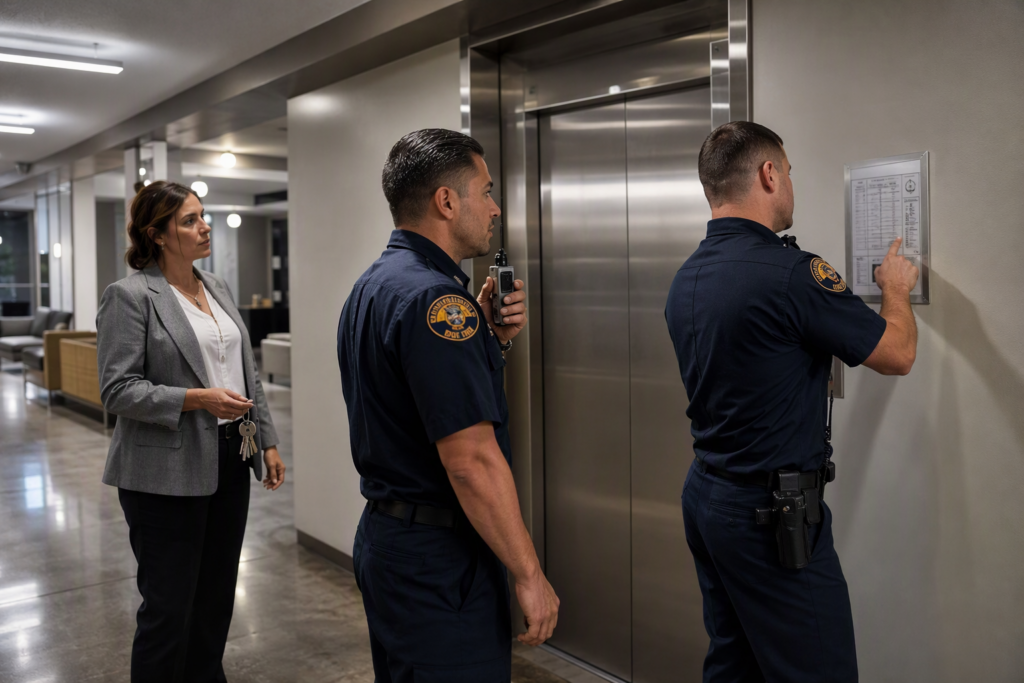
The inspection covers the machine room, pit, hoistway, car enclosure, door operation, safety devices, emergency lighting and communication, governor and safeties, and overall ride performance. Test weights are used to verify brake holding capacity and safety device operation. The inspector reviews the maintenance log and prior inspection records.
When deficiencies are found, the building owner receives a correction notice and a specified timeframe to complete repairs. Failure to remedy deficiencies results in the elevator being placed out of service. Scheduling a pre-inspection review with a qualified elevator maintenance provider helps identify and correct problems before the formal inspection, reducing the risk of forced shutdowns.
How Does Elevator Traffic and Load Affect the Rate of Mechanical Wear?
Higher elevator traffic volume — measured in starts per day and total load-hours — accelerates wear on drive motors, door operators, guide shoes, and control components, making maintenance frequency a function of actual usage rather than calendar time alone.
A commercial office tower in downtown Los Angeles with dozens of floors and hundreds of daily occupants places fundamentally different mechanical demands on an elevator than a three-story medical office in Signal Hill. Maintenance contracts and inspection intervals should reflect actual traffic patterns. Elevators in high-rise or high-density-use environments benefit from more frequent lubrication cycles, more regular door adjustment, and closer monitoring of rope condition compared to low-rise or light-use installations.
Building managers should provide usage context — number of floors, daily passenger volume, freight use, and any after-hours demands — to their elevator service provider so that maintenance intervals are calibrated appropriately.
What Should Be Included in a Commercial Elevator Maintenance Contract?
A comprehensive commercial elevator maintenance contract should specify the scope of covered work, visit frequency, emergency response terms, parts coverage, exclusions, documentation requirements, and compliance responsibilities.
Key elements to verify in any maintenance agreement include:
- Explicit list of components covered for labor and parts versus those billed separately
- Frequency of preventive maintenance visits — monthly, quarterly, or semi-annual — appropriate to the elevator type and traffic level
- Inclusion of annual safety device testing as required by code
- Clear language on who is responsible for AHJ permit fees and inspection scheduling
- Documentation: written service reports after every visit with findings and actions taken
- Escalation procedures for safety-critical faults discovered during routine visits
- Terms governing parts availability and lead times for non-stock components
Liftech Elevator structures maintenance agreements for commercial clients in Long Beach, Signal Hill, Los Angeles, and Orange County to align scope with the specific equipment, use profile, and compliance requirements of each property.
What Are the Consequences of Ignoring Elevator Warning Signs?
Ignoring elevator warning signs leads to outcomes ranging from unexpected emergency shutdowns and passenger entrapments to failed inspections, ADA compliance violations, personal injury liability, and the substantially higher cost of emergency versus planned repair.
Passenger entrapments — where occupants are trapped inside a stalled car — are not only distressing but trigger mandatory incident reporting requirements and potential regulatory investigation. If an entrapment is associated with a known, unaddressed deficiency, the building owner’s liability exposure increases significantly.
From a financial standpoint, deferred maintenance compounds costs in a predictable pattern: a worn door roller that costs relatively little to replace can, if ignored, cause the door motor to burn out and the interlock to fail, turning a minor line item into a multi-component repair. Emergency callout work on nights and weekends carries additional cost beyond standard rates. Planned, preventive intervention is consistently more cost-effective than reactive emergency repair.
How Long Does a Commercial Elevator Repair Typically Take?
Repair duration depends on the nature of the failure: a door adjustment or sensor replacement may be completed in hours, while a hoist rope replacement, controller modernization, or hydraulic cylinder repair can take days to several weeks depending on parts availability and permitting requirements.
Parts availability is often the controlling variable. Older elevator systems — particularly those with proprietary controllers manufactured by companies no longer in business — may require fabricated or refurbished components with extended lead times. Building managers overseeing older equipment in Los Angeles or Orange County commercial properties should ask their maintenance provider to document critical spare parts on hand and identify any long-lead components specific to their installation.
Permit requirements can also affect timelines. In California, certain repair categories — including work on safety devices, control systems, or structural hoistway modifications — require permits and post-repair inspection before the elevator can return to service. Experienced elevator companies factor these administrative steps into their project timelines from the outset.
What Is the Typical Service Life of a Commercial Elevator, and When Should Replacement Be Considered?
Commercial elevator systems are designed for long service lives measured in decades, but major system components — particularly controllers, hydraulic power units, and drive motors — have shorter replacement cycles, and the cumulative cost of maintaining aging equipment eventually shifts the economic case toward modernization or full replacement.
There is no single code-mandated end-of-life date for a commercial elevator. The ASME A17.3 Safety Code for Existing Elevators and Escalators governs retrofitting requirements for older equipment and establishes minimum safety standards that existing elevators must meet. When an elevator can no longer satisfy ASME A17.3 requirements or California AHJ requirements without cost-prohibitive upgrades, replacement becomes the practical path forward.
Decision factors include: frequency of breakdown, parts obsolescence, energy efficiency of aging drive systems, current and projected code compliance costs, and the remaining useful life of the building itself. A structured modernization assessment from Liftech Elevator can help property owners in Signal Hill, Long Beach, Los Angeles, and Orange County quantify these factors and make an informed capital planning decision.
How Can Facility Managers Verify That Their Elevator Service Company Is Qualified to Work in California?
In California, elevator contractors must hold a valid Elevator Mechanic certification and operate under a licensed contractor who holds an Elevator (C-11) specialty contractor license issued by the California Contractors State License Board — both of which are verifiable through public licensing databases.
Facility managers should request and verify the service company’s California C-11 contractor license number before executing a maintenance agreement. Technicians working on California elevator equipment must be certified Elevator Mechanics under the applicable California licensing framework. Compliance with the ASME A17.1 Safety Code for Elevators and Escalators and the California AHJ requirements is the baseline expectation for any licensed elevator contractor operating in the state.
References from comparable commercial properties — same building class, similar elevator type, comparable traffic volume — are a practical supplement to license verification when evaluating a service provider’s suitability for a specific account.
Ready to Prevent an Emergency Elevator Shutdown?
Early warning signs do not wait for a convenient time to become breakdowns. Whether a commercial elevator in Signal Hill, Long Beach, Los Angeles, or Orange County is showing unusual noises, door problems, leveling issues, or is simply overdue for a professional evaluation, proactive assessment is always less costly than emergency repair.
Contact Liftech Elevator for a free elevator assessment. A qualified technician will evaluate the equipment condition, identify any code compliance gaps, and recommend a maintenance plan calibrated to the specific elevator type, traffic level, and regulatory environment of the property.
Call Liftech Elevator today: 562-609-3478
Serving commercial properties throughout Signal Hill CA, Long Beach CA, Los Angeles CA, and Orange County CA.