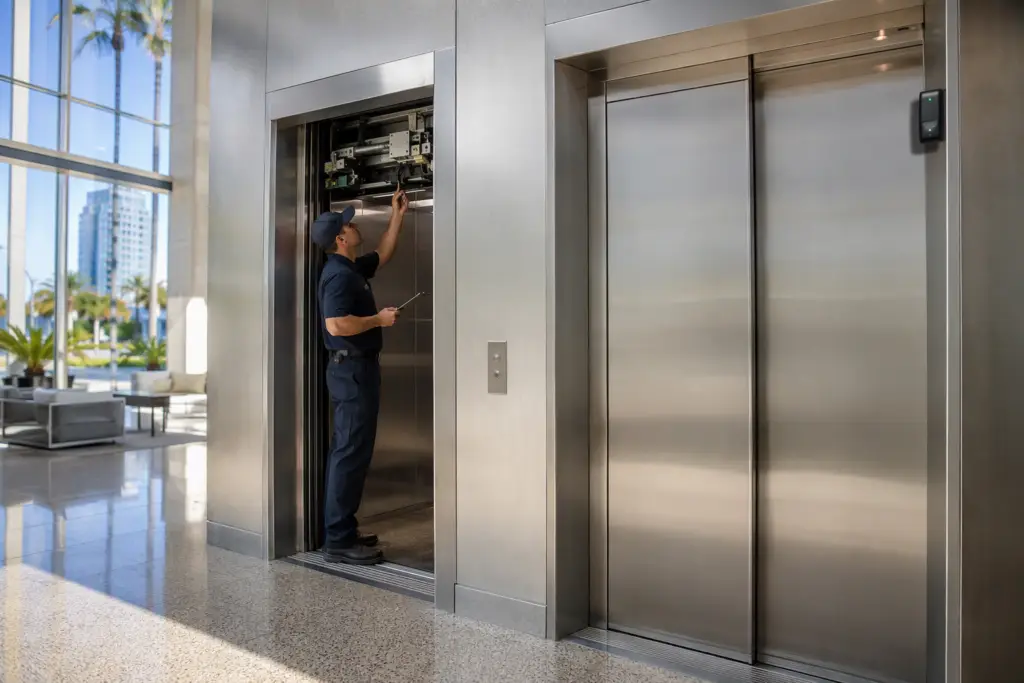
Elevator Stuck Between Floors: Who to Call and What to Do Right Now
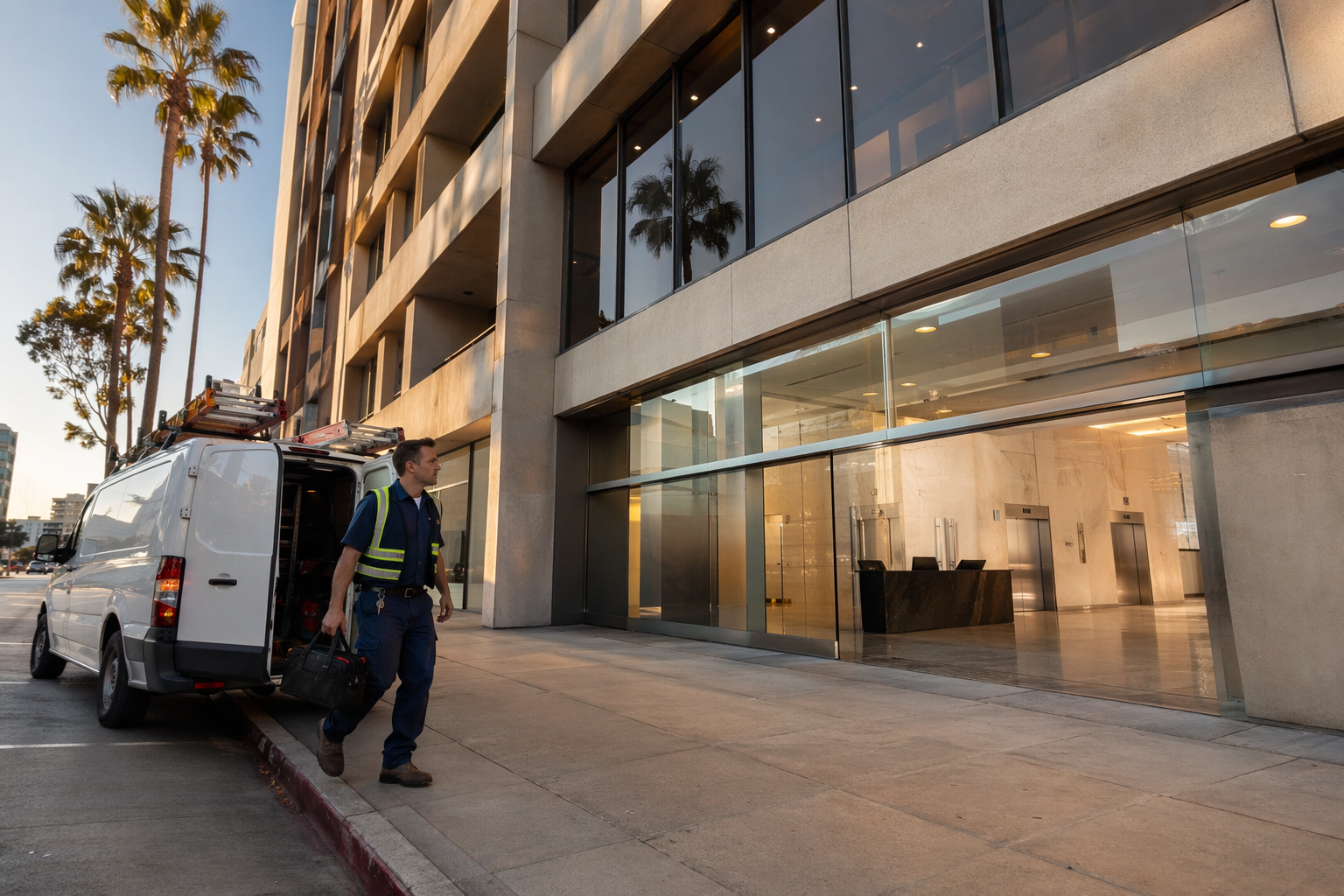
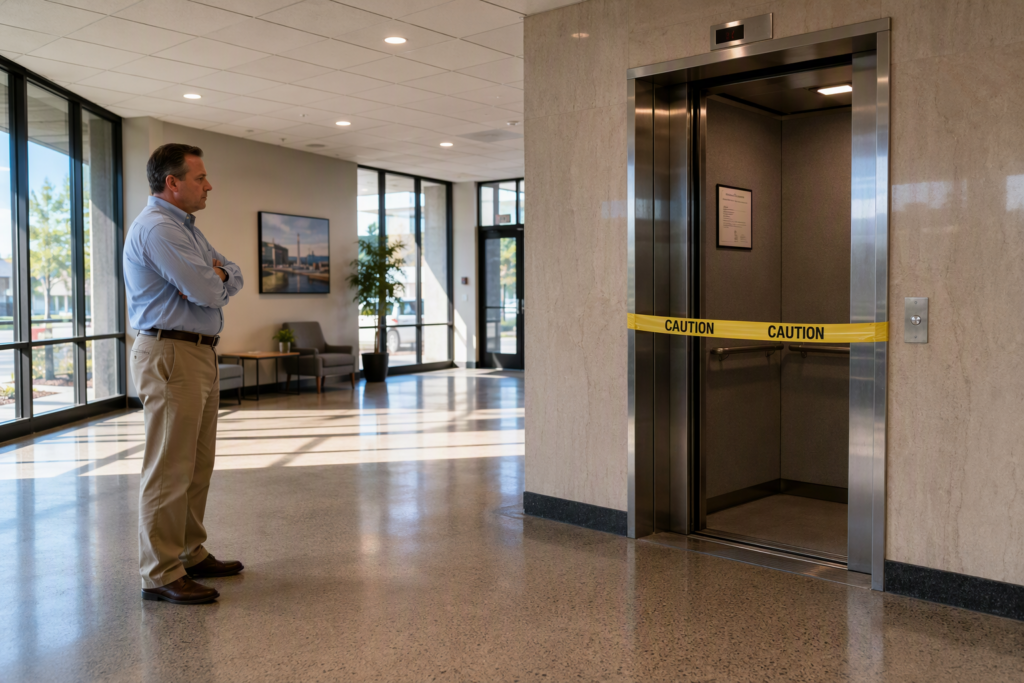
An elevator stuck between floors is one of the most disorienting experiences a building occupant can face — and one of the most common calls I receive as a certified technician with over 15 years in the field. Whether you are a passenger trapped inside, a building manager watching helplessly from the lobby, or a property owner suddenly aware of a serious liability issue, knowing exactly who to call and in what order can mean the difference between a safe, orderly rescue and a dangerous, costly incident.
This comprehensive FAQ covers every aspect of elevator entrapment: the immediate steps to take, who holds legal responsibility, what causes elevators to stop between floors, how California law governs emergency response, and what you should expect from a professional elevator rescue and repair service in the Los Angeles, Long Beach, Signal Hill, and Orange County areas.
1. Who Should You Call First When an Elevator Is Stuck Between Floors?
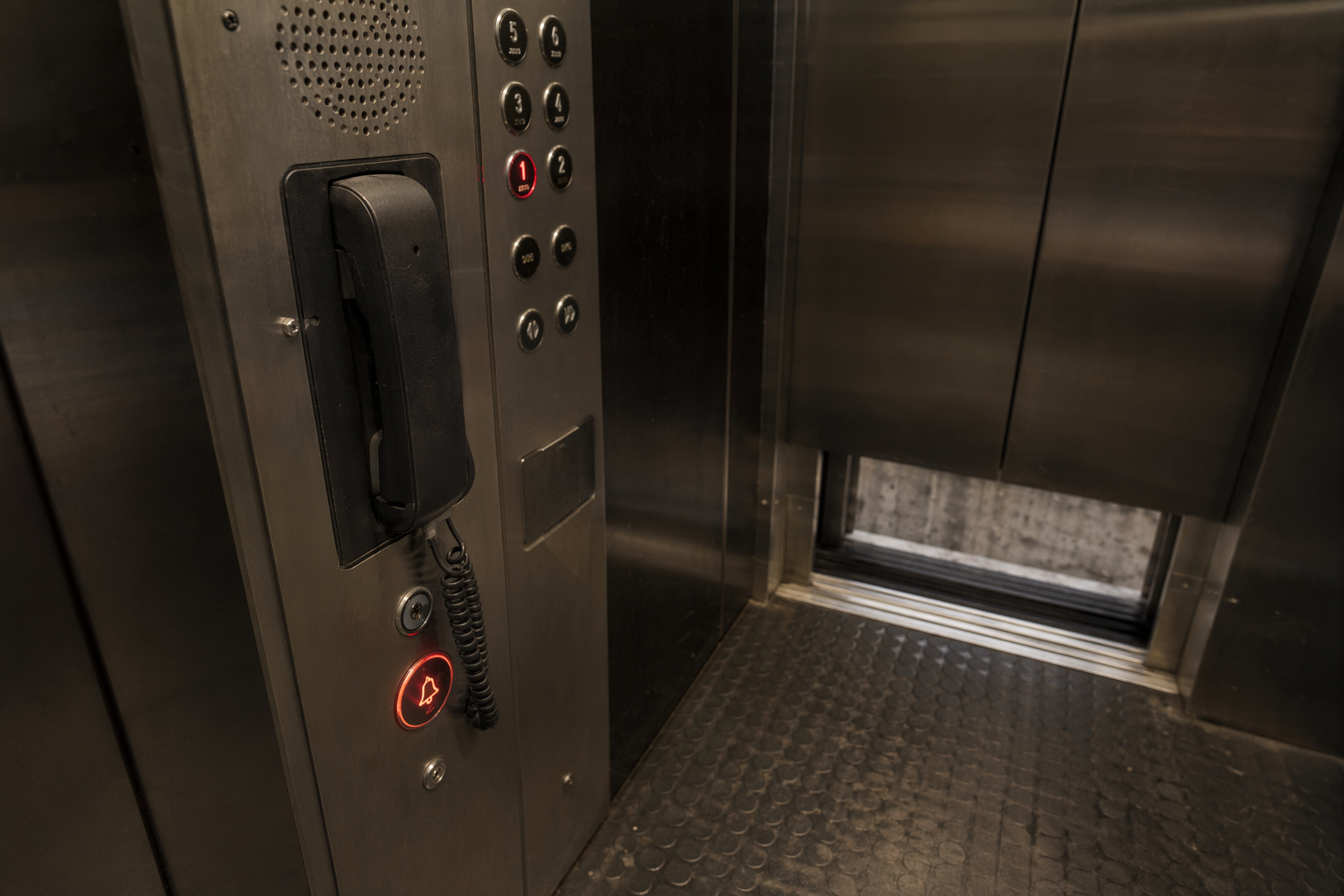
Call 911 if anyone inside has a medical emergency, and simultaneously contact your building’s elevator service provider — in Southern California, that means calling a licensed company like Liftech Elevator at 562-609-3478 — because emergency responders handle life safety while certified technicians handle the mechanical rescue.
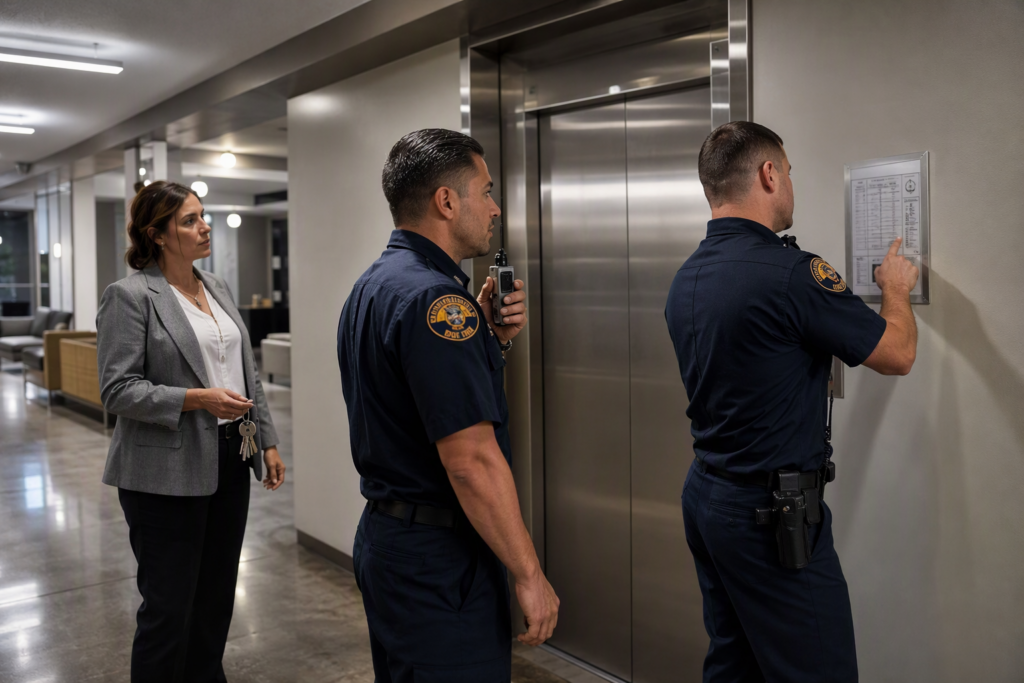
The call sequence matters enormously. Fire departments are trained for passenger extraction, but they are not elevator mechanics. They can manually release certain doors using a drop key, but without a certified technician on site, that door release can create additional hazards if the car is not level with a landing.
Here is the recommended call order for a non-emergency entrapment in California:
- Use the in-car emergency telephone — Federal law under ADA Section 4.10.14 requires all elevators to have a two-way communication device. Press the alarm button and wait for a response.
- Contact building management or security — They should have the elevator service company’s emergency line on file.
- Call your elevator service company directly — A 24/7 certified service provider can dispatch a technician within 1–2 hours in most Southern California markets.
- Call 911 — If anyone inside is injured, panicking severely, has a medical condition, or if the entrapment extends beyond 30 minutes without professional response.
Never call a general handyman or HVAC contractor. Elevator rescue requires a technician licensed under California’s Division of Occupational Safety and Health (Cal/OSHA) Elevator, Tramway, and Amusement Ride Safety Unit.
2. What Should Passengers Do While Waiting for Help?
Passengers should remain calm, press the alarm button, use the emergency phone, avoid attempting to force open the doors, and wait in the center of the car until a certified technician arrives.
From a mechanical standpoint, forcing elevator doors open is the single most dangerous thing a trapped passenger can attempt. If the car is not perfectly level with a landing — even a 6-inch misalignment — stepping out creates a serious fall hazard. In 2026, the Consumer Product Safety Commission continues to report that door-related elevator injuries account for approximately 17,000 emergency room visits annually in the United States, with a significant portion attributable to improper self-rescue attempts.
Practical guidance for trapped passengers:
- Press and hold the door-open button — it may still have power.
- Use the emergency telephone or intercom, not your cell phone as a primary device (signal can be poor inside elevator shafts).
- Do not climb through ceiling hatches — these are for technician access only and are not designed for passenger escape.
- If the lights go out, most modern elevators have battery-powered emergency lighting that lasts a minimum of 4 hours per ASME A17.1-2019 Safety Code for Elevators and Escalators.
- Stay low if smoke is detected — this signals a separate fire emergency and 911 should be your immediate call.
3. What Are the Most Common Causes of an Elevator Getting Stuck Between Floors?
The most common causes include power interruptions, door sensor malfunctions, overloaded car weight, worn brake components, and outdated or failed control board circuits — all of which require a licensed technician to diagnose and repair safely.
After thousands of service calls across Los Angeles County and Orange County, here are the root causes I encounter most frequently:
| Cause | Frequency (Industry Est. 2026) | Typical Repair Time | Preventable With Maintenance? |
|---|---|---|---|
| Door sensor / door operator failure | ~38% | 1–3 hours | Yes |
| Power interruption or brownout | ~22% | 15 min – 2 hours | Partially (requires backup power) |
| Control board or software fault | ~16% | 2–8 hours | Yes (firmware updates, inspections) |
| Brake wear or failure | ~11% | 4–24 hours | Yes (lubrication and wear checks) |
| Overloaded car / safety relay trip | ~8% | 30 min – 1 hour | Yes (load sensor calibration) |
| Rope/cable stretch or sheave wear | ~5% | 1–3 days | Yes (annual inspections) |
The encouraging takeaway from this data is that approximately 85% of entrapment causes are preventable through routine maintenance — which is precisely why California elevator code mandates periodic inspections.
4. How Quickly Should a Technician Arrive for an Elevator Entrapment?
Industry best practice — and the standard upheld by reputable service providers — is a maximum 2-hour emergency response time, though many established companies serving Los Angeles and Orange County aim for 60–90 minutes.
California does not codify a specific technician response time in the elevator safety statute, but Cal/OSHA Title 8, Section 3070 requires building owners to ensure the safe evacuation of passengers, and prolonged entrapment creates direct liability exposure. A well-structured service agreement should specify emergency response time in writing.
When evaluating elevator service contracts, ask specifically:
- What is the guaranteed emergency response time, day and night?
- Are technicians dispatched from local offices or a central hub?
- Is 24/7/365 service included or billed as an add-on?
Liftech Elevator maintains technician coverage across Signal Hill, Long Beach, Los Angeles, and Orange County with a 24/7 emergency dispatch line, ensuring that entrapments in our service territory are addressed rapidly regardless of time of day.
5. Is It Legal to Force Open an Elevator Door During an Entrapment?
It is not illegal for passengers to attempt self-rescue, but under ASME A17.1 and California elevator code, only authorized elevator personnel are permitted to perform a formal mechanical rescue, meaning forced entry by untrained individuals voids liability protections and creates serious injury risk.
Under ASME A17.1-2019, Section 2.27, hoistway doors are equipped with interlocks that prevent opening from the landing side without a certified drop key — a tool that only licensed technicians and fire departments are authorized to possess. Fire departments in Los Angeles County, Long Beach, and surrounding jurisdictions carry drop keys as standard equipment for exactly this reason.
For building managers and property owners: if you or your security staff attempt to open hoistway doors without proper training and cause injury to a passenger, your liability exposure increases substantially. The safest and legally defensible course of action is always to contact certified professionals immediately.
6. What Does California Law Require Regarding Elevator Emergency Phones?
California law, consistent with ADA requirements and ASME A17.1, mandates that every elevator cab contain a functioning two-way communication system capable of connecting to a staffed location — not a recording — within 60 seconds of activation.
This is one of the most frequently cited violations I observe during annual inspections across Southern California properties. Many older buildings installed telephone systems that technically functioned at installation but have since been connected to phone lines that were discontinued or redirected to voicemail. As of 2026, the ADA requires:
- Two-way voice communication (not text only)
- Hands-free operation
- Automatic identification of the location of the caller (building address and floor)
- Connection to a live attendant within a reasonable timeframe
Non-compliance with elevator communication requirements can result in Cal/OSHA citations, elevator shutdown orders, and ADA civil complaints. If your building’s elevator phone is routed to voicemail or a non-staffed line, that is an urgent compliance issue requiring immediate correction.
7. Who Is Legally Responsible When a Passenger Is Trapped in an Elevator?
The building owner holds primary legal responsibility for passenger safety under California Civil Code and OSHA Title 8, and that responsibility includes maintaining a current, valid elevator service agreement with a licensed provider.
This is a point that surprises many property owners and managers. Even if the root cause of the entrapment is a manufacturer defect or an act of vandalism, the building owner’s duty of care to maintain safe premises does not disappear. California courts have consistently held that elevator entrapments causing injury — including psychological injury — can support negligence claims against building owners who failed to maintain proper service agreements or lapsed on required inspections.
Your legal protection as a building owner rests on three pillars:
- A valid, current elevator service and maintenance contract with a licensed contractor
- A valid annual inspection permit issued by the California Elevator Safety Unit (a division of Cal/OSHA)
- Documented response protocols for entrapments, posted in your building emergency plan
8. How Often Must Elevators Be Inspected in California to Prevent Entrapments?
California requires annual inspections by a Cal/OSHA-licensed elevator inspector, plus quarterly and monthly maintenance checks depending on the type of service agreement in place — with ASME A17.1 providing the technical benchmark for inspection standards.
The California Elevator Safety Unit (Cal/OSHA) mandates:
- Annual permit inspections — Required for all elevators, escalators, and moving walks. Operating without a current permit is a Class B violation.
- Periodic maintenance — Not specifically codified at a monthly interval by the state, but ASME A17.1 Section 8.6 provides detailed maintenance intervals for individual components, many of which are monthly or quarterly.
- Category 1 tests — Full-load safety and brake tests required annually.
- Category 5 tests — Five-year cycle comprehensive tests including governor, safeties, and buffers.
In my experience across Long Beach, Signal Hill, and the broader Los Angeles metro, the buildings with the fewest entrapment incidents are those on full-service maintenance contracts — not callbacks-only or oil-and-grease-only agreements — where technicians are proactively inspecting door operators, safety circuits, and control boards on a monthly basis.
9. What Happens After the Technician Arrives — What Does the Rescue Process Look Like?
A licensed technician will first assess car position and power status, then use approved procedures to level the car to a floor, open the doors safely, and evacuate passengers before diagnosing and repairing the root mechanical cause.
Here is the standard field protocol I follow on entrapment calls:
- Communication with passengers — Before touching anything mechanical, I establish voice contact to assess whether anyone needs immediate medical attention.
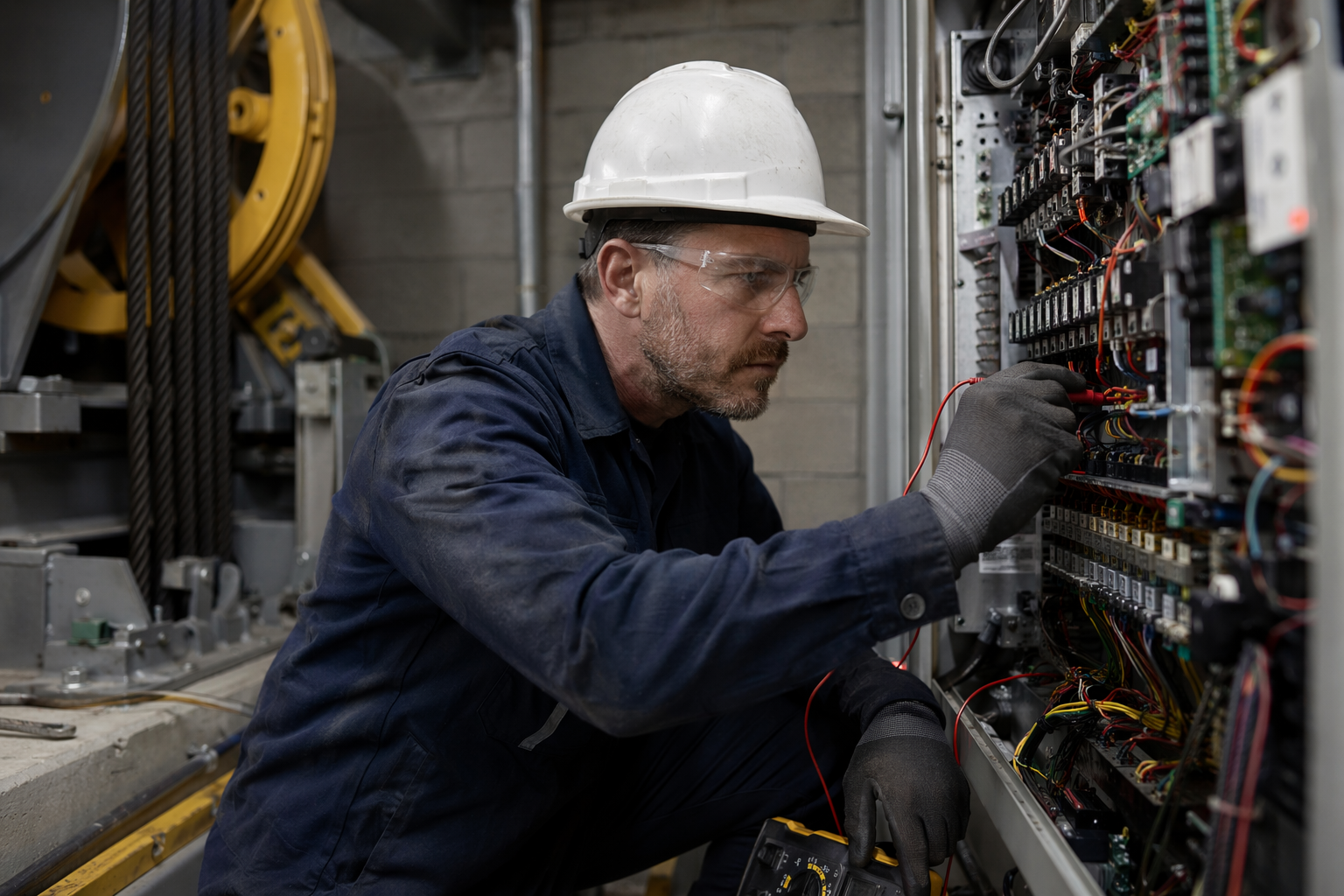
- Power assessment — I check the machine room for power, tripped breakers, or blown fuses.
- Car leveling — Using manual lowering or jogging procedures approved under ASME A17.1, I bring the car level with the nearest landing (within ¾ inch tolerance).
- Door release — Using an authorized drop key or mechanical release, I open the hoistway door and allow passengers to exit on a level landing.
- Passenger evacuation and assessment — I confirm all passengers have exited safely and document any medical concerns.
- Root cause diagnosis — Only after all passengers are safe do I begin diagnosing the mechanical failure.
- Repair or lockout — If the repair can be completed safely on-site, the elevator is returned to service. If not, it is locked out of service with signage and a repair order is initiated.
10. How Much Does Emergency Elevator Rescue and Repair Cost in Southern California?
Emergency elevator rescue service calls in the Los Angeles, Long Beach, and Orange County areas typically range from $250–$600 for the dispatch and rescue itself, with subsequent repair costs ranging from $300 to $15,000+ depending on the failed component.
| Service Type | Typical Cost Range (2026) | Covered Under Full-Service Contract? |
|---|---|---|
| Emergency dispatch / rescue labor (non-contract) | $250 – $600 | Yes (most full-service agreements) |
| Door operator replacement | $800 – $3,500 | Yes (parts + labor under full-service) |
| Control board / circuit board repair | $1,500 – $8,000 | Partially (depends on contract tier) |
| Brake replacement (traction elevator) | $2,000 – $6,000 | Yes (most full-service agreements) |
| Hoist rope / cable replacement | $3,000 – $15,000+ | Partially |
| Emergency phone system repair/replacement | $300 – $1,200 | Yes |
Building owners on comprehensive full-service maintenance contracts typically pay zero out-of-pocket for emergency rescues and most standard repairs. This is the most cost-effective approach for commercial properties with high-traffic elevators.
11. Can an Elevator Get Stuck Between Floors Due to Overcrowding or Overloading?
Yes — modern elevators are equipped with load-weighing devices that trigger a safety stop when the rated load capacity is exceeded, causing the elevator to halt between floors until the overload condition is corrected.
Under ASME A17.1, every elevator must display its rated load capacity in both pounds and number of passengers. In California, this placard is required to be permanently affixed inside the cab. When the car’s load sensor detects an overload, a safety relay trips and the controller halts the car to protect the hoisting ropes, sheaves, and brake from excessive stress.
Resolution in these cases is usually straightforward: one or more passengers must exit at the nearest level floor, and the remaining passengers can continue. However, if this happens repeatedly, it often signals that the load sensor needs recalibration — a task for a licensed technician, not building staff.
12. Does a Power Outage Automatically Trap Passengers Between Floors?
Not necessarily — California buildings above a certain occupancy threshold are required to have elevator emergency power systems that automatically lower the car to the nearest floor and open the doors during a power failure.
California Building Code (CBC) Section 3003.2, referencing ASME A17.1 requirements, mandates that new and substantially renovated elevator installations include automatic rescue devices (ARDs) — battery-powered systems that, upon detecting power loss, drive the elevator to the nearest floor, open the doors, and hold them open until passengers exit.
Older elevators, particularly those in historic buildings in downtown Los Angeles and older commercial corridors in Long Beach and Orange County, may not have ARD systems installed. If your building’s elevator does not have an ARD, this represents both a passenger safety risk and a code compliance gap that should be addressed. Liftech Elevator regularly performs ARD retrofits on existing elevator systems throughout our service territory.
13. What Is the Difference Between a Callback Service Agreement and a Full-Service Elevator Contract?
A callback-only contract covers labor for emergency service calls but excludes parts and proactive maintenance, while a full-service contract covers scheduled maintenance visits, emergency calls, parts, and repairs — making full-service contracts the significantly safer and more cost-predictable choice for high-occupancy buildings.
This distinction is critical for building owners evaluating their elevator service options. Here is a plain-language comparison:
| Feature | Callback Contract | Full-Service Contract |
|---|---|---|
| Monthly scheduled maintenance | Not included | Included |
| Emergency dispatch labor | Included | Included |
| Replacement parts (door operators, boards, etc.) | Extra charge | Included or capped |
| Annual inspection support | Not always included | Included |
| Proactive component replacement | No | Yes |
| Typical monthly cost (single commercial elevator) | $80 – $150/mo | $300 – $700/mo |
| Entrapment risk reduction | Minimal | Significant |
14. How Do I Find a Licensed Elevator Service Company in Los Angeles or Orange County?
You should verify that any elevator service company holds a current California Contractor’s License Board (CCLB) classification C-11 (Elevator Installation) and that their technicians are members of the International Union of Elevator Constructors (IUEC) or equivalently certified.
In California, elevator work — including maintenance, repair, and emergency service — must be performed by contractors licensed under the CCLB C-11 classification. You can verify license status at the California Contractors State License Board website (cslb.ca.gov). Additionally, technicians must be certified under Cal/OSHA’s Elevator Unit regulations.
Red flags to avoid:
- Companies that cannot provide a current C-11 license number
- Service providers who cannot verify technician certification
- Contracts with no specified emergency response time
- Companies without local office presence in your service area
Liftech Elevator is a fully licensed, IUEC-affiliated elevator service company with a physical service presence in Signal Hill, serving clients across Long Beach, Los Angeles, and Orange County. Our technicians carry current Cal/OSHA certifications and are available 24/7 for emergency dispatch.
15. Can Extreme Weather Cause an Elevator to Become Stuck Between Floors?
Yes — extreme heat can cause hydraulic fluid to expand and trigger thermal protection shutdowns in hydraulic elevators, while seismic events trigger mandatory earthquake operation protocols under California Title 24 that halt traction elevators until inspected.
California’s seismic environment creates a specific elevator safety consideration that most other states do not face. Under California Title 24 and ASME A17.1 Section 8.4.10.1.3, elevators in seismic zones are required to be equipped with seismic switches that shut down the elevator automatically when a qualifying ground motion is detected. After a seismic event, the elevator cannot return to service until a certified technician performs a visual inspection and resets the seismic switch — a process that can take 1–4 hours depending on technician availability and the extent of any physical damage.
Building managers in the Los Angeles Basin should have a post-earthquake elevator protocol in place that includes immediate lockout, passenger notification, and a direct call to their elevator service provider.
16. What Should a Building Manager Do Immediately When an Elevator Entrapment Is Reported?
A building manager should immediately establish voice communication with trapped passengers via the emergency intercom, call the building’s elevator service company, assess whether 911 is needed, and document all actions taken from the moment of the report.
Documentation is not a bureaucratic afterthought — it is your legal protection. I advise every property manager I work with to maintain a simple elevator entrapment log that captures:
- Time entrapment was reported
- Time elevator service company was notified
- Time 911 was called (if applicable)
- Time technician arrived on site
- Time passengers were evacuated
- Names of all passengers involved (with their consent)
- Nature of any injuries or medical concerns
- Root cause as identified by the technician
This log should be maintained for a minimum of 5 years and made available to Cal/OSHA inspectors upon request.
17. How Long Can Someone Safely Remain Trapped in a Stuck Elevator?
While there is no defined medical “safe limit,” standard emergency protocols treat any entrapment exceeding 30 minutes as a priority dispatch situation, and any entrapment involving vulnerable individuals — elderly, children, those with medical conditions — as an immediate 911 emergency regardless of duration.
Modern elevators are designed with passenger safety in mind for short-duration entrapments. ASME A17.1 requires:
- Emergency lighting with a minimum 4-hour battery backup
- Ventilation (most cars have passive ventilation, though not air conditioning)
- Two-way communication
The primary medical risk in elevator entrapments is anxiety and panic, which can be medically serious for individuals with heart conditions, severe anxiety disorders, or claustrophobia. Heat buildup can also become a concern in extreme summer temperatures — a real issue in Southern California during heat events when ambient temperatures can exceed 100°F. For any entrapment in hot weather, I recommend escalating to 911 within 20–30 minutes if a technician has not yet arrived.
18. Are Older Elevators in California Required to Be Modernized to Prevent Entrapments?
California does not mandate wholesale elevator modernization on a fixed schedule, but Cal/OSHA can and does require specific upgrades when inspections reveal components that fail to meet current safety standards — and many older systems operating on outdated relay-logic controls present significantly elevated entrapment risk.
Many commercial buildings in the Long Beach, downtown Los Angeles, and older Orange County corridors are operating elevators that were installed in the 1970s or 1980s on relay-logic control systems. While these systems can be maintained, they are increasingly difficult to service due to parts obsolescence and carry a statistically higher risk of control-related entrapments.
Modernization triggers in California include:
- Cal/OSHA citation requiring specific safety upgrades
- Building permit for substantial renovation (triggering CBC compliance requirements)
- Parts that are no longer manufactured and cannot be safely substituted
- Repeated entrapments or safety failures documented on inspection records
A full elevator modernization in the Southern California market typically costs between $35,000 and $120,000 per elevator, depending on the scope and the type of system (hydraulic vs. traction). However, partial modernizations — specifically control system replacements — can dramatically reduce entrapment risk at a fraction of the cost of full replacement.
19. What Questions Should I Ask an Elevator Company Before Signing an Emergency Service Agreement?
Before signing any elevator service agreement, ask specifically about guaranteed emergency response times, technician certification status, parts coverage, escalation procedures for extended entrapments, and local office proximity to your building.
After years of working in this industry, here are the 10 questions every building owner should ask before committing to an elevator service contract:
- What is your guaranteed emergency response time, in writing?
- Are your technicians IUEC-certified and California-licensed?
- Do you have a local office or technician base within 15 miles of my building?
- Is 24/7/365 emergency dispatch included in this contract?
- What components are covered under parts replacement?
- How do you handle entrapments that require fire department assistance?
- Will you support my annual Cal/OSHA inspection?
- What is your callback rate (percentage of service calls that recur within 30 days)?
- Can you provide references from buildings comparable to mine in this area?
- What happens if my elevator requires modernization — do you offer that service?
20. Why Should I Choose Liftech Elevator for Elevator Emergency Service in Southern California?
Liftech Elevator combines IUEC-certified technicians, 24/7 local dispatch coverage across Signal Hill, Long Beach, Los Angeles, and Orange County, and comprehensive service agreements that include emergency entrapment rescue — making it the proven choice for building owners who take elevator safety seriously.
With over a decade of service in the Southern California elevator market, Liftech Elevator has built its reputation on three commitments:
- Speed: Our technicians are dispatched from local positions across our service territory, not from a centralized hub hours away. When your elevator is down and passengers are waiting, proximity matters.
- Certification: Every Liftech Elevator technician holds current IUEC certification and California Cal/OSHA credentials. We do not subcontract emergency calls to uncertified third parties.
- Transparency: Our service agreements clearly define what is covered, what response times are guaranteed, and how we escalate situations that require fire department coordination. No fine print surprises.
We serve building owners, property managers, HOAs, commercial real estate operators, healthcare facilities, and government properties across Signal Hill CA, Long Beach CA, Los Angeles CA, and Orange County CA. Whether you need emergency rescue right now, a new full-service maintenance agreement, an ARD retrofit, or a modernization consultation, Liftech Elevator is the call to make.
Is Your Elevator Safe? Contact Liftech Elevator for a Free Elevator Assessment
Do not wait for an entrapment to discover a gap in your elevator safety program. Whether you are evaluating a new service agreement, responding to a Cal/OSHA notice, or simply want a second opinion on your current elevator’s condition, Liftech Elevator’s certified technicians are ready to help.
Call us now — 24/7 emergency and non-emergency service available:
562-609-3478
Serving Signal Hill CA • Long Beach CA • Los Angeles CA • Orange County CA
Licensed • IUEC-Certified • Cal/OSHA Compliant • Available 24/7/365