24 Hour Elevator Repair Service: Everything You Need to Know
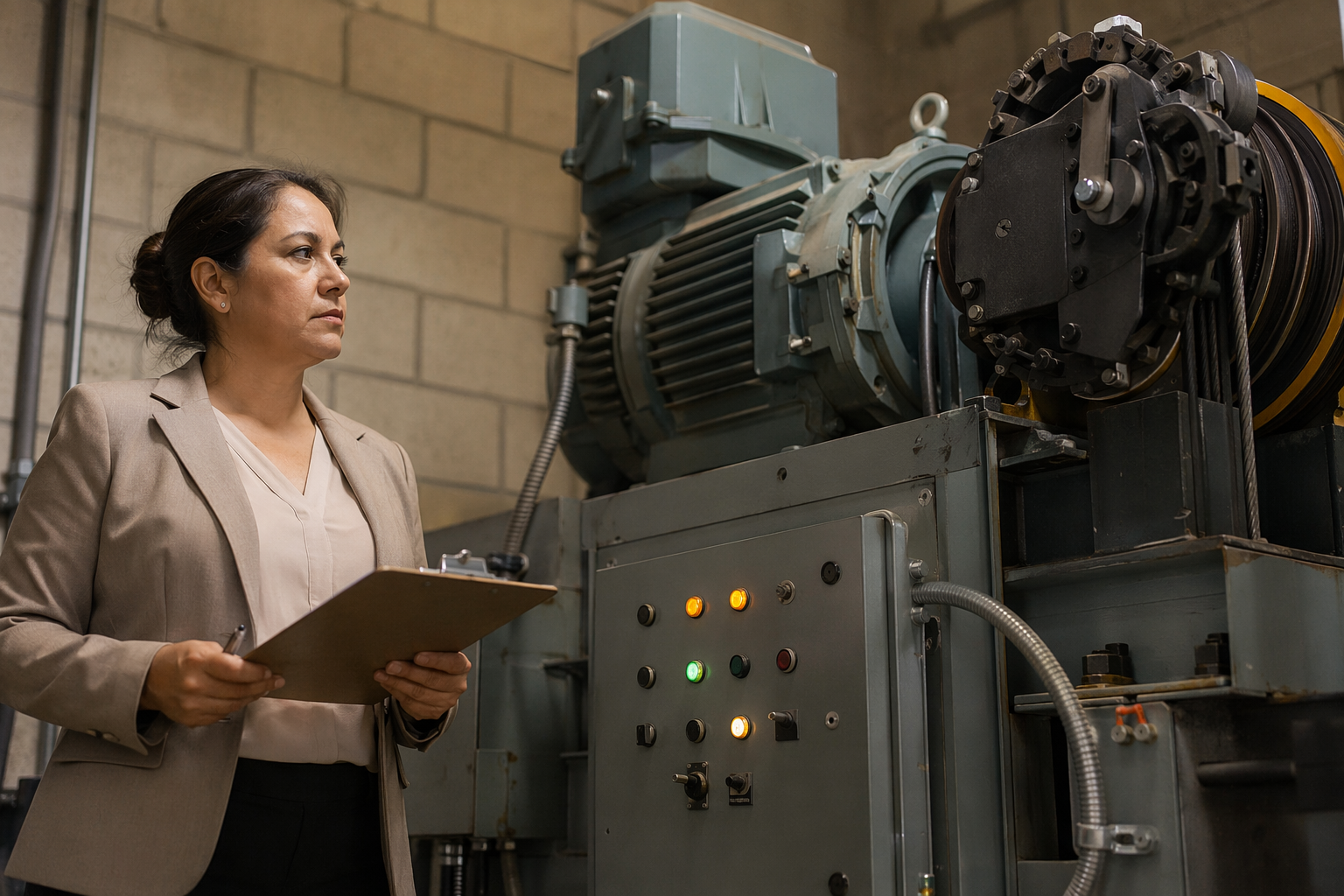
When an elevator fails at 2 a.m. in a high-rise, a hospital, or a senior living facility, every minute it sits out of service is a liability, an ADA violation risk, and a direct cost to your tenants and your reputation. As a certified elevator technician with more than 15 years of hands-on field experience across Los Angeles, Long Beach, Signal Hill, and Orange County, I have responded to hundreds of emergency calls. This comprehensive FAQ hub covers everything a building owner, property manager, or facilities director needs to know about 24 hour elevator repair service — from response times and costs to California-specific regulations and how to choose the right provider.
What exactly is 24 hour elevator repair service?
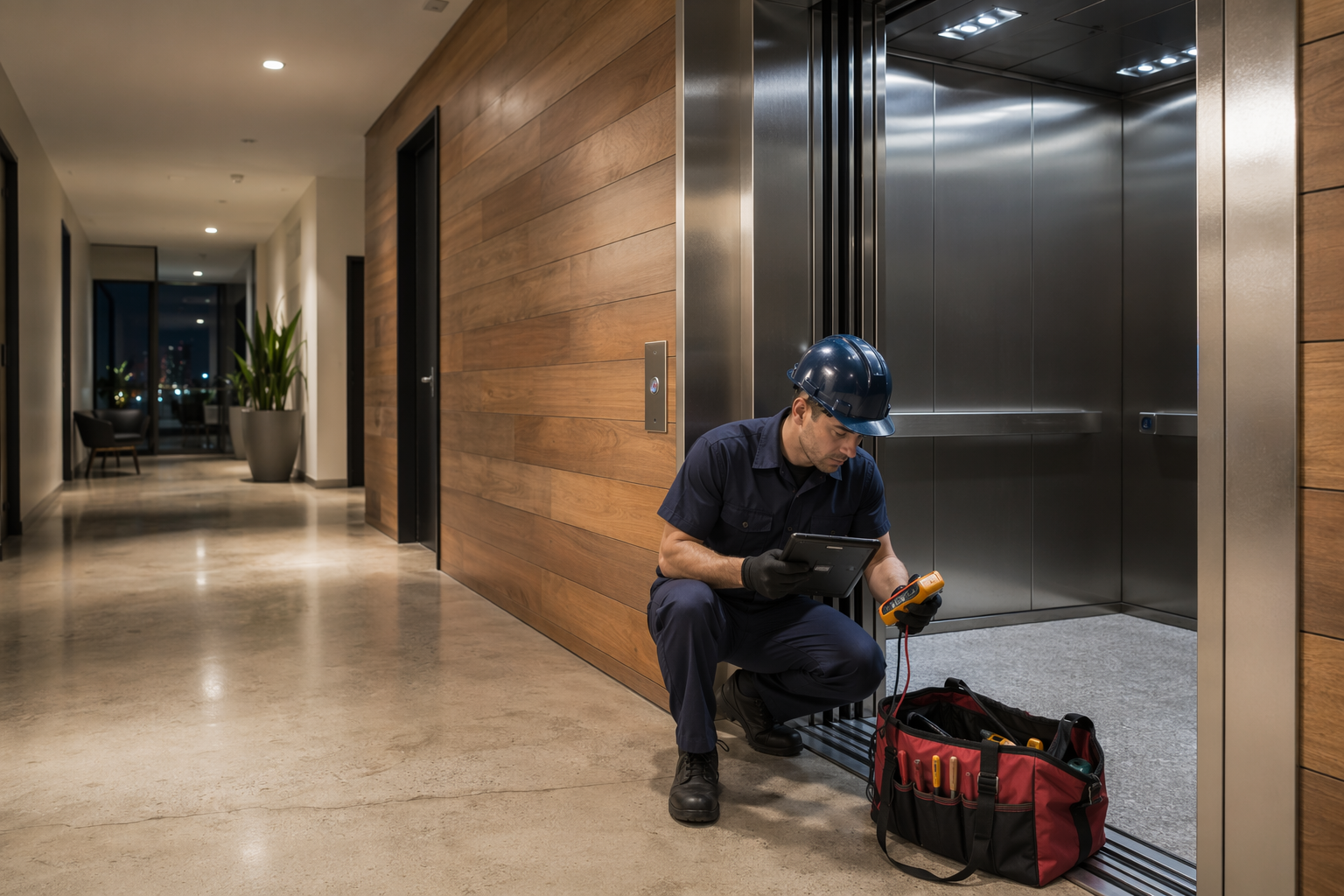
24 hour elevator repair service means a licensed elevator company maintains on-call, IUEC-certified technicians available to respond to breakdowns, entrapments, and safety failures at any hour — including nights, weekends, and holidays.
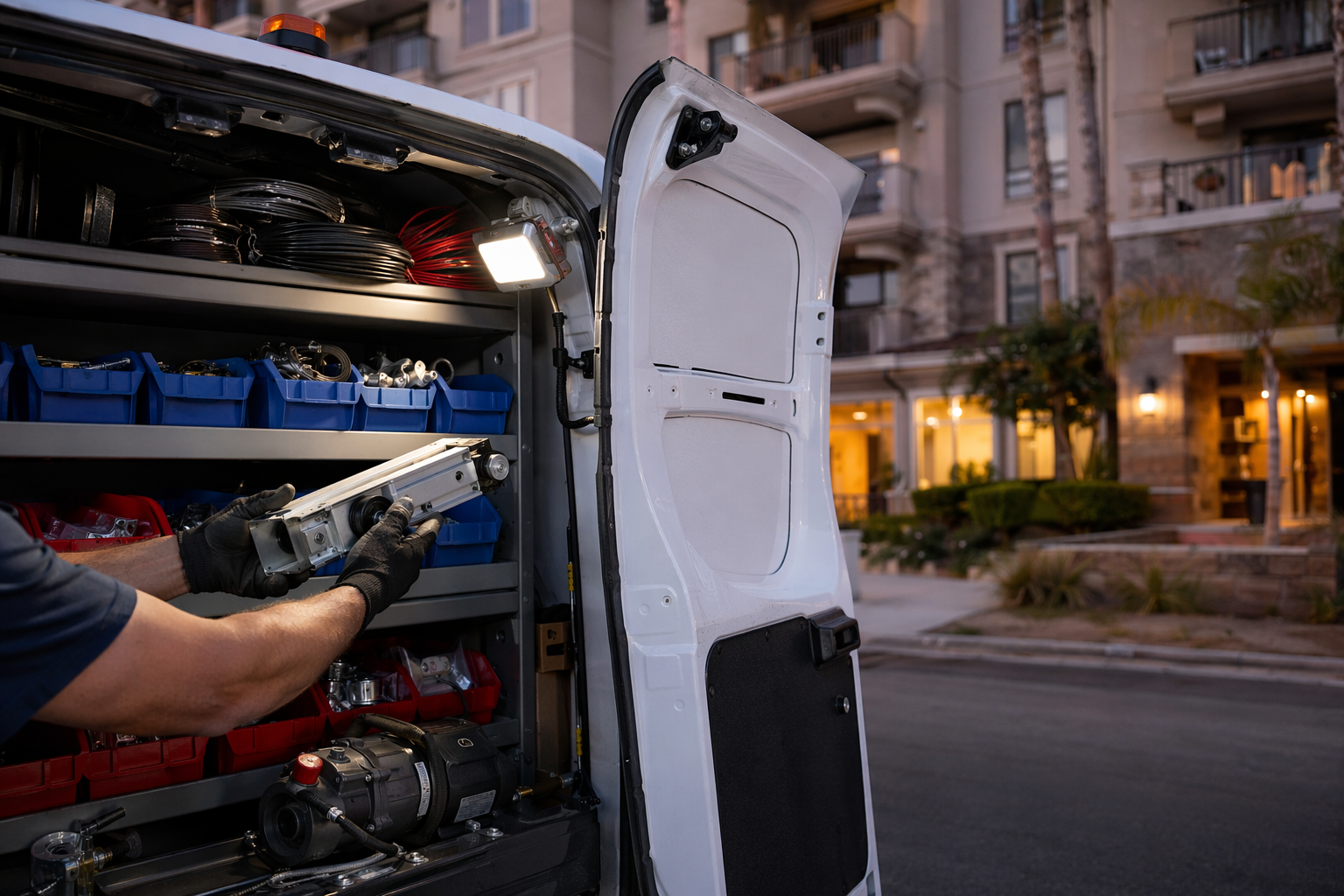
Unlike standard business-hours maintenance, true around-the-clock emergency service requires a staffed dispatch center, a rotating roster of qualified mechanics, and a stocked service vehicle with common replacement parts. Reputable providers targeting Southern California markets — including Signal Hill, Long Beach, Los Angeles, and Orange County — guarantee response windows rather than vague availability promises. Liftech Elevator, for example, maintains a dedicated emergency dispatch line with guaranteed response times for all service areas.
Emergency elevator repair is distinct from scheduled preventive maintenance. It is reactive by definition, but the fastest-responding companies are also the ones that use diagnostic data from routine visits to stock the right parts and cut mean-time-to-repair (MTTR) dramatically.
Why does elevator downtime require an emergency response rather than waiting until morning?
Elevator downtime triggers immediate ADA compliance liability, potential entrapment danger, and financial losses that compound by the hour — all of which make next-morning service an unacceptable default.
Under the Americans with Disabilities Act (ADA), building owners are required to maintain accessible vertical transportation. An out-of-service elevator in a multi-story building can constitute a discriminatory denial of access for tenants or visitors with mobility disabilities. California’s Title 24 accessibility standards reinforce this at the state level.
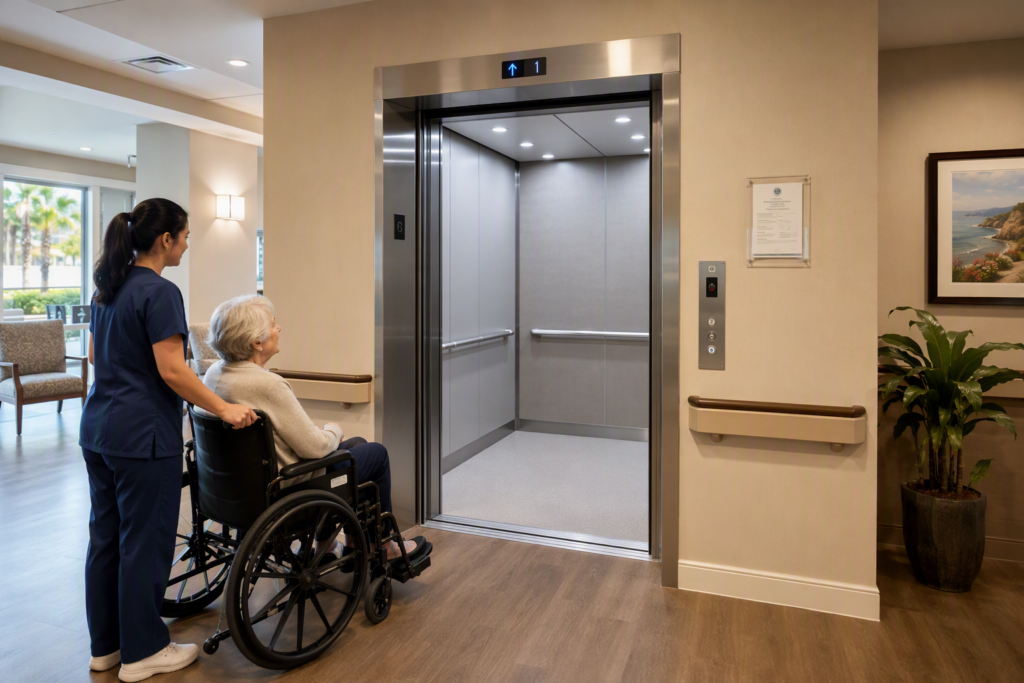
Beyond legal exposure, consider the operational reality: a hospital with a non-functioning patient elevator, a hotel with guests stranded on the 12th floor, or a senior living facility where residents cannot reach dining or therapy services. In these environments, waiting 8–10 hours for a morning technician is simply not an option. California Labor Code and OSHA regulations also impose obligations on building operators when mechanical failures create unsafe conditions.
How fast should a 24 hour elevator repair technician arrive after my call?
Industry best practice is a 2-hour or less on-site response time for emergency elevator calls, though response times vary by provider, geography, and time of day.
In dense urban markets like Los Angeles and Long Beach, top-tier providers routinely achieve 60–90 minute response times due to technician proximity and routing efficiency. Suburban or lower-density areas within Orange County may see responses in the 90–120 minute range. When vetting a 24 hour elevator repair company, always ask for a written guaranteed response time — not an estimate — and confirm whether that guarantee applies on holidays and overnight hours.
Response time directly affects liability. California courts have considered response time as a factor in negligence claims related to elevator entrapments. A documented, contractually guaranteed response window protects both the tenant trapped in the cab and the property owner responsible for the equipment.
What are the most common elevator failures that require emergency repair?
The five most frequent emergency elevator failures are door malfunctions, drive system failures, control board errors, hydraulic oil leaks, and safety device trips — each requiring immediate attention to restore safe operation.
| Failure Type | Frequency (% of Emergency Calls) | Typical Repair Time | Average Emergency Cost (2026) |
|---|---|---|---|
| Door Operator / Gate Failure | 28% | 1–3 hours | $350–$800 |
| Drive / Motor Failure | 21% | 2–6 hours | $800–$3,500 |
| Control Board / Software Error | 19% | 1–4 hours | $400–$2,200 |
| Hydraulic System Leak | 17% | 2–5 hours | $600–$2,800 |
| Safety Device / Overspeed Trip | 15% | 1–4 hours | $500–$1,800 |
Door-related failures are the most common because the door operator experiences the highest mechanical cycle count of any elevator component — averaging 150,000–300,000 cycles per year in high-traffic buildings. Control board errors have increased as older analog systems are replaced with digital PLC-based controllers that require specialized diagnostic tools.
What codes and regulations govern emergency elevator repairs in California?
Emergency elevator repairs in California must comply with ASME A17.1 Safety Code for Elevators and Escalators, California Code of Regulations Title 8, and local authority having jurisdiction (AHJ) requirements enforced by the California Division of Occupational Safety and Health (Cal/OSHA).
Key regulatory touchpoints for emergency repairs include:
- ASME A17.1 Rule 8.6: Requires that elevators be inspected and tested after emergency repair before returning to passenger service.
- Cal/OSHA Title 8, Section 3001: Establishes state jurisdiction over elevator safety and mandates that only licensed mechanics perform repair work.
- California Elevator Safety Act (Health & Safety Code §7300 et seq.): Requires all elevator contractors to hold a valid C-11 Elevator Contractor License issued by the California Contractors State License Board (CSLB).
- ADA Title III / Title II: Requires that places of public accommodation and government facilities maintain accessible routes — including elevators — in working order.
After any major component replacement during an emergency repair, a re-inspection by a California-licensed elevator inspector may be required before the unit returns to full service. Always confirm your provider carries both a C-11 license and appropriate liability insurance.
How much does 24 hour emergency elevator repair cost in Los Angeles and Southern California?
In 2026, emergency elevator repair service calls in Los Angeles, Long Beach, Signal Hill, and Orange County typically range from $300 to $500 for after-hours labor minimums, with total repair costs averaging $600–$4,000 depending on the component failure and parts required.
Cost drivers include:
- After-hours labor premiums: Expect 1.5x–2.0x standard hourly rates for calls between 6 p.m. and 6 a.m., weekends, and holidays.
- Part availability: Common parts stocked on the service vehicle incur no sourcing delay. Specialty or OEM-specific components may require expedited shipping at premium cost.
- Elevator type: Hydraulic elevators generally cost less to repair than traction systems due to component accessibility. Machine-room-less (MRL) traction units often carry the highest emergency repair costs due to specialized tooling requirements.
- Entrapment response: If passengers are trapped, Cal/OSHA notification obligations and the complexity of a safe extraction add time and cost.
Buildings enrolled in a full-service preventive maintenance contract often receive discounted or waived emergency call-out fees — making maintenance agreements a financially strategic choice for high-traffic buildings.
What should I do immediately when my elevator breaks down after hours?
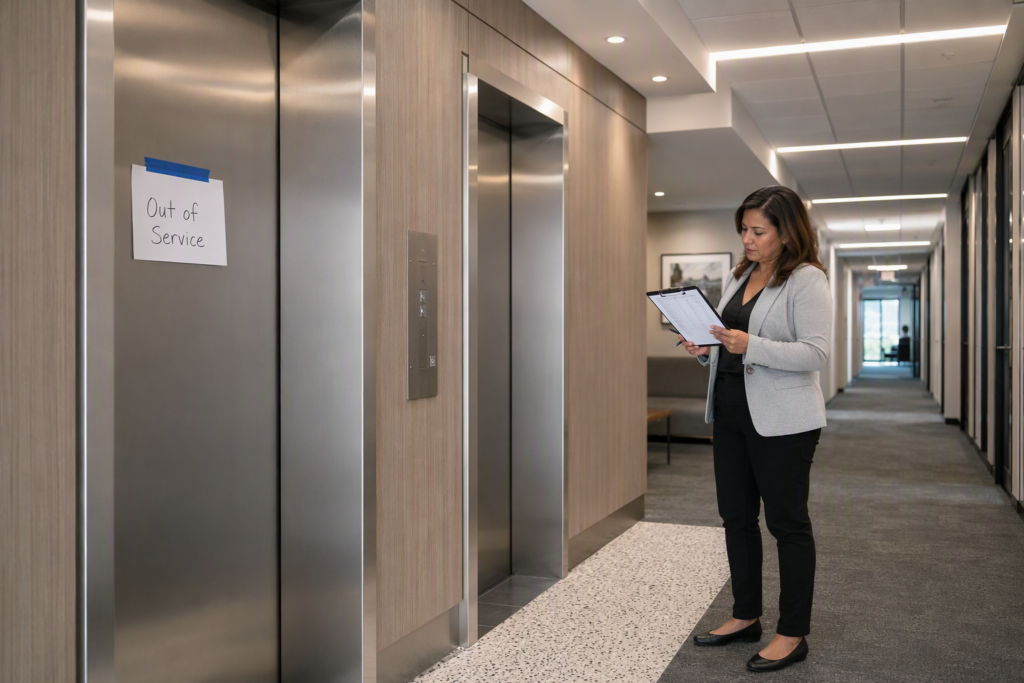
When your elevator fails after hours, immediately secure the lobby, place “Out of Service” signage, call your 24 hour elevator repair provider, and if passengers are trapped, contact 911 before attempting any manual release.
Here is the step-by-step protocol I recommend from 15 years in the field:
- Do not attempt a DIY rescue. Untrained extraction of trapped passengers creates serious injury risk and violates ASME A17.1 protocols.
- Call 911 if anyone is trapped. Fire departments have trained elevator rescue protocols and can communicate with occupants through the emergency phone.
- Post signage on all floors to prevent additional passengers from attempting to use the unit.
- Call your 24 hour elevator repair service immediately. Provide the building address, elevator number or location, nature of the reported problem, and whether passengers are trapped.
- Document everything. Note the time of failure, any error codes on the controller panel, and the name of the responding technician for your maintenance records and regulatory compliance log.
- Notify tenants and management. If the building is occupied, proactive communication reduces complaints and protects your relationship with tenants.
How do I choose the best 24 hour elevator repair company in Los Angeles or Orange County?
The best 24 hour elevator repair provider holds a California C-11 Elevator Contractor License, employs IUEC-certified mechanics, guarantees a contractual response time, and maintains a verifiable track record of emergency service in your specific market.
Use this vetting checklist when evaluating vendors:
- ✅ Valid California C-11 license (verify at CSLB.ca.gov)
- ✅ IUEC (International Union of Elevator Constructors) certified technicians
- ✅ Written emergency response time guarantee (2 hours or less)
- ✅ 24/7 live dispatch — not voicemail or automated answering
- ✅ Familiarity with your elevator manufacturer (Otis, KONE, Schindler, ThyssenKrupp, etc.)
- ✅ Liability insurance of at least $2 million per occurrence
- ✅ References from comparable properties in your area
- ✅ Transparent after-hours pricing structure in writing
Liftech Elevator meets all of the above criteria and serves building owners across Signal Hill, Long Beach, Los Angeles, and Orange County with a dedicated emergency dispatch line and documented average response times under 90 minutes.
Does a 24 hour elevator repair service handle entrapments differently than standard repairs?
Yes — entrapment situations are classified as life-safety emergencies and require coordination between your elevator repair provider, local fire department, and building management, with passenger rescue taking absolute priority over equipment repair.
Under ASME A17.1 Section 2.27.1, every elevator must be equipped with a two-way emergency communication system that connects trapped passengers directly to a monitored location. When an entrapment is reported, the technician’s first priority is safe passenger extraction using either the emergency lowering valve (hydraulic) or manual lowering procedure (traction), followed by a full safety inspection before returning the unit to service.
California law (Health & Safety Code §7319) requires elevator owners to report entrapment incidents to the state’s elevator safety unit. An experienced 24 hour provider will guide you through that documentation process as part of the emergency response — not leave you to figure it out afterward.
What is the difference between a 24 hour elevator repair service and a preventive maintenance contract?
A 24 hour repair service is reactive — dispatched after a failure occurs — while a preventive maintenance (PM) contract is a scheduled, proactive program designed to identify and address wear before it causes a breakdown or safety violation.
The two services are complementary, not interchangeable. Data consistently shows that buildings with active PM contracts experience 40–60% fewer emergency service calls annually compared to buildings without maintenance agreements. According to ASME A17.1 Section 8.6, elevators must receive periodic inspections and lubrication at defined intervals regardless of whether breakdowns occur.
In practical terms, a PM contract typically includes monthly or quarterly visits, lubrication of all moving components, adjustment of door operators, testing of safety devices, and review of code compliance. Emergency 24 hour service fills the gap when — despite best maintenance practices — unexpected failures occur due to component age, manufacturing defects, or unusual operating conditions.
How long does an emergency elevator repair typically take?
Most emergency elevator repairs are completed within 2–4 hours of technician arrival, though complex drive system failures or parts sourcing delays can extend repair time to 24–72 hours in some cases.
The variables that affect repair duration most significantly are:
- Part availability: High-volume providers like Liftech Elevator stock common components on every service vehicle, eliminating warehouse run time for the majority of repairs.
- Diagnostic clarity: Modern elevators with fault-code logging systems allow technicians to pinpoint failures in minutes. Legacy analog systems often require more trial-and-error diagnosis.
- Scope of damage: A single failed relay takes 20 minutes to replace. A burned-out traction motor may require a crane, a specialist, and a 48-hour parts lead time.
- Post-repair testing: Per ASME A17.1 Rule 8.6.5, after significant repairs the elevator must undergo a full functional test cycle before passengers are permitted to use it, adding 30–90 minutes to return-to-service time.
Are there specific elevator brands or types that require specialized emergency repair technicians?
Yes — certain elevator manufacturers including Otis Gen2, KONE MonoSpace, Schindler 3300, and ThyssenKrupp TWIN systems require proprietary diagnostic tools and factory-authorized repair protocols that not all independent technicians are equipped to handle.
This is a critical point that many building owners overlook when selecting an emergency repair provider. A technician who is highly skilled on a standard hydraulic unit may be completely unable to access the fault codes on a KONE or Schindler controller without the manufacturer’s proprietary software dongle. Before you sign any 24 hour service agreement, ask the provider to specify which elevator brands and model types their technicians are certified and equipped to service.
Machine-room-less (MRL) traction elevators, increasingly common in mid-rise construction across Los Angeles and Orange County built after 2010, require compact gear tools and familiarity with space-constrained drive systems that older technicians may not have encountered. Always verify specific MRL experience when your building uses this elevator type.
What information should I have ready before calling a 24 hour elevator repair service?
Before calling your emergency elevator repair provider, have ready: your building address, the elevator’s unit number or location, the elevator brand and model, a description of the fault symptom or error code displayed, and whether any passengers are currently trapped.
Additional information that accelerates dispatch and repair:
- Your elevator’s CAL/OSHA permit number (posted in the elevator cab)
- Date of the most recent inspection
- Whether the elevator has a machine room or is MRL
- Name and contact number for on-site building personnel who can provide elevator room access
- Any recent unusual symptoms prior to the failure (slow door closing, erratic leveling, unusual sounds)
Having this information ready at the time of your call can reduce technician prep time by 15–20 minutes per dispatch — a meaningful margin when passengers are involved or the building has a single elevator serving multiple floors.
Can a 24 hour elevator repair service restore compliance after a failed inspection?
Yes — a licensed 24 hour elevator repair provider can address deficiencies cited in a Cal/OSHA inspection notice and restore your elevator to compliant operation, though the timeline depends on the nature of the violation and parts availability.
California’s elevator inspection program, administered under Cal/OSHA’s Elevator, Ride, and Tramway Unit, issues violation notices that categorize deficiencies as either immediate shutdown orders or items requiring correction within a specified timeframe (typically 30–90 days). Shutdown orders require immediate emergency-level repair and a re-inspection before the unit can legally return to service.
Common inspection-triggered emergency repairs include: failed governor rope testing, worn or broken hoist cables, non-functional emergency lighting, inoperative two-way communication systems, and door reopening device failures. These are all life-safety items under ASME A17.1 and cannot be deferred.
How does a 24 hour elevator repair company handle repeat or chronic elevator failures?
A reputable 24 hour elevator repair provider will document recurring failures, perform root-cause analysis, and recommend either a component upgrade or modernization when reactive repairs are no longer cost-effective.
As a field technician, the clearest indicator that a building needs more than repeated emergency patches is when the same component fails three or more times within a 12-month period. At that threshold, the cost of emergency labor and parts almost always exceeds the cost of a proactive replacement — and the risk of an entrapment or safety violation escalates with each subsequent failure.
Liftech Elevator provides post-emergency failure reports that include repair history, root-cause findings, and a modernization cost-benefit analysis when warranted — giving building owners and property managers the data they need to make informed capital decisions rather than simply patching recurring problems indefinitely.
What is the liability exposure for a building owner if they don’t have a 24 hour elevator repair service on call?
Building owners without a contracted 24 hour elevator repair service face exposure to ADA violation claims, premises liability lawsuits, Cal/OSHA penalties, and tenant lease disputes — all of which can far exceed the annual cost of an emergency service agreement.
California courts apply a premises liability standard to elevator owners: if the owner knew or should have known the elevator was unsafe and failed to take corrective action, they can be held liable for resulting injuries or damages. An out-of-service elevator with no emergency repair option on call is a documented failure to take corrective action.
ADA civil penalties for accessibility violations can reach $75,000 for a first violation and $150,000 for subsequent violations under the ADA Title III framework. In California, Unruh Civil Rights Act claims provide for minimum $4,000 statutory damages per occurrence — with no cap on the number of qualifying occurrences.
The annual cost of a 24 hour elevator maintenance and emergency service agreement in the Los Angeles market ranges from $2,400 to $9,600 depending on building size and elevator count. That investment is negligible relative to a single ADA lawsuit or personal injury claim.
Does Liftech Elevator provide 24 hour service across all its Southern California service areas?
Yes — Liftech Elevator provides 24 hour emergency elevator repair service throughout Signal Hill, Long Beach, Los Angeles, and Orange County, with live dispatch available around the clock and certified technicians positioned across the service region.
Liftech Elevator’s coverage footprint is specifically designed for the dense, mixed-use building stock of Southern California — from high-rise commercial towers in downtown Los Angeles and Long Beach to mid-rise residential buildings in Irvine and Garden Grove, and the industrial and logistics facilities common in Signal Hill and surrounding communities. Technicians are regionally deployed to maintain sub-90-minute average response times across all four service markets.
Emergency service is available for all major elevator manufacturers and types, including hydraulic, traction, MRL, and limited-use/limited-application (LULA) lifts commonly found in smaller commercial and healthcare facilities.
What qualifications should an emergency elevator repair technician hold?
Emergency elevator repair technicians should hold IUEC journeyman certification, a valid California C-11 elevator contractor license (through their employer), current Cal/OSHA safety training, and manufacturer-specific certifications relevant to the elevator systems they service.
The baseline certification standard for elevator mechanics in the United States is completion of a four-year IUEC (International Union of Elevator Constructors) apprenticeship program, which includes both classroom instruction in electrical theory, hydraulics, and code compliance, and supervised field hours. Journeyman-level technicians have completed this program and passed qualification testing.
Beyond baseline IUEC certification, look for technicians with:
- NAESA (National Association of Elevator Safety Authorities) Qualified Elevator Inspector (QEI) credentials for inspection-related work
- Manufacturer training from Otis, KONE, Schindler, TK Elevator, or Mitsubishi as applicable to your building’s equipment
- Current 30-hour OSHA construction safety certification
- Ongoing continuing education (ASME A17.1 updates its code every 3 years — technicians must stay current with the 2022/2025 cycles)
How can building owners reduce the frequency of after-hours emergency elevator calls?
Building owners can reduce emergency elevator calls by 40–60% through consistent preventive maintenance, real-time remote monitoring systems, and proactive component replacement at manufacturer-recommended service intervals.
The single highest-impact action a building owner can take is enrolling in a full-service preventive maintenance contract with a licensed elevator company. Monthly visits that include lubrication, adjustment, and safety device testing catch developing failures before they become emergency shutdowns. California’s Cal/OSHA regulations, aligned with ASME A17.1 Section 8.6, define minimum inspection frequencies — but best practice exceeds those minimums for high-traffic or older equipment.
Remote monitoring technology, now available for retrofitting on most elevator systems, provides real-time fault alerts to technicians before passengers even notice a degrading condition. In 2026, IoT-based elevator monitoring has become a cost-effective option even for smaller commercial buildings, with monthly monitoring fees typically ranging from $50–$200 per unit depending on system complexity. Buildings using remote monitoring have documented reductions of up to 62% in unplanned emergency calls compared to inspection-only maintenance models.
What should I expect from a 24 hour elevator repair service agreement contract?
A comprehensive 24 hour elevator service agreement should specify guaranteed response times, coverage scope, after-hours labor rates, parts inclusion or exclusion terms, notification protocols, and the contractor’s licensing and insurance documentation.
Watch for these common contract pitfalls:
- Vague response language: “We will respond as soon as possible” is not a guarantee. Insist on a specific maximum response window in writing.
- Parts exclusions: Many contracts cover labor but bill parts separately at retail markup. Negotiate parts-inclusive pricing or caps on parts costs for common components.
- Automatic renewal clauses: Some contracts auto-renew with built-in rate escalations. Negotiate annual caps on rate increases (3–5% is reasonable in the current Southern California market).
- Exclusions for “abuse” or “misuse”: These clauses can be overly broad. Ensure the definition is specific and reasonable.
- Liquidated damages for non-response: The best contracts include financial penalties payable to the building owner if the provider fails to meet the guaranteed response window.
Ready to Protect Your Building with True 24 Hour Elevator Service?
Don’t wait for a failure, an entrapment, or a Cal/OSHA shutdown order to find out whether your current elevator service provider can actually respond at 2 a.m. Building owners across Signal Hill, Long Beach, Los Angeles, and Orange County trust Liftech Elevator for emergency response, preventive maintenance, and compliance support — backed by IUEC-certified technicians and a live dispatch center that never closes.
Contact Liftech Elevator for a free elevator assessment: 562-609-3478
C-11 Licensed • IUEC Certified • Serving Signal Hill, Long Beach, Los Angeles & Orange County
Need elevator service you can rely on? Liftech Elevator is ready to help.