How to Switch Elevator Maintenance Companies in Healthcare Facilities
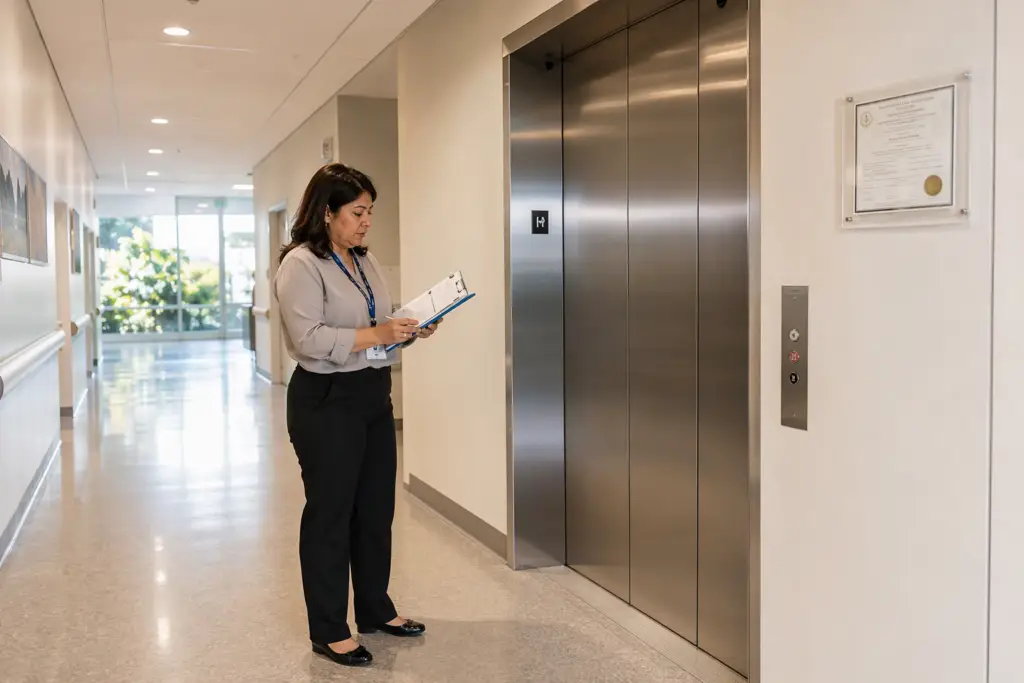
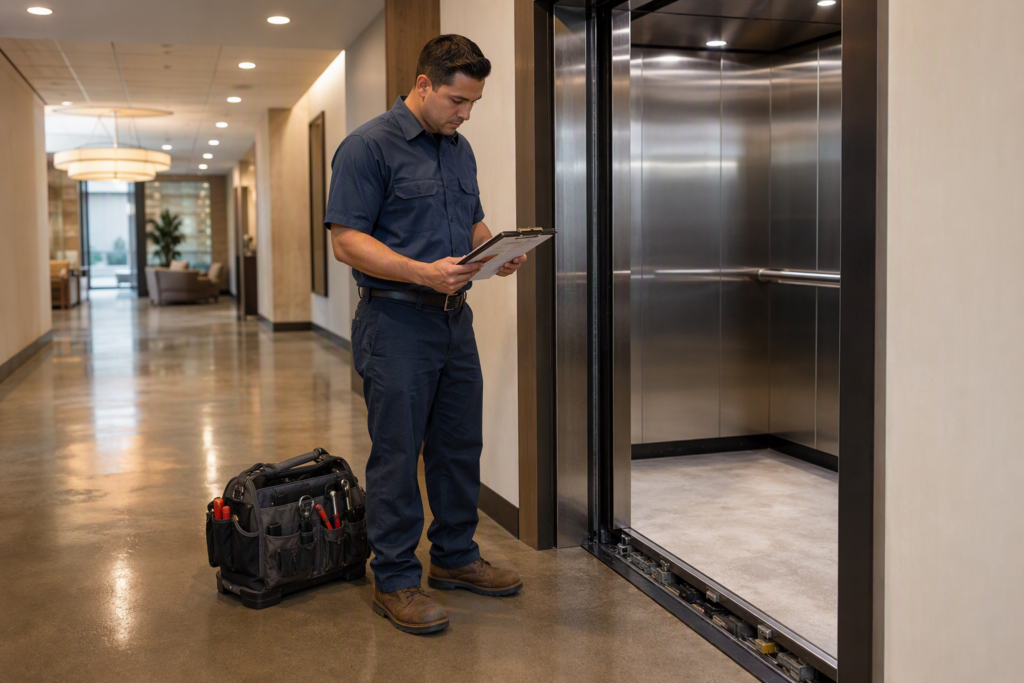
Elevators in hospitals, clinics, skilled nursing facilities, and medical office buildings are not a convenience — they are a critical component of patient transport, emergency response, and equipment delivery. When a maintenance provider is underperforming, switching companies is not only appropriate, it may be a regulatory and liability necessity. This guide walks healthcare facility managers in Signal Hill, Long Beach, Los Angeles, and Orange County through every step of making that transition safely and compliantly.
What Should a Healthcare Facility Know Before Switching Elevator Maintenance Companies?
Before initiating any change, facility managers should understand the full scope of their current obligations. Healthcare elevators operate under a layered compliance framework that includes federal, state, and industry-specific standards. Switching providers mid-cycle without a plan can create inspection gaps, documentation lapses, or — in worst-case scenarios — equipment downtime that disrupts patient care workflows.
Key considerations before making the switch include:
- Current contract terms: Most maintenance agreements include a notice period, typically 30 to 90 days, and may include early termination clauses. Review the contract with legal counsel before sending any written notice.
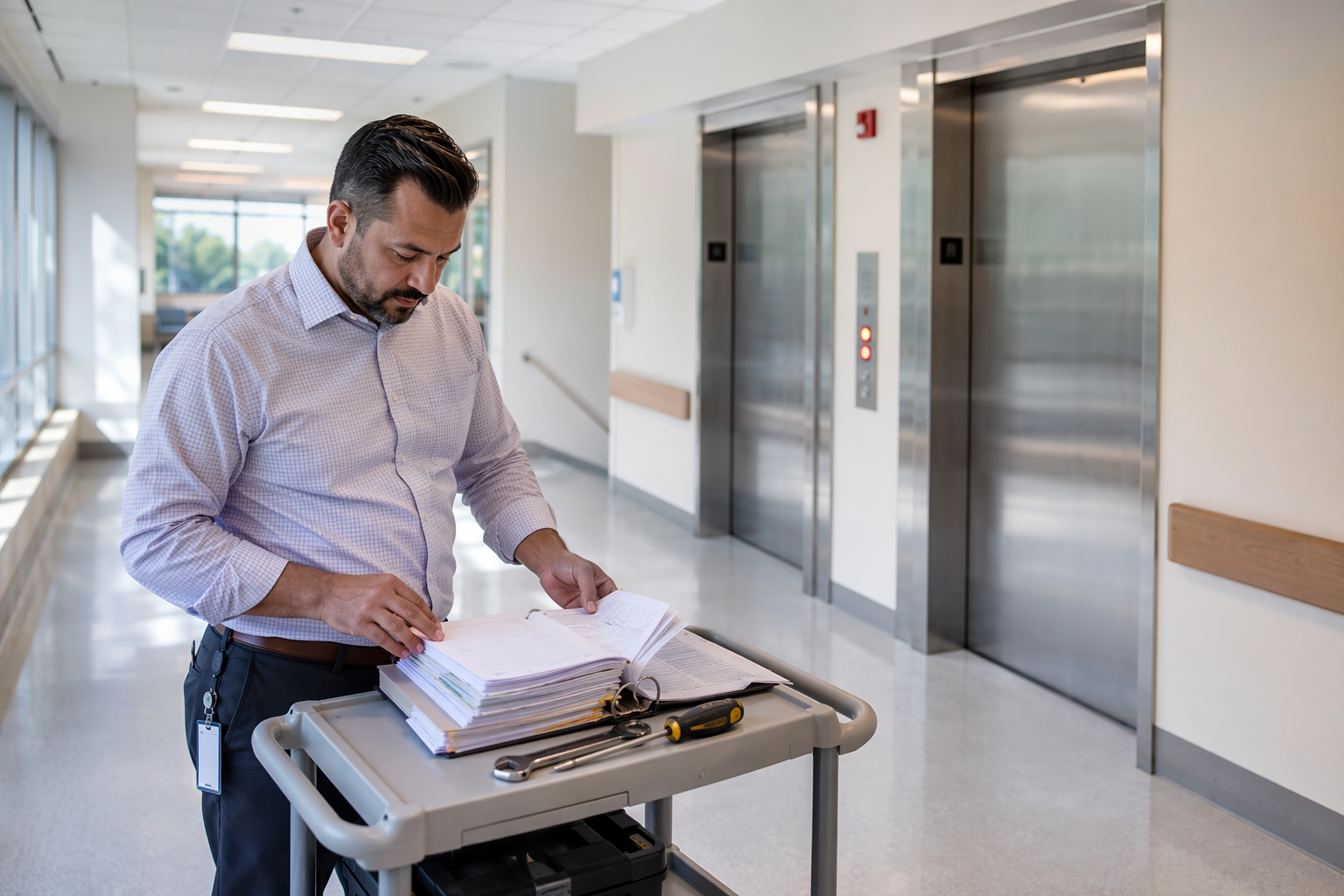
- Equipment documentation: Obtain all maintenance logs, inspection records, repair histories, and parts inventories from the outgoing provider. In California, these records support state-required inspections and may be requested during a Joint Commission survey.
- Compliance standing: Confirm whether any open violations, deferred repairs, or outstanding inspection items exist. These carry over to the new provider and must be disclosed.
- Pending inspections: Coordinate the transition timeline around California Division of Occupational Safety and Health (Cal/OSHA) inspection schedules to avoid lapses in certificate of compliance.
What Compliance Standards Govern Elevators in Healthcare Facilities?
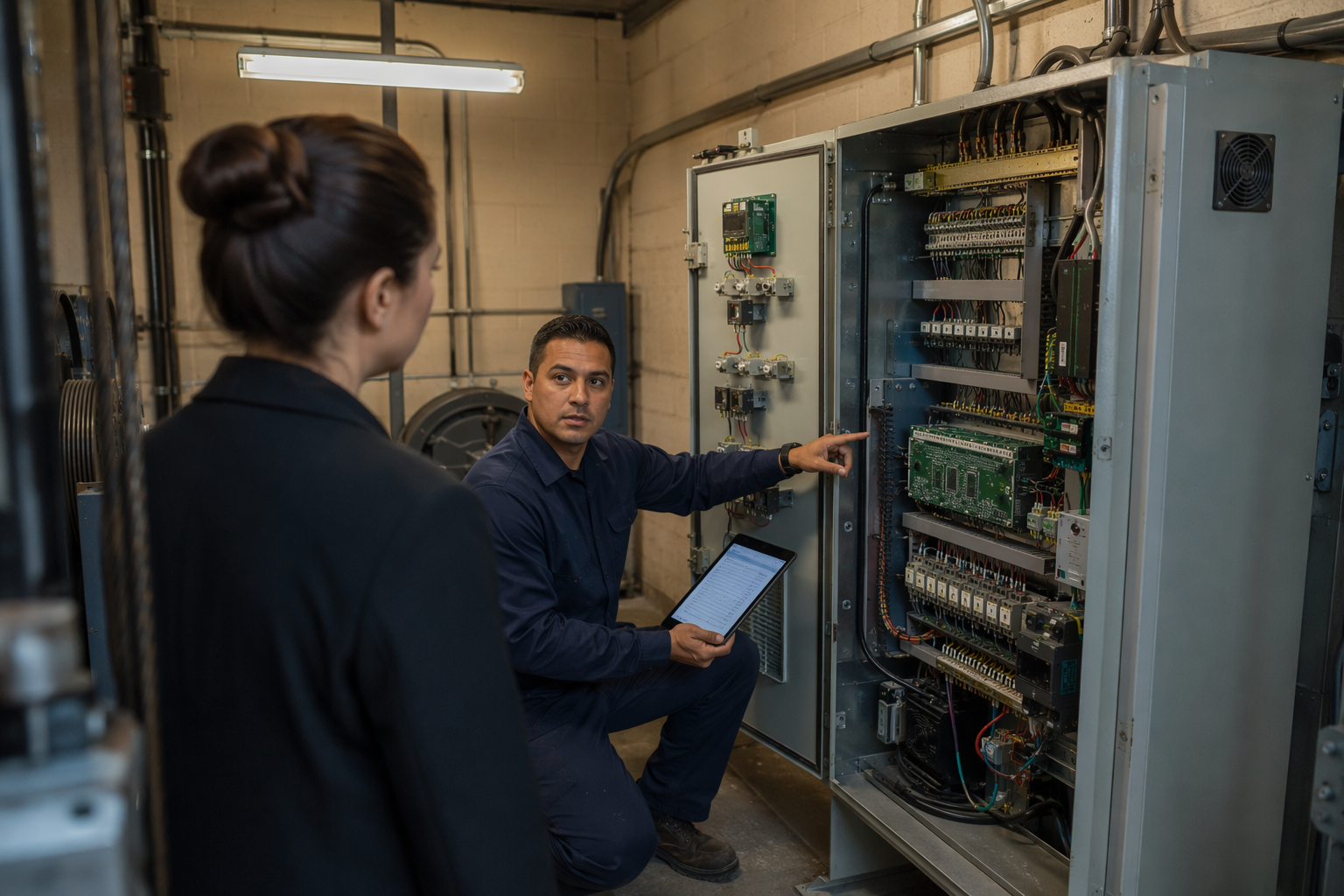
Healthcare elevators are subject to multiple overlapping codes, all of which must be satisfied by any qualified maintenance provider:
- ASME A17.1 Safety Code for Elevators and Escalators: This is the primary national standard governing elevator design, installation, inspection, testing, and maintenance. In California, it is adopted by reference into state regulations. Periodic inspections and Category tests required under ASME A17.1 must be performed on schedule — healthcare facilities cannot afford lapses.
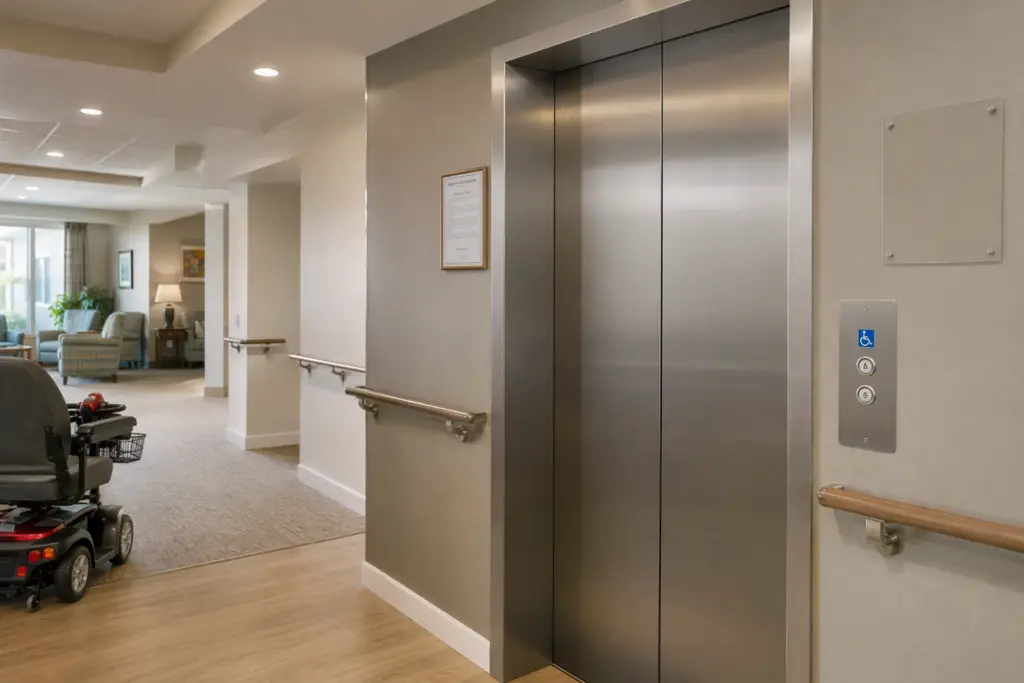
- Americans with Disabilities Act (ADA): All public-access elevators in healthcare facilities must meet ADA accessibility standards, including door timing, button height, audible signals, and cab dimensions. A new maintenance provider should audit compliance as part of onboarding.
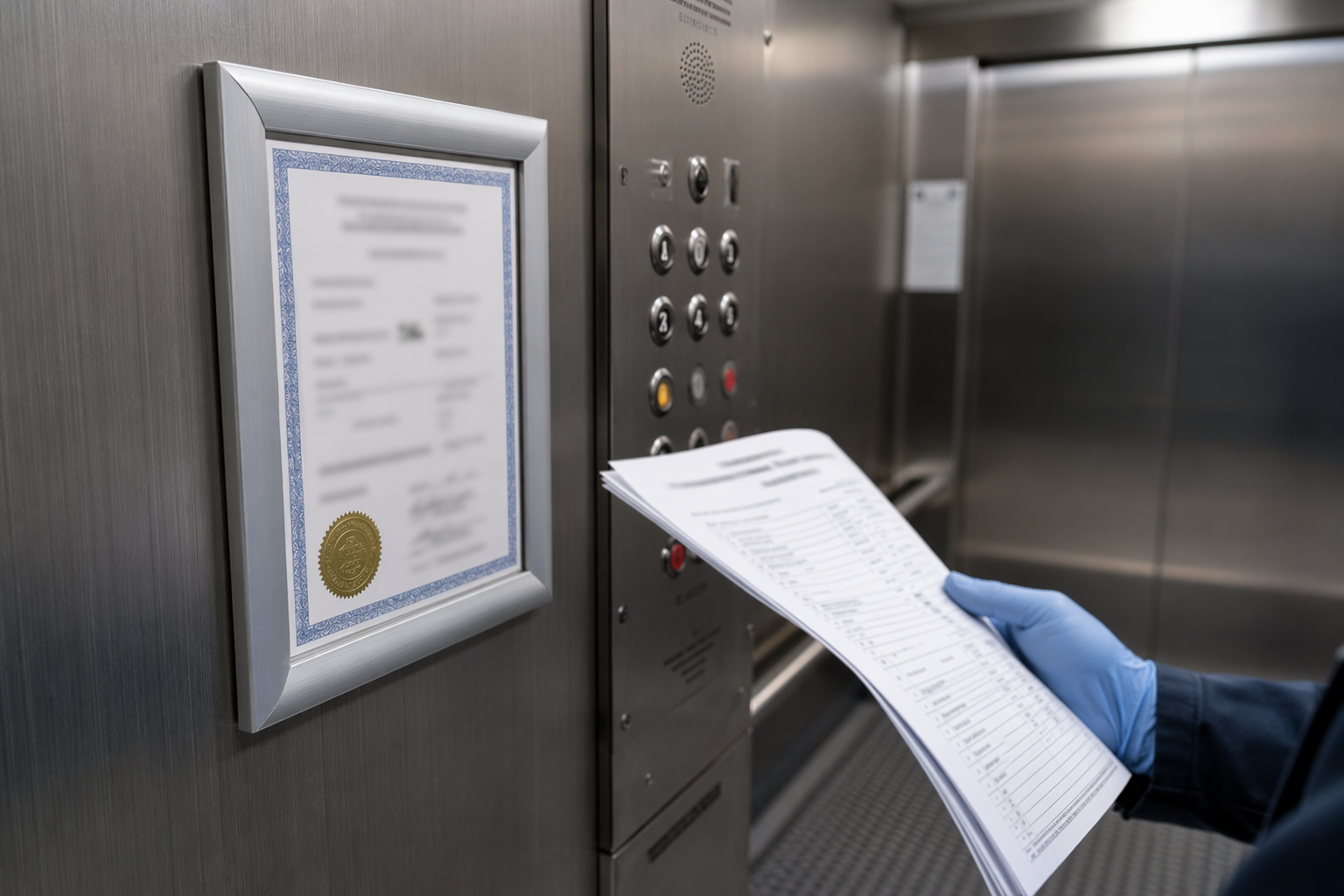
- California Code of Regulations, Title 8: Cal/OSHA administers elevator safety in California, including permitting, inspection, and enforcement. Any elevator in a hospital or licensed healthcare facility must hold a current Cal/OSHA permit to operate.
- OSHA General Industry Standards: Federal OSHA standards for workplace safety apply to maintenance personnel working on elevators, including lockout/tagout (LOTO) procedures.
- The Joint Commission (TJC) Environment of Care Standards: Accredited hospitals must maintain elevators as part of their Environment of Care program. Elevator failures and maintenance gaps can trigger findings during TJC surveys.
- CMS Conditions of Participation: Medicare- and Medicaid-certified facilities must maintain a safe physical environment, which includes operational elevator systems.
Liftech Elevator is a certified elevator service company operating throughout Signal Hill, Long Beach, Los Angeles, and Orange County, and works within this full compliance framework when onboarding healthcare clients.
How Do You Formally Terminate an Elevator Maintenance Contract?
Terminating an elevator maintenance agreement requires a deliberate, documented process to protect the facility legally and operationally:
- Pull and review the existing contract. Identify the termination notice requirements, cure periods, and any automatic renewal clauses. Many agreements auto-renew annually with a 60-day opt-out window.
- Send written notice within the required timeframe. Deliver termination notice via certified mail or another trackable method. Keep a timestamped copy.
- Request all records from the outgoing provider. This includes maintenance logs, inspection certificates, test reports, parts replacement history, and any open repair tickets.
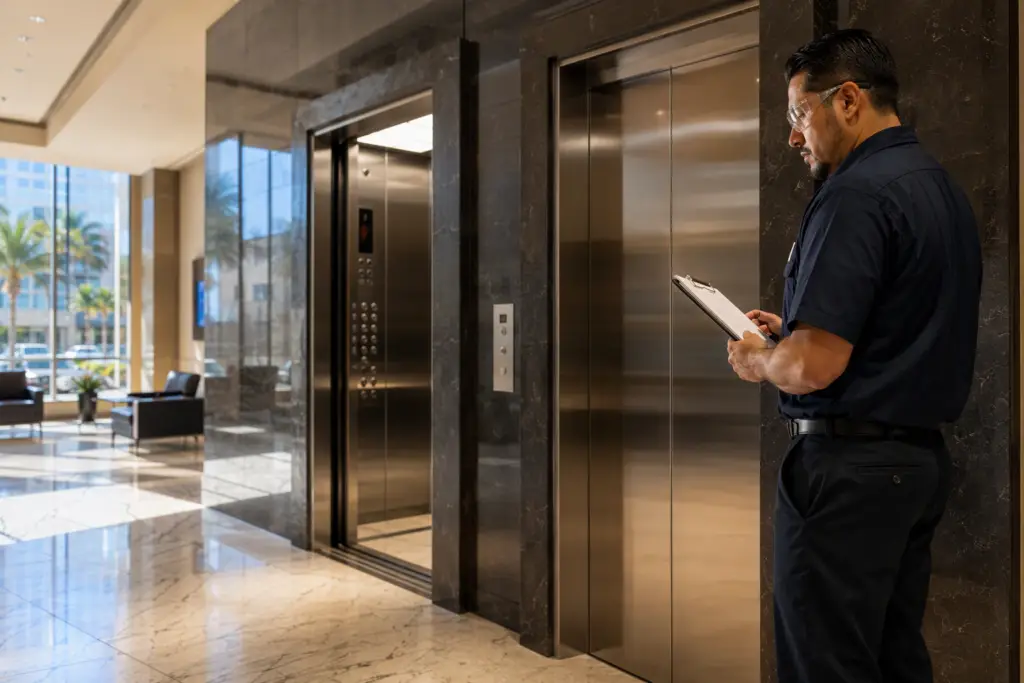
- Document the current condition of all equipment. Arrange for a third-party inspection or ask the incoming provider to conduct an assessment before the contract ends, establishing a clear baseline.
- Confirm no outstanding regulatory items exist. Contact Cal/OSHA or review the elevator permit status online to confirm the certificate of compliance is current and unencumbered.
- Notify your incoming provider of the go-live date. Coordinate scheduling to ensure maintenance coverage begins the day after the outgoing contract ends — with no gap in service.
What Should Healthcare Facilities Look for When Evaluating a New Elevator Maintenance Provider?
Not all elevator maintenance companies are equipped to serve healthcare environments. The evaluation criteria should be specific to the demands of clinical operations:
- Healthcare-specific experience: Providers should understand the operational sensitivity of hospital and clinic environments, including restricted access areas, infection control protocols, and the need for minimal service disruption during patient hours.
- Code compliance capability: The provider must be able to perform all ASME A17.1 Category 1 and Category 5 tests, maintain compliance documentation, and support state inspection processes in California.
- Familiarity with multiple equipment types: Healthcare facilities often have a mix of traction, hydraulic, and MRL (machine-room-less) elevators. Confirm the provider services all types present in the building.
- Emergency response protocols: Elevator entrapments in a healthcare setting carry elevated risk. Confirm the provider has clear protocols for emergency response situations.
- Transparent maintenance agreements: Look for clear scope-of-work definitions, predictive maintenance practices, and documentation standards that will hold up during a Joint Commission survey or Cal/OSHA inspection.
Liftech Elevator serves healthcare facilities across Long Beach, Los Angeles, Signal Hill, and Orange County with maintenance programs designed around clinical operational requirements.
How Long Does It Take to Switch Elevator Maintenance Companies?
The timeline for switching providers in a healthcare setting typically spans four to eight weeks, depending on contract terms and equipment complexity. A reasonable phased approach looks like this:
- Weeks 1–2: Review contract, send written termination notice, and begin evaluating replacement providers.
- Weeks 3–4: Select a new provider, execute the new agreement, and schedule a pre-transition equipment assessment.
- Weeks 5–6: Transfer all documentation from the outgoing provider to the incoming provider. Conduct any deferred repairs or open-ticket work before the handoff.
- Week 7–8: New provider assumes full maintenance responsibility. Confirm permit status, update emergency contact information posted in elevator cabs, and brief facility management on new reporting procedures.
What Happens to Open Repairs or Violations When You Switch Providers?
Any outstanding violations, deferred maintenance items, or failed test results remain the responsibility of the facility, not the outgoing contractor. When Liftech Elevator onboards a new healthcare client, a comprehensive equipment assessment identifies all existing conditions so they can be addressed proactively rather than discovered during a state inspection.
If a Cal/OSHA violation is on record, it must be corrected and re-inspected before the elevator can receive a renewed certificate of compliance. This process should be coordinated with the incoming maintenance provider as a priority task.
Can Switching Elevator Maintenance Companies Affect Patient Safety?
Improperly managed transitions can create risk. If there is a gap in maintenance coverage, a missed lubrication cycle, or an uninspected repair, the consequences in a healthcare setting extend beyond inconvenience — they can delay patient transport, strand individuals between floors, or create exposure during a regulatory survey.
Planning the transition carefully, securing all documentation, and choosing a provider with healthcare-appropriate protocols mitigates these risks. Liftech Elevator coordinates transitions with healthcare facility managers to ensure continuous compliance and operational coverage throughout the handoff period.
What Are the Costs Involved in Switching Elevator Maintenance Companies?
The financial picture of switching providers includes several components that facility managers should plan for:
- Early termination fees: If the current contract is terminated before its natural expiration, fees may apply. Review contract language carefully.
- Catch-up repairs: A pre-transition assessment may reveal deferred maintenance that needs immediate attention. Addressing these items promptly prevents larger costs and compliance exposure later.
- New agreement structure: Comprehensive maintenance agreements typically cover routine maintenance, lubrication, adjustments, and Category testing. Understanding exactly what is and is not included in a new contract prevents unexpected expenses.
- Inspection and permitting fees: California requires periodic inspections and permit renewals. Confirm whether these are included in the new maintenance agreement or billed separately.
What Are the ADA Requirements Healthcare Facilities Must Maintain After Switching Providers?
Under the Americans with Disabilities Act, elevators in healthcare facilities serving the public must maintain specific accessibility features at all times. These include:
- Door reopening devices that function properly when an obstruction is detected
- Door timing that provides sufficient clearance time for individuals using mobility aids
- Audible and visual floor indicators
- Raised and Braille characters on control panels
- Cab dimensions meeting minimum size requirements
A new maintenance provider should audit all ADA-related features during the onboarding assessment and include them in ongoing maintenance scope. Failure to maintain these features can expose the facility to ADA complaints and compliance findings.
Questions Your Inspector Will Ask
When a Cal/OSHA elevator inspector or Joint Commission surveyor visits a healthcare facility, the questions they are likely to ask about elevator maintenance include:
- Can you provide the current certificate of compliance for each elevator in the facility?
- Where is the maintenance log, and does it reflect service activity within the required intervals under ASME A17.1?
- Have all required Category 1 and Category 5 tests been performed and documented?
- Who is the current maintenance contractor, and can you provide their contact information for emergency response?
- Have there been any entrapments in the past 12 months? If so, what was the documented response and resolution?
- Are there any open repair orders or outstanding violations on record?
- How are ADA accessibility features tested and documented between inspection cycles?
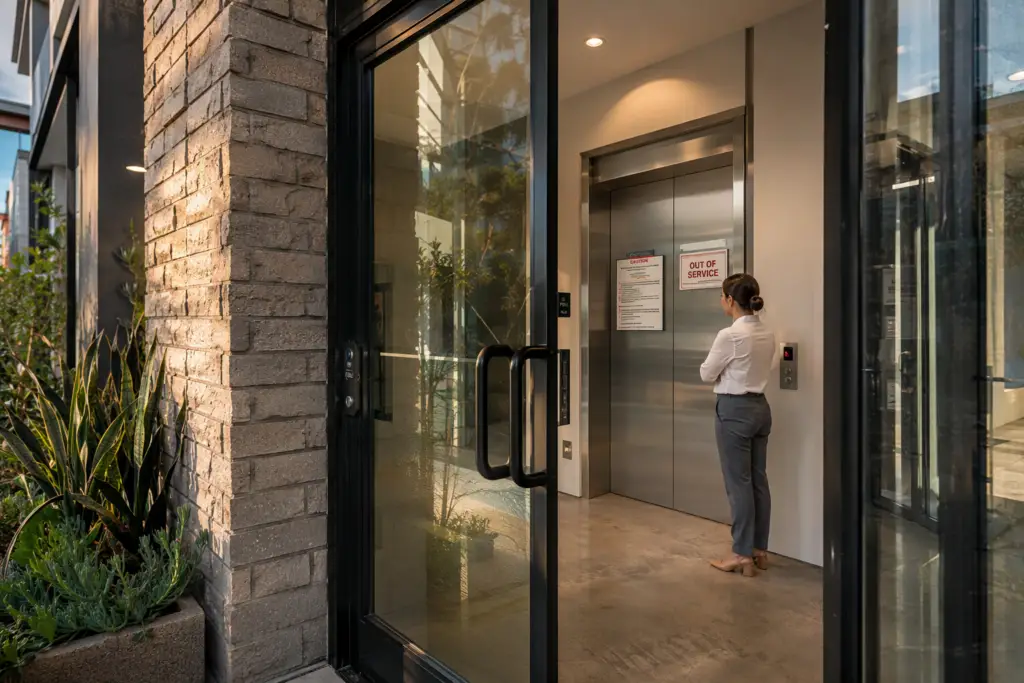
- What is the facility’s protocol if an elevator goes out of service during patient transport hours?
Having clear, documented answers to all of these questions — supported by records from the current and incoming maintenance provider — is the standard healthcare facilities in Los Angeles, Long Beach, Signal Hill, and Orange County should be prepared to meet.
How Does a New Maintenance Provider Get Up to Speed Quickly on Healthcare Elevator Systems?
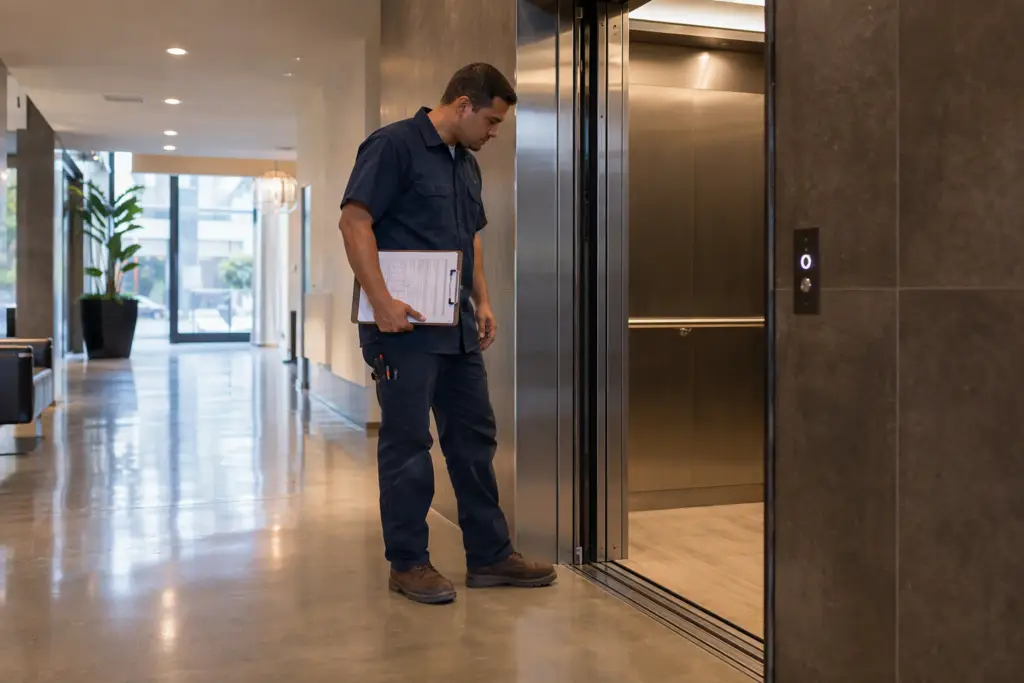
A qualified provider will conduct a thorough equipment assessment at the start of the relationship. This includes reviewing all available documentation from the prior contractor, physically inspecting each elevator, testing safety devices, and creating an equipment profile that drives the ongoing maintenance schedule.
Liftech Elevator begins every new healthcare account with a documented assessment that captures the current condition of all elevator systems — creating a transparent baseline for the maintenance relationship going forward.
What Local Regulations Apply to Healthcare Elevator Maintenance in Los Angeles and Orange County?
In addition to ASME A17.1 and federal ADA requirements, healthcare facilities in Los Angeles and Orange County must comply with:
- California Code of Regulations, Title 8, Elevator Safety Orders: Administered by Cal/OSHA, these orders establish permitting, inspection frequency, and testing requirements specific to California.
- Los Angeles Department of Building and Safety (LADBS): In the City of Los Angeles, LADBS coordinates with Cal/OSHA on elevator permits and may conduct independent inspections.
- County and municipal fire codes: Firefighter service (Phase I and Phase II emergency operation) requirements must be maintained and tested in accordance with local fire authority having jurisdiction (AHJ) requirements.
Healthcare facilities in Signal Hill, Long Beach, Los Angeles, and Orange County that are ready to transition to a more reliable, compliance-focused elevator maintenance partner deserve a straightforward starting point.
Contact Liftech Elevator for a free elevator assessment. Call 562-609-3478 to speak with a member of the Liftech Elevator team about transitioning your healthcare facility’s elevator maintenance program — with no gap in compliance or coverage.
Need elevator service you can rely on? Liftech Elevator is ready to help.