Elevator Entrapment Rescue Procedure: Complete FAQ Guide for Building Owners and Passengers
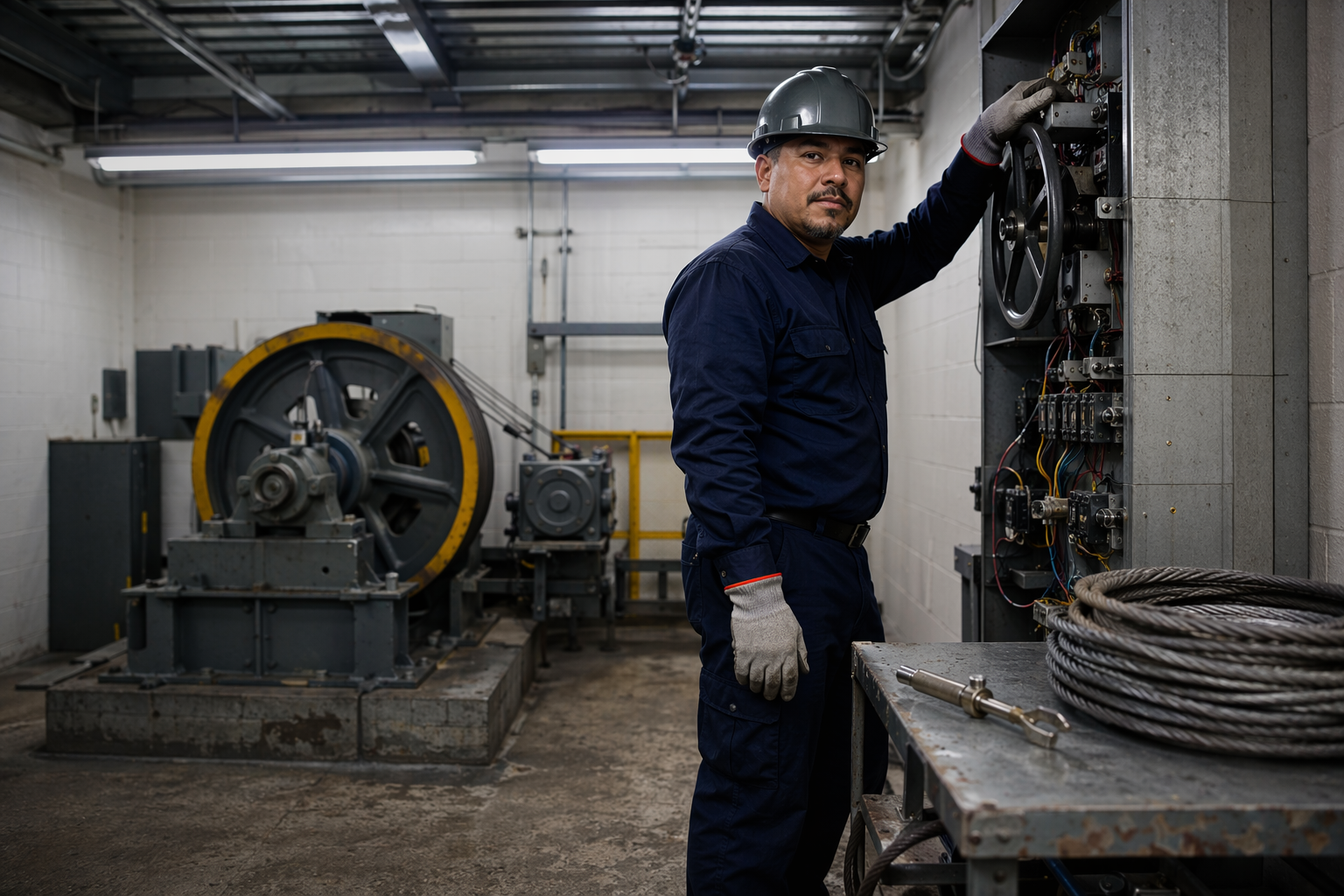
Elevator entrapments are more common than most building owners realize. According to 2026 industry data from the National Elevator Industry Inc. (NEII), approximately 10,000 elevator entrapments occur annually across the United States, with California accounting for a disproportionate share due to its aging vertical transportation infrastructure. Whether you manage a commercial high-rise in Los Angeles, a mid-rise residential building in Long Beach, or a retail property in Orange County, understanding the proper rescue procedure is not optional — it is a life-safety obligation.
This comprehensive FAQ guide covers every aspect of elevator entrapment rescue: what to do, who is authorized to act, what the codes require, and how to prepare your building before an incident occurs. I have spent over 15 years responding to entrapment calls across Southern California, and the information below reflects real field experience, not just textbook theory.
What Is the Correct Elevator Entrapment Rescue Procedure Step by Step?
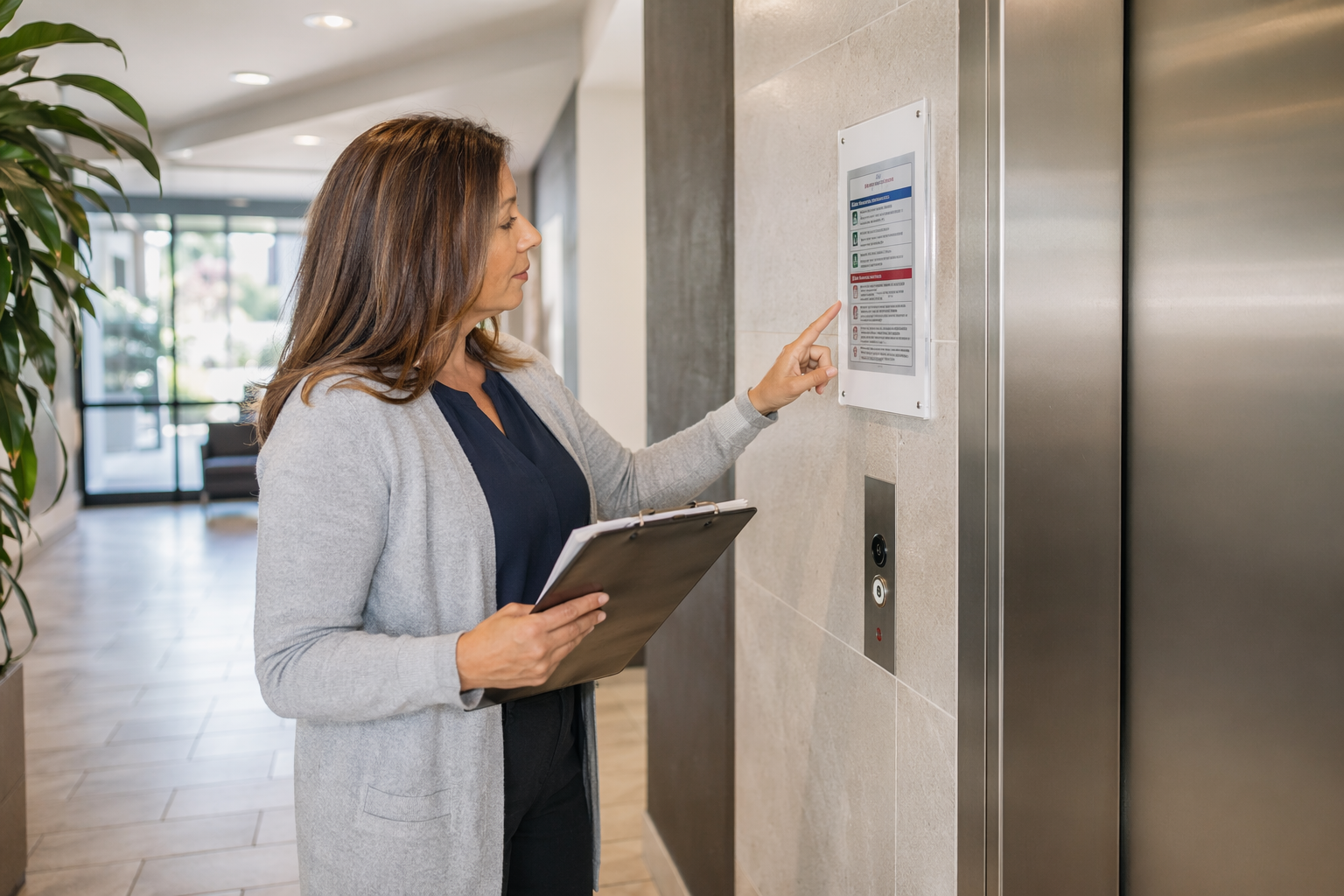
The correct procedure involves six sequential steps: establish communication with passengers, call emergency services, dispatch a certified elevator technician, assess elevator position from the machine room, manually move the cab to the nearest floor landing, and open doors only when the cab is fully leveled.
Step 1 is always communication. Passengers must be verbally reassured via the in-car emergency phone (required by ASME A17.1 Section 2.27.1.5) that help is on the way. Panic is the enemy; calm, clear communication prevents injuries caused by passengers attempting to self-rescue.
Step 2 is never to attempt to force open doors or allow passengers to climb out of the cab unless there is an immediate life-threatening emergency such as fire or flooding at the cab level. More injuries occur from premature self-evacuation than from the entrapment itself.
Step 3 involves the elevator technician locating the car using the machine room position indicator, cutting power at the main line disconnect only after confirming it is safe to do so, and engaging the hand-winding device (on traction elevators) or the emergency lowering valve (on hydraulic elevators) to bring the car to the nearest floor landing within 1–2 inches of level.
Step 4 is door operation: doors must be opened using the mechanical door release key (car door release tool) by qualified personnel only. Under California Code of Regulations Title 8, Section 3038, untrained personnel are prohibited from performing elevator rescues.
Who Is Authorized to Perform an Elevator Entrapment Rescue in California?
In California, only licensed elevator mechanics, certified elevator inspectors, or trained fire department personnel are legally authorized to perform an elevator entrapment rescue.
California Labor Code Section 7302 requires that any person performing elevator work — including emergency rescue — hold a valid state elevator mechanic license issued through the Division of Occupational Safety and Health (Cal/OSHA). Building maintenance staff, security guards, and property managers are explicitly prohibited from operating elevator rescue equipment unless they hold this license.
Fire departments in Los Angeles, Long Beach, and Orange County maintain elevator rescue protocols and carry door release keys for emergency access. However, fire responders are trained in passenger extraction, not mechanical diagnosis. Once passengers are safely removed, a licensed elevator company must restore the unit to service and identify the root cause before the elevator is returned to operation.
Liftech Elevator maintains a 24/7 emergency response line with IUEC-certified mechanics stationed throughout Signal Hill, Long Beach, Los Angeles, and Orange County to ensure rapid dispatch for entrapment events.
How Long Can Passengers Legally Be Trapped in an Elevator?
There is no single legally mandated maximum entrapment time under federal law, but ASME A17.1-2019/CSA B44-19 requires that rescue operations be initiated immediately upon notification, and California best-practice standards target passenger rescue within 30 minutes of a reported entrapment.
While a specific clock does not exist in statute, liability exposure for building owners grows significantly the longer a rescue takes. In cases involving medical emergencies — heat stroke, cardiac events, panic attacks — courts have held that delayed response constitutes negligence. Buildings in Los Angeles County that have experienced entrapments exceeding 60 minutes without documented response efforts have faced regulatory action.
The 30-minute benchmark comes from the ASME A17.1 Section 2.27.1.5 requirement that emergency communication systems connect to a monitoring center staffed 24 hours a day, 7 days a week, with a commitment to dispatching assistance promptly. Elevator service contracts should specify guaranteed response times; 4-hour windows are unacceptable for entrapment events and should be explicitly excluded from service agreement language.
What Equipment Is Required for a Proper Elevator Rescue?
A proper elevator entrapment rescue requires a machine room access key, hand-winding device or emergency lowering tool, car door release key, floor landing key, flashlight, communication device, and personal protective equipment including fall protection for hoistway access.
| Equipment Item | Traction Elevator | Hydraulic Elevator | MRL (Machine Room-Less) | Required By |
|---|---|---|---|---|
| Hand-Winding Device | Yes | No | Yes (portable brake release tool) | ASME A17.1-2.26.9 |
| Emergency Lowering Valve | No | Yes | No | ASME A17.1-3.19.5 |
| Car Door Release Key | Yes | Yes | Yes | ASME A17.1-2.12.1 |
| Hoistway Landing Key | Yes | Yes | Yes | ASME A17.1-2.12.2 |
| Emergency Lighting | Yes | Yes | Yes | ASME A17.1-2.27.1.2 |
| Two-Way Communication | Yes | Yes | Yes | ADA / ASME A17.1-2.27.1.5 |
| Brake Release Tool (MRL) | No | No | Yes | ASME A17.1-2.26.9.3 |
| Fall Protection Harness | Yes (hoistway access) | Situational | Yes (hoistway access) | Cal/OSHA Title 8 §3281 |
Machine room-less (MRL) elevators, which have become increasingly common in new construction across Los Angeles and Orange County since 2010, present unique rescue challenges because the drive machine is located inside the hoistway rather than a separate room. Technicians must access a control panel at the top landing and use a specialized brake release and lowering procedure that differs substantially from conventional traction elevator rescue.
What Should Passengers Do During an Elevator Entrapment?
Passengers should press the emergency call button, use the in-car phone to contact the monitoring center, stay calm, avoid attempting to open doors or climb out, and wait for trained rescue personnel to arrive.
The single most dangerous action a trapped passenger can take is attempting to exit between floors. Hoistway openings represent a fatal fall hazard, and elevator mechanical systems can restart unexpectedly due to automatic reset functions. In 2025, the Consumer Product Safety Commission attributed 7 of 27 reported elevator fatalities in the U.S. to improper self-rescue attempts.
Passengers should be advised to: press the door open button intermittently (it will not help but reduces anxiety), use a cell phone if the in-car emergency phone is non-functional, avoid jumping (it will not free a stalled elevator and can trigger safety brakes), sit on the floor to reduce fatigue during longer waits, and alert the monitoring center to any medical conditions present in the cab.
What Are the ASME A17.1 Requirements for Elevator Emergency Operations?
ASME A17.1-2019 (adopted by California as the basis for Title 8 elevator regulations) mandates emergency lighting, two-way voice communication, firefighters’ emergency operation (Phase I and Phase II), and clearly posted rescue procedures in every machine room.
Key ASME A17.1 provisions relevant to entrapment rescue include:
- Section 2.27.1.2: Emergency lighting with a minimum 1-hour battery backup must activate automatically upon power failure.
- Section 2.27.1.5: A two-way voice communication system connecting to a 24/7 monitoring center is mandatory in all new and substantially modified elevators.
- Section 2.26.9: Means to manually move the elevator car by qualified personnel must be provided at or adjacent to the machine.
- Section 2.27.2: Firefighters’ emergency operation (FEO) Phase I returns all cars to a designated floor on activation of a building fire alarm. Phase II allows firefighters to manually control individual cars.
- Section 8.6.10.1: Periodic inspection and testing requirements for emergency systems, including communication devices, must be documented and available for inspection by California DOSH (Division of Occupational Safety and Health) inspectors.
California has adopted ASME A17.1-2019 with state-specific amendments under Title 8, California Code of Regulations. Building owners in Los Angeles, Long Beach, Signal Hill, and Orange County must comply with both the base ASME code and California-specific addenda, which in some cases impose stricter requirements.
How Does the Elevator Rescue Procedure Differ for Hydraulic vs. Traction Elevators?
Hydraulic elevators are lowered using a manual emergency lowering valve that releases fluid pressure, while traction elevators are moved by hand-winding the motor brake or using a portable brake release tool, making the machine type the primary determinant of rescue technique.
For hydraulic elevators, the technician locates the emergency lowering valve — typically a red-handled valve on the power unit — and carefully opens it in small increments to allow the car to descend slowly to the lowest landing. This procedure can only lower the car; if the car is below the nearest landing, additional mechanical intervention is required.
For electric traction elevators, the technician must de-energize the motor, manually release the electromagnetic brake using the brake release device, and then use the hand-winding wheel to move the car to the nearest landing. On gearless machines common in high-rise buildings throughout Los Angeles, this requires significant physical effort and two-person operation for safety.
For MRL elevators, there is no machine room. The brake release tool is inserted through an access panel at the top floor landing, and the car is moved using a coordinated procedure involving the control panel at the top landing. This is the most technically complex rescue scenario and requires specific training that not all elevator technicians have completed.
What Is the Role of Building Management During an Elevator Entrapment?
Building management is responsible for calling 911 and the elevator service company immediately, maintaining continuous communication with trapped passengers, clearing the area around affected floor landings, and documenting the incident for regulatory and insurance purposes.
Building managers should maintain a written Emergency Action Plan (EAP) that includes the elevator service company’s 24/7 emergency number, the local fire department non-emergency dispatch number, the location of the machine room key, and instructions for operating the emergency intercom if the in-car phone fails to auto-connect.
Under California Government Code Section 8607 and related OSHA regulations, building owners have a duty of care to maintain elevator systems in safe operating condition. Failure to respond appropriately to an entrapment — including failure to have a current elevator service contract — can result in Cal/OSHA citations, civil liability, and in cases of injury, criminal negligence charges.
How Often Should Elevator Rescue Equipment and Emergency Systems Be Tested?
California regulations and ASME A17.1 require elevator emergency systems — including communication devices, emergency lighting, and firefighters’ emergency operation — to be tested at least annually, with some components requiring more frequent testing intervals.
| Emergency System | Testing Frequency | Authority Having Jurisdiction | Code Reference |
|---|---|---|---|
| In-Car Emergency Phone | Monthly recommended; annually required | Cal/OSHA DOSH | ASME A17.1-8.6.10.1 |
| Emergency Lighting | Annually (full load test) | Cal/OSHA DOSH | ASME A17.1-2.27.1.2 |
| Firefighters’ Emergency Operation (Phase I & II) | Annually | Local Fire Marshal / Cal/OSHA | ASME A17.1-8.6.9.3 |
| Governor and Safety (Traction) | Every 5 years (full test) | Cal/OSHA DOSH | ASME A17.1-8.6.5.3 |
| Relief Valve (Hydraulic) | Annually | Cal/OSHA DOSH | ASME A17.1-8.6.7 |
| Hand-Winding Device Operability | Annually (at maintenance visit) | Elevator Contractor | ASME A17.1-2.26.9 |
| Seismic Switch Function (California) | Annually | Cal/OSHA DOSH | CCR Title 8 §3003 |
What Are the Most Common Causes of Elevator Entrapment in Southern California Buildings?
The most common causes of elevator entrapment in Southern California are power outages, door mechanism failures, aging control system faults, overloading, and seismic activity triggering automatic shutdown systems.
In buildings I have serviced across Long Beach and Los Angeles over the past 15 years, door-related failures account for approximately 40–45% of all entrapments. Door operator failures, worn door gibs, and misaligned door cams prevent the car from receiving the “doors fully closed” signal required for movement, trapping passengers mid-operation.
Seismic shutdowns are unique to California and require special mention. California Code of Regulations Title 8 Section 3003 mandates seismic sensors on elevators in most new construction, which automatically stop and hold cars at the nearest floor upon detecting ground motion above a threshold. While this is a safety feature, it frequently results in minor entrapments during small earthquakes — situations that require a certified technician to manually reset the seismic switch before the elevator returns to service.
Power outages affecting older buildings without battery lowering systems cause cars to stop between floors. Modern elevators built after the widespread adoption of ASME A17.1-2000 include automatic lowering systems on power failure, but pre-2000 construction — prevalent throughout older neighborhoods in Los Angeles and Orange County — may lack this feature entirely.
What ADA Requirements Apply to Elevator Emergency Communication During Entrapment?
Under the Americans with Disabilities Act and ASME A17.1 Section 2.27.1.5, elevator emergency communication systems must be usable by people who are deaf or hard of hearing, typically through visual signals and two-way text capability in addition to voice communication.
ADA Standards for Accessible Design, Section 407.4.9, require that elevator emergency communication systems provide both audible and visible signals. The “push for help” button must produce a visual confirmation when activated (such as an illuminated indicator), and the monitoring center must have the capability to respond to TTY/TDD communications for passengers with hearing impairments.
In 2022, the U.S. Access Board updated guidance clarifying that visual-only emergency communication systems in elevators are insufficient and that two-way voice communication remains mandatory alongside visual confirmation signals. Building owners in Los Angeles and Orange County who have older elevators with communication systems that only provide a bell or buzzer response — without voice capability — are likely out of compliance and should schedule an assessment promptly.
How Much Does an Emergency Elevator Rescue Call Cost in Southern California?
Emergency elevator rescue calls in Southern California typically range from $250 to $800 for after-hours response, depending on time of day, elevator type, and service contract terms — though buildings with comprehensive maintenance contracts often receive emergency response at no additional charge.
Pricing variables include:
- Time of call: After-hours, weekend, and holiday calls carry premium rates of $125–$175/hour versus $85–$120/hour during standard business hours (2026 Southern California market rates).
- Contract status: Full-service maintenance contracts — which typically run $350–$900/month per elevator in the Los Angeles/Orange County market — generally include emergency rescue response at no incremental cost.
- Elevator type: MRL elevator rescues requiring specialized tooling may carry a higher trip charge than standard hydraulic or traction units.
- Cause of entrapment: If the entrapment is caused by a part failure requiring immediate repair (door operator, control board), parts and repair labor will be billed separately.
Liftech Elevator offers comprehensive maintenance agreements for buildings in Signal Hill, Long Beach, Los Angeles, and Orange County that include 24/7 emergency response with guaranteed dispatch times — eliminating the uncertainty of per-call emergency billing when it matters most.
What Should Be Included in a Building’s Elevator Emergency Action Plan?
A compliant elevator Emergency Action Plan must include emergency contact numbers, machine room location and access procedures, entrapment communication protocols, coordination steps with fire department responders, and incident documentation procedures.
California OSHA recommends that all commercial buildings with elevators maintain a written EAP that is reviewed and updated annually. The plan should include:
- The elevator service company’s 24/7 emergency number (primary and backup)
- Physical location of machine room(s) with access key storage location
- Elevator identification numbers and type (hydraulic, traction, MRL) for each unit
- Procedure for activating the building’s emergency communication intercom
- Instructions for fire department coordination upon arrival
- Incident reporting forms for Cal/OSHA notification (required within 8 hours for serious injuries)
- Post-incident return-to-service authorization requirements
The EAP should be posted in the building’s management office, at the security desk, and in the elevator machine room. Staff responsible for executing the plan should receive annual training — a requirement that is often overlooked in building turnovers and staff transitions.
Can Fire Departments Perform Elevator Rescues Without a Licensed Elevator Mechanic?
Yes, fire departments in California are authorized to perform emergency passenger extraction from elevators, but they are not authorized to restore elevator service — only a licensed elevator mechanic can return the unit to operation after a rescue.
California Labor Code Section 7302 distinguishes between emergency extraction (a life-safety function permitted to fire personnel) and elevator repair or restoration (reserved exclusively for licensed elevator mechanics). Fire responders in Los Angeles, Long Beach, and Orange County carry universal hoistway door keys and are trained to access landings and assist passengers out of stalled cars.
However, after fire department extraction, the elevator must be tagged out of service and remain shut down until a licensed mechanic inspects the unit, identifies the cause of entrapment, makes any necessary repairs, and provides written clearance for return to service. Building owners who allow an elevator to be placed back in service after an entrapment without licensed mechanic clearance face Cal/OSHA citations and significant liability exposure if a subsequent incident occurs.
What Are the Penalties for Non-Compliance with California Elevator Rescue Requirements?
California Cal/OSHA can issue citations ranging from $1,000 to $25,000 per violation for elevator safety non-compliance, with willful or repeat violations carrying penalties up to $156,259 per violation under 2026 penalty schedules.
Beyond Cal/OSHA administrative penalties, building owners face civil tort liability for injuries sustained during entrapments where negligence in maintenance or emergency preparedness can be established. In California, elevator-related personal injury cases frequently result in settlements between $150,000 and $1.5 million, depending on injury severity and duration of entrapment.
Specific violations that result in automatic citations include: non-functioning in-car emergency phones, expired elevator permits, missing or inoperable emergency lighting, absence of required machine room rescue equipment, and failure to report elevator-related injuries to Cal/OSHA within the required timeframe.
Annual elevator inspections by a Cal/OSHA-approved elevator inspector — with current certificates of compliance posted in each elevator cab — are the baseline requirement. Buildings without current inspection certificates are operating illegal equipment and are subject to immediate shutdown orders.
How Should Building Staff Communicate with Trapped Passengers During an Entrapment?
Building staff should maintain continuous verbal contact with trapped passengers through the in-car intercom, provide honest time estimates for rescue arrival, take note of any medical emergencies, and avoid making promises about timeline that could cause passengers to attempt self-rescue if the estimate is missed.
Communication best practices based on field experience include:
- Check in via intercom every 5–10 minutes to reassure passengers that the situation is being actively managed.
- Confirm the number of passengers and ask specifically about medical conditions, pregnancy, claustrophobia, or panic disorder.
- If a passenger has a medical emergency, escalate to 911 immediately and relay information to the elevator service technician en route.
- Do not tell passengers to try to open the doors or insert anything into the door jamb — this creates additional hazards.
- Document all communications with timestamps for incident reporting purposes.
What Happens After an Elevator Entrapment Is Resolved?
After passenger extraction, the elevator must be taken out of service, the mechanic must perform a root-cause analysis and complete any required repairs, a post-incident inspection may be required by Cal/OSHA, and the incident must be documented in the elevator’s maintenance log.
Post-entrapment protocol requires: written documentation of the entrapment cause, all corrective actions taken, parts replaced (with part numbers), return-to-service authorization signed by the licensed mechanic, and — if the entrapment resulted in injury — a Cal/OSHA Form 300 entry and potentially a Form 301 incident report within the statutory timeframe.
If the entrapment was caused by a recurring fault — a door that has been adjusted multiple times, a control system that periodically faults — the building owner should discuss a capital repair or modernization assessment with their elevator service provider. Repeated entrapments in the same unit are a regulatory red flag and will receive heightened scrutiny during the next scheduled inspection.
Liftech Elevator provides written post-incident reports to building owners and property managers following all emergency service calls, including root-cause findings and recommended corrective actions — documentation that is essential for insurance claims and regulatory compliance in the Los Angeles and Orange County markets.
How Can Building Owners Prevent Elevator Entrapments Before They Occur?
Entrapment prevention relies on comprehensive monthly preventive maintenance, proactive door component replacement on a scheduled cycle, modernization of aging control systems, and real-time remote monitoring systems that flag anomalies before they cause shutdowns.
Preventive measures with the highest return on entrapment reduction include:
- Door maintenance: Replacing door gibs, sills, and rollers on a 2–3 year cycle eliminates the leading cause of entrapments. Door component wear is gradual and easy to miss without a structured PM program.
- Remote monitoring: IoT-based elevator monitoring systems track door cycle counts, motor current draw, and fault code frequency, alerting technicians to developing problems before they cause passenger-affecting events. As of 2026, remote monitoring adoption in the commercial elevator sector exceeds 35% in major California metro markets.
- Control system modernization: Elevator controllers more than 20 years old lack the fault-tolerance and self-diagnostic capabilities of modern solid-state systems. Modernization cost-benefit analysis typically shows payback within 5–8 years through reduced service calls and emergency response costs.
- Comprehensive service contracts: Full-service agreements that include all parts and labor — rather than “oil and grease” contracts that exclude major components — ensure that failing components are replaced before they cause entrapments.
What Is the Difference Between a Full-Service Elevator Maintenance Contract and a Basic Maintenance Agreement?
A full-service elevator contract covers all parts, labor, and emergency response at a fixed monthly cost, while a basic “oil and grease” contract covers only lubrication and minor adjustments — leaving building owners responsible for the cost of all parts and major repairs, including those that cause entrapments.
In the Southern California elevator service market (2026 data), full-service contracts for a single mid-rise hydraulic elevator average $450–$750/month, while basic maintenance agreements run $200–$350/month. The apparent savings on basic contracts frequently evaporate following a single door operator replacement ($800–$2,500 in parts alone) or controller board failure ($1,500–$8,000+).
For building owners in Los Angeles, Long Beach, Signal Hill, and Orange County managing multiple elevator units, the risk-adjusted economics consistently favor full-service agreements, particularly for equipment more than 15 years old where component failure rates accelerate significantly.
How Do I Choose a Qualified Elevator Rescue and Maintenance Company in Southern California?
A qualified elevator service company must hold a valid California Elevator Safety Contractor License, employ IUEC-certified mechanics, provide documented 24/7 emergency response times, carry minimum $2 million general liability insurance, and be able to demonstrate familiarity with your specific elevator make and model.
Verification checklist for evaluating elevator service providers:
- Request the company’s California Elevator Contractor License number and verify it at the Cal/OSHA Elevator Unit website.
- Confirm all field mechanics hold current IUEC (International Union of Elevator Constructors) certifications or equivalent state-recognized credentials.
- Ask specifically about guaranteed emergency response time — acceptable is 1–2 hours maximum for entrapment events.
- Request references from comparable properties in your market (commercial, residential, healthcare).
- Review the contract language carefully for exclusions — particularly around “major components” and “acts of God” clauses that may leave you unprotected.
Liftech Elevator has served building owners and property managers in Signal Hill, Long Beach, Los Angeles, and Orange County for years, combining IUEC-certified technicians, manufacturer-trained expertise across all major elevator brands, and response infrastructure designed for the Southern California market’s unique demands — including seismic events, coastal humidity, and the aging building stock common in urban Los Angeles County.
Ready to Protect Your Building and Passengers?
An elevator entrapment is not a matter of if — it is a matter of when, and the difference between a manageable 20-minute rescue and a multi-hour liability event comes down entirely to preparation and the quality of your service partner.
Whether your building needs a comprehensive emergency preparedness review, updated maintenance contract, emergency system testing, or immediate entrapment response, Liftech Elevator has the certified personnel, local presence, and technical expertise to keep your vertical transportation operating safely and compliantly across Signal Hill, Long Beach, Los Angeles, and Orange County.
Contact Liftech Elevator for a free elevator assessment: 562-609-3478
Available 24/7 for emergency entrapment response. Licensed, insured, and IUEC-certified. Serving Southern California building owners and property managers with the responsiveness and technical depth that life-safety equipment demands.