What Is Included in an Elevator Maintenance Contract?
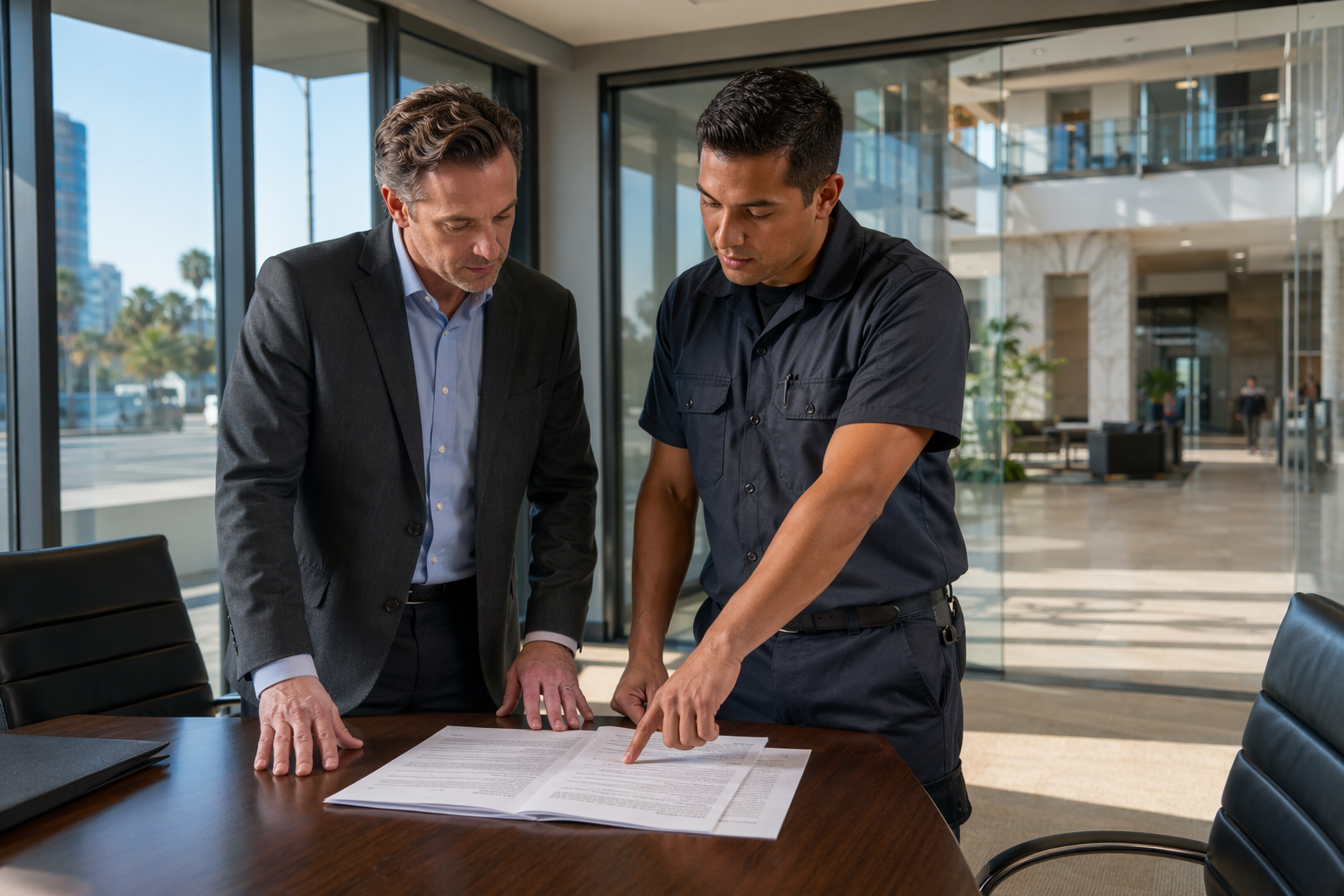
After more than 15 years servicing elevators across Signal Hill, Long Beach, Los Angeles, and Orange County, I’ve reviewed hundreds of maintenance contracts — good ones, bad ones, and everything in between. Property managers often sign contracts without fully understanding what’s covered, and that gap in knowledge leads to surprise costs, compliance failures, and unnecessary downtime. This guide breaks down every component you should expect in a well-structured elevator maintenance agreement.
What Does a Standard Elevator Maintenance Contract Cover?
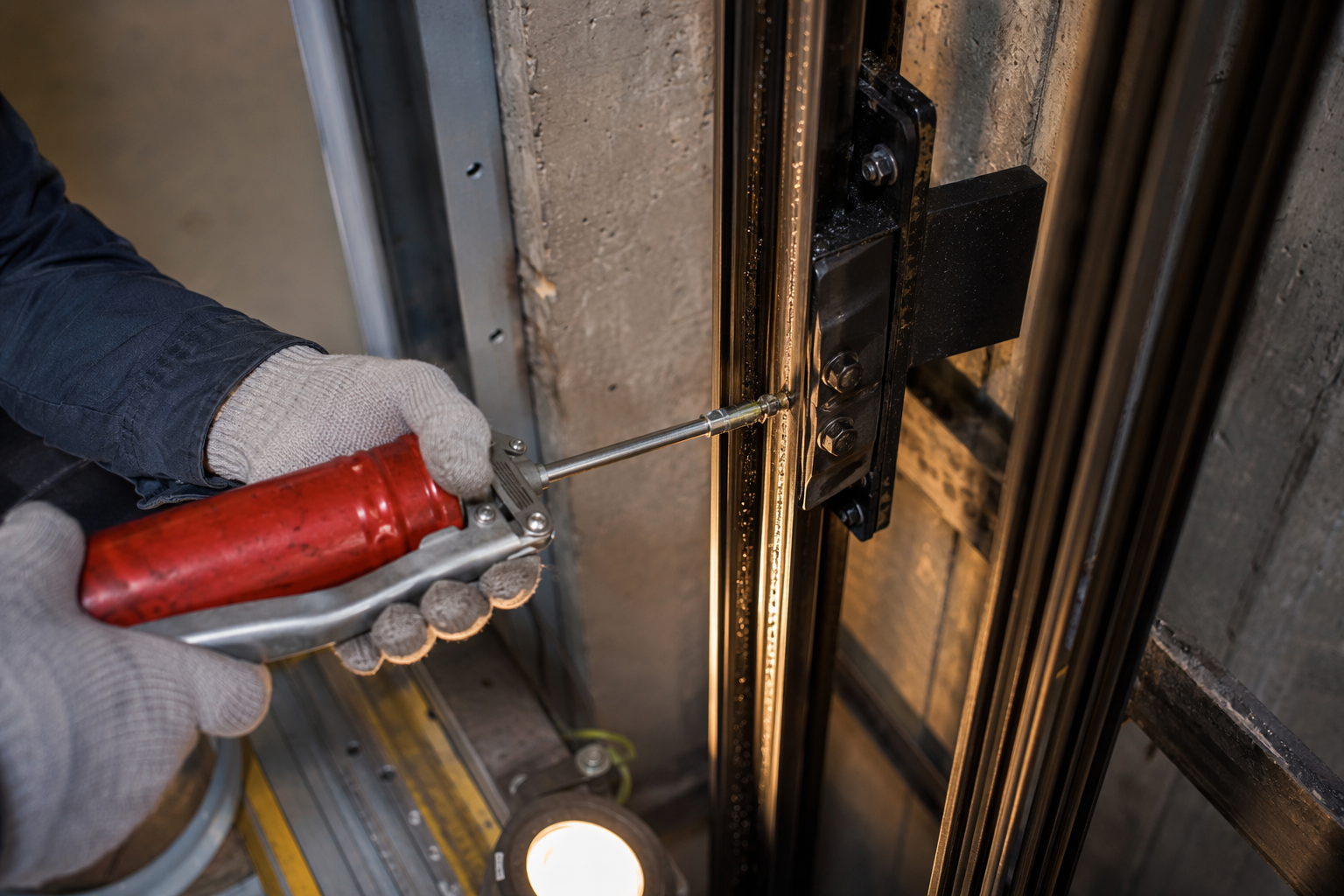
A standard elevator maintenance contract covers routine preventive maintenance visits, safety adjustments, lubrication, code-compliance testing, and emergency service response, with coverage scope varying by contract tier (oil-and-grease, parts-and-labor, or full-coverage).
At its core, every legitimate elevator maintenance agreement should address three functional areas: mechanical upkeep, regulatory compliance, and emergency response. Mechanical upkeep includes the lubrication of cables, pulleys, bearings, and guide rails. Regulatory compliance ensures your elevator meets ASME A17.1 Safety Code for Elevators and Escalators requirements and California Code of Regulations Title 8 standards. Emergency response defines how quickly a technician responds when your elevator goes down or traps a passenger.
In 2026, California’s Division of Occupational Safety and Health (Cal/OSHA) continues to enforce mandatory annual inspections for all passenger elevators, meaning your contract must include documentation support for those inspections or you face permit violations.
What Are the Three Main Types of Elevator Maintenance Contracts?
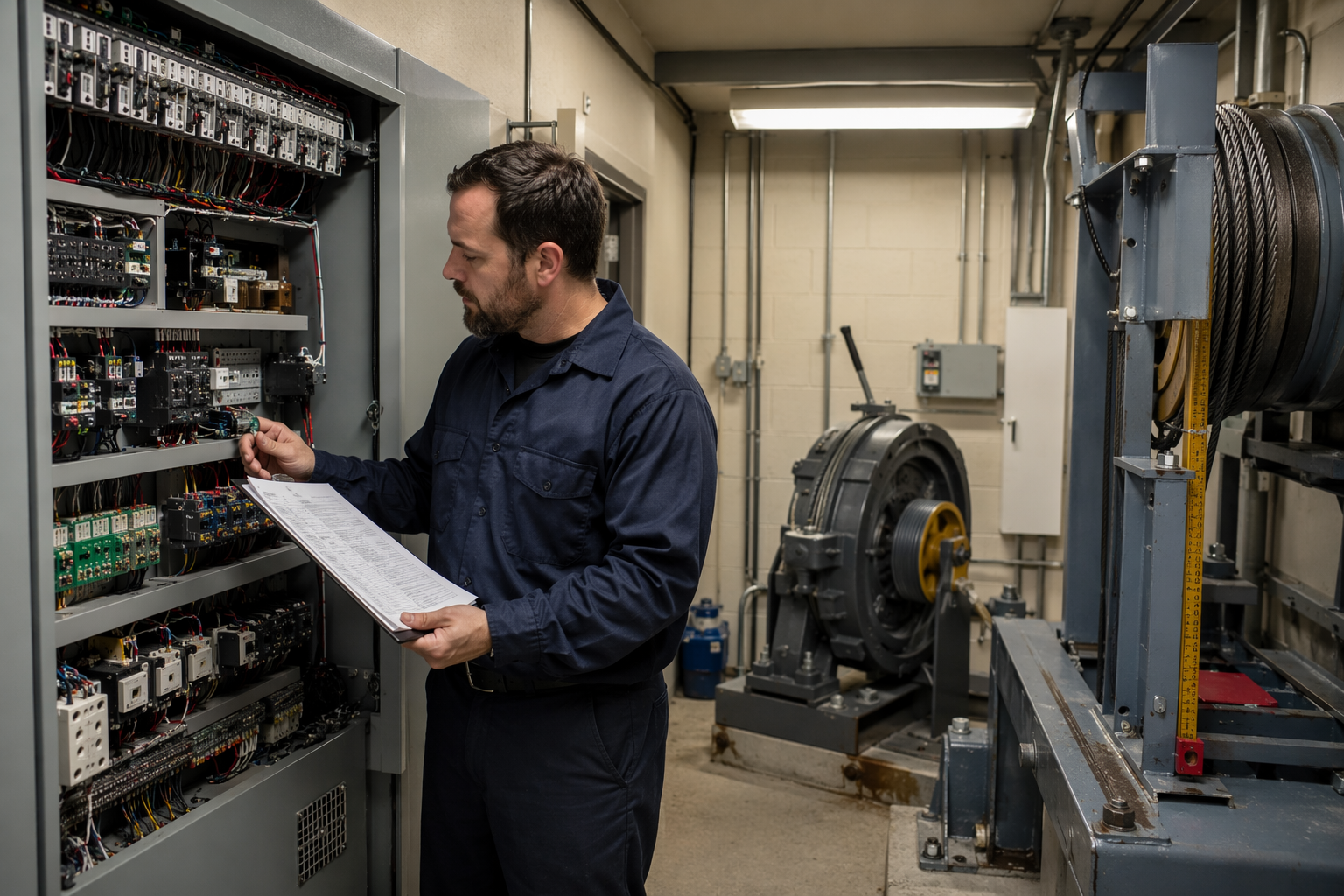
The three main contract types are oil-and-grease (basic), parts-and-labor (mid-tier), and full-coverage (comprehensive), each offering progressively broader protection and cost predictability.
| Contract Type | Preventive Maintenance | Parts Covered | Labor Covered | Emergency Callback | Typical Monthly Cost (CA) |
|---|---|---|---|---|---|
| Oil & Grease (Basic) | Yes | No | Limited | Billed separately | $150 – $300 |
| Parts & Labor (Mid-Tier) | Yes | Most components | Yes | Included (business hours) | $300 – $600 |
| Full Coverage (Comprehensive) | Yes | All components | Yes | 24/7 included | $600 – $1,200+ |
For high-traffic commercial buildings in Los Angeles or Orange County, I consistently recommend full-coverage contracts. The cost of a single major component failure — a motor controller, for example, can run $8,000–$15,000 in parts alone — easily exceeds a year of full-coverage premiums. Oil-and-grease contracts are only appropriate for low-use residential elevators where the owner is prepared to absorb repair costs out of pocket.
Which Mechanical Components Should Be Serviced Under the Contract?
A complete maintenance contract should cover the machine room equipment, hoistway components, cab interior systems, and pit-level safety devices as defined under ASME A17.1 Part 2 requirements.
Here is a breakdown of the specific components that should appear in your contract’s scope of work:
- Machine Room: Motor, gearbox, brake assembly, drive controller, machine bearings, and sheaves
- Hoistway: Wire ropes or belts, guide rails, counterweight, safeties, buffers, and limit switches
- Cab: Door operator, door contacts, safety edges or light curtains, intercom, lighting, and emergency lowering device
- Pit: Pit ladder, pit lighting, oil buffer, sump pump, and stop switch
- Control Systems: Microprocessor controller, selector, dispatch logic, and remote monitoring connections
Any contract that omits door components is a red flag. In my experience, faulty door operators account for roughly 60–70% of all elevator service calls. A contract that excludes door parts essentially excludes your most likely failure point.
How Often Should Preventive Maintenance Visits Occur?
California regulations require at minimum monthly or quarterly maintenance visits depending on elevator usage, with high-traffic commercial elevators typically requiring monthly service to maintain compliance and performance.
The industry standard, supported by ASME A17.1 guidelines, recommends maintenance frequency based on the number of starts (door cycles) per month:
- Under 1,000 starts/month: Quarterly visits acceptable
- 1,000 – 5,000 starts/month: Monthly visits recommended
- Over 5,000 starts/month: Bi-weekly or weekly visits warranted
A mid-rise office building in downtown Long Beach running 10,000+ starts per month on a quarterly maintenance plan is essentially waiting for something to break. I’ve seen that scenario result in failed annual inspections, entrapments, and costly emergency repairs that a monthly visit would have caught for a fraction of the cost.
Does an Elevator Maintenance Contract Include Annual Inspections?
Yes, a complete elevator maintenance contract should include coordination and support for the state-mandated annual inspection conducted by a California Division of Occupational Safety and Health (Cal/OSHA) certified inspector.
California requires all passenger elevators to pass an annual safety inspection under Title 8 of the California Code of Regulations, Section 3000. Your maintenance contractor should prepare the elevator for this inspection, be present during the inspection when possible, and correct any cited deficiencies. The permit to operate is issued only after a successful inspection, and operating without a valid permit exposes building owners to significant liability.
At Liftech Elevator, our contracts in Signal Hill, Long Beach, Los Angeles, and Orange County include pre-inspection preparation visits specifically designed to identify and correct issues before the inspector arrives — reducing the risk of a failed inspection and permit suspension.
What Safety Tests Are Required Under a Maintenance Agreement?
Maintenance agreements should include periodic safety tests such as the Category 1 and Category 5 tests mandated by ASME A17.1 Rule 8.6, covering governor, safeties, buffers, and pressure relief valve testing on hydraulic units.
California enforces a strict testing schedule:
- Category 1 Test: Annual — includes no-load safety and governor inspection
- Category 3 Test: Every 3 years — includes full-load rated speed governor and safety test
- Category 5 Test: Every 5 years — includes full-load rated speed with oil buffers compressed (traction elevators) or full-load pressure relief valve tests (hydraulic elevators)
These tests must be performed by a licensed Qualified Elevator Inspector (QEI) and documented. Any contractor who cannot provide written Category test documentation is not maintaining your elevator to code — period.
Is Emergency Callback Service Included in Elevator Maintenance Contracts?
Emergency callback service is included in mid-tier and full-coverage contracts, but basic oil-and-grease agreements typically bill emergency responses separately, often at premium overtime rates of $150–$300 per hour.
When evaluating callback clauses, pay close attention to three specific terms: response time guarantee, hours of coverage, and entrapment policy. A strong contract should define response time in writing — typically 2–4 hours for standard callbacks and under 1 hour for passenger entrapments. OSHA guidelines and California regulations both emphasize that trapped passengers must be rescued promptly by trained personnel, not building staff.
Response time commitments should be location-specific. A contractor based in Anaheim servicing a building in Signal Hill may not realistically meet a 2-hour window during peak traffic on the 405. Always ask for local technician availability.
What Compliance Documentation Should the Contractor Provide?
Your elevator maintenance contractor must provide inspection certificates, Category test records, maintenance logs, and violation correction reports to demonstrate compliance with California Title 8 regulations and ASME A17.1 standards.
Documentation you should receive and retain includes:
- Current Certificate of Compliance (permit to operate) issued by Cal/OSHA
- Annual and periodic Category test reports signed by a QEI
- Maintenance visit logs with dates, technician names, and work performed
- Parts replacement records with manufacturer documentation
- Violation notices (if any) and written proof of correction
In litigation involving elevator injuries, this documentation is frequently the difference between a defensible position and catastrophic liability for building owners. Never allow a contractor to keep these records on your behalf without providing you copies.
Does an Elevator Maintenance Contract Cover ADA Compliance?
Maintenance contracts do not typically cover ADA renovation work, but they should include operational maintenance of ADA-required features such as door timing, audible signals, Braille buttons, and cab leveling accuracy.
Under ADA Title III, places of public accommodation must maintain accessibility features in operable condition. This means your elevator’s door open time (minimum 3 seconds under ADA standards), floor-level accuracy (within ½ inch), audible floor announcements, and tactile controls must function correctly at all times — not just during inspections.
A competent technician will verify these parameters on every maintenance visit and document them. If your current contractor isn’t checking door timing and cab leveling as part of routine service, you may be unknowingly out of ADA compliance between inspections.
What Is Typically Excluded from Elevator Maintenance Contracts?
Common exclusions include vandalism damage, cosmetic cab repairs, major modernization work, hydraulic oil replacement on basic contracts, and damage caused by flooding, fire, or power surges beyond ANSI tolerances.
Other frequent exclusions to watch for:
- Obsolete parts that are no longer manufactured (common in pre-1990 elevator systems)
- Structural repairs to the hoistway or machine room
- Electrical work beyond the elevator’s dedicated circuit
- Remote monitoring hardware installation (though monitoring itself may be included)
- Pit waterproofing or sump pump replacement on some contracts
Always read the exclusions section as carefully as the inclusions. A contract can appear comprehensive on the front page and be full of carve-outs on page 4.
How Long Should an Elevator Maintenance Contract Term Be?
Elevator maintenance contracts typically run 1–5 years, with 3-year terms being the most common in California, though first-time agreements with a new provider should ideally start with a 1-year term to evaluate service quality.
Long-term contracts (4–5 years) often include rate-lock provisions that protect you from price increases, which can be valuable given that labor and parts costs in the Los Angeles and Orange County markets have increased approximately 12–18% since 2022. However, locking into a 5-year term with a contractor you haven’t worked with before is risky. I recommend negotiating a 1-year initial term with an option to extend, and including a service quality termination clause if response times or inspection results fall below agreed benchmarks.
What Questions Should You Ask Before Signing an Elevator Maintenance Contract?
Before signing, you should ask about technician certification, local parts inventory, response time guarantees, subcontracting policies, and what happens to your elevator data if you terminate the contract.
Key questions to ask every prospective contractor:
- Are your technicians IUEC-certified and licensed under California law?
- Do you carry a local parts inventory, or do parts have to be ordered?
- What is your written guaranteed response time for entrapments?
- Will my elevator be serviced by the same technician consistently?
- Do you use subcontractors, and are they held to the same certification requirements?
- Who owns the maintenance records and controller passwords if I cancel the contract?
- What is your process for notifying me of code changes that affect my elevator?
That last question matters more than most property managers realize. California amends elevator safety regulations periodically, and a proactive contractor will notify you of upcoming compliance requirements before they become violations — not after.
How Much Does an Elevator Maintenance Contract Cost in California?
In California, elevator maintenance contracts typically range from $1,800–$14,400 per elevator annually, depending on contract tier, elevator type, building location, and the age and complexity of the equipment.
Cost factors specific to the Los Angeles, Long Beach, Signal Hill, and Orange County markets include:
- Elevator type: Hydraulic units generally cost less to maintain than high-speed traction elevators
- Equipment age: Pre-2000 elevators often require more frequent parts replacement, increasing costs under full-coverage contracts
- Number of units: Multi-elevator buildings typically receive per-unit discounts of 10–20%
- Traffic volume: High-rise commercial buildings with 50,000+ starts per month carry premium maintenance costs
- Remote monitoring: Adding 24/7 remote monitoring typically adds $50–$150/month per unit
The lowest bid is rarely the best value. A $150/month basic contract that generates $4,000 in emergency repair invoices per year costs more than a $500/month full-coverage agreement — and creates far more operational disruption.
What Happens During an Elevator Preventive Maintenance Visit?
During a preventive maintenance visit, a certified technician systematically inspects, tests, lubricates, and adjusts all major elevator systems following a documented checklist aligned with ASME A17.1 maintenance guidelines.
Here is a step-by-step overview of what a thorough preventive maintenance visit involves:
- Review maintenance log from the previous visit to check for recurring issues or deferred repairs
- Inspect machine room for oil leaks, unusual wear on motor and brake components, and verify proper temperature and ventilation
- Test brake holding power and adjust if outside manufacturer tolerances
- Lubricate guide rails, sheaves, and bearings using manufacturer-specified lubricants
- Inspect wire ropes or belts for broken wires, wear patterns, and proper tension
- Test door operation — opening and closing force, timing, safety edge or light curtain function
- Verify cab leveling accuracy at each floor (should be within ½ inch of floor level)
- Test all safety devices including emergency lighting, alarm bell, intercom, and emergency stop switch
- Inspect pit for water intrusion, proper lighting, and condition of buffers and pit stop switch
- Review controller diagnostics for fault codes and address any active or pending faults
- Document all findings in the maintenance log and notify building management of any deferred items requiring repair authorization
A thorough visit typically takes 2–4 hours per elevator depending on equipment complexity. If a technician is in and out in 30 minutes, that is not a maintenance visit — that is a drive-by inspection.
Does a Maintenance Contract Cover Elevator Modernization?
No, elevator modernization — which involves replacing major systems such as controllers, door operators, or drive systems — is a capital project billed separately and is not included in standard maintenance contracts.
Modernization is distinct from maintenance in both scope and cost. Replacing a relay-logic controller with a solid-state microprocessor system in a 1985-vintage elevator can cost $25,000–$80,000 per unit, depending on the extent of work. A good maintenance contractor will advise you when aging equipment is approaching the point where maintenance costs exceed modernization ROI — typically when annual repair costs exceed 30–40% of modernization cost for two or more consecutive years.
In California, certain modernization triggers are code-driven. Buildings undergoing renovations that meet specific thresholds may trigger mandatory elevator upgrades under California Title 8 amendments, independent of what your maintenance contract covers.
Should Remote Monitoring Be Included in an Elevator Maintenance Contract?
Remote monitoring is increasingly standard in modern full-coverage contracts and provides real-time fault detection, predictive maintenance alerts, and entrapment notification that significantly reduces downtime and improves passenger safety.
Modern remote monitoring systems can detect door cycle anomalies, motor temperature spikes, and controller fault codes before they result in shutdowns — often allowing technicians to bring parts to a service call rather than diagnosing on-site and returning. For high-traffic buildings in Los Angeles and Orange County, the downtime reduction alone typically justifies the $75–$150/month additional cost.
When reviewing contracts, verify whether the monitoring hardware is owned by the contractor or the building. Contractor-owned monitoring equipment can be used as a lock-in mechanism, making it technically difficult or expensive to switch providers. Building-owned or neutral third-party monitoring is preferable.
How Do You Evaluate Whether Your Current Elevator Maintenance Contract Is Adequate?
You can evaluate contract adequacy by auditing your maintenance logs for visit frequency and technician documentation quality, reviewing your last three inspection reports for repeated violations, and comparing callback response times against your contract’s written guarantees.
Warning signs your current contract is underperforming:
- Maintenance logs show visits shorter than 90 minutes for a full elevator service
- The same deficiency appears on two or more consecutive inspection reports
- Emergency callbacks are taking longer than 4 hours on average
- You’ve received surprise invoices for items you believed were covered
- You haven’t received Category test documentation in over 12 months
- Your contractor cannot provide the current Certificate of Compliance on request
If two or more of these apply, it’s worth requesting a competitive assessment. Liftech Elevator offers free elevator assessments for buildings throughout Signal Hill, Long Beach, Los Angeles, and Orange County — with a full review of your current maintenance documentation at no obligation.
What Certifications Should an Elevator Maintenance Company Hold in California?
In California, elevator maintenance companies must hold a valid Elevator Contractor license issued by the California Department of Industrial Relations, and all field technicians must hold a current Certified Competent Conveyance Mechanic (CCCM) certification.
Beyond the state minimum, look for:
- IUEC certification: International Union of Elevator Constructors training ensures technicians are current on code changes and equipment
- QEI (Qualified Elevator Inspector): On-staff QEIs can perform state-required Category tests without subcontracting the inspection
- Manufacturer training certifications: Important for newer digital or destination-dispatch systems from Otis, KONE, Schindler, or ThyssenKrupp
- OSHA 30-hour safety certification: Indicates commitment to OSHA safety standards beyond minimum requirements
Always verify a contractor’s license status through the California Department of Industrial Relations before signing. A single unlicensed technician performing work on your elevator creates workers’ compensation and liability exposure for your building.
How Should a Maintenance Contract Address Older or Obsolete Elevator Equipment?
Contracts for older elevator systems should include explicit language about parts sourcing obligations, acceptable substitute components, and the contractor’s protocol when original manufacturer parts are no longer available.
This is a critical and frequently overlooked issue, particularly in Southern California where many commercial buildings still operate relay-logic elevator systems installed in the 1960s–1980s. When original parts are discontinued, contractors may substitute aftermarket or refurbished components. Your contract should specify:
- Whether refurbished or aftermarket parts are permitted and under what conditions
- Lead times for special-order parts and how downtime is managed during that period
- At what point the contractor is obligated to notify you that maintenance is no longer cost-effective versus modernization
As a 15-year technician, I’ve seen buildings held hostage by contractors who couldn’t source parts for aging equipment but never disclosed this limitation at contract signing. Transparency about equipment age and parts availability is a hallmark of a trustworthy service provider.
What Should a Property Manager Do Immediately After an Elevator Breakdown or Entrapment?
After an elevator breakdown or passenger entrapment, property managers should follow a specific protocol to ensure passenger safety, regulatory compliance, and proper documentation.
- Immediately call your maintenance contractor’s emergency line and report the entrapment or breakdown with the elevator unit number, building address, and number of passengers trapped if applicable
- Contact 911 if a passenger reports a medical emergency, injury, or if the contractor cannot respond within 30 minutes
- Keep communication open with trapped passengers via the elevator intercom — reassure them that help is coming and instruct them not to attempt to exit the elevator themselves
- Post an “Out of Service” sign on all affected elevator landings to prevent additional passengers from attempting to use the unit
- Do not attempt to manually move the elevator or reset the system unless you are a licensed elevator mechanic
- Document the incident including time of breakdown, first report, technician arrival time, and resolution for your maintenance records and potential insurance reporting
- Request a written incident report from your elevator contractor within 48 hours identifying the root cause and corrective action taken
- Notify Cal/OSHA if the incident involved a passenger injury, as California law requires reporting of elevator-related injuries to the Division of Occupational Safety and Health
The single most dangerous thing a building manager can do during an entrapment is allow untrained staff or building maintenance personnel to attempt a rescue. Door forced open between floors represents a fatal fall risk. Always wait for a licensed technician.
Get a Free Elevator Maintenance Contract Assessment
If you’re unsure whether your current elevator maintenance agreement covers what it should — or you’re evaluating contractors for the first time — Liftech Elevator is ready to help. We serve building owners, property managers, and facilities directors throughout Signal Hill CA, Long Beach CA, Los Angeles CA, and Orange County CA with fully certified elevator maintenance programs backed by IUEC-trained technicians and on-staff QEIs.
We’ll review your existing contract, inspect your equipment, and give you an honest assessment of your compliance status — at no cost and no obligation.
Contact Liftech Elevator for a free elevator assessment: 562-609-3478
Need elevator service you can rely on? Liftech Elevator is ready to help.