How Often Should Elevators Be Inspected? Complete FAQ Guide
How Often Should Elevators Be Inspected?
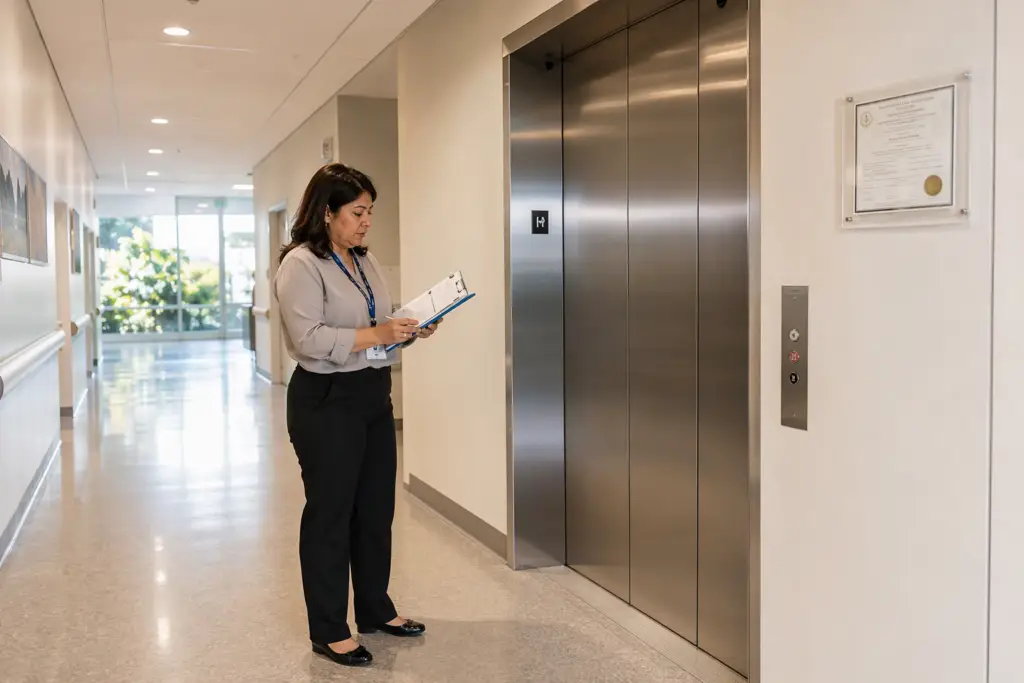
Elevators in California are required by state law to receive a full annual safety inspection conducted by a certified inspector under Cal/OSHA authority, but responsible building owners schedule additional maintenance visits far more frequently to ensure continuous safe operation.
California’s elevator safety program falls under the Elevator, Ride, and Tramway Unit of Cal/OSHA. State law requires that every conveyance — including passenger elevators, freight elevators, escalators, and dumbwaiters — be inspected and issued a valid permit to operate. The annual inspection is a regulatory floor, not a ceiling. High-traffic elevators in commercial buildings, hospitals, or multi-unit residential complexes typically require preventive maintenance visits every one to three months to catch wear issues before they become safety hazards or code violations.
The ASME A17.1 Safety Code for Elevators and Escalators provides the technical foundation for inspection intervals and testing protocols adopted by California and most other states. Building owners who align their maintenance schedules with ASME A17.1 requirements, rather than simply meeting the minimum annual state inspection, significantly reduce downtime and liability exposure.
What Is the Difference Between a Maintenance Inspection and a State Safety Inspection?

A maintenance inspection is a proactive service visit performed by a licensed elevator company to check mechanical and electrical components, while a state safety inspection is a formal examination conducted by or on behalf of a government authority to verify code compliance and renew the elevator’s operating permit.
Maintenance inspections are scheduled by the building owner or their elevator service contractor. During these visits, technicians lubricate moving parts, test safety devices, check door operation, inspect the machine room, and document any deficiencies. These visits do not result in a government-issued permit.
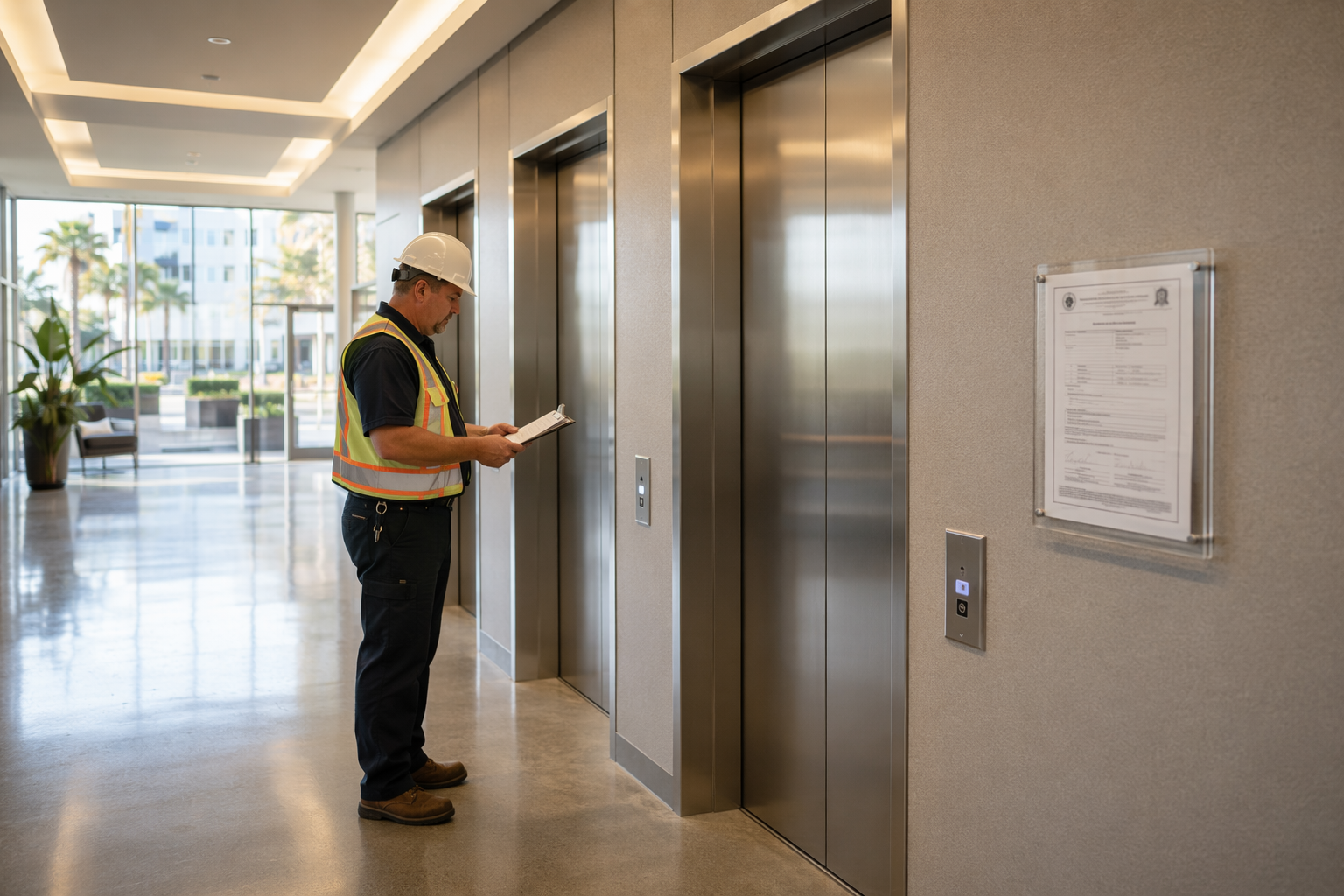
State safety inspections in California are performed by Cal/OSHA-certified inspectors or by certified third-party inspection companies under contract. The result of a passing inspection is a renewed Certificate of Inspection, which must be posted inside the elevator cab. Failure to maintain a valid certificate can result in a shutdown order and financial penalties for the building owner.
Liftech Elevator assists building owners throughout Signal Hill, Long Beach, Los Angeles, and Orange County in preparing for state inspections by performing pre-inspection audits that identify and correct deficiencies before the official examination.
What Does ASME A17.1 Require for Elevator Inspection Intervals?
The ASME A17.1 Safety Code for Elevators and Escalators establishes detailed requirements for periodic tests, inspections, and maintenance intervals that form the technical backbone of most state elevator regulations, including California’s.
ASME A17.1 categorizes tests into different types based on frequency and scope. Category 1 tests are required annually and cover basic safety device functionality, including governors, safeties, and buffers. Category 3 tests are required every five years and include governor and safety tests under full load. Category 5 tests, also conducted every five years for hydraulic elevators, include full load pressure tests. Some jurisdictions require Category 5 tests on a different cycle, so building owners should confirm the applicable schedule with their authority having jurisdiction (AHJ).
These code-defined intervals represent minimum mandatory testing. ASME A17.1 also references ASME A17.1/CSA B44 Handbook guidance on maintenance intervals, which recommends that maintenance tasks be performed at frequencies sufficient to keep the equipment in safe, reliable operating condition — a standard that almost always means more frequent visits than the annual inspection alone.
Are There Different Inspection Requirements for Different Types of Elevators?
Yes, inspection requirements vary by elevator type — including traction elevators, hydraulic elevators, limited-use/limited-application (LU/LA) elevators, freight elevators, escalators, and platform lifts — because each type has distinct mechanical systems and associated safety risks.
Hydraulic elevators, common in low-rise buildings throughout Los Angeles and Orange County, require annual Category 1 tests and periodic oil line inspections to prevent leaks that could pose environmental and fire risks. Traction elevators, which use cables and counterweights, require governor rope and safety gear inspections as part of their annual and five-year test cycles. Freight elevators operating under higher load conditions may require more frequent lubrication and structural checks. Platform lifts and LU/LA elevators installed to meet ADA accessibility requirements also fall under Cal/OSHA jurisdiction and must be maintained and inspected accordingly.
What Happens If an Elevator Fails a State Inspection?
When an elevator fails a state inspection in California, Cal/OSHA can issue an order prohibiting use of the equipment until all cited deficiencies are corrected and a re-inspection confirms compliance, exposing building owners to legal liability and operational disruption.
Common reasons for inspection failures include malfunctioning door operators, defective safeties or governors, expired lubricants, missing or outdated emergency lighting, worn rope or cable beyond permissible limits, and non-compliant machine room conditions. After a failed inspection, the building owner is required to take the elevator out of service immediately if so ordered. A licensed elevator contractor must then perform all corrective repairs, and a follow-up inspection is required before the equipment can be returned to service. Re-inspection fees apply in most California jurisdictions.
Preventive maintenance programs, like those offered by Liftech Elevator in the greater Los Angeles and Orange County region, are specifically designed to identify these failure points in advance, avoiding costly shutdowns and re-inspection delays.
How Often Should High-Traffic Commercial Elevators Be Serviced?
High-traffic commercial elevators — such as those in office towers, hotels, hospitals, and shopping centers — should receive preventive maintenance visits at minimum every one to two months, with some high-volume installations warranting monthly or more frequent attention.
Usage intensity accelerates wear on door operators, guide rails, ropes, and control systems. A building with multiple elevator cars running hundreds of cycles per day faces fundamentally different maintenance demands than a two-story residential building with a single elevator making a few trips daily. Elevator service contracts for commercial properties typically specify monthly maintenance rounds, while light-duty residential elevators may be serviced quarterly. Building managers should review their service contracts to confirm the frequency aligns with actual usage patterns and manufacturer recommendations.
How Often Should Residential Elevators Be Inspected?
Residential elevators in California are subject to Cal/OSHA jurisdiction if they serve buildings with three or more floors or meet other statutory thresholds, and even those in private single-family homes benefit from at minimum an annual inspection and periodic maintenance every three to six months.
California’s requirements for privately owned residential elevators can vary based on building classification. However, from a safety and reliability standpoint, annual inspections and semi-annual maintenance visits represent a widely recommended baseline. Hydraulic home elevators, in particular, should have their oil levels, cylinder integrity, and control valves checked regularly. Cable-driven residential traction units require periodic rope and pulley inspections. Owners of private residential elevators in Long Beach, Signal Hill, and surrounding communities should consult a certified elevator service provider to determine the appropriate schedule for their specific equipment.
What Is Included in a Thorough Elevator Maintenance Inspection?
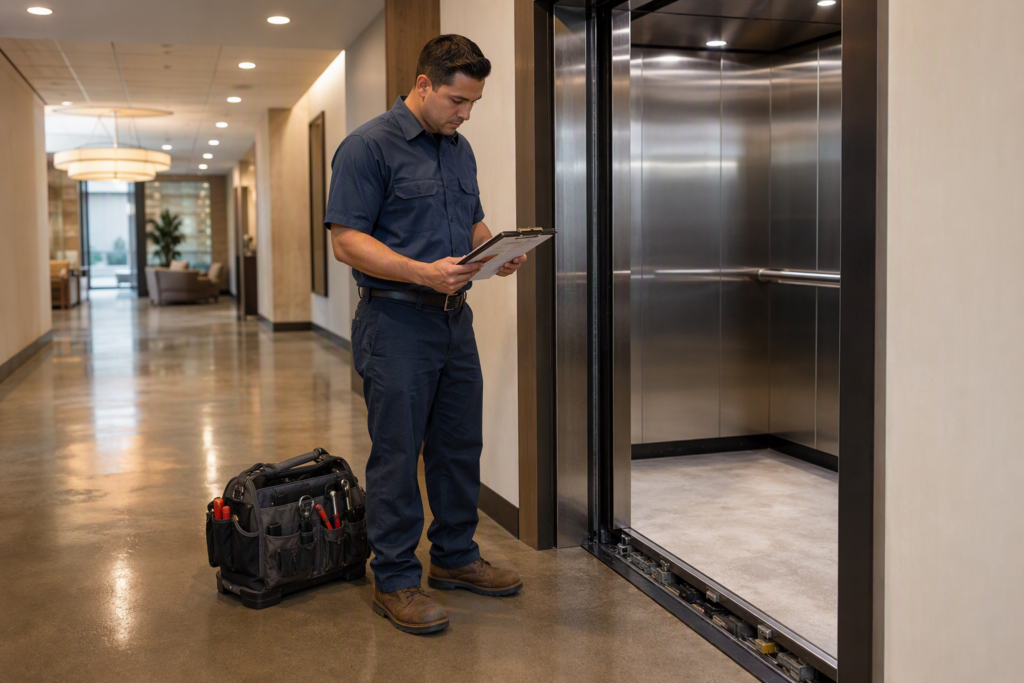
A thorough elevator maintenance inspection covers all major mechanical, electrical, and safety systems of the conveyance, including the machine room, car and counterweight, guide rails, ropes or hydraulic components, door systems, control systems, and cab interior safety features.
Below is a representative checklist of items typically evaluated during a comprehensive maintenance visit:
- Machine room temperature, lighting, and access security
- Motor and brake condition and adjustment
- Governor and overspeed device function
- Rope or chain condition, tension, and lubrication
- Car and counterweight guide shoe wear
- Hoistway door and car door operation, including interlock function
- Safety edge and detector curtain responsiveness
- Buffer condition and pit cleanliness
- Emergency lighting and alarm operation
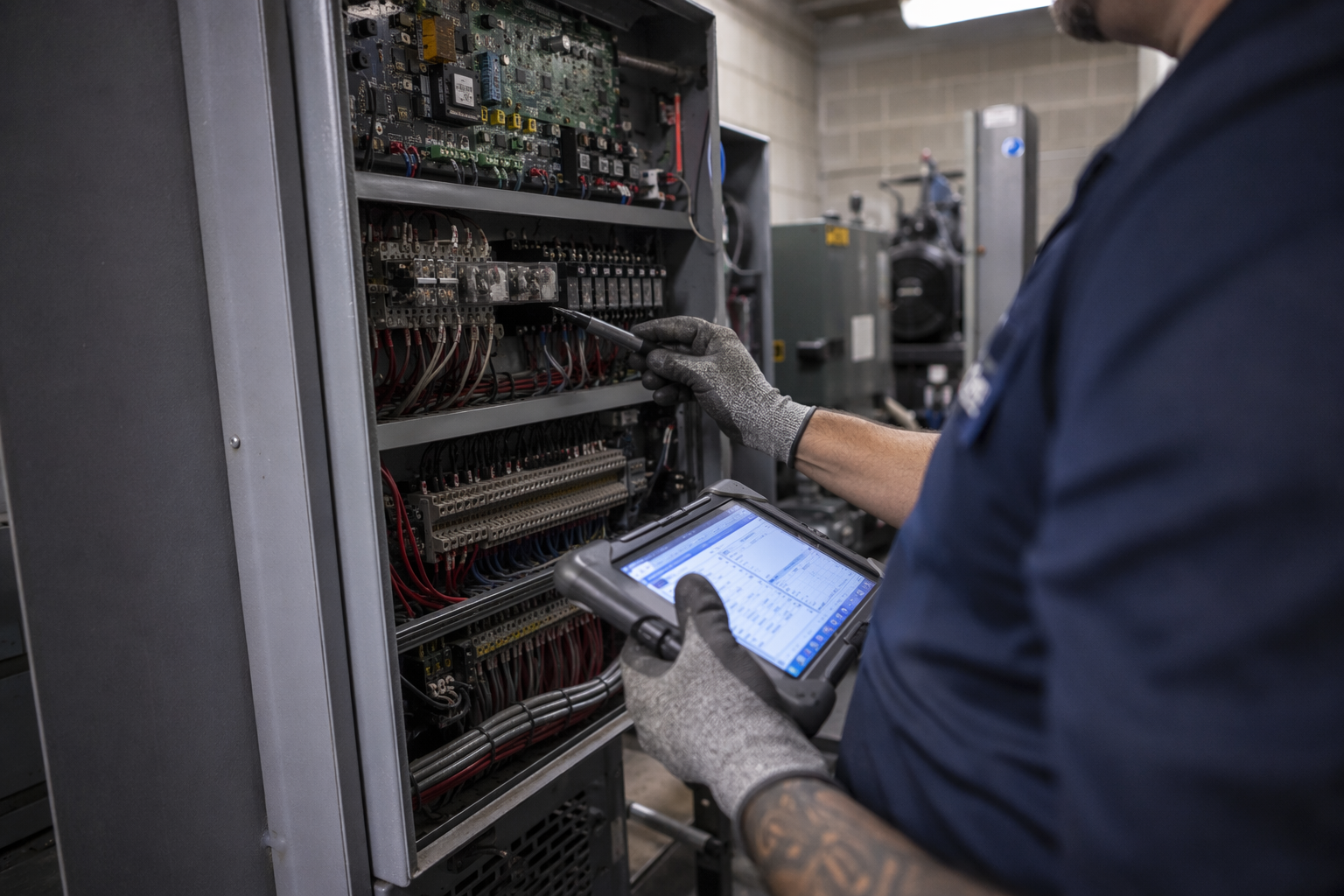
- Control board and wiring inspection
- Leveling accuracy at each floor
- Phone or two-way communication system test
- Certificate of Inspection validity check
What Are the Consequences of Skipping Elevator Inspections?
Skipping mandatory elevator inspections in California can result in Cal/OSHA citations, fines, forced equipment shutdown, and significant civil liability if an uninspected elevator causes injury to a passenger or worker.
Beyond regulatory penalties, deferred inspections create compounding maintenance problems. Minor issues that would be caught and corrected during a routine maintenance visit — such as slightly worn door rollers or low hydraulic fluid — can escalate into major failures, expensive component replacements, or safety incidents. Building owners also face increased insurance exposure when inspection records reveal gaps in compliance history. In personal injury litigation, a lack of documented inspection and maintenance is frequently cited as evidence of negligence. Maintaining complete, current inspection records is one of the most important risk management steps a property owner can take.
How Do California Elevator Inspection Requirements Compare to Other States?
California operates one of the most comprehensive state elevator safety programs in the country, administered by Cal/OSHA, and generally aligns with ASME A17.1 standards while imposing additional state-specific requirements for permits, fees, and qualified inspector credentials.
| State | Governing Authority | Mandatory Inspection Frequency | Adopts ASME A17.1? | Operating Permit Required? |
|---|---|---|---|---|
| California | Cal/OSHA Elevator Unit | Annual | Yes (state-adopted edition) | Yes — Certificate posted in cab |
| New York | NYC DOB / State DOL | Annual (NYC: periodic device tests) | Yes | Yes |
| Texas | Texas Dept. of Insurance | Annual | Yes | Yes |
| Florida | FL DBPR Elevator Safety | Annual | Yes | Yes |
| Illinois | IL IDOL Elevator Safety | Annual (biennial in some counties) | Yes | Yes |
Note: Inspection intervals reflect the minimum mandatory frequency for standard passenger elevators. Specific equipment types and local amendments may impose additional requirements. Building owners should verify current requirements with their local authority having jurisdiction (AHJ).
Does ADA Compliance Affect Elevator Inspection Requirements?
The Americans with Disabilities Act (ADA) does not independently set elevator inspection intervals, but it does establish accessibility standards for elevator features — including control panel height, door timing, audible signals, and Braille markings — that must be maintained in working order and are evaluated during inspections.
ADA-required features that fall into disrepair can constitute both a civil rights violation and a building code deficiency. For example, if a talking elevator display or floor-call audible signal fails between inspections, that represents both an ADA compliance gap and a maintenance deficiency. Routine maintenance inspections should include verification that all ADA-mandated accessibility features remain fully functional. Buildings undergoing modernization projects in Los Angeles, Long Beach, or Orange County must also ensure that any updated equipment meets current ADA Standards for Accessible Design.
What Should Building Owners Do Immediately If an Elevator Shows Signs of Malfunction?
If an elevator shows signs of malfunction, building owners and property managers should act immediately to protect passenger safety, document the issue, and contact a licensed elevator service company for emergency service — do not wait for the next scheduled maintenance visit.
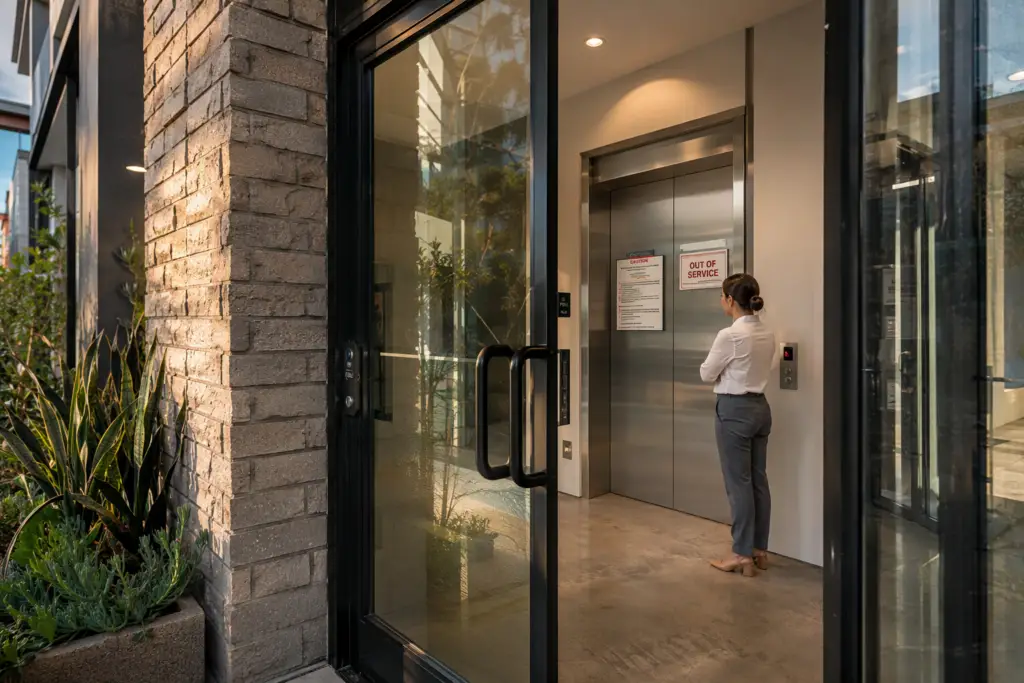
- Take the elevator out of service immediately. Post clear “Out of Service” signage at all landings and secure the car at a floor landing if possible to prevent entrapment.
- Check for trapped passengers. If anyone is inside a stalled car, communicate with them, reassure them, and call 911 if they cannot exit safely. Do not attempt to extract passengers without trained personnel.
- Document the malfunction. Note the time, symptoms observed (unusual noise, leveling issues, door problems, etc.), and any recent maintenance history. This documentation is important for the service technician and for your compliance records.
- Contact a licensed elevator service contractor. Report the specific symptoms so the technician can bring appropriate parts and tools. Liftech Elevator serves Signal Hill, Long Beach, Los Angeles, and Orange County for elevator service needs.
- File an incident report if an injury occurred. Any injury related to an elevator malfunction should be documented and reported per OSHA requirements and California state law. Preserve all maintenance and inspection records.
- Do not restore service until cleared by a qualified technician. Returning a malfunctioning elevator to service before it has been properly repaired and re-tested creates serious liability and safety risk.
How Long Does an Elevator Inspection Take?
A standard annual elevator inspection typically takes between one and three hours per unit, depending on the elevator type, age, number of floors served, and the scope of testing required by the applicable code edition and local jurisdiction.
Category 5 tests for hydraulic elevators, which involve pressure testing and other more involved procedures, generally take longer than routine Category 1 annual inspections. Multi-car installations in large commercial or residential buildings in Los Angeles or Orange County may require a full day for a complete inspection of all units. Building managers should plan for temporary elevator unavailability during inspection periods and communicate this to tenants in advance.
How Should Building Owners Choose an Elevator Inspection and Maintenance Company?
Building owners should select an elevator service company based on verifiable state licensing, demonstrated familiarity with the applicable code editions (ASME A17.1 and California state amendments), geographic coverage, and a transparent preventive maintenance program with documented service records.
Key criteria to evaluate include whether the company’s technicians hold current California Certified Elevator Mechanic (CEM) credentials, whether the company can perform both maintenance and inspection-related repair work, the clarity and detail of their maintenance contracts, and their responsiveness for unscheduled service calls. Building owners in Signal Hill, Long Beach, Los Angeles, and Orange County benefit from working with a locally based provider that understands California’s specific regulatory environment. Liftech Elevator is a certified elevator service company serving these communities, with deep familiarity with Cal/OSHA requirements and the ASME A17.1 Safety Code for Elevators and Escalators.
What Records Should Building Owners Keep Related to Elevator Inspections?
Building owners are required to maintain current Certificates of Inspection in the elevator cab at all times, and should also retain a comprehensive file of all maintenance visit reports, repair invoices, test records, and inspection reports for the operational life of the equipment.
Cal/OSHA may request inspection and maintenance records during compliance reviews or following an incident. A well-organized records file should include the following:
- Current and historical Certificates of Inspection
- All maintenance visit reports with technician signatures and dates
- Records of Category 1, Category 3, and Category 5 tests as applicable
- Repair orders and invoices for all corrective work performed
- Deficiency notices issued by inspectors and documentation of corrective actions
- Any modernization or alteration permits and completion records
- Emergency service call records
Retaining these records not only satisfies regulatory requirements but also provides a defense against negligence claims and assists future service technicians in understanding the equipment’s maintenance history.
Can Elevator Inspections Be Performed by the Building Owner or Facility Staff?
No — California law requires that elevator safety inspections resulting in a Certificate of Inspection be performed by a Cal/OSHA-certified elevator inspector or a certified third-party inspection company; building staff cannot perform or certify official state inspections.
Facility maintenance personnel may perform basic visual checks — such as verifying that emergency lighting is functioning, the inspection certificate is current, and the elevator cab is clean and free of hazards — but these do not substitute for licensed inspection or maintenance visits. Allowing unqualified individuals to service elevator mechanical or electrical systems creates serious safety risks and may void equipment warranties. All maintenance work that goes beyond housekeeping should be performed by state-licensed elevator mechanics.
How Does Elevator Age Affect Inspection Frequency?
Older elevators generally require more frequent inspections and maintenance visits than newer units because aging components — including ropes, hydraulic seals, control systems, and door mechanisms — experience accelerated wear and are more likely to develop deficiencies between scheduled visits.
An elevator that is decades old and has not undergone modernization may require monthly maintenance attention even if it serves a low-traffic building, simply because older technology and worn components demand closer monitoring. Conversely, a recently modernized or newly installed elevator with current technology may operate reliably on a quarterly maintenance schedule in light-duty applications. Building owners with aging elevator systems should discuss with their service contractor whether increased maintenance frequency or a modernization assessment is the more cost-effective path forward.
What Is an Elevator Modernization and Does It Reset Inspection Requirements?
Elevator modernization involves replacing or upgrading major components — such as controls, motors, door operators, or hydraulic systems — and does trigger a new inspection and permitting process in California, but it does not eliminate ongoing annual inspection requirements; modernized elevators must continue to be inspected annually.
A modernization project that includes replacement of the control system, machine, or structural components typically requires a permit from the local AHJ and a full acceptance inspection before the elevator is returned to service. This is equivalent in scope to an inspection of a new installation. After the acceptance inspection and issuance of a new operating permit, the elevator then re-enters the standard annual inspection cycle. Modernization can, however, reduce the frequency of maintenance visits needed to keep the equipment in compliance, particularly when older components that were prone to failure are replaced with current technology.
How Do Inspection Requirements Apply to Escalators and Moving Walks?
Escalators and moving walks in California fall under the same Cal/OSHA conveyance safety program as elevators and are subject to annual inspection requirements and ASME A17.1 periodic testing standards, including specific comb-plate, step chain, and handrail inspection protocols.
Escalators in shopping centers, transit facilities, and commercial buildings across Los Angeles and Orange County must be inspected annually and maintained according to manufacturer specifications and code requirements. The high mechanical complexity and constant-motion nature of escalators means that monthly preventive maintenance is common practice for commercial installations. Handrail speed synchronization, step level sensors, comb-plate impact devices, and emergency stop systems are among the critical safety features verified during each maintenance visit.
What Should a Building Owner Expect to Pay for Elevator Inspection and Maintenance Services?
Elevator maintenance and inspection costs vary widely based on elevator type, age, number of units, geographic location, and the scope of the service contract, so building owners should obtain multiple competitive proposals from licensed elevator service companies in their area to establish a baseline for their specific equipment.
Service contract structures vary significantly. Full-service contracts typically cover all parts and labor for routine maintenance and most repairs, while oil-and-grease contracts cover only labor and consumables, leaving parts as an additional cost. Building owners evaluating proposals should look beyond the monthly fee to understand what is and is not covered, the inspection visit frequency included, and the contractor’s process for handling emergency calls and state inspection preparation. Obtaining at minimum two to three proposals from licensed California elevator contractors is a sound practice before committing to a multi-year agreement.
For building owners in Signal Hill, Long Beach, Los Angeles, and Orange County, Liftech Elevator provides customized service proposals based on a thorough assessment of the existing equipment and the building’s specific operational needs.
Elevator Inspection Frequency Quick Reference
| Building / Use Type | Minimum State Inspection (California) | Recommended Maintenance Visit Frequency | ASME A17.1 Category Test |
|---|---|---|---|
| High-traffic commercial (office, hotel, hospital) | Annual | Monthly to every 2 months | Category 1 (annual); Category 3/5 (5-year) |
| Mid-rise multi-unit residential | Annual | Every 2–3 months | Category 1 (annual); Category 3/5 (5-year) |
| Low-traffic commercial / retail | Annual | Every 3 months | Category 1 (annual); Category 3/5 (5-year) |
| Residential / private home elevator | Annual (if subject to Cal/OSHA jurisdiction) | Every 3–6 months | Per AHJ determination |
| Escalator / moving walk | Annual | Monthly (commercial) | Per ASME A17.1 escalator provisions |
| Freight elevator | Annual | Every 1–3 months (based on load cycles) | Category 1 (annual); Category 3/5 (5-year) |
| Platform lift / LU/LA elevator (ADA) | Annual (where AHJ mandates) | Every 3–6 months | Per applicable ASME standard |
Ready to Schedule Your Elevator Inspection or Maintenance Visit?
Maintaining a current inspection certificate and a consistent preventive maintenance schedule is the most effective way to protect building occupants, avoid regulatory penalties, and extend the service life of elevator equipment. Whether a building requires a first-time safety assessment, is preparing for a Cal/OSHA inspection, or needs to establish a long-term maintenance program, working with a certified local elevator service provider is the right first step.
Contact Liftech Elevator for a free elevator assessment. Liftech Elevator serves property owners, managers, and facility teams throughout Signal Hill CA, Long Beach CA, Los Angeles CA, and Orange County CA. Call today at 562-609-3478 to speak with a certified elevator service professional and schedule your complimentary evaluation.
Need elevator service you can rely on? Liftech Elevator is ready to help.