Elevator Maintenance ROI: What Building Owners and Facility Managers Need to Know
For commercial and residential property owners in Signal Hill, Long Beach, Los Angeles, and Orange County, elevator systems represent a significant capital asset. Understanding the full return on investment from a disciplined elevator maintenance program helps facility managers justify budget allocations, negotiate service contracts, and avoid the far greater costs that come with deferred upkeep. This FAQ hub covers every dimension of elevator maintenance ROI — from compliance cost avoidance to tenant retention and equipment longevity.
What Is Elevator Maintenance ROI and How Is It Measured?
Elevator maintenance ROI is the financial and operational return achieved when preventive service costs are weighed against avoided repair expenses, downtime losses, compliance penalties, and asset depreciation.
Return on investment from elevator maintenance is rarely a single number. It encompasses direct cost avoidance — such as preventing a major component failure that would otherwise require emergency replacement — as well as indirect returns like improved tenant satisfaction, uninterrupted building operations, and maintained property valuations. Facility managers typically measure ROI by tracking three categories: hard cost savings (avoided repairs and fines), soft cost savings (operational continuity and liability reduction), and asset value protection (extended equipment lifespan and resale considerations).
A rigorous approach compares the annualized cost of a full-service preventive maintenance contract against the historical or projected cost of reactive, break-fix service. Because elevator components such as controllers, hydraulic pumps, hoist ropes, and door operators carry substantial replacement costs, preventing even one major failure per year frequently covers the entire annual maintenance investment.
How Does Preventive Maintenance Reduce Elevator Repair Costs?
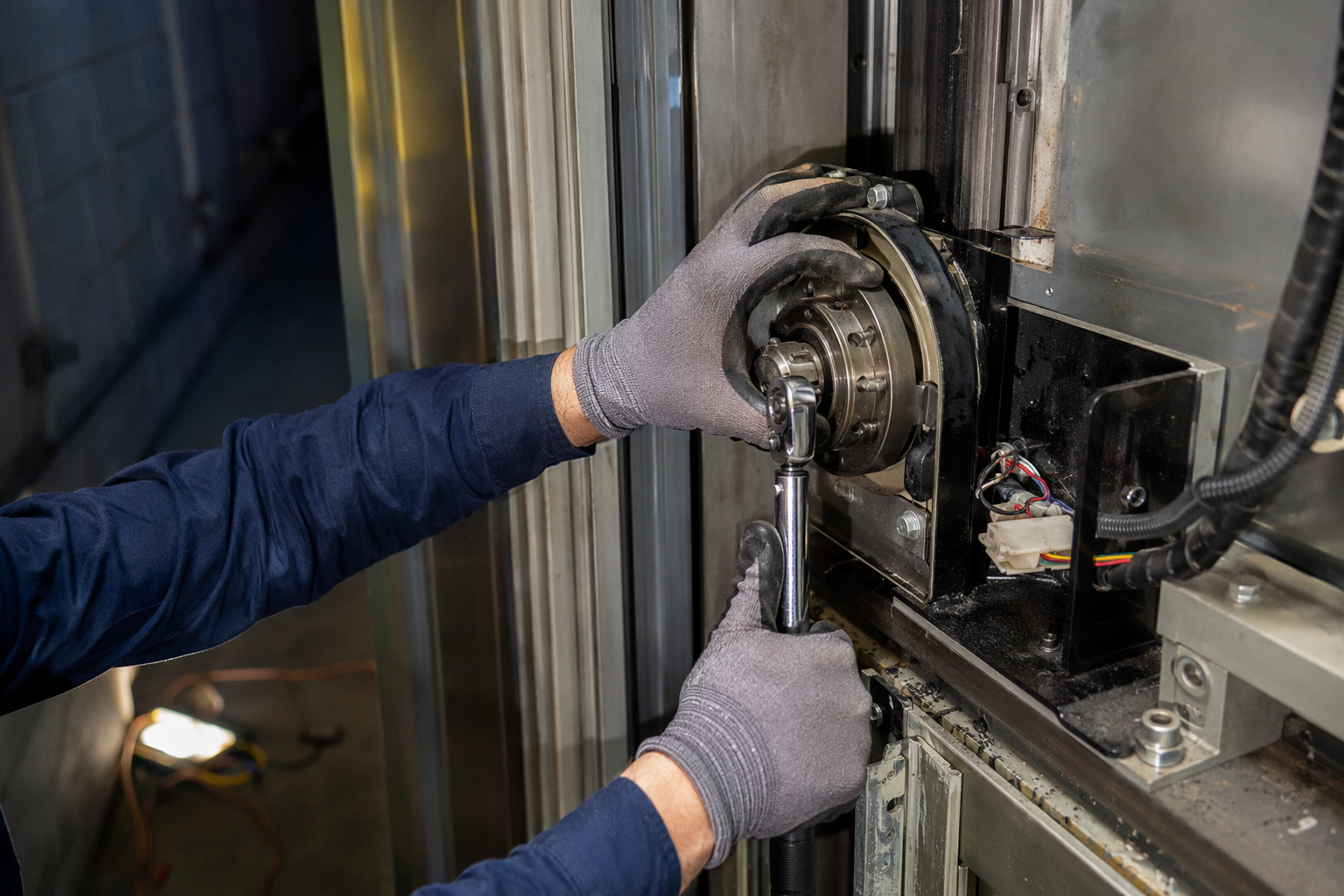
Preventive maintenance identifies and corrects minor component wear before it escalates into major mechanical failures, directly reducing the frequency and severity of repair bills.
Elevator systems involve hundreds of interdependent mechanical, electrical, and hydraulic components. Door clutches, safety circuits, guide rail lubrication, buffer oil levels, and rope tension all degrade incrementally. When routine inspections catch these issues early, technicians replace an inexpensive worn part rather than an entire subsystem that failed under stress.
Emergency service calls — dispatched outside normal business hours to restore a trapped passenger or a non-functioning elevator — carry premium labor rates and expedited parts costs that can significantly exceed the cost of several months of preventive maintenance visits. Building owners who defer maintenance to reduce short-term expense typically encounter this dynamic, effectively trading a predictable maintenance budget for unpredictable and higher-cost reactive repairs.
What Are the Compliance Costs of Neglecting Elevator Maintenance in California?
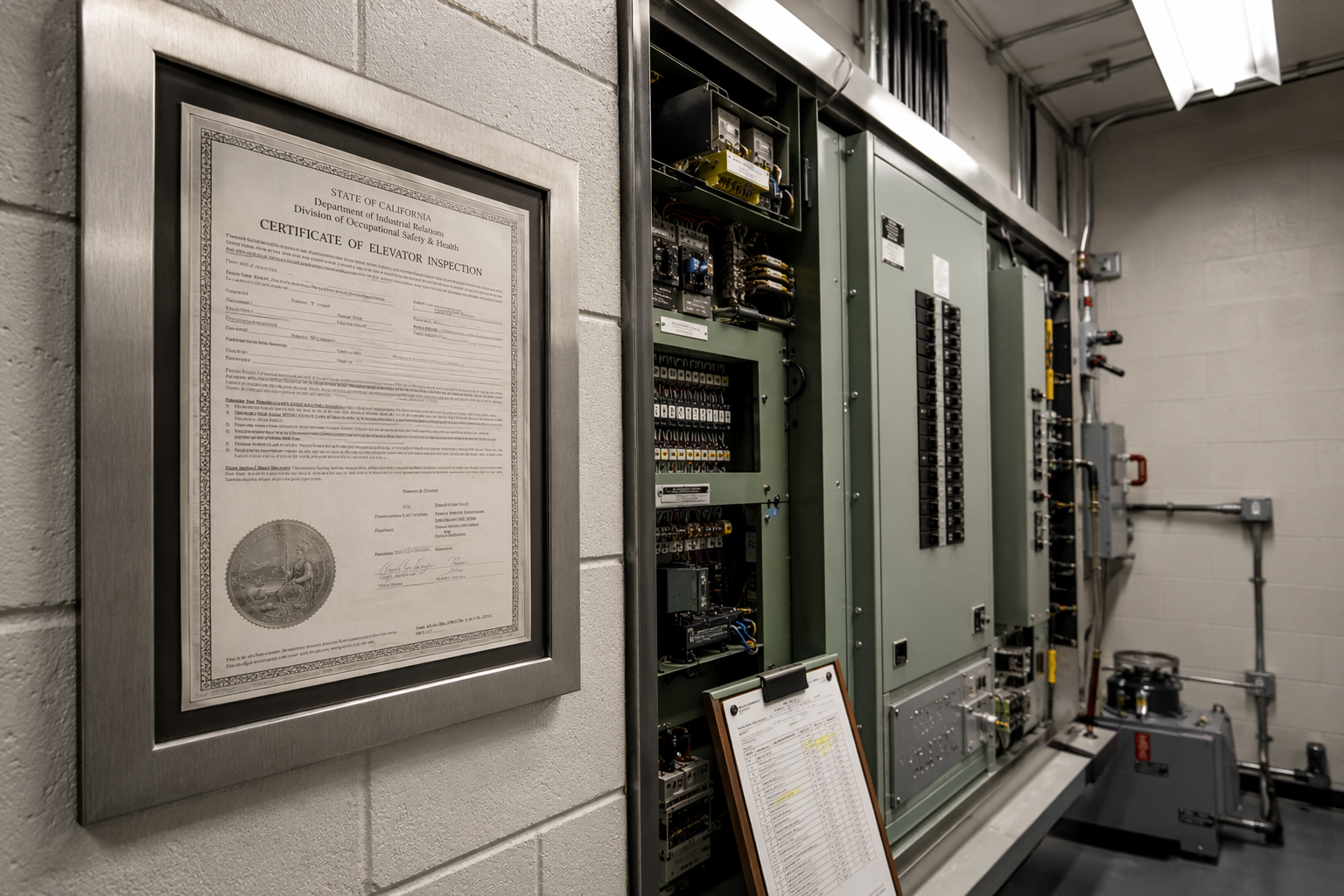
California requires annual elevator inspections under the jurisdiction of the Division of Occupational Safety and Health (Cal/OSHA), and non-compliant elevators can be shut down immediately, generating substantial revenue loss, legal liability, and reinspection fees.
California elevator safety is governed at the state level through Cal/OSHA’s Elevator, Ride, and Tramway Unit, which enforces standards aligned with the ASME A17.1 Safety Code for Elevators and Escalators. Elevators that fail inspection or operate without a current certificate of inspection are subject to order-to-comply notices and, in cases of imminent hazard, immediate shutdown orders.
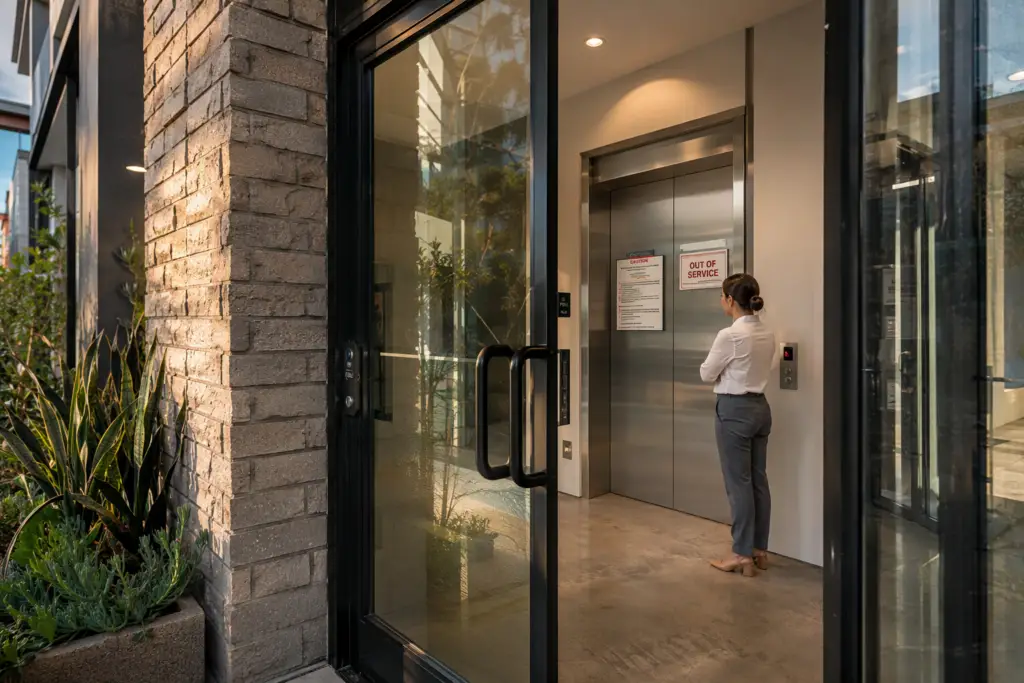
For a commercial building in Los Angeles or Orange County, an elevator shutdown can mean loss of access for tenants, potential lease default disputes, ADA accommodation failures, and direct revenue interruption. The cost of a compliance failure — legal fees, emergency repair premiums, reinspection fees, and tenant compensation — routinely dwarfs the annual cost of a properly maintained elevator. Facilities that retain a certified service provider such as Liftech Elevator maintain inspection-ready equipment year-round, eliminating this exposure.
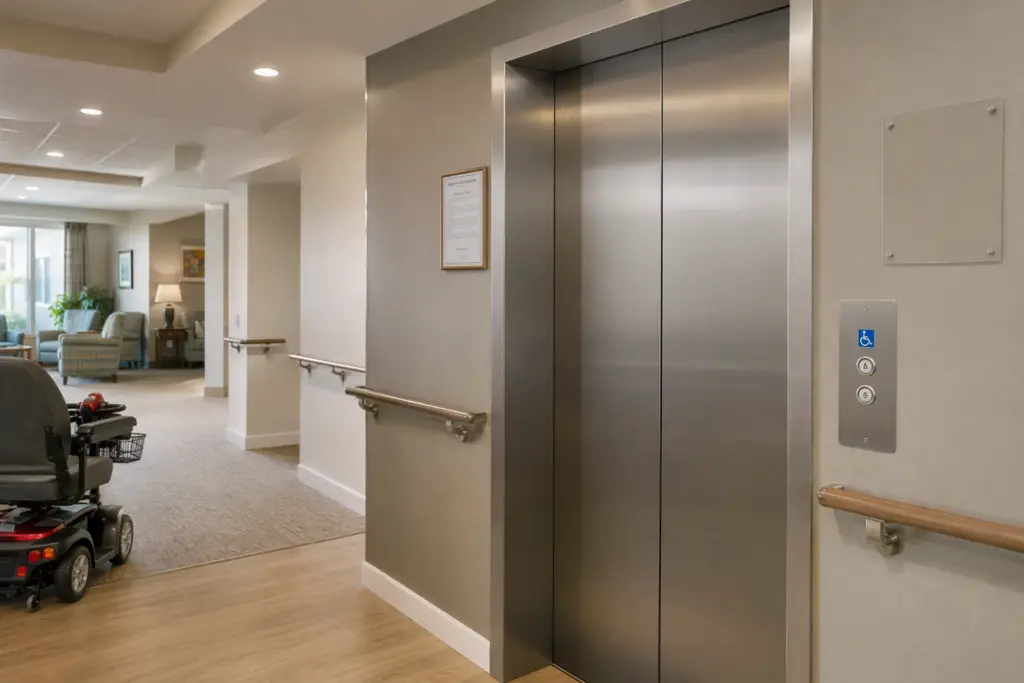
Additionally, ADA requirements mandate accessible vertical transportation in covered buildings. An elevator that is out of service due to neglected maintenance may trigger ADA complaints, adding another layer of regulatory and legal cost.
How Does Elevator Maintenance Affect Property Value?
Well-maintained elevator systems are a documented factor in commercial property valuations, lease negotiations, and cap rate calculations because they signal overall building quality and reduce buyer-assumed capital expenditure risk.
During commercial real estate due diligence, prospective buyers and lenders routinely commission elevator condition assessments. A system with current maintenance records, no outstanding violations, and documented component history commands a materially different risk profile than a system with deferred maintenance and open inspection items. The latter becomes a negotiating lever that reduces purchase price or increases financing costs.
For multi-family residential properties in Long Beach or Signal Hill, elevator reliability directly influences tenant retention. In buildings where elevators serve upper-floor units, chronic downtime increases vacancy rates and reduces achievable rents — both of which compress net operating income and, consequently, property value under income-approach appraisal methods.
What Is the Typical Lifespan of an Elevator, and How Does Maintenance Extend It?
With consistent preventive maintenance, a properly serviced elevator can remain in reliable service for several decades, whereas a neglected system may require full modernization significantly earlier than its design life.
Elevator equipment manufacturers design their systems with a service life that assumes regular lubrication, component replacement at prescribed intervals, and adjustment of safety systems. The ASME A17.1 Safety Code for Elevators and Escalators establishes inspection and test cycles — including five-year hydraulic pressure tests and periodic safety device tests — that, when performed consistently, ensure components are replaced before they cause cascading damage.
Guide rails, car buffers, hydraulic cylinders, and machine room equipment all have service intervals that, when respected, prevent the exponential cost increase associated with a single neglected failure propagating damage to adjacent systems. A hoist rope that is inspected and replaced at appropriate intervals, for instance, protects the sheave, the car frame, and the drive machine — components whose replacement costs far exceed the rope itself.
How Do Full-Service Maintenance Contracts Compare to Oil-and-Grease Contracts?
| Contract Type | Coverage Included | Parts & Labor | Best For | ROI Profile |
|---|---|---|---|---|
| Oil & Grease (Basic) | Lubrication, minor adjustments only | Not included — billed separately | Low-traffic buildings with new equipment | Low predictability; higher repair exposure |
| Lubrication & Examination | Lubrication, inspection, minor adjustments | Parts extra; some labor included | Buildings with moderate traffic and aging equipment | Moderate; reduces surprises but not fully covered |
| Full-Service (Comprehensive) | All of above plus parts and labor for covered components | Included per contract terms | High-traffic commercial, healthcare, residential | Highest; predictable costs, maximum cost avoidance |
| Modernization + Maintenance Bundle | Equipment upgrade plus ongoing service | Included post-modernization | Buildings with aging equipment nearing code thresholds | Very high over 10+ year horizon; resets depreciation |
The contract type a building owner selects has a direct bearing on cost predictability and total maintenance ROI. Full-service contracts convert variable repair costs into a fixed operational expense, which simplifies budgeting and eliminates the risk of a large unplanned capital outlay. Buildings with high call volume, older equipment, or mission-critical operations in Los Angeles and Orange County typically find that full-service coverage delivers the clearest positive ROI.
What Are the Key Components That Drive the Highest Elevator Repair Costs When Neglected?
Door operating systems, hydraulic power units, control systems, and hoist ropes account for the majority of high-cost elevator repairs when maintenance is deferred.
Door-related failures are statistically the most frequent cause of elevator outages. Door operators, gibs, clutches, and rollers require regular adjustment and lubrication. When these components wear without maintenance intervention, they cause entrapment events, door reversal failures, and eventually motor burnout — escalating from a minor adjustment into a significant parts-and-labor repair.
Hydraulic systems require periodic fluid changes, cylinder inspections, and pump seal maintenance. A neglected hydraulic unit can develop internal leaks that contaminate the fluid, accelerate pump wear, and ultimately require full power unit replacement. In California, underground hydraulic cylinders are also subject to environmental compliance requirements, adding regulatory cost to mechanical repair expense when these systems are not properly monitored.
Control system boards and relay logic components fail prematurely when they operate in environments with inadequate machine room temperature control or are subjected to voltage irregularities that regular maintenance visits would identify. Controller replacements represent among the highest single-item repair costs in elevator service.
How Does Elevator Downtime Affect Building Revenue and Tenant Relationships?
Elevator downtime in multi-story commercial or residential buildings directly reduces tenant satisfaction, increases vacancy risk, and can trigger lease termination clauses or rent abatement demands in California.
In California commercial leases, particularly in Class A office buildings across Los Angeles and Orange County, elevator service is generally treated as a landlord covenant. Chronic outages create legal exposure and erode tenant confidence in building management quality. For medical office buildings, senior housing, or retail centers where elevator access is not merely a convenience but an operational necessity, downtime translates directly to lost revenue for tenants — who then have grounds for rent negotiations or early lease termination.
Residential properties in Long Beach and Signal Hill face similar dynamics. Multi-family buildings with non-functional elevators generate maintenance complaints, negative online reviews, and increased tenant turnover — all of which carry real costs that dwarf routine maintenance investments.
What Elevator Inspection Intervals Are Required Under California Law?
California requires annual inspections of most elevator types, with additional periodic safety tests at intervals prescribed by the ASME A17.1 Safety Code, enforced through the Cal/OSHA Elevator, Ride, and Tramway Unit.
Under California law, building owners are responsible for ensuring their elevators hold a current certificate of inspection issued following a passing annual inspection. The inspection itself must be performed by a certified inspector. The ASME A17.1 Safety Code for Elevators and Escalators — which California adopts as its baseline technical standard — specifies additional test intervals for governor and safety devices, buffers, and hydraulic pressure tests that extend beyond the annual inspection cycle.
Facilities that maintain a proactive service relationship with a qualified elevator company receive advance notice of upcoming test deadlines, ensuring that required safety tests are scheduled and documented before inspection dates. This proactive posture eliminates last-minute compliance scrambles and the risk of a failed test that triggers reinspection delays. Liftech Elevator assists clients throughout Signal Hill, Long Beach, Los Angeles, and Orange County in managing these inspection and test schedules as part of ongoing maintenance programs.
How Should Building Owners Evaluate an Elevator Maintenance Vendor’s True Value?
Vendor value should be assessed on contract coverage depth, technician certification, parts access, inspection compliance support, and transparency of documentation — not on quoted price alone.
The lowest-priced maintenance contract is not inherently the best value. A contract that excludes parts, limits callback coverage, or is performed by undertrained technicians can result in deferred component replacement, missed safety adjustments, and failed inspections that collectively produce a far higher total cost of ownership than a slightly more expensive comprehensive contract.
Building owners should request documentation of the vendor’s certification under the ASME A17.1 framework, verify that technicians hold appropriate state certifications, and review sample maintenance logs to assess the depth of inspection documentation. Transparent reporting — including itemized condition notes, parts replaced, and upcoming test due dates — is a hallmark of a maintenance provider that manages equipment proactively rather than reactively.
What Is Elevator Modernization, and When Does It Deliver Better ROI Than Ongoing Repair?
Elevator modernization — the systematic replacement of aging control systems, drive machines, or cab components — delivers superior ROI when the cumulative annual repair cost of aging equipment approaches or exceeds the annualized cost of a modernization investment.
As elevator systems age, the cost curve of maintaining them rises. Obsolete relay logic controllers require increasingly expensive troubleshooting. Parts for discontinued models become scarce and costly. Energy consumption of older traction machines and hydraulic power units exceeds that of modern equivalents. At a certain point, continued repair investment maintains a depreciating asset rather than protecting a reliable one.
A modernization assessment typically evaluates controller age and parts availability, motor and drive efficiency, door operator condition, cab interior depreciation, and current code compliance status. The result is a capital expenditure that resets the depreciation clock, typically reduces energy costs, improves ride quality and reliability, and qualifies the building’s elevator for a full new inspection cycle — all of which contribute to measurable ROI over a multi-year horizon.
How Does ADA Compliance Factor Into Elevator Maintenance ROI?
Maintaining ADA-compliant elevator operation — including functioning door timing, leveling accuracy, and accessible controls — protects building owners from federal complaints, litigation costs, and barrier removal orders that carry significant financial consequences.
The ADA requires that covered buildings provide accessible routes, and elevators are frequently the only means of vertical access compliance in multi-story structures. When a poorly maintained elevator develops leveling issues — stopping inches above or below floor level — it creates a tripping hazard that is both an ADA barrier and a personal injury liability. Door timing malfunctions that cause doors to close too rapidly can similarly constitute an ADA violation and an injury risk.
Regular maintenance ensures that leveling systems, door open times, audible signals, and Braille control panels remain in proper function. The cost of defending an ADA complaint, installing ordered remediation measures, and managing associated legal fees substantially exceeds the maintenance investment required to keep these systems operational. From a pure risk-adjusted ROI perspective, ADA compliance maintenance represents one of the highest-return components of a maintenance program.
What Questions Should Facility Managers Ask When Reviewing Elevator Maintenance ROI Annually?
An annual ROI review should examine total maintenance spend versus avoided repair costs, inspection pass/fail history, downtime incidents, component age relative to service life, and contract coverage gaps.
- Review all service tickets from the prior year and categorize each as preventive maintenance, callback, or emergency repair — then calculate the total cost of reactive service.
- Compare the reactive service cost against what full-service contract coverage would have cost to determine the net cost of under-coverage.
- Document all downtime incidents and estimate the operational or tenant impact value of each occurrence.
- Verify that all required inspections and periodic safety tests were completed on schedule and that current certificates of inspection are posted as required by California law.
- Request a component age and condition report from the service provider, identifying parts approaching end of service life that should be budgeted for replacement in the coming year.
- Assess energy consumption trends for traction or hydraulic units and calculate whether modernization of inefficient components would yield net positive ROI over a defined payback period.
- Review vendor documentation quality and confirm that maintenance logs are sufficiently detailed to satisfy regulatory audits and due diligence requests.
How Does Elevator Maintenance Relate to Workers’ Compensation and General Liability Insurance?
Documented preventive maintenance programs reduce the frequency of elevator-related incidents, which directly influences liability claim history, insurance premium calculations, and the ability to defend negligence claims.
Insurance carriers underwriting commercial property and general liability policies in California consider elevator maintenance history when assessing risk. Buildings with recurring elevator incidents, open inspection violations, or no documented maintenance program are categorized as higher risk — a categorization that manifests in higher premiums or coverage exclusions.
When an elevator-related personal injury claim does arise, the building owner’s ability to produce comprehensive maintenance logs demonstrating that the system was regularly inspected, adjusted, and tested is a significant defense asset. Courts and insurance adjusters assess whether the property owner exercised reasonable care. Thorough maintenance documentation is the primary evidence of that care. Conversely, the absence of maintenance records, or records showing deferred repairs, materially weakens the building owner’s legal position.
What Energy Savings Can Elevator Modernization and Maintenance Contribute?
Modernized elevator drive systems and well-maintained hydraulic power units consume meaningfully less energy than aging or poorly maintained equivalents, contributing to operational cost savings that factor into overall maintenance ROI.
Older hydraulic elevators with oversized or degraded motors, and older traction systems with inefficient motor-generator sets, represent opportunities for energy reduction through targeted modernization. Variable-frequency drives (VFDs), regenerative drive systems on traction elevators, and LED lighting retrofits in cabs and machine rooms reduce energy consumption in ways that contribute to a calculable financial return over time.
Ongoing maintenance also contributes to energy efficiency: properly lubricated guide shoes and sheaves reduce mechanical resistance, well-adjusted door operators reduce cycle time and motor load, and correctly calibrated leveling systems minimize correction runs that consume additional energy. For commercial properties in Los Angeles and Orange County subject to energy benchmarking ordinances, elevator efficiency improvements can contribute meaningfully to reported building performance metrics.
How Should Building Owners Budget for Elevator Maintenance and Capital Replacement?
Sound financial planning separates elevator costs into two categories: operating expense (routine preventive maintenance and minor repairs) and capital reserve (component replacements and modernization), with reserve contributions sized to equipment age and condition.
For buildings in California that operate under homeowners association (HOA) structures or commercial condominium regimes, reserve study requirements may mandate specific elevator capital reserve funding. Even for buildings not subject to formal reserve study requirements, prudent facility management calls for annual contributions to an elevator capital reserve fund calibrated to the expected remaining service life of major components.
A maintenance provider that delivers detailed equipment condition assessments — identifying components approaching end of life with estimated replacement cost ranges — enables building owners and financial managers to build accurate multi-year capital plans. This transforms elevator management from an unpredictable expense into a planned line item, which improves overall building financial performance and strengthens lender relationships. Liftech Elevator provides condition-based assessments to clients across its service area to support exactly this kind of long-range planning.
What Is the Role of OSHA in Elevator Safety and Compliance Cost Avoidance?
OSHA standards apply to elevator safety in the context of worker protection, including the safety of technicians performing maintenance and the safety of building occupants and workers who use elevators in commercial settings.
The OSHA standards relevant to elevator maintenance primarily govern the safety of maintenance workers — lockout/tagout procedures, confined space protocols for pit work, and machine room safety requirements. For building owners, OSHA compliance means ensuring that elevator machine rooms meet housekeeping, lighting, and access standards, and that the maintenance vendor follows OSHA-compliant work practices.
An elevator company that follows OSHA-required procedures protects both its technicians and the building owner from workers’ compensation liability. When a maintenance contractor is injured on a building’s elevator equipment, the building owner’s liability exposure depends in part on whether the equipment and access conditions met applicable OSHA standards. Maintaining clean, properly lit, and code-compliant machine room environments is both a safety obligation and a cost-avoidance measure.
How Do Callback Rates Signal Maintenance Quality and ROI Impact?
Callback frequency — the rate at which an elevator requires unscheduled service calls between preventive maintenance visits — is one of the most direct performance indicators of maintenance program effectiveness and a primary driver of total service cost.
A high callback rate signals that preventive maintenance is either inadequate in scope, infrequent, or improperly executed. Each callback carries direct cost in labor and potentially parts, as well as indirect cost in tenant disruption and management time. Tracking callbacks on a per-unit, per-quarter basis and comparing against industry-equivalent benchmarks provides facility managers with objective data to evaluate their current service provider and identify underperforming equipment.
When Liftech Elevator undertakes new maintenance relationships, a detailed condition assessment of existing equipment helps establish a baseline, identify deferred maintenance backlog, and set realistic expectations for callback frequency as the equipment is brought into proper operating condition. Clients in Long Beach, Signal Hill, Los Angeles, and Orange County benefit from this structured onboarding approach, which typically yields a measurable reduction in callback frequency within the first service period.
What Documentation Should Elevator Maintenance Programs Produce to Demonstrate ROI?
Comprehensive maintenance documentation — including inspection logs, parts replacement records, test certifications, callback reports, and condition assessments — constitutes the evidentiary foundation for demonstrating ROI to ownership, insurers, regulators, and prospective property buyers.
Maintenance documentation serves multiple functions simultaneously: it satisfies California regulatory requirements for inspection records, it provides the audit trail needed to defend against liability claims, it supports reserve study and capital planning, and it demonstrates due diligence to insurers. A maintenance log that records only the date of service provides minimal value; a log that documents each component inspected, its condition, any adjustments made, parts replaced, and upcoming service milestones provides comprehensive value across all these functions.
Building owners should request digital access to their maintenance records and confirm that the service provider maintains records in a format that can be produced for regulatory audits or due diligence reviews on short notice. This documentation capability is a meaningful differentiator when comparing elevator service providers in competitive markets such as Los Angeles and Orange County.
How Can Building Owners in Southern California Get Started With an Elevator Maintenance ROI Assessment?
The first step is a professional condition assessment of existing elevator equipment, which establishes the current maintenance baseline, identifies deferred work, quantifies near-term capital needs, and enables accurate ROI modeling for preventive maintenance investment.
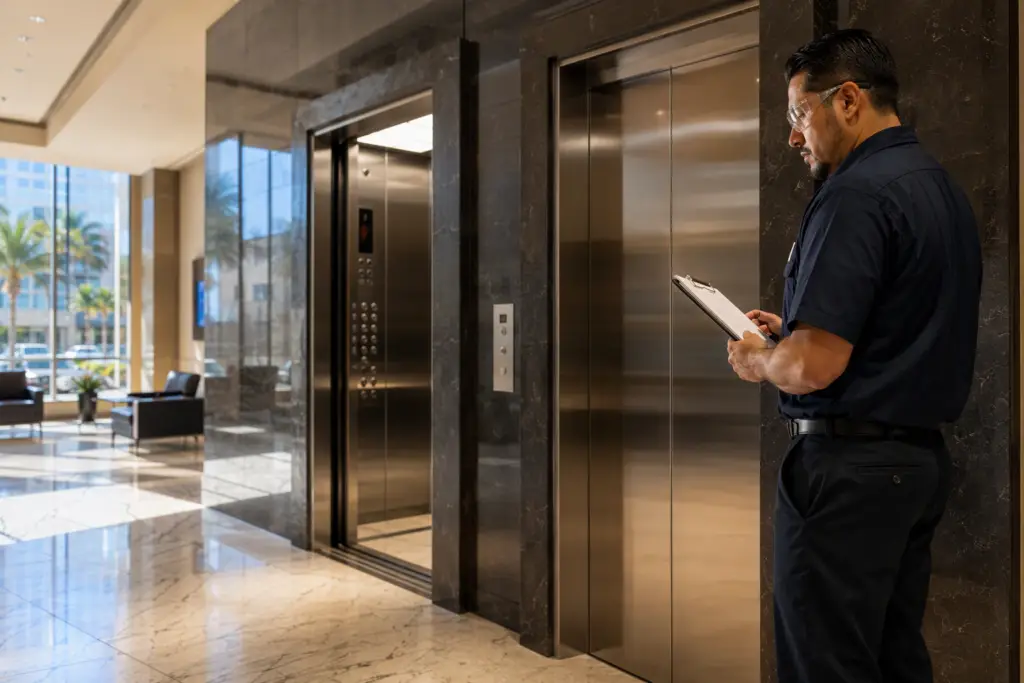
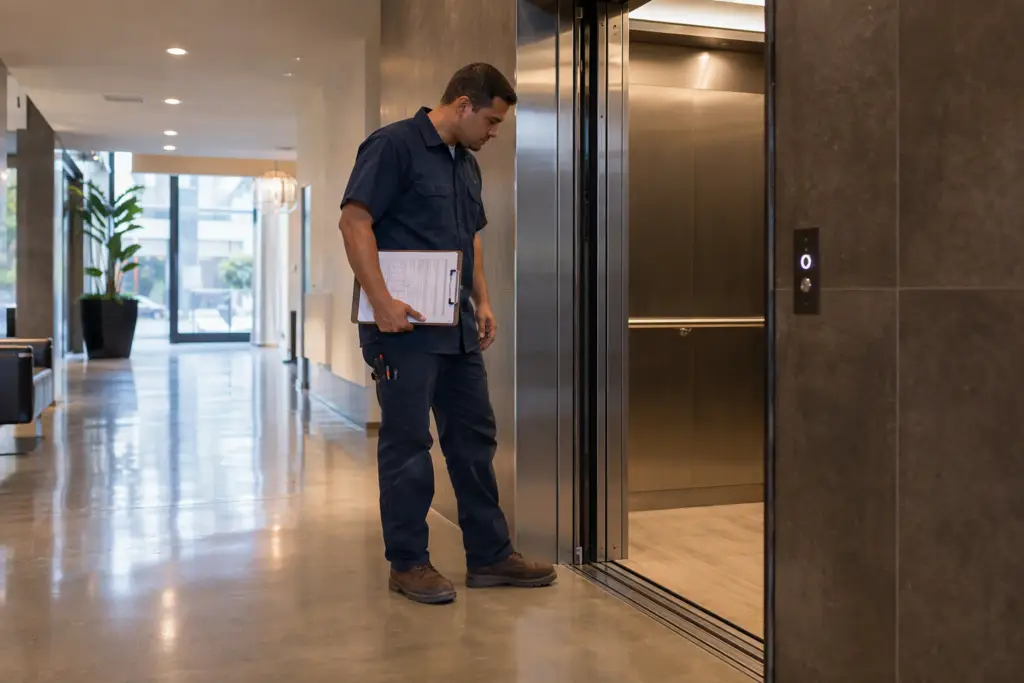
A qualified elevator service company will inspect all major systems — door operators, car and counterweight guide systems, machine and control equipment, safety devices, and pit and overhead conditions — and produce a written report with condition ratings and recommended actions. This report becomes the foundation for selecting the right maintenance contract tier, building a capital reserve contribution schedule, and documenting the current state of the asset for insurance and due diligence purposes.
For buildings that have been under a prior service contract, the assessment also identifies whether the previous contractor maintained the equipment to the standard required by the ASME A17.1 Safety Code for Elevators and Escalators and California inspection requirements. Any backlog of deferred maintenance is quantified, enabling ownership to make informed decisions about remediation scope and timing before the next inspection cycle.
What Makes Elevator Maintenance ROI Different for High-Rise Buildings Versus Low-Rise Properties?
High-rise buildings face amplified ROI consequences from elevator maintenance because their tenants are more dependent on vertical transportation, the systems are more complex, and the regulatory and liability stakes of a failure are proportionally greater.
In a two-story commercial building, an elevator outage is an inconvenience; in a twenty-story residential tower in Los Angeles, it is an access emergency. High-rise elevators — particularly high-speed traction systems, destination dispatch configurations, and hydraulic freight elevators — involve more complex control systems, larger hoist rope and sheave assemblies, and more demanding inspection requirements under the ASME A17.1 Safety Code. The failure consequences and repair costs scale accordingly.
At the same time, high-rise properties typically operate elevators at higher utilization rates, accelerating component wear and making preventive maintenance visit frequency — and the depth of each visit — even more consequential. The ROI calculation for a high-rise property in Los Angeles almost universally favors comprehensive full-service coverage over any less inclusive contract structure.
Ready to Maximize Your Elevator Investment?
Contact Liftech Elevator for a free elevator assessment. Our certified service team works with building owners, facility managers, and property managers throughout Signal Hill, Long Beach, Los Angeles, and Orange County to design maintenance programs that protect equipment value, ensure regulatory compliance, and deliver measurable return on investment.
Call Liftech Elevator today: 562-609-3478
Put a trained eye on your elevator system before a deferred maintenance issue becomes an emergency repair — or an inspection violation. Liftech Elevator is ready to help you understand exactly where your elevator assets stand and what a structured maintenance program will return to your bottom line.
Need elevator service you can rely on? Liftech Elevator is ready to help.