Emergency Elevator Repair in Los Angeles: Complete FAQ Guide
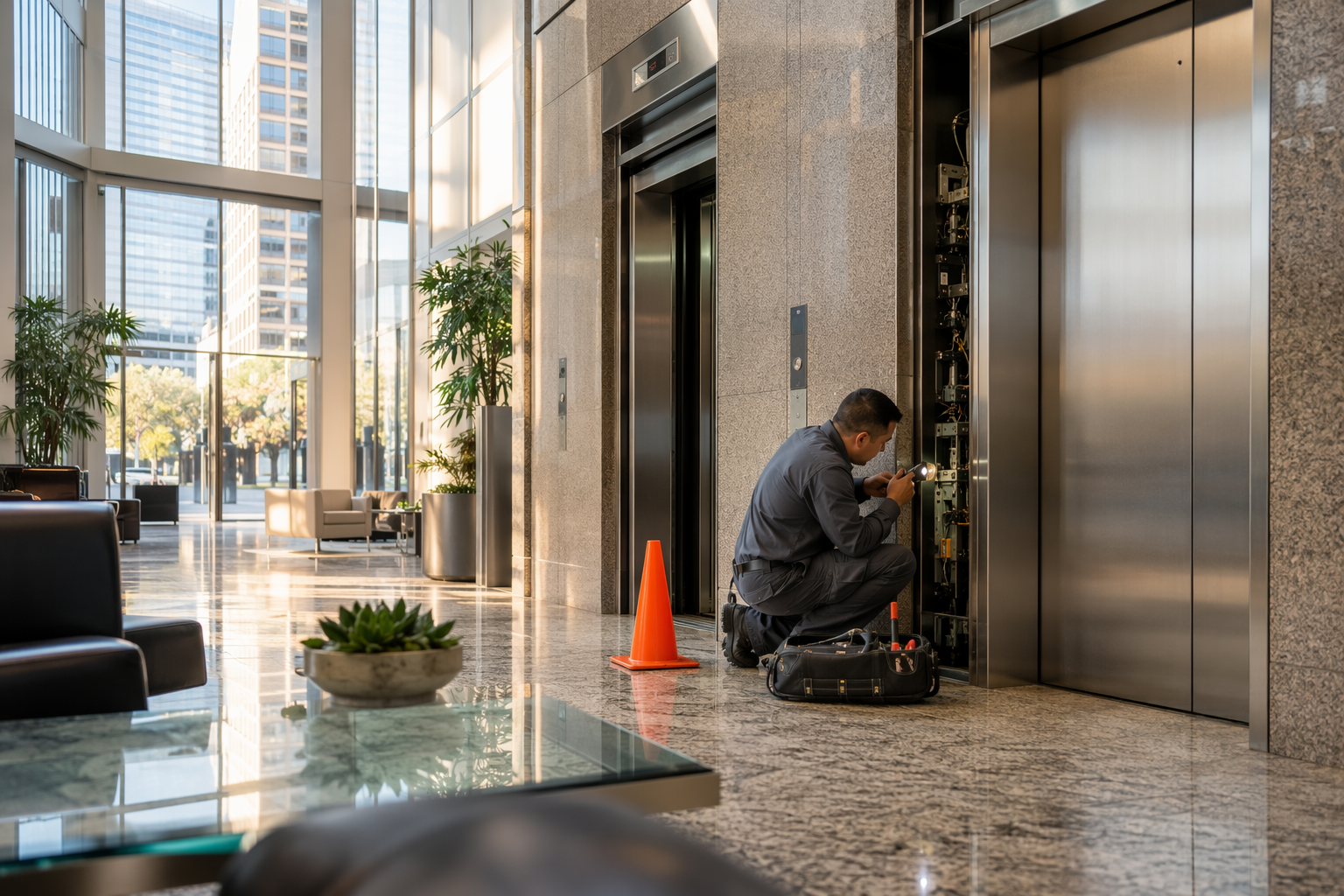
When an elevator stops working unexpectedly — whether in a commercial high-rise in Downtown Los Angeles, a residential building in Long Beach, or a medical facility in Orange County — the consequences range from inconvenience to serious safety liability. This FAQ hub covers every dimension of emergency elevator repair in Los Angeles: what qualifies as an emergency, how the repair process works, what codes apply, how to choose a provider, and how to prevent future breakdowns.
What Counts as an Emergency Elevator Repair Situation in Los Angeles?
An emergency elevator repair situation is any condition that poses an immediate safety risk to passengers, traps people inside the cab, or causes the elevator to operate outside the parameters set by the ASME A17.1 Safety Code for Elevators and Escalators.
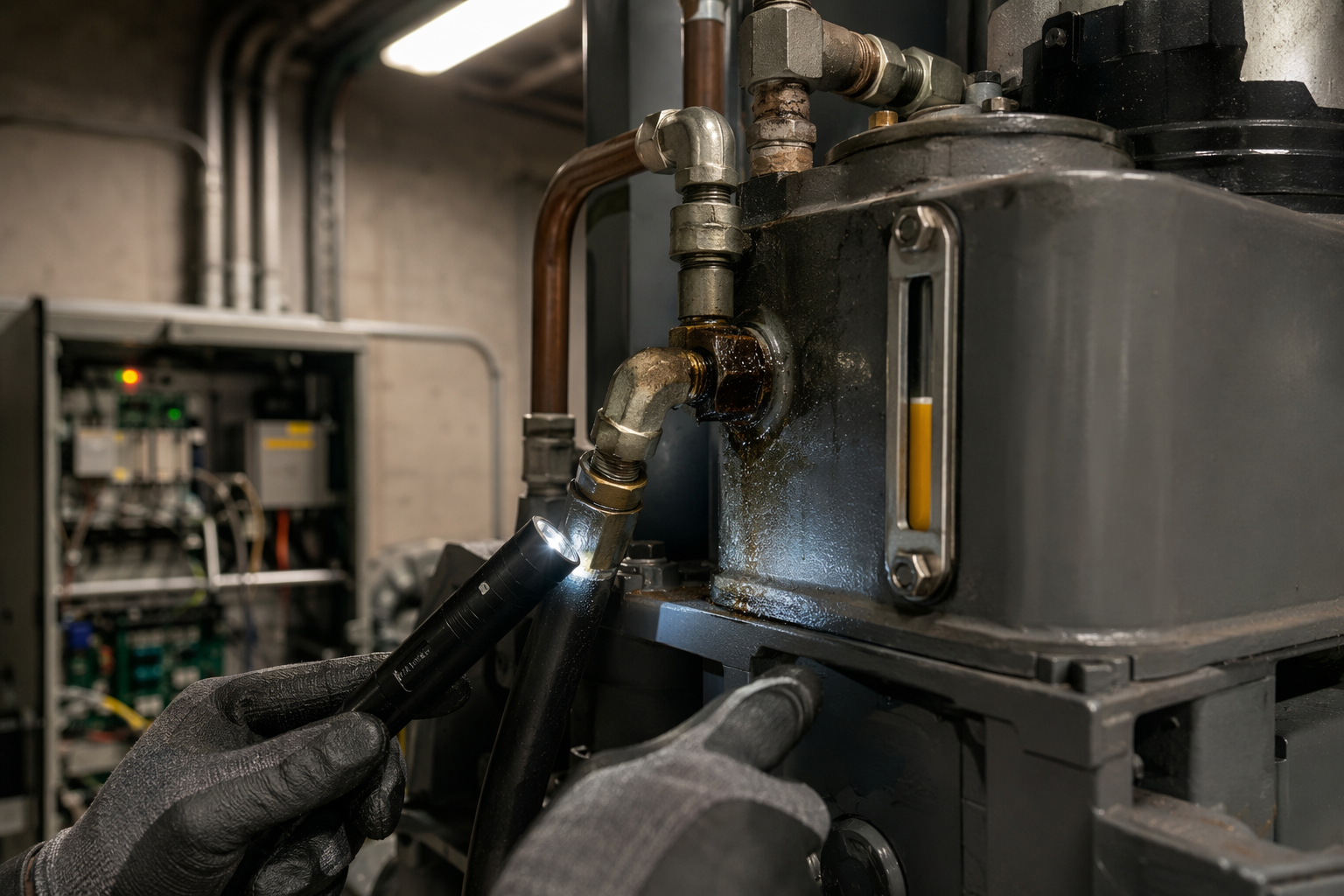
Common emergency conditions include passenger entrapment, door malfunctions that prevent safe entry or exit, leveling failures that create a trip hazard between the cab floor and the landing, brake system faults, hydraulic fluid leaks, and safety circuit trips that cause the elevator to stop mid-travel. Any of these conditions requires the elevator to be taken out of service immediately and assessed by a licensed elevator mechanic before resuming operation.
Non-emergency issues — such as a slow door, minor cosmetic damage, or a flickering interior light — are still important to address but do not require an after-hours urgent call. Understanding the distinction helps property managers prioritize correctly and avoid unnecessary emergency premiums while also ensuring they do not delay on genuinely dangerous faults.
What Should Building Staff Do Immediately When an Elevator Breaks Down?
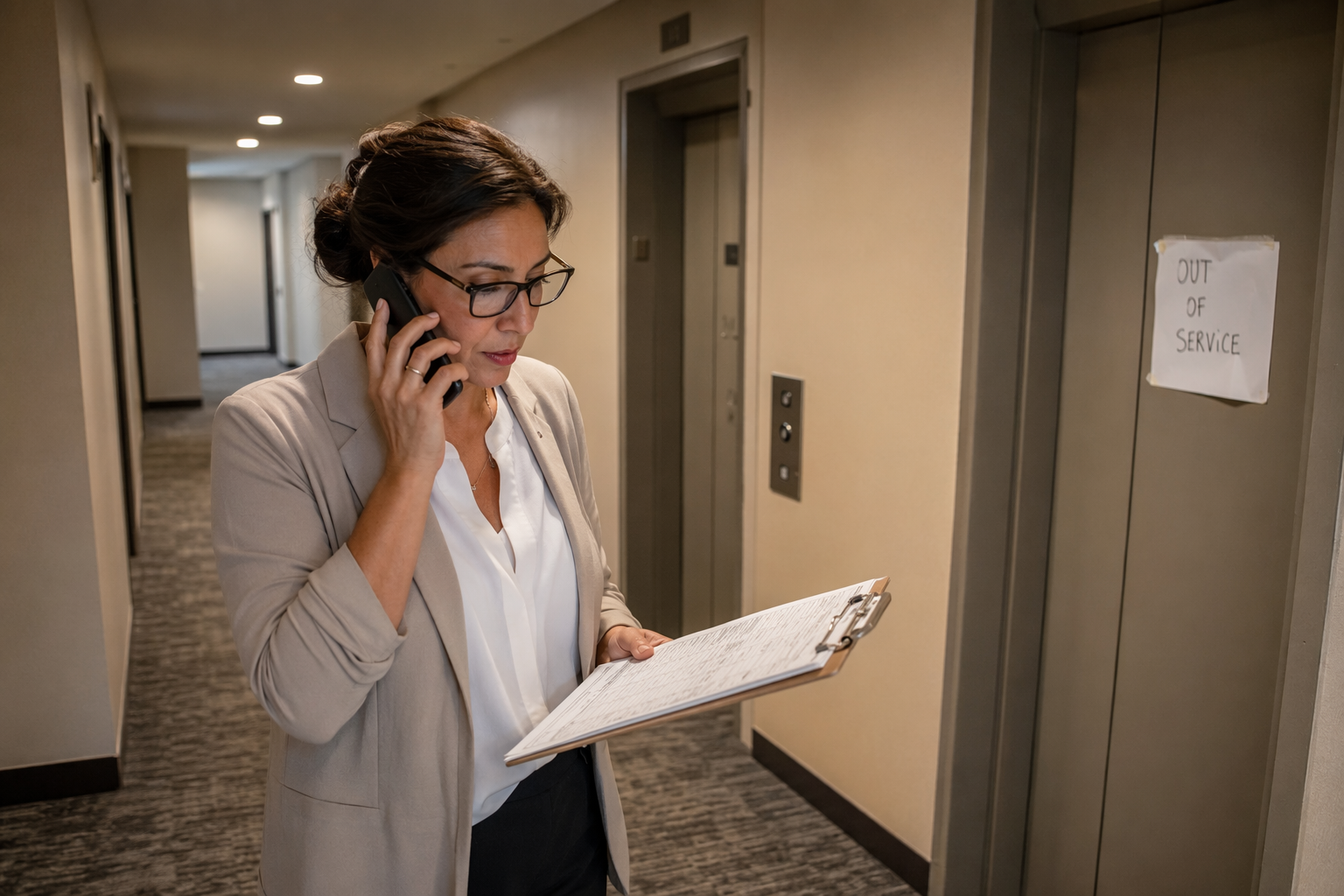
Building staff should follow a structured emergency protocol to protect passengers, preserve equipment safety, and comply with California regulations.
- Communicate with trapped passengers immediately. Use the elevator’s two-way communication system, required under ASME A17.1, to confirm whether anyone is inside the cab and inform them that help is on the way.
- Call 911 if passengers are trapped and cannot be safely released. Los Angeles Fire Department personnel are trained for elevator rescues and should be dispatched for entrapments involving vulnerable individuals, medical emergencies, or elevators stopped between floors.
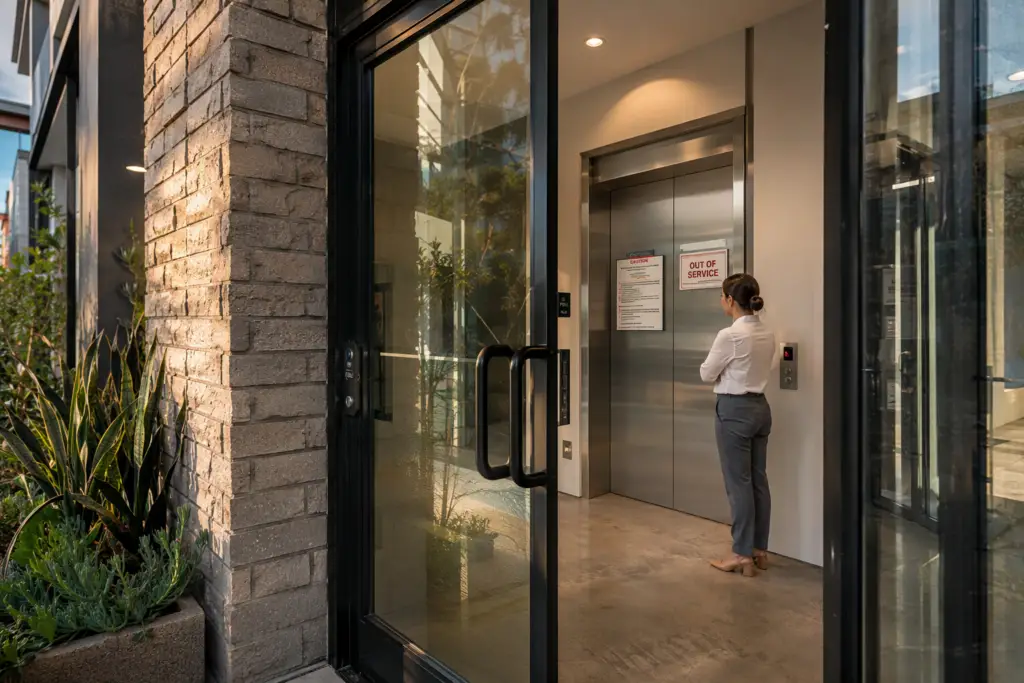
- Place the elevator out of service. Post clear signage at every landing door and, where possible, lock out the elevator controller so no one can attempt to use the unit.
- Contact a licensed elevator service company. Notify your contracted provider or, if no contract is in place, contact a certified elevator repair company such as Liftech Elevator that serves the Los Angeles area.
- Document the fault. Record the time of failure, the floor where the cab stopped, any error codes on the controller display, and a description of what the elevator was doing before it stopped. This information accelerates diagnostic time.
- Notify your elevator inspection authority. The California Department of Industrial Relations, Division of Occupational Safety and Health (Cal/OSHA) oversees elevator safety in California. Certain accidents and entrapments may require formal notification under OSHA and state regulations.
- Complete an internal incident report. Log the event in your building’s maintenance records for insurance and compliance purposes.
How Does the Emergency Elevator Repair Process Work in Los Angeles?
Emergency elevator repair in Los Angeles follows a defined sequence: dispatch, site arrival, diagnosis, parts procurement, repair execution, safety testing, and return to service — each step governed by ASME A17.1 and California elevator regulations.
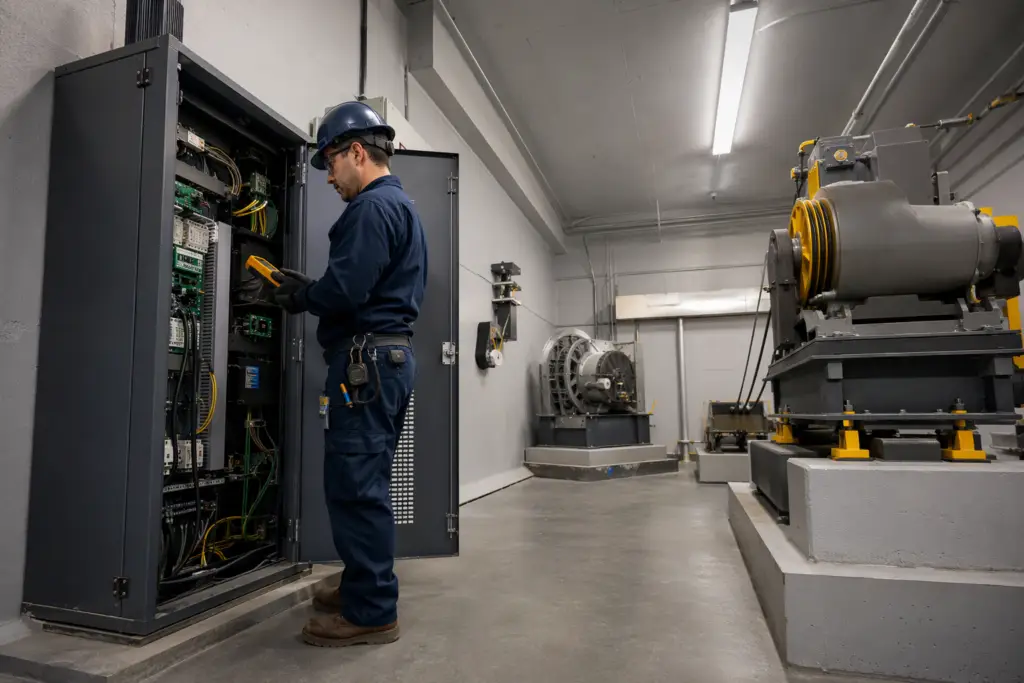
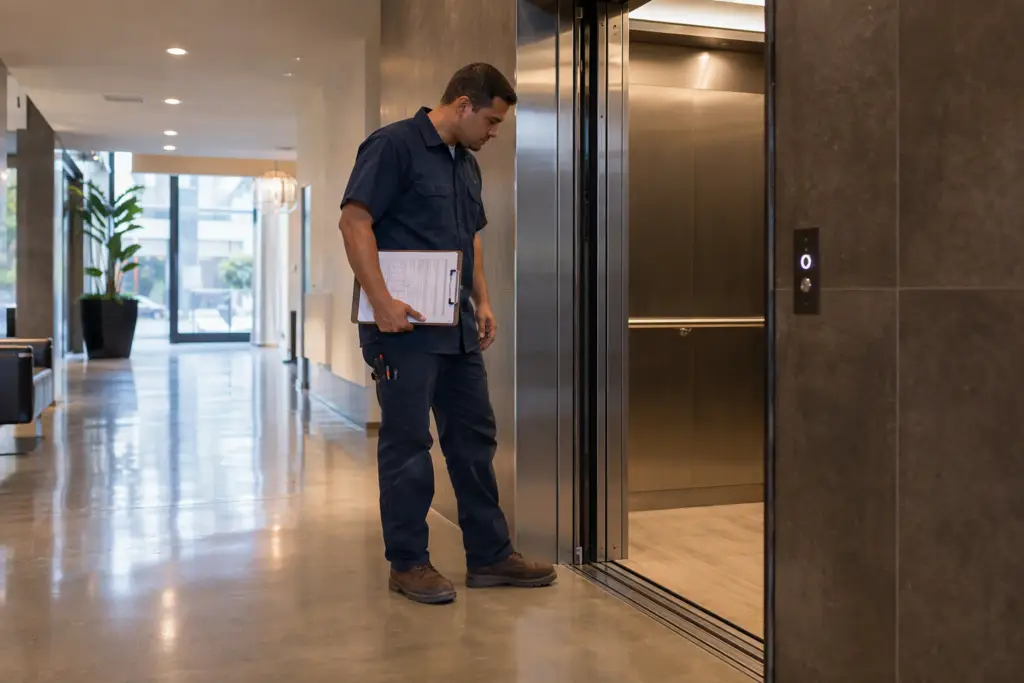
Once a technician arrives on site, the first priority is confirming that all passengers have been safely evacuated. The technician then performs a systematic diagnosis of the fault — inspecting the controller, safety circuits, mechanical components, and hydraulic or traction systems depending on elevator type. Modern controllers store fault codes that significantly shorten diagnostic time.
If the required parts are in the technician’s vehicle stock, repairs can often be completed in a single visit. For uncommon components — particularly on older or proprietary elevator systems — parts may need to be sourced, which can extend the timeline. After the repair is completed, the technician performs a full operational test including door cycle testing, leveling accuracy, emergency stop function, and load testing before clearing the unit for passenger use.
In California, any elevator that has been involved in an accident or has undergone major component replacement may require a re-inspection by the state-authorized Qualified Elevator Inspector (QEI) before it returns to service.
Which Codes and Regulations Govern Emergency Elevator Repairs in Los Angeles?
Emergency elevator repairs in Los Angeles must comply with the ASME A17.1 Safety Code for Elevators and Escalators, California Code of Regulations Title 8, and applicable ADA accessibility standards.
California adopts ASME A17.1 as the baseline safety standard for all conveyance equipment and enforces it through the California Elevator Safety Construction Act (Labor Code Sections 7300–7324). The Division of Occupational Safety and Health (Cal/OSHA) has authority over elevator installations in most commercial and residential buildings in Los Angeles.
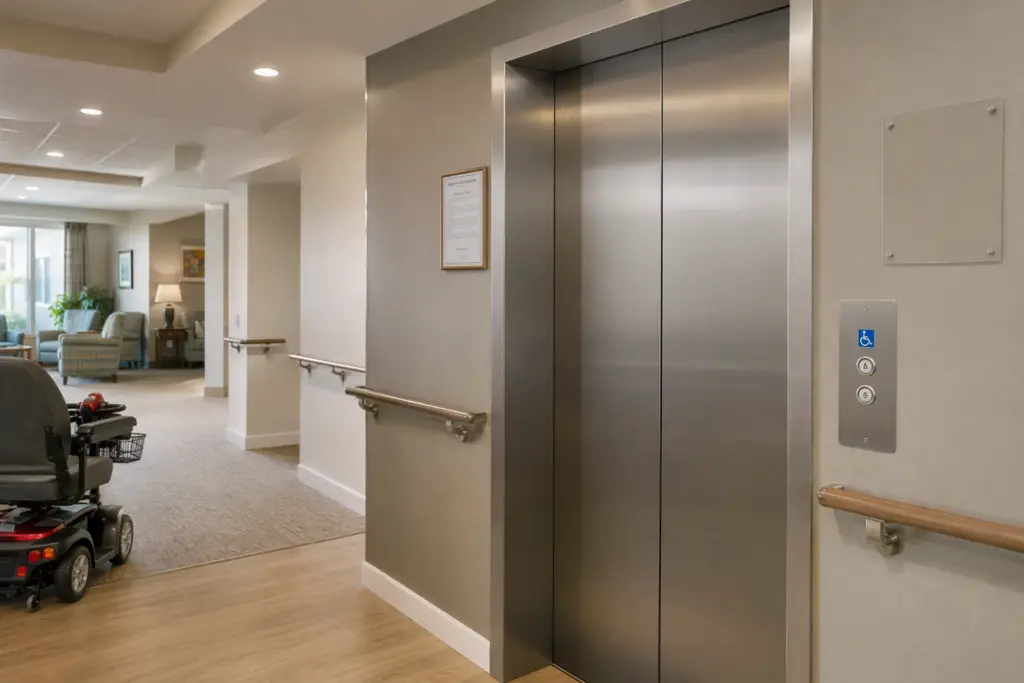
The ADA requires that when an elevator serving a public accommodation is repaired, restored accessibility features — including compliant controls, auditory signals, and Braille markings — must be maintained or restored. A breakdown that disables the only accessible vertical means of travel in a building may create immediate ADA liability for the property owner.
For 2026 code compliance, building owners and service providers should reference the current edition of ASME A17.1 and confirm with their elevator service company that all repair work meets the edition adopted by the California Building Standards Commission.
How Long Does Emergency Elevator Repair Take in Los Angeles?
Repair duration depends on the nature of the fault, availability of replacement parts, and the elevator system’s age and type — straightforward electrical or door-related repairs can often be resolved in a few hours, while mechanical or hydraulic failures requiring parts procurement may take longer.
Simple faults — a tripped safety relay, a misaligned door interlock, a blown fuse, or a faulty door sensor — are often resolved quickly once a qualified technician is on site. Complex failures involving worn brake assemblies, damaged rope systems on traction elevators, hydraulic cylinder leaks, or circuit board replacements are more time-intensive.
Proprietary elevator systems manufactured by companies that restrict parts availability to their own technicians can significantly extend repair timelines. This is a key consideration when selecting a service provider and evaluating modernization options for older equipment.
What Are the Most Common Causes of Emergency Elevator Breakdowns in Los Angeles Buildings?
The most frequent causes of emergency elevator breakdowns include door system failures, safety circuit trips, hydraulic fluid issues, worn traction components, and controller malfunctions.
| Failure Type | Elevator Type Affected | Typical Symptom | Relative Complexity to Repair |
|---|---|---|---|
| Door interlock / sensor failure | Traction & hydraulic | Doors won’t close or open; elevator won’t move | Low–Medium |
| Safety circuit trip | Traction & hydraulic | Elevator stops unexpectedly, won’t reset | Medium |
| Hydraulic fluid leak or pump failure | Hydraulic only | Slow descent, cab won’t rise to floor level | Medium–High |
| Worn hoist ropes or sheaves | Traction only | Vibration, abnormal noise, safety governor trip | High |
| Controller / drive unit fault | Traction & hydraulic | Error codes, erratic movement, no response | Medium–High |
| Brake system failure | Traction only | Cab drifts, won’t hold at landing | High |
| Leveling / re-leveling fault | Traction & hydraulic | Cab floor not flush with landing floor | Low–Medium |
| Power supply or electrical fault | Traction & hydraulic | Complete shutdown, no cab lighting | Low–Medium |
In Los Angeles, older commercial buildings — particularly those constructed before the 1980s — tend to experience higher frequencies of controller and mechanical component failures due to equipment age. Coastal proximity in areas such as Long Beach and Signal Hill can accelerate corrosion in exposed components, contributing to electrical and mechanical faults. Liftech Elevator’s service teams are familiar with the specific equipment profiles common to Southern California building stock.
Does Building Age or Elevator Type Affect Emergency Repair Complexity in Los Angeles?
Yes — older elevators and proprietary systems present significantly greater repair complexity due to parts availability constraints, outdated wiring schemes, and components that may no longer meet current ASME A17.1 standards.
Buildings constructed in the mid-twentieth century often contain relay-logic controllers, drum or worm-gear machines, or single-speed hydraulic units that have been superseded by modern solid-state and variable-frequency drive (VFD) systems. Replacement parts for these systems may need to be fabricated, sourced from specialty suppliers, or improvised — all of which increase both time and cost.
Conversely, modern traction elevators with digital controllers typically provide detailed fault logging and are designed for modular component replacement, making diagnosis and repair more efficient. For buildings in Los Angeles with aging equipment experiencing repeated emergency calls, a modernization assessment is often the more cost-effective long-term strategy.
Can Emergency Elevator Repairs Be Performed Without a Permit in Los Angeles?
No — significant repair or component replacement work on elevators in Los Angeles typically requires a permit and inspection under California elevator safety regulations, regardless of the urgency of the repair.
California’s elevator safety program, administered through Cal/OSHA’s Elevator, Ride, and Tramway Unit, requires permits for alterations and major repairs. The distinction between maintenance (no permit required) and alteration or repair (permit required) is defined in the California Code of Regulations Title 8 and aligned with ASME A17.1 definitions.
Routine maintenance tasks — lubricating components, adjusting door operators, replacing lamps — generally do not require permits. Replacing a hoist motor, installing a new controller, or modifying a safety device does. Working with a licensed elevator contractor ensures that permit requirements are correctly identified and fulfilled so that the repaired elevator can be legally returned to service.
What Is the Difference Between Emergency Repair and Preventive Maintenance for Elevators?
Emergency repair is reactive — restoring a failed elevator to safe operation — while preventive maintenance is proactive, designed to identify and correct deteriorating conditions before they cause a breakdown or safety event.
A comprehensive preventive maintenance program typically includes scheduled inspections of all mechanical, electrical, hydraulic, and safety systems on a regular interval. State-required periodic inspections under California regulations supplement but do not replace manufacturer-recommended maintenance intervals.
Buildings that maintain consistent preventive maintenance agreements with a qualified elevator service company statistically experience fewer emergency calls, lower total lifecycle costs, and better compliance outcomes during state inspections. Liftech Elevator offers preventive maintenance programs across its Los Angeles, Long Beach, Signal Hill, and Orange County service areas tailored to each building’s equipment type and usage profile.
How Often Are Elevators Required to Be Inspected in California?
California regulations require periodic inspections of elevators by a Qualified Elevator Inspector (QEI) on an annual basis for most conveyance equipment, with additional inspections triggered by alterations, accidents, or change of ownership.
Annual inspection certificates must be posted in each elevator cab as required by California Labor Code. During a state inspection, the inspector verifies compliance with the applicable edition of ASME A17.1, including the condition of all safety devices, door systems, lighting, emergency communication, and load ratings.
Elevators that fail inspection receive a correction notice requiring deficiencies to be remedied within a specified timeframe. Elevators with imminent hazard conditions may be ordered out of service immediately. Staying ahead of inspection cycles through diligent maintenance is the most effective way to avoid unplanned shutdowns.
What ADA Requirements Apply When an Elevator in Los Angeles Is Repaired?
Under the ADA, when an elevator in a place of public accommodation or commercial facility is altered or repaired, accessibility features must be maintained and, where the repair constitutes an alteration, brought into compliance with current ADA Standards for Accessible Design.
ADA-compliant elevator features include appropriately sized cab dimensions, compliant control panel heights and button configurations, Braille and tactile signage, auditory floor announcements, and two-way emergency communication. When a repair involves replacing a control panel, door operator, or communication system, the replacement components must meet ADA specifications.
For properties in Los Angeles that serve the public — office buildings, retail centers, hotels, medical facilities — ADA compliance during and after elevator repair is not optional. Failure to maintain accessible elevator service can expose property owners to complaints, investigations, and legal action under federal and California state disability rights law.
How Should a Property Manager Choose an Emergency Elevator Repair Company in Los Angeles?
A property manager should select an emergency elevator repair company based on verified California licensure, demonstrated familiarity with the specific elevator equipment installed, transparent service documentation practices, and established local presence in the Los Angeles area.
Key criteria to evaluate when vetting a provider include whether the company holds a valid California Elevator Mechanic certification for its field technicians, whether it carries adequate general liability and workers’ compensation insurance, and whether it maintains inventory of commonly needed parts for the elevator types it services.
Local presence matters significantly in emergency situations. A company with service infrastructure in Los Angeles, Long Beach, Signal Hill, and Orange County — as Liftech Elevator maintains — can deploy qualified personnel more efficiently than a provider dispatching from outside the region. Property managers should also verify that the company provides written repair documentation and supports permit applications when required.
What Questions Should You Ask an Emergency Elevator Repair Technician on Arrival?
Property managers and building staff should ask arriving technicians to confirm their license status, explain their diagnostic findings in plain language, identify what parts or repairs are needed, clarify permit requirements, and provide written documentation of all work performed.
Specifically, it is reasonable to ask:
- Is this repair categorized as maintenance or an alteration requiring a permit under California regulations?
- Does this repair address the root cause of the failure, or is it a temporary fix?
- Are any additional components showing wear that should be addressed proactively?
- When can the elevator safely return to full passenger service?
- Will a follow-up inspection by a QEI be required before the elevator can be reopened?
A qualified technician should be able to answer these questions clearly and provide written work orders that property managers can retain for their maintenance records and regulatory compliance files.
What Are the Liability Risks for Los Angeles Building Owners When an Elevator Fails?
Building owners in Los Angeles face significant liability exposure when an elevator failure results in passenger injury, entrapment, or an ADA accessibility violation — particularly when maintenance records reveal neglected inspections or deferred repairs.
California courts have consistently held property owners to a high standard of care for elevator maintenance. An elevator accident in a building where maintenance logs are incomplete or where known defects were not addressed in a timely manner creates conditions for negligence claims. Beyond personal injury liability, owners may face regulatory fines, permit violations, and ADA enforcement actions.
Maintaining a complete paper trail — including all maintenance visits, inspection certificates, repair work orders, and any communications with elevator service companies — is the most important risk management practice a building owner can adopt. When elevators are properly maintained under a documented service agreement, the legal defensibility of the owner’s position is substantially stronger.
Is It Safe to Attempt to Manually Release a Trapped Passenger Without a Technician?
Manual passenger release from a stalled elevator should only be performed by trained personnel using the building’s approved emergency lowering or manual rescue procedures — untrained attempts can cause serious injury to passengers and bystanders.
Most hydraulic elevators are equipped with a manual lowering valve that allows trained building staff or emergency responders to lower the cab to the nearest landing under controlled conditions. Traction elevator manual rescue procedures are more complex and typically require elevator mechanic involvement or fire department rescue teams.
Under ASME A17.1, buildings are required to have emergency evacuation procedures posted and to ensure that appropriate personnel are trained in their execution. The Los Angeles Fire Department provides guidance for emergency responders on elevator rescue protocols, and building engineers or facility managers should coordinate with their elevator service provider to develop and practice site-specific rescue procedures.
What Is Elevator Modernization and When Does It Make More Sense Than Emergency Repair?
Elevator modernization is the partial or complete upgrade of aging elevator systems to current technology and code standards — it is typically more cost-effective than repeated emergency repairs when an elevator’s core components are at or beyond their design service life.
When a building experiences recurrent emergency calls on the same elevator — particularly for controller faults, hydraulic system failures, or deteriorating mechanical components — a modernization assessment can determine whether continued repair is economically rational. Modernization typically involves replacing the controller, drive system, door operators, fixtures, and safety devices while retaining the hoistway structure.
Modern equipment offers improved energy efficiency, reduced maintenance frequency, enhanced safety features, and updated code compliance including current ADA requirements. For Los Angeles buildings with elevators manufactured before the 1990s, modernization often significantly reduces both emergency repair frequency and total annual maintenance cost. Liftech Elevator provides modernization assessments for properties across Los Angeles, Long Beach, Signal Hill, and Orange County.
How Does Weather and Environment Affect Elevator Reliability in the Los Angeles Area?
Los Angeles’s coastal humidity, seismic activity, and temperature variation can all contribute to accelerated wear in elevator components, making locally adapted maintenance protocols important for buildings in the region.
Salt air in coastal communities such as Long Beach and Signal Hill accelerates corrosion in exposed electrical contacts, hoist ropes, and guide rails. Seismic events — even minor ones frequent in Southern California — can trip seismic shutoff devices, shift guide rail alignment, or displace counterweights, requiring post-event inspections before elevators can safely resume operation.
California’s seismic requirements for elevators include mandatory seismic switches that shut down elevators automatically when ground motion exceeds defined thresholds, in accordance with ASME A17.1 seismic provisions. After a seismic shutdown, an elevator must be inspected and cleared by a qualified elevator mechanic before returning to service — it is not sufficient to simply reset the seismic switch without verifying that no physical damage occurred.
What Should Be Included in an Emergency Elevator Service Agreement for Los Angeles Properties?
A comprehensive emergency elevator service agreement for a Los Angeles property should clearly define scope of service, covered components, documentation requirements, permit responsibility, and escalation procedures for major repairs.
Key provisions to look for in a service agreement include:
- Explicit statement of which components are covered under the agreement versus billed separately
- Clear language on whether the provider will handle permit applications for qualifying repair work
- Requirement for written work orders for every visit, including parts replaced and labor performed
- Provision for annual inspection coordination and any required QEI inspection support
- Escalation path for emergency situations involving passenger entrapment or safety device activation
- Coverage for seismic event inspections, which are a relevant consideration for all Los Angeles properties
Agreements that exclude major components or place broad exclusions on “consequential damage” should be reviewed carefully. A transparent service agreement from a reputable local provider offers the best protection for building owners and operators.
How Can Building Owners Reduce the Frequency of Emergency Elevator Calls?
Building owners can substantially reduce emergency elevator calls through consistent preventive maintenance, timely response to minor defects before they escalate, and keeping accurate records that enable trend analysis across service visits.
The most impactful practices include:
- Maintaining a scheduled preventive maintenance agreement with a qualified elevator service company
- Addressing all items noted on state inspection correction notices promptly, not at the last moment before a follow-up inspection
- Training building staff to recognize and report early warning signs — unusual noises, door hesitation, leveling inconsistency — before they become emergency conditions
- Keeping the machine room clean, dry, and at appropriate temperature, as controller electronics are sensitive to heat and moisture
- Reviewing maintenance visit reports to identify recurring issues that may indicate systemic component wear
- Scheduling a modernization assessment for elevators with persistent reliability issues
Proactive ownership of elevator reliability not only protects building occupants but also supports better outcomes during state inspections and reduces overall cost of ownership over time.
Why Should Los Angeles Property Owners Choose a Local Elevator Service Company Over a National Provider?
Local elevator service companies with established operations in the Los Angeles area typically offer more direct accountability, deeper familiarity with regional building stock and regulations, and more efficient deployment of technicians familiar with local conditions.
National providers often route service calls through centralized dispatch, which can create delays when a property has a complex or unusual system. Local companies maintain relationships with regional parts suppliers and inspectors, which can accelerate both emergency repairs and permit processing. Technicians embedded in the local market are also more familiar with the specific equipment types prevalent in Los Angeles, Long Beach, Signal Hill, and Orange County commercial and residential buildings.
Liftech Elevator is a certified elevator service company with operations focused specifically on the Southern California market, providing emergency repair, preventive maintenance, and modernization services to properties across Los Angeles, Long Beach, Signal Hill, and Orange County. That regional focus means faster deployment, stronger supplier relationships, and technicians who know the equipment and regulatory landscape of the area.
Ready to Protect Your Building and Your Passengers?
Whether your elevator has stopped unexpectedly, you need a preventive maintenance program, or you want a professional assessment of aging equipment, Liftech Elevator is here to help. Serving Los Angeles, Long Beach, Signal Hill, and Orange County, Liftech Elevator provides certified elevator repair and maintenance services backed by deep knowledge of ASME A17.1 standards, California elevator regulations, and ADA compliance requirements.
Contact Liftech Elevator for a free elevator assessment today.
Call us at 562-609-3478
Need elevator service you can rely on? Liftech Elevator is ready to help.