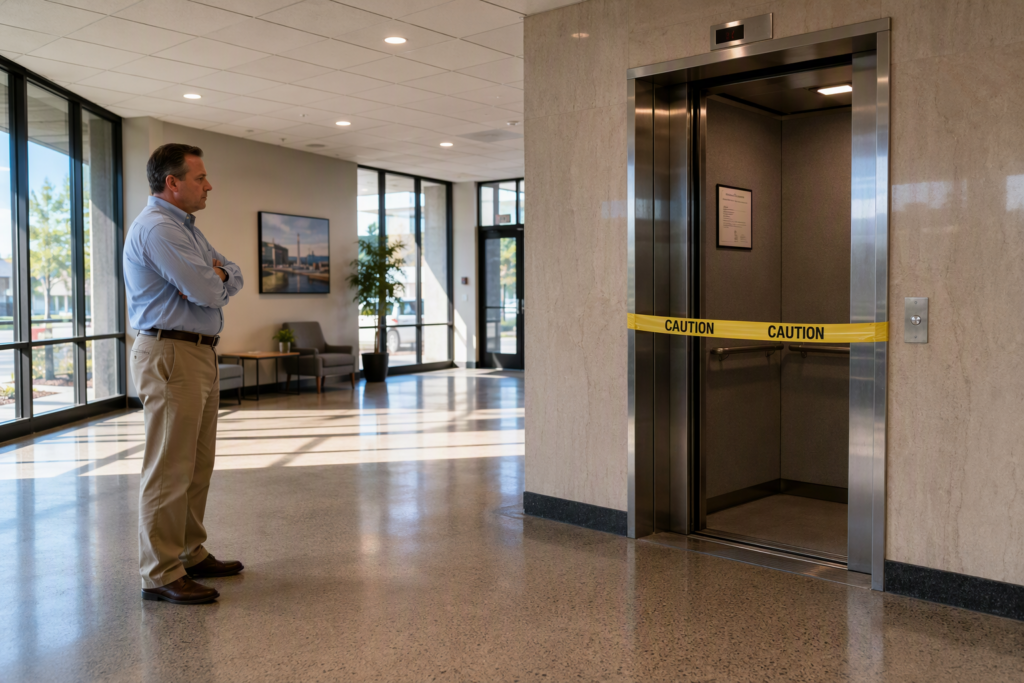
Quick Answer: Senior living facilities in California face stricter elevator maintenance requirements than standard commercial buildings because elevators are classified as essential life-safety equipment for a population with limited mobility — meaning operators must meet California’s Elevator Safety Orders, ADA accessibility standards, and ASME safety codes simultaneously, with more frequent inspections, tighter response-time expectations for outages, and documented preventive maintenance programs that go beyond baseline commercial requirements.
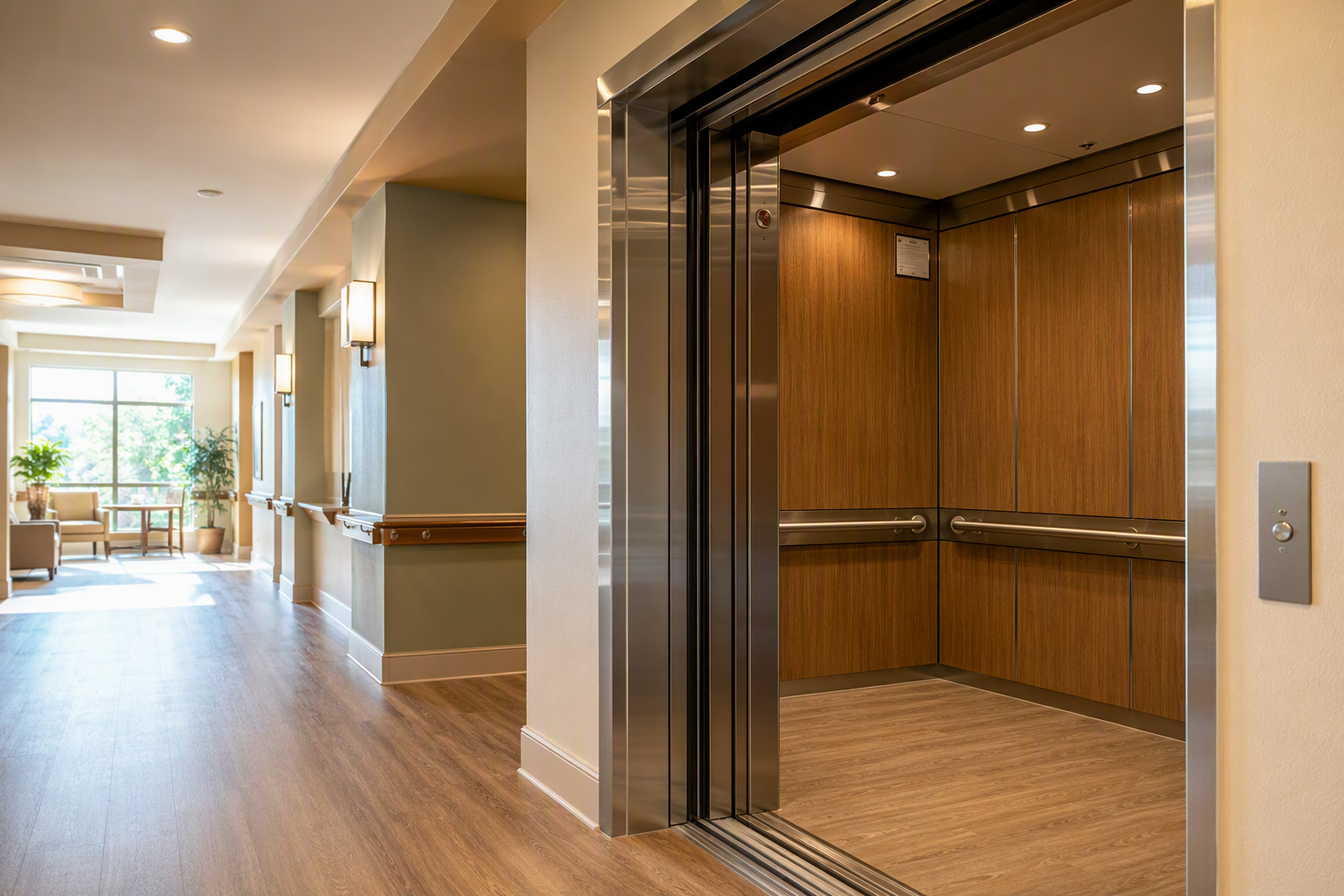
For administrators and facility managers overseeing assisted living communities, skilled nursing facilities, and independent senior living campuses in California, elevator reliability is not a convenience — it is a matter of resident safety and regulatory compliance. A single elevator outage can isolate residents from meals, medical care, and emergency evacuation routes. Understanding exactly how maintenance requirements differ from standard commercial buildings helps operators avoid citations, reduce liability, and protect the people in their care.
Why Are Senior Living Elevators Held to a Higher Standard?
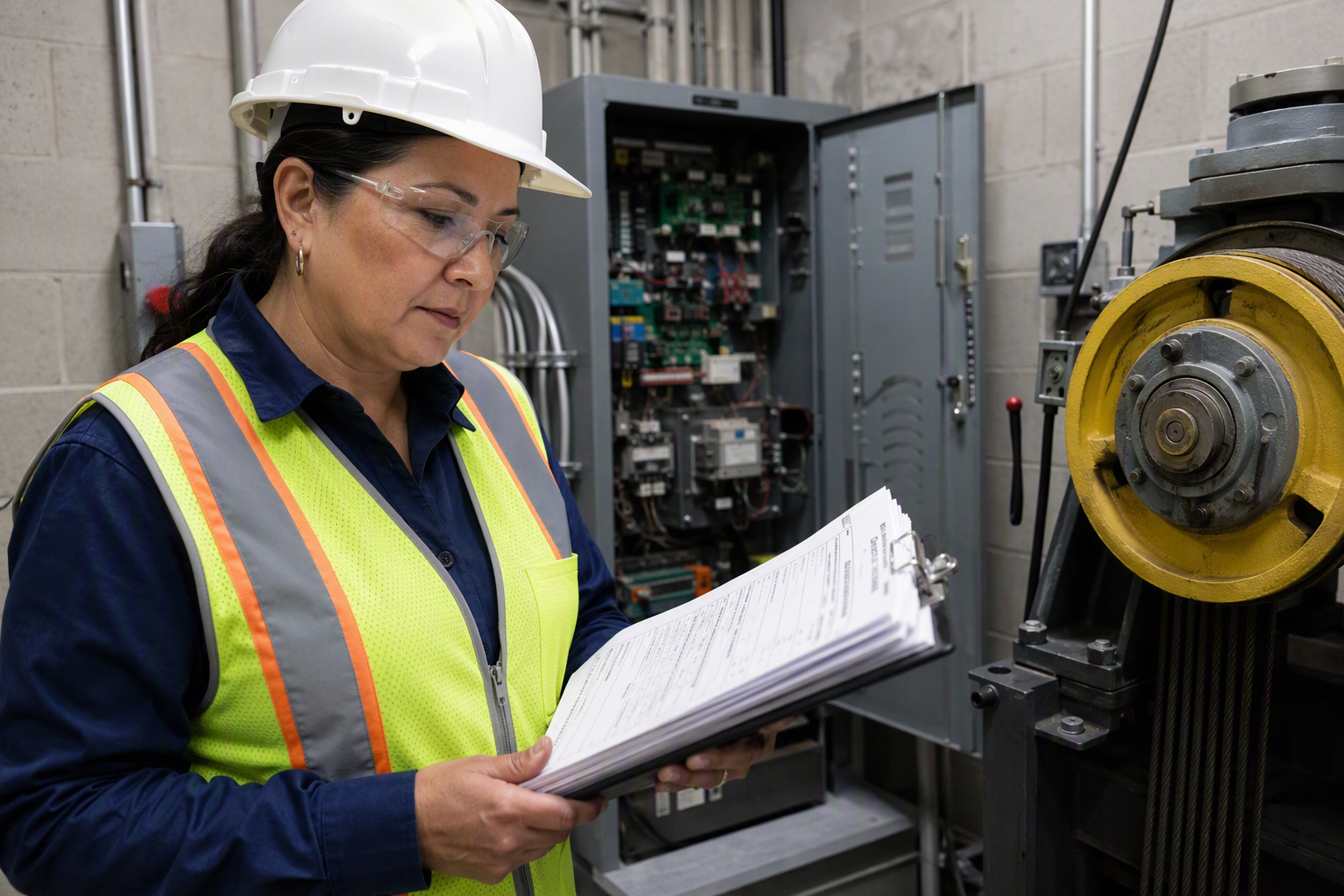
California’s elevator oversight falls under the Division of Occupational Safety and Health (Cal/OSHA), which administers the Elevator Safety Orders as part of Title 8 of the California Code of Regulations. These orders establish baseline inspection, permit, and maintenance requirements for all elevators in the state.
However, senior living facilities must layer additional obligations on top of these baseline rules:
- Life-safety classification: When an elevator serves as the primary or only means of vertical travel for mobility-impaired residents, its operational status directly affects emergency egress and daily medical access.
- ADA continuous compliance: Under the Americans with Disabilities Act, multi-story facilities serving individuals with disabilities must maintain accessible routes. An out-of-service elevator in a senior living building is not merely an inconvenience — it can constitute an ADA violation if no alternative accessible route exists.
- Licensing body oversight: Facilities licensed by the California Department of Social Services or the California Department of Public Health face additional inspections where elevator operability is evaluated as part of the facility’s overall compliance posture.
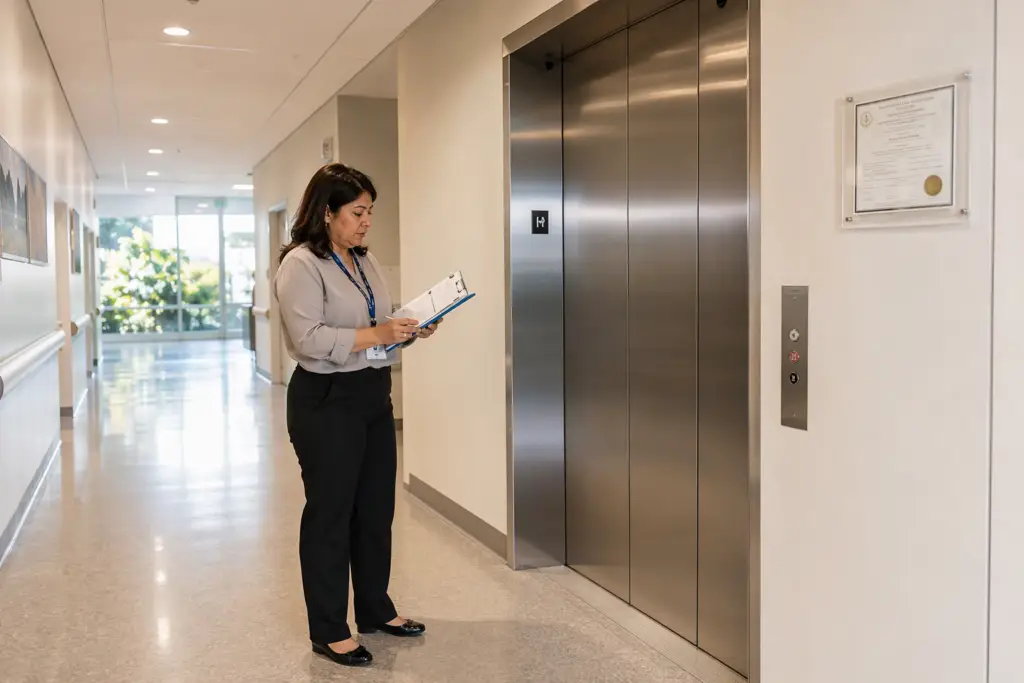
- Heightened documentation expectations: Regulators and insurers expect senior living operators to maintain detailed maintenance logs, corrective action records, and evidence of preventive maintenance agreements — documentation requirements that exceed what a typical office building owner must produce.
How Do California’s Elevator Inspection Intervals Apply to Senior Living Facilities?
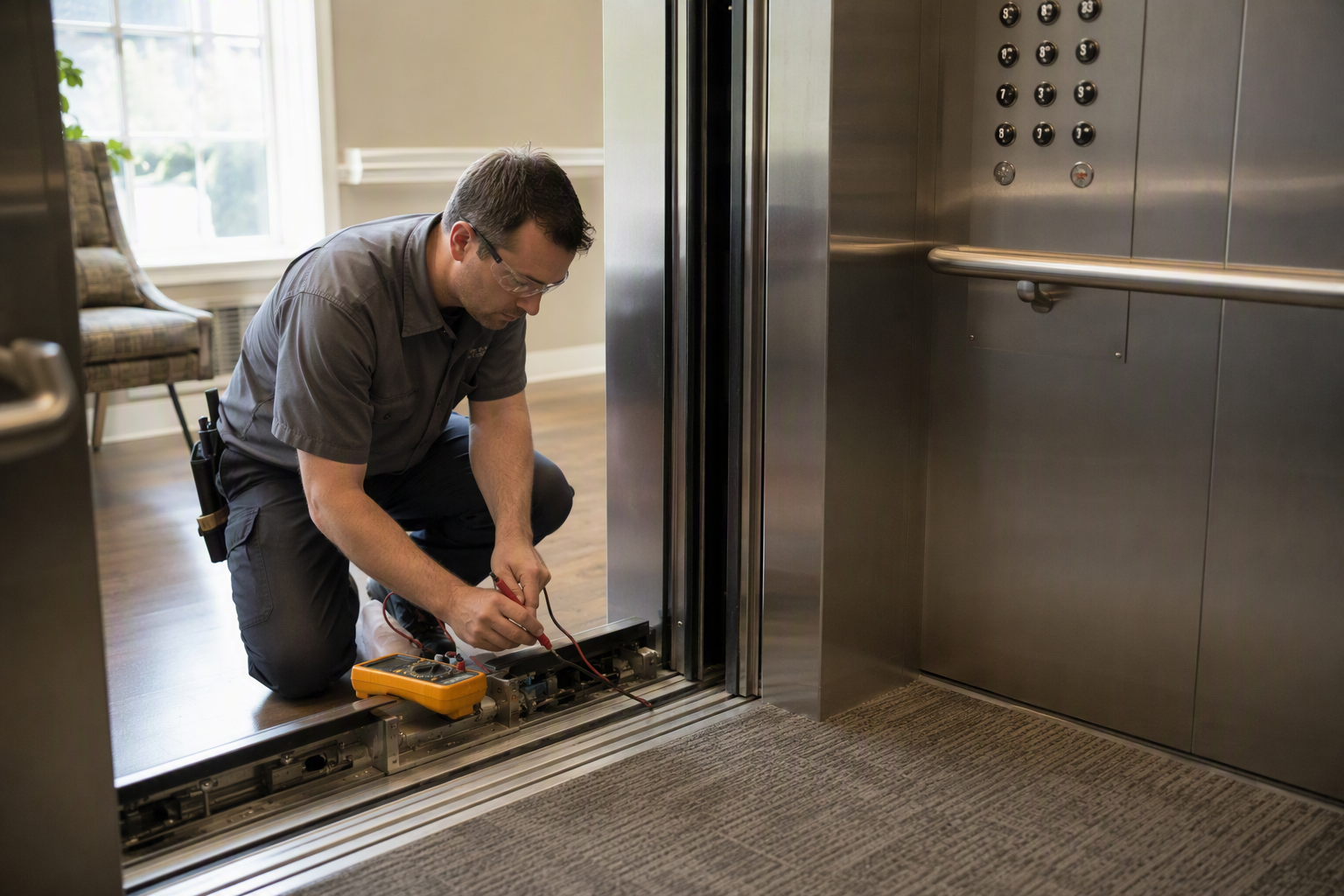
California requires all passenger elevators to hold a current permit issued after a passing periodic inspection. The state follows frameworks aligned with the ASME A17.1 Safety Code for Elevators and Escalators, which establishes nationally recognized design, installation, and inspection standards. Cal/OSHA’s Elevator Unit enforces these inspection cycles and issues the permits that must be posted in each elevator cab.
For senior living facilities, the practical implication is that allowing a permit to lapse — even briefly — carries far greater institutional risk than it does for a commercial tenant. A citation at an assisted living community can trigger review by the facility’s licensing authority, potentially affecting its operating license.
Operators should work with a qualified elevator service provider to maintain a compliance calendar that tracks:
- Periodic inspection due dates for each unit
- Permit renewal deadlines
- Scheduled preventive maintenance visits
- Category 1 and Category 5 testing cycles as defined under ASME A17.1
What Does a Preventive Maintenance Program Look Like for a Senior Living Elevator?
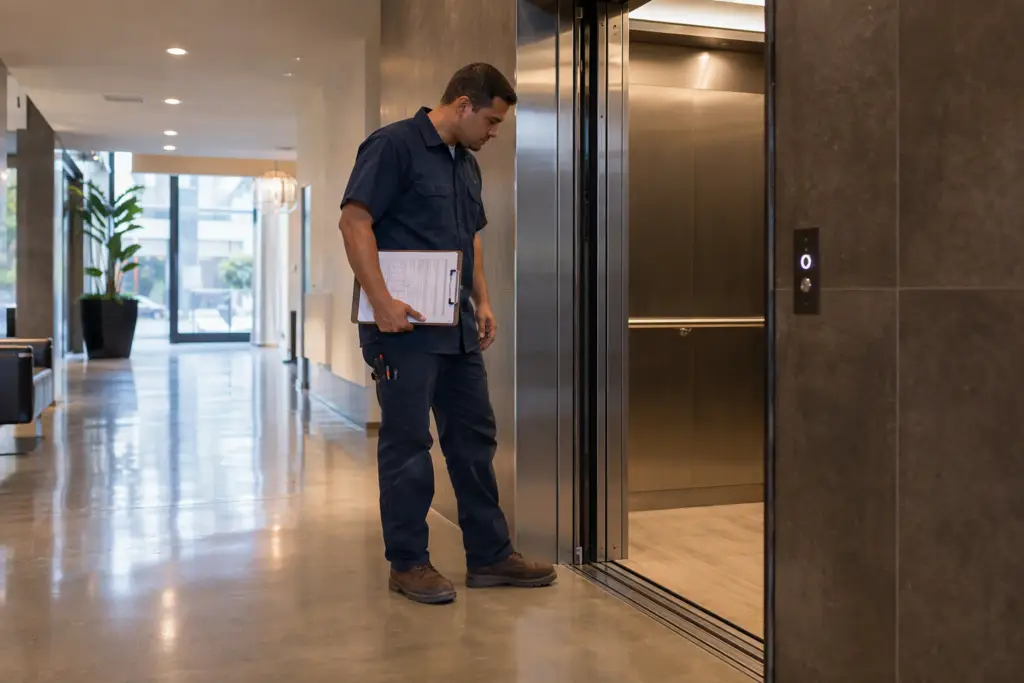
A preventive maintenance (PM) program for a senior living facility elevator typically goes beyond the minimum intervals used for light-use commercial equipment. Because senior living elevators operate continuously — early mornings for medication rounds, mealtimes, shift changes — wear accumulates faster than in a standard office building elevator.
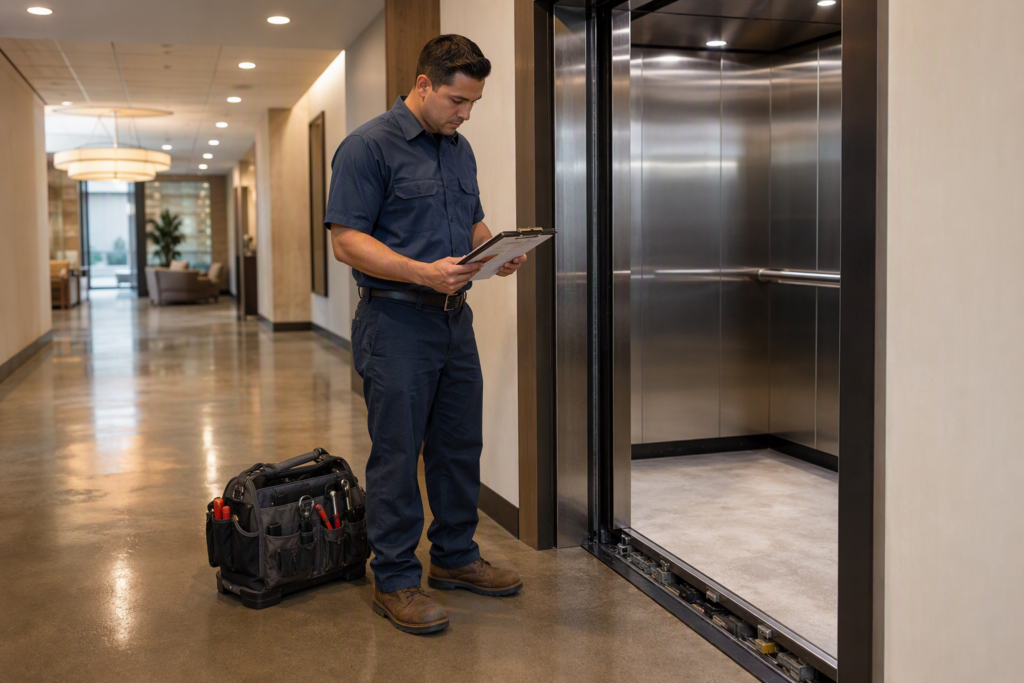
A comprehensive PM program for this setting generally includes:
- Monthly lubrication and mechanical inspection of guide rails, ropes, sheaves, and door operators to catch wear before it causes a breakdown.
- Monthly door pressure and close-force testing to confirm doors meet the force limitations under ASME A17.1, protecting residents who may move slowly through doorways.
- Quarterly electrical and safety circuit checks covering emergency lighting, communication systems, and leveling accuracy.
- Semi-annual or annual load testing appropriate to the equipment type and usage classification.
- Category 1 annual tests of safeties and governors as required by California’s Elevator Safety Orders.
- Category 5 five-year load tests for hydraulic and traction units, coordinated with Cal/OSHA’s Elevator Unit.
- Documentation and log entry for every service visit, retained on-site and available for regulatory review.
- Emergency communication system verification, confirming that the in-cab phone connects to a live monitoring point — critical for residents who may become stranded.
Comparison Table: Senior Living vs. Standard Commercial Elevator Maintenance Requirements in California
| Requirement Category | Standard Commercial Building | Senior Living Facility |
|---|---|---|
| Cal/OSHA Periodic Inspection | Required; permit must be current | Required + licensing body may conduct separate review |
| ADA Accessible Route Obligation | Required if serving public | Heightened — outage may constitute ADA violation with no alternative route for residents |
| PM Visit Frequency | Quarterly is common for moderate use | Monthly recommended due to continuous, high-cycle usage |
| Door Force Compliance | Required under ASME A17.1 | Required + heightened risk for slow-moving or wheelchair users |
| Emergency Communication | Required in-cab phone | Required + live monitoring strongly recommended given resident population |
| Maintenance Documentation | Logs required; audit frequency lower | Detailed logs required; subject to licensing body audit at any time |
| Out-of-Service Impact | Inconvenience; tenant complaint risk | Life-safety concern; regulatory citation risk; ADA exposure |
| ASME A17.1 Category 5 Testing | Required every 5 years | Required every 5 years + timing must minimize resident disruption |
| Insurance / Liability Exposure | Moderate | Elevated — incidents involving elderly residents carry greater liability |
What Are the Key ADA Requirements That Affect Senior Living Elevator Maintenance?
The Americans with Disabilities Act requires that places of public accommodation and multi-story facilities serving individuals with disabilities maintain accessible vertical access. For senior living operators, this creates a continuous maintenance obligation — not just a construction-phase checklist.
Specific ADA-related maintenance considerations include:
- Call button height and operation: Buttons must remain operable and positioned at accessible heights. Damaged or inoperable buttons require prompt repair.
- Door timing: Doors must remain open long enough for a person using a mobility aid to pass through safely. Improper door timing is both an ASME and ADA concern.
- Leveling accuracy: Sill-to-sill leveling must be maintained within tolerances that allow safe wheelchair entry and exit. Drift over time is a common maintenance failure point.
- Audible and visual signals: Hall lanterns, floor annunciators, and in-car position indicators must function correctly for residents with visual or hearing impairments.
- Braille and tactile markings: Control panel Braille must be present and legible; worn or damaged panels require replacement.
How Should Operators Respond When an Elevator Goes Out of Service?
When an elevator becomes non-operational in a senior living facility, the response must be faster and more structured than in a typical commercial property. The following protocol is recommended:
- Immediately assess whether any residents are trapped and contact emergency services if entrapment is confirmed.
- Post clear out-of-service notices at every affected landing to prevent residents from attempting to use non-operational equipment.
- Notify facility administration and nursing staff so that resident care plans can be adjusted — particularly for residents on upper floors who require medical access.
- Contact your elevator service provider and communicate that the facility is a senior living community requiring priority response given the life-safety implications.
- Activate any emergency care protocols established in the facility’s operational plan for elevator outages (e.g., relocating residents, coordinating with staff for manual assistance).
- Document the outage, including time of failure, cause if known, and all actions taken — this documentation is essential for regulatory and insurance purposes.
- Notify the appropriate licensing authority if the outage is expected to extend beyond a period that materially affects resident care or accessible egress.
- Once service is restored, obtain written confirmation from the service technician and retain it in the maintenance log.
What Equipment Considerations Are Unique to Senior Living Elevator Installations?
Beyond maintenance protocols, the physical configuration of elevators in senior living facilities introduces unique servicing considerations:
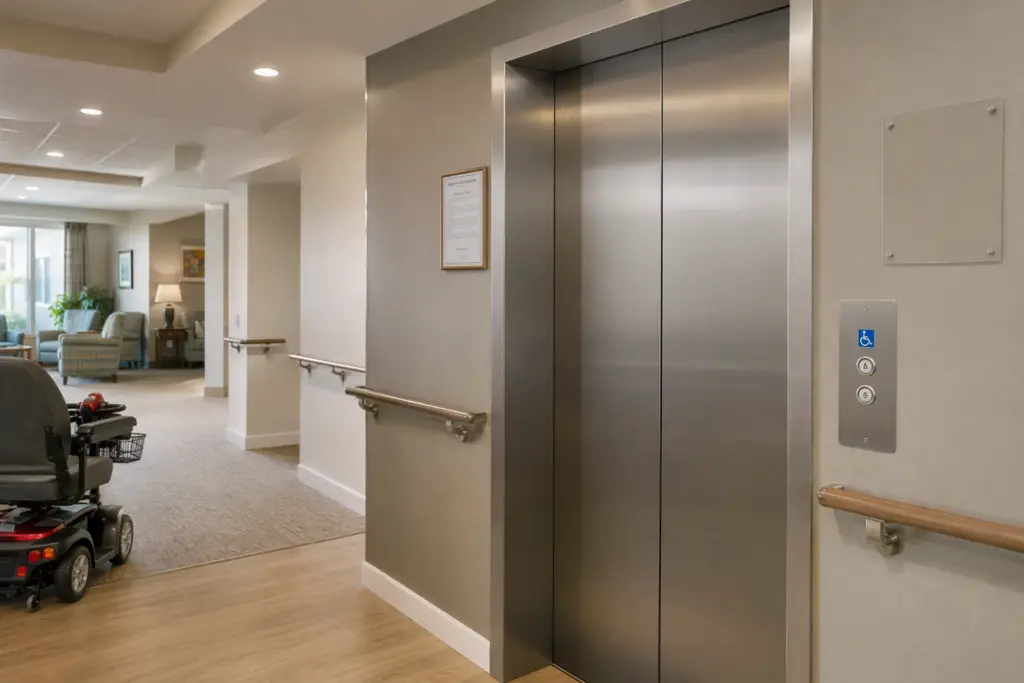
- Larger cab dimensions: Many senior living elevators are sized to accommodate hospital-style stretchers or large power wheelchairs. Larger cabs mean heavier loads and different wear patterns on machinery.
- Softer leveling requirements: Precise floor leveling is more critical when residents use walkers, canes, or wheelchairs — even small floor gaps create fall hazards.
- Handrail systems inside cabs: Interior handrails must be inspected for secure mounting and smooth surfaces during every maintenance visit.
- Emergency power connectivity: Many senior living facilities are required to connect at least one elevator to emergency generator power for evacuation purposes. This connection must be tested regularly.
- Slow-speed door settings: Door open/close speeds are often adjusted to slower settings than standard commercial units. These settings can drift and require periodic recalibration.
How Do Maintenance Costs Compare Between Senior Living and Commercial Elevators?
| Cost Factor | Standard Commercial | Senior Living Facility | Why the Difference |
|---|---|---|---|
| PM Visit Frequency | Quarterly typical | Monthly recommended | Higher duty cycle; life-safety criticality |
| Documentation Burden | Standard logs | More detailed logs; multi-agency review | Licensing body audits in addition to Cal/OSHA |
| Emergency Response Priority | Standard queue | Priority escalation needed | Resident welfare and ADA exposure |
| ADA Compliance Audits | Periodic | Ongoing; triggered by complaints | Resident disability status creates continuous exposure |
| Category 5 Testing Coordination | Standard scheduling | Must plan around resident schedules | Outages during testing affect resident mobility |
| Component Replacement Urgency | Can defer non-critical parts | Lower tolerance for deferral | Fall risk and ADA liability accelerate repair timelines |
Note: Specific pricing figures vary by region, elevator type, and service agreement terms. Operators should obtain itemized quotes from qualified service providers and compare scope of services carefully rather than price alone.
What Should Operators Look for When Selecting an Elevator Service Provider?
Not all elevator service companies understand the specific obligations of senior living operators. When evaluating providers, facility administrators should ask:
- Does the provider have documented experience servicing elevators in licensed care facilities in California?
- Can the provider demonstrate familiarity with Cal/OSHA Elevator Safety Orders and ASME A17.1 testing requirements?
- Does the provider offer full maintenance documentation suitable for licensing body audits?
- Can the provider coordinate Category 1 and Category 5 testing with minimal disruption to residents?
- Does the service agreement clearly define the scope of preventive maintenance visits?
- Is the provider independent, giving them the flexibility to source parts from multiple manufacturers rather than being locked into a proprietary supply chain?
Liftech Elevator is an independent elevator service provider serving senior living facilities across California. As an independent company, Liftech Elevator is not tied to any single manufacturer’s parts or protocols, which allows for more flexible, cost-effective service solutions tailored to the specific equipment and compliance needs of each facility. Liftech Elevator works with operators to establish maintenance programs that align with California’s regulatory framework, support ADA continuous compliance, and reduce the risk of unplanned outages.
What Happens If a Senior Living Facility Fails an Elevator Inspection?
A failed Cal/OSHA elevator inspection triggers a series of consequences that are more severe in a senior living context than in a standard commercial building:
- Permit revocation or suspension: The elevator may be placed out of service until deficiencies are corrected and a re-inspection passes.
- Citation and civil penalty: Cal/OSHA can issue citations with associated penalties for violations of California’s Elevator Safety Orders.
- Licensing body notification: A failed inspection at a licensed care facility may be reported to or discovered by the California Department of Social Services or California Department of Public Health, potentially triggering a separate compliance review of the facility’s license.
- ADA complaint exposure: Residents or their families may file ADA complaints if an out-of-service elevator leaves mobility-impaired residents without accessible vertical access.
- Insurance implications: A documented history of inspection failures can affect the facility’s general liability and professional liability insurance terms.
Proactive maintenance and a strong relationship with a qualified service provider are the most reliable ways to prevent inspection failures.
How Does the ASME A17.1 Code Apply Specifically to Senior Living Facilities?
The ASME A17.1 Safety Code for Elevators and Escalators establishes the technical standards for elevator design, installation, inspection, testing, and maintenance that California has adopted as the basis for its Elevator Safety Orders. For senior living operators, the most operationally relevant provisions include:
- Periodic inspection requirements: ASME A17.1 defines the inspection categories and intervals that California enforces. Understanding these helps operators anticipate when their units will be tested and what inspectors will examine.
- Door safety requirements: The code establishes maximum closing force and kinetic energy limits for elevator doors — particularly important where residents may be slow to clear the door path.
- Leveling tolerances: The code specifies acceptable leveling accuracy, which directly affects wheelchair and walker access.
- Emergency lighting and communication: ASME A17.1 requires functional emergency lighting and two-way communication in every cab — non-negotiable in a senior living setting where a stranded resident may not be able to summon help independently.
- Maintenance record-keeping: The code requires that maintenance records be kept and made available to inspectors — a requirement senior living operators must treat as a baseline, not a ceiling.
The 2022 edition of ASME A17.1 (referenced in 2026 compliance planning) is the current benchmark; operators should confirm with their service provider which edition California has formally adopted for their specific equipment vintage.
What Is the Timeline for Bringing a Non-Compliant Elevator into Compliance?
The time required to achieve compliance depends on the nature and severity of the deficiency:
| Deficiency Type | Typical Resolution Timeline | Notes |
|---|---|---|
| Minor adjustment (leveling, door timing) | Same visit or within days | Usually resolved at PM visit |
| Permit lapsed; no structural deficiency | Days to weeks | Depends on Cal/OSHA scheduling availability |
| Failed Category 1 test (safety/governor) | Weeks | Parts lead time and re-inspection scheduling are variables |
| Failed Category 5 hydraulic test | Weeks to months | May require major component replacement |
| ADA control panel replacement | Weeks | Custom panels often have lead times |
| Full modernization required | Months | Permitting, engineering, installation, and inspection all required |
Senior living operators should plan for these timelines in advance — waiting until a deficiency is cited before addressing it leaves residents exposed and the facility at regulatory risk.
How Can Senior Living Operators Build a Proactive Compliance Culture?
The facilities that maintain the strongest elevator compliance records treat it as an ongoing operational discipline rather than a reactive exercise. Practical steps include:
- Designating a staff member responsible for tracking elevator compliance deadlines and maintenance logs.
- Establishing a formal service agreement with a qualified independent provider like Liftech Elevator that includes preventive maintenance at appropriate intervals, documentation support, and proactive communication about upcoming testing requirements.
- Incorporating elevator status into regular facility safety committee meetings.
- Training staff to recognize and report early warning signs of elevator problems — unusual noises, slow door operation, leveling inconsistencies — before they become failures.
- Reviewing the elevator maintenance program annually against current Cal/OSHA requirements and any updates to ASME A17.1 adopted by California.
- Maintaining a written outage response plan so staff know exactly what to do when an elevator goes out of service.
Get Expert Elevator Compliance Support for Your Senior Living Facility
Senior living operators in California face a complex, layered set of elevator maintenance and compliance obligations that go well beyond what standard commercial building owners must manage. The consequences of non-compliance — regulatory citations, ADA exposure, licensing risk, and most importantly, harm to residents — make proactive maintenance a business and ethical imperative.
Liftech Elevator is an independent elevator service provider with specific experience supporting senior living facilities in California navigate Cal/OSHA requirements, ASME testing cycles, and ADA accessibility obligations. Liftech Elevator’s independence means no manufacturer lock-in and no upselling of proprietary parts — just qualified service focused on keeping your residents safe and your facility compliant.
Contact Liftech Elevator for a free elevator assessment: 562-609-3478
Need elevator service you can rely on? Liftech Elevator is ready to help.