How to Budget for Elevator Modernization in 2027: A Complete Planning Guide
Elevator modernization is one of the most significant capital investments a building owner or property manager will make. Done correctly, it extends equipment life, improves safety, enhances energy efficiency, and ensures compliance with evolving codes. Done without proper planning, it leads to cost overruns, extended outages, and compliance penalties. This guide covers every stage of the planning and budgeting process so that owners in Signal Hill, Long Beach, Los Angeles, and Orange County can approach 2027 modernization projects with confidence.
What Is Elevator Modernization and How Is It Different from Routine Maintenance?

Elevator modernization is the partial or complete replacement of major mechanical, electrical, and control components to bring an elevator up to current safety, performance, and code standards — it is fundamentally different from routine maintenance, which only addresses wear items and adjustments on existing equipment.
Routine maintenance preserves the current condition of installed equipment. Modernization, by contrast, replaces core systems — controllers, drives, motors, door operators, cab interiors, and safety devices — with contemporary technology. The result is effectively a new elevator in an existing hoist way. For aging buildings across Los Angeles and Orange County, modernization is frequently more cost-effective than full elevator replacement, which involves structural modifications to the shaft and pit.
Common modernization scopes include: full drive and controller upgrades, door system replacement, cab renovation, machine room upgrades, and accessibility improvements. Each scope carries its own cost range and compliance trigger, which is why a structured planning process is essential before any budget figure is committed.
When Should a Building Owner Start Planning a 2027 Elevator Modernization?
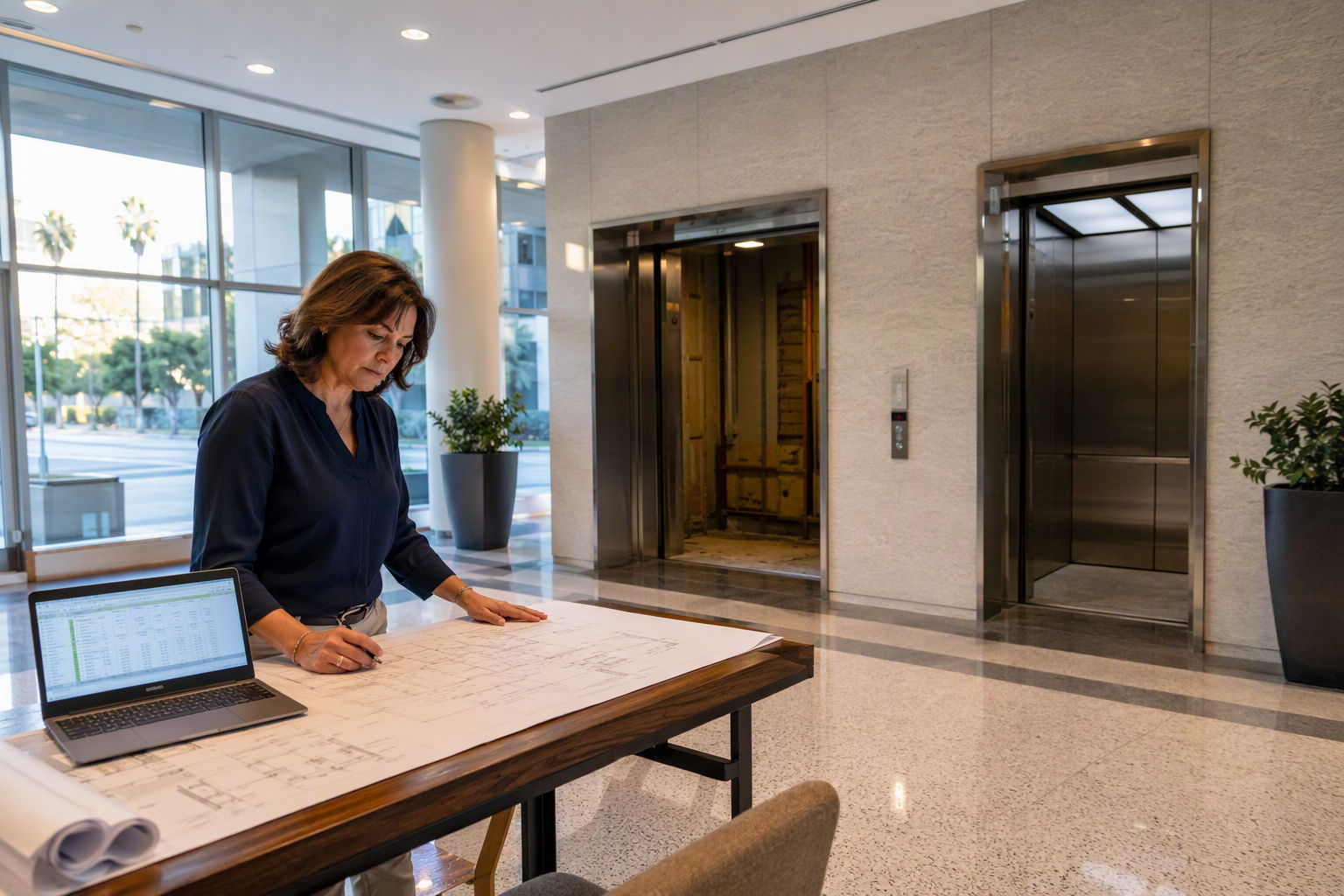
Building owners targeting a 2027 modernization project should begin the planning process no later than mid-2025, and ideally by early 2025, to allow adequate time for condition assessments, design, permitting, procurement, and contractor selection.
Elevator equipment lead times for controllers, drives, and specialty components have extended in recent years due to supply chain pressures. Permit processing timelines with California’s Division of Occupational Safety and Health (Cal/OSHA), which oversees elevator safety in California under the Elevator Safety Act, can add additional months before work may legally begin. Factoring in the time needed to solicit bids, review proposals, negotiate contracts, and secure financing, an 18–24 month runway is considered best practice for mid-to-large modernization projects.
Smaller scope projects — such as a controller-only upgrade on a two-stop hydraulic elevator — may require a shorter lead time, but even these benefit from at least 12 months of advance planning to avoid rushed procurement and scheduling conflicts with the building’s operations calendar.
What Does the Elevator Modernization Planning Process Look Like Step by Step?
The modernization planning process follows a structured sequence that moves from assessment through occupancy, ensuring that every decision is informed, compliant, and financially controlled.
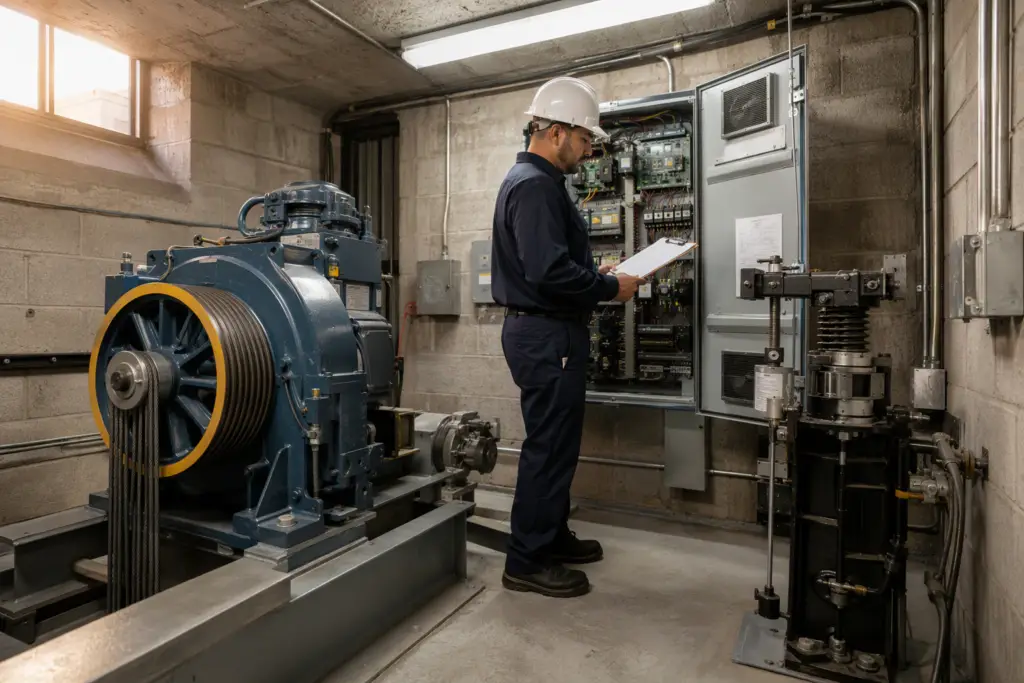
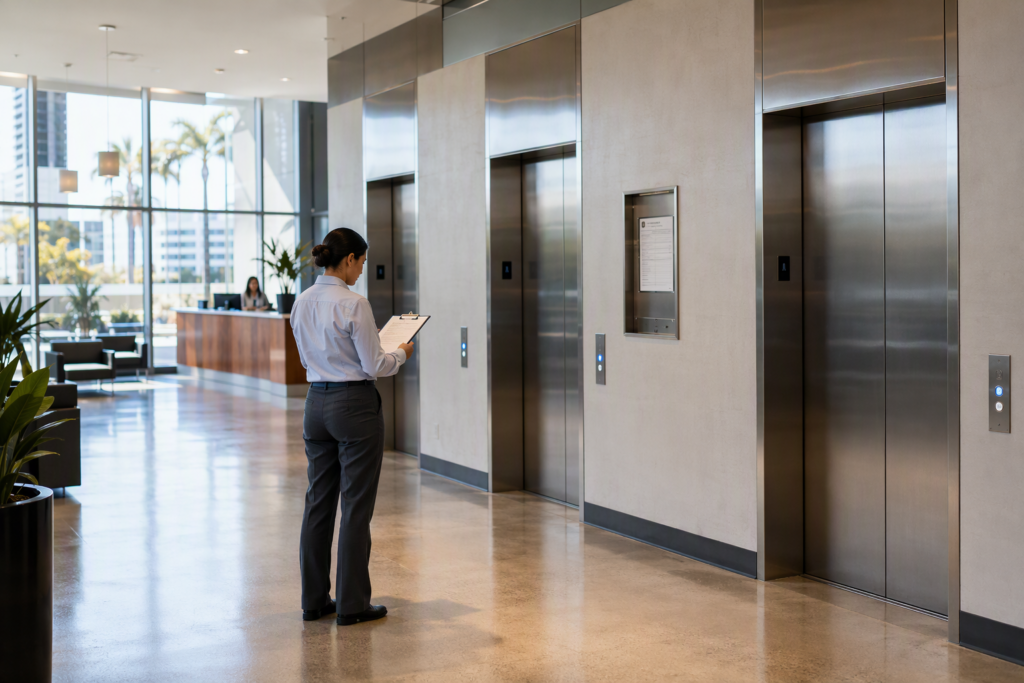
- Condition Assessment: Engage a qualified elevator service company to conduct a thorough inspection of all mechanical, electrical, and structural components. Document the age, condition, and remaining service life of each system.
- Code Gap Analysis: Identify which current requirements under ASME A17.1, Safety Code for Elevators and Escalators, California’s Title 8 regulations, and ADA Standards for Accessible Design are not met by the existing installation.
- Scope Definition: Based on assessment and gap analysis findings, define whether the project will be a full modernization, partial system upgrade, or phased approach across multiple budget cycles.
- Preliminary Budgeting: Develop a cost model covering equipment, labor, permit fees, temporary hoisting or alternative transportation provisions, testing fees, and a contingency reserve.
- Bid Solicitation: Issue a detailed scope-of-work document to qualified elevator contractors and request itemized proposals. Obtain a minimum of three bids for meaningful comparison.
- Bid Evaluation and Contractor Selection: Evaluate bids on scope compliance, equipment specifications, proposed schedule, warranty terms, and references — not price alone.
- Contract Execution: Execute a detailed contract covering scope, milestones, payment schedule, change-order procedures, and completion guarantees.
- Permit Application: The selected contractor submits permit applications to the California Elevator Unit and applicable local jurisdiction. Do not proceed with equipment procurement until permit approval is confirmed.
- Equipment Procurement: Order long-lead items immediately upon permit approval to protect the project schedule.
- Construction and Installation: Execute the modernization work according to the approved plans, maintaining communication with building management regarding access and outage schedules.
- Inspection and Acceptance Testing: A state-certified inspector performs acceptance testing per ASME A17.1 requirements. All deficiencies must be corrected before the elevator returns to service.
- Certificate of Occupancy / Return to Service: Obtain the updated operating permit and place the modernized elevator back in service.
What Are the Major Cost Categories in an Elevator Modernization Budget?
A complete elevator modernization budget must account for six primary cost categories: equipment, labor, permitting and inspection fees, temporary accommodations, contingency, and post-modernization maintenance contracts.
Equipment costs typically represent the largest single line item and vary considerably based on the scope of replacement. A controller and drive upgrade will carry a different equipment cost than a full cab, door, and machine room overhaul. Labor costs in California reflect prevailing wage requirements on public projects and market labor rates on private projects, both of which are elevated relative to national averages.
Permit and inspection fees are set by the California Elevator Unit and vary by jurisdiction and project scope. Temporary accommodations — such as portable lifts, staff to assist passengers, or service modifications for ADA-dependent occupants — are frequently overlooked but can represent a meaningful cost during extended outages. A contingency reserve of at least 10–15% of the total project budget is considered prudent for modernization projects, given the potential for unforeseen conditions discovered during demolition of older equipment.
What Equipment Is Typically Replaced During Elevator Modernization?
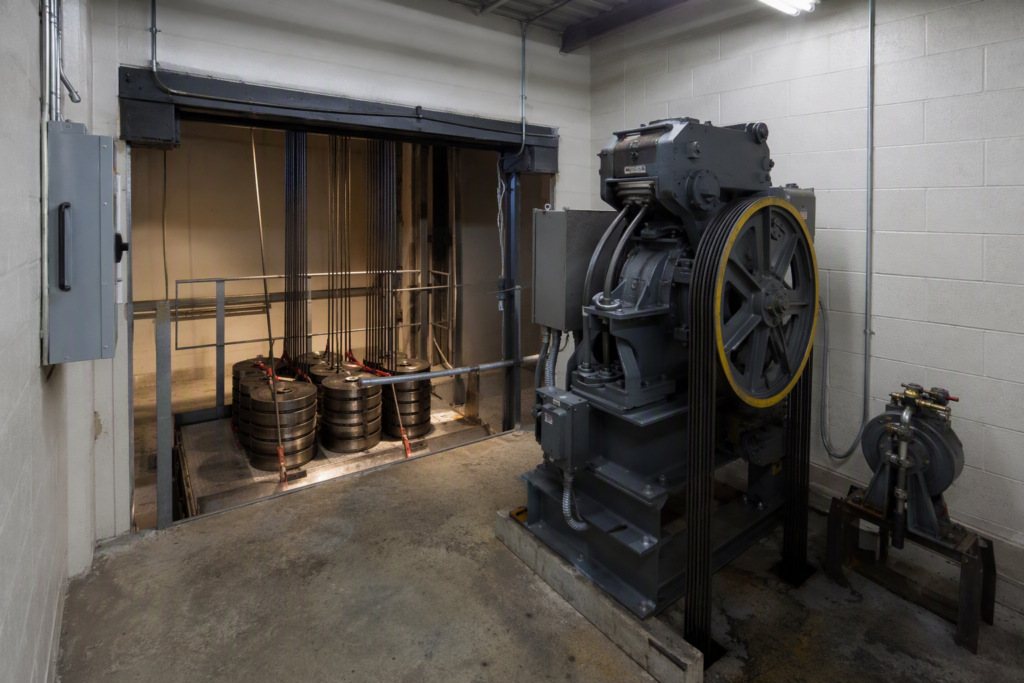
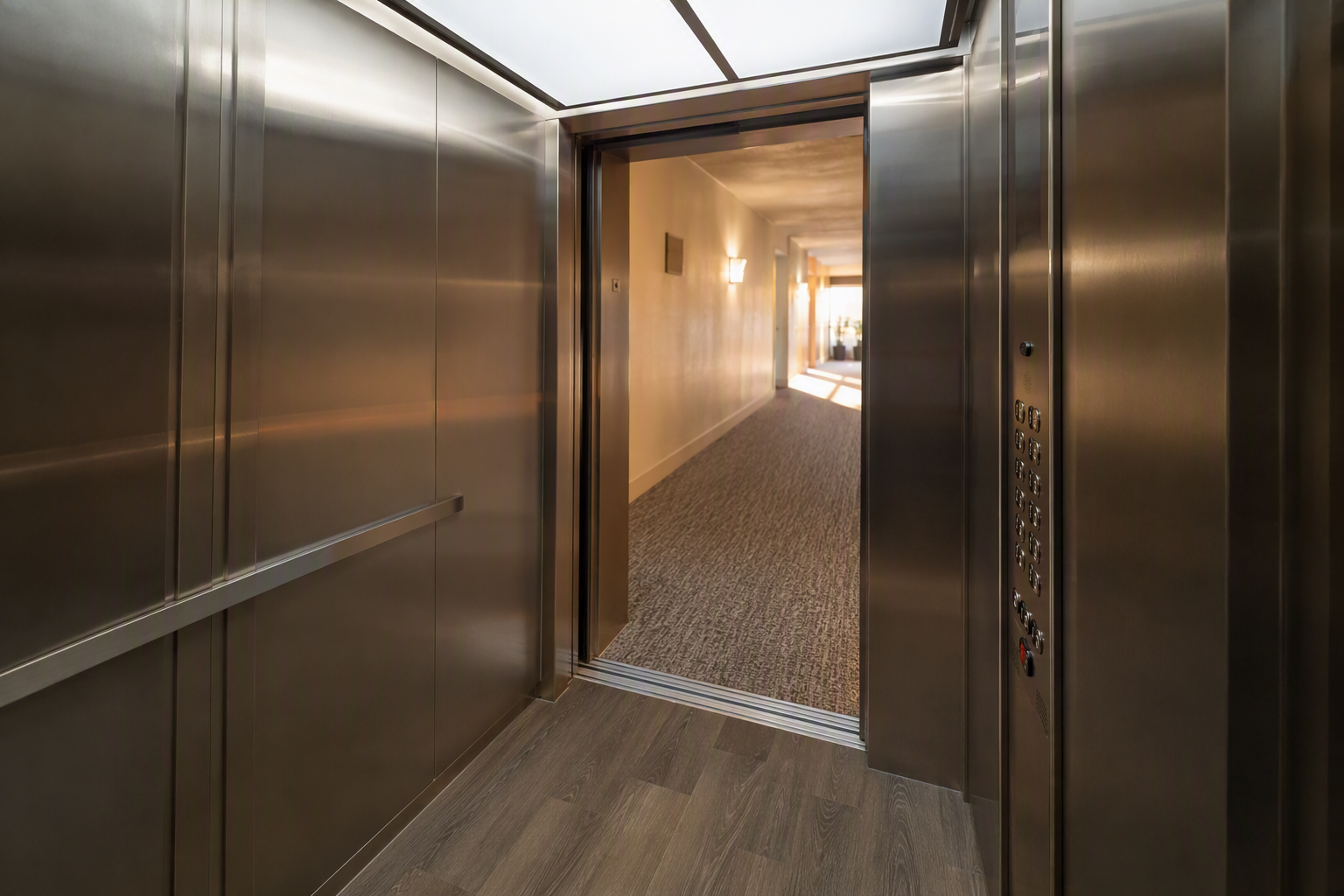
A full elevator modernization commonly replaces the controller and relay logic, the drive system, the motor, door operators and door equipment, the position reference system, the car operating panel, hall fixtures, the car interior, and all associated safety devices required by current code.
The controller is the brain of the elevator system and is almost always addressed in modernization because legacy relay-logic controllers are no longer supportable and may not be capable of meeting current code mandates such as Phase I and Phase II firefighters’ service, seismic shutoff, and door reopening device requirements. Modern solid-state controllers and variable-frequency drives also deliver measurable improvements in energy consumption compared to older resistance-based systems.
Door systems warrant particular attention because door-related incidents are among the most commonly cited elevator safety issues. Upgrading to modern door operators with electronic sensitizing edges and advanced door reopening devices directly addresses both safety and ADA compliance requirements related to door hold-open times and force limitations.
What Compliance Codes Apply to Elevator Modernization in California?
California elevator modernization projects must comply with the edition of ASME A17.1, Safety Code for Elevators and Escalators adopted by the state, applicable California Title 8 regulations enforced by Cal/OSHA, ADA Standards for Accessible Design where the scope triggers accessibility requirements, and local amendments adopted by the jurisdiction in which the building is located.
California enforces elevator safety through the Elevator, Ride, and Tramway Unit (ERTA) under Cal/OSHA. Any modernization work that alters regulated components requires a permit, engineered drawings, and acceptance testing by a state-certified inspector before the elevator may return to public service. Owners in Los Angeles, Long Beach, Signal Hill, and Orange County should confirm whether their local jurisdiction has adopted additional requirements beyond the state baseline.
Under ADA Title III (commercial facilities) and Title II (state and local government), alterations to an elevator must comply with ADA Standards for Accessible Design to the maximum extent feasible. Modernization of an elevator cab or controls typically constitutes an alteration and triggers ADA compliance obligations for the altered elements. Seismic safety requirements applicable to California buildings may also impose additional equipment specifications, particularly for machine room equipment and counterweight systems.
How Should Building Owners Compare Elevator Modernization Bids?
Building owners should compare modernization bids using a structured evaluation matrix that scores each proposal on scope completeness, equipment brand and specifications, proposed schedule, warranty coverage, contractor qualifications, and total lifecycle cost — not on base price alone.
| Evaluation Factor | What to Look For | Common Red Flags |
|---|---|---|
| Scope Completeness | All items from the assessment scope are addressed line by line | Vague scope language; items listed as “allowances” |
| Equipment Specifications | Named manufacturer, model class, and performance ratings | “Or equal” substitutions with no named brand |
| Code Compliance | Explicit reference to applicable ASME A17.1 edition and ADA standards | No compliance language; silence on code obligations |
| Schedule | Realistic milestones for permit, procurement, installation, and testing | Overly compressed timeline that ignores permit lead times |
| Warranty | Clear parts and labor warranty terms, duration, and exclusions | Warranty limited to parts only; short warranty period |
| Post-Modernization Maintenance | Maintenance agreement offered with defined scope | No maintenance offering or proprietary lock-in language |
| Contractor Qualifications | Licensed elevator contractor in California; verifiable local references | Out-of-state contractor with no local project history |
| Total Lifecycle Cost | First cost plus projected maintenance cost over 10 years | Lowest first cost with high-cost proprietary maintenance |
Liftech Elevator provides building owners across Long Beach, Signal Hill, Los Angeles, and Orange County with detailed, itemized modernization proposals that clearly reference applicable codes and equipment specifications, enabling straightforward apples-to-apples comparison.
How Long Does an Elevator Modernization Project Typically Take?
The total duration from condition assessment through return to service for a typical elevator modernization project — including permitting and procurement — commonly ranges from several months to over a year depending on project scope, equipment lead times, and permit processing timelines.
Permitting alone through California’s Elevator Unit can take weeks to months depending on application completeness and agency workload. Equipment lead times for controllers and drives from major manufacturers can extend the procurement phase further. The physical installation of a full modernization on a standard traction elevator typically requires a building outage measured in weeks, while more complex projects or full-building multi-elevator programs take longer. Building owners should work with their contractor to develop a realistic schedule early in the planning process and communicate that schedule clearly to building occupants and tenants.
What Are the ADA Compliance Obligations Triggered by Elevator Modernization?
When elevator modernization constitutes an alteration under ADA Standards for Accessible Design, the altered elements must be made accessible to the maximum extent feasible, which may require upgrades to cab dimensions, door clear width, control button height and labeling, floor designation signage, and audible and visual communication systems.
Specifically, ADA Standards address elevator call button height, button size, Braille and raised character floor designations, car position indicators, door reopening devices, and floor area inside the cab. Building owners planning a modernization that touches any of these elements should review their obligations with a qualified contractor prior to finalizing scope to avoid costly add-backs during construction.
For properties in Los Angeles, Long Beach, Signal Hill, and Orange County that serve the public or house commercial tenants, ADA compliance is not optional — and a modernization project that brings an elevator nearly into compliance while leaving an accessible path of travel interrupted can expose building owners to complaints and litigation. A thorough pre-modernization accessibility audit is a worthwhile investment.
How Should a Building Owner Approach Financing an Elevator Modernization?
Building owners can finance elevator modernization through capital reserves, property improvement loans, equipment financing programs, or — for qualifying commercial properties — through energy efficiency financing mechanisms that recognize the energy savings associated with modern drive technology.
Condominium and homeowner associations in California are governed by Civil Code requirements related to reserve fund planning. A properly maintained reserve study should include elevator modernization as a capital line item with a realistic cost estimate and funding timeline. Underfunded reserves are one of the most common reasons modernization projects are delayed beyond their optimal window, ultimately increasing costs and safety exposure.
Commercial building owners should consult with their lender or financial advisor early in the planning process to identify the financing structure best suited to the project size and the building’s cash flow. Some elevator equipment manufacturers and contractors offer financing programs directly, though building owners should evaluate the total cost of any such arrangement carefully.
What Is a Condition Assessment and Why Is It the First Step?
A condition assessment is a systematic inspection of all elevator components conducted by a qualified elevator professional to document current conditions, identify deferred maintenance, flag safety deficiencies, and produce data-driven recommendations for modernization scope and prioritization — it is the essential first step because no budget can be reliably developed without knowing what actually needs to be replaced.
A credible condition assessment goes beyond a routine maintenance visit. It documents the age and model of the controller, drive, motor, roping, door equipment, safety devices, and cab components. It notes which items are at or near the end of their service life, which represent immediate safety or compliance concerns, and which can be deferred. The output is a prioritized list that allows building owners to make informed decisions about scope and phasing rather than relying on a contractor’s recommendation that may not be grounded in objective observation.
Liftech Elevator conducts condition assessments for building owners and property managers throughout Signal Hill, Long Beach, Los Angeles, and Orange County, providing a clear basis for modernization planning and budgeting.
What Is a Phased Modernization Approach and Is It Right for Every Building?
A phased modernization spreads the replacement of elevator components across multiple budget cycles — for example, completing the controller and drive in year one and the cab, doors, and fixtures in year two — which can reduce the financial impact in any single period but may extend the overall project timeline and complicate permitting.
Phasing works best when the components being deferred are genuinely in serviceable condition and when the building’s operations cannot tolerate an extended single outage. It works less well when deferred components are interdependent with the first-phase work — for example, replacing a controller without replacing the door operator it must interface with can introduce integration complexity and reliability issues.
Building owners considering phasing should discuss the interdependencies with their elevator contractor before committing to a phased approach. In some cases, the total cost of a phased project may exceed that of a single-scope modernization due to duplicate mobilization, permit, and inspection costs.
How Does Elevator Age Affect the Urgency and Scope of Modernization?
As elevator equipment ages beyond the typical service life of its major components, the frequency and cost of unplanned breakdowns increases, parts availability decreases, and the probability of code non-compliance grows — all of which increase the urgency and likely scope of a modernization project.
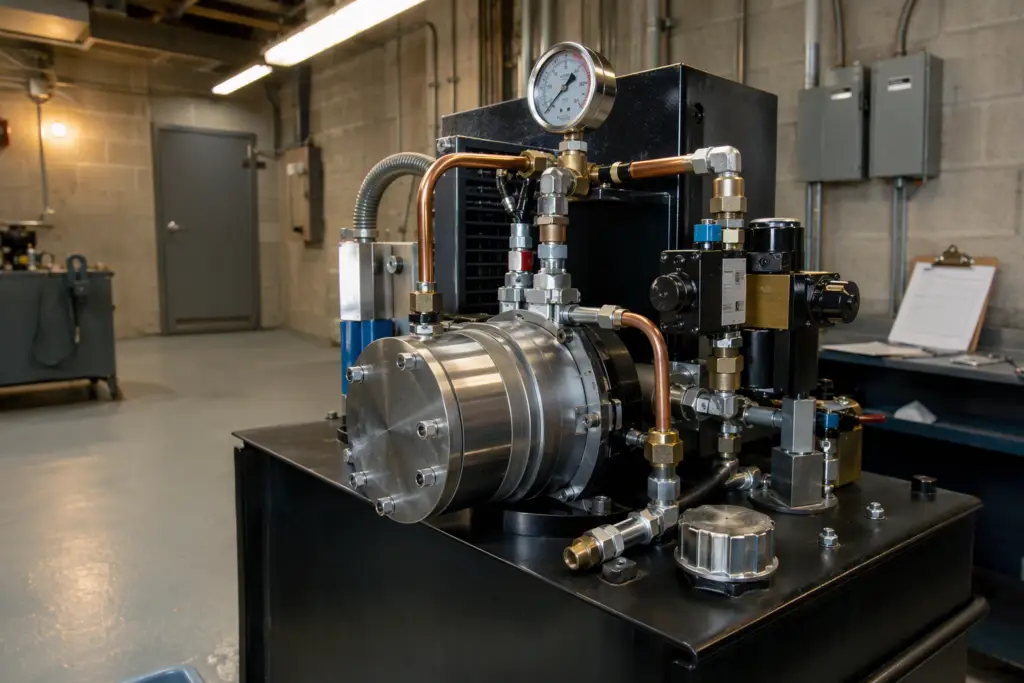
Relay-logic controllers from prior decades are a common example: replacement parts may be unavailable, and the control logic may be incapable of meeting current firefighters’ service, seismic, and door safety requirements without a complete controller replacement. Similarly, older hydraulic power units may use fluid types that are no longer environmentally permissible, requiring replacement under current regulations regardless of functional condition.
Building owners should not wait for a catastrophic failure to trigger modernization planning. The condition assessment is the tool for establishing an objective timeline before the decision is forced by equipment failure.
What Role Does Cal/OSHA Play in California Elevator Modernization?
Cal/OSHA’s Elevator, Ride, and Tramway Unit (ERTA) has jurisdiction over elevator safety in California, requiring that any modernization work involving regulated components be permitted, inspected, and certified before the elevator returns to public service — failure to comply can result in mandatory shutdown orders and civil penalties.
The ERTA reviews permit applications, approves engineered drawings, assigns state-certified inspectors for acceptance testing, and issues the operating permit that authorizes the elevator for public use. Building owners should ensure their selected contractor has a current California elevator contractor license and a demonstrated track record of successful ERTA permit and inspection processes. Engaging an unlicensed or inexperienced contractor can result in failed inspections, costly rework, and extended outages.
Workplace safety during modernization is also governed by OSHA standards for construction and general industry, including fall protection, lockout/tagout, and confined space requirements applicable to hoist way and pit work.
What Are the Most Common Mistakes Building Owners Make When Budgeting for Elevator Modernization?
The most common budgeting mistakes include underestimating scope based on verbal contractor estimates rather than a formal assessment, failing to include permit and inspection fees, ignoring the cost of tenant accommodations during outages, and not budgeting a contingency reserve for unforeseen conditions.
Another frequent error is selecting the lowest bid without verifying that the scope matches the assessment findings. A low bid that omits key components will appear attractive until the change orders arrive during construction. Building owners should require all bidders to respond to the same detailed scope-of-work document derived from the condition assessment, so that bids are truly comparable.
Finally, many building owners fail to account for the post-modernization maintenance contract in their financial planning. Modern elevator equipment requires competent, trained maintenance to sustain the performance and longevity gains achieved through modernization. The maintenance contract is not optional — it is the mechanism through which the modernization investment is protected over its service life.
How Does Elevator Modernization Affect a Building’s Energy Consumption?
Modernizing an elevator’s drive system from older resistance-based technology to a modern variable-frequency drive (VFD) can meaningfully reduce the energy consumed by the elevator — this is a qualitative benefit that, while difficult to quantify without site-specific energy auditing, is widely recognized in the elevator industry and may be relevant to building sustainability certifications.
For buildings pursuing LEED certification or operating under California’s energy benchmarking requirements, elevator modernization that incorporates regenerative drives, LED cab lighting, standby modes, and destination dispatch systems contributes to the building’s overall energy efficiency profile. Building owners should discuss energy-efficient equipment options with their contractor during scope definition to ensure that energy benefits are captured without compromising reliability or compliance.
What Questions Should Building Owners Ask Potential Elevator Modernization Contractors?
Building owners should ask prospective contractors about their California elevator contractor license status, their experience with the specific equipment type and building use, the manufacturer and model of the proposed control system, their process for permit acquisition and inspection scheduling, their warranty terms, and their post-modernization maintenance offering.
Additional questions worth asking include: Who will be the project superintendent, and what is their experience level? How will the contractor manage building access and outage communication? What is the plan if unforeseen conditions are discovered during demolition? How are change orders priced and approved? What documentation will be provided upon project completion?
Liftech Elevator welcomes these questions from prospective clients across Los Angeles, Long Beach, Signal Hill, and Orange County and provides detailed written responses as part of its proposal process, so that building owners can make fully informed contractor selections.
How Should Multi-Elevator Buildings Sequence a Modernization Program?
In buildings with multiple elevators, modernization should be sequenced to maintain continuous vertical transportation service throughout the project — typically by modernizing one elevator at a time and ensuring that remaining elevators are in reliable condition before each outage begins.
For buildings with two elevators, the sequencing is straightforward: modernize one while the other remains in service, then switch. For larger banks, a rolling schedule coordinated with building management allows modernization to proceed without leaving any floor group without service for extended periods. Buildings with high-traffic periods — such as office buildings with morning and evening peaks — should schedule outages to avoid peak demand windows where possible.
Multi-elevator modernization programs also benefit from economies of scale in equipment procurement and contractor mobilization. Owners should discuss group pricing and scheduling efficiencies with their contractor during the bid phase.
What Documentation Should Be Requested Upon Completion of Elevator Modernization?
At project completion, building owners should receive the updated operating permit from the California Elevator Unit, as-built drawings reflecting the installed configuration, equipment manuals for all replaced components, warranty documentation, and a baseline inspection report establishing the condition of the modernized installation.
This documentation package is important for ongoing compliance, future maintenance, and any subsequent sale or refinancing of the property. Lenders and buyers performing due diligence on commercial real estate routinely request elevator permit and inspection history. A complete documentation package demonstrates that the modernization was performed legally, inspected, and accepted by the state — protecting the building owner’s investment and limiting liability exposure.
Why Should Building Owners in Los Angeles, Long Beach, Signal Hill, and Orange County Choose a Local Elevator Contractor for Modernization?
A locally based elevator contractor brings knowledge of California-specific code requirements, established relationships with Cal/OSHA’s Elevator Unit, familiarity with local permitting processes, and the ability to respond to the building throughout the project — advantages that out-of-area contractors typically cannot offer.
California elevator regulations are among the most comprehensive in the United States, and the permitting and inspection process through the ERTA requires contractor familiarity with state procedures. Local contractors also carry accountability in the market they serve: their reputation depends on the quality of work performed in the communities where they operate. For building owners in Los Angeles, Long Beach, Signal Hill, and Orange County, selecting a contractor with a demonstrated local presence and verifiable local references is a material risk-reduction decision.
Liftech Elevator is a certified elevator service company headquartered to serve Southern California, with direct experience navigating the regulatory and operational requirements that apply to modernization projects across its service area.
Need elevator service you can rely on? Liftech Elevator is ready to help.