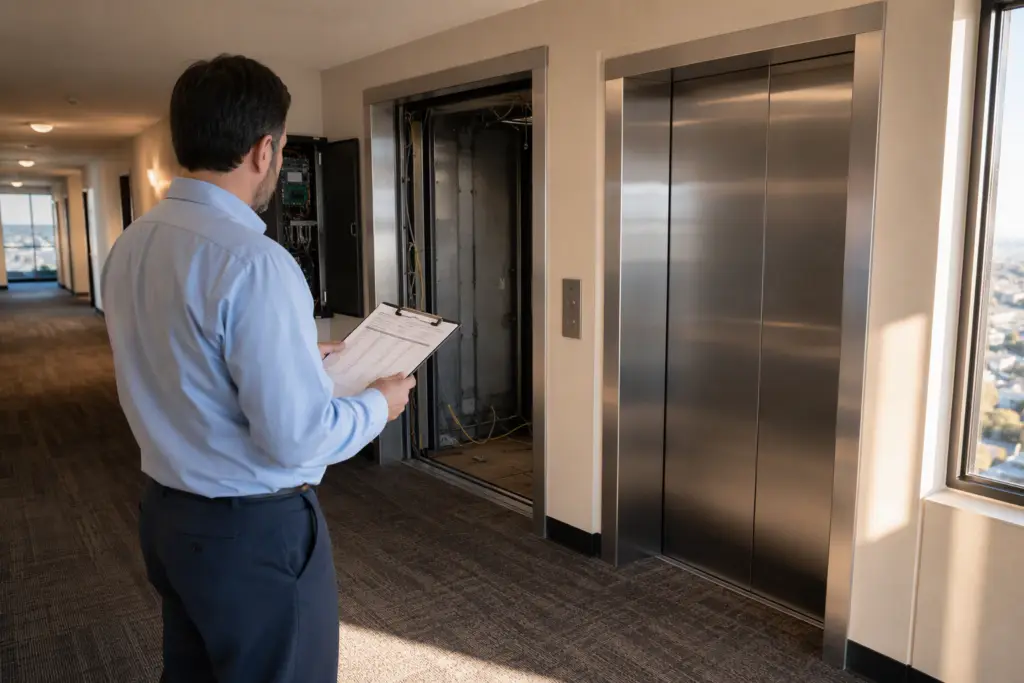
What Are the Signs My Elevator Control System Is Failing — and How Urgent Is It to Replace It?
Elevator control systems are the electronic brain governing every movement, door cycle, and safety interlock in your elevator. When that brain begins to deteriorate, the consequences range from minor inconveniences to outright code violations and dangerous passenger events. Building owners and facility managers in Los Angeles, Long Beach, Signal Hill, and Orange County need to understand how to recognize failure symptoms early and act with the appropriate level of urgency. This comprehensive FAQ guide answers the most critical questions surrounding elevator control system failure, replacement timelines, code requirements, and what to expect from a professional modernization project.
What exactly is an elevator control system and what does it do?
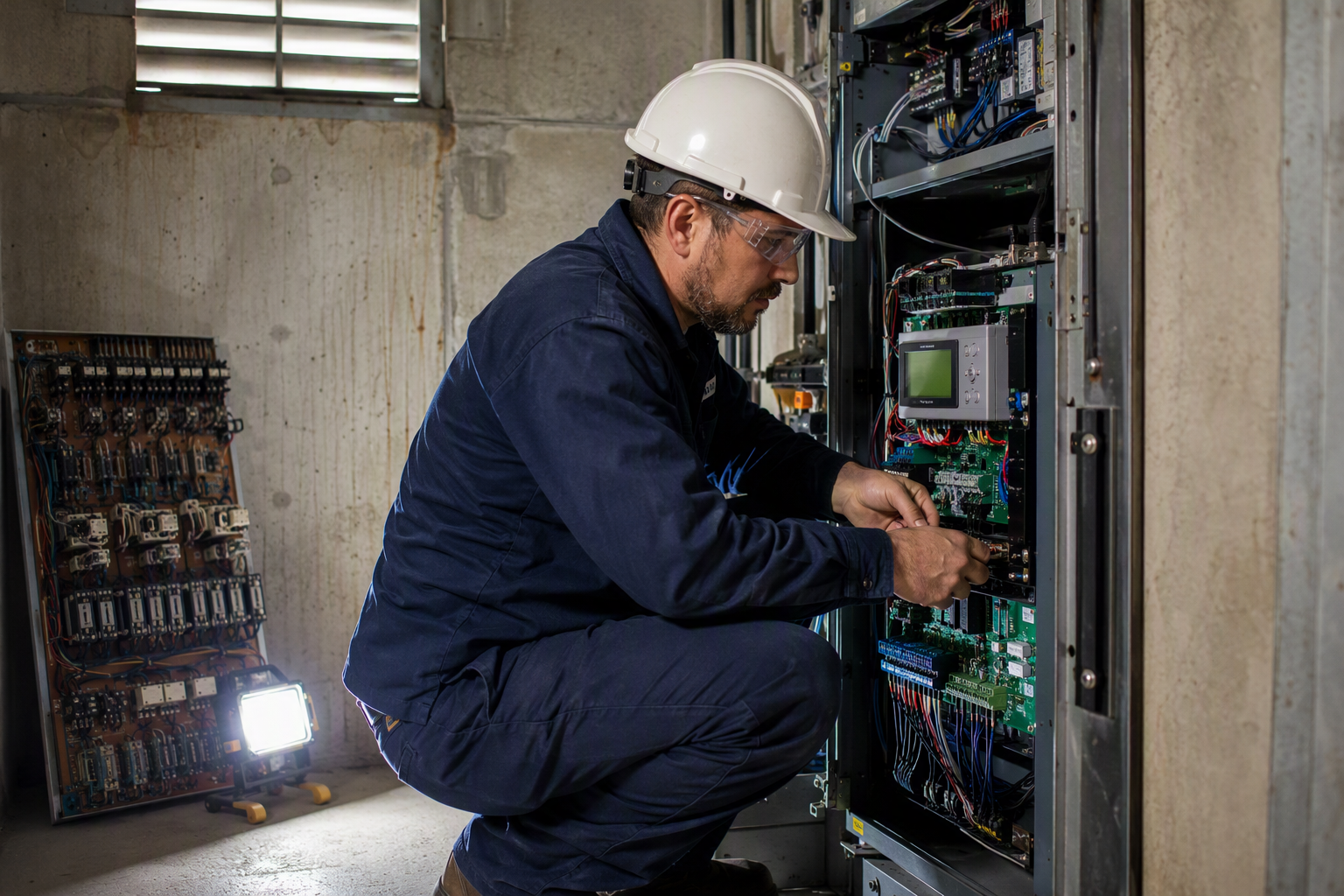
The elevator control system is the integrated network of hardware and software that governs every operational function of an elevator, including speed regulation, floor positioning, door timing, safety interlock monitoring, and communication between the car and machine room.
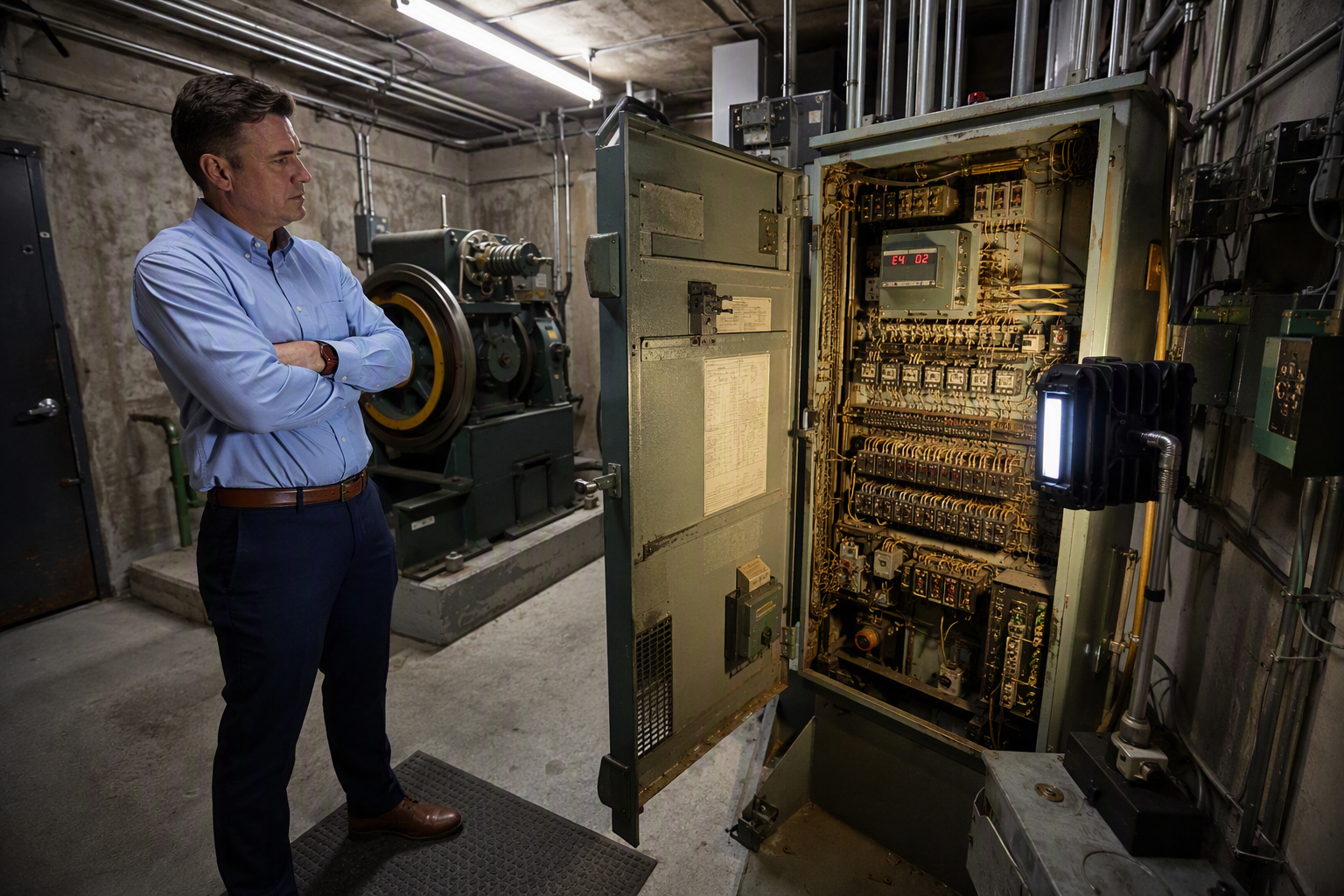
Modern elevator controllers consist of a main logic board or programmable logic controller (PLC), relay panels or solid-state drives, motor drive units, and the associated wiring harness that connects them to position sensors, door operators, buttons, and safety circuits. In older buildings throughout Los Angeles and Orange County, relay-based analog controllers — some installed decades ago — are still in service. These legacy systems lack the diagnostic capabilities, parts availability, and reliability of modern microprocessor-based controllers, making failure recognition more difficult and more consequential.
The control system communicates continuously with the machine, the brake, the door operator, the car operating panel, and the hall call stations. A fault anywhere in that chain can cascade into a broader system failure, which is why early warning signs should never be dismissed as minor glitches.
What are the most common warning signs that an elevator control system is failing?
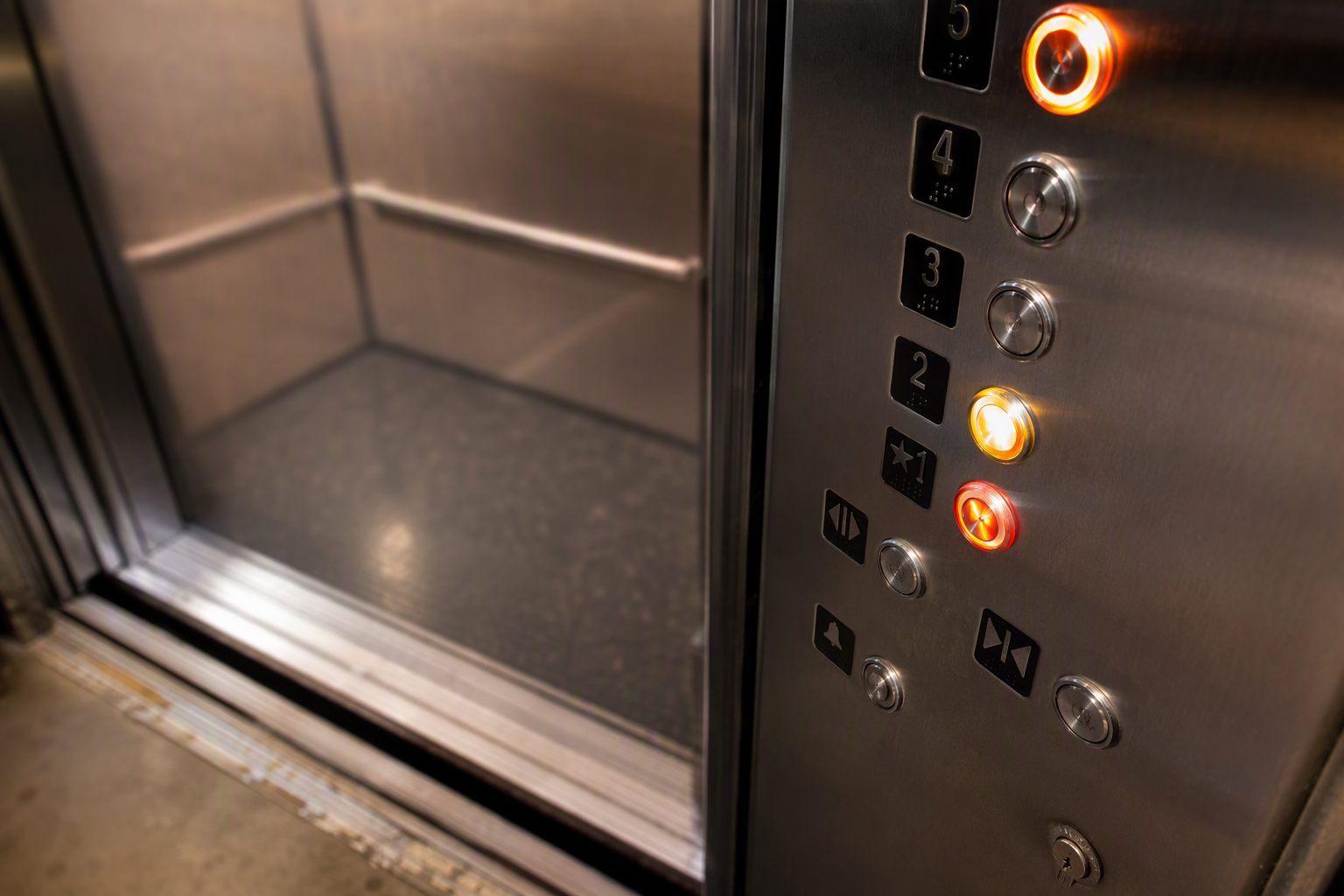
The most reliable warning signs of a failing elevator control system include persistent floor mis-leveling, unresponsive or flickering call buttons, erratic or reversed door behavior, unexplained shutdowns, and recurring fault codes on the controller display that cannot be resolved through routine servicing.
Below is a breakdown of the most frequently observed failure indicators:
- Floor mis-leveling: The elevator consistently stops above or below floor level, creating a trip hazard — one of the most safety-critical symptoms.
- Erratic door behavior: Doors open or close without command, reverse unexpectedly, or fail to open at the correct floor.
- Unresponsive buttons: Car or hall call buttons require multiple presses or stop registering entirely.
- Intermittent shutdowns: The elevator goes out of service randomly and returns without a clear fault being cleared by a technician.
- Fault codes that repeat: The controller logs the same error codes repeatedly after resets, indicating a persistent hardware or software fault rather than an isolated event.
- Communication failures: Loss of serial communication between the car controller and machine room controller causes the system to default to emergency stop mode.
- Overheating components: Burn marks, unusual odors, or heat discoloration on relay boards or drive units indicate component stress or imminent failure.
- Parts no longer available: When replacement circuit boards, relays, or proprietary components are discontinued by the manufacturer, repair becomes impossible without full system replacement.
- Increased call-back frequency: A rising trend in service calls for the same unit is a leading indicator that the control system is degrading beyond routine maintenance.
How urgent is it to replace a failing elevator control system?
Replacement urgency depends on the severity of symptoms, but any control system failure that causes mis-leveling, unexpected motion, or safety circuit bypasses should be treated as an immediate shutdown situation — not a deferred capital project.
California elevator safety is enforced by the Division of Occupational Safety and Health (Cal/OSHA) Elevator Unit, which has authority to issue citations and order elevators out of service when they present an imminent hazard. Under ASME A17.1 Safety Code for Elevators and Escalators, a number of safety device requirements must be maintained at all times, and a failing control system can cause multiple simultaneous code violations.
From a liability standpoint, building owners who continue operating an elevator with known control system deficiencies face significant exposure if a passenger incident occurs. In many cases, a thorough assessment will reveal whether targeted component replacement can stabilize the system temporarily or whether full controller modernization is the only viable path forward.
Liftech Elevator regularly assists building owners across Signal Hill, Long Beach, Los Angeles, and Orange County in making this determination through structured assessments that evaluate both the technical condition of the system and its compliance status.
What does ASME A17.1 require regarding elevator control systems?
The ASME A17.1 Safety Code for Elevators and Escalators establishes the minimum safety requirements for all aspects of elevator design, installation, operation, and maintenance, including control system performance, safety circuit integrity, and the conditions under which an elevator must be taken out of service.
Key ASME A17.1 requirements relevant to control systems include:
- Safety circuits must be maintained in a functional state at all times; bypassing or disabling any safety interlock is a code violation.
- The control system must bring the car to a stop and hold it if any safety device is triggered.
- Door control circuits must prevent car movement unless doors are fully closed and locked.
- Emergency terminal stopping devices must be active and correctly set by the controller.
- Where modernization is performed, the entire installation must meet the requirements of the current applicable edition of the code or the edition adopted by the authority having jurisdiction (AHJ).
In California, the AHJ is generally the Cal/OSHA Elevator Unit, and the adopted code edition governs what is required at the time of permit issuance for any modernization project. Building owners should confirm the current adopted edition with their jurisdiction before planning a modernization scope.
How does a failing control system affect ADA compliance?
A degraded elevator control system can directly cause ADA compliance failures, particularly when door timing, floor leveling, and accessible feature functionality are affected.
The Americans with Disabilities Act (ADA) requires that elevators serving public accommodations and commercial facilities be accessible and operational. When a failing control system causes erratic door timing — for example, doors closing too quickly for a passenger using a mobility device — or results in floor mis-leveling that creates a gap or rise between the car and landing, these represent functional ADA failures in addition to ASME violations. Buildings in Los Angeles, Long Beach, and Orange County with multi-story public access must ensure their elevator remains ADA-compliant as part of ongoing operations.
What is the typical lifespan of an elevator control system?
The serviceable lifespan of an elevator control system varies based on technology type, maintenance quality, and environmental conditions, but relay-based analog controllers generally reach the end of useful life within 20 to 30 years, while well-maintained microprocessor-based systems can remain serviceable for 25 years or more under ideal conditions.
The critical distinction is not simply age but parts availability and the ability to perform reliable diagnostics. Once a manufacturer discontinues support for a controller platform, the effective end-of-life is reached regardless of the system’s chronological age. At that point, even minor faults become major problems because replacement components cannot be sourced.
How do I compare replacement options for an elevator control system?
Replacement options generally fall into three categories: partial modernization targeting specific failed components, full controller replacement with a compatible modern system, and comprehensive modernization that upgrades the controller alongside related mechanical and electrical components.
| Option | Scope | Best For | Code Trigger | Typical Disruption |
|---|---|---|---|---|
| Component-Level Repair | Replace individual boards, relays, or drives | Systems still under manufacturer support with isolated faults | Minimal — repair in kind usually does not trigger full code upgrade | Hours to days depending on parts lead time |
| Full Controller Replacement | Remove and replace entire control panel with modern equivalent | Systems with obsolete controllers but otherwise sound mechanical components | Modernization permit required; AHJ inspection triggered | Days to weeks depending on permit and installation complexity |
| Comprehensive Modernization | Controller, motor drive, door operator, wiring, fixtures | Older units with multiple aging systems approaching failure simultaneously | Full code compliance review at current adopted edition | Weeks; may require temporary shutdown planning |
| Emergency Interim Repair | Stabilize system to restore safe operation while modernization is planned | Active safety failure requiring immediate action before full project can begin | AHJ notification may be required | Immediate response through short-term fix |
What should I do immediately if I suspect my elevator control system is failing?
If a building owner or manager suspects the elevator control system is failing, the immediate priority is passenger safety — which means taking the elevator out of service until a qualified technician can assess the condition.
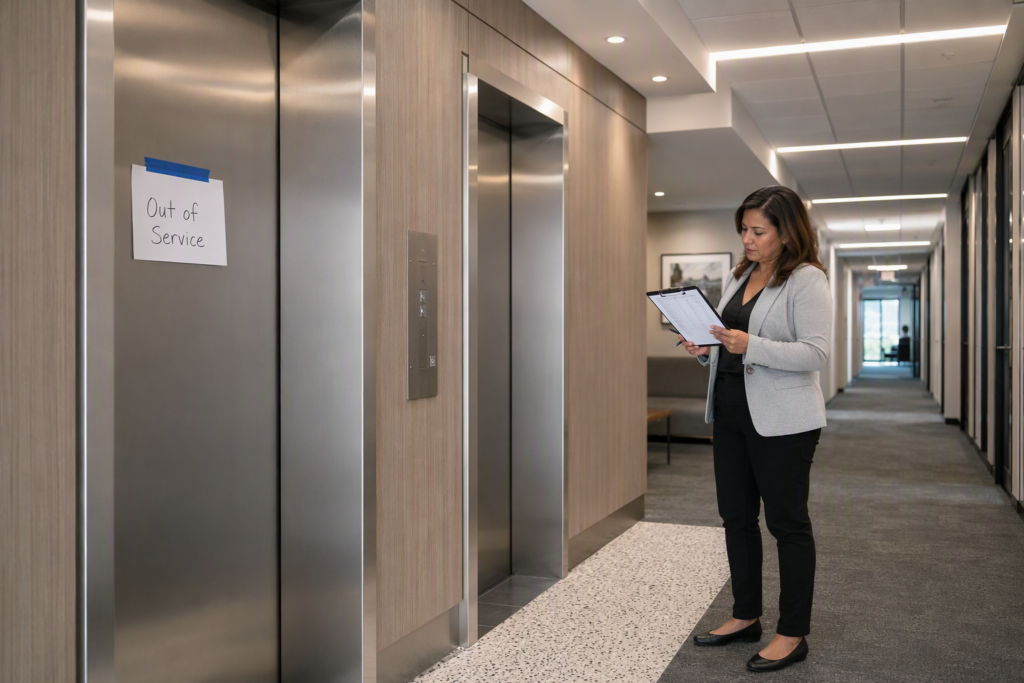
- Take the elevator out of service immediately if any of the following are present: mis-leveling greater than one inch, unexpected movement with doors open, or failure of the emergency stop function. Post clear “Out of Service” signage on all landings.
- Do not attempt to reset or restart an elevator that has shut down due to a safety device trip without first contacting a licensed elevator contractor. Resetting over a genuine safety fault can create a more dangerous condition.
- Contact a licensed elevator service company with experience in control system diagnostics. Provide the technician with any fault codes displayed on the controller panel and a log of observed symptoms and their frequency.
- Notify your building insurer and property manager of the known condition in writing. This creates a record that demonstrates due diligence and reduces liability exposure.
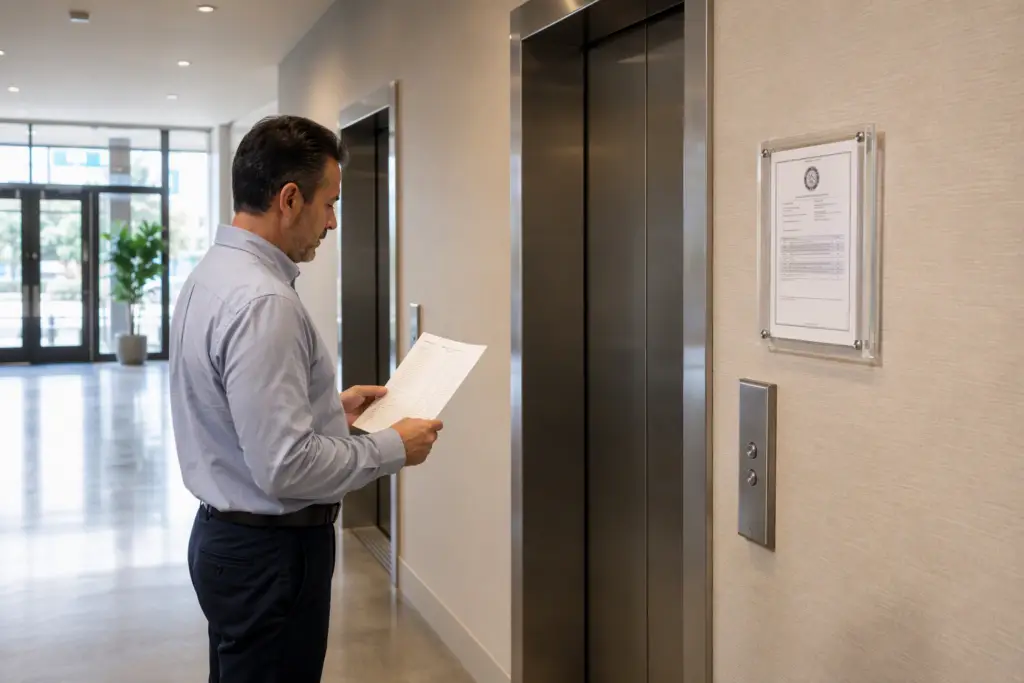
- Request a written assessment report from the elevator contractor documenting the condition of the control system, any active code deficiencies, and the recommended scope of repair or modernization.
- Initiate the permit and engineering process for modernization without delay if the assessment confirms the control system is beyond reliable repair. Permitting timelines in Los Angeles and Orange County can add weeks to a project schedule.
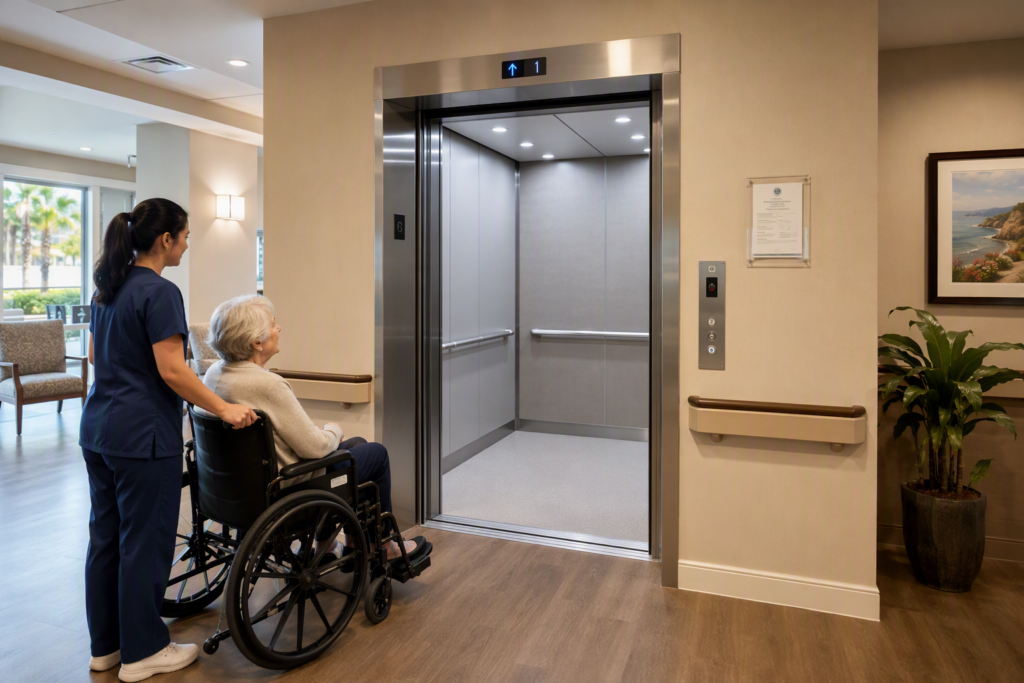
- Coordinate ADA and accessibility accommodations for building occupants who depend on the elevator during any planned downtime, in accordance with your obligations under the Americans with Disabilities Act.
Can a failing elevator control system cause safety incidents?
Yes — a failing elevator control system is one of the most direct pathways to serious passenger safety incidents, because the control system governs the safety interlocks, braking commands, door operation, and leveling precision that protect passengers during every trip.
Specific failure modes that create direct injury risk include: mis-leveling that causes passengers to trip when entering or exiting, door closing on occupants due to faulty door sensor circuits controlled by the logic board, unexpected car movement with doors open caused by a bypass of the door zone safety circuit, and brake release commands issued incorrectly by a degraded drive system. Any one of these failure modes can result in serious injury and significant legal liability for the building owner. OSHA maintains jurisdiction over elevator safety in certain workplace contexts, and Cal/OSHA has authority to order immediate shutdown of any elevator presenting an imminent hazard.
How does a technician diagnose elevator control system failure?
Qualified elevator technicians diagnose control system failure through a structured combination of fault log review, electrical testing of individual circuits, inspection of physical components for damage, and operational performance testing across all modes including inspection, normal, and emergency.
The diagnostic process typically includes pulling the controller’s internal fault history to identify recurring fault codes, performing continuity and voltage tests on safety circuit inputs and outputs, inspecting relay contacts and circuit boards for burn marks or corrosion, testing the motor drive for correct acceleration and deceleration profiles, and verifying door operator integration through the full range of car and hall call scenarios. The findings are then compared against the requirements of ASME A17.1 and the applicable California code edition to determine whether observed conditions constitute safety violations or deferred maintenance items.
What is the difference between an elevator controller and an elevator drive?
The elevator controller is the logic system that decides what the elevator should do — which floor to travel to, when to open doors, and when to stop — while the drive (also called the motor drive or variable voltage variable frequency drive, VVVF) is the power electronics system that executes the motion commands by controlling the speed and torque of the hoist motor.
Both can fail independently, and failure of either creates significant operational and safety problems. A controller failure typically manifests as logic errors, communication faults, and safety circuit anomalies, while a drive failure typically manifests as rough ride quality, incorrect speeds, motor overheating, or failure to start. In many aging systems, both the controller and the drive are original equipment from the same era, meaning that when one reaches end of life, the other is usually close behind — a factor that influences the scope recommendation for modernization projects.
How long does elevator control system replacement take?
The timeline for elevator control system replacement depends on the scope of work, permitting requirements, and equipment lead times, but building owners should generally plan for a minimum of several weeks from project initiation to return-to-service, with more complex modernization projects requiring longer timeframes.
The critical path variables include: permit application and review by the local AHJ (which in Los Angeles and Orange County can take several weeks depending on the jurisdiction and current workload), equipment procurement lead time for the new controller and associated components, the installation period itself, and the final inspection and sign-off by the AHJ before the elevator can return to passenger service. Planning the project well before the system reaches critical failure reduces the risk of an unplanned extended outage. Liftech Elevator assists building owners across Southern California in navigating the permitting process and developing project timelines that minimize disruption.
What code compliance requirements are triggered when replacing an elevator control system?
In California, replacing an elevator control system constitutes an alteration under the applicable elevator safety code, which triggers a modernization permit requirement and, in many cases, requires that related systems be brought into compliance with the current adopted code edition.
Under ASME A17.1, when an alteration is made to an existing elevator, the altered equipment and certain related components must comply with the requirements applicable to new installations or with specific alteration provisions depending on the scope. The AHJ — in most California jurisdictions, the Cal/OSHA Elevator Unit or a certified local inspection agency — reviews the permit application, inspects the completed work, and issues a certificate of operation before the elevator may be returned to passenger service. Building owners who attempt to replace a controller without pulling the required permits risk operating an uninspected elevator, which carries both safety and legal consequences.
Are there specific building types in Los Angeles or Orange County more at risk for control system failure?
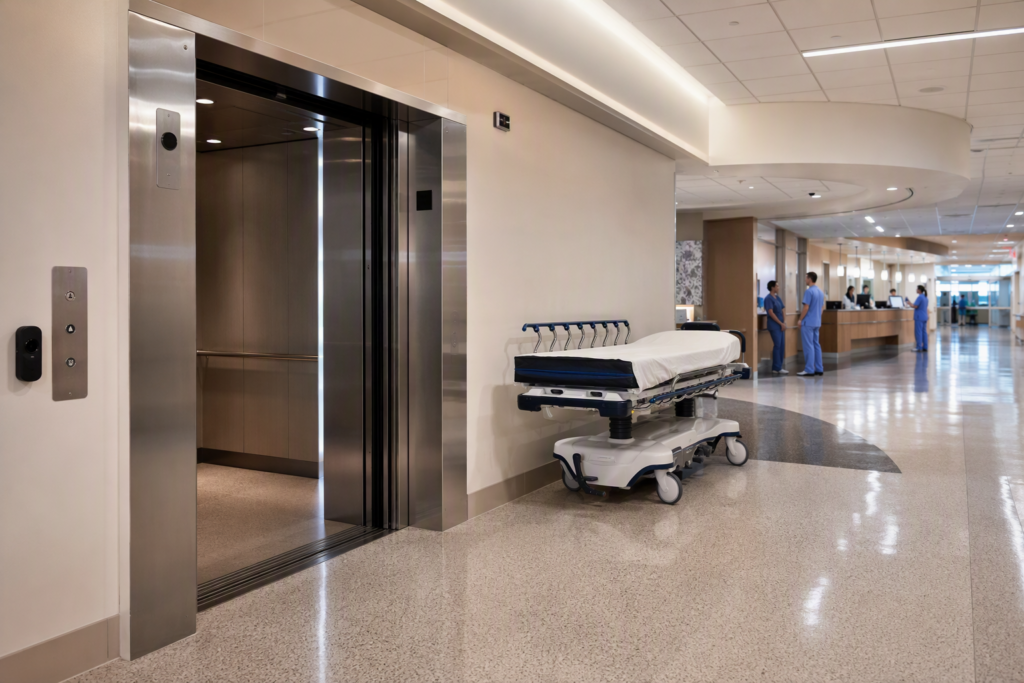
Older multi-tenant residential buildings, mid-rise commercial properties from the 1970s through 1990s, and healthcare or assisted living facilities with high-cycle operations are among the building types most frequently found with aging or failing elevator control systems across Los Angeles and Orange County.
Buildings constructed before approximately 1990 are likely to have relay-based or early solid-state controllers that are now at or beyond their serviceable lifespan and for which parts availability is severely limited. High-cycle environments — such as residential towers, hospitals, and parking structures with attendant elevators — accelerate wear on both mechanical and electronic components, meaning the control system may reach failure earlier than its nominal lifespan would suggest. Coastal environments in Long Beach and Signal Hill add corrosion risk to electrical components, further compressing the time between installation and end of reliable service life.
What should building owners look for when selecting an elevator modernization contractor?
Building owners should select an elevator modernization contractor who is licensed by the State of California, experienced with the specific controller platforms being replaced, capable of managing the full permit and inspection process, and familiar with the requirements of the local AHJ in the relevant jurisdiction.
Additional evaluation criteria include the contractor’s ability to provide a detailed written scope of work and assessment report, their familiarity with ASME A17.1 alteration provisions, their relationships with major controller manufacturers and distributors for equipment sourcing, and their track record managing modernization projects in similar building types. Transparency in documentation — including fault assessments, permit submissions, and inspection records — is a strong indicator of a contractor that prioritizes compliance and accountability. Liftech Elevator provides comprehensive modernization services across Signal Hill, Long Beach, Los Angeles, and Orange County, with full permit management and AHJ coordination included in the project scope.
Can temporary repairs stabilize a failing control system while a full modernization is planned?
In some cases, targeted interim repairs can stabilize a failing elevator control system long enough for a full modernization project to be properly planned, permitted, and executed — but only when the system can be restored to safe operating condition without bypassing or defeating any safety circuits.
The viability of interim repairs depends on parts availability, the nature of the active faults, and whether the system can be made to pass a functional safety test without relying on workarounds. An elevator that cannot be made demonstrably safe through interim repair should not remain in service. Any interim repair approach should be evaluated and performed by a licensed elevator contractor who documents the work and confirms the elevator’s compliance status before returning it to service. This is not a situation where building maintenance staff or general electrical contractors should be working on the equipment.
How does elevator control system modernization affect property value and tenant satisfaction?
Elevator control system modernization delivers measurable benefits to building operations, tenant experience, and asset value by improving ride quality, reducing callback frequency, enabling modern diagnostic monitoring, and bringing the installation into compliance with current code requirements.
From a tenant perspective, frequent elevator outages, rough ride quality, and slow response times are among the most common complaints in multi-tenant residential and commercial properties. A modernized control system addresses all of these factors directly. From an asset management perspective, a documented modernization with current code compliance and valid inspection certificates reduces insurance risk, supports higher property valuations, and eliminates deferred maintenance liability. For building owners in competitive Los Angeles and Orange County markets, elevator performance is a visible marker of overall building quality.
What monitoring technologies are available for elevator control systems in 2026?
Modern elevator control systems in 2026 commonly support remote monitoring capabilities that allow service providers to receive real-time fault data, performance metrics, and predictive maintenance alerts without requiring a technician to be physically present at the equipment.
Remote monitoring platforms connect to the elevator controller via cellular or building network interfaces and transmit fault logs, door cycle counts, leveling data, and drive performance metrics to a monitoring dashboard accessible to the service provider. This enables condition-based maintenance scheduling rather than time-based service intervals, often identifying developing faults before they result in an outage. For building owners managing multiple properties across Los Angeles or Orange County, remote monitoring provides centralized visibility into the condition of every elevator in the portfolio. Upgrading to a modern controller with remote monitoring capability is one of the most operationally significant improvements available through a control system modernization project.
What questions should a building owner ask before approving a control system replacement proposal?
Before approving any elevator control system replacement proposal, building owners should ask the contractor to clarify the specific deficiencies being addressed, the code compliance basis for the scope, the permit and inspection process, equipment sourcing and lead times, downtime planning, and what warranty coverage applies to the new installation.
Specific questions worth asking include: Is the proposed controller platform actively supported by the manufacturer with a committed parts availability window? Does the scope include all components that will be required to comply with the current ASME A17.1 alteration provisions under the local AHJ? Who is responsible for submitting permit applications and attending AHJ inspections? What happens if the inspection reveals additional deficiencies not included in the original scope? What is the warranty period and coverage for the new controller and installation labor? A reputable contractor will provide clear, documented answers to all of these questions before work begins.
How does Liftech Elevator approach elevator control system assessments and modernization in Southern California?
Liftech Elevator provides structured elevator control system assessments for building owners and property managers throughout Signal Hill, Long Beach, Los Angeles, and Orange County, evaluating both the technical condition of the existing system and its compliance status under applicable codes and regulations.
The assessment process includes a physical inspection of the controller, drive, and associated wiring, a review of the fault log and maintenance history, an evaluation of parts availability for the existing platform, and a compliance review against the requirements of ASME A17.1 and applicable California regulations. Findings are documented in a written report that clearly distinguishes between immediate safety concerns, code deficiencies, and longer-term deferred maintenance items. Where modernization is recommended, Liftech Elevator develops a detailed scope of work, manages the permitting process with the relevant AHJ, and coordinates the project from equipment procurement through final inspection and return to service.
What are the consequences of ignoring elevator control system failure?
Ignoring elevator control system failure exposes building owners to a compounding set of consequences including passenger injury risk, regulatory shutdown orders, code violation citations, increased insurance liability, and the higher cost of emergency replacement compared to planned modernization.
From a regulatory standpoint, Cal/OSHA inspectors have the authority to order an elevator out of service immediately upon finding an imminent hazard, and operating an elevator after a shutdown order is issued constitutes a serious legal violation. From an insurance standpoint, a known and unaddressed control system deficiency documented in a maintenance record or previous inspection report significantly weakens a building owner’s position in any subsequent liability claim. Financially, emergency modernization projects executed under time pressure typically cost more than planned projects because of expedited permitting, premium pricing on rushed equipment orders, and compressed installation schedules. The most cost-effective and lowest-risk approach is always to address control system deterioration proactively, before it escalates to a safety event or regulatory action.
Get a Professional Elevator Control System Assessment Today
If your elevator is showing any of the warning signs described above — mis-leveling, erratic door behavior, recurring fault codes, or parts that can no longer be sourced — do not wait for a safety incident or a regulatory shutdown order to take action. A qualified assessment from a licensed elevator contractor is the first and most important step toward restoring safe, compliant elevator service in your building.
Contact Liftech Elevator for a free elevator assessment. Liftech Elevator serves building owners and property managers throughout Signal Hill CA, Long Beach CA, Los Angeles CA, and Orange County CA with comprehensive elevator inspection, control system assessment, and full modernization services.
Call now: 562-609-3478
Need elevator service you can rely on? Liftech Elevator is ready to help.