Elevator Maintenance and Inspection Requirements for Senior Living and Assisted Living Facilities in California
For senior living and assisted living communities, elevators are not a convenience — they are a lifeline. Residents who depend on mobility aids, face cognitive challenges, or recover from medical procedures rely on elevators to access dining rooms, therapy facilities, outdoor spaces, and emergency exits. Understanding the full scope of California’s elevator compliance requirements is essential for administrators, facility directors, and property managers who operate these communities in Signal Hill, Long Beach, Los Angeles, and Orange County.
This guide covers every layer of compliance — state and federal codes, inspection schedules, documentation obligations, ADA requirements, and what to expect when a certified elevator company conducts an assessment at your facility.
What State Agency Governs Elevator Inspections in California?
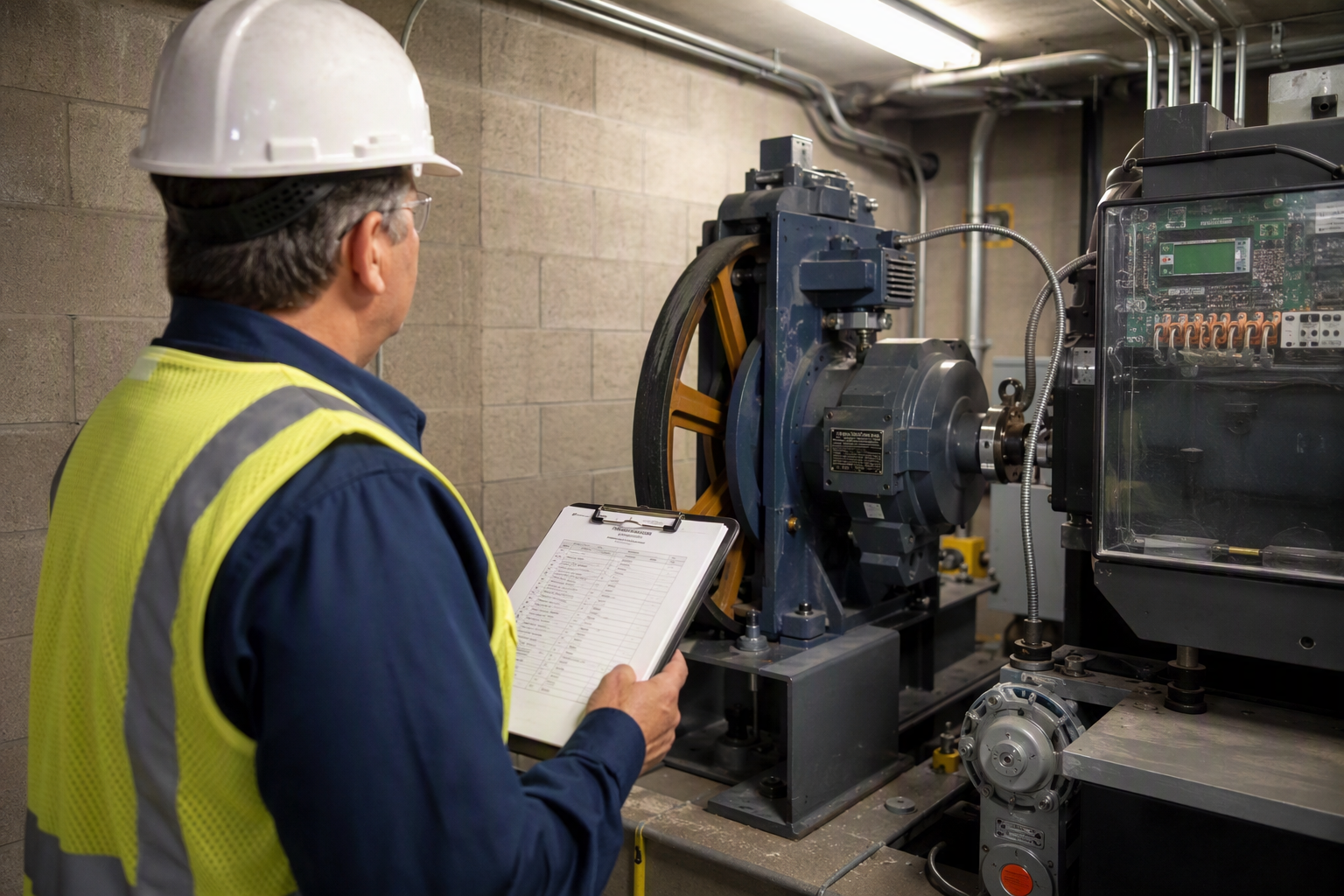
The California Department of Industrial Relations (DIR), through its Elevator Safety Unit (ESU), is the primary state authority responsible for elevator safety. The ESU enforces the California Elevator Safety Construction Code, which adopts and modifies the ASME A17.1 Safety Code for Elevators and Escalators. All elevators in commercial and residential-care facilities, including senior living and assisted living communities, must be permitted, inspected, and certified by the state before operation and at required intervals thereafter.
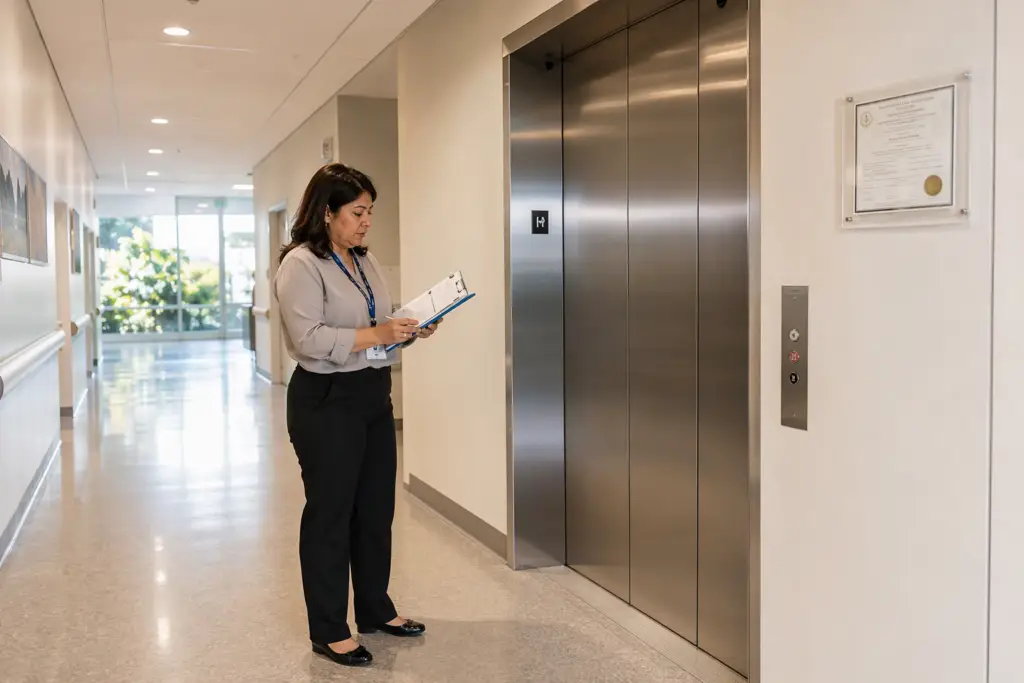
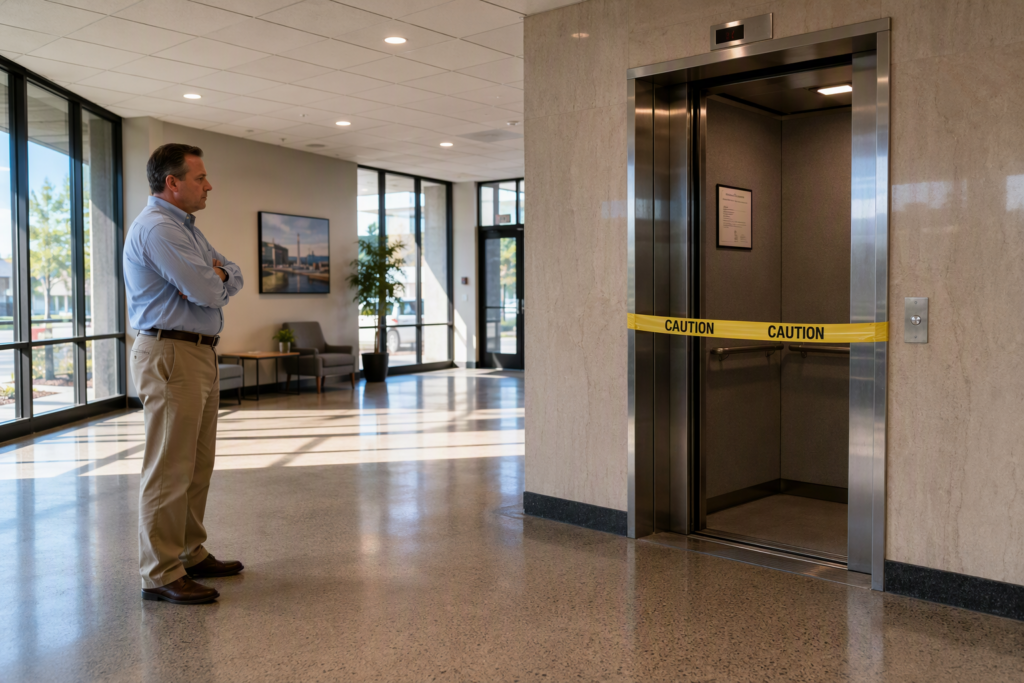
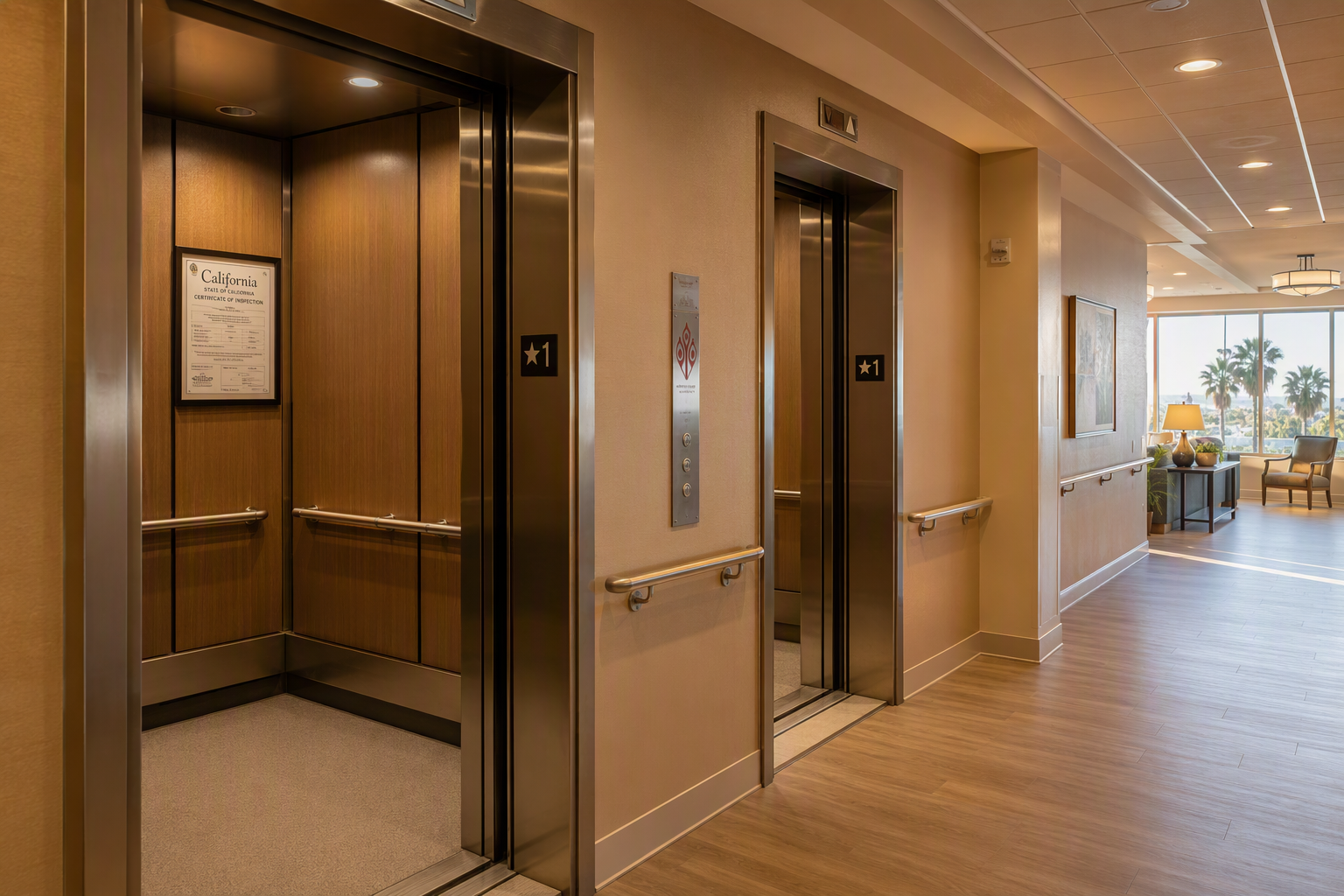
Operators must display a valid Certificate of Inspection inside the elevator cab. A missing or expired certificate is a violation that can result in an order to cease elevator operation — a serious disruption in any senior care environment.
How Often Must Elevators Be Inspected at Assisted Living Facilities?
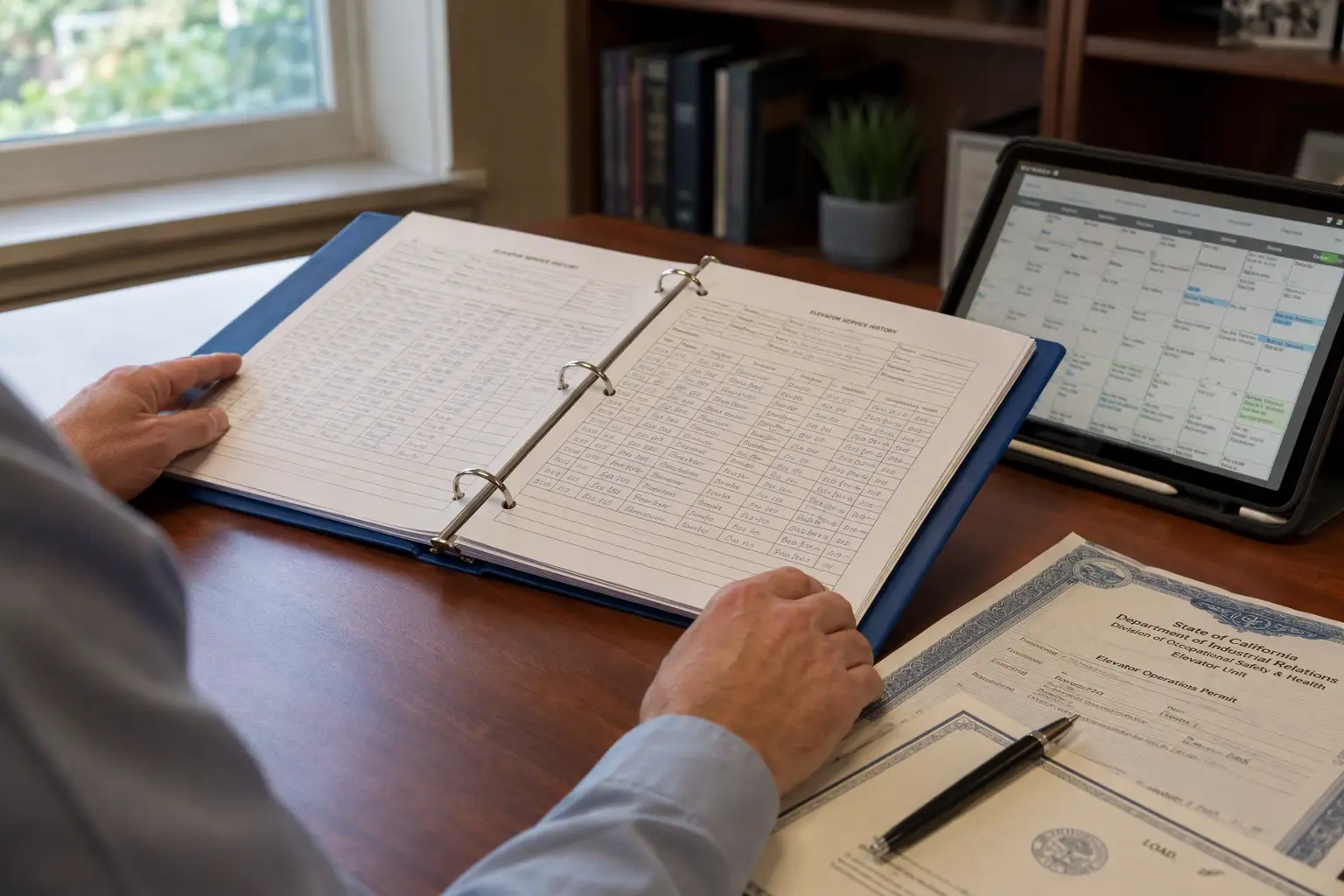
Under California’s adoption of ASME A17.1, traction elevators and hydraulic elevators used in senior care settings are subject to periodic inspections. The state requires a full inspection at least once every year for most elevator types. High-usage elevators — common in larger assisted living communities with multiple floors and high resident density — may warrant more frequent maintenance visits beyond the minimum state schedule to remain safe and code-compliant.
In addition to full inspections, Category 1 tests (no-load safety tests) and Category 5 tests (full-load, full-speed governor and safety tests) are required on cycles defined by ASME A17.1 — typically every one and five years, respectively. These tests must be witnessed by a state-licensed inspector and performed by a qualified elevator mechanic.
Liftech Elevator coordinates inspection scheduling and test preparation for healthcare and senior living operators across Signal Hill, Long Beach, Los Angeles, and Orange County, ensuring that Category 1 and Category 5 deadlines are never missed.
What ADA Requirements Apply to Elevators in Senior Living Facilities?
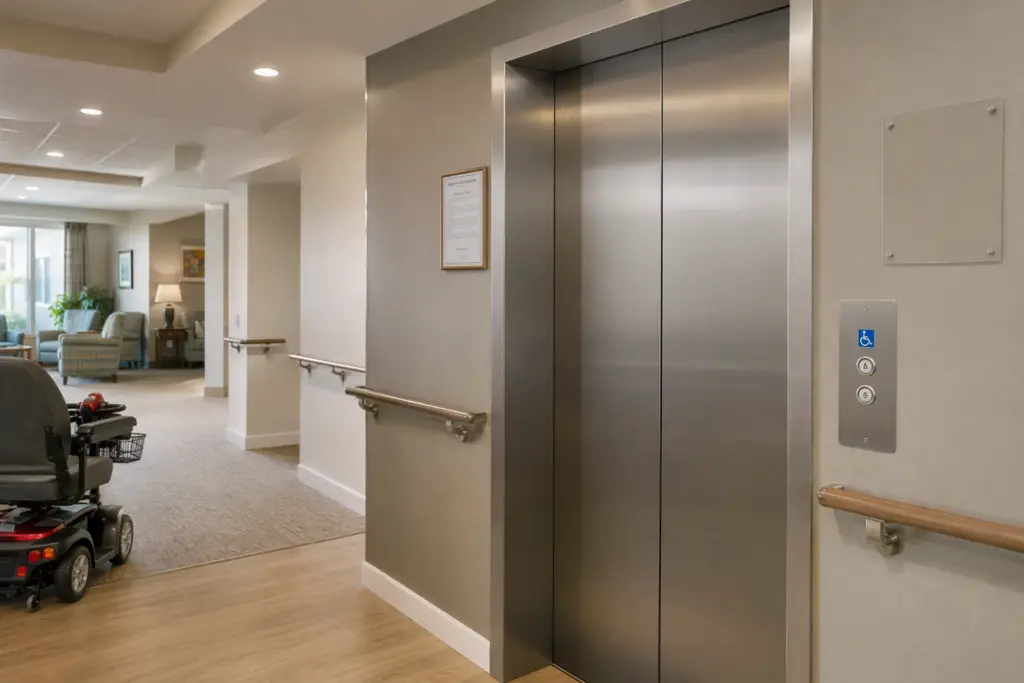
The Americans with Disabilities Act (ADA) sets minimum accessibility standards for elevators in facilities that serve individuals with disabilities. Because assisted living and senior care communities serve populations with mobility, vision, and hearing impairments, ADA compliance is not optional — it is a legal obligation under Title III for most facility types and Title II for any that receive government funding.
Key ADA elevator requirements relevant to senior living facilities include:
- Door width: Minimum clear opening width to accommodate wheelchair users.
- Call button height: Controls must be within reach range for seated users.
- Cab dimensions: Interior dimensions must allow a wheelchair to enter, turn, and exit.
- Audible and visual signals: Floor arrival signals and verbal annunciators support residents with vision or hearing loss.
- Braille and raised characters: All floor buttons and signage must include tactile characters.
- Door timing: Doors must remain open long enough for residents using mobility aids to enter and exit safely.
- Emergency communication: A two-way communication device accessible without voice-only use must be present in each cab.
California’s own accessibility standards, enforced through the California Building Code (Title 24), frequently exceed federal ADA minimums. Facility managers should verify compliance against both layers of law.
What Maintenance Tasks Are Required Between State Inspections?
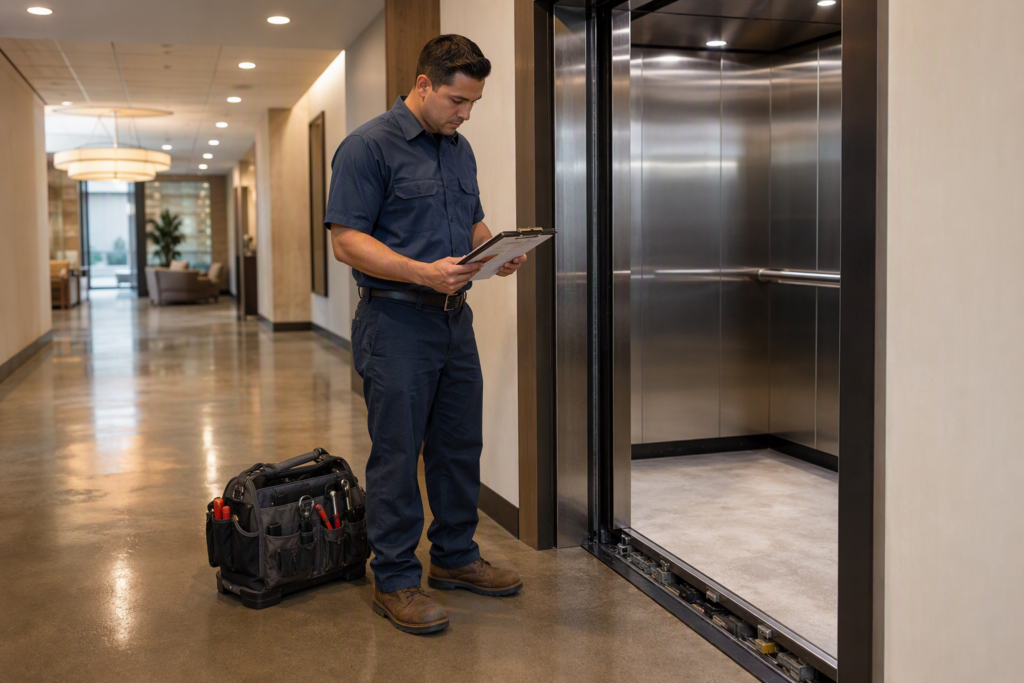
State inspections confirm code compliance at a point in time — they do not substitute for ongoing preventive maintenance. For senior living environments where elevators operate continuously across all hours, a written maintenance program is essential. Required and recommended maintenance activities include:
- Lubrication of guide rails, sheaves, and mechanical components on manufacturer-specified intervals.
- Inspection and adjustment of door operators, safety edges, and reopening devices.
- Testing of emergency lighting, phones, and alarm systems inside the cab.
- Hydraulic fluid level checks and leak inspections for hydraulic units.
- Motor and controller diagnostics.
- Rope and chain tension checks on traction elevators.
- Leveling accuracy adjustments to reduce trip-fall risk at landings — a critical concern for elderly residents.
Maintenance logs must be retained on-site and made available to state inspectors. Gaps in documentation are treated as compliance red flags.
Are There Special Requirements for Emergency Power and Fire Service Operations?
Yes. California and ASME A17.1 require that elevators in multi-story healthcare-adjacent facilities meet specific fire service recall requirements. In the event of a fire alarm, Phase I Emergency Recall automatically returns the elevator to a designated landing and holds the doors open so the cab cannot be used by residents — preventing entrapment in a smoke-filled shaft.
Phase II Emergency In-Car Operation allows trained fire or emergency personnel to manually control the elevator for evacuation or access. Both Phase I and Phase II systems must be tested and documented. In assisted living facilities where evacuation of non-ambulatory residents is a life-safety concern, these systems must be fully functional at all times.
Backup power connections are also critical. Elevators in senior care facilities should be reviewed to confirm whether emergency generator circuits provide at minimum one operational cab during a power outage — supporting resident safety and regulatory compliance with California’s Title 22 licensing requirements for residential care facilities for the elderly (RCFEs).
What Is Title 22 and How Does It Interact with Elevator Requirements?
Title 22 of the California Code of Regulations governs Residential Care Facilities for the Elderly (RCFEs), which include most assisted living communities in California. While Title 22 does not replicate the full technical elevator code, it establishes operational requirements for building safety, resident welfare, and emergency preparedness that intersect directly with elevator performance. State RCFE licensing inspectors may note elevator deficiencies — including inoperative units, missing inspection certificates, or non-functioning emergency phones — as part of a licensing inspection, even if their primary jurisdiction differs from the DIR’s Elevator Safety Unit.
Facility administrators should treat elevator compliance as a shared obligation across building operations, licensing compliance, and risk management.
What Are the Consequences of Non-Compliance at a Senior Living Facility?
Non-compliance with California elevator codes carries several categories of consequence:
- Order to cease elevator operation: The state can prohibit use of a non-compliant elevator, leaving residents without access to upper floors.
- RCFE licensing action: Elevator deficiencies documented during a licensing visit can contribute to citations, correction plans, or license conditions.
- ADA complaints and litigation: Inaccessible or malfunctioning elevators expose facilities to complaints filed with the U.S. Department of Justice or private civil rights litigation.
- Liability in the event of injury: An undocumented or unmaintained elevator involved in a resident injury creates significant legal exposure.
How Long Does an Elevator Inspection Take at a Senior Living Facility?
The duration of a state inspection depends on the number of elevators, the elevator type (hydraulic vs. traction), the age of the equipment, and whether all required tests are performed on the same visit. A single-elevator community may see an inspection completed in a few hours. A multi-elevator campus requiring Category 5 testing may require a full day of coordinated work. Facility managers should plan for temporary elevator unavailability during test windows and communicate timelines to residents and care staff in advance.
What Should Facility Managers Do If an Elevator Fails Inspection?
If a California elevator inspection results in a notice of violation or a failed certificate, the following steps apply:
- Take the elevator out of service immediately if ordered by the inspector, and post required notices.
- Contact a certified elevator maintenance company to review the specific violations cited in the inspection report.
- Obtain a written repair scope addressing each deficiency line by line.
- Schedule and complete all required repairs using licensed elevator mechanics.
- Request a re-inspection through the California DIR Elevator Safety Unit.
- Retain all documentation — repair invoices, parts records, and the new inspection certificate — in your compliance file.
- Notify RCFE licensing staff proactively if the facility operates under Title 22, to demonstrate corrective action is underway.
Liftech Elevator assists senior living operators in Signal Hill, Long Beach, Los Angeles, and Orange County with violation remediation — from identifying the root cause of failures to coordinating re-inspection scheduling.
Questions Your Inspector Will Ask
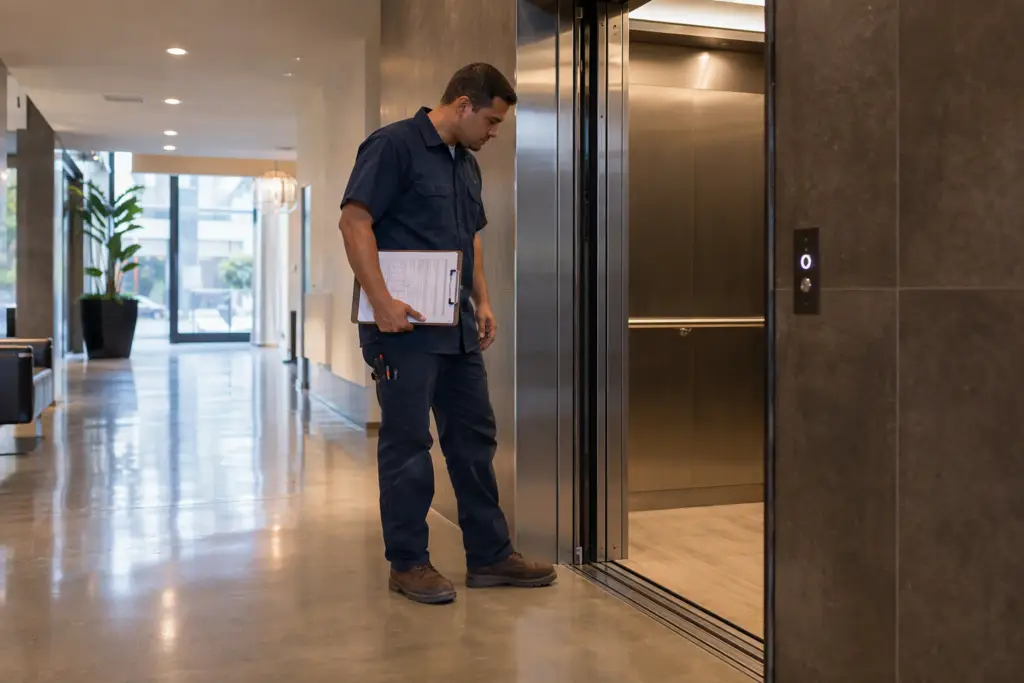
During a California elevator inspection at a senior living or assisted living facility, a state-licensed inspector is likely to review the following — and facility managers should have answers and documentation ready:
- “Where is your current Certificate of Inspection?” — It must be posted inside the elevator cab.
- “Can I see your maintenance log?” — Logs must document all service visits, adjustments, and repairs with dates and technician identification.
- “When was the last Category 1 test performed?” — Documentation of the test date, test results, and witnessing inspector must be on file.
- “Has Phase I fire service recall been tested recently?” — Fire service tests should be part of routine maintenance records.
- “Is the emergency communication device operational?” — The inspector will test the two-way cab phone or communication system in your presence.
- “Is the cab lighting functioning, including emergency lighting?” — Emergency lighting backup must activate on power loss.
- “Are the door safety edges and reopening devices working correctly?” — The inspector will test door reversal behavior with an obstruction.
- “What is the current leveling accuracy at each floor?” — The cab floor must align precisely with each landing to prevent trip-and-fall incidents for residents using walkers, wheelchairs, or canes.
- “Has any modification been made to the elevator since the last inspection?” — Unpermitted modifications are a violation under California law.
Why Does Vendor Selection Matter for Healthcare and Senior Living Elevators?
Not every elevator service company has experience with the operational demands of senior care environments. Elevators in these settings run more hours per day, carry mobility equipment, and must meet a higher standard of reliability because downtime directly affects resident welfare. Selecting a vendor who understands the intersection of state elevator codes, ADA requirements, Title 22 compliance, and the practical realities of senior living operations is a meaningful decision.
Liftech Elevator serves senior living and assisted living communities across Signal Hill, Long Beach, Los Angeles, and Orange County with maintenance programs designed around the continuous-use demands and compliance obligations of the healthcare vertical. Facility managers working with Liftech Elevator gain a service partner who documents every visit, tracks inspection deadlines, and is familiar with the questions state and licensing inspectors ask.
What Questions Should a Senior Living Facility Ask When Evaluating an Elevator Service Company?
When selecting or reviewing an elevator maintenance provider, senior living administrators should ask:
- Is the company certified to perform work under California DIR regulations?
- Do their mechanics hold the appropriate state licensure?
- Do they have documented experience servicing elevators in senior care, healthcare, or assisted living environments?
- Will they provide a written maintenance schedule tied to ASME A17.1 intervals?
- How do they document maintenance visits, and will those records be accessible for state inspection?
- Can they coordinate Category 1 and Category 5 testing with state-licensed inspection witnesses?
- Do they offer ADA compliance assessments as part of their service review?
Elevator compliance in senior living and assisted living facilities is not a single checkbox — it is an ongoing program that spans state mechanical codes, federal accessibility law, facility licensing requirements, and daily operational reliability. Administrators who treat elevator maintenance as a proactive compliance function — rather than a reactive repair cycle — protect their residents, their licenses, and their organizations.
Contact Liftech Elevator for a free elevator assessment. Serving Signal Hill, Long Beach, Los Angeles, and Orange County senior living communities. Call 562-609-3478 to schedule your compliance review today.
Need elevator service you can rely on? Liftech Elevator is ready to help.