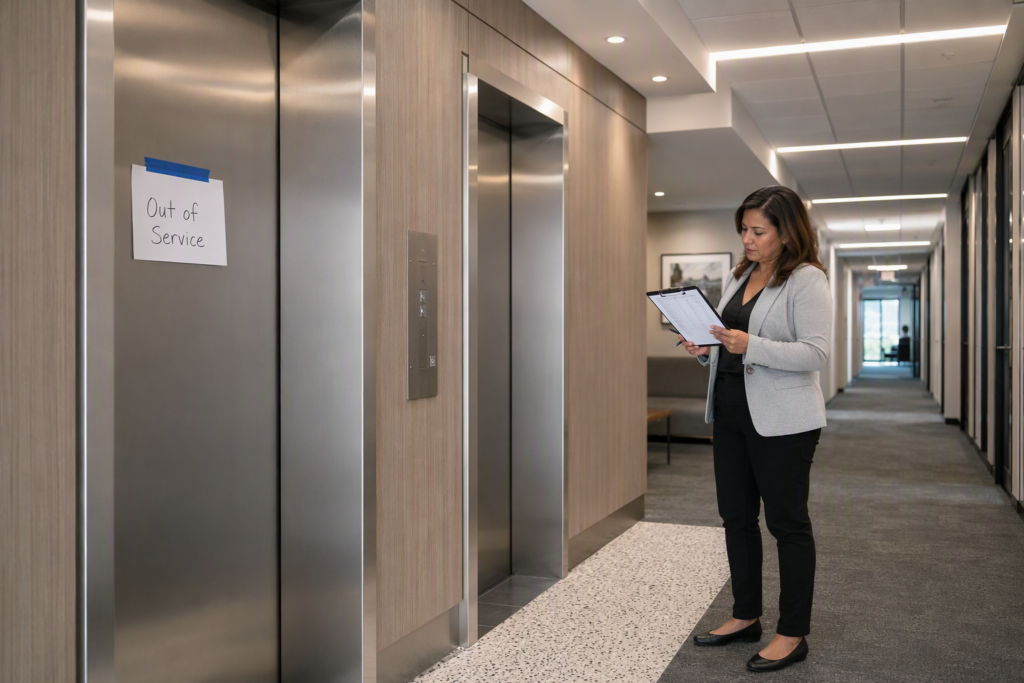
How to Get Your Hospital or Clinic Elevator Ready for a California State Inspection Before the Certificate Expires
Hospitals, outpatient surgery centers, rehabilitation facilities, and medical office buildings across Signal Hill, Long Beach, Los Angeles, and Orange County depend on elevators for patient transport, medical equipment movement, and ADA accessibility. When an elevator certificate is approaching its expiration date, facility managers face a compressed window to identify deficiencies, schedule repairs, coordinate with inspectors, and keep patient care uninterrupted. Missing that window can result in an elevator shutdown order — a serious operational and liability risk in any clinical environment.
This guide walks healthcare facility teams through every stage of the preparation process, from the first compliance audit through the final signed certificate.
What California Law Requires for Elevator Inspections in Healthcare Facilities?
California regulates elevators through the Elevator Safety Labor Code (California Labor Code §§ 7300–7324.2) and enforces those rules through the Cal/OSHA Elevator Unit. All conveyances in healthcare buildings — patient elevators, service lifts, and platform lifts — must hold a valid Certificate of Inspection issued after a passing periodic inspection.
The technical standard governing what inspectors evaluate is the ASME A17.1 Safety Code for Elevators and Escalators, which California adopts by reference. Inspectors also reference the Americans with Disabilities Act (ADA) accessibility guidelines, which carry particular weight in healthcare settings where patients with mobility impairments rely on elevators as the primary path of travel.
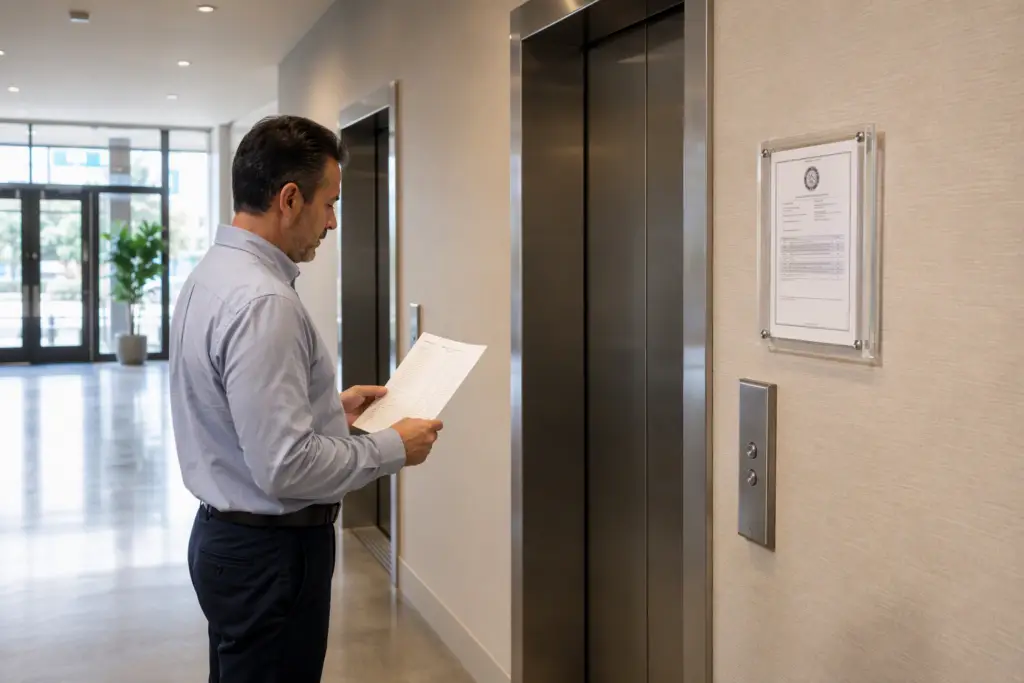
Inspections in California are performed by either a state Qualified Elevator Inspector (QEI) or a licensed third-party inspection agency approved by the Elevator Unit. The certificate issued after a successful inspection must be posted inside each elevator car where it is visible to passengers.
How Far in Advance Should a Healthcare Facility Begin Preparing?
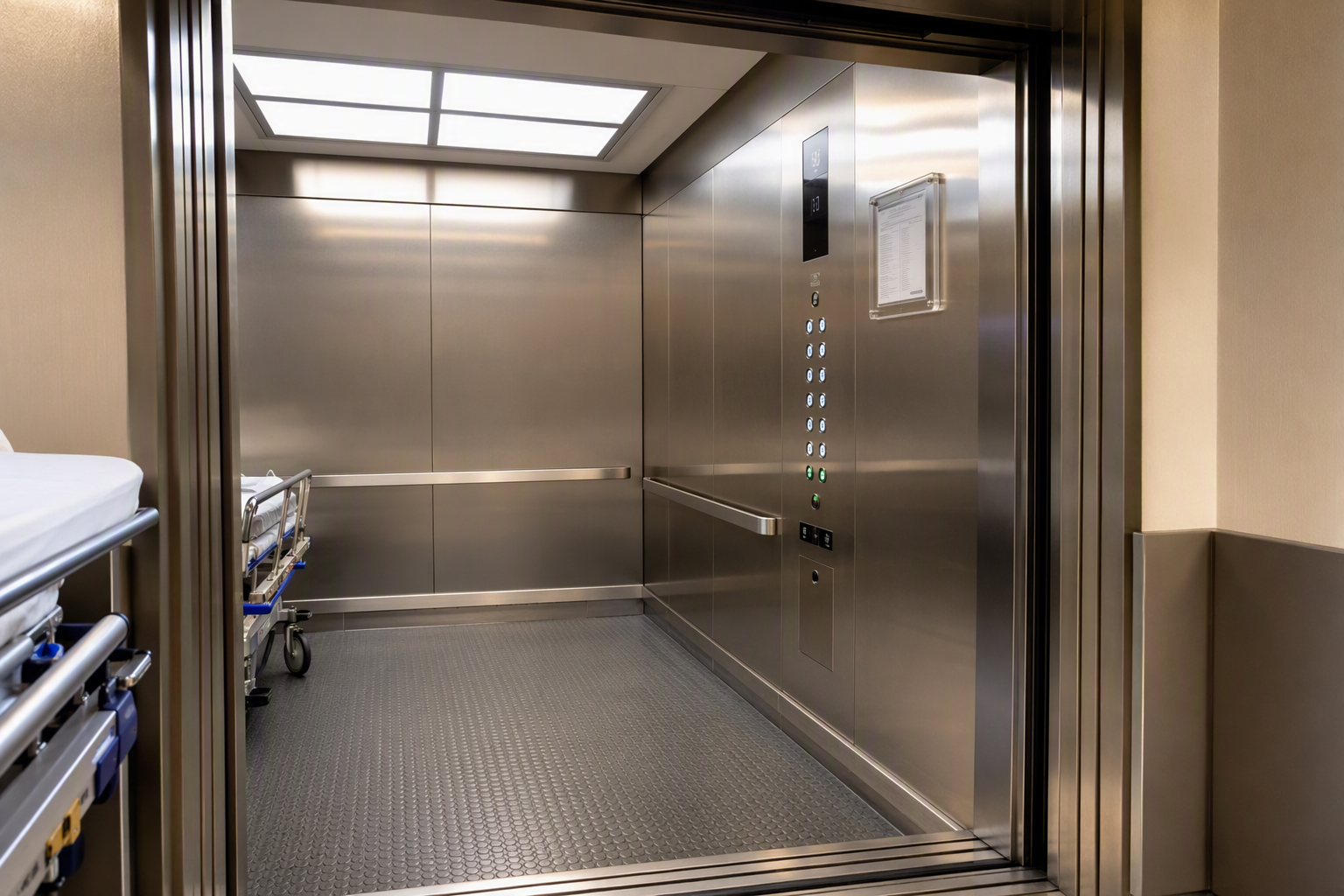
Industry guidance and practical experience in California suggest beginning preparation at least 90 days before the certificate expiration date. This timeline allows for:
- Initial audit (Days 1–14): A licensed elevator contractor conducts a full pre-inspection examination of each unit, documenting every item that does not meet current ASME A17.1 requirements or ADA standards.
- Parts procurement (Days 15–30): Any deficient components — safety devices, door operators, lighting, emergency communication systems — are ordered. Supply chain delays for specialized hospital-grade parts can be significant, making early ordering essential.
- Repairs and testing (Days 31–60): All deficiencies are corrected by licensed mechanics. Safety tests required under ASME A17.1 (load tests, governor tests, hydraulic pressure tests where applicable) are completed and documented.
- Documentation assembly (Days 61–75): Maintenance logs, test reports, wiring diagrams, and contractor certifications are compiled into a single inspection package.
- Inspection scheduling and buffer (Days 76–90): The inspection is scheduled, leaving margin for a re-inspection if a minor item is flagged on the first visit.
Liftech Elevator works with healthcare facility managers across Long Beach, Signal Hill, Los Angeles, and Orange County to build a customized preparation timeline that fits around patient care schedules and minimizes elevator downtime.
What ASME A17.1 Requirements Are Most Commonly Cited in Healthcare Elevator Inspections?
Inspectors reviewing elevators in hospitals and medical facilities frequently cite deficiencies in the following areas under the ASME A17.1 Safety Code for Elevators and Escalators:
- Door reopening devices: Safety edges and light curtains must function reliably. In healthcare settings where patients move on gurneys and IV poles, door sensing must cover the full height of the door opening.
- Emergency lighting and power: Elevators must maintain emergency lighting and, in many healthcare facilities, must be wired to emergency power to support evacuation and fire department use.
- Emergency communication: A two-way means of communication must be operable from inside the car. Hospitals frequently face citations when phone systems are not tested or when audio quality fails.
- Firefighters’ Emergency Operation (FEO): Phase I and Phase II recall functions must operate correctly — a critical life-safety requirement in any building with multiple floors.
- Governor and safety device testing: Periodic load testing and governor testing must be documented according to ASME A17.1 test cycles.
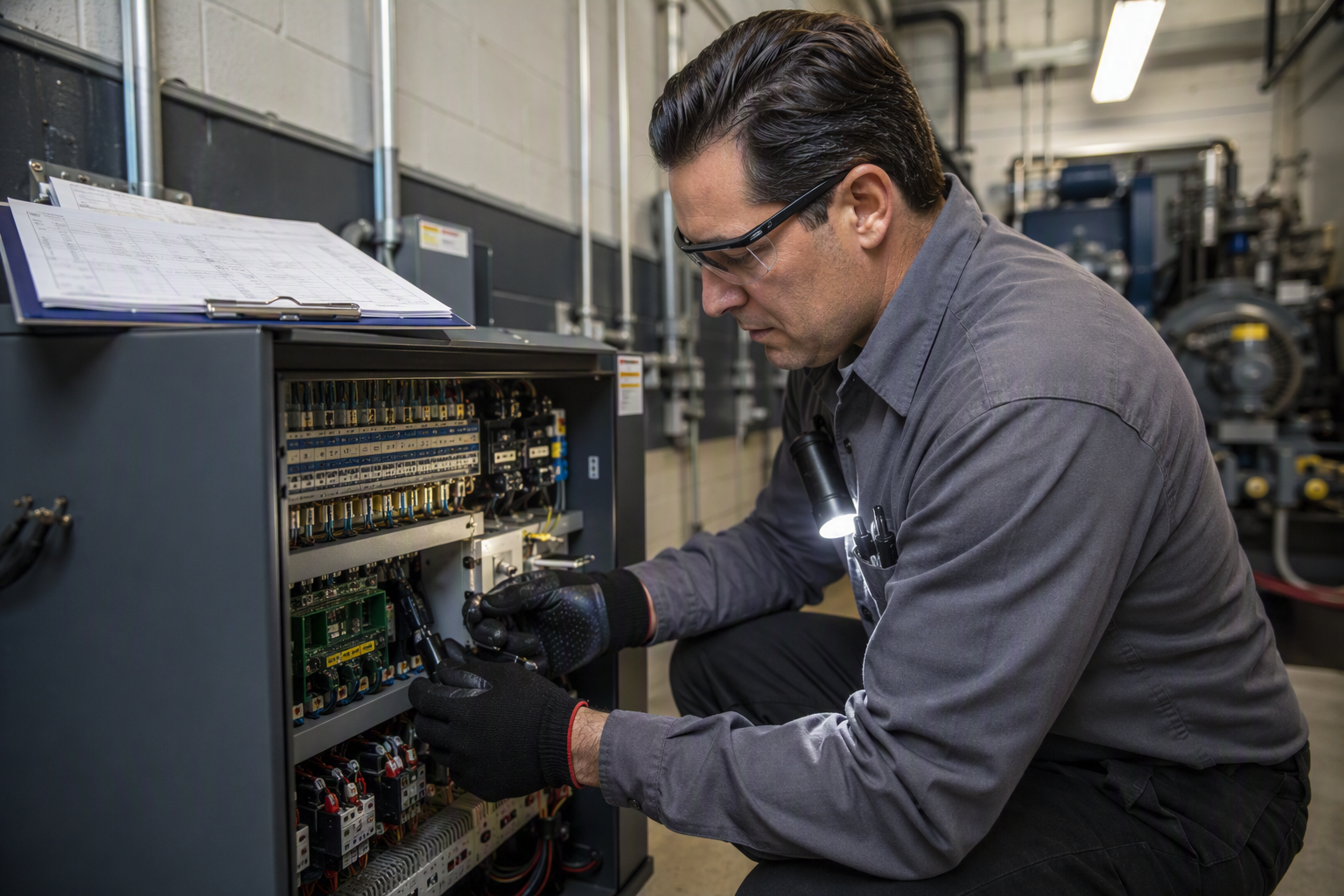
- Machine room conditions: Temperature control, lighting, and housekeeping in the machine room are reviewed. Medical facilities sometimes repurpose adjacent mechanical spaces in ways that create code violations.
- Pit conditions: The elevator pit must be clean, dry, properly lit, and equipped with a working stop switch and ladder.
What ADA Requirements Apply Specifically to Healthcare Elevators?
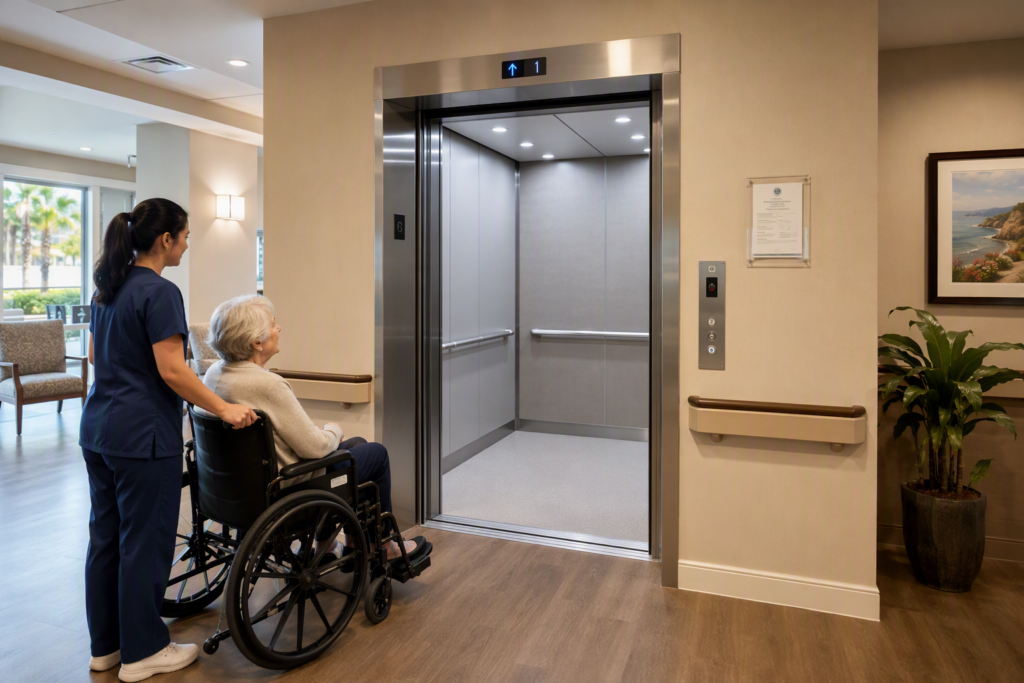
Under the Americans with Disabilities Act, elevators serving healthcare facilities must meet accessibility standards that go beyond basic safety. Common compliance items inspectors review include:
- Hall call and car operating panel button heights within the accessible reach range
- Braille and raised character floor designations on all panels
- Audible and visual floor indicators inside the car and at landings
- Door timing: doors must remain open long enough for a patient in a wheelchair or on a gurney to enter and exit safely
- Cab interior dimensions that accommodate mobility devices
- Non-slip flooring that does not create a tripping hazard for walkers or canes
Healthcare facilities with older elevators that have never been retrofitted for ADA compliance face the greatest exposure. An elevator that passes mechanical inspection can still generate a complaint or legal action if accessibility features are absent.
What Documents Must Be Ready Before the Inspector Arrives?
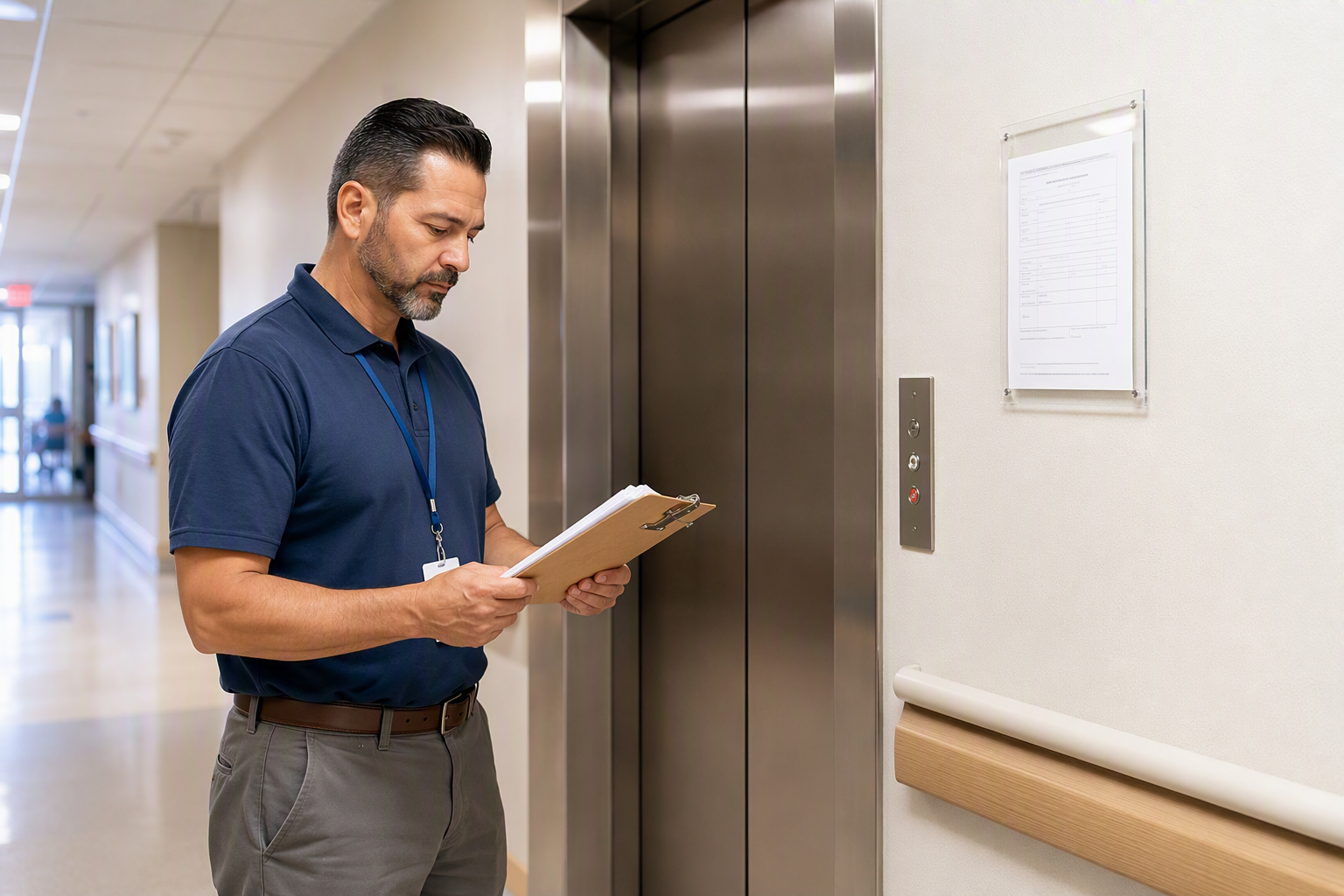
California inspectors expect a complete documentation package. Facilities that cannot produce required records on inspection day risk a failed inspection even when the equipment itself is in good condition. Required records typically include:
- Current maintenance log showing routine service visits and any corrective actions
- Previous certificate of inspection and inspection report
- Completed test reports for safety devices, governors, buffers, and hydraulic systems (as applicable)
- Current wiring diagrams and equipment data plates
- Records of any alterations made since the last inspection, along with permits issued by the Elevator Unit
- Emergency communication test log
- Machine room access log (for buildings that require controlled access)
What Happens If an Elevator Fails Inspection at a Hospital or Medical Facility?
A failed inspection results in the Elevator Unit issuing a notice that the unit may not be used until deficiencies are corrected and a re-inspection passes. In a hospital, this can affect patient transport to imaging, surgery, or upper-floor units. In an outpatient clinic, it may trigger ADA complaints if no accessible alternative path of travel exists.
Cal/OSHA has authority to order an elevator shut down immediately if a safety-critical deficiency is found. Operating a posted elevator after a shutdown order exposes the facility to significant civil and regulatory liability.
Facilities that engage Liftech Elevator for pre-inspection preparation can address deficiencies before the official inspection date, dramatically reducing the risk of a failed inspection or a shutdown order.
Are There Healthcare-Specific Code Requirements Beyond ASME A17.1?
Yes. California healthcare facilities licensed by the Department of Public Health must also comply with Title 24 of the California Code of Regulations (California Building Standards Code), which incorporates elevator requirements for hospitals and skilled nursing facilities. Key healthcare-specific considerations include:
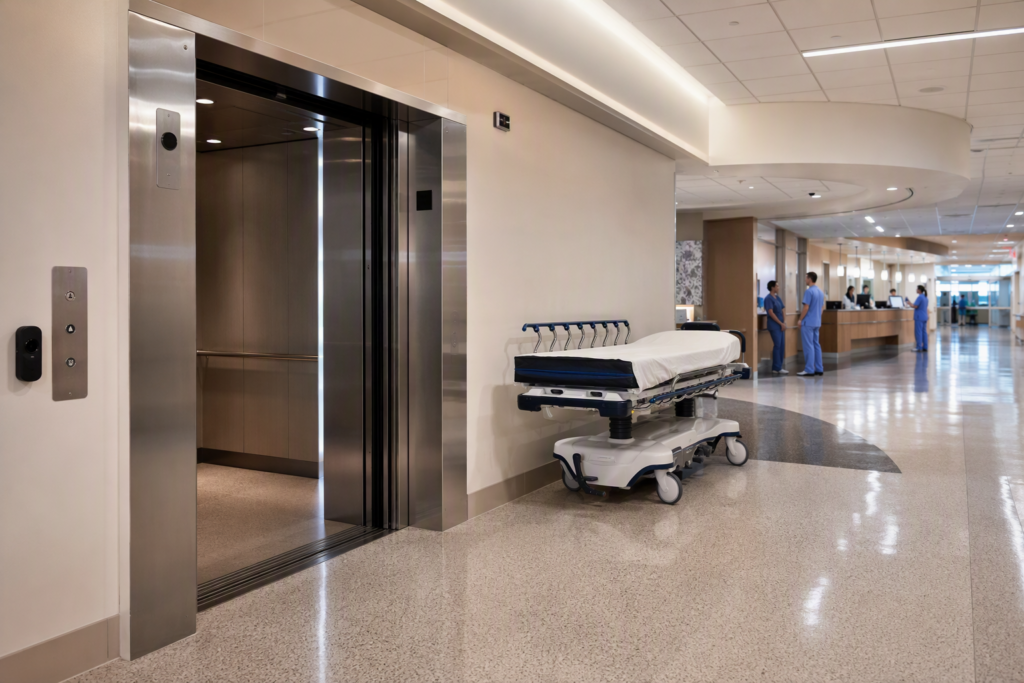
- Stretcher-capacity requirements: Certain hospital occupancy classifications require at least one elevator large enough to accommodate a fully extended hospital stretcher.
- Fire and smoke control integration: Elevators in fully sprinklered hospitals may be required to integrate with the building’s fire alarm and smoke control systems.
- Seismic provisions: California’s seismic risk zone means that elevators in healthcare facilities must meet additional seismic switch and counterweight guarding requirements under ASME A17.1 and California amendments.
- Infection control during maintenance: While not a code requirement per se, healthcare facilities are expected to enforce infection control protocols during any maintenance or repair work, which affects how and when maintenance windows can be scheduled.
How Should a Healthcare Facility Choose an Elevator Contractor for Pre-Inspection Work?
Not every elevator contractor has experience with the operational constraints and compliance layers specific to healthcare environments. Facility managers should evaluate contractors on the following criteria:
- Valid California elevator contractor license issued through the Elevator Unit
- Demonstrated familiarity with ASME A17.1, ADA, and California Title 24 healthcare requirements
- Ability to work within infection control policies and around clinical schedules
- Transparent documentation practices that produce inspection-ready records
- Local presence in the service area for timely response during the pre-inspection window
Liftech Elevator is a certified elevator service company serving healthcare facilities in Signal Hill, Long Beach, Los Angeles, and Orange County, providing pre-inspection assessments, maintenance, and repair work aligned with the compliance requirements hospitals and clinics face.
Questions Your Inspector Will Ask
Healthcare facility managers can expect a California Elevator Unit inspector to ask or test the following during the inspection visit:
- “Can you show me the current maintenance log?” — The inspector will review the log for continuity of service and will note any gaps.
- “When were the safety devices last tested, and do you have the test reports?” — Undocumented tests are treated as tests not performed.
- “Has any alteration been made to this elevator since the last inspection?” — Unreported alterations can result in a violation and a requirement to obtain a retroactive permit.
- “Is the emergency phone operational?” — The inspector will physically test two-way communication from inside the car.
- “Test Phase I and Phase II recall for me.” — The inspector will physically verify firefighters’ emergency operation using the building’s key switch and the in-car controls.
- “What is the capacity rating, and is it posted?” — The capacity placard must be current and visible.
- “Is the machine room access restricted to authorized personnel?” — Unauthorized access to machine rooms is a recurring citation item in large healthcare campuses.
- “Show me the pit.” — The inspector will descend into or visually inspect the pit for water intrusion, lighting, stop switch function, and housekeeping.
What Is the Timeline for Receiving a New Certificate After a Passing Inspection?
After a passing inspection, the Elevator Unit processes the certificate. Certificate issuance timelines can vary depending on case volume at the Elevator Unit. Facilities should not wait for the certificate to arrive before scheduling the inspection — the prior certificate remains in effect until expiration even if the inspection has already been completed. Planning the inspection well before the expiration date ensures no lapse occurs during processing.
If a facility is undergoing significant renovations that affect elevator access or if new equipment is being installed, additional permits and acceptance inspections are required before a new certificate will be issued. Liftech Elevator assists healthcare clients in identifying when permit filings are needed and coordinates directly with the Elevator Unit to keep the process on track.
Can a Healthcare Facility Apply for a Certificate Extension If Repairs Cannot Be Completed in Time?
In limited circumstances, the California Elevator Unit may grant a short extension or variance when a facility can demonstrate that repairs are actively in progress and that the elevator does not pose an imminent safety hazard. Extensions are not guaranteed, are subject to Unit discretion, and should never be treated as a substitute for timely preparation. Facilities that find themselves in this position should consult directly with the Elevator Unit and ensure a licensed contractor is actively on the work.
How Does Seismic Risk in Southern California Affect Healthcare Elevator Compliance?
Southern California’s seismic environment creates compliance obligations that facilities in other states do not face. Under California amendments to ASME A17.1, elevators must be equipped with seismic switches that halt the elevator and trigger inspection protocols after a seismic event above a defined threshold. Counterweight guarding requirements also apply. Healthcare facilities — which are expected to remain operational or rapidly restore operations after an earthquake — have particular reason to ensure these systems are functional and properly tested before the inspection.
Contact Liftech Elevator for a Free Elevator Assessment
Healthcare facility managers in Signal Hill, Long Beach, Los Angeles, and Orange County who need to prepare for a California state elevator inspection before the certificate expires can get started with a no-cost assessment from Liftech Elevator. A licensed technician will review the current condition of each conveyance, identify deficiencies against ASME A17.1 and ADA requirements, and provide a clear action plan with a timeline that fits the facility’s operational schedule.
Do not wait until the certificate is weeks away from expiring. The risks — shutdown orders, patient transport disruptions, ADA liability, and Cal/OSHA penalties — are too significant to leave to chance.
Contact Liftech Elevator for a free elevator assessment: 562-609-3478
Need elevator service you can rely on? Liftech Elevator is ready to help.