Elevator Maintenance & Inspection Requirements for Hospitals and Healthcare Facilities in Los Angeles and Orange County
Quick Answer: Hospitals and healthcare facilities in Los Angeles and Orange County must comply with California’s Title 8 elevator safety regulations administered by the Division of Occupational Safety and Health (Cal/OSHA), periodic inspections under the ASME A17.1 Safety Code for Elevators and Escalators, ADA accessibility standards, and any additional requirements set by local Authorities Having Jurisdiction (AHJs) — with healthcare-specific demands around continuous availability, infection control, and emergency power compliance.
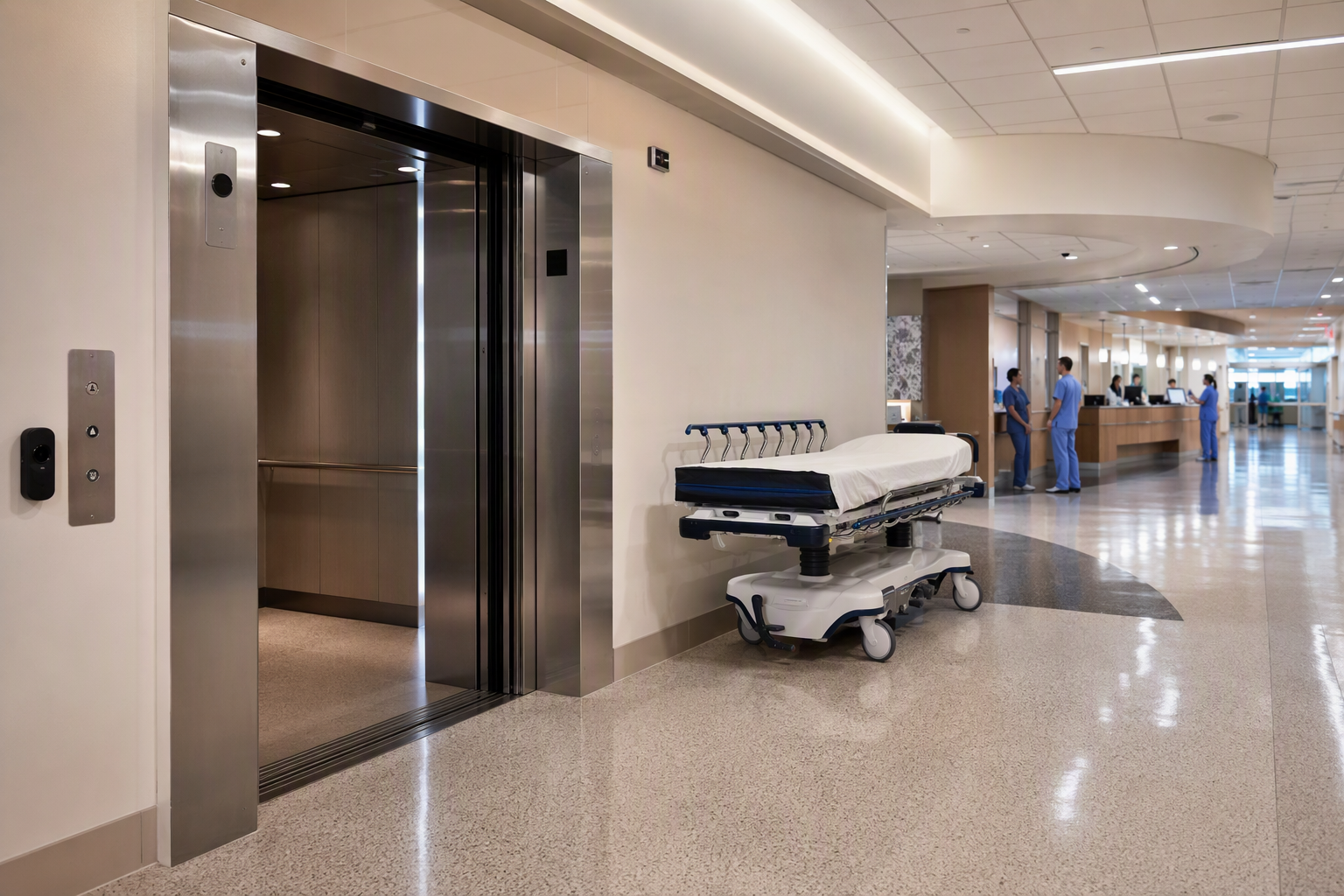
Healthcare facilities operate under a uniquely demanding set of vertical transportation requirements. Elevators in hospitals, surgery centers, and outpatient clinics in Los Angeles and Orange County are not simply a convenience — they are critical infrastructure. A single elevator shutdown can disrupt patient transport, delay surgery, and compromise emergency response. Understanding the full compliance picture helps facility managers avoid citations, protect patients, and keep operations running without interruption.
Liftech Elevator works with healthcare facility managers, hospital engineers, and property directors throughout Signal Hill, Long Beach, Los Angeles, and Orange County to keep elevators inspection-ready and code-compliant year-round.
What State Agency Oversees Elevator Inspections in California Healthcare Facilities?
In California, elevator safety is regulated under Title 8 of the California Code of Regulations, with enforcement administered by the California Division of Occupational Safety and Health (Cal/OSHA), specifically through its Elevator Unit. This unit issues permits, licenses elevator mechanics and contractors, and enforces periodic inspection requirements across all building types — including hospitals, skilled nursing facilities, and outpatient clinics.
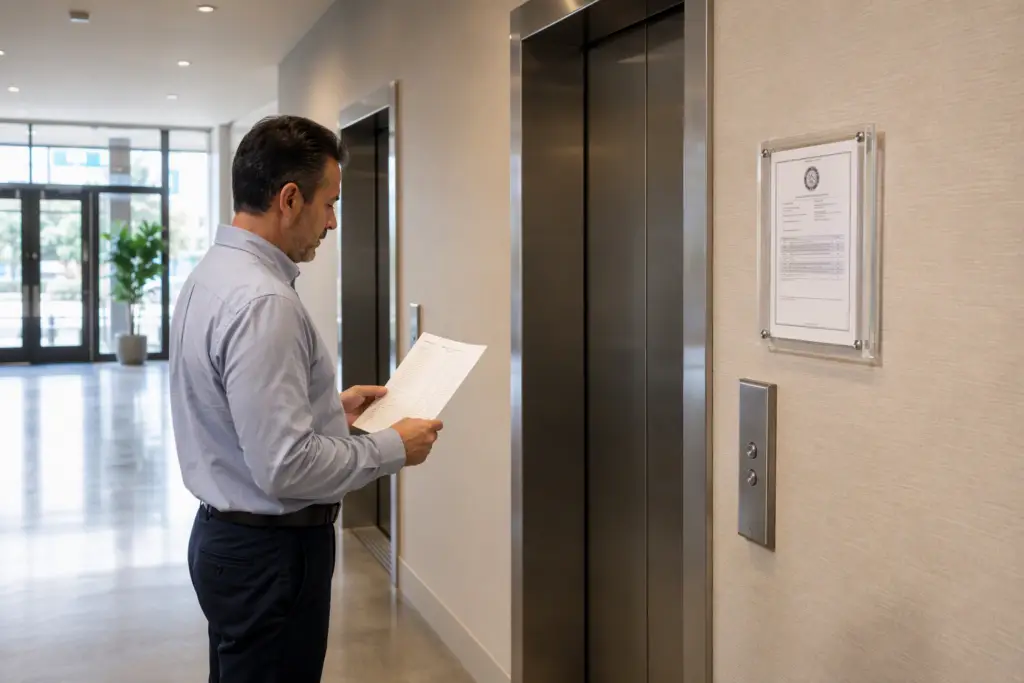
Every elevator in a California healthcare facility must hold a valid Cal/OSHA Permit to Operate. This permit is issued only after a qualified inspector certifies the elevator meets applicable safety standards. Operating a hospital elevator without a current permit exposes a facility to significant regulatory liability.
Local AHJs — including city building departments in Los Angeles and municipalities across Orange County — may also impose additional requirements or coordinate inspections alongside the state. Facility managers should confirm both state and local requirements with their elevator service provider.
Which ASME Code Applies to Hospital Elevators in California?
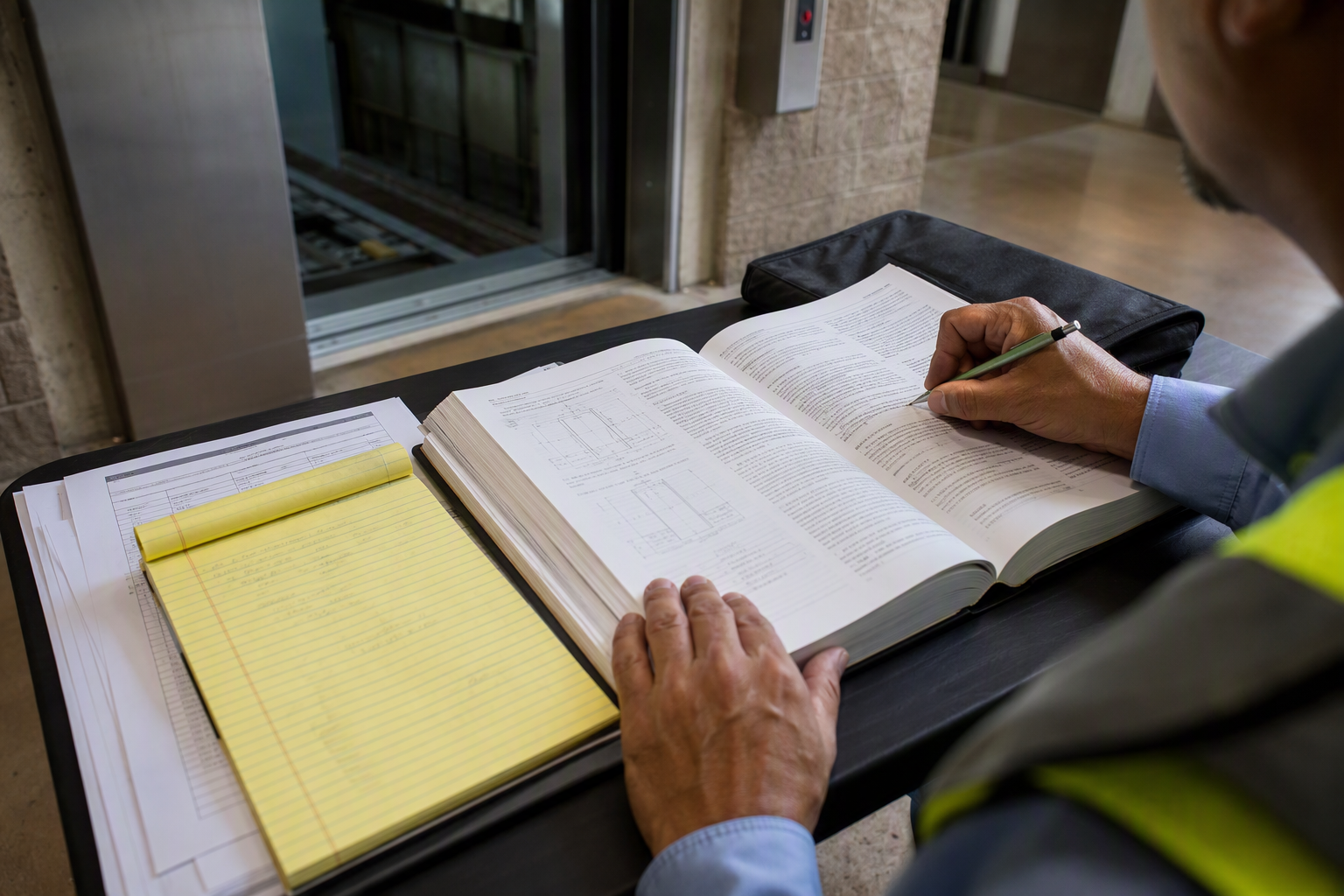
California enforces the ASME A17.1 Safety Code for Elevators and Escalators for new installations and modernizations, and the ASME A17.3 Safety Code for Existing Elevators and Escalators for equipment already in service. Both are adopted and enforced through California’s Title 8 framework.
For healthcare facilities, the practical impact includes:
- ASME A17.1 governs the design, construction, installation, and testing of new or modernized elevators — including emergency operation features, door safety, and car controls.
- ASME A17.3 sets retroactive safety requirements that existing hospital elevators must meet, even if they predate current code editions. California periodically updates which edition of these codes is in effect.
- Healthcare facilities with older elevator inventory should schedule a code-compliance audit to identify any A17.3 retroactive requirements that may apply.
Liftech Elevator assists healthcare clients in identifying which code edition governs their specific equipment and what — if any — retroactive upgrades are required under current California enforcement.
How Often Must Hospital Elevators Be Inspected in Los Angeles and Orange County?
California’s Title 8 regulations require that elevators undergo periodic inspections and tests at intervals defined by the adopted ASME codes and state enforcement policy. The specific interval for a given elevator depends on its category and use classification under ASME A17.1 / A17.3.
In general terms:
- Annual inspections are required for most passenger and freight elevators in commercial and institutional settings, including hospitals.
- Periodic tests — including full-load safety tests and governor and buffer tests — occur on longer cycles as specified by ASME standards and California’s enforcement schedule.
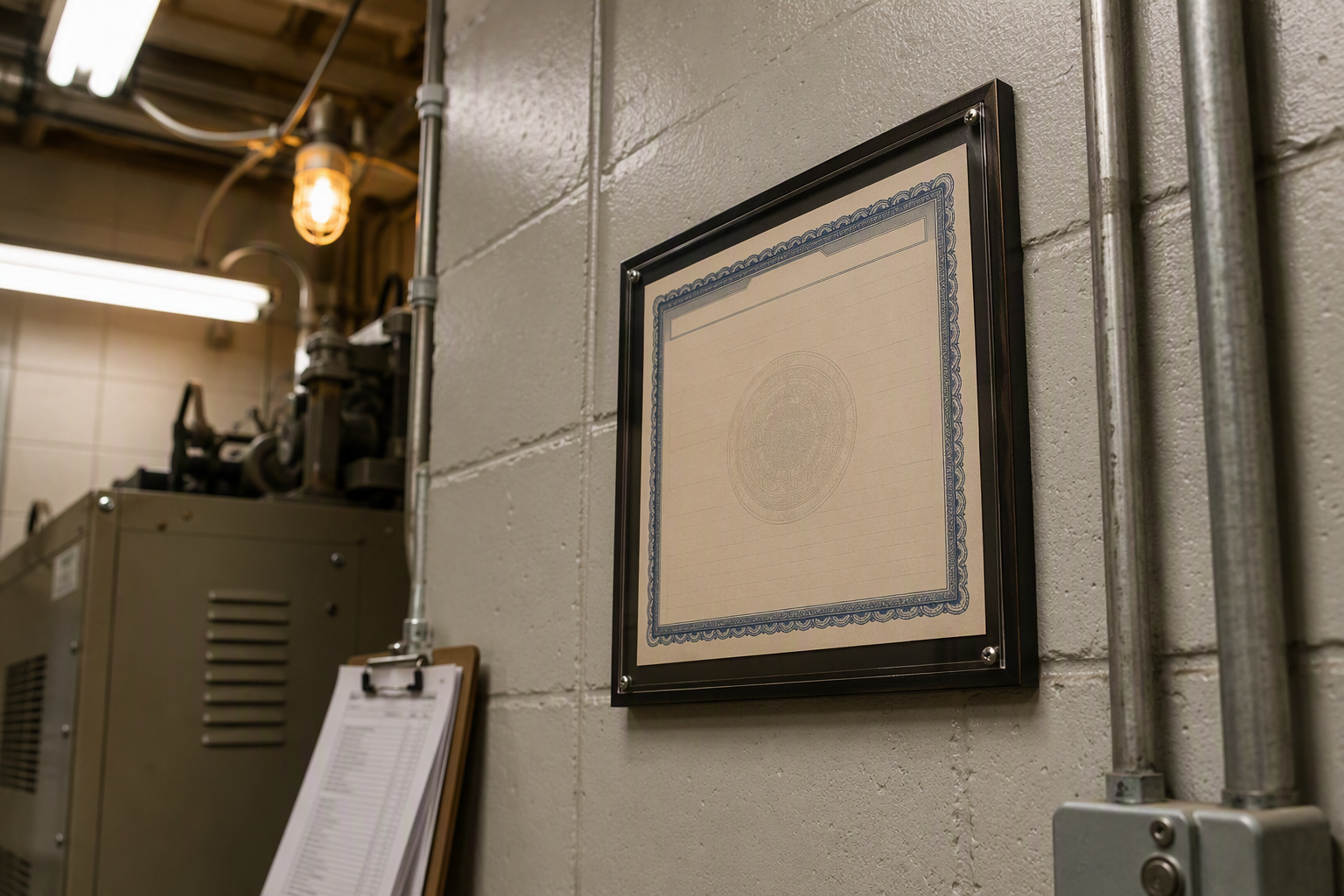
- Inspection certificates must be posted in the elevator car and made available to inspectors upon request.
For healthcare facilities in Los Angeles and Orange County, where elevator downtime carries patient safety implications, many facility managers choose to schedule maintenance visits more frequently than the minimum required intervals to catch wear before it triggers a violation.
What ADA Requirements Apply to Elevators in Healthcare Facilities?
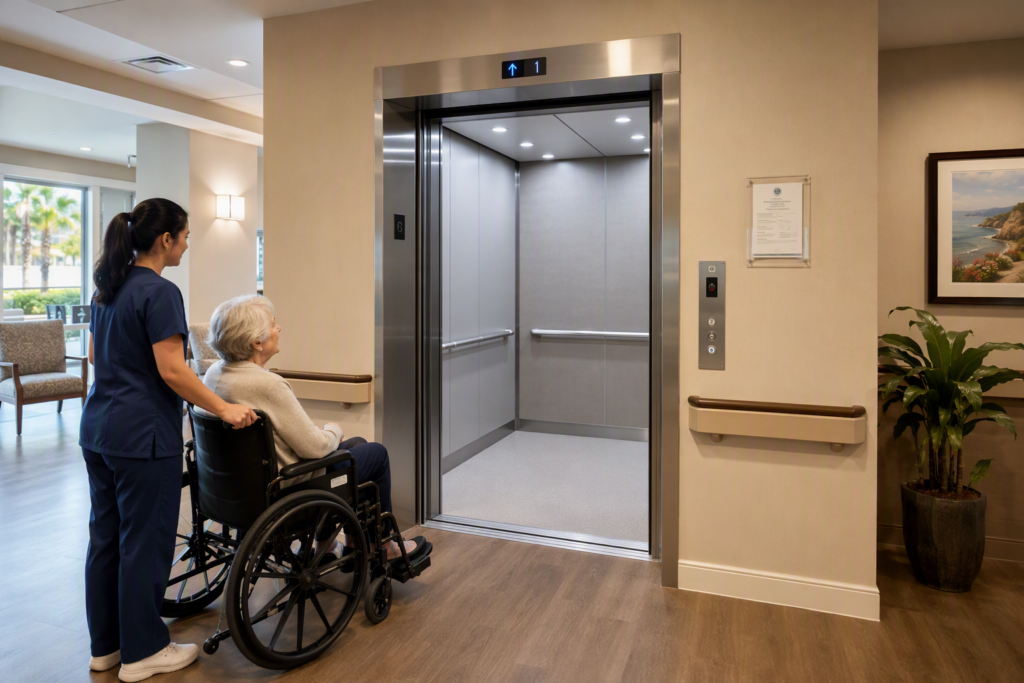
The Americans with Disabilities Act (ADA) requires that elevators serving multiple-story healthcare facilities be accessible to people with disabilities. For hospitals and clinics, this is not aspirational — it is a legal requirement with direct bearing on patient and visitor access.
Key ADA requirements for healthcare elevator compliance include:
- Car dimensions: Elevator cars must meet minimum interior dimensions to accommodate wheelchairs, stretchers, and mobility devices.
- Door timing: Doors must remain open long enough for individuals with mobility limitations to enter and exit safely.
- Controls and signage: Control buttons must be at accessible heights, and floors must be identified with raised characters and Braille.
- Audible and visual signals: Leveling indicators and arrival signals must serve users with visual or auditory impairments.
California also enforces the California Building Code (CBC) accessibility provisions, which in some areas exceed federal ADA minimums. Healthcare facility managers in Los Angeles and Orange County should confirm compliance with both federal and state accessibility standards.
What Are the Emergency Power and Fire Service Requirements for Hospital Elevators?
Healthcare facilities have additional obligations beyond standard commercial buildings because of their emergency operations requirements. Under California building and fire codes applicable to hospitals:
- Designated elevators must be connected to emergency standby power systems so that vertical transportation remains operational during power outages — critical for patient transport during emergencies.
- Elevators must be equipped with Phase I and Phase II Fire Service Emergency Operation as required under ASME A17.1. Phase I returns cars to a designated floor upon activation of building fire alarms; Phase II allows firefighters to operate cars manually.
- Hospital elevators used for patient transport must accommodate stretcher-capable car sizes, which is a specific design and retrofit consideration for older facilities.
Facility engineers should verify that both their elevator service contractor and fire protection systems contractor have coordinated testing of fire service operation as part of their annual compliance program.
What Maintenance Practices Are Required — Not Just Inspections?
California’s Title 8 regulations require that elevators be maintained by a licensed elevator mechanic under a qualified elevator contractor. For healthcare facilities, a structured preventive maintenance program is the foundation of both regulatory compliance and operational reliability.
A compliant maintenance program for a hospital elevator typically includes:
- Lubrication and adjustment of mechanical components on a scheduled cycle.
- Inspection of door operators, safety edges, and door timing for proper function.
- Testing of safeties, governors, and buffers per ASME A17.1 schedules.
- Review and documentation of all work performed in a maintenance logbook available to inspectors.
- Prompt response to reported malfunctions — particularly door-related issues that pose entrapment risk.
- Coordination with facility engineering on infection control protocols when mechanics enter patient-area elevator lobbies and machine rooms.
Liftech Elevator provides documented preventive maintenance programs designed to satisfy California inspection requirements and support the continuous-operation demands of healthcare environments in Los Angeles and Orange County.
What Happens If a Hospital Elevator Fails a California Inspection?
When a California elevator inspection results in a violation or failed test, the consequences for a healthcare facility are immediate and serious:
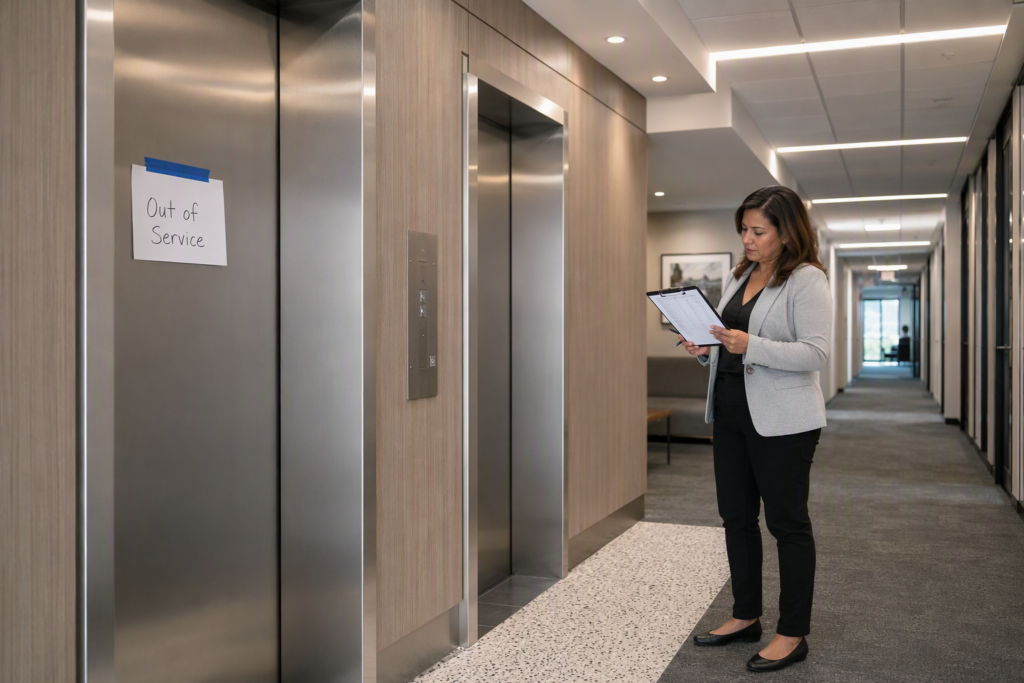
- The elevator may be taken out of service by the inspector until the deficiency is corrected and re-inspected.
- The facility must engage a licensed elevator contractor to perform the required repairs.
- A re-inspection must be scheduled with Cal/OSHA’s Elevator Unit before the elevator may return to service.
- Operating an elevator under a stop order is a regulatory violation that can result in citations and fines.
- For hospitals, an out-of-service elevator can disrupt patient flow, require operational adjustments, and trigger internal incident reporting.
Proactive maintenance — not reactive repair — is the most effective way healthcare facilities avoid this scenario. Facilities that undergo regular code-compliance reviews are far less likely to face unexpected out-of-service orders.
Are There Infection Control Considerations for Elevator Maintenance in Hospitals?
While not part of the elevator code itself, healthcare accreditation standards and hospital policy often require that elevator maintenance work in clinical areas follow specific infection control protocols. Facility managers should communicate requirements such as:
- Barrier or containment procedures when accessing machine rooms adjacent to patient care areas.
- Scheduling non-emergency maintenance during lower-traffic periods to reduce exposure in corridors.
- Contractor sign-in and badging requirements consistent with Joint Commission or CMS standards for vendor access.
- Use of clean tools and equipment when working in elevators that serve sterile or sensitive clinical zones.
An experienced elevator service provider working in healthcare settings understands these operational realities and can coordinate accordingly.
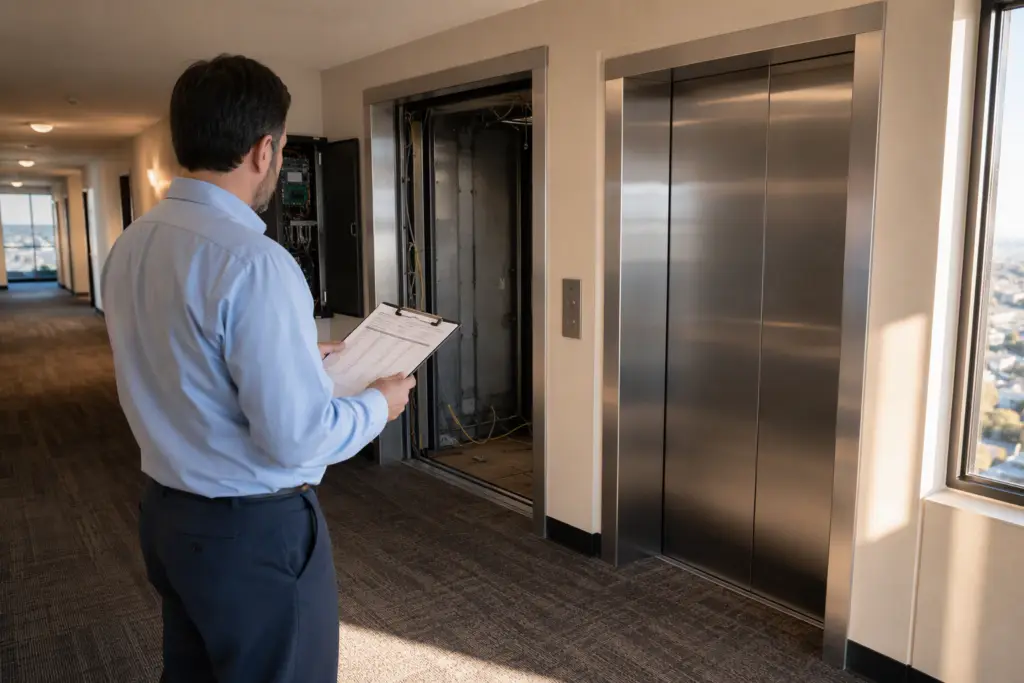
How Should a Healthcare Facility Prepare for an Elevator Inspection?
Preparation reduces the likelihood of violations and speeds the inspection process. Steps a facility manager should take include:
- Confirm the elevator’s current Permit to Operate is posted in the car and has not expired.
- Ensure the maintenance logbook is current, legible, and accessible to the inspector.
- Verify that the machine room is clean, properly lit, and free of stored materials not related to elevator equipment.
- Test fire service Phase I and Phase II operation with building staff before the inspection date.
- Review any open work orders or previously noted deficiencies and confirm they have been resolved.
- Coordinate with your licensed elevator contractor to be on-site or available during the inspection.
Questions Your Inspector Will Ask
When a Cal/OSHA elevator inspector arrives at a Los Angeles or Orange County healthcare facility, the following questions — or their documentary equivalents — are commonly part of the review:
- Is the current Permit to Operate posted in the elevator car?
- When was the last periodic inspection performed, and is the certificate current?
- Has the maintenance logbook been kept up to date by a licensed elevator mechanic?
- Has fire service Phase I and Phase II emergency operation been tested and documented?
- Is the machine room accessible, properly identified, and free of non-elevator materials?
- Have any open deficiencies from the prior inspection been corrected?
- Is the elevator connected to emergency standby power, and has that connection been tested?
- Do car controls, door safety devices, and audible/visual signals meet current applicable code requirements?
- Has the contractor performing maintenance work been licensed under California’s elevator contractor licensing requirements?
Facilities that can answer “yes” — and provide documentation — to each of these points are well-positioned for a successful inspection outcome.
Why Healthcare Facilities in Los Angeles and Orange County Choose Liftech Elevator
Healthcare facility engineers and administrators throughout Signal Hill, Long Beach, Los Angeles, and Orange County rely on Liftech Elevator because elevator compliance in a clinical environment requires more than passing a checklist. It requires a service partner that understands the regulatory framework, responds to the operational demands of healthcare settings, and documents work in a way that satisfies both Cal/OSHA inspectors and hospital compliance officers.
Liftech Elevator’s work in the healthcare vertical spans hospitals, outpatient surgery centers, medical office buildings, and skilled nursing facilities across the Los Angeles and Orange County service area. Every maintenance visit is performed by California-licensed elevator mechanics and documented in a format consistent with what inspectors expect to see.
What Should a Healthcare Facility Do Right Now to Ensure Compliance?
For facility managers who are uncertain about their current compliance status, the most effective first step is a structured elevator assessment. This review should cover:
- Verification that all elevators hold current Cal/OSHA Permits to Operate.
- Review of maintenance logbooks for completeness and frequency of documented service.
- A code-gap analysis comparing the current condition of each elevator against applicable ASME A17.1 and A17.3 requirements.
- Confirmation that ADA-required features — car dimensions, controls, signage, door timing — are in place.
- Documentation of fire service emergency operation testing history.
This type of assessment provides a clear picture of where a facility stands today and what — if anything — needs to be addressed before the next scheduled inspection.
Schedule Your Healthcare Elevator Assessment Today
Elevator compliance in a hospital or healthcare facility is too important to leave to uncertainty. Whether your facility is preparing for an upcoming Cal/OSHA inspection, evaluating an aging elevator inventory, or simply confirming that your current maintenance program meets 2026 California requirements, Liftech Elevator can help.
Contact Liftech Elevator for a free elevator assessment: 562-609-3478
Serving Signal Hill, Long Beach, Los Angeles, and Orange County.
Need elevator service you can rely on? Liftech Elevator is ready to help.