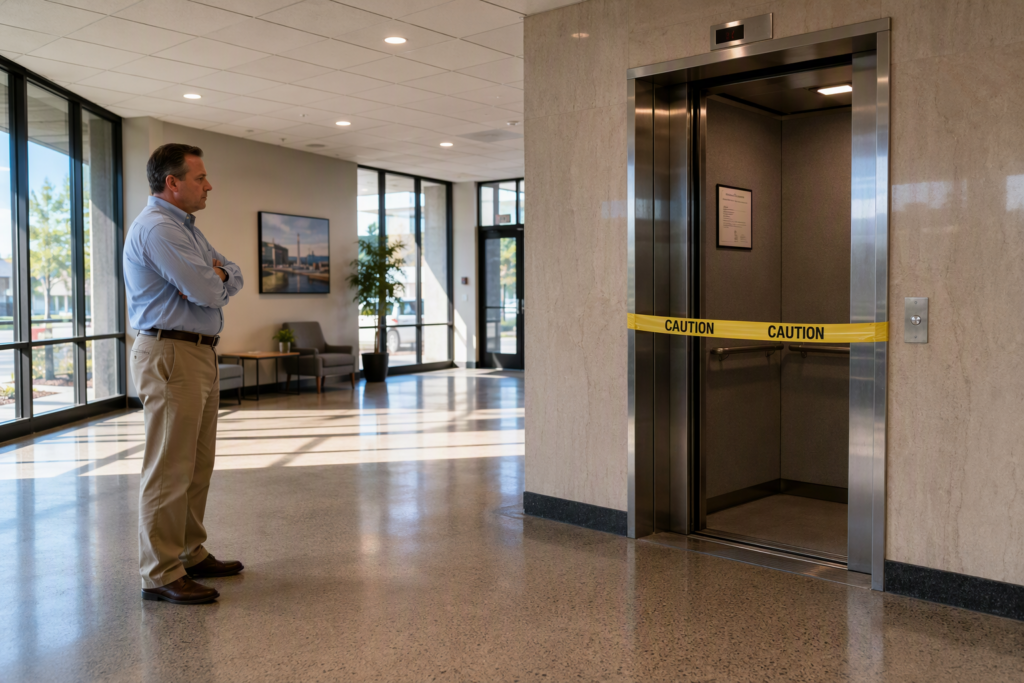
Building owners and facility managers in California face a recurring dilemma: the elevator is acting up again, and the question is whether to fix the immediate problem or commit to a full modernization. The answer is not always obvious. This guide breaks down the decision framework, compares costs and outcomes, and helps you determine which path makes financial sense for your specific situation.
—
What Is the Difference Between Elevator Repair and Modernization?

Elevator repair addresses a specific, discrete failure — a worn brake, a faulty door sensor, a burned-out controller board. The goal is to restore the elevator to its previous operating condition without replacing core systems.
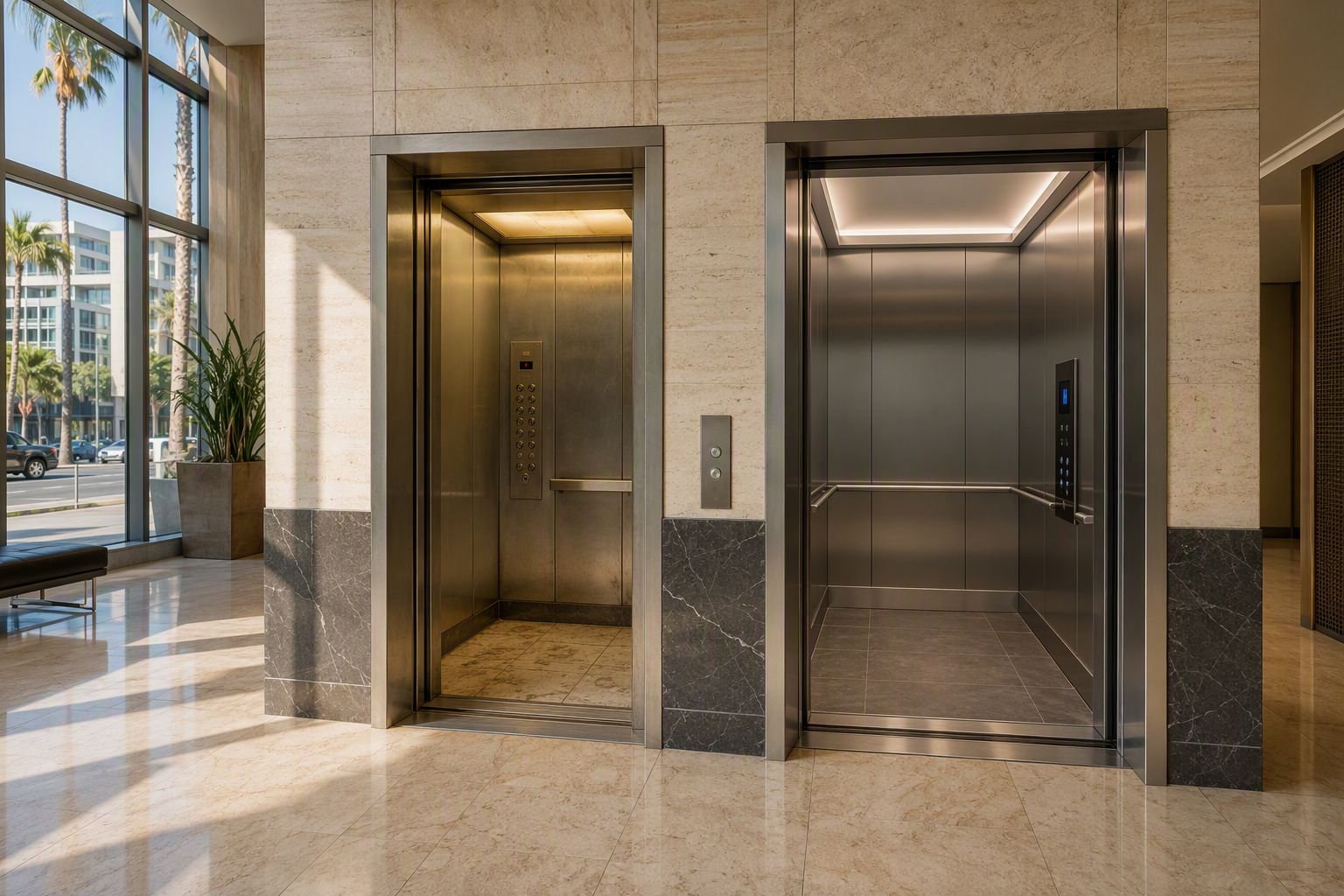
Elevator modernization (also called a retrofit or upgrade) replaces major components or entire subsystems — typically the controller, motor and drive, cab interior, door operator, or all of the above — with current-generation technology. Modernization does not necessarily mean replacing the entire elevator structure, but it fundamentally changes how the elevator performs, complies with codes, and consumes energy.
The distinction matters financially because repair spending is largely reactive and unpredictable, while modernization is a planned capital investment with a defined scope and a measurable return.
—
How Do You Know When an Elevator Needs Modernization Instead of Repair?
Several indicators suggest that modernization has become the more rational choice:
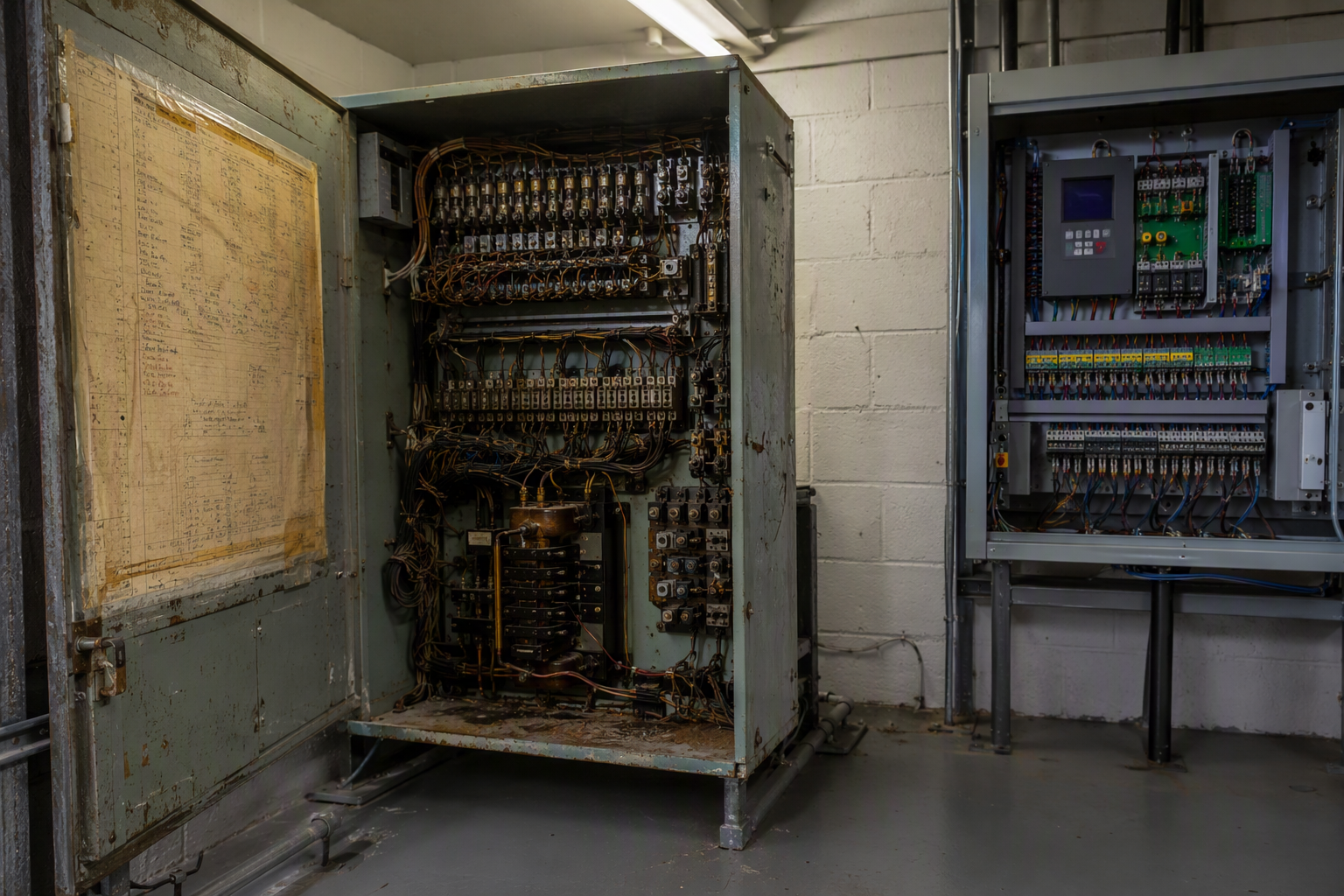
- Age and obsolescence: When an elevator’s core mechanical and electrical systems are several decades old, replacement parts may no longer be manufactured. When sourcing parts requires specialty suppliers or salvage, each repair becomes more expensive and slower.
- Repair frequency: If the same elevator is generating multiple service calls per year for different failing components, the system is degrading systemically — not experiencing isolated failures.
- Accumulating repair costs: A commonly referenced industry rule of thumb is that when annual repair costs approach or exceed a significant fraction of the estimated modernization cost, modernization deserves serious evaluation. (See the cost comparison table below.)
- Code compliance gaps: California elevator installations must meet requirements under the ASME A17.3 Safety Code for Existing Elevators and Escalators and applicable state regulations enforced by the California Department of Industrial Relations, Division of Occupational Safety and Health (Cal/OSHA). An aging elevator may have accumulated code deficiencies — particularly around door reopening devices, emergency lighting, or communication systems — that require upgrades regardless of mechanical condition.
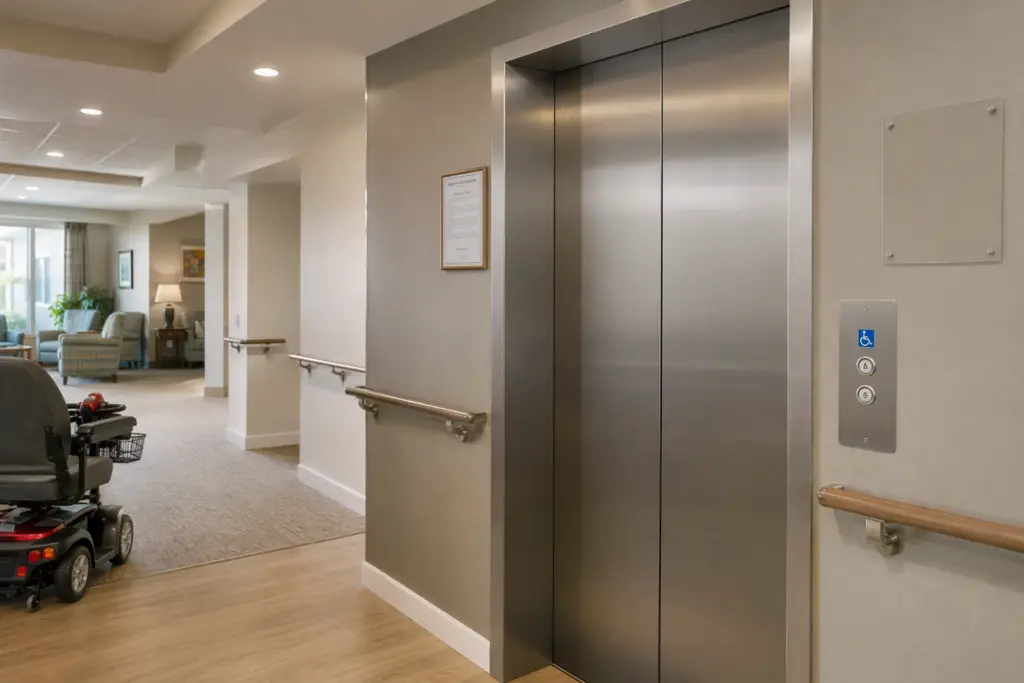
- ADA compliance issues: The Americans with Disabilities Act (ADA) requires elevators in covered buildings to meet accessibility standards. If your elevator’s cab dimensions, control panel heights, or Braille signage do not comply, a modernization project can address these requirements systematically.
- Energy and operational inefficiency: Older hydraulic and traction systems consume substantially more energy than modern variable-frequency drive (VFD) systems. A modernization that reduces energy consumption can generate ongoing operational savings that help offset the capital cost.
- Tenant and occupant experience: Persistent slow speeds, rough rides, unreliable door operation, and dated cab aesthetics affect tenant satisfaction and can influence lease renewals in commercial buildings.
—
What Are the Key Cost Factors for Elevator Repair vs. Modernization?
| Factor | Repair | Modernization |
|---|---|---|
| Upfront cost | Lower per incident; unpredictable total | Higher capital outlay; defined scope |
| Long-term cost trajectory | Tends to increase as system ages further | Typically decreases after project completion |
| Parts availability | May require costly specialty sourcing for older systems | New components under manufacturer warranty |
| Downtime risk | Reactive; unplanned outages are common | Planned outage during project; reduced unplanned downtime afterward |
| Energy costs | No improvement; older systems remain inefficient | Modern VFD drives and LED lighting reduce ongoing energy use |
| Code compliance | Repair restores prior condition; does not upgrade compliance | Brings system to current ASME A17.1 and California requirements |
| ADA compliance | Repair does not address ADA gaps | Can incorporate ADA upgrades in project scope |
| Liability exposure | Aging systems carry higher risk of incident and citation | Reduced liability with updated safety systems |
| Useful life added | Extends life of aging components incrementally | Resets useful life of modernized systems by many years |
| Financing options | Usually expensed as operating cost | May qualify as capital improvement; financing and depreciation strategies available |
—
What Does an Elevator Modernization Project Actually Include?
Modernization scope varies by building needs and budget, but projects typically address one or more of the following subsystems:
- Controller and relay logic: Replacing relay-based or early microprocessor controllers with modern solid-state controllers improves reliability, enables remote diagnostics, and supports current safety codes.
- Motor and drive system: Converting from older AC two-speed or DC motors to variable-frequency drive (VFD) technology reduces energy consumption and provides smoother acceleration and deceleration.
- Door operator and equipment: Modern door operators with updated reopening devices help meet safety requirements under ASME A17.1 Safety Code for Elevators and Escalators and reduce door-related service calls, which are among the most frequent causes of elevator outages.
- Cab interior and fixtures: Updated cab panels, LED lighting, flooring, and ADA-compliant controls and signage.
- Emergency communication systems: Current code requirements include two-way communication capable of connecting to a live attendant, not just a recording.
- Hydraulic system upgrades: For hydraulic elevators, modernization may include installing an environmentally safe biodegradable fluid, a submersible pump unit, or a new control valve to improve efficiency and address environmental compliance.
—
What Is the Typical Timeline for Elevator Repair vs. Modernization?
| Phase | Repair | Modernization |
|---|---|---|
| Initial assessment | Same day to 48 hours for diagnostic visit | Assessment and proposal: days to weeks depending on scope |
| Parts procurement | Widely available parts: same day to a few days; obsolete parts: weeks to months | Modern components: typically predictable lead times with advance planning |
| Work execution | Hours to days per incident | Weeks to months depending on scope; single-elevator buildings may require temporary measures |
| Inspection and sign-off | Required for certain repairs under California regulations | Full inspection and permit sign-off required before return to service |
| Return to service | Rapid for routine repairs | Planned outage; longer but predictable |
—
What Are the Pros and Cons of Each Approach?
| Repair | Modernization | |
|---|---|---|
| Pros |
|
|
| Cons |
|
|
—
How Do California Code Requirements Affect the Repair vs. Modernization Decision?
California elevator installations are regulated under the ASME A17.1 Safety Code for Elevators and Escalators (for new installations) and ASME A17.3 Safety Code for Existing Elevators and Escalators (for existing installations), as adopted and enforced by the California Division of Occupational Safety and Health (Cal/OSHA) Elevator Unit.
When a modernization project crosses certain thresholds of scope, it may trigger a requirement to bring additional elevator systems into compliance with current code editions. Building owners should understand this before scoping a project, because what begins as a controller replacement may require addressing other deficiencies before the elevator can receive a new permit to operate.
This is not a reason to avoid modernization — it is a reason to work with a qualified, California-licensed elevator contractor who can accurately assess the full compliance picture before committing to a project scope and budget. Repairs, by contrast, generally restore the elevator to its existing permitted condition and do not automatically trigger broader code upgrade obligations, though California regulators may cite pre-existing deficiencies discovered during a repair inspection.
Buildings that serve the public or employees must also comply with the Americans with Disabilities Act. If an elevator is a required accessible route, ADA compliance gaps can represent ongoing legal exposure that repair alone will not resolve.
—
What Steps Should a Building Owner Take to Evaluate the Decision?
- Gather your service history. Compile records of all elevator service calls, repairs, and costs for at least the past three years. Look for patterns: frequency of calls, recurring components, and trend in total annual spend.
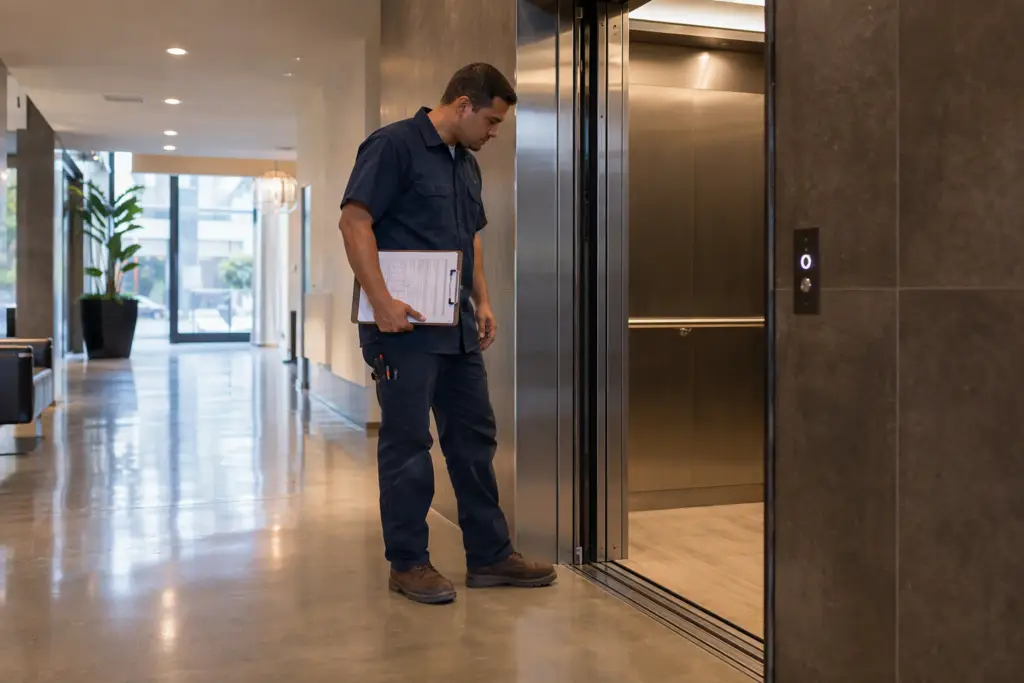
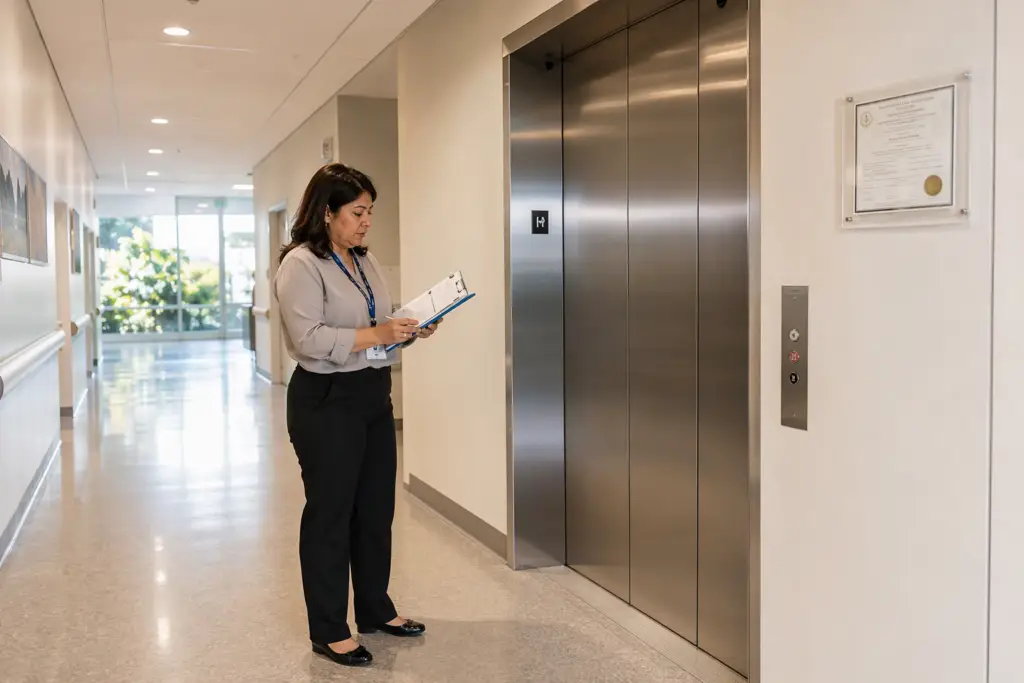
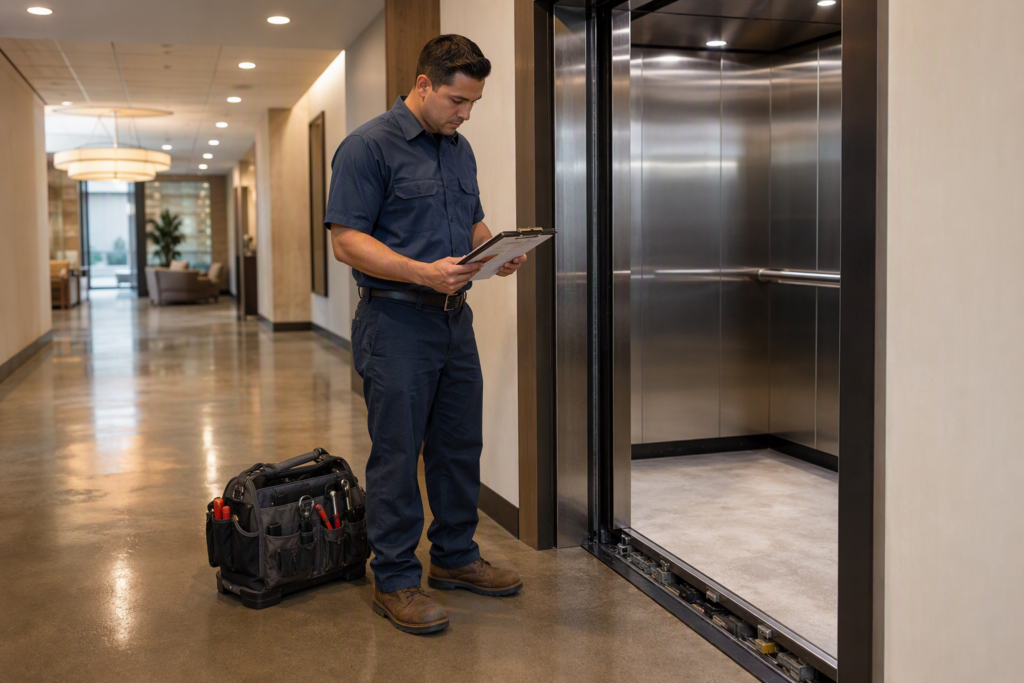
- Commission a condition assessment. Have a qualified, independent elevator contractor — not your current maintenance provider with a financial interest in the status quo — conduct a thorough mechanical, electrical, and code compliance assessment of the existing installation.
- Identify code and ADA compliance gaps. Request a written compliance gap analysis referencing ASME A17.3 and ADA requirements applicable to your building type and use.
- Obtain a modernization scope and budget estimate. Get a detailed, written proposal with clearly defined scope, so you can compare the total cost of modernization against the trajectory of continuing repairs.
- Model the financial comparison. Compare the projected repair cost over the next five to ten years (based on current trend) against the modernization cost plus projected reduced maintenance and energy savings over the same period.
- Evaluate financing and tax treatment. Consult with your accountant or financial advisor about whether the modernization qualifies as a depreciable capital improvement, and whether financing options are appropriate for your situation.
- Consider tenant and occupancy impact. Quantify the cost of downtime: lost productivity, tenant complaints, and any lease or contractual implications of persistent elevator outages.
- Make the decision based on total cost of ownership, not just upfront cost. The option with the lower sticker price is not always the more economical choice over a five- or ten-year horizon.
—
Does Elevator Modernization Increase Building Value?
For commercial, multifamily, and mixed-use properties in California, elevator reliability and condition are factors that prospective tenants, buyers, and appraisers consider. A modernized elevator signals proactive capital management and reduces the discount a buyer might apply for deferred maintenance. While the exact valuation impact depends on building type, location, and market conditions, building owners generally report that modernization supports stronger lease negotiations and reduces concessions related to building condition.
Additionally, for buildings subject to OSHA general industry standards and California workplace safety requirements, a well-maintained, code-compliant elevator system reduces liability exposure — a factor that can affect insurance premiums and risk assessment.
—
Is It Ever Smarter to Keep Repairing Rather Than Modernize?
Yes. Repair is the financially rational choice when:
- The elevator is relatively young and the current failure is genuinely isolated.
- Parts are readily available and repair cost is modest relative to modernization.
- The system is otherwise in good mechanical condition with no accumulated compliance gaps.
- A planned modernization is already scheduled within the near term and bridging repairs make sense in the interim.
- The building is facing near-term sale or redevelopment and a full modernization investment would not be recovered.
The key is making the decision based on a clear-eyed analysis of current condition, total cost trajectory, and compliance standing — not simply on the desire to avoid a large upfront expenditure.
—
How Do You Choose an Elevator Contractor for This Assessment in California?
In California, elevator work must be performed by a contractor licensed by the California Department of Industrial Relations. When selecting a contractor to assess and advise on the repair vs. modernization decision, building owners should look for:
- A contractor who is not tied exclusively to a single equipment manufacturer (independent contractors can recommend the best-fit solution rather than defaulting to proprietary systems).
- Demonstrated familiarity with California elevator code requirements as enforced by Cal/OSHA.
- The ability to provide a written condition assessment, not just a verbal opinion.
- Transparency about what triggers code upgrade obligations during a modernization project.
- A clear, itemized proposal that separates labor, equipment, permitting, and contingency.
Liftech Elevator is a California-based, independent certified elevator service company serving building owners and facility managers throughout the state. As an independent contractor, Liftech Elevator evaluates each building’s situation on its own merits — recommending repair when repair is the right answer, and modernization when the data supports it — without a manufacturer affiliation that might bias the recommendation.
—
What Should You Do Right Now If You Are Unsure Whether Your Elevator Needs Repair or Modernization?
The most important first step is an honest, independent assessment of your elevator’s current condition, code compliance standing, and cost history. Without that foundation, any decision is speculative. A qualified assessor will provide the factual basis to make a confident, financially sound decision — whether the answer turns out to be a targeted repair, a phased modernization, or a full system upgrade.
Do not rely solely on the opinion of your current maintenance contractor, who may have an interest in continuing a maintenance and repair relationship. Seek an independent evaluation that separates the assessment from the work award.
—
Get a Free Elevator Assessment from Liftech Elevator
If you are weighing whether your California building’s elevator needs repair or modernization, the right starting point is a professional, independent condition assessment. Liftech Elevator provides complimentary elevator assessments to help building owners and facility managers understand their equipment’s true condition, code compliance standing, and the financial case for each path forward.
Contact Liftech Elevator for a free elevator assessment: 562-609-3478
Need elevator service you can rely on? Liftech Elevator is ready to help.