Healthcare Facility Elevator Code: What Hospitals and Medical Buildings Must Know
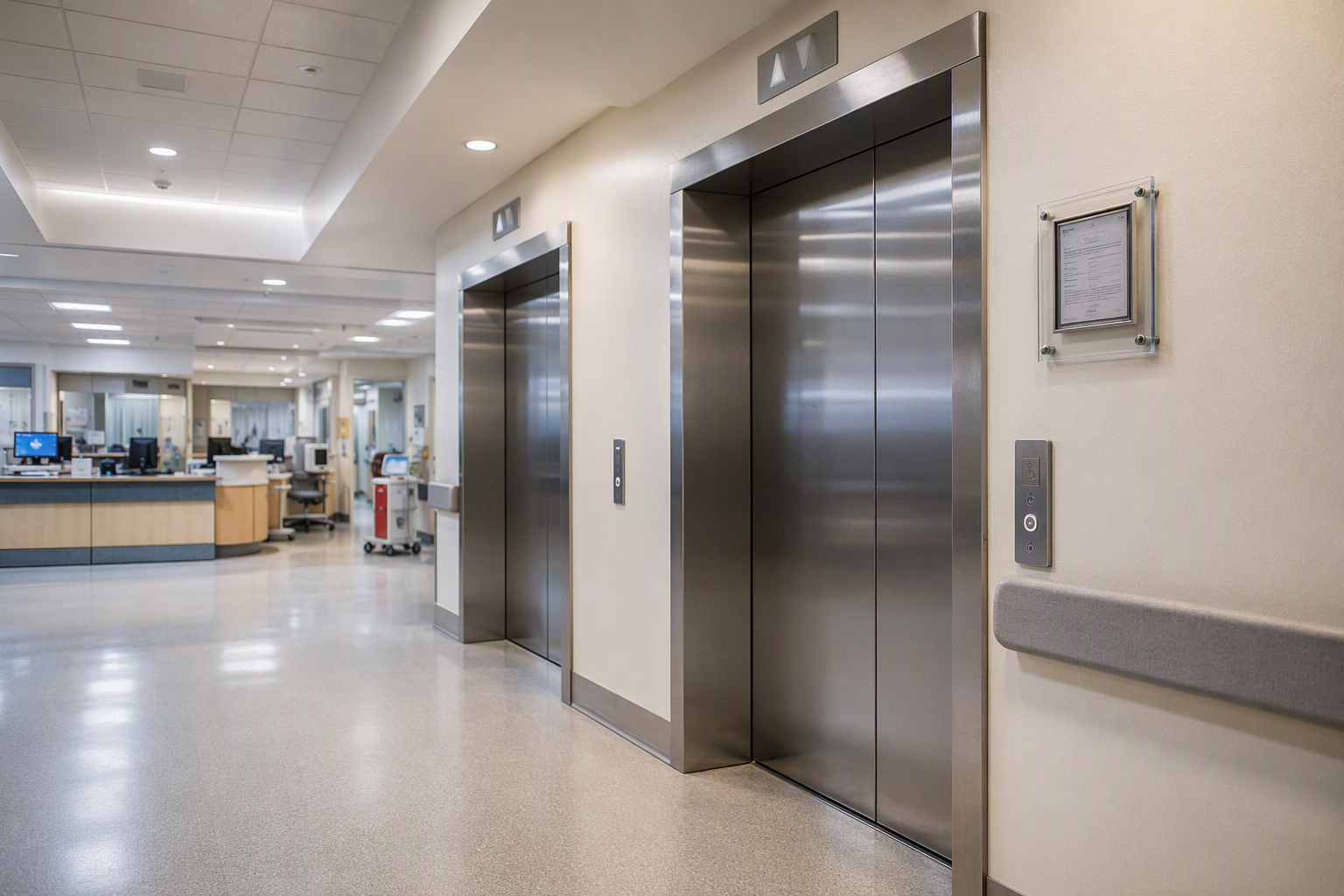
Healthcare facilities — hospitals, skilled nursing facilities, outpatient surgery centers, medical office buildings, and rehabilitation clinics — operate elevators under some of the most demanding regulatory frameworks in any industry. In Southern California markets including Signal Hill, Long Beach, Los Angeles, and Orange County, facility managers must navigate a layered compliance environment that goes well beyond the requirements for a standard commercial building. A single lapse in code compliance can jeopardize a facility’s operating license, expose it to liability, and — most critically — put patients, staff, and visitors at risk.
The sections below address every dimension of healthcare elevator compliance: applicable codes, inspection timelines, equipment requirements, ADA obligations, and what healthcare facility managers should do when their elevators fall out of compliance. Liftech Elevator works with healthcare clients throughout Southern California to help maintain safe, code-compliant vertical transportation systems.
—
What Codes Govern Healthcare Facility Elevators?
Healthcare elevators are subject to multiple overlapping regulatory frameworks, each enforced by a different authority:
- ASME A17.1 Safety Code for Elevators and Escalators: The foundational national standard governing elevator design, installation, testing, and inspection. California adopts ASME A17.1 by reference through its own elevator safety orders, administered by the California Department of Industrial Relations (DIR) Elevator Unit.
- Americans with Disabilities Act (ADA): Federal civil rights law mandating accessible elevator design in public accommodations and commercial facilities, including all healthcare settings.
- California Title 24 (California Building Standards Code): State accessibility and construction requirements that often exceed federal ADA minimums, including specific cab dimensions, door timing, and signage for healthcare applications.
- HCAI (California Department of Health Care Access and Information): Formerly known as OSHPD, HCAI enforces construction and equipment standards specific to licensed healthcare facilities. Any significant elevator modification or new installation in a licensed healthcare facility requires HCAI review and approval.
- The Joint Commission / CMS Conditions of Participation: Accredited hospitals and facilities participating in Medicare and Medicaid must maintain vertical transportation systems in a manner consistent with their Environment of Care standards, which reference applicable life safety and building codes.
—
Why Are Healthcare Elevators Held to a Higher Standard?
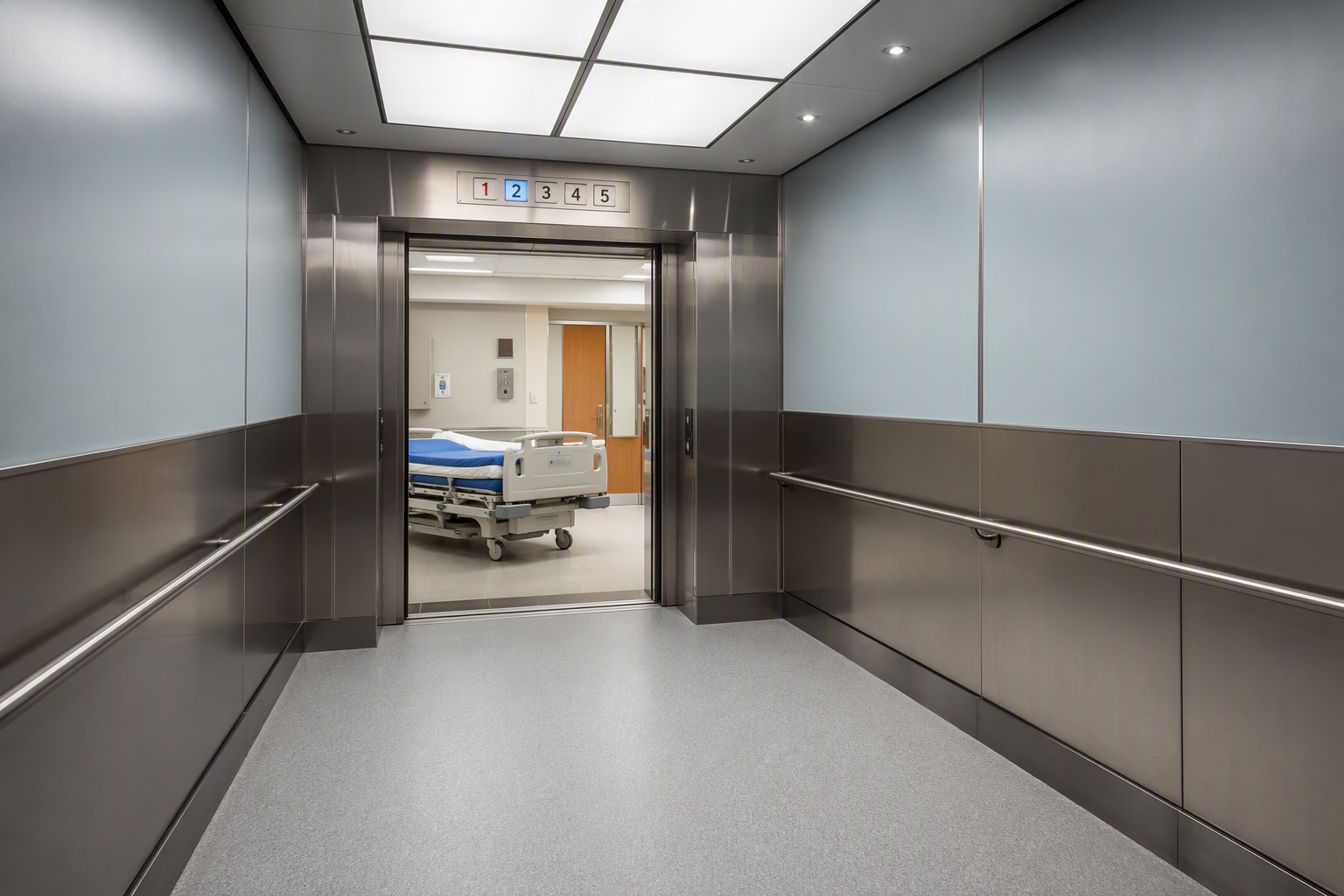
The regulatory intensity around healthcare facility elevators reflects the unique risk environment of medical settings. Elevators in these facilities transport patients on gurneys, powered wheelchairs, and hospital beds; carry sterile supplies, medications, and medical equipment; and serve as primary egress routes during emergencies. Failure in any of these functions can directly affect patient outcomes.
California’s elevator safety orders, which incorporate ASME A17.1 requirements, establish specific periodic inspection intervals and testing protocols. Healthcare facilities should not rely on a single annual inspection cycle — elevator maintenance in a clinical environment is appropriately a continuous process, not a once-a-year event. Liftech Elevator provides planned maintenance programs designed around the operational demands of healthcare settings in Long Beach, Los Angeles, Orange County, and Signal Hill.
—
What ADA Requirements Apply to Hospital Elevators?
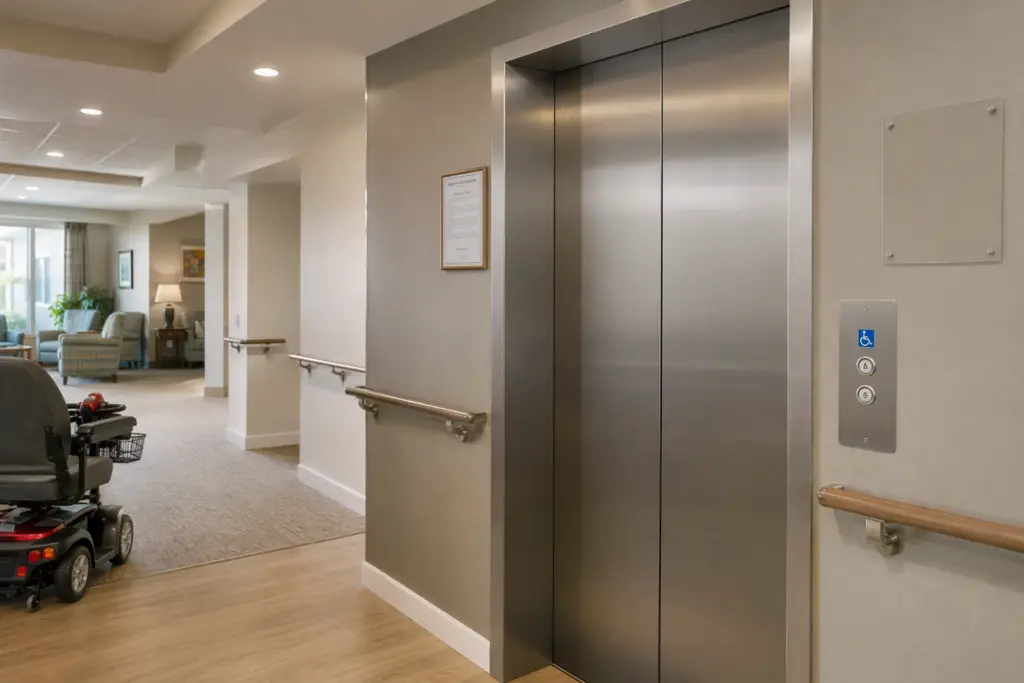
Under the ADA and California Title 24, healthcare facility elevators must meet specific accessibility standards, including:
- Minimum cab dimensions sufficient to accommodate a standard wheelchair and its user with clear floor space for maneuvering
- Door reopening devices that detect obstructions without requiring contact
- Audible and visual floor indicators and call signals
- Braille and raised character signage on hoistway entrance jambs
- Controls at accessible reach ranges for both ambulatory and wheelchair-using passengers
- Leveling accuracy sufficient to prevent a wheel gap that could trap a wheelchair or gurney
California Title 24 imposes additional requirements beyond federal ADA minimums. Healthcare facility managers conducting renovations should verify compliance with the current edition of both standards before assuming federal ADA satisfaction is sufficient for state compliance.
—
What Is the Required Inspection Frequency for Healthcare Elevators in California?
California law requires that elevators undergo periodic inspections by a state-licensed inspector. The California DIR Elevator Unit administers this program. ASME A17.1 specifies the types of tests required at defined intervals — including periodic inspections and full load tests — and California’s elevator safety orders incorporate these intervals by reference.
Healthcare facilities should be aware that the state inspection is a minimum floor, not a maintenance ceiling. Clinical-grade maintenance programs typically involve more frequent technician visits, performance logging, and proactive parts replacement to minimize unplanned downtime in an environment where elevator availability is directly tied to patient care operations.
—
What Happens If a Healthcare Facility Elevator Fails Inspection?
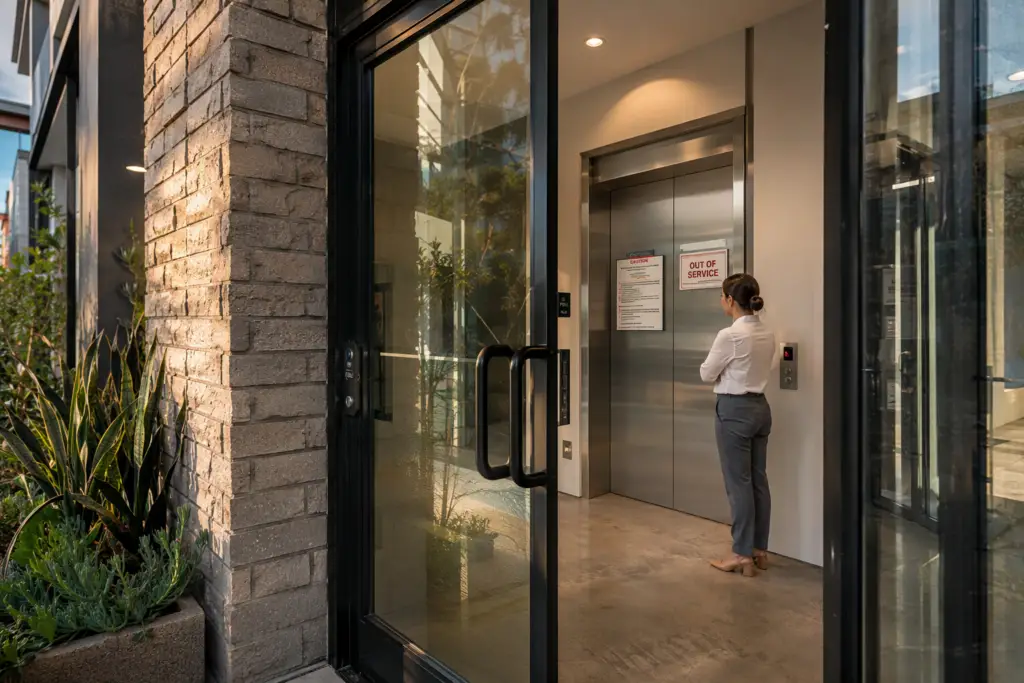
When a California elevator fails a periodic inspection, the elevator is subject to an order to shut down until deficiencies are corrected and a re-inspection is passed. For a hospital, skilled nursing facility, or outpatient surgery center, an out-of-service elevator can:
- Disrupt patient transport between floors
- Force rerouting of staff and supply chains
- Trigger scrutiny from accreditation bodies and state licensing agencies
- Generate regulatory findings that must be disclosed and remediated under specific timelines
Proactive maintenance and compliance management is the most effective strategy for avoiding this scenario. Liftech Elevator’s service approach for healthcare clients in Southern California is built around preventing failures before they reach the inspection stage.
—
What Is HCAI’s Role in Healthcare Elevator Projects?
The California Department of Health Care Access and Information (HCAI) exercises oversight over construction, alteration, and equipment projects in licensed healthcare facilities. Any elevator modernization, new installation, or significant repair in a licensed acute care hospital, skilled nursing facility, or other HCAI-regulated building type requires submission to and approval from HCAI before work begins.
HCAI review adds time and documentation requirements to elevator projects that would not apply in a standard commercial building. Healthcare facility managers planning elevator modernizations should build HCAI review time into their project schedules and work with contractors who understand the submission process. Liftech Elevator is familiar with HCAI project requirements across Los Angeles County and Orange County healthcare markets.
—
What Are the Elevator Requirements for Patient Transport and Gurney Access?
Hospital and skilled nursing facility elevators that serve patient floors must accommodate gurney transport. This creates practical requirements beyond the minimums in ASME A17.1 and the ADA:
- Cab depth sufficient to accommodate a standard hospital gurney with attendant clearance
- Door width and height adequate for gurney passage without angling or tilting
- Smooth, cleanable interior finishes that support infection control protocols
- Reliable leveling accuracy so that gurney wheels transition cleanly between cab floor and building floor
- Door hold-open timing long enough for gurney transfer without triggering door closure
Facilities that have not recently reviewed their elevator cab configurations against current gurney transport standards may find that older equipment — even equipment that passes a standard periodic inspection — does not fully support contemporary patient transport needs.
—
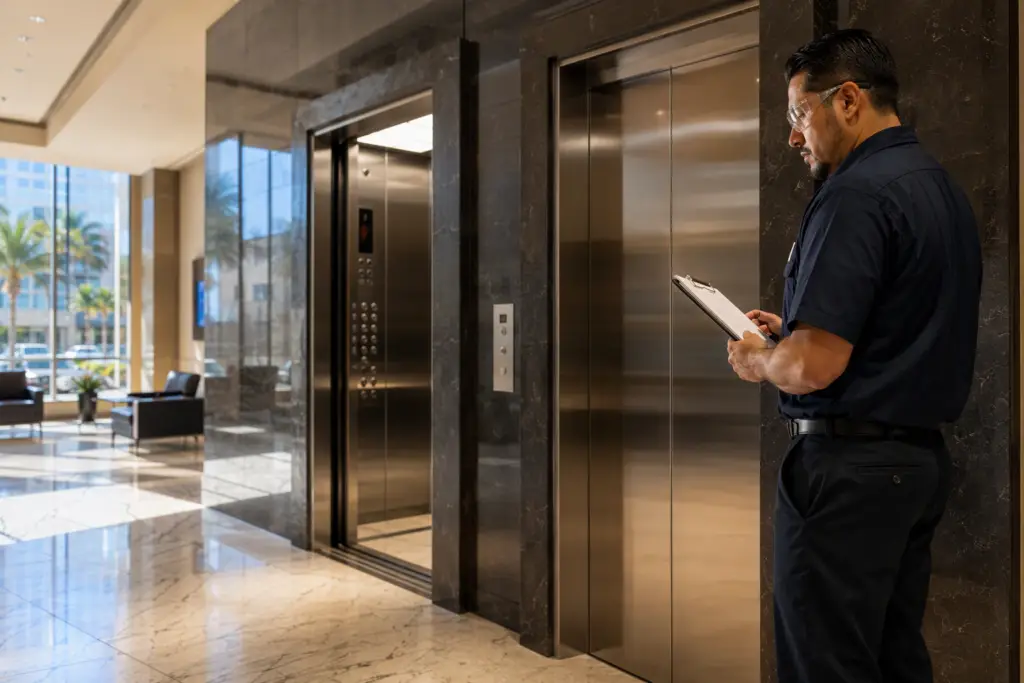
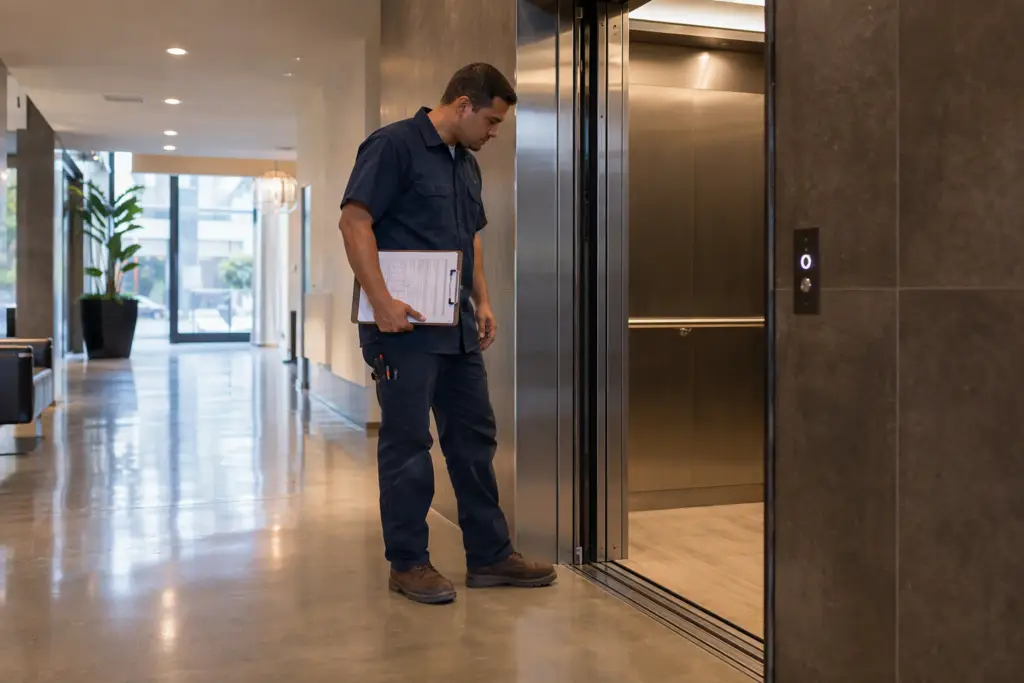
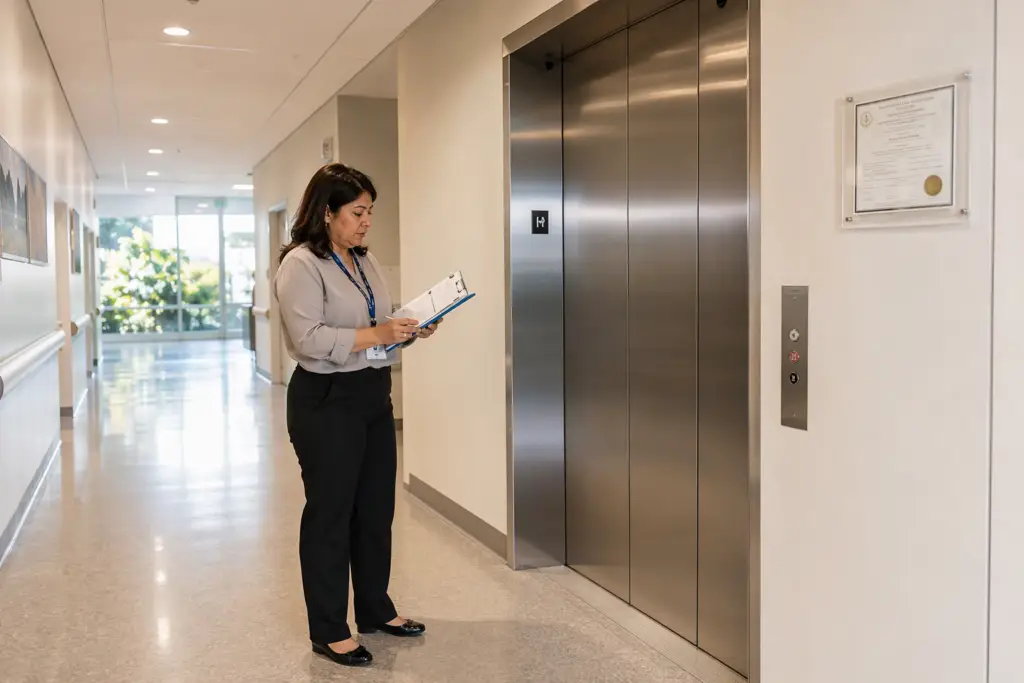
How Should a Healthcare Facility Prepare for an Elevator Inspection?
Preparation for a state elevator inspection in a healthcare setting should follow a structured process:
- Review the previous inspection report and confirm that all cited deficiencies were corrected and documented.
- Confirm that all required periodic tests (load tests, safety device tests) have been performed on schedule and that records are available.
- Verify that the current elevator certificate of inspection is posted in or adjacent to the elevator cab as required by California law.
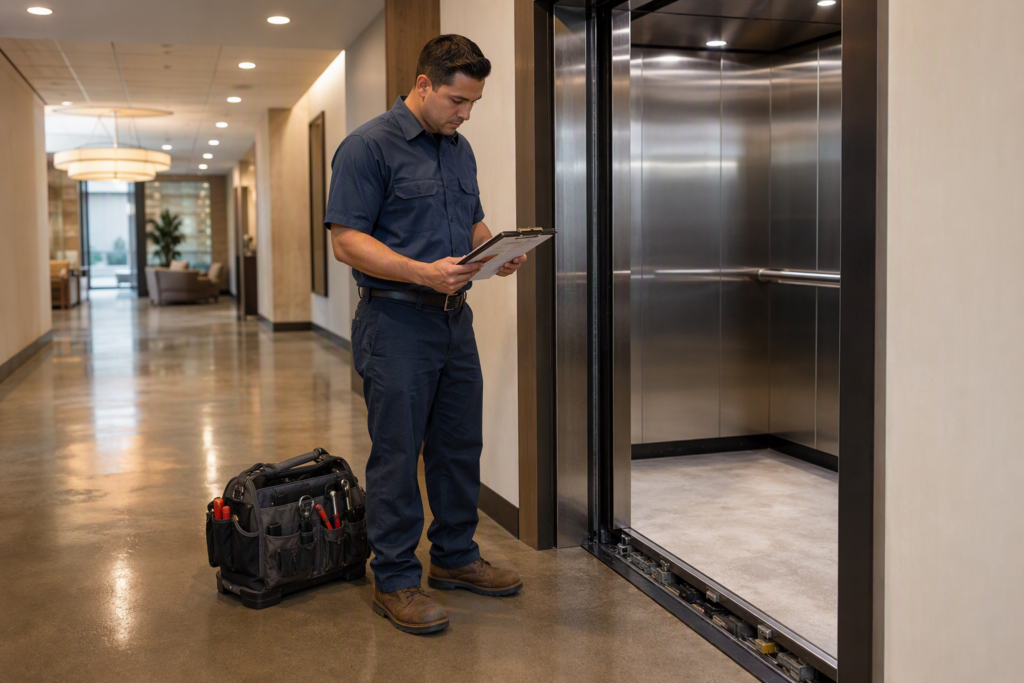
- Walk each elevator with maintenance staff to identify visible deficiencies — worn threshold plates, malfunctioning door reopening devices, non-functional cab lighting, or leveling issues — before the inspector arrives.
- Confirm that all ADA-required signage is present, legible, and correctly positioned.
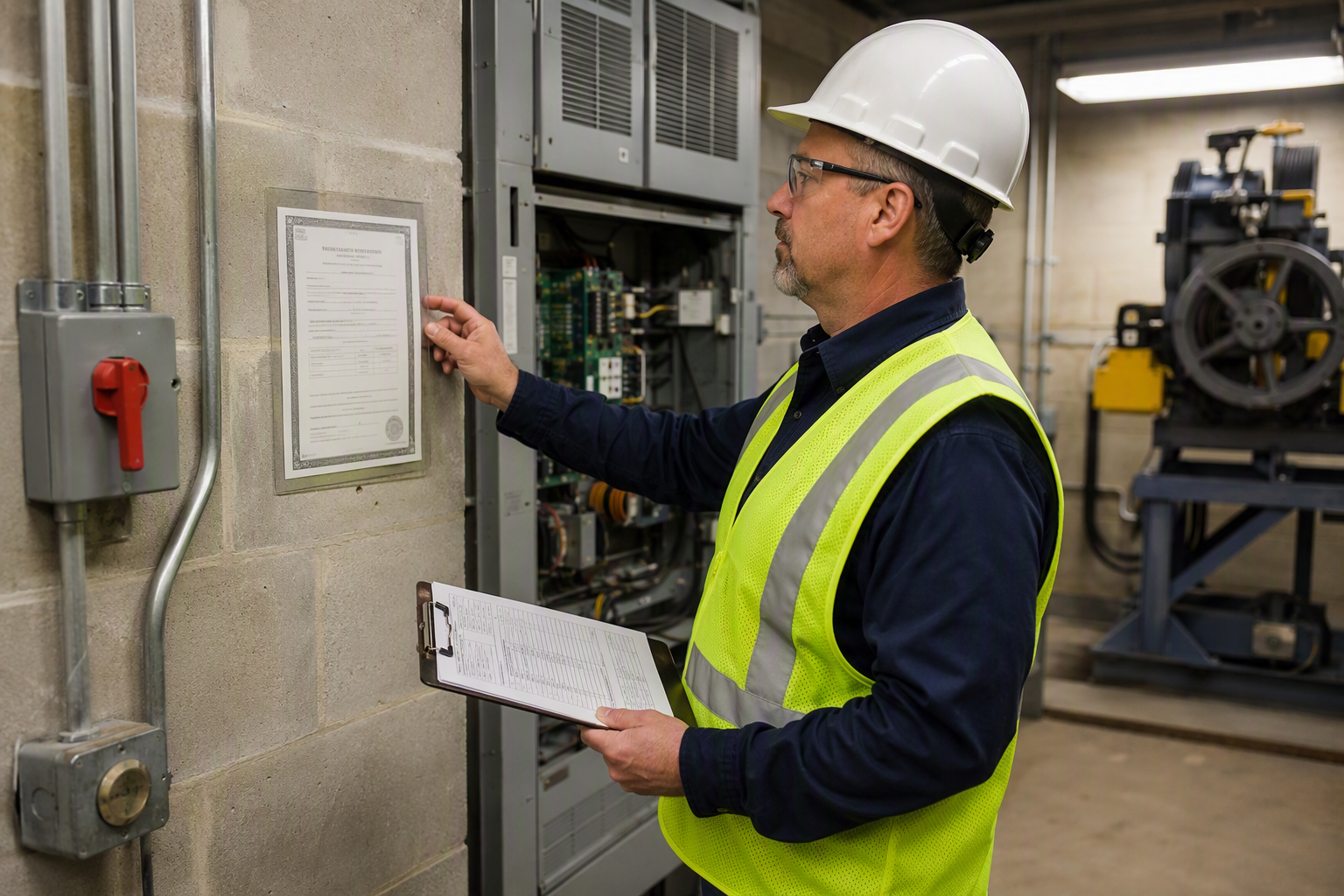
- Ensure that the machine room is accessible, unobstructed, climate-controlled, and free of unauthorized storage.
- Have all maintenance logs, test records, and modernization permits available for the inspector’s review.
—
Questions Your Inspector Will Ask
California elevator inspectors conducting a periodic inspection at a healthcare facility commonly verify the following — facility managers and maintenance staff should be prepared to respond:
- Where is the current certificate of inspection? It must be posted in or near the elevator cab.
- When was the last full load test performed? ASME A17.1 specifies required intervals; records must be available.
- Have any modifications been made to the elevator since the last inspection? Any alterations may require permit documentation.
- Is the machine room secured and temperature-controlled? California elevator safety orders specify machine room environmental and access requirements.
- Are all safety devices — overspeed governor, buffers, safeties — tested and in working order? Inspectors will verify test records and may conduct functional tests.
- Are door reopening devices functioning correctly? This is a frequent deficiency finding, particularly in older equipment.
- Is the elevator leveling accurate? Gurney and wheelchair accessibility depends on landing accuracy within specified tolerances.
- Are all ADA signage requirements met? Inspectors in California also verify Title 24 accessibility compliance.
- Is there a current maintenance contract on file? Documentation of ongoing maintenance is typically reviewed as part of the inspection process.
- For HCAI-regulated facilities: Are all permits for recent work on file? HCAI approval documentation must be retained and available.
—
What Should a Healthcare Facility Do If an Elevator Is Out of Compliance?
- Take the elevator out of service immediately if the deficiency poses a safety risk, or coordinate with the inspector on whether continued limited operation is permitted.
- Notify facility leadership and, if applicable, the Environment of Care committee and accreditation liaison.
- Contact a licensed elevator contractor to assess the deficiency and provide a scope of corrective work.
- If the facility is HCAI-regulated, determine whether the corrective work requires HCAI notification or permit submission before proceeding.
- Document all corrective actions taken, including dates, parts replaced, and technician credentials.
- Schedule a re-inspection with the California DIR Elevator Unit promptly upon completion of corrective work.
- Update the facility’s preventive maintenance plan to reduce recurrence risk.
—
How Does Elevator Modernization Affect Healthcare Facility Compliance?
Modernizing an aging elevator in a healthcare facility is not simply a capital improvement decision — it is a compliance event. Under ASME A17.1 and California elevator safety orders, modernization triggers a requirement to bring the elevator into compliance with current code requirements applicable to the scope of work performed. For HCAI-regulated facilities, modernization projects also require advance regulatory review and approval.
Healthcare facility managers considering modernization should engage their elevator service provider early in the planning process to understand the full compliance scope. Liftech Elevator supports healthcare clients in Signal Hill, Long Beach, Los Angeles, and Orange County through the planning, permitting, and execution phases of modernization projects to help ensure the process does not create unexpected compliance exposure.
—
What Role Does Ongoing Maintenance Play in Healthcare Elevator Compliance?
A properly structured preventive maintenance program is the foundation of sustained elevator compliance in a healthcare setting. Periodic inspections by state-licensed inspectors verify a point-in-time condition; maintenance determines the condition that exists between those inspections.
Effective healthcare elevator maintenance programs typically include scheduled lubrication and adjustment, proactive replacement of wear-prone components, performance trend monitoring, documentation of all service visits, and rapid response to reported issues. The goal is to maintain the elevator in a condition that would pass inspection on any given day — not only on the day the inspector arrives.
Liftech Elevator offers maintenance programs for healthcare facilities across Southern California structured around the continuous availability demands and infection control requirements of clinical environments.
—
Contact Liftech Elevator for a Free Elevator Assessment
Healthcare facilities in Signal Hill, Long Beach, Los Angeles, and Orange County operate under complex, layered elevator compliance obligations. A gap in any one of those layers — ASME A17.1 periodic testing, ADA accessibility requirements, California Title 24 standards, or HCAI project permitting — can affect patient safety, facility operations, and regulatory standing.
Liftech Elevator provides elevator assessments, maintenance programs, and modernization services designed for the specific demands of healthcare environments. An assessment can identify current compliance gaps, prioritize corrective actions, and establish a maintenance baseline appropriate to a clinical setting.
Contact Liftech Elevator for a free elevator assessment: 562-609-3478
Need elevator service you can rely on? Liftech Elevator is ready to help.