University Elevator ADA Compliance: Standards, Requirements & What Campuses Need to Know
Universities operate some of the most complex vertical transportation environments in the built environment — multi-story academic buildings, residence halls, libraries, sports facilities, and parking structures all demand elevators that are safe, reliable, and fully accessible. For campus facilities managers and ADA coordinators, understanding what the law actually requires, what common deficiencies look like, and how to manage a remediation project is essential knowledge heading into 2025 and 2026.
What Federal Law Requires for University Elevators
Public colleges and universities are covered entities under Title II of the ADA, which prohibits discrimination on the basis of disability in all programs, services, and activities. Private universities that receive federal financial assistance are also bound by Section 504 of the Rehabilitation Act, which carries substantially similar accessibility obligations.
The primary technical standard that governs accessible elevator design is the ADA Standards for Accessible Design, published by the U.S. Department of Justice and the U.S. Access Board. These standards incorporate specific elevator requirements covering:
- Cab dimensions: A minimum clear floor area to accommodate wheelchair users and their companions
- Door clear width: A minimum opening width to allow passage of mobility devices
- Door timing: Doors must remain open long enough for a person using a mobility aid to enter or exit without risk of contact
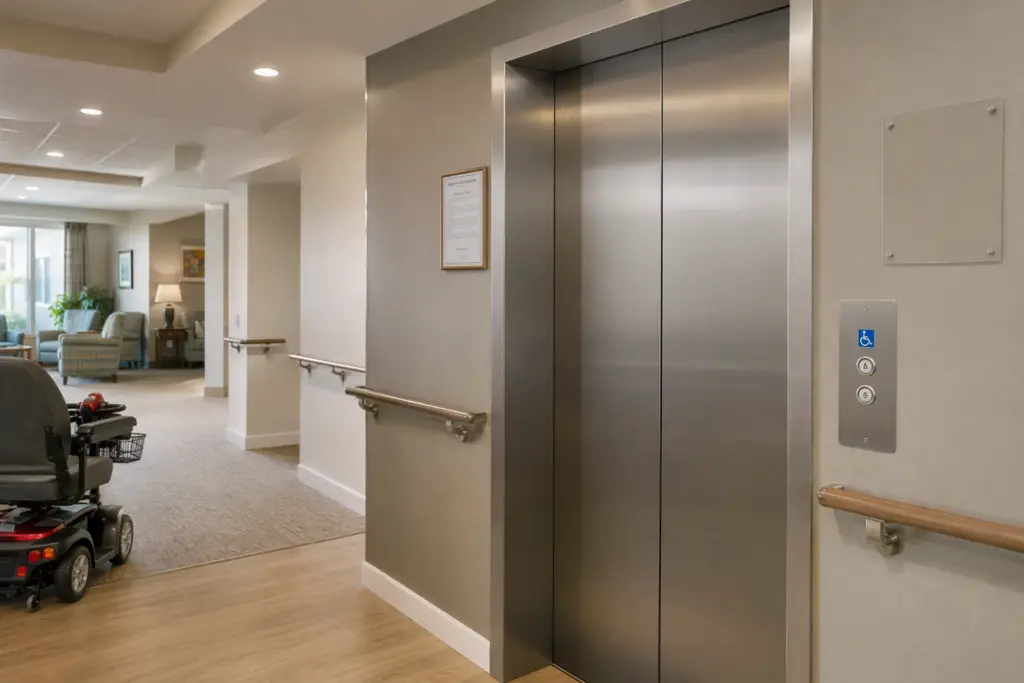
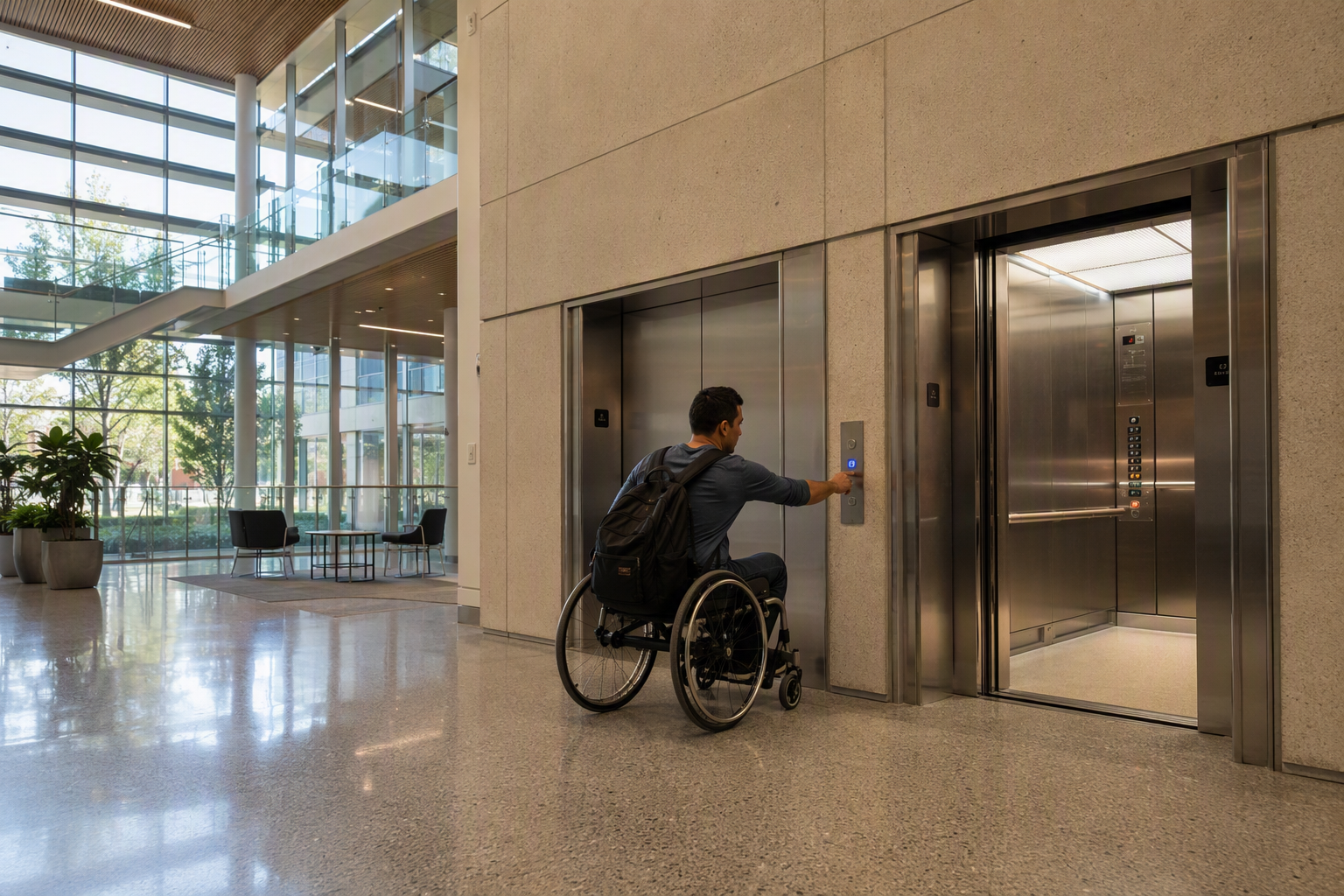
- Call button placement: Both floor call buttons and car operating panels must be positioned within reach ranges accessible to wheelchair users
- Audible and visual signals: Elevators must provide both audible tones and illuminated signals to communicate car arrival and direction of travel
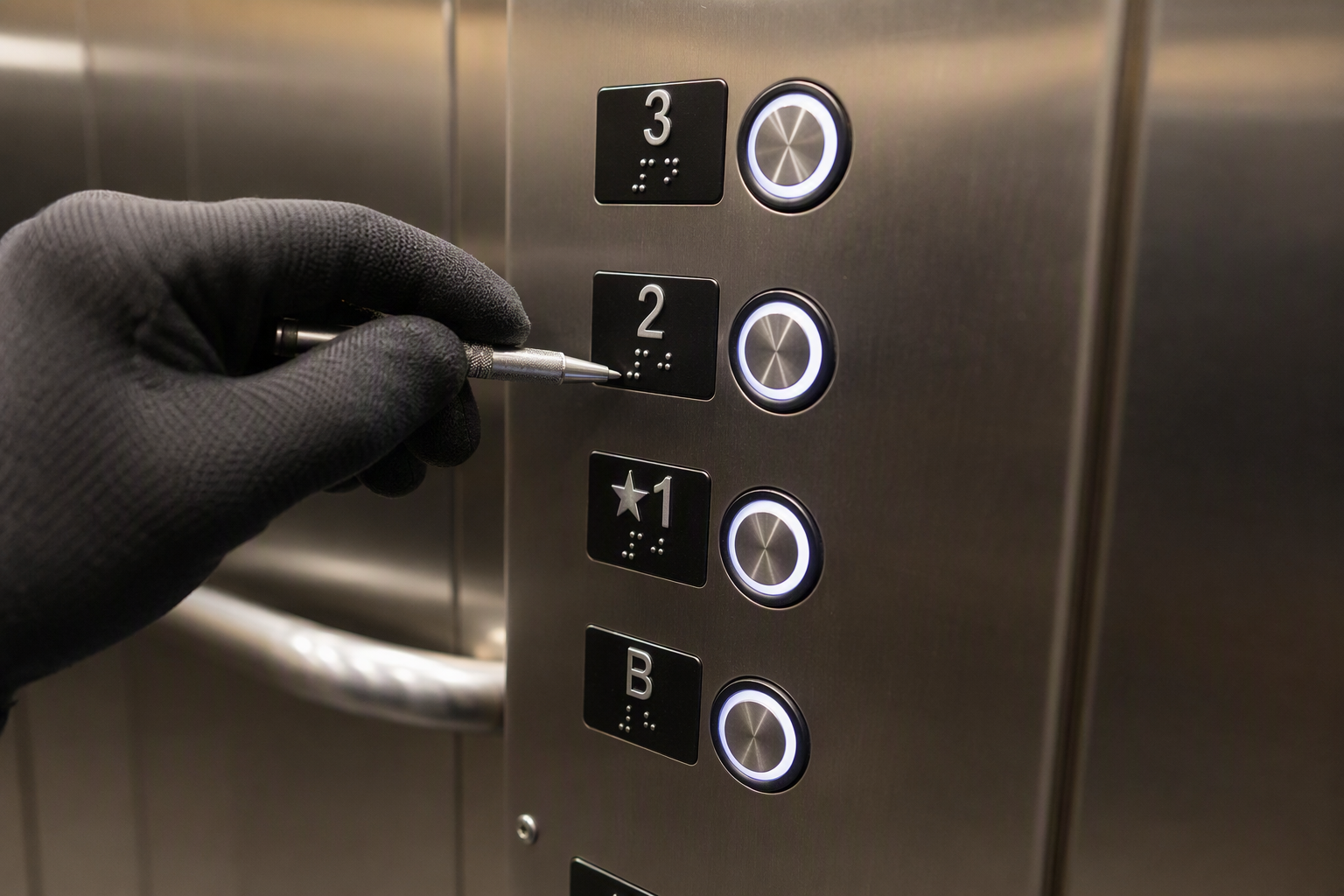
- Braille and raised characters: Control buttons must be identified with raised characters and Braille
- Floor designations: Tactile floor designations must appear on both jambs at each hoistway entrance
- Emergency communication: A two-way communication system must allow passengers to summon assistance
In addition to ADA requirements, university elevators must comply with ASME A17.1, the Safety Code for Elevators and Escalators, which governs structural, mechanical, and electrical safety. ADA accessibility and ASME safety compliance are distinct regulatory tracks — a university can pass a safety inspection and still be out of ADA compliance, or vice versa. Facilities teams need to manage both simultaneously.
Which University Buildings Must Have Accessible Elevators?
The ADA does not require elevators in every building. However, the exemption is narrow: buildings with fewer than three stories or fewer than 3,000 square feet per floor may qualify for the elevator exemption — but this exemption does not apply to shopping centers, shopping malls, professional offices of health care providers, terminals used for transportation, or certain other facility types.
On a typical university campus, the elevator exemption rarely applies in practice. The vast majority of academic, administrative, residential, and recreational buildings on campuses exceed the threshold that triggers the exemption. Furthermore, courts and federal enforcement agencies have consistently held that when a building does contain an elevator — even one installed voluntarily — that elevator must comply with all applicable ADA standards.
For existing facilities, universities are required to remove barriers to access when doing so is “readily achievable,” meaning accomplishable without much difficulty or expense. When a university undertakes an alteration to a building, the altered portions must comply with current ADA standards to the maximum extent feasible — and if the alteration affects usability of the facility, an accessible path of travel to the altered area must also be addressed.
What Are the Most Common ADA Elevator Violations on University Campuses?
Based on widely reported compliance patterns in higher education facilities management literature and DOJ enforcement settlements, the most frequently cited elevator-related ADA deficiencies on university campuses include:
- Non-compliant call button heights: Older installations often place call buttons above the reach range specified in the ADA Standards, making them inaccessible to wheelchair users
- Missing or degraded Braille: Braille on control panels wears over time and must be maintained in readable condition
- Inoperable or absent two-way communication systems: Emergency phones that have been disconnected or are non-functional create both an ADA and a life-safety violation
- Doors that close too quickly: Automatic door reopening devices that fail to respond to obstruction within required timing parameters
- Leveling issues: Elevator cars that do not level within acceptable tolerances create a tripping hazard and a barrier for wheelchair users rolling on and off the car
- Inadequate lighting levels: Interior cab illumination below the minimum required for safe operation and visibility
- Missing floor designations on hoistway jambs: Tactile and Braille floor indicators missing from one or both jambs at landings
- Outdated audible signals: Single-tone systems in older buildings that do not communicate direction of travel as required
How Does the ADA Transition Plan Requirement Apply to University Elevators?
Public universities with 50 or more employees are required under Title II of the ADA to have completed a self-evaluation of their programs, services, and activities — and if barriers were identified, to have developed a written transition plan describing how those barriers would be removed. The transition plan must identify the person responsible for its implementation and establish a schedule for achieving compliance.
Elevator accessibility is a core component of any campus transition plan. Facilities managers should ensure that:
- All elevators on campus have been inventoried and assessed against current ADA Standards
- Deficiencies are documented with priority rankings based on their impact on program access
- The transition plan includes specific timelines and budget allocations for elevator remediation
- The plan is updated as projects are completed and as new buildings are added to the campus inventory
Transition plans are public documents, and failure to maintain or implement one has been cited in DOJ settlement agreements with universities across the country.
What Steps Should a University Take to Assess Elevator ADA Compliance?
- Inventory all vertical transportation equipment: Create a complete list of every elevator, platform lift, and escalator on campus, including building name, equipment ID, installation year, and last major modernization date.
- Obtain current inspection records: Confirm that all units have current certificates of inspection as required by state elevator safety authorities and are compliant with ASME A17.1.
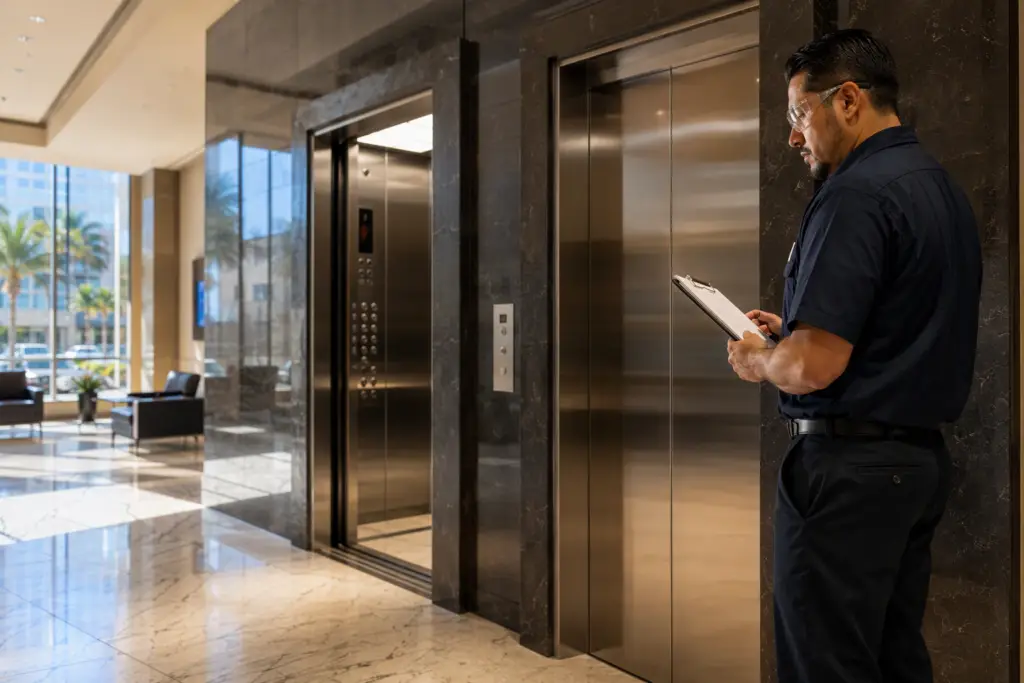
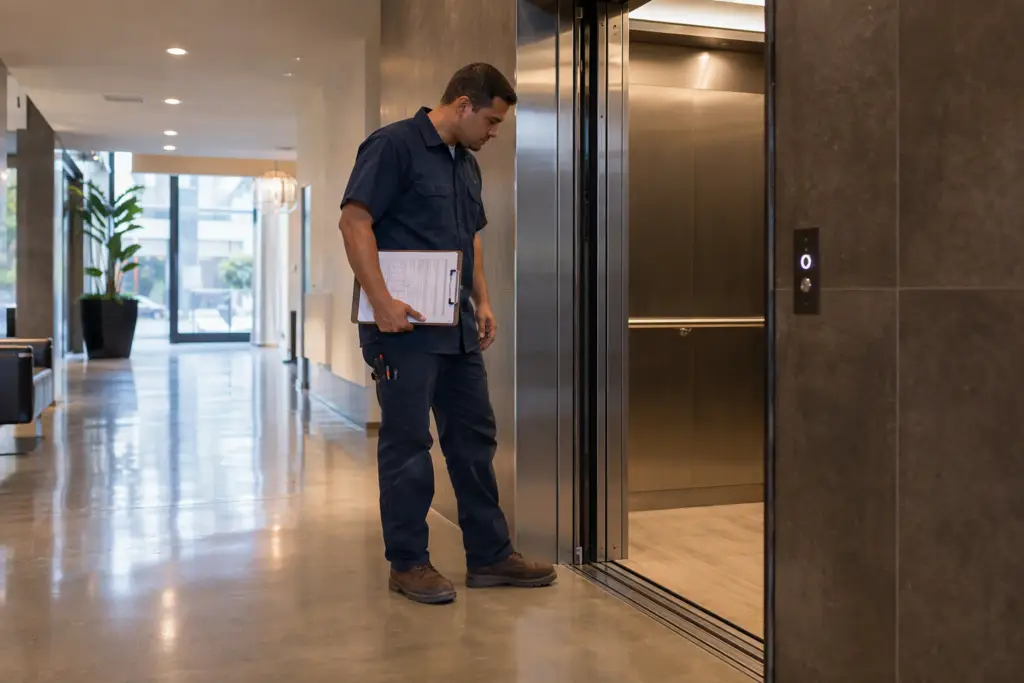
- Conduct a field audit against ADA Standards: Have a qualified elevator consultant or contractor measure cab dimensions, door clear widths, button heights, reach ranges, leveling accuracy, and all other ADA-required parameters for each unit.
- Document all deficiencies with photographs and measurements: Create a written record that can be incorporated into the campus transition plan and used to develop scope of work for remediation.
- Prioritize remediation by impact on program access: Focus first on elevators that provide the only accessible route to a program, service, or activity — particularly in academic and administrative buildings with active class schedules.
- Develop a phased remediation schedule: Coordinate elevator modernization or repair projects with building renovation cycles, capital budget cycles, and academic calendar constraints to minimize disruption.
- Procure qualified contractors: Issue specifications that require compliance with both ADA Standards and ASME A17.1, and verify that bidding contractors hold all required state licenses and are familiar with higher education project environments.
- Conduct post-completion verification: After any remediation project, conduct a final field audit to confirm that all required parameters meet current ADA Standards before closing out the project.
- Update the transition plan and asset management records: Document completed work and revise the campus elevator inventory to reflect current compliance status.
- Establish an ongoing monitoring protocol: Schedule periodic re-audits to catch emerging deficiencies — particularly Braille wear, door timing drift, and communication system failures — before they generate complaints or enforcement action.
What Is the Difference Between ADA Compliance and ASME Safety Compliance for University Elevators?
These are two distinct regulatory frameworks that operate in parallel. ASME A17.1, the Safety Code for Elevators and Escalators, is the primary safety standard adopted by state elevator safety programs across the United States. It governs mechanical, electrical, and structural safety — things like overspeed governors, safeties, buffers, wiring, and inspection intervals. State elevator inspectors enforce ASME A17.1 compliance and issue certificates of inspection.
The ADA, by contrast, is a civil rights law enforced by the U.S. Department of Justice, the U.S. Access Board, and through private litigation. It governs the usability of elevators by people with disabilities. A university elevator can have a current state inspection certificate and still be flagged in a DOJ compliance review for failing to meet ADA Standards — and vice versa.
University facilities teams need to track both compliance tracks in their maintenance management systems and address them through separate but coordinated workflows.
What Drives the Cost of University Elevator ADA Remediation Projects?
The cost of bringing a university elevator into ADA compliance varies significantly depending on the nature and extent of the deficiencies identified. Minor remediation — such as replacing worn Braille overlays, adjusting door timing, or adding tactile floor designations — represents a comparatively modest expense that can often be handled through routine maintenance budgets.
More substantial remediation projects — particularly those involving cab expansion, new operating panel installation, or full modernization of older equipment — require capital project funding and longer planning horizons. Factors that typically drive cost include:
- Age of equipment: Older installations may require full modernization rather than targeted repair to achieve compliance, as replacement parts for obsolete controllers and operating fixtures may no longer be available
- Cab geometry: Expanding an undersized cab in an existing hoistway is a major structural undertaking that may not be feasible in all cases, requiring program relocation as an alternative path to access
- Building occupancy constraints: University buildings operate on tight academic calendars, and elevator outages must be carefully scheduled to avoid disrupting instruction, research, and residential life
- Number of units: Large campuses with dozens of elevators face proportionally larger aggregate remediation costs and require multi-year capital planning
- Historic preservation requirements: Buildings listed on the National Register of Historic Places or subject to state historic preservation review may face constraints on what modifications can be made to hoistways and lobbies
What Are the Legal Risks of Non-Compliance for Universities?
Universities that fail to maintain ADA-compliant elevators face exposure on multiple fronts. The U.S. Department of Justice actively investigates complaints filed under Title II of the ADA and has entered into settlement agreements with colleges and universities requiring comprehensive barrier removal, transition plan updates, and in some cases monetary damages or civil penalties. Private individuals also have the right to file suit under Title II and may seek injunctive relief and attorney’s fees.
Beyond federal ADA enforcement, many states have their own accessibility laws that may impose additional requirements or lower thresholds for liability. Universities in states with robust state accessibility statutes face a layered compliance environment.
Reputational risk is also significant. A university known to have inaccessible facilities faces challenges in recruitment of students with disabilities, faculty, and staff — and may face negative media attention following a complaint or enforcement action.
How Do University Elevator Modernization Projects Affect ADA Compliance Obligations?
Under the ADA, when a university undertakes an alteration to a facility, the altered portions must comply with current ADA Standards to the maximum extent feasible. An elevator modernization project — even one primarily motivated by reliability or energy efficiency goals — triggers this requirement. This means that a university that modernizes an elevator’s drive system, controller, or cab finishes must simultaneously address any ADA deficiencies in the elements being altered.
Facilities managers and project managers should treat every elevator modernization project as an opportunity to close out open ADA deficiencies. Combining ADA remediation with planned modernization work is typically more cost-effective than addressing the two separately, and it avoids the situation where a newly modernized elevator still carries open accessibility violations.
What Are the 2025 and 2026 Trends in University Elevator ADA Compliance?
Several trends are shaping the university elevator ADA compliance landscape heading into 2025 and 2026:
- Increased DOJ enforcement activity: Federal civil rights enforcement agencies have signaled continued attention to physical accessibility in higher education, with campus barrier removal remaining a priority area for complaint investigations and voluntary compliance reviews
- Destination dispatch and touchless technology: Universities modernizing to destination dispatch systems or touchless call interfaces must carefully evaluate whether new interfaces comply with ADA reach range, operable parts, and usability requirements — some emerging technologies have introduced new accessibility questions that are working their way through the guidance and litigation landscape
- Integration with accessibility management software: Leading campuses are moving toward centralized accessibility management platforms that track elevator compliance status alongside other barrier removal priorities, enabling more strategic capital planning
- Aging building stock: Many campus elevators installed in the 1970s and 1980s are reaching the end of their reliable service life simultaneously, creating a wave of modernization demand that intersects directly with ADA remediation needs
- Focus on elevator reliability as an accessibility issue: Enforcement guidance and complaint patterns increasingly treat chronic elevator outages in buildings where the elevator is the only accessible route as an independent ADA violation — not just an inconvenience — pushing universities to invest in predictive maintenance programs
How Should Universities Evaluate Elevator Service Providers for ADA Compliance Work?
Not all elevator contractors have equal experience with ADA compliance remediation in higher education environments. When evaluating providers, university procurement teams should assess:
- Demonstrated knowledge of current ADA Standards for Accessible Design, including reach range requirements, operable parts standards, and signage specifications
- Familiarity with ASME A17.1 and state elevator safety code requirements in the relevant jurisdiction
- Experience working in occupied university buildings with academic calendar constraints
- Ability to provide detailed field audit reports that document measurements against code requirements, not just narrative descriptions
- References from comparable higher education clients
- Capacity to support both immediate targeted remediation and longer-term modernization planning
Liftech Elevator works with university facilities teams to provide data-driven elevator assessments that document compliance status against both ADA Standards and applicable safety codes, supporting transition plan documentation and capital project planning. The approach emphasizes accurate field measurement, clear reporting, and practical remediation strategies tailored to the operational realities of campus environments.
What Is the Role of OSHA in University Elevator Safety?
While ADA and ASME standards govern accessibility and equipment safety respectively, OSHA standards apply to the occupational safety of elevator mechanics and maintenance workers who service university equipment. Universities that employ in-house elevator maintenance personnel must ensure those workers operate under OSHA-compliant lockout/tagout procedures, confined space protocols where applicable, and fall protection requirements. For universities that contract elevator maintenance to outside vendors, OSHA’s multi-employer worksite rules may apply, and universities should confirm that contracted elevator service providers maintain current OSHA compliance programs.
Frequently Asked Questions: University Elevator ADA Compliance
Does the ADA elevator exemption apply to university buildings?
Rarely in practice. The ADA elevator exemption applies to facilities with fewer than three stories or fewer than 3,000 square feet per floor, and it excludes several building types outright. Most university academic, administrative, and residential buildings exceed these thresholds, meaning the exemption does not apply. Additionally, if a building voluntarily installs an elevator, that elevator must meet ADA Standards regardless of whether one was required.
Are private universities subject to the same ADA elevator requirements as public universities?
Public universities are covered by Title II of the ADA. Private universities are covered by Title III of the ADA as places of public accommodation, and by Section 504 of the Rehabilitation Act if they receive federal financial assistance — which virtually all accredited private universities do. The substantive accessibility requirements are substantially similar across these frameworks, though the enforcement mechanisms differ.
What cab size does an ADA-compliant elevator need to have?
The ADA Standards for Accessible Design specify minimum clear floor area requirements for elevator cabs. The exact dimensions depend on the configuration — the standards provide compliant configurations including minimum dimensions for both the width and depth of the clear floor space. Universities with older, smaller cabs should have a qualified elevator consultant measure against current standards to determine whether an existing cab meets requirements.
How long must elevator doors remain open to meet ADA requirements?
The ADA Standards require that elevator doors remain fully open for a minimum period to allow a person using a mobility device to enter or exit. The door reopening device must be capable of detecting an obstruction and must not be set to a timing that causes the door to close before passage is complete. Specific timing parameters are defined in the standards and must be verified through field measurement during compliance audits.
What is the required height for elevator call buttons under the ADA?
The ADA Standards establish reach range requirements that govern the placement of operable parts, including elevator call buttons. Call buttons must be located within the reach range of a person seated in a wheelchair, with specific maximum heights for forward and side reach scenarios. Many older university elevator installations have call buttons mounted above compliant reach ranges and require hardware relocation or panel replacement.
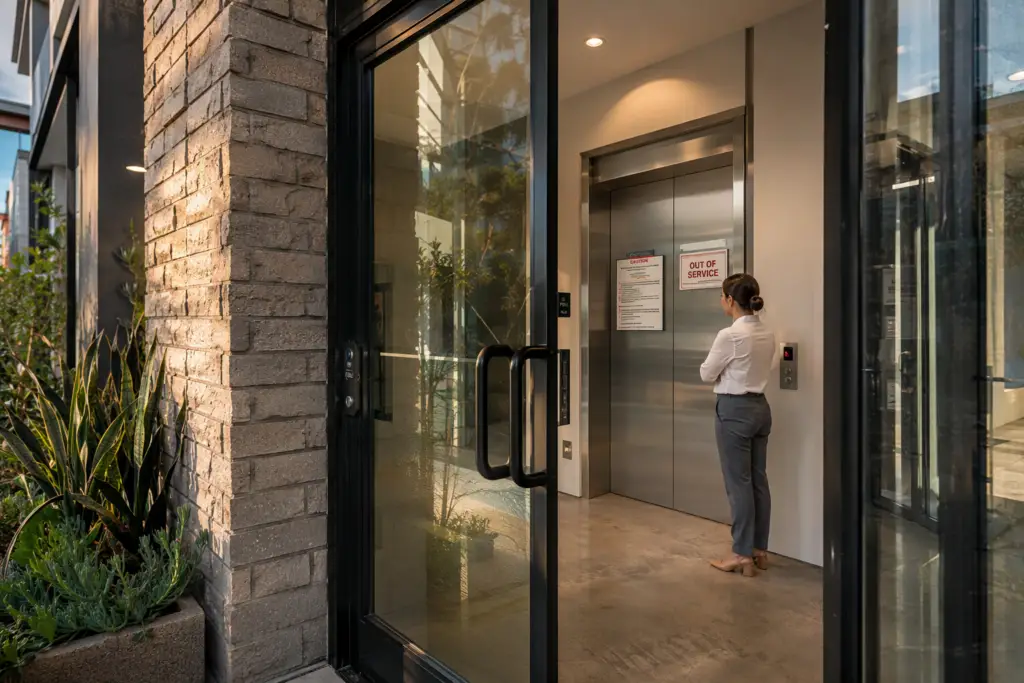
Can a university be cited for ADA violations if an elevator is temporarily out of service?
Yes. When an elevator is the only accessible route to a program, service, or activity, an extended outage can constitute an ADA barrier. DOJ guidance and enforcement practice has increasingly treated chronic elevator unreliability in single-elevator buildings as an accessibility issue, not merely a maintenance issue. Universities should have written protocols for communicating outages, providing alternative access where feasible, and prioritizing rapid restoration of service.
Are platform lifts an acceptable alternative to elevators for ADA compliance at universities?
Platform lifts are permitted under the ADA Standards in specific, limited circumstances — they are not a general substitute for passenger elevators. Permitted use cases include providing access to raised areas in assembly areas, to spaces not otherwise required to be accessible, and in certain existing buildings where elevator installation is technically infeasible. Universities should not rely on platform lifts as a general strategy for avoiding elevator accessibility requirements without careful review of whether a specific installation qualifies under the standards.
What Braille and tactile signage is required on university elevators?
The ADA Standards require that control buttons be identified with raised characters and Braille, that floor designations appear in tactile characters and Braille on both hoistway entrance jambs at each floor, and that emergency controls be identified. Braille degrades over time with heavy use and must be maintained in readable condition — worn or damaged Braille is a frequently cited deficiency in university elevator audits.
How does a university’s ADA transition plan relate to elevator compliance?
Public universities with 50 or more employees are required under Title II of the ADA to have conducted a self-evaluation and, where barriers were identified, to maintain a written transition plan for barrier removal. Elevator accessibility deficiencies identified in a self-evaluation must be included in the transition plan with a remediation schedule. Failure to maintain and implement a current transition plan has been cited in DOJ enforcement actions against universities.
What should universities look for when hiring an elevator contractor for ADA compliance work?
Universities should look for contractors with documented knowledge of current ADA Standards for Accessible Design, familiarity with ASME A17.1, experience in higher education environments, and the ability to produce detailed field audit reports with measurements rather than narrative assessments only. References from comparable university clients, demonstrated capacity for phased project delivery around academic calendars, and clear documentation practices are all important evaluation criteria. Liftech Elevator provides university clients with structured assessment reporting designed to support transition plan documentation and capital project development.
Take the Next Step: Get a Professional Elevator Compliance Assessment
University elevator ADA compliance is not a one-time checkbox — it requires ongoing attention as equipment ages, standards are updated, and campus facilities evolve. The consequences of non-compliance range from DOJ enforcement action and private litigation to the fundamental failure to serve students, faculty, staff, and visitors with disabilities on an equal basis.
Liftech Elevator provides universities with data-driven elevator assessments that document compliance status against ADA Standards and applicable safety codes, identify remediation priorities, and support the transition plan and capital planning processes that campus facilities teams require. The assessment process is grounded in field measurement and code attribution — not generalized observations.
Contact Liftech Elevator for a free elevator assessment: 562-609-3478
Need elevator service you can rely on? Liftech Elevator is ready to help.