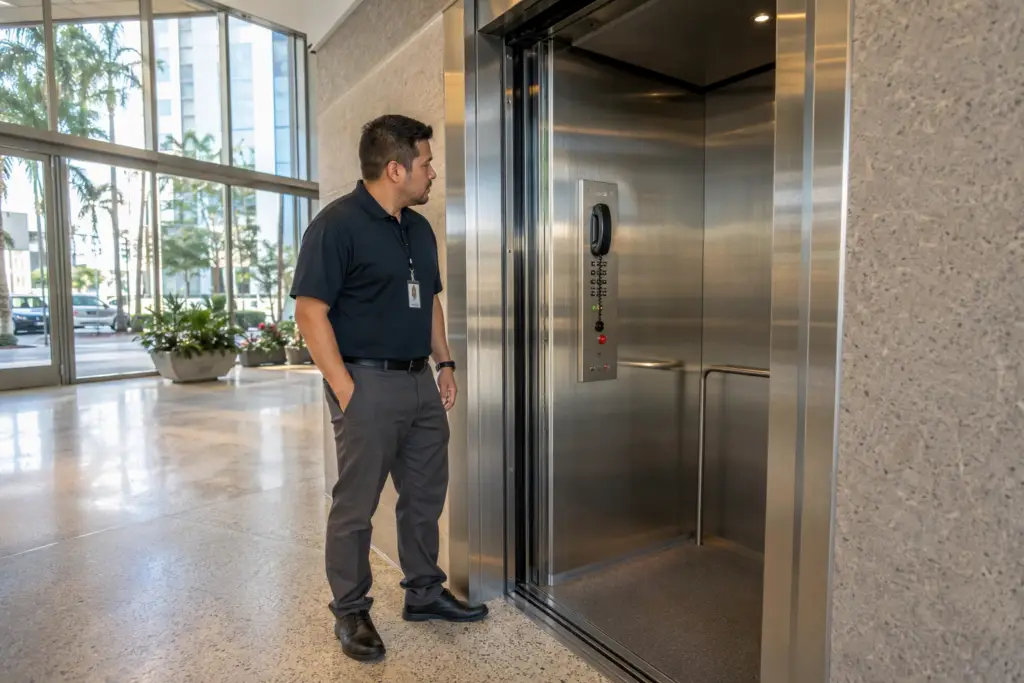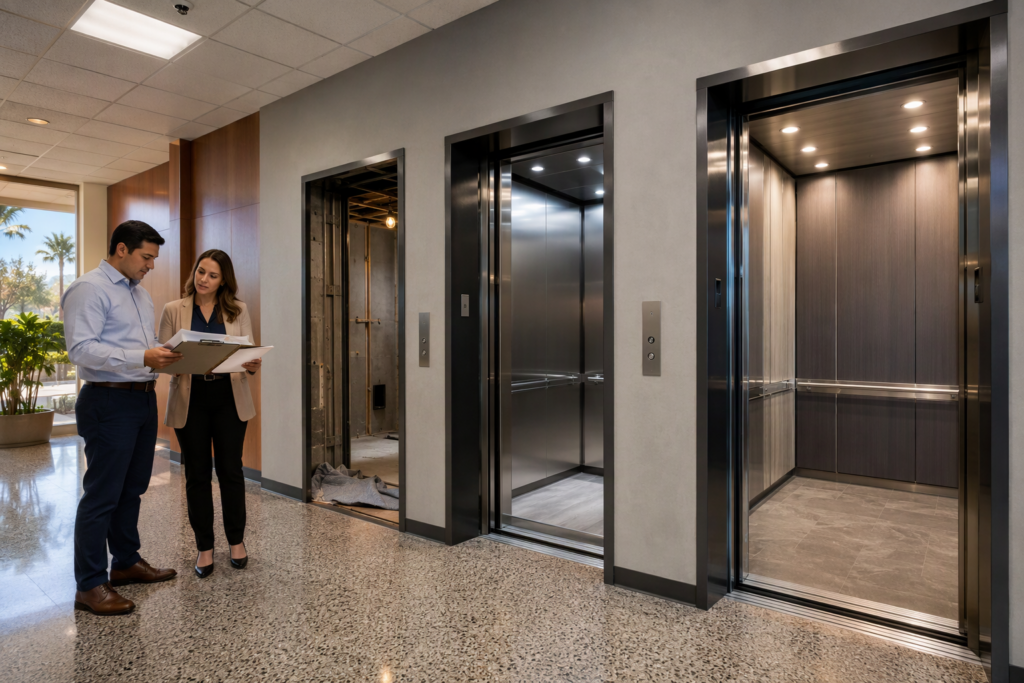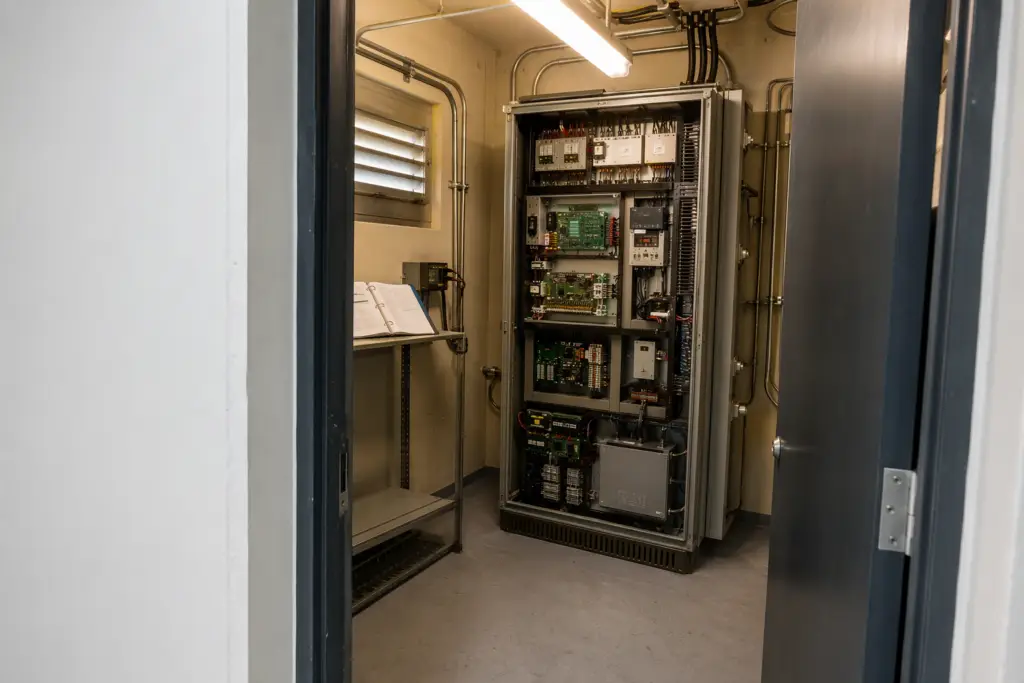
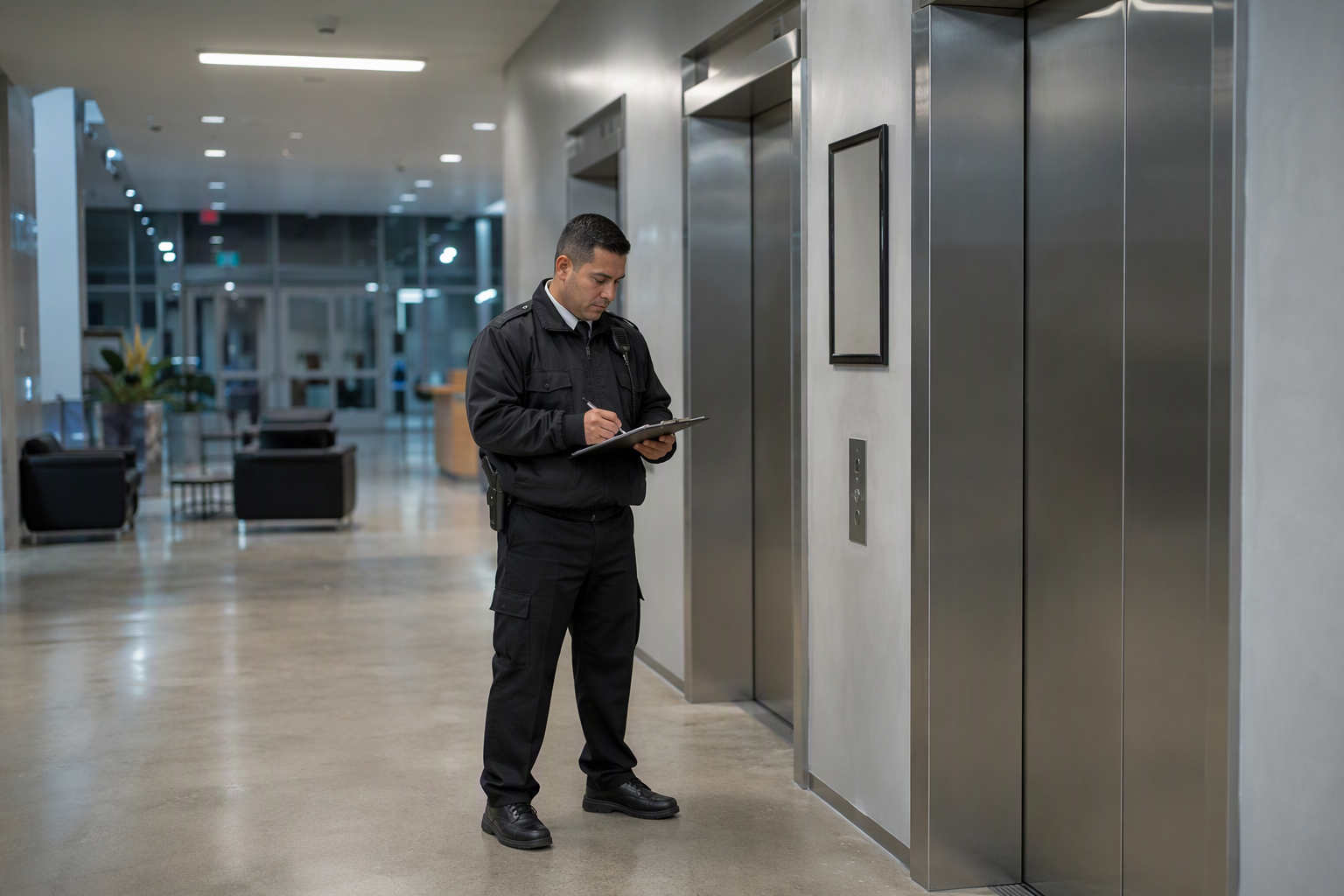
In California, elevator inspections are a regulated, documented process governed by the Division of Occupational Safety and Health (Cal/OSHA), Elevator Unit, California Department of Industrial Relations. When something falls outside that documented process — such as an unannounced after-hours visit with no paperwork left behind — building owners and managers have every right, and responsibility, to verify what occurred. This hub page answers the most common questions building owners, property managers, and facilities teams ask when they encounter this situation, along with broader guidance on California’s elevator inspection framework.
What should I do immediately if a claimed elevator inspector visits after hours and leaves no paperwork?
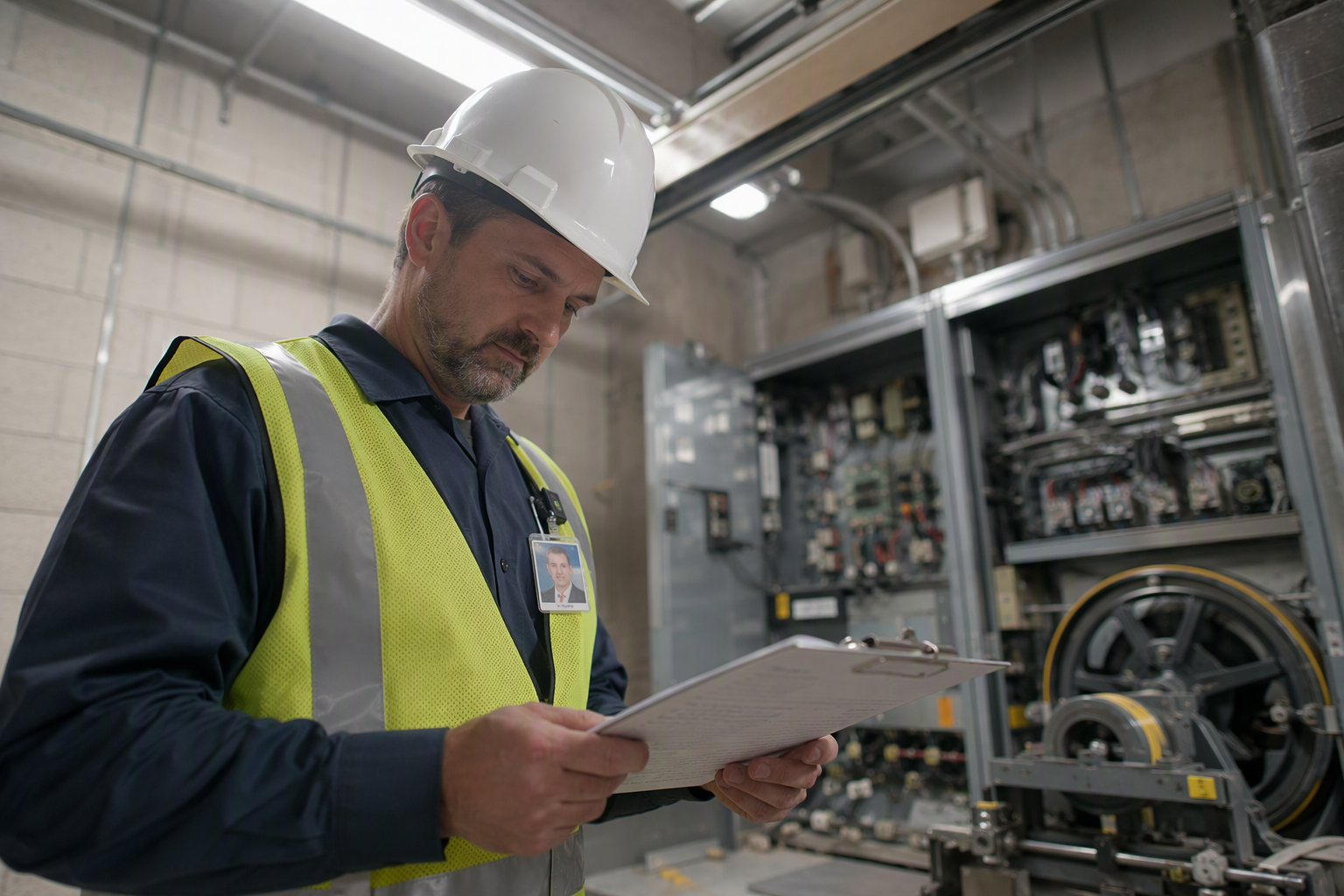
Document everything you observed about the visit right away, then contact your property manager, Cal/OSHA’s Elevator Unit, and your elevator service company the next business day to verify whether the visit was legitimate.
The steps below outline the recommended protocol. Acting quickly and in writing protects the building owner legally and ensures that any real compliance concern is addressed without delay.
- Document the visit immediately. Write down the date, approximate time, and anything observed: how the individual entered the building, which elevator(s) were accessed, what tools or identification — if any — were presented, and whether anything in the machine room or car was moved or disturbed.
- Collect witness statements. If security staff, a tenant, or a night-shift employee observed the visit, get their written account the same evening while details are fresh.
- Check building security footage. Pull and preserve any CCTV footage from elevator lobbies, machine rooms, and entry points before it is overwritten.
- Notify the property manager or building owner. Even if you are the property manager, escalate to ownership so that legal counsel can be looped in if needed.
- Verify with Cal/OSHA the next business day. Contact the Cal/OSHA Elevator Unit and ask whether an inspection of your conveyance was scheduled or conducted. Provide your permit to operate number and the property address.
- Contact your elevator maintenance company. A Certified Qualified Conveyance Company (CQCC) — such as Liftech Elevator — can check whether any components were accessed or disturbed and verify the current status of the permit to operate posted in the car.
- File a report if the visit appears fraudulent. If Cal/OSHA confirms no inspection was scheduled, contact local law enforcement. Unauthorized access to a machine room is a serious safety and liability matter.
Who is legally authorized to inspect elevators in California?
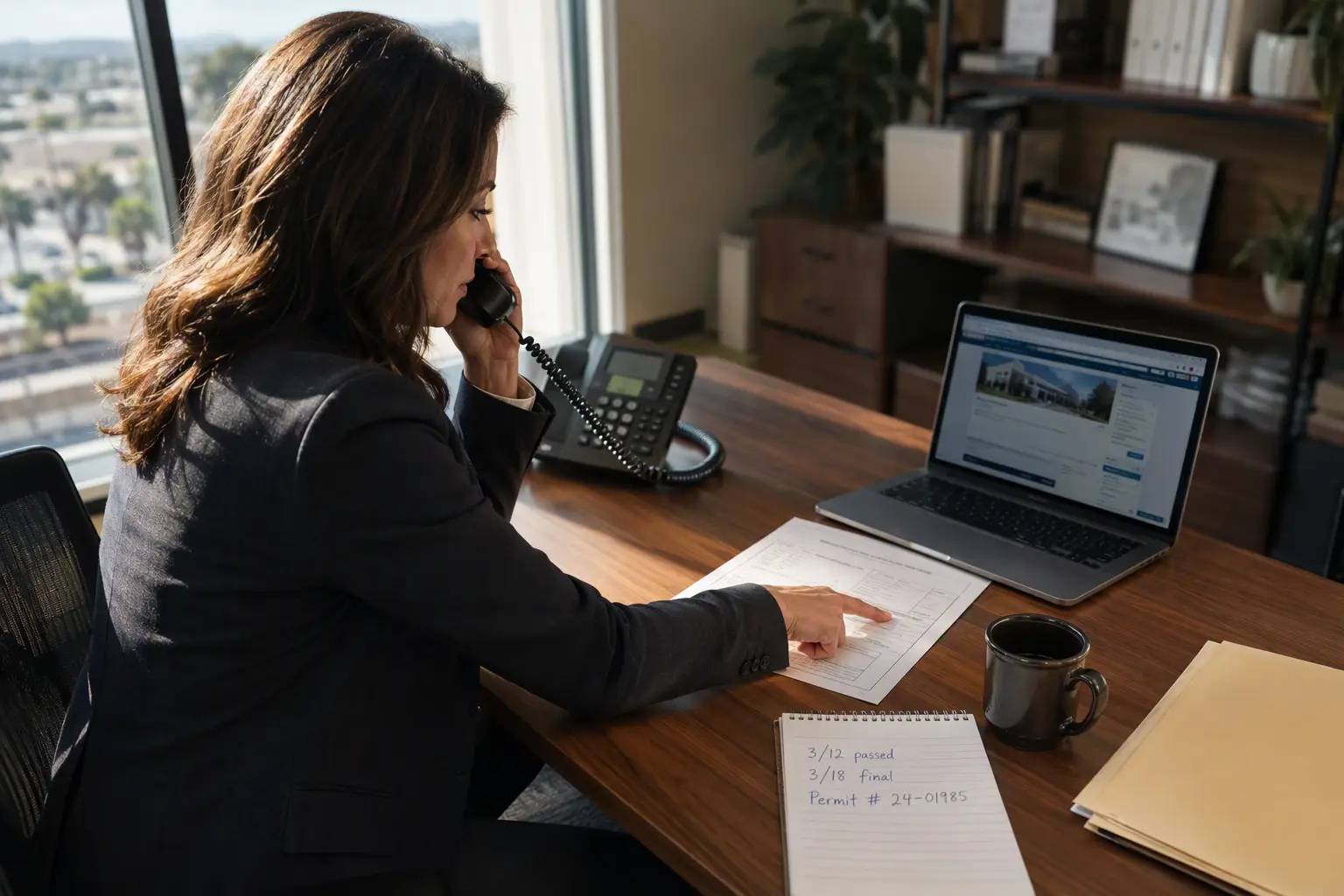
In California, only State of California safety engineers and Certified Competent Conveyance Inspectors (CCCI) may perform elevator inspections.
This requirement flows from California Labor Code Sections 7300–7324.2 and the California Code of Regulations, Title 8, Elevator Safety Orders (Sections 3000–3146). No private individual, contractor, or third-party vendor may conduct an official California inspection unless they carry CCCI credentials issued by Cal/OSHA. Always ask any claimed inspector to show Cal/OSHA-issued credentials on the spot, and note the credential number for follow-up verification.
In Los Angeles specifically, the Department of Building and Safety (LADBS) runs its own elevator and conveyance inspection program. If a property is located in the City of Los Angeles, the authorized inspector may come from LADBS rather than directly from Cal/OSHA’s state team. Building managers in Los Angeles should be aware of both programs and verify which agency scheduled any given visit.
Does an elevator inspector have to leave paperwork after every inspection in California?
Yes — a legitimate Cal/OSHA inspection that results in a permit to operate will produce a permit document that must be posted conspicuously in the elevator car, and any inspection that identifies violations will result in written notices or orders.
Under California law, no elevator may be operated in California without a valid, current permit to operate issued by Cal/OSHA. That permit is a physical document. If an inspector visited and the elevator passed, a new or renewed permit should have been issued or the process for issuing it initiated before the inspector left. If the elevator failed, a written order or correction notice would accompany the visit. An inspection that produces no paperwork whatsoever is a significant red flag warranting immediate follow-up with the Cal/OSHA Elevator Unit.
What are the official inspection intervals for elevators in California?
California law requires every conveyance to be inspected at least once a year, though a two-year permit is available under specific conditions.
| Condition | Inspection Frequency | Permit Duration | Key Requirement |
|---|---|---|---|
| Standard operation (all conveyance types) | At least once per year | Up to one year | Elevator found safe by Cal/OSHA inspector or CCCI |
| Full maintenance contract in place | At least once every two years | Up to two years | Covered by a full maintenance contract with a C-11 licensed elevator company; elevator found safe |
| New installation | Before first use | Up to one year (or two years with full maintenance contract) | Cal/OSHA inspection and permit required before the elevator is placed in service |
| Material alteration | Before returning to service | Per Cal/OSHA determination | Cal/OSHA permit required before altered conveyance operates |
The two-year permit option is particularly valuable for building owners seeking to reduce inspection frequency. To qualify, the elevator must be covered by a full maintenance contract with a company holding a C-11 Elevator Contractor license from the California Contractors State License Board (CSLB). Liftech Elevator can assess whether a property’s current maintenance arrangement meets the criteria for the extended permit interval.
Who is responsible for scheduling the annual elevator inspection in California?
In California, arranging the annual reinspection is the elevator owner’s responsibility — not Cal/OSHA’s and not the maintenance company’s by default.
This is one of the most commonly misunderstood aspects of California’s elevator compliance framework. Many building owners assume that Cal/OSHA proactively schedules inspections. In practice, the obligation rests with the owner of the conveyance. Property managers should calendar reinspection scheduling well before the current permit’s expiration date to avoid operating an elevator with a lapsed permit, which is a violation of California Labor Code Sections 7300–7324.2. An experienced CQCC-certified maintenance partner can help track permit expiration dates and coordinate inspection readiness on the owner’s behalf.
What credentials should I ask a claimed inspector to show?
Ask the individual to present their Cal/OSHA-issued CCCI (Certified Competent Conveyance Inspector) credential or, in Los Angeles, their LADBS inspector identification, and record the credential number before granting access.
A legitimate inspector will carry government-issued photo identification and agency-specific credentials. In California, CCCI certificates are issued by Cal/OSHA and last two years. If the individual cannot produce credentials on request, or if the credential number cannot later be verified through the Cal/OSHA Elevator Unit, the visit should be treated as unauthorized. Never allow someone without verified credentials to access a machine room, pit, or elevator car on a claimed inspection basis.
Can an elevator inspector legally access a machine room after business hours?
Nothing in California’s elevator safety orders restricts inspections to business hours, but an authorized inspector should always carry credentials, schedule the visit through official channels, and leave documentation regardless of when the inspection occurs.
After-hours inspections are uncommon but not prohibited. They may occur, for example, in response to a complaint or incident. However, the documentation and credentialing requirements do not change based on the time of day. A building owner who receives an unannounced after-hours visit with no documentation has legitimate grounds to question the legitimacy of the visit. Ensuring that security personnel on site are trained to request and record inspector credentials at any hour is a prudent risk-management practice.
What companies are legally allowed to maintain or repair an elevator in California?
Only companies certified by Cal/OSHA as a Certified Qualified Conveyance Company (CQCC), employing mechanics certified as Certified Competent Conveyance Mechanics (CCCM), may maintain, repair, alter, or replace components on elevators in California.
To obtain CQCC certification, a company must submit a current C-11 Elevator Contractor license issued by the California Contractors State License Board (CSLB), along with certificates of workers’ compensation and liability insurance. Anyone who works on an elevator in California without supervision must independently hold CCCM certification from Cal/OSHA. This dual-certification framework — CQCC for the company, CCCM for the individual — is what distinguishes legitimate elevator service from unauthorized work. Liftech Elevator operates within this framework, serving building owners in Signal Hill, Long Beach, Los Angeles, and Orange County.
What happens if an elevator operates with an expired permit to operate in California?
Operating an elevator without a valid, current permit to operate is a violation of California Labor Code Sections 7300–7324.2 and can expose the building owner to enforcement action, fines, and liability.
Cal/OSHA has authority to order a conveyance out of service when it is found to be unsafe or operating without a valid permit. Beyond regulatory penalties, a building owner whose elevator injures a passenger while operating without a valid permit faces significantly elevated civil liability exposure. This underscores why tracking permit expiration dates — and ensuring inspection readiness before the permit lapses — is a fundamental property management obligation, not an optional administrative task.
What code standards govern elevator safety in California?
California’s elevator safety orders adopt the ASME A17.1/CSA B44 Safety Code for Elevators and Escalators, 2004 edition (Group IV Elevator Safety Orders), effective May 1, 2008, for installation contracts signed on or after that date.
At the federal level, the Americans with Disabilities Act (ADA) governs accessibility requirements for elevators in public accommodations and commercial facilities. Elevators subject to ADA must meet standards covering cab size, control button height and labeling, door timing, and — where applicable — communication systems. The ASME A17.1 code, administered nationally, provides the underlying mechanical and safety engineering standards that California has adopted in its Elevator Safety Orders. California has proposed a Group V update that would incorporate elements of ASME A17.1-2019; the Standards Board held a public hearing on June 18, 2026, and no effective date has been posted as of the time of this writing. Building owners should monitor Cal/OSHA communications for updates on when the new edition takes effect.
What is the difference between a Cal/OSHA inspection and a maintenance visit?
A Cal/OSHA inspection is a formal, government-authorized review that results in either a permit to operate or an enforcement action; a maintenance visit is performed by a CQCC-certified company to keep the elevator in safe operating condition between inspections.
Confusion between the two is understandable, but the distinction matters enormously. A maintenance technician — even a fully certified CCCM — cannot issue a permit to operate. Only a Cal/OSHA safety engineer or CCCI can do that. Conversely, a Cal/OSHA inspector does not perform maintenance. A maintenance visit typically involves lubrication, adjustment, component testing, safety device checks, and documentation of findings — all of which help ensure the elevator passes its annual inspection. Building owners should maintain clear records distinguishing maintenance logs from inspection permits.
How should a building manager train staff to handle claimed inspector visits?
Security and front-desk staff should be trained to request government-issued photo ID and official credentials, record all identifying information in writing, notify the property manager immediately, and escort the inspector at all times — never leaving them unaccompanied in a machine room or pit.
A one-page protocol posted at security desks can standardize this process across staff shifts, including overnight and weekend hours. The protocol should specify: what credentials to request (CCCI number, agency-issued ID), how to record the information (log book entry, photo if permitted), who to call (property manager, then CQCC maintenance partner), and what to do if credentials cannot be produced (politely decline access and request the inspection be rescheduled through official channels). Liftech Elevator can assist building managers in Signal Hill, Long Beach, Los Angeles, and Orange County in developing site-specific compliance protocols as part of a broader maintenance consultation.
What should I check in the elevator car after a claimed inspection?
Verify that the permit to operate posted in the car is current and undisturbed, and inspect the car interior, control panel, and machine room for any signs of unauthorized access or component disturbance.
The permit to operate is required by California law to be posted conspicuously inside the elevator car. After any claimed inspection — authorized or not — the property manager or a CQCC-certified technician should confirm the permit is present, that its expiration date has not changed unexpectedly, and that no seals, panels, or safety devices appear to have been tampered with. If anything appears disturbed, take the elevator out of service until a certified inspection can be completed and document the condition with photographs before allowing the car to run again.
What is a full maintenance contract, and why does it matter for inspection frequency?
A full maintenance contract is a service agreement covering all labor and parts needed to keep an elevator in safe operating condition, and holding one with a C-11 licensed elevator company can qualify a California building owner for a two-year permit to operate instead of the standard one-year permit.
The two-year permit option reduces scheduling burden and provides a longer compliance window, but it requires that the elevator remain in genuinely safe condition throughout the extended period — and that the maintenance company holding the contract carries a valid C-11 license from the CSLB. Not every maintenance agreement qualifies; the scope of coverage matters. Building owners considering this option should ask their elevator service provider to confirm in writing that the agreement meets Cal/OSHA’s requirements for the extended permit interval.
What role does the C-11 license play in California elevator compliance?
The C-11 Elevator Contractor license, issued by the California Contractors State License Board (CSLB), is a prerequisite for a company to obtain CQCC certification from Cal/OSHA and to legally perform elevator work in California.
The CSLB administers the C-11 license as part of California’s broader contractor licensing framework. Cal/OSHA then layers its own CQCC certification requirement on top of the C-11, requiring the company to also carry workers’ compensation and liability insurance. Both credentials must be current. Building owners should verify that any elevator company they engage holds both a current C-11 from the CSLB and current CQCC certification from Cal/OSHA. Accepting a company with only one of the two exposes the building owner to compliance and liability risk.
What are common signs that an elevator inspection may have been fraudulent or unauthorized?
Key red flags include: no credentials presented, no paperwork left behind, after-hours timing with no prior notice from Cal/OSHA or LADBS, requests for cash payment, signs of physical tampering, and inability to verify the claimed inspector’s credential number with the issuing agency.
Fraudulent inspector schemes, while not unique to any industry, do occur in regulated trades where building owners may not know exactly what an inspection looks like. In California’s elevator sector, the documentation trail is clear: a legitimate inspection always produces a permit, notice, or written finding. Any claimed inspection that produces none of these — especially one occurring outside normal government business hours without prior scheduling — warrants immediate verification before the building owner assumes the inspection was valid or that any compliance obligation has been met.
What are my obligations if a real Cal/OSHA inspection finds violations?
If Cal/OSHA identifies violations, the elevator owner must address the cited deficiencies within the timeframe specified in the written order, and the elevator may not return to unrestricted service until Cal/OSHA confirms the corrections are satisfactory.
Cal/OSHA enforcement under California Labor Code Sections 7300–7324.2 can include orders to take a conveyance out of service until deficiencies are corrected, civil penalties, and in serious cases, referral for further action. The building owner — not the maintenance company — bears primary legal responsibility for ensuring the elevator is maintained in safe operating condition and that a valid permit is in place at all times. Engaging a CQCC-certified maintenance partner is the most reliable way to stay ahead of potential violations before an official inspection occurs. Liftech Elevator provides maintenance services designed to keep elevators in compliance-ready condition across its service areas in Signal Hill, Long Beach, Los Angeles, and Orange County.
How do ADA requirements interact with California elevator inspection requirements?
ADA accessibility requirements apply independently of Cal/OSHA’s safety inspection process — an elevator can hold a valid permit to operate and still be out of ADA compliance, and vice versa.
Under the Americans with Disabilities Act, elevators in commercial facilities and public accommodations must meet specific accessibility standards, including requirements for cab dimensions, control button height, floor designation signage, and communication systems. ADA compliance is enforced separately from Cal/OSHA’s safety permitting process, typically through the U.S. Department of Justice or private litigation. Building owners should treat ADA compliance and Cal/OSHA permitting as two parallel obligations, both of which require ongoing attention. An elevator inspection by a CCCI addresses safety — it does not certify ADA compliance.
How long are CQCC, CCCM, and CCCI certificates valid in California?
California CQCC, CCCM, and conveyance inspector (CCCI) certificates last two years, and renewal requires at least eight hours of continuing education.
This renewal cycle means that building owners verifying a contractor or inspector’s credentials should confirm not just that the credential was issued, but that it is currently in its active two-year period. An inspector presenting credentials that expired more than two years ago — or credentials with no clear expiration date — should be asked to provide renewed documentation. The continuing education requirement helps ensure that certified individuals stay current with evolving safety standards, including any changes resulting from California’s ongoing Group V rulemaking process to incorporate elements of the updated ASME A17.1 code.
What is the best way to prepare for a legitimate Cal/OSHA elevator inspection?
Ensure the current permit to operate is posted in the car, all maintenance logs are up to date, the machine room is accessible and clean, all required safety devices are functioning, and a CQCC-certified maintenance company has completed any outstanding repair items before the inspection date.
Preparation is the surest path to a passed inspection and an on-time permit renewal. Property managers should coordinate with their elevator maintenance provider well in advance of the permit expiration date to conduct a pre-inspection assessment, identify any deficiencies, and complete corrections before the official inspector arrives. Liftech Elevator offers pre-inspection assessments for buildings in Signal Hill, Long Beach, Los Angeles, and Orange County to help identify and resolve potential issues before they become formal violations. Maintaining thorough maintenance records also supports the building owner’s position if any enforcement question arises later.
Contact Liftech Elevator for a free elevator assessment at 562-997-3639.
Need elevator service you can rely on? Liftech Elevator is ready to help.