How Much Does Elevator Maintenance Cost? A Complete Guide for Building Owners
Understanding elevator maintenance costs is essential for any building owner, property manager, or facilities director in Signal Hill, Long Beach, Los Angeles, or Orange County, CA. This comprehensive FAQ hub covers every dimension of elevator service costs — from routine maintenance contracts to major modernizations — so decision-makers can plan budgets accurately and maintain safe, code-compliant equipment.
What Are the Main Factors That Determine Elevator Maintenance Costs?
Elevator maintenance costs are shaped by the type of elevator, its age and condition, the building’s location, the scope of the service contract, and local labor and regulatory requirements.
No two elevators carry the same maintenance price tag. A hydraulic elevator in a three-story medical office building has fundamentally different service demands than a traction elevator in a 20-story residential high-rise. Key cost drivers include:
- Elevator type: Hydraulic, traction (geared or gearless), MRL (machine room-less), and specialty lifts each require different service procedures and parts.
- Number of units: Properties with multiple elevators often negotiate per-unit discounts through a single bundled service agreement.
- Equipment age: Older equipment may require obsolete parts, more frequent callbacks, and interim code-compliance retrofits.
- Usage volume: High-traffic commercial and residential buildings place greater mechanical stress on components, accelerating wear on ropes, sheaves, door operators, and controllers.
- Contract scope: Full-service agreements that include parts and labor cost more upfront but reduce exposure to unpredictable repair invoices.
- Local labor market: Elevator mechanics in Los Angeles and Orange County operate under union wage scales that reflect regional cost-of-living conditions.
- Regulatory compliance requirements: California’s elevator code enforcement calendar — including periodic inspections mandated by the California Department of Industrial Relations — generates non-negotiable service events with associated costs.
What Types of Elevator Service Contracts Are Available, and How Do They Differ in Cost?
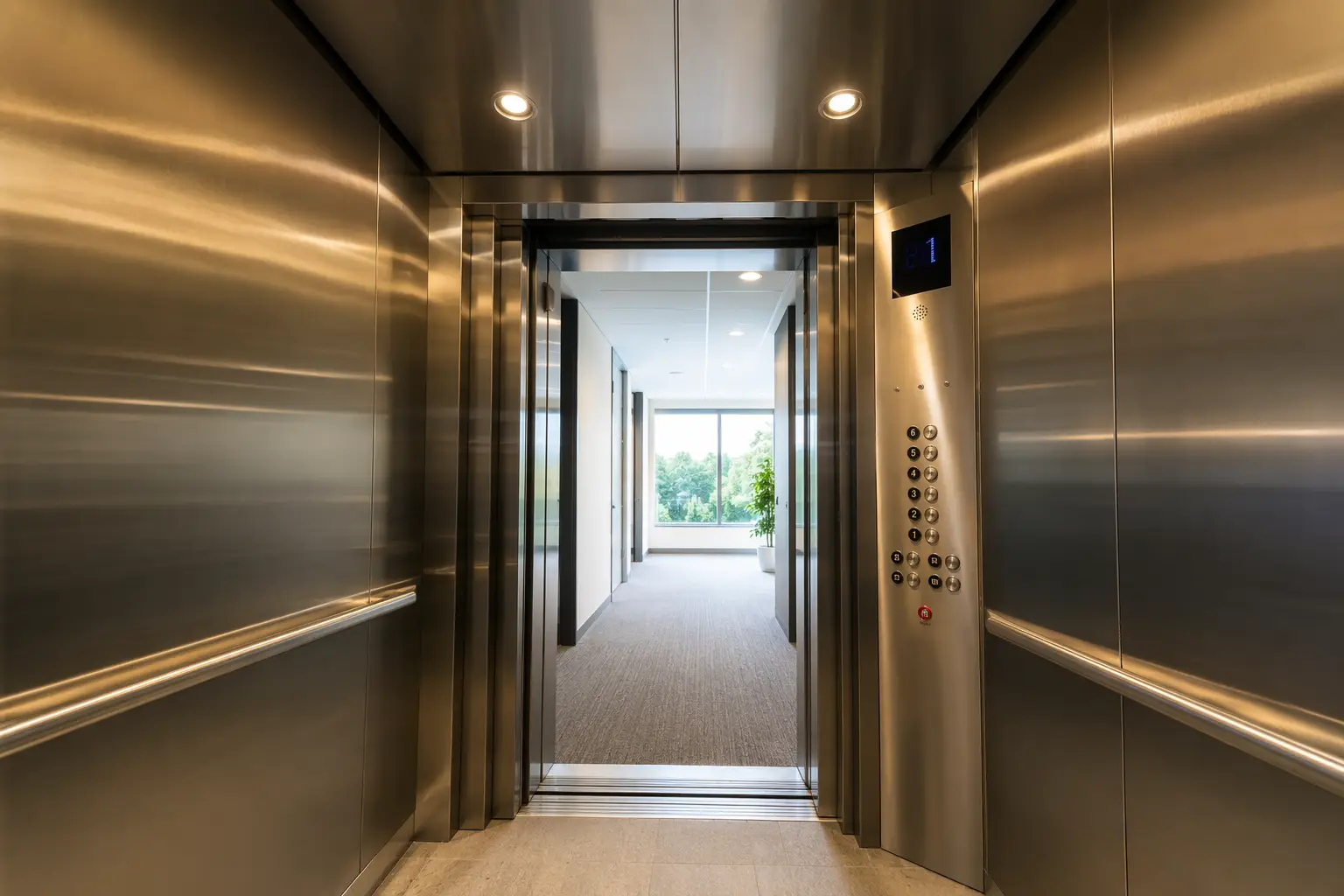
Service contracts generally fall into three tiers — oil-and-grease, parts-and-labor, and full-coverage — each offering a progressively broader scope of protection at a higher monthly rate.
| Contract Type | What Is Typically Included | What Is Typically Excluded | Best Suited For |
|---|---|---|---|
| Oil & Grease (Basic) | Lubrication, visual inspections, minor adjustments | Parts, labor for repairs, callbacks after hours | New equipment under manufacturer warranty; low-traffic sites |
| Parts & Labor | All basic services plus covered parts and repair labor | Major component replacements (motors, controllers, hydraulic units); vandalism | Mid-age equipment; medium-traffic commercial buildings |
| Full-Service / Comprehensive | All of the above plus major components, callbacks, entrapments, after-hours service | Modernizations; code upgrades not related to normal wear; structural modifications | Older equipment; high-traffic residential or commercial buildings; risk-averse owners |
| Modernization / Capital Agreement | Phased upgrades to controller, cab, fixtures, door systems combined with ongoing service | Varies by negotiated scope | Buildings planning full or partial modernization with bundled ongoing service |
Understanding the difference between contract tiers is critical before signing. A basic oil-and-grease agreement may appear attractive on a monthly basis, but a single major repair event — such as a controller board failure or hydraulic pump replacement — can produce an invoice that far exceeds the savings realized over many months of lower premiums.
How Often Are Elevators Required to Be Inspected in California?
California law requires periodic inspections of elevators by a Qualified Elevator Inspector (QEI), and the California Department of Industrial Relations Division of Occupational Safety and Health (Cal/OSHA) sets mandatory inspection intervals that generate direct and indirect costs for building owners.
California elevator inspections are governed by state regulations that incorporate ASME A17.1 Safety Code for Elevators and Escalators as the technical reference standard. Routine periodic inspections and witnessing of tests are conducted at defined intervals depending on equipment category. Building owners bear the cost of the inspection fee itself, the elevator technician’s time to perform required tests (such as the Category 1 and Category 5 load and safety tests), and any corrective work identified during the inspection.
Failing to maintain a current Certificate of Operation is a compliance violation enforceable by OSHA and state authorities, and it exposes building owners to significant liability. Proactive maintenance programs are the most reliable way to ensure an elevator passes its inspection on the first attempt, avoiding the cost of re-inspection and emergency repair under deadline pressure.
What Does a Routine Elevator Maintenance Visit Actually Include?
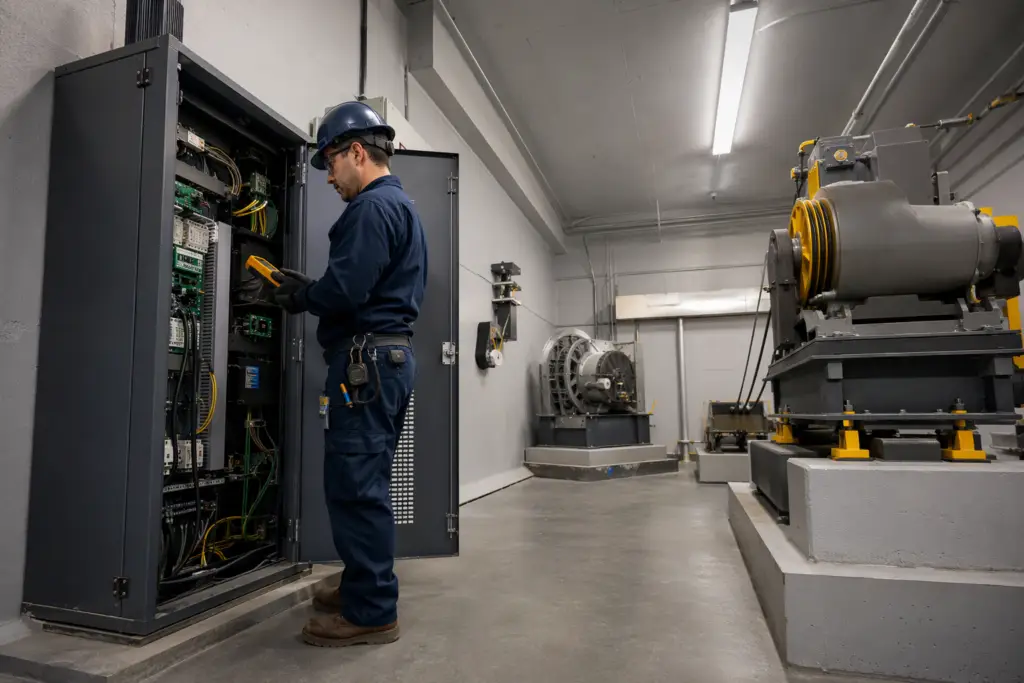
A routine preventive maintenance visit by a qualified elevator mechanic covers lubrication of moving components, inspection of safety devices, adjustment of doors and leveling, testing of operational functions, and documentation of findings.
During a standard preventive maintenance call, a certified technician will typically:
- Inspect and lubricate guide rails, rollers, or guide shoes to reduce wear and noise.
- Check and adjust door operators, door clutches, and interlocks to ensure safe, smooth door operation — door-related failures are among the most common causes of service callbacks.
- Inspect and test all safety devices, including the governor, safeties, buffers, and emergency stop switches in accordance with ASME A17.1 requirements.
- Test the leveling accuracy of the car at each floor and make adjustments to the drive system or control parameters as needed.
- Inspect the machine room (or MRL space) for temperature, cleanliness, and proper storage compliance.
- Check lighting in the car, machine room, pit, and hoistway as required by code.
- Inspect the pit for water intrusion, proper pit stop switch operation, and adequate lighting.
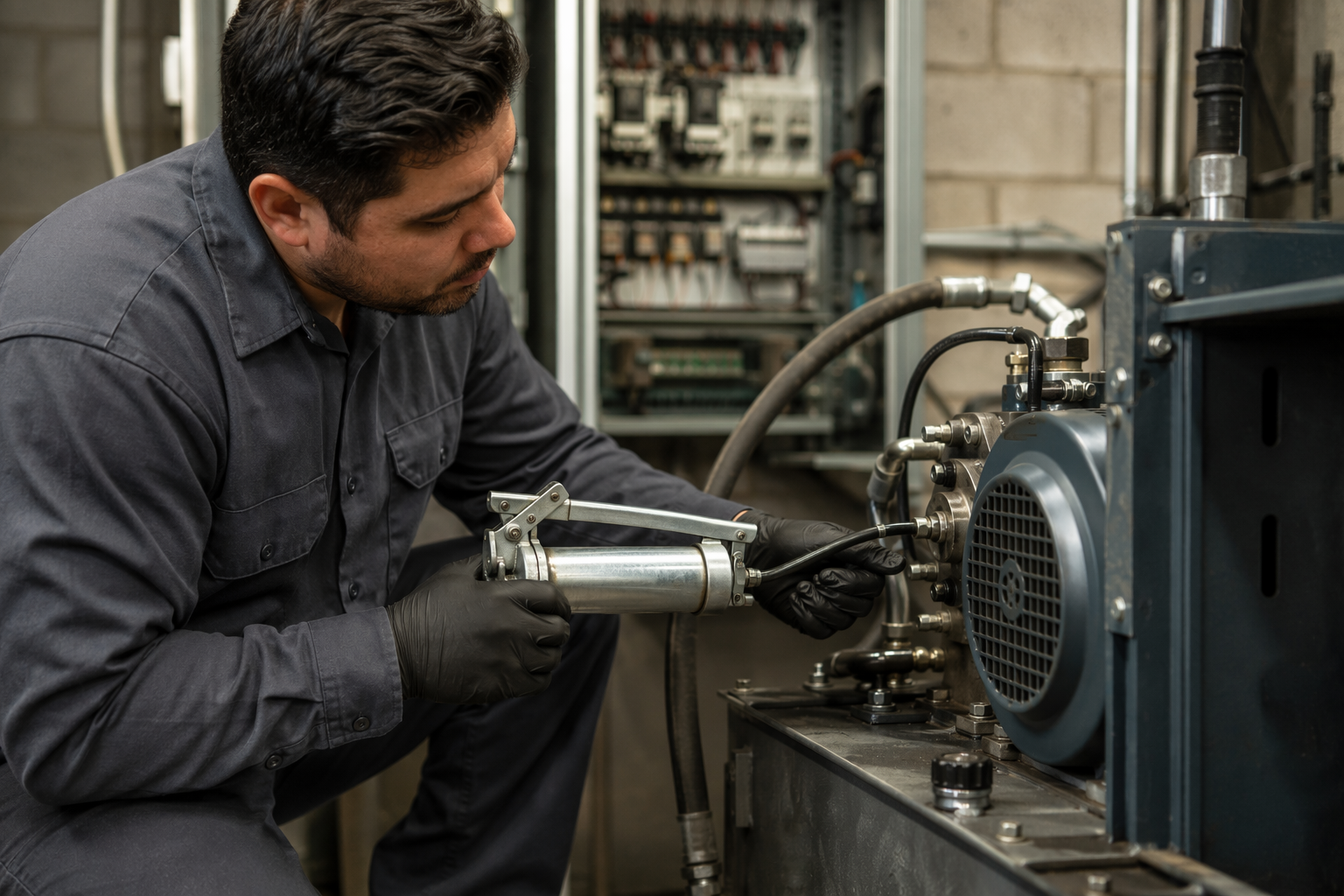
- Review the oil level in a hydraulic elevator’s power unit and check for leaks in the hydraulic line.
- Test emergency communications (phone or intercom) to confirm functionality per ADA and ASME A17.1 requirements.
- Complete a written service record and report any deficiencies requiring follow-up.
The depth and frequency of these visits depends on the contracted service tier and the specific demands of the equipment. Buildings in high-use environments — such as hospitals, transit facilities, and large residential complexes in Los Angeles and Orange County — generally benefit from more frequent visits than lightly used commercial properties.
What Are Common Elevator Repair Costs That Are Not Covered by Maintenance Contracts?
Repairs triggered by vandalism, deliberate misuse, flooding, fire, or major component failures beyond normal wear — such as motor replacements, hydraulic cylinder replacements, or full controller upgrades — are frequently excluded from standard maintenance agreements.
Building owners on basic or mid-tier contracts should maintain a capital reserve for repair events that fall outside contract scope. Common out-of-contract repair categories include:
- Hydraulic cylinder replacement: Required when a cylinder develops a slow leak or fails pressure testing. This is a significant labor and material event, often requiring excavation.
- Controller modernization: Aging relay-logic controllers may need replacement when parts become unavailable or the unit fails to meet current code requirements.
- Hoist rope replacement: Traction elevators require rope replacement based on wear criteria defined in ASME A17.1.
- Motor and drive replacement: Variable-frequency drives and hoist motors have finite service lives, and replacement is a capital expense.
- Door equipment replacement: Complete door operator assemblies, sill replacement, or header replacements after significant wear or physical damage.
- Vandalism and cab damage: Interior cab damage, fixture replacement, and fixture vandalism are typically excluded from all contract tiers.
How Do Elevator Modernization Costs Differ From Ongoing Maintenance Costs?
Modernization is a capital investment in upgrading major elevator systems — controls, drives, cab interiors, door equipment, or entire mechanical packages — that is categorically different from recurring preventive maintenance costs.
Modernization costs are project-based and vary widely depending on the scope of work, the number of units, and the specific systems being replaced. A partial modernization might address only the controller and fixtures, while a full modernization replaces everything from the machine components to the cab finishes. Modernization projects are typically triggered by one or more of the following circumstances:
- Equipment reaching the end of its serviceable life with parts no longer available from the original manufacturer.
- A Cal/OSHA violation notice requiring code-mandated upgrades such as door reopening devices, emergency lighting, or car-top clearance corrections.
- A building sale or refinancing that requires an elevator condition assessment and identifies deferred capital items.
- A tenant improvement project that requires cab interior upgrades or accessibility modifications under the Americans with Disabilities Act.
Liftech Elevator works with building owners throughout Long Beach, Signal Hill, Los Angeles, and Orange County to develop phased modernization strategies that spread capital costs over time while keeping equipment compliant and reliable.
How Does ADA Compliance Affect Elevator Maintenance and Upgrade Costs?
The Americans with Disabilities Act (ADA) establishes accessibility requirements for elevator controls, cab dimensions, door timing, and communication systems that can generate compliance-related upgrade costs, particularly during alterations to existing buildings.
ADA requirements relevant to elevator owners include:
- Call button and control panel height and reach range requirements.
- Audible and visual signals at hoistway entrances and within the car.
- Emergency two-way communication that does not require voice to operate (for users who are speech-impaired).
- Door timing requirements that accommodate users with mobility limitations.
- Cab interior dimensions for wheelchair accessibility.
When a building undergoes alterations that trigger ADA path-of-travel requirements, elevator upgrades may become mandatory. Building owners should consult with a qualified elevator contractor and their legal counsel to assess exposure before planning renovation projects.
What Is the Difference Between a Callback and a Preventive Maintenance Visit?
A preventive maintenance visit is a scheduled, proactive service call to inspect and maintain the elevator system, while a callback is an unscheduled emergency response to an equipment failure or passenger entrapment.
Callbacks represent unplanned cost and operational disruption. Under full-service contracts, callbacks during business hours — and sometimes after hours — are included in the monthly fee. Under basic contracts, each callback may generate a separate labor invoice. Buildings with high callback rates typically have one or more underlying maintenance deficiencies: deferred preventive work, aging components near failure, or environmental conditions (such as water intrusion in pits) that accelerate wear. Reducing callback frequency is one of the most tangible economic arguments for investing in a higher-tier service contract or proactive equipment condition assessment.
How Does Elevator Age and Condition Affect Ongoing Maintenance Costs?
Older elevators cost progressively more to maintain as parts become scarce, safety code requirements evolve, and wear accumulates across multiple systems simultaneously.
The relationship between elevator age and maintenance cost is not strictly linear — it tends to accelerate as equipment passes certain thresholds. An elevator that is decades old may face compounding challenges: the original manufacturer may no longer support the controller platform, rope and sheave wear may require costly renewal, and successive code editions under ASME A17.1 may have introduced requirements that necessitate retrofits at inspection time. Building owners should request a condition assessment from a qualified elevator contractor to understand the remaining useful life of their equipment and plan capital expenditures accordingly.
What Should Building Owners in Los Angeles and Orange County Budget for Elevator Maintenance?
Budgeting for elevator maintenance requires accounting for the base service contract cost, periodic inspection fees, anticipated repair events based on equipment condition, and a capital reserve for modernization or major component replacement over a multi-year horizon.
Rather than relying on generic industry benchmarks — which vary widely by region, contract scope, and equipment type — building owners in Los Angeles, Long Beach, Signal Hill, and Orange County are best served by obtaining competitive bids from qualified local contractors and requesting an itemized breakdown of contract inclusions and exclusions. Key budget line items to plan for include:
- Monthly or annual service contract premium.
- Annual state inspection fees and related test labor.
- Category 1 and Category 5 safety test costs (per ASME A17.1 testing intervals).
- Reserve contributions toward major component renewals (controller, ropes, hydraulic unit, cab).
- Potential ADA or code-compliance retrofit costs triggered by alterations.
Liftech Elevator provides transparent, itemized proposals to property managers and building owners across Southern California so that budget planning is based on the actual condition and requirements of the specific equipment — not generic estimates.
How Can Building Owners Reduce Elevator Maintenance Costs Without Sacrificing Safety?
Cost-conscious building owners can reduce long-term elevator maintenance expenses by selecting the right contract tier for their equipment, addressing deficiencies proactively before they escalate, and investing in modernization before equipment reaches a crisis point.
Practical cost-reduction strategies include:
- Bundling multiple units: Property owners with two or more elevators can often negotiate better per-unit contract rates through a single service provider.
- Scheduling discretionary work during normal hours: Non-emergency repairs and inspections scheduled during regular business hours avoid after-hours labor premiums.
- Addressing minor deficiencies promptly: A worn door clutch adjusted during a routine visit costs far less than the callback, entrapment incident, and liability exposure that result from letting it fail in service.
- Requesting a condition assessment before contract renewal: Understanding the actual state of equipment allows owners to select a contract tier that matches real risk rather than defaulting to the lowest-cost option.
- Phased modernization: Upgrading the controller and door equipment before a full failure — rather than after — typically results in lower total project cost and less emergency downtime.
What Are the Legal Consequences of Neglecting Elevator Maintenance in California?
California building owners who fail to maintain elevators in compliance with state law and ASME A17.1 requirements face permit revocation, fines, mandatory shutdown of equipment, and significant civil liability exposure in the event of an injury.
The California Department of Industrial Relations has authority to issue orders to shut down non-compliant elevators. Operating an elevator without a current Certificate of Operation is a violation of state law. Beyond regulatory consequences, building owners and property managers who cannot demonstrate a documented, consistent maintenance record face heightened exposure in personal injury litigation. Courts and juries in California frequently examine maintenance records when evaluating negligence claims involving elevator incidents.
Maintaining thorough, current service documentation — including inspection certificates, maintenance logs, and repair records — is both a regulatory requirement and a critical risk-management practice. A reputable elevator service provider will maintain this documentation and make it available to building owners on demand.
How Do I Evaluate and Compare Elevator Maintenance Contractors in Southern California?
Evaluating elevator contractors requires comparing contract scope, inclusion lists, response capabilities, compliance expertise, and references — not monthly rate alone.
When soliciting bids from elevator service contractors in Los Angeles, Long Beach, Signal Hill, or Orange County, building owners should request and compare:
- A complete written list of inclusions and exclusions for each contract tier offered.
- Confirmation that all technicians are qualified elevator mechanics under California and applicable union standards.
- Documentation that the contractor is registered and authorized to perform elevator work in California.
- References from comparable properties (similar building type, elevator type, and occupancy) in the region.
- A clear description of how callbacks, entrapments, and after-hours emergencies are handled.
- Evidence of the contractor’s familiarity with California-specific inspection processes and Cal/OSHA enforcement.
Price comparison is only meaningful when the scope being compared is identical. A lower monthly rate that excludes critical components or after-hours service may represent a higher total cost of ownership than a comprehensive contract at a higher rate.
What Are Category 1 and Category 5 Elevator Tests, and What Do They Cost?
Category 1 and Category 5 tests are periodic safety tests required by ASME A17.1 that must be witnessed by a Qualified Elevator Inspector and performed at defined intervals — each generating direct costs for test labor and inspection fees.
Under ASME A17.1, traction elevators are subject to Category 1 tests (no-load safety system tests) annually, and Category 5 tests (full-load, full-speed safety and governor tests) on a five-year cycle. Hydraulic elevators have their own test categories and intervals. These tests require a trained elevator mechanic to perform the test procedures, and the results must be documented and made available to the authority having jurisdiction. The costs associated with these tests include the mechanic’s time (which may or may not be included in the service contract depending on its terms), any inspection fees charged by the state, and the cost of correcting any deficiencies identified during testing.
How Does Elevator Maintenance Cost Compare for Hydraulic Versus Traction Elevators?
Hydraulic and traction elevators have meaningfully different maintenance profiles, with hydraulic units requiring attention to fluid management and cylinder integrity while traction units involve more complex mechanical systems including ropes, sheaves, and counterweights.
| Maintenance Category | Hydraulic Elevator | Traction Elevator (Geared/Gearless) |
|---|---|---|
| Fluid management | Hydraulic oil level checks, leak detection, fluid changes | Gear oil (geared units); no hydraulic fluid |
| Primary drive system | Submersible pump unit; relatively accessible | Hoist motor, drive sheave, counterweight; more complex |
| Rope/tension system | Not applicable (piston-driven) | Hoist ropes require periodic inspection and eventual replacement per ASME A17.1 |
| Environmental sensitivity | Higher: oil leaks, cylinder corrosion, valve wear | Lower for fluid, but machine room temperature management critical |
| Typical travel height | Suited for low-rise (generally up to 6 stops) | Mid-rise to high-rise; wider application range |
| Major capital event | Hydraulic cylinder replacement | Motor/drive replacement; rope renewal |
What Is a Elevator Condition Assessment, and Why Does It Matter for Cost Planning?
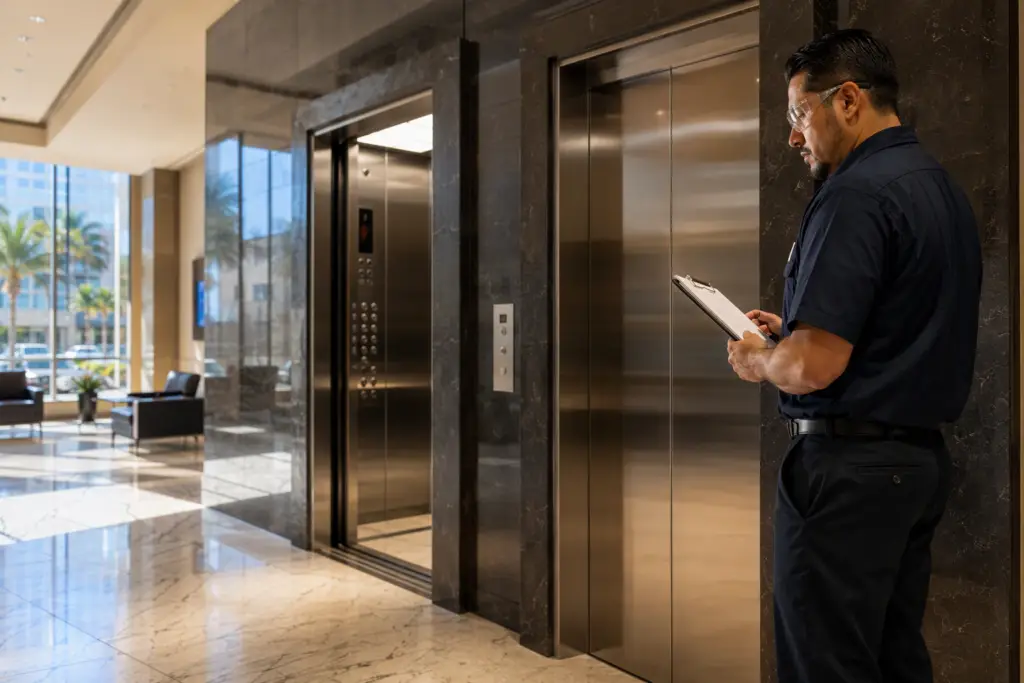
An elevator condition assessment is a systematic, documented evaluation of an elevator’s current mechanical, electrical, and code-compliance status that provides building owners with a factual basis for maintenance contract selection, capital reserve planning, and modernization decision-making.
A thorough condition assessment conducted by a qualified elevator contractor will typically document the remaining useful life of major components, identify any current or anticipated code-compliance deficiencies, and provide a prioritized list of recommended actions. For building owners planning a sale, refinancing, or major renovation, this documentation is also valuable for due diligence purposes. Liftech Elevator offers free elevator assessments for building owners in Signal Hill, Long Beach, Los Angeles, and Orange County to help establish an accurate, current baseline for service planning.
How Do Elevator Maintenance Costs Factor Into Overall Building Operating Budgets?
Elevator maintenance is a non-discretionary operating expense for any building with vertical transportation equipment, and it should be treated as a fixed line item in the annual operating budget with a separate capital reserve component for major repairs and modernization.
Property managers and building owners working with lenders, investors, or HOA boards frequently need to justify elevator maintenance line items. The appropriate framing is that elevator maintenance costs are an investment in asset preservation, occupant safety, regulatory compliance, and liability management — not merely an overhead expense. Deferred maintenance on elevators does not eliminate costs; it defers and amplifies them while increasing operational and legal risk in the interim period.
What Should I Do Immediately If My Elevator Has a Serious Mechanical Problem or Fails Inspection?
When an elevator experiences a serious mechanical failure or receives a failed inspection with a notice of violation, the building owner must take immediate, documented steps to address the deficiency and protect occupant safety.
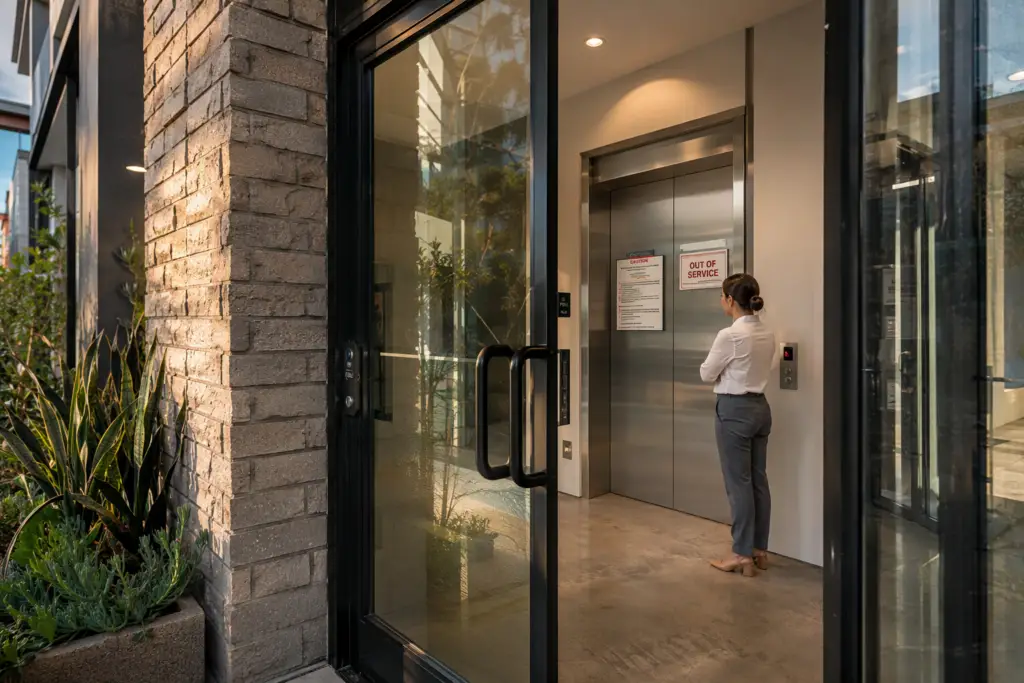
- Take the elevator out of service immediately if there is any safety hazard to passengers — post clear signage at all landings indicating the elevator is out of service.
- Contact your elevator service contractor to report the failure and request an emergency service response.
- Retain all inspection notices, violation orders, and correspondence from the authority having jurisdiction (Cal/OSHA or local inspection authority) without alteration.
- Obtain a written scope of work and timeline from your elevator contractor for the required corrective repairs.
- Confirm with the contractor that all corrective work will be performed to the applicable code standard and that documentation will be provided for re-inspection.
- Notify building occupants and management of the outage and the expected timeline for restoration of service.
- After repairs are complete, request a written service report and retain it with the elevator’s permanent maintenance records.
How Does California’s Regulatory Environment Affect Elevator Maintenance Costs Compared to Other States?
California’s elevator regulatory framework — administered through the Division of Occupational Safety and Health within the Department of Industrial Relations — imposes rigorous inspection, permitting, and contractor qualification requirements that shape the cost structure of elevator ownership in the state.
California adopts and enforces the ASME A17.1 Safety Code for Elevators and Escalators with state-specific amendments. The permitting, inspection, and certification processes administered by Cal/OSHA create costs that are specific to California — including fees for annual operating permits, periodic inspection witnessing fees, and the cost of compliance with California-specific code amendments. Building owners in Los Angeles, Long Beach, Signal Hill, and Orange County operate within this regulatory framework, and selecting a service contractor with deep familiarity with California’s specific requirements — rather than one primarily experienced in other states — is a practical consideration that affects both compliance outcomes and total cost.
Why Should Building Owners in Signal Hill, Long Beach, Los Angeles, and Orange County Choose Liftech Elevator for Maintenance?
Building owners in Southern California benefit from working with a locally focused elevator service company that understands the specific regulatory requirements, building stock, and operational environment of the region.
Liftech Elevator is a certified elevator service company serving building owners, property managers, HOAs, and commercial facilities throughout Signal Hill, Long Beach, Los Angeles, and Orange County. The company provides preventive maintenance contracts, repair services, modernization projects, and condition assessments tailored to the specific needs of Southern California’s diverse building portfolio — from low-rise residential communities to mid-rise commercial and mixed-use properties.
Local service matters for elevator maintenance because response to service events, familiarity with local inspection authorities, and knowledge of the regional regulatory environment all affect the quality and cost of elevator ownership. Liftech Elevator’s focus on the Southern California market means that the team understands the compliance landscape that building owners in these communities face, including California-specific amendments to ASME A17.1 and the requirements of the Americans with Disabilities Act as they apply to existing and altered facilities.
Ready to Get an Accurate Elevator Maintenance Cost Assessment for Your Building?
Stop guessing at elevator maintenance budgets based on generic national figures. Get a clear, accurate picture of what it will cost to keep your elevators safe, compliant, and reliable in 2026 and beyond.
Contact Liftech Elevator for a free elevator assessment. Serving Signal Hill, Long Beach, Los Angeles, and Orange County, CA.
Call: 562-609-3478
A qualified Liftech Elevator specialist will evaluate your equipment, review your current service agreement, and provide a transparent recommendation — with no obligation. Don’t wait for a failed inspection or an unexpected breakdown to find out what proper elevator maintenance should cost.