Who Should I Contact When an Elevator Needs Fast Repair?
Elevator downtime is more than an inconvenience — it can create safety risks, ADA compliance violations, and significant operational disruption for residential buildings, commercial properties, hospitals, and schools. The questions below address every dimension of fast elevator repair: who to call, what to expect, which codes apply, and how to choose the right service provider in Signal Hill, Long Beach, Los Angeles, and Orange County, CA.
Who exactly should building owners contact for fast elevator repair?
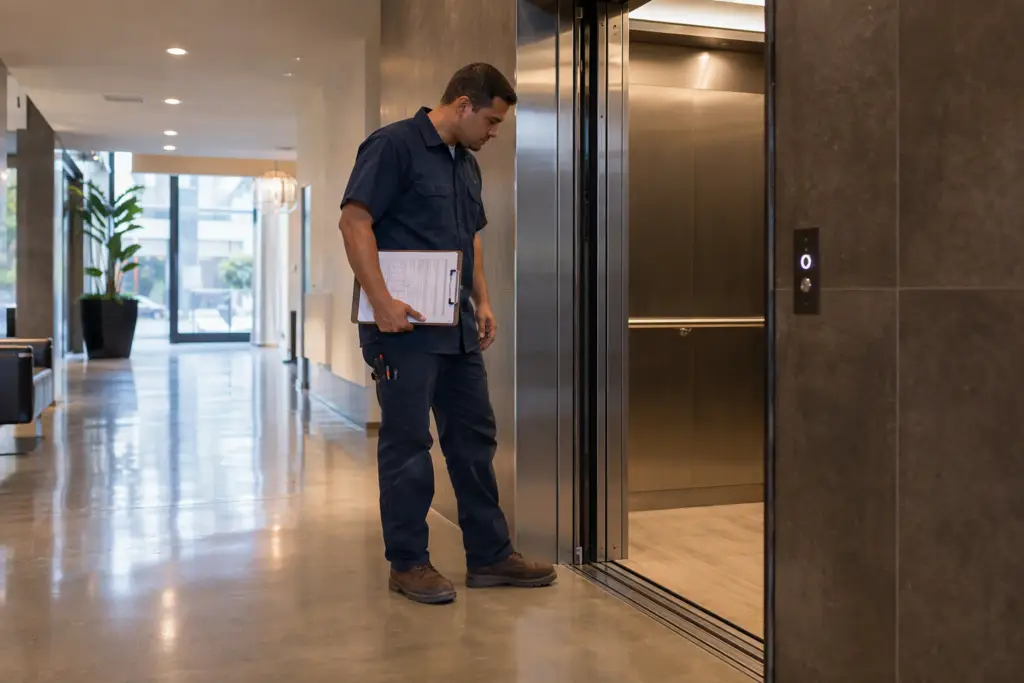
Building owners and property managers should contact a licensed elevator contractor — not a general building maintenance technician — because elevator systems are governed by specialized safety codes that require qualified personnel.
In California, elevator work must be performed by contractors holding the appropriate state elevator certificate issued through the California Department of Industrial Relations, and the work must comply with the ASME A17.1 Safety Code for Elevators and Escalators. Calling a general handyman or building engineer for anything beyond basic reset procedures can void insurance, create liability, and delay a proper repair.
For properties in Signal Hill, Long Beach, Los Angeles, and Orange County, Liftech Elevator is a certified elevator service company equipped to respond to repair calls across all four service areas. Having a contractor already on a maintenance agreement with your building typically results in the fastest response because the technician already knows the equipment configuration.
What information should I have ready before calling an elevator repair company?
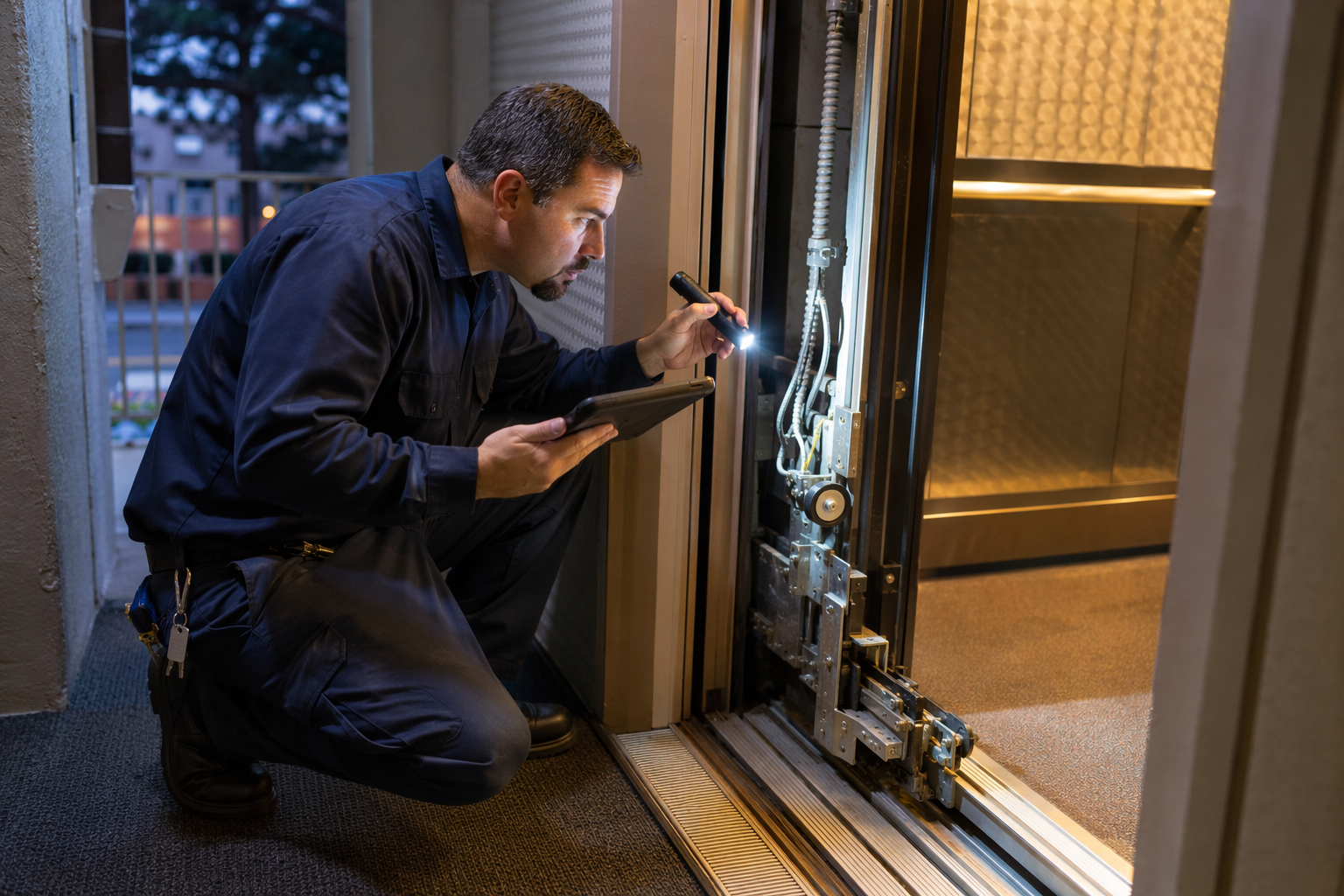
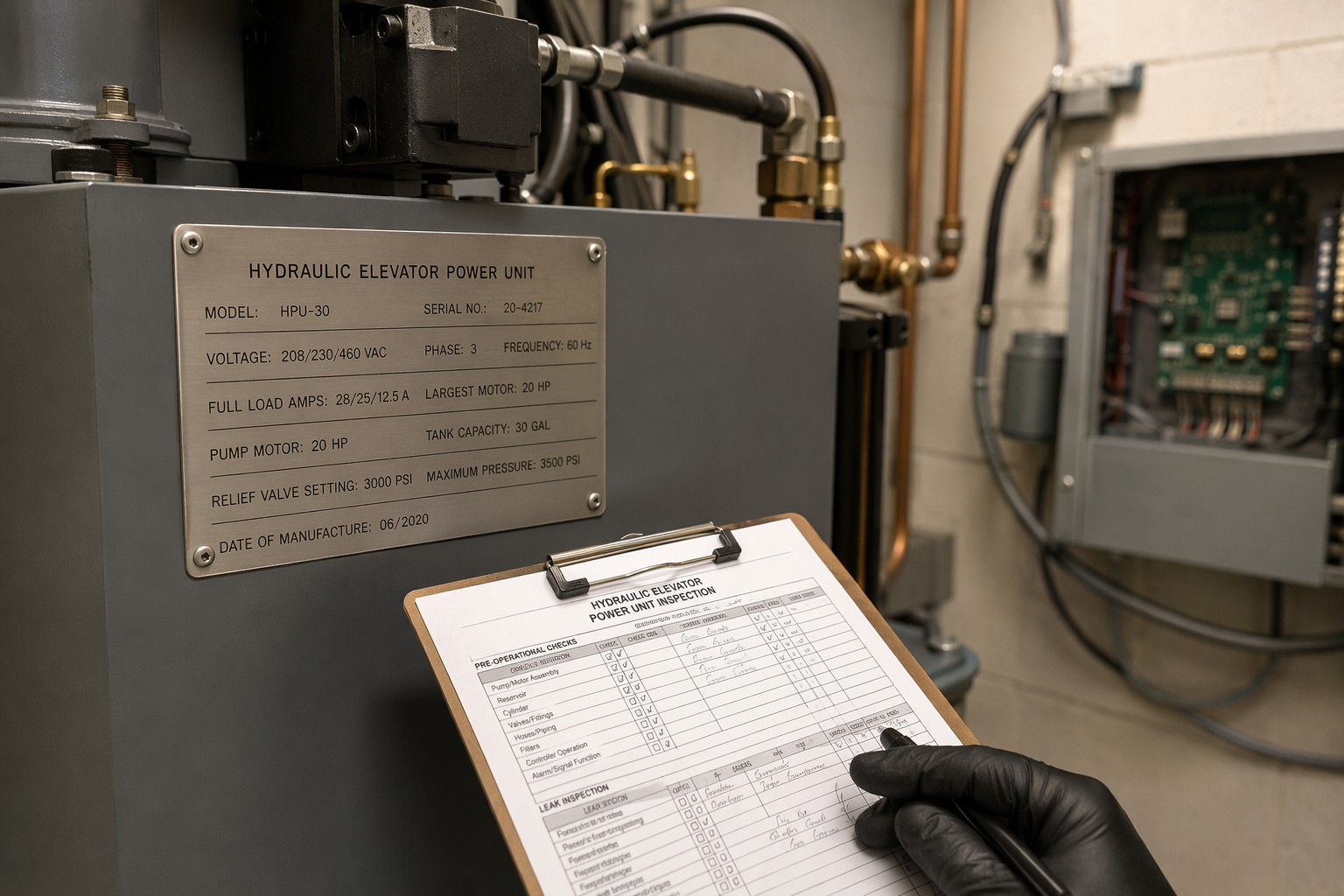
Before placing a service call, gather the elevator’s make, model, serial number, floor count, type of failure, and whether passengers are trapped, because this information directly affects dispatch priority and part availability.
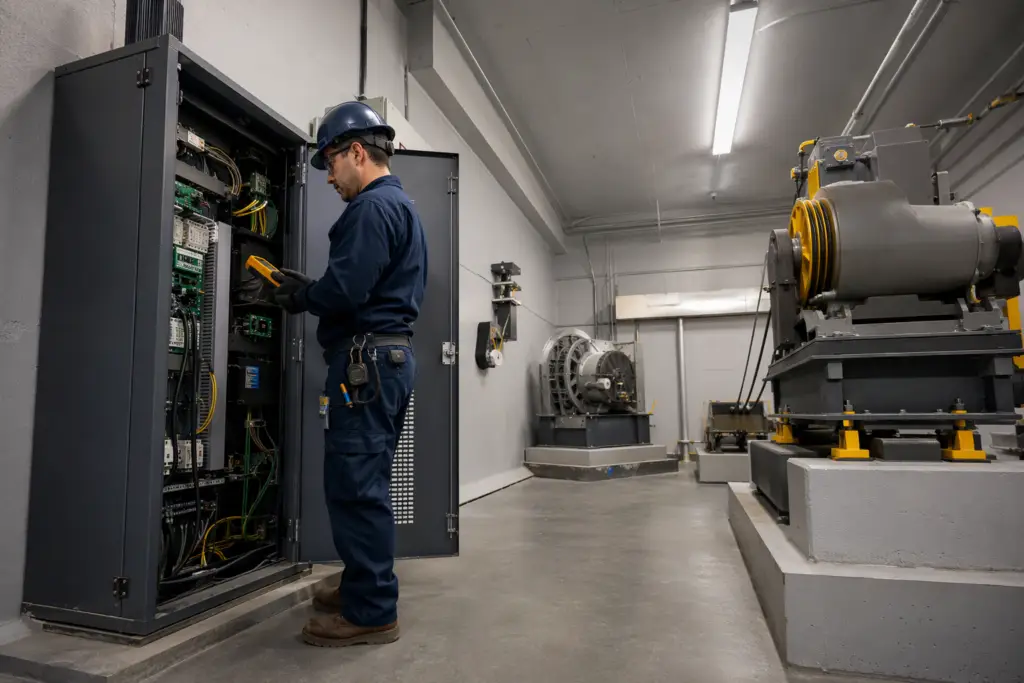
This detail is usually found on the elevator’s data plate inside the machine room. Knowing whether the elevator is hydraulic, traction, or MRL (machine-room-less) helps the dispatcher assign a technician with the right tools. Describing the symptom precisely — for example, “doors open but car won’t move” versus “car moves but doors won’t close” — enables faster remote diagnosis before the technician even arrives on site.
What is the difference between emergency elevator repair and standard repair service?
Emergency elevator repair prioritizes passenger safety and entrapment rescue above all else, while standard repair addresses non-critical failures that reduce performance without creating immediate safety hazards.
Under ASME A17.1 Safety Code for Elevators and Escalators, any situation where passengers are trapped or the elevator poses an imminent danger triggers an emergency response protocol. Standard repairs — such as a misbehaving door sensor, a faulty button, or erratic leveling — are important but do not typically require the same level of urgency. Property managers should understand this distinction so they communicate severity accurately when calling for service.
What are the most common reasons elevators need urgent repair?
The most common causes of urgent elevator repair include door system failures, control board malfunctions, hydraulic fluid leaks, rope wear, and safety circuit trips — all of which can take an elevator out of service immediately.
Door-related issues account for a large proportion of elevator service calls industry-wide. Hydraulic leaks are critical not only for operational reasons but also for environmental compliance. Safety circuit trips — where the elevator’s internal monitoring detects an out-of-tolerance condition — shut the car down automatically as a protective measure under ASME A17.1 requirements. Identifying the root cause quickly, rather than simply resetting the system, is what separates a lasting repair from a repeat call.
How does elevator type affect repair speed?
Elevator type significantly affects how quickly a repair can be completed because hydraulic elevators, traction elevators, and MRL systems use different components, require different tools, and have different parts availability timelines.
The table below provides a general comparison of common repair scenarios by elevator type:
| Elevator Type | Common Urgent Issue | Typical Repair Complexity | Parts Availability Factor |
|---|---|---|---|
| Hydraulic (oil-driven) | Fluid leak, pump motor failure | Moderate — requires fluid containment | Pumps and cylinders can be non-standard on older units |
| Traction (cable/counterweight) | Rope wear, brake adjustment, control faults | Moderate to High — safety-critical components | Controllers for legacy brands may require special order |
| MRL (Machine Room-Less) | Drive unit faults, door operator failure | Moderate — compact design can limit access | Proprietary parts from OEM may extend lead time |
| Residential / Limited-Use | Safety switch trips, chain drive issues | Lower — simpler mechanical systems | Generally good parts availability |
Contractors who maintain an on-hand parts inventory for the specific makes and models common in their service area — as Liftech Elevator does for properties throughout Long Beach, Los Angeles, Signal Hill, and Orange County — can often eliminate parts-sourcing delays that extend downtime for out-of-area vendors.
What should building staff do immediately when an elevator stops working?
When an elevator stops unexpectedly, building staff should follow a clear sequence of steps to protect occupants and preserve equipment before the repair technician arrives.
- Determine immediately whether any passengers are trapped inside the car by intercom, phone, or in-person communication at each landing.
- If passengers are trapped, call 911 first and then the elevator service company — do not attempt to open doors manually unless you have specific training and authorization.
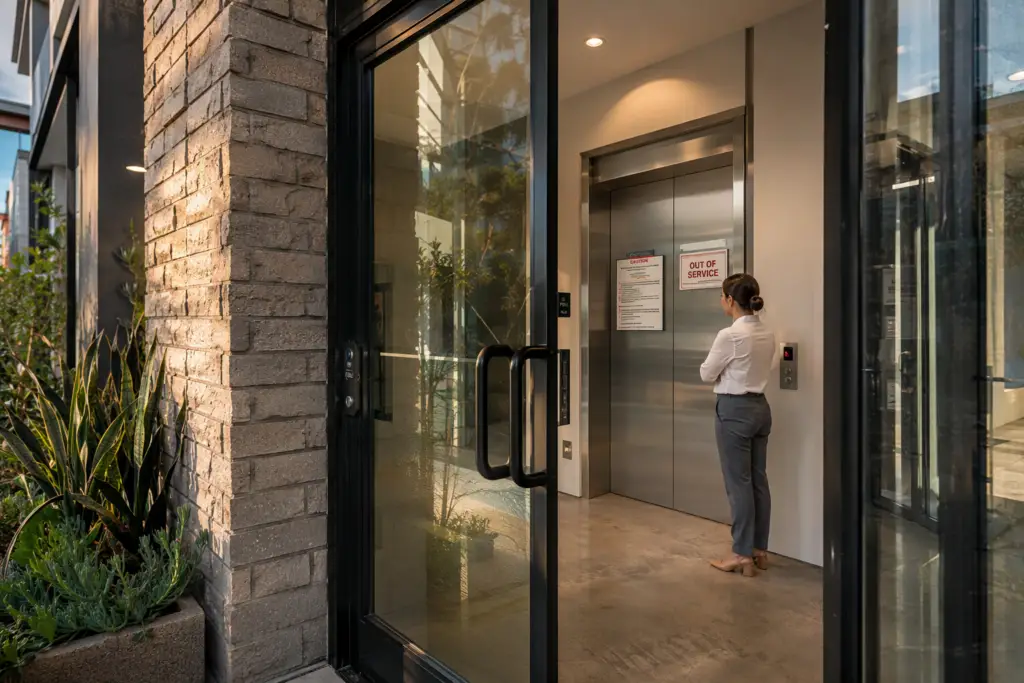
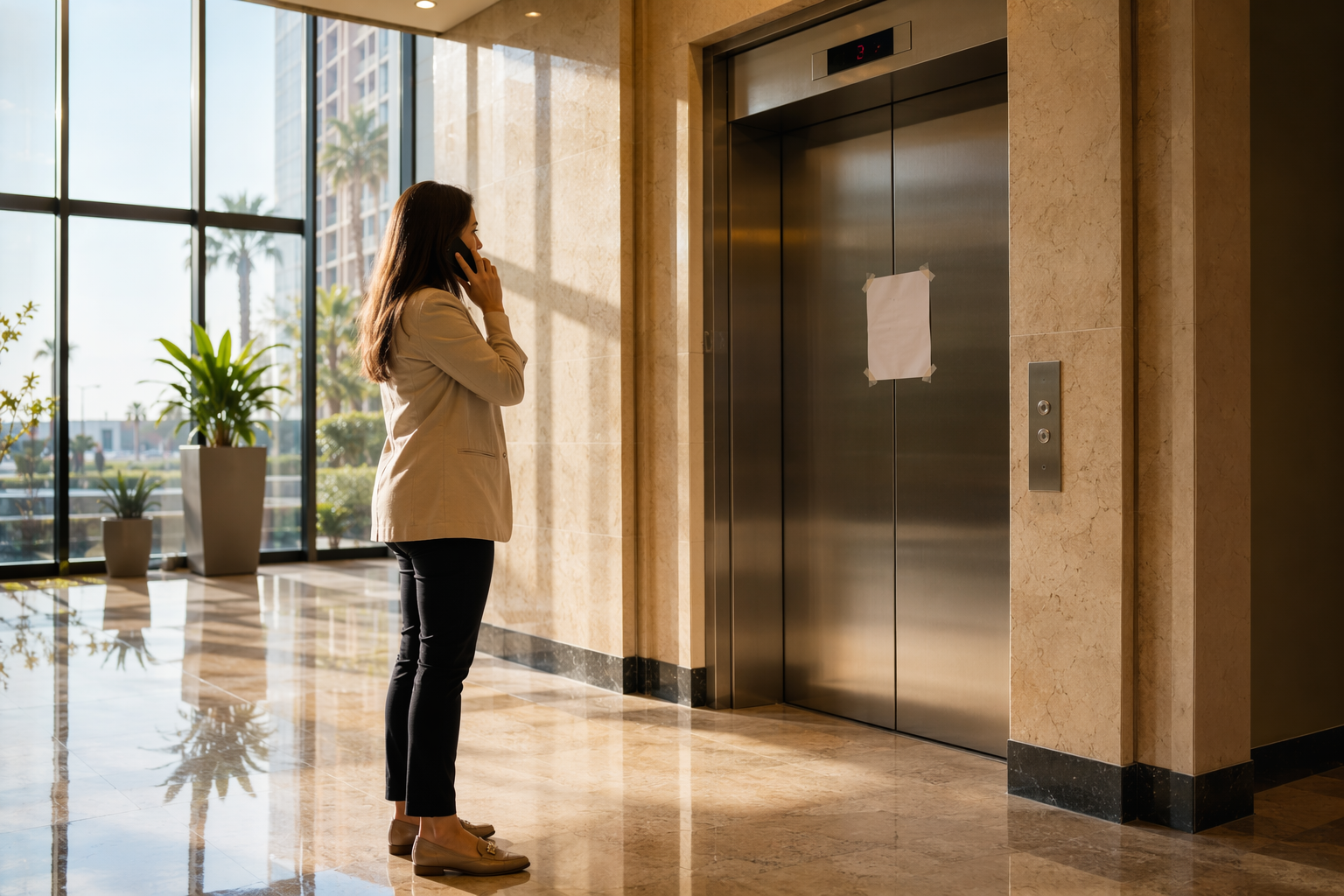
- Post clear “Out of Service” signage at every landing to prevent additional passengers from attempting to board.
- Note the exact time the failure occurred, the last floor the car was known to be on, and any unusual sounds or motions reported by users.
- Locate the elevator’s data plate information (make, model, serial number) from the machine room or documentation on file.
- Call your licensed elevator service contractor with all gathered information.
- Restrict access to the machine room — only qualified technicians should enter.
- Document all actions taken and times for the maintenance log, which may be required for state inspection records.
Does California law require a specific type of contractor for elevator repairs?
Yes — California law requires that elevator installation, major alteration, and repair work be performed by certified elevator mechanics and contractors under the jurisdiction of the California Division of Occupational Safety and Health (Cal/OSHA).
The regulatory framework in California incorporates the ASME A17.1 Safety Code for Elevators and Escalators as the technical standard and requires that elevators be inspected by a certified elevator inspector after significant repairs. Property owners who use uncertified personnel for repairs risk failed inspections, civil liability, and fines. Referencing OSHA standards is also relevant for worksite safety during repair operations.
How does ADA compliance factor into elevator repair decisions?
Under the Americans with Disabilities Act (ADA), elevators in multi-story buildings subject to the ADA must be maintained in operable condition, and extended outages can constitute an accessibility barrier requiring remediation.
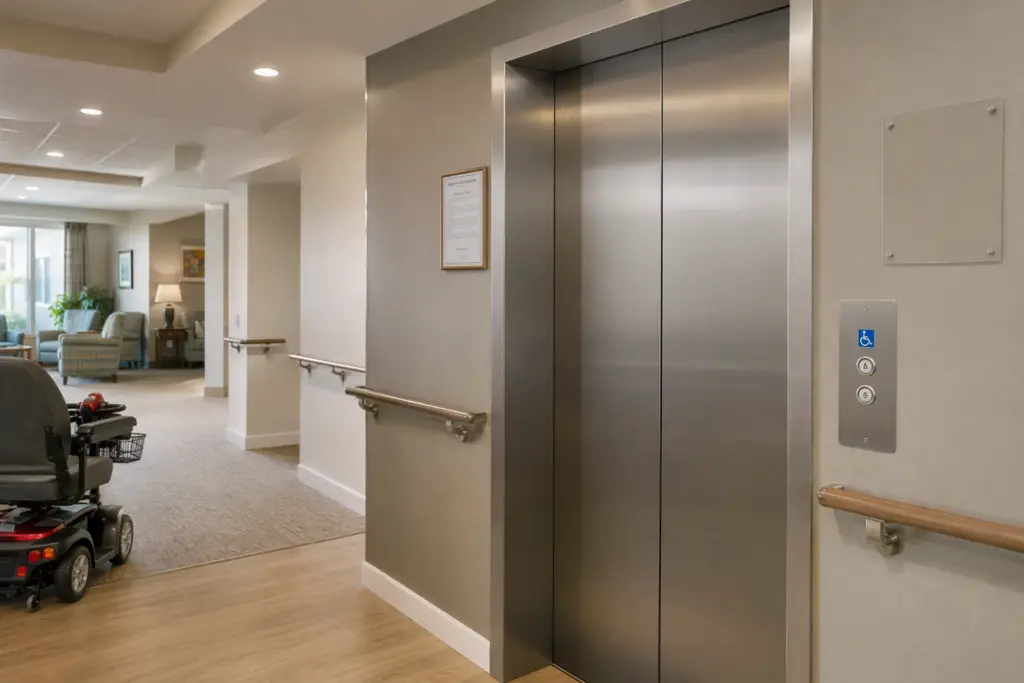
The ADA does not specify a maximum permissible downtime window, but property owners have an obligation to provide accessible routes. When an elevator serving wheelchair users or other individuals who cannot use stairs is out of service, building management should consider temporary service accommodations and prioritize repair accordingly. Restoring full ADA-compliant operation — including proper door timing, accessible controls at correct heights, and audible/visual signals — must be verified as part of any elevator repair completion.
What factors most affect how quickly an elevator can be repaired?
The primary factors determining elevator repair speed are: the nature of the fault, parts availability, contractor proximity, access to the machine room, and whether the building has an active maintenance agreement on file.
Diagnostic time is often underestimated. A technician who has previously serviced a building’s specific elevator can typically reduce diagnostic time significantly compared to one encountering the unit for the first time. Buildings with documented maintenance histories also give technicians a head start. Parts sourcing is frequently the longest delay in elevator repair — a contractor with regional parts inventory eliminates this bottleneck for common failure items.
What is the role of preventive maintenance in reducing emergency repair frequency?
Preventive maintenance — performed on a scheduled basis by a licensed elevator contractor — is the single most effective strategy for reducing the frequency and severity of emergency repairs.
Under ASME A17.1, elevator owners have a duty to maintain equipment in safe operating condition, and routine maintenance is the mechanism by which that duty is fulfilled. Scheduled maintenance visits allow technicians to identify and correct wear on cables, door operators, hydraulic seals, safety devices, and control systems before those components cause unplanned outages. Properties that operate under active maintenance agreements with qualified contractors like Liftech Elevator tend to experience fewer emergency shutdowns and shorter resolution times when issues do arise.
How should property managers evaluate an elevator repair company before hiring them?
Property managers should verify that any elevator repair contractor holds appropriate California state certification, carries adequate liability insurance, has documented experience with the specific elevator makes and models in the building, and can provide references from comparable properties.
Additional evaluation criteria include the contractor’s geographic proximity to the property (which affects realistic response time), whether they maintain parts inventory for common components, and their familiarity with local inspection authorities in cities such as Long Beach, Los Angeles, Signal Hill, and Orange County municipalities. A contractor who has established working relationships with the local elevator inspection authority can also streamline the post-repair inspection process.
Are there situations where a repair cannot begin immediately even if a contractor is contacted?
Yes — certain repairs require a Cal/OSHA permit before work can begin, and others may be delayed by mandatory parts lead times, particularly for proprietary components on older or specialty elevator systems.
Major alterations as defined under ASME A17.1 and California Title 8 regulations may require a permit application and approval before the repair contractor can legally proceed. Emergency entrapment rescue is always permitted immediately, but the subsequent repair may require permitting depending on the scope of work involved. An experienced contractor will guide property owners through this process accurately and efficiently.
What should be inspected and verified after an elevator is repaired?
After any significant repair, the elevator should undergo a thorough functional test covering door operation, leveling accuracy, safety device function, emergency lighting and communication, and — where required by scope of repair — a formal inspection by a certified elevator inspector.
California regulations require certain categories of repairs to be followed by a state-approved inspection before the elevator is returned to public use. The repair contractor should provide written documentation of the work performed, parts replaced, and test results obtained. This documentation feeds into the building’s ongoing maintenance record, which may be reviewed during routine annual inspections.
How does building age and elevator age affect repair complexity and timeline?
Older elevators — particularly those installed before widespread adoption of microprocessor-based controls — present greater repair complexity because replacement parts may be discontinued, requiring fabrication, substitution, or system modernization.
Many commercial and residential buildings in Los Angeles and Long Beach operate elevators installed decades ago. While these units can be maintained safely with proper care, repairs to legacy relay logic controllers or obsolete hydraulic components require technicians with specific knowledge of older systems. In some cases, a targeted modernization of one subsystem — such as replacing an obsolete relay controller with a current solid-state unit — can resolve chronic reliability problems more cost-effectively than repeated emergency repairs to failing legacy components.
When does a repair situation become a modernization situation?
A repair becomes a modernization consideration when the same components fail repeatedly, when replacement parts are no longer manufactured, when the elevator cannot feasibly be brought into compliance with current code through repair alone, or when repair costs approach or exceed modernization costs.
Under ASME A17.1 and California regulations, certain alterations trigger mandatory upgrades to bring the elevator into compliance with current code provisions. A qualified elevator contractor can help building owners understand whether a given repair crosses into alteration territory and what compliance obligations follow. Making this determination accurately upfront avoids unexpected costs and delays mid-project.
What role does the elevator’s maintenance history play in repair speed?
A well-documented maintenance history enables a repair technician to diagnose faults faster, anticipate related wear patterns, and make more accurate decisions about the scope of repair required.
Buildings that have maintained a continuous relationship with a single service contractor benefit from institutional knowledge about the equipment — prior failure patterns, known quirks of specific components, and any modifications made over the equipment’s lifetime. This familiarity is difficult to replicate on a one-time service call and represents a concrete operational advantage of ongoing maintenance agreements.
What are the ADA requirements specifically related to elevator communication systems during outages?
The ADA requires that elevators subject to its provisions include a two-way emergency communication system that connects to a location staffed to respond, and this system must remain functional or be repaired as a priority during any outage.
The emergency telephone or intercom inside the elevator car is not merely a convenience — it is a code-required safety feature under both ADA standards and ASME A17.1. When an elevator is returned to service after repair, verification that the emergency communication system is fully functional is a mandatory step. Buildings should confirm that the answering point is staffed around the clock or routed to an appropriate emergency response service.
How can property owners in Signal Hill, Long Beach, Los Angeles, and Orange County find qualified elevator repair contractors?
Property owners in these areas should seek contractors who are registered with Cal/OSHA’s Elevator, Ride, and Tramway Unit, maintain current insurance documentation, and have verifiable experience with the types of elevators present in the local building stock.
Local knowledge matters in elevator service — familiarity with the inspection authorities in individual cities, awareness of local building permit offices, and proximity for rapid deployment all contribute to faster, more reliable service. Liftech Elevator operates specifically across Signal Hill, Long Beach, Los Angeles, and Orange County, providing property managers with a single accountable point of contact for both planned maintenance and emergency repair in these markets.
What questions should a property manager ask when calling for elevator repair?
Property managers should ask whether the contractor is certified for California elevator work, whether they have experience with the specific make and model involved, whether they carry common parts in local inventory, and what the process is for post-repair inspection and documentation.
Additional questions worth asking include whether the contractor will provide a written scope of work before proceeding with non-emergency repairs, how permit requirements will be handled, and how the contractor coordinates with the local inspection authority. A contractor who answers these questions clearly and specifically — without vague assurances — demonstrates the operational transparency that responsible property management requires.
What is the best long-term strategy for minimizing elevator repair disruptions?
The most effective long-term strategy combines a comprehensive preventive maintenance agreement with a qualified local contractor, proactive component replacement before failure, diligent maintenance recordkeeping, and periodic modernization assessments as equipment ages.
Reactive repair — waiting until an elevator fails before calling for service — consistently produces longer downtime, higher repair costs, and greater risk of code compliance issues than a proactive maintenance posture. Buildings that treat elevator maintenance as a core facility management function rather than an emergency-only expense tend to achieve better equipment longevity, stronger regulatory compliance records, and more predictable operating costs. Partnering with a contractor such as Liftech Elevator, which serves the Signal Hill, Long Beach, Los Angeles, and Orange County markets, provides access to local expertise and established relationships with regional inspection authorities.
Contact Liftech Elevator for a Free Elevator Assessment
Whether your building is experiencing an active fault, a recurring reliability issue, or you simply want to verify that your elevator is meeting current ASME A17.1 and ADA requirements, Liftech Elevator is available to help property owners and managers across Signal Hill, Long Beach, Los Angeles, and Orange County, CA.
Call Liftech Elevator today: 562-609-3478
A certified elevator professional will review your equipment, maintenance history, and compliance status — and provide a clear, practical path forward with no obligation.
Need elevator service you can rely on? Liftech Elevator is ready to help.